
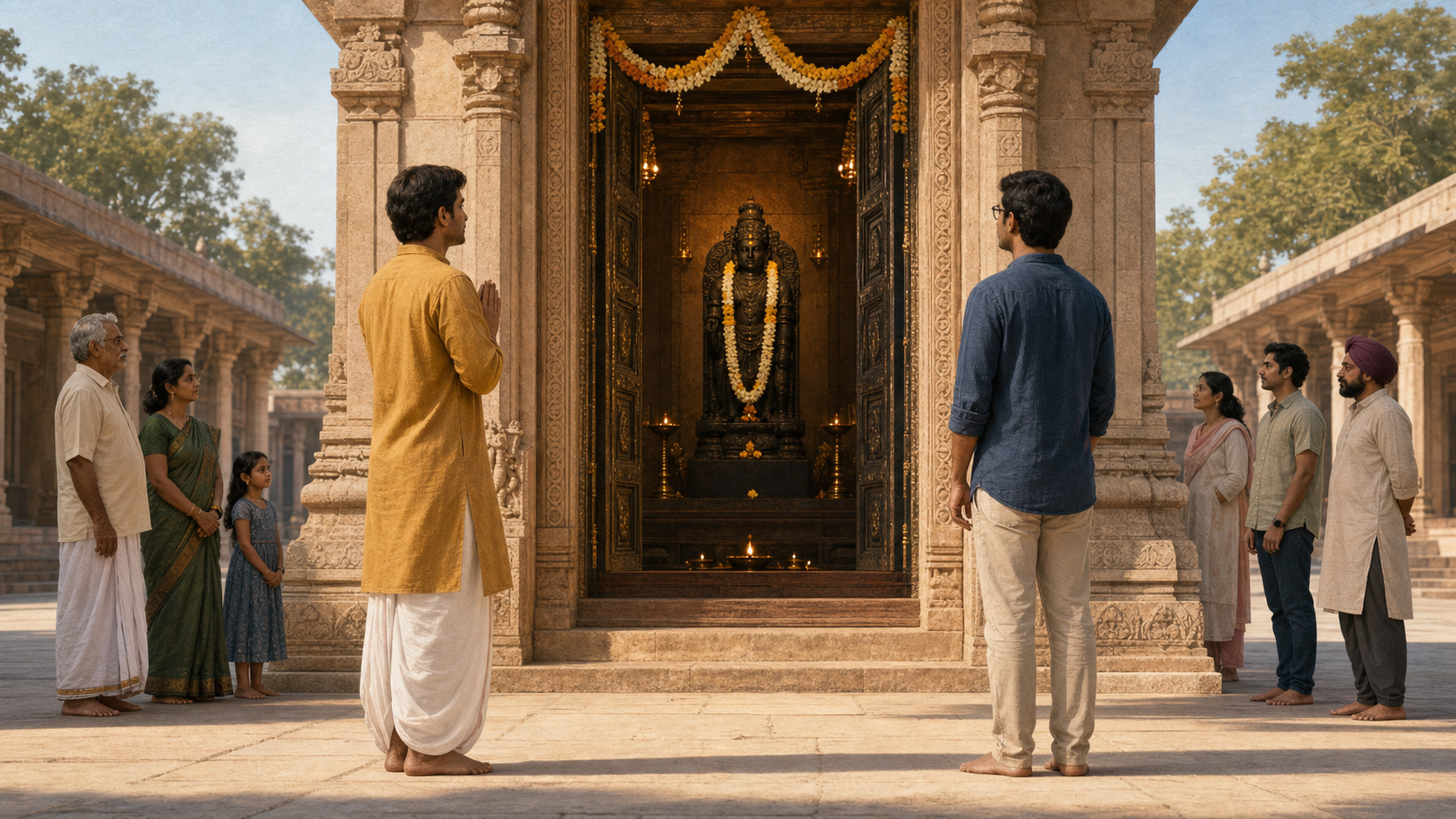
You may fully accept a citizen’s right to reject temple worship and still sense that something goes wrong when a consecrated murti is dismissed as “only stone.” The distinction you are looking for is not between belief and unbelief. It is between freedom of conscience and the way we represent another person’s sacred world.
That distinction matters whenever you assess a political remark, answer a classroom question, discuss a controversy online, or decide whether a public policy is genuinely secular. Indian secularism does not require anyone to accept a theological claim. It does require equal civic standing for people whose relationships with sacred forms differ.
The line secularism actually asks you to draw
Start with three different questions that are often collapsed into one.
| Question | What secularism protects | What fairness requires |
|---|---|---|
| What may a person believe? | Belief, disbelief, doubt, inquiry, and changes of conviction | No forced profession of faith |
| How should a person discuss another tradition? | Freedom to disagree and criticise | An accurate account of what practitioners believe and do |
| How should the state act? | No state-imposed theology | Consistent protection and consistent standards across communities |
Articles 25-28 place freedom of conscience and religious freedom within India’s constitutional order. That protection is broad enough to include a Hindu devotee, a Sikh who rejects murti worship, a philosophical seeker, and a person who professes no religion. The Constitution does not compel admiration for a ritual or symbol.
But constitutional liberty and civic judgment are not identical. A statement can fall within a person’s freedom and still be ignorant, needlessly derisive, or unworthy of someone exercising public influence. “I do not experience divinity in this form” reports the speaker’s conviction. “This is nothing but stone” presents that conviction as an exhaustive account of the devotee’s reality. The first preserves disagreement. The second erases meaning before discussion has even begun.
This is where sarva-dharma-samabhava, understood as equal regard, remains useful. Equal regard does not mean declaring all doctrines true or pretending their differences are trivial. It means refusing to make contempt for one community’s sacred forms the price of admission to the public square. A secular standard that treats Hindu sensibilities as uniquely expendable while carefully interpreting every other community on its own terms is not neutral. It is selective deference.
When you evaluate a controversial remark, therefore, do not ask only, “Was the speaker allowed to say it?” Also ask, “Did the speaker describe the tradition truthfully, and would the same language be considered responsible if directed at another community’s sacred centre?” Those are different tests, and a mature democracy needs both.
Why “only stone” is a category error
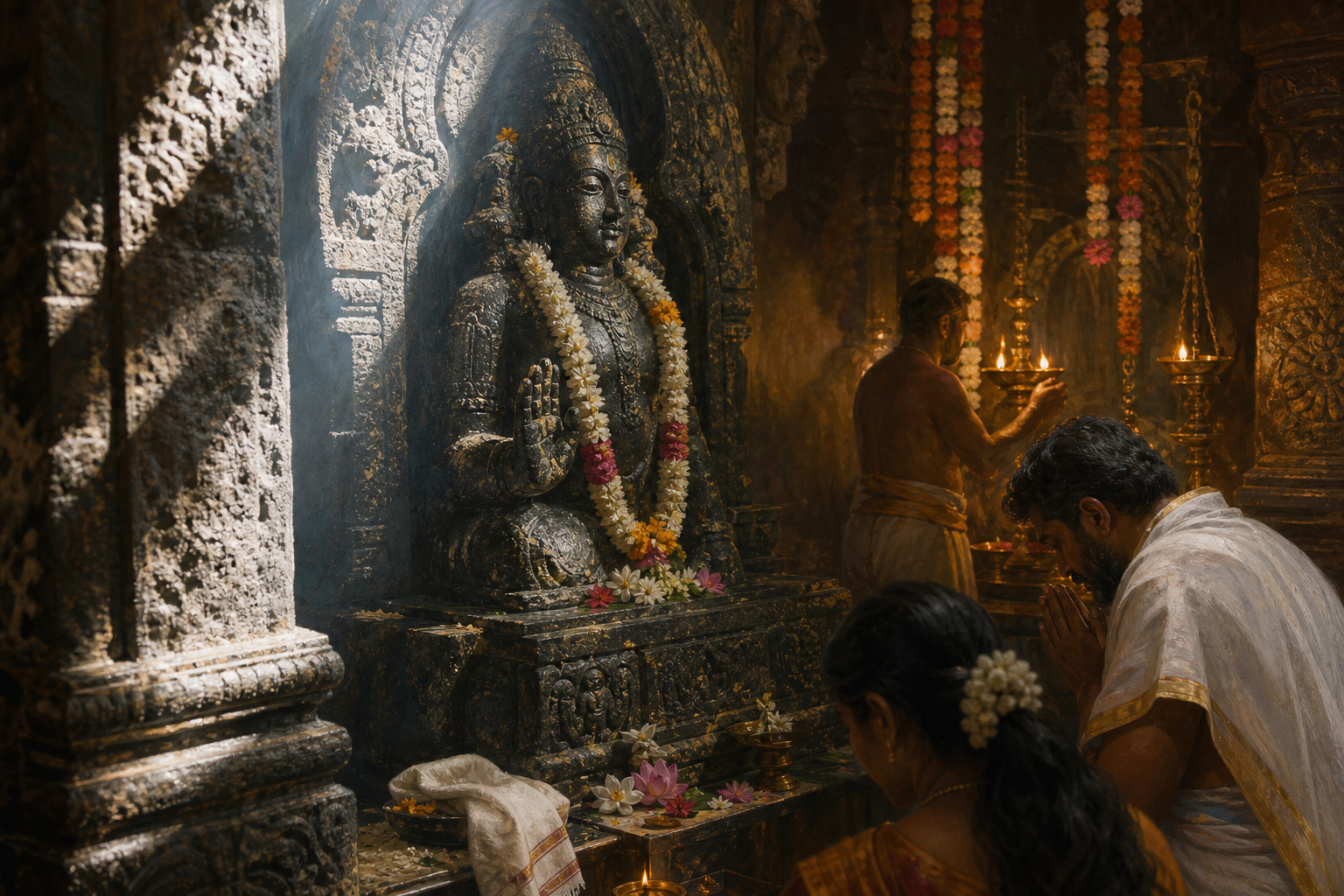
A murti is made from material, but its religious identity is not exhausted by its material. Calling it only stone is like explaining a national flag only as cloth or a handwritten family letter only as ink and paper. The material description may be chemically correct while being humanly incomplete. Meaning arises through relationship, practice, memory, and recognised status.
In Hindu temple life, the decisive concept is prana-pratishtha, the consecration through which divine presence is ritually invoked in a murti. The claim is not that the stone ceases to be stone. Consecration changes the form’s religious status and the devotee’s relationship to it. The murti becomes an appointed focus of darshan, worship, service, and disciplined attention within a sanctified setting.
This makes more sense when you avoid forcing a choice between form and formlessness. Vedantic and Agamic traditions can approach the divine as saguna, apprehended with attributes and form, and as nirguna, beyond limiting attributes. These approaches need not cancel each other. A worshipper may use a visible form to train attention, cultivate devotion, and approach a reality ultimately understood as unlimited by that form.
The Shiva linga makes the point especially clearly. It is an aniconic sign rather than an ordinary human likeness. Its sacred function points beyond portraiture toward a reality that cannot be contained in a single anthropomorphic image. The relevant question is therefore not, “Does stone exist?” Everyone agrees that it does. The question is whether consecrated form can mediate attention, presence, and encounter for the practitioner.
Ritual also works through the body. Abhishekam, arati, mantra-japa, circumambulation, bells, lamps, fragrance, architecture, and repeated gestures shape how attention is directed and how memory is carried. Repeated practice within an acoustically and architecturally ordered sacred space can cultivate the experience of darshan. You do not have to adopt a devotee’s metaphysics to understand that the experience is disciplined and relational, rather than a random confusion about the physical composition of an image.
If you are explaining murti-puja to someone unfamiliar with it, begin there. Do not try to prove the divine in one argumentative leap. Correct the smaller and more basic error: a consecrated murti is not treated as an interchangeable rock. It belongs to a ritual, philosophical, artistic, and communal world that gives the form its sacred function.
Dharmic pluralism does not make every tradition the same
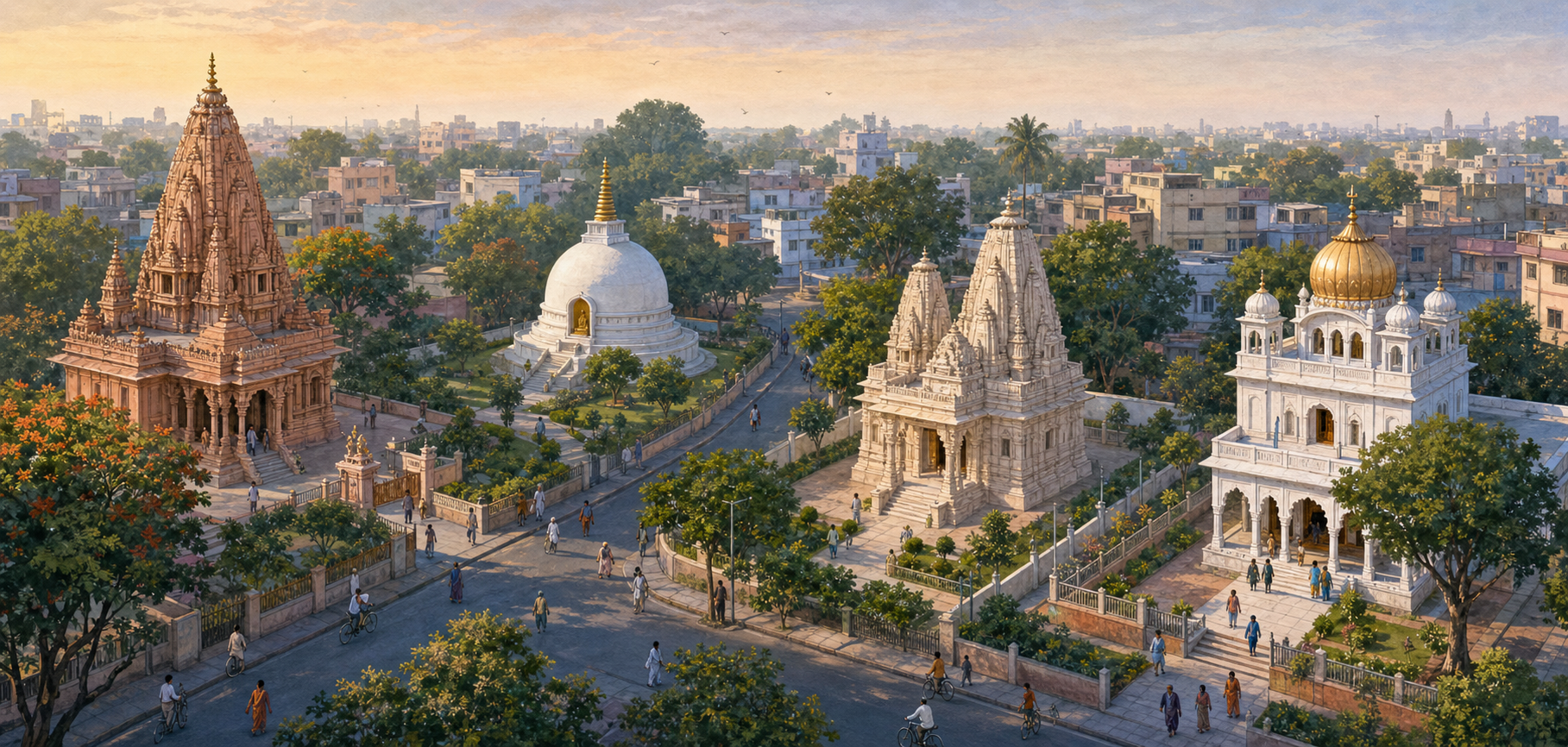
Defending Dharmic sacred symbols does not require claiming that Hinduism, Buddhism, Jainism, and Sikhism share one theology of images. They do not. Their differences should be stated plainly, because accurate difference is more respectful than vague unity.
Hindu paths accommodate different spiritual temperaments
The Hindu principle of ishta allows a practitioner to orient devotion and practice around a chosen form or ideal suited to temperament. Bhakti, jnana, karma, and dhyana can provide different emphases in sadhana. One person may encounter the sacred through a temple murti; another may focus on contemplative inquiry, selfless action, mantra, or a less image-centred discipline. Plurality exists inside Hindu Dharma before it becomes a civic principle applied to the wider society.
This internal plurality gives you a useful habit: do not make your own mode of practice the measure of every other person’s sincerity. Ishta is not a claim that every practice is identical. It is an acknowledgment that spiritual formation can proceed through more than one legitimate orientation.
Buddhist and Jain forms complicate the image-versus-no-image divide
Early Buddhist veneration included the stupa as an aniconic presence before Buddha-rupa images became widespread. Jain practice likewise includes aniconic emblems as well as images of the tirthankaras. These histories show why “idol worship” is usually too blunt a label. A sacred tradition may work with relics, symbols, images, architecture, bodily movement, or combinations of them without reducing its practice to the worship of raw material.
Jain anekantavada, or many-sidedness, offers a civic discipline as well as a philosophical insight. It asks you to recognise that a statement may grasp one aspect of a thing without exhausting it. “This object is stone” can be true at one level and radically incomplete at another. Material composition, ritual status, aesthetic form, inherited memory, and devotional presence answer different questions.
Sikh reverence follows a distinct grammar
Sikh practice does not endorse idol worship. Reverence in the gurdwara centres on the living authority of the Guru Granth Sahib, the shabad-guru, and the disciplined life of the sangat. Kirtan, langar, seva, and collective remembrance organise a sacred world that is not based on Hindu murti-puja.
That distinction should not be turned into a hierarchy of supposedly rational and irrational traditions. Sikh disagreement with murti worship does not justify contempt for Hindus, just as Hindu respect for the Guru Granth Sahib does not require pretending that a scripture and a murti have the same theological function. Shared Dharmic values can include truthfulness, self-discipline, service, sacred sound, and reverence for sanctified space while leaving real doctrinal differences intact.
When you encounter an unfamiliar sacred form, ask three questions before assigning it a label: What exactly is revered? How does the community understand presence or authority here? What practices and ethical obligations gather around it? Those questions work in a mandir, stupa, Jain derasar, or gurdwara because they invite accurate understanding without manufacturing sameness.
How to answer dismissive speech without surrendering principle
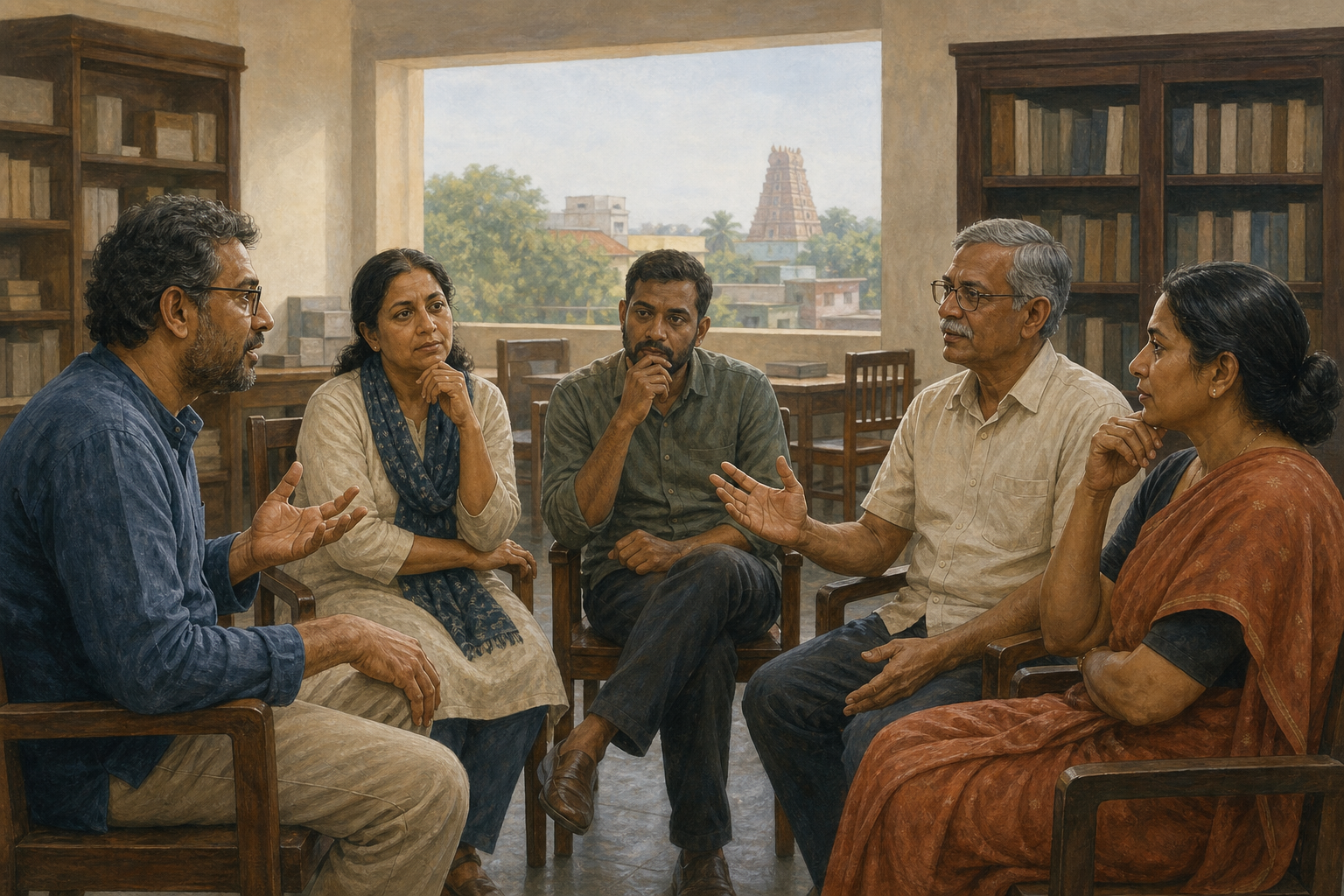
The strongest reply to religious derision is not a counter-insult. It is a sequence that protects conscience, corrects the category error, and demands an equal public standard.
- Defend the right to disbelieve first. Say plainly that no citizen should be compelled to worship or affirm a divine presence. This removes the false impression that respect requires conversion or silence.
- Correct the description, not the person’s inner conviction. Explain that a consecrated murti remains material but is not religiously interchangeable with unworked stone. Prana-pratishtha, darshan, and continuing worship establish its place within a living tradition.
- Distinguish criticism from reduction. A person may question theology, temple administration, ritual practice, or institutional conduct. Reduction occurs when the critic refuses even to describe what the practice means to its practitioners.
- Apply a reciprocity test. Replace the Hindu symbol in the sentence with another community’s scripture, shrine, sacred word, or sanctified space. If the tone suddenly seems unacceptable, the original standard was probably selective.
- Show the institution’s lived function. Many temples support annadanam, seva, cultural education, performing arts, craft traditions, and local memory. In diaspora communities, they may also anchor language, identity, and interfaith contact. Sacred meaning should not have to prove its economic utility, but the temple’s social role makes the phrase “only stone” even less adequate.
A concise response might read: You are free not to share this worship. But “only stone” describes the material while denying the consecrated form’s religious meaning. Secularism can protect your disbelief without asking devotees to accept misrepresentation as neutrality.
Notice what this response does not claim. It does not say that hurt feelings settle a theological argument. It does not demand that the state declare the murti divine. It does not treat every disagreement as persecution. It asks for a truthful description and the same civic courtesy that should be available to every community.
Public figures deserve closer scrutiny because their vocabulary spreads through institutions, media, and ordinary conversation. A private person may use a clumsy phrase without much consequence. A political leader or prominent commentator can normalise a hierarchy in which one tradition is interpreted sympathetically and another is caricatured. Greater reach brings greater responsibility for precision.
If the dispute concerns state policy rather than rhetoric, change the argument accordingly. Identify the practice being burdened, the actual state action, and whether comparable communities receive comparable treatment. India’s contested Essential Religious Practices doctrine shows the difficulty of deciding which practices are integral to religious identity. A secular state should protect the conditions for peaceful religious life without pretending to settle theological truth. A policy argument is therefore stronger when it demonstrates unequal treatment or a concrete burden, rather than relying only on a general claim that sentiments were offended.
Key takeaways: five tests for a genuinely secular response
- The conscience test: Can the believer worship and the nonbeliever decline without either being coerced?
- The accuracy test: Is the sacred form described as its practitioners understand it, even when the speaker rejects that understanding?
- The consistency test: Would the same tone, institutional rule, and threshold of respect be applied to another religious community?
- The difference test: Are Hindu, Buddhist, Jain, and Sikh practices allowed to remain distinct, or are they being flattened into a convenient slogan?
- The consequence test: Does the discussion account for the symbol’s ritual, cultural, educational, and social life, or reduce everything to physical material?
You can use these tests before sharing a provocative clip, responding to a public remark, or supporting a policy framed as secular. They help you reject two equally poor choices: forcing faith on the sceptic and forcing the believer to accept contempt as the language of reason.
The next time someone says a Dharmic sacred form is “only” stone, metal, architecture, sound, or a book, move the conversation to the question that matters: what relationship has consecration, practice, and memory created here? Defend the freedom to answer that question differently, then insist that every answer be represented with equal honesty. That is a secularism India can use without becoming estranged from its own civilisation.