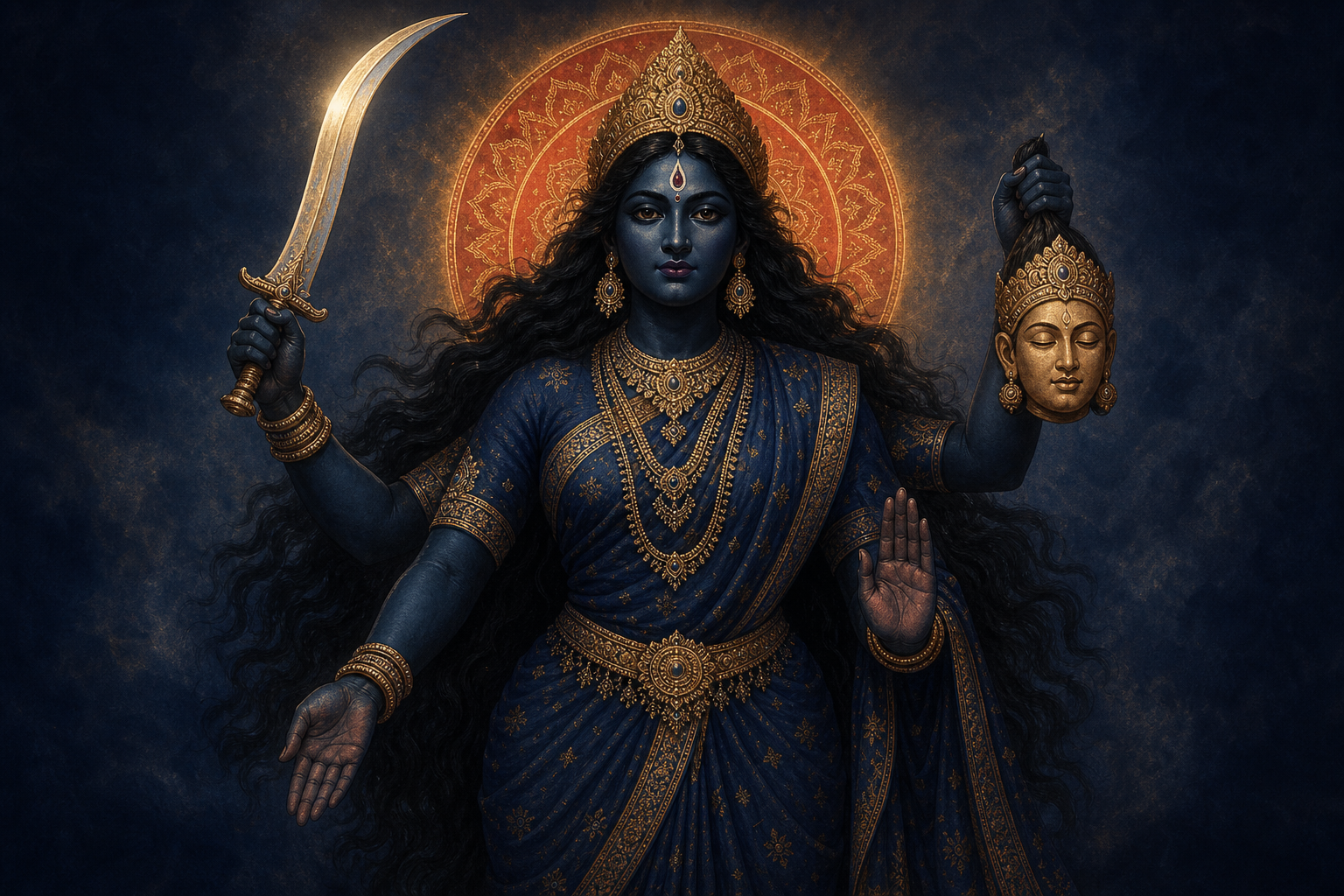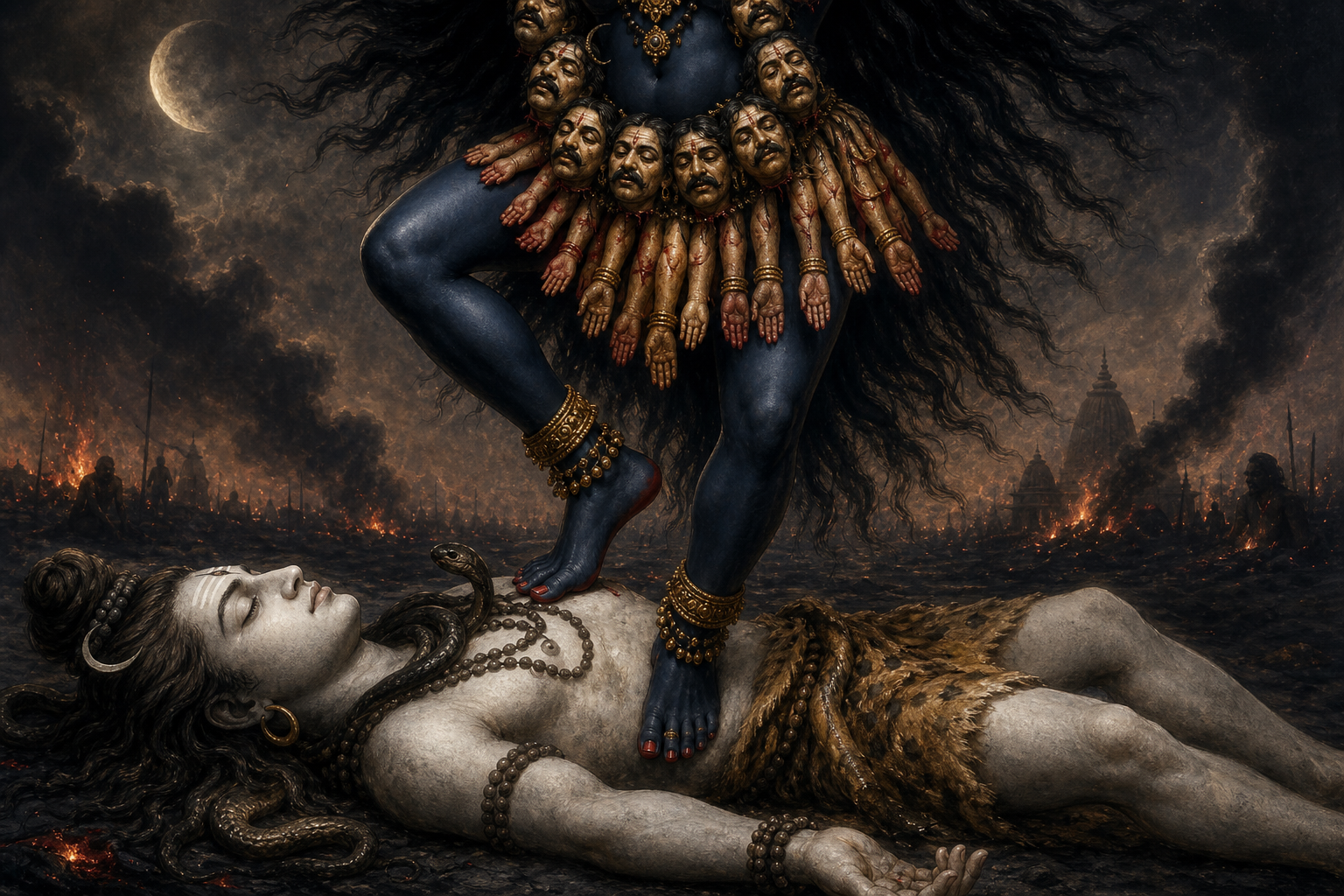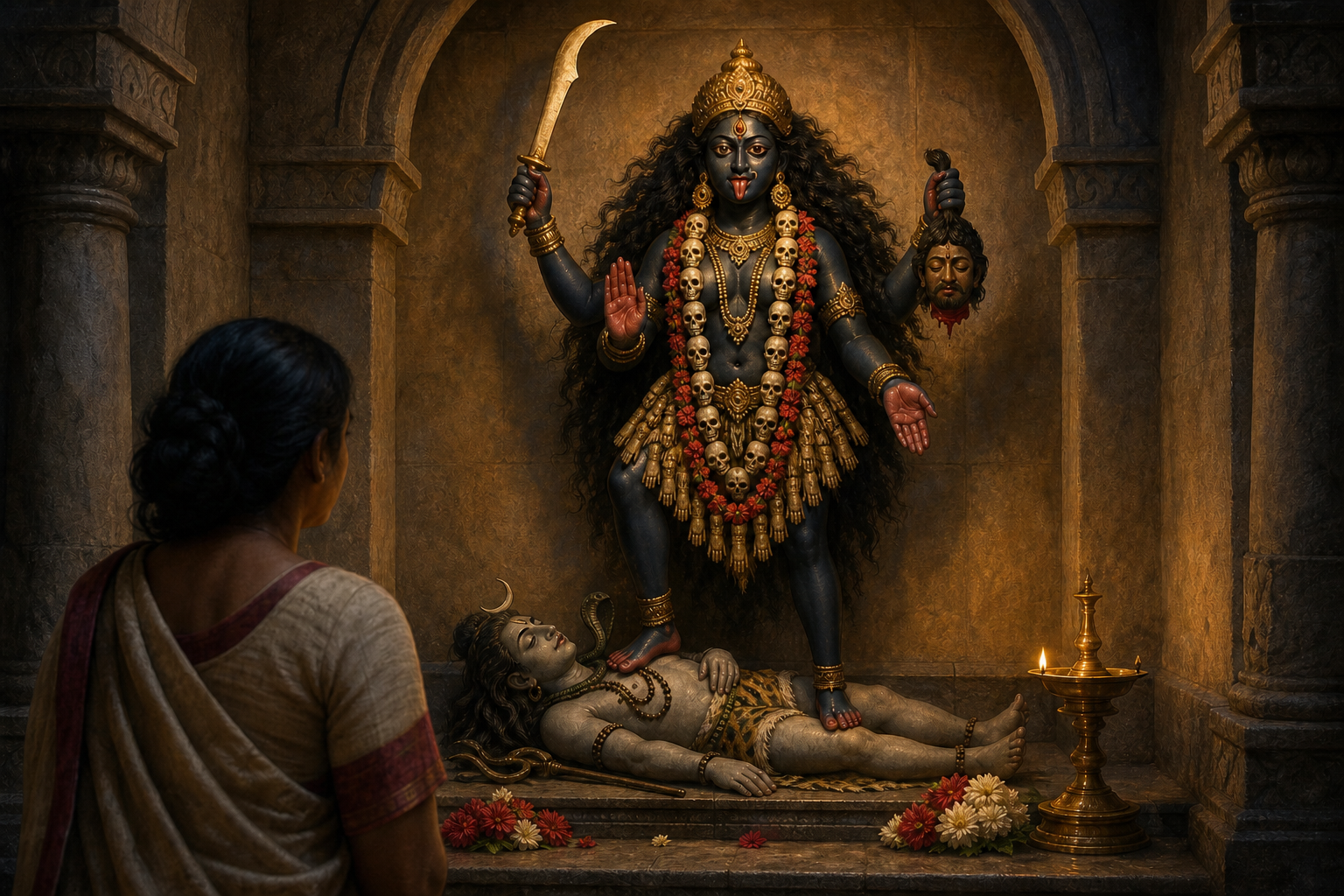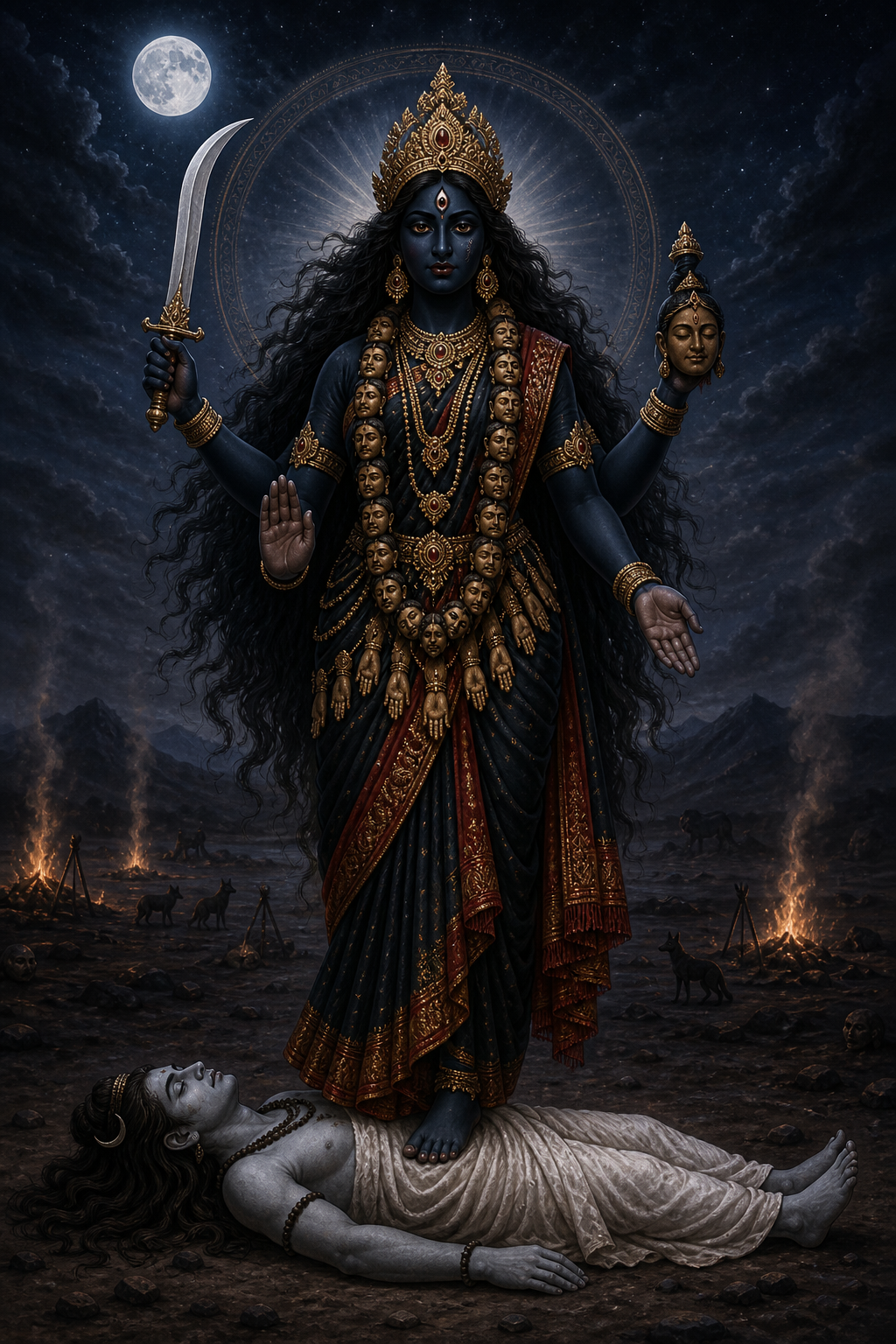
If Kali’s image looks like a collection of frightening details, do not begin by decoding the skulls, blood, and weapons separately. First notice the apparent contradiction: the same form that carries a blade also raises a hand of protection. That union of severity and refuge is the key to reading the image.
Within the Dasa Mahavidyas, the ten wisdom forms of the Divine Mother revered in Shakta traditions, Kali occupies the first and most primal position. Her place at the beginning is not merely a rank in a list. It directs you toward the unconditioned reality from which forms arise and into which they disappear.
Key takeaways
- Kali’s fierce features are not a collection of threats. Together, they depict the destruction of ignorance, attachment, fear, and false identity.
- Her dark, unclothed, and unbound appearance presents a reality that cannot be contained by ordinary categories or social coverings.
- In a common four-armed form, the sword and severed head must be read together with the gestures of fearlessness and giving. What she removes is inseparable from the freedom she grants.
- The garland, severed arms, blood, and cremation ground confront you with mortality and the limits of bodily identity, status, speech, and action.
- Kali standing upon Shiva is not best understood as a contest between two deities. It expresses the inseparability of dynamic Shakti and still consciousness.
- Individual images vary by lineage, region, temple, and artistic purpose. Identify the form before treating any one arrangement as universal.
The dark body points beyond every bounded form
A sacred image gives form to something that cannot finally be confined to form. This paradox is especially important with Kali. Her body is visible, but its darkness resists ordinary visual definition. You can see her, yet you cannot easily mark where she ends. The icon therefore turns darkness into a theological statement about limitlessness rather than a moral statement about evil.
This distinction matters because a light-versus-dark moral binary badly misreads Hindu iconography. Kali’s black or blue-black complexion does not make her demonic. It presents the formless and timeless ground of creation and dissolution. Every definite object can appear against that ground, but the ground itself cannot be reduced to one object among others.
Her nakedness develops the same point. Clothing identifies a person through role, place, rank, community, or stage of life. Kali appears without those coverings because the reality she embodies precedes them. This is not casual exposure, and it is not an invitation to read the image erotically in isolation. It signifies a power that social convention, possession, and constructed identity cannot contain.
Her loose hair likewise refuses the controlled appearance expected within ordinary social order. It visually enlarges the figure and makes her seem difficult to bind. It should not be turned into a crude claim that disorder is spiritually superior. The point is narrower and more demanding: ultimate reality is not domesticated by the arrangements that make everyday life manageable.
Kali’s extended red tongue is often forced into a single narrative explanation. Resist that shortcut unless the image belongs to a context that clearly supplies one. At the visual level, the tongue interrupts the darkness of her body and gives consuming power an unmistakable presence. It can also mark a sudden arrest within otherwise uncontrolled motion. A lineage may connect it with a particular episode or doctrine, but the feature should first be read as part of the complete composition.
The four hands turn destruction into a path of release
In a widely recognized four-armed form, Kali’s left hands hold a sword or curved blade and a severed head, while her right hands offer protection and blessing. Exact hand positions can vary, so do not reject an image merely because its upper and lower hands differ from a diagram you have seen. The stable interpretive relationship is more important: removal appears alongside refuge.
The blade represents the power to cut through ignorance and mistaken identification. It is not simply a weapon directed at an external enemy. Its spiritual force becomes clearer when you ask what a serious practitioner would need severed: the belief that the temporary body is the whole self, that status can protect against time, or that possession can provide permanent security.
The severed head makes that cutting visible. It is commonly read as the false or self-enclosed identity that treats its own preferences, fears, and narratives as absolute. The symbolism is severe because ordinary language about personal growth can conceal how radical this transformation is. Kali does not decorate the ego with a spiritual identity. She exposes its claim to permanence.
Now read the other two hands. The gesture of abhaya communicates fearlessness or protection. The boon-giving gesture communicates generosity and fulfilment. Their presence prevents you from interpreting the sword as cruelty. Kali removes what binds and grants what becomes possible when the binding is gone.
The hands therefore form a single teaching rather than four independent symbols:
<!– wp:list {