

You may be disciplined in puja, japa, study or seva and still lose your inner steadiness when someone ignores your contribution, questions your judgement or receives the credit you expected. That gap between spiritual intention and immediate reaction is where ego becomes visible.
The problem is not that you have a name, personality or role. You need them to fulfil your duties. The problem begins when a role, achievement, opinion or wound becomes your identity, and you require other people to confirm it. Pride then obstructs the happiness it promises to protect; Hindu teaching therefore treats ego as a hurdle to bliss and liberation.
The ego to watch is the identity that must be defended

A practical sense of self is necessary. You must remember your commitments, make decisions, keep boundaries and accept responsibility for your conduct. Dharma does not require you to become indecisive, invisible or incapable of saying no.
The obstructive ego makes a stronger claim: I alone am the doer; the result belongs to me; success proves my worth; disagreement diminishes me; and my status must be protected. Once that claim takes hold, an ordinary event becomes a trial of identity. A correction is no longer information. It is an insult. Another person’s success is no longer good news. It is a threat.
This distinction matters because trying to destroy your personality can become another form of self-absorption. You begin monitoring how humble you appear, condemning every preference and feeling proud of having fewer needs than others. The ego has not disappeared. It has adopted spiritual language.
Nor does letting go of ego mean tolerating humiliation, abuse or adharma. Humility is not helplessness. You can oppose wrongdoing, protect someone vulnerable, correct a false claim or leave a harmful situation without turning the action into a campaign for personal vengeance. The useful question is not, “Am I asserting myself?” It is, “Does this response serve truth and duty, or is it mainly defending an image of me?” Sometimes both motives are present. Retain the necessary action and relinquish the performance around it.
Bliss should not be reduced to an agreeable mood that never changes. Moods change with the body, circumstances and relationships. The relevant freedom is that praise, blame, gain and disappointment no longer dictate every inner movement. Liberation cannot become the ego’s greatest possession, because the impulse to announce “my attainment” is part of the bondage being examined.
Notice ego in praise, blame, service and sadhana
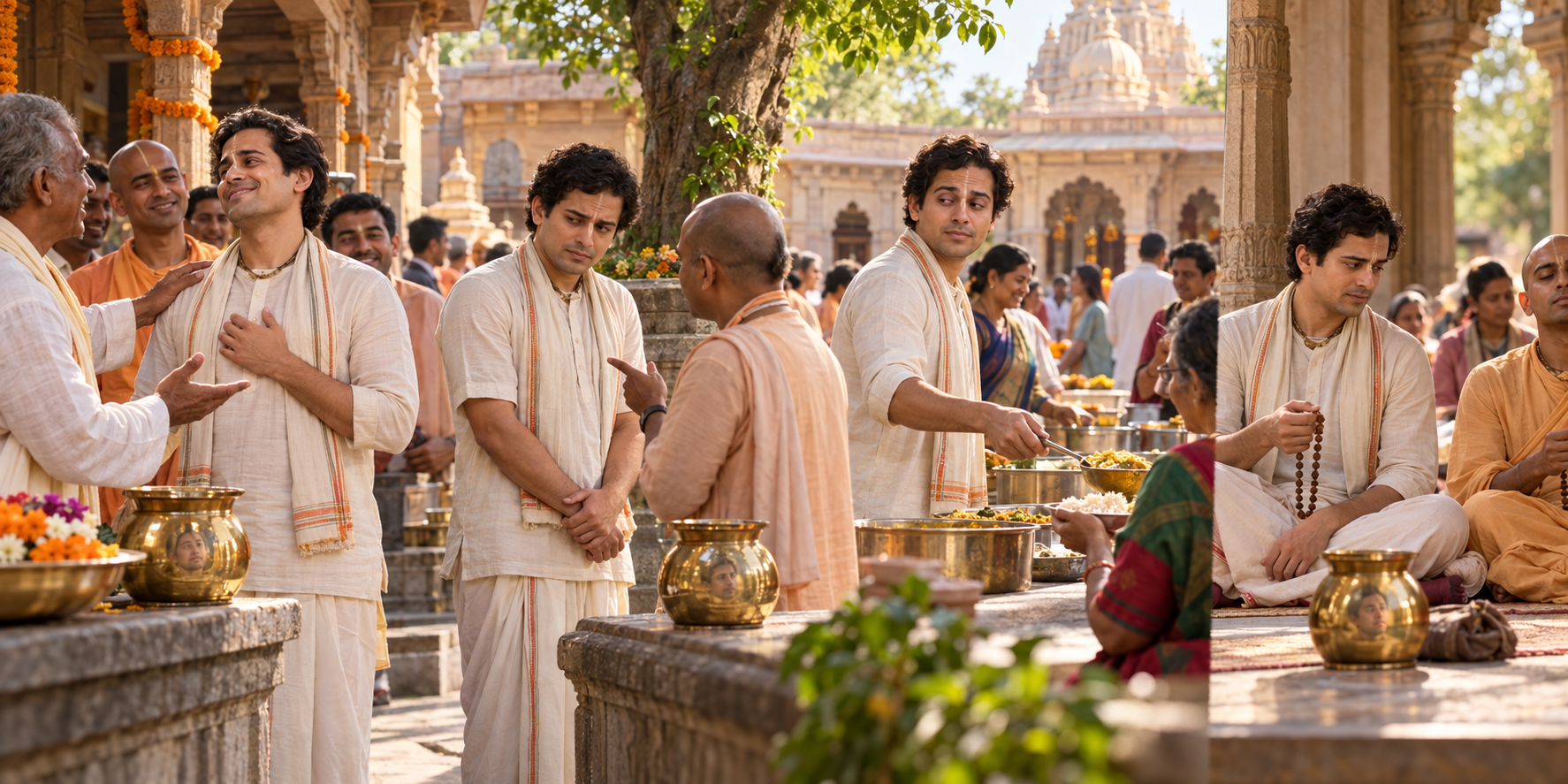
Ego is easy to condemn in theory and difficult to recognise in the moment. Look for the point where a necessary concern becomes a demand that your identity be protected.
- Correction feels like rejection. You stop examining what was said and begin proving that the speaker has no right to say it. Before defending yourself, restate whatever part of the correction is valid. You can reject an unfair accusation after extracting the truth it may contain.
- Service creates a claim on recognition. You help willingly, then become resentful when nobody mentions your contribution. Ask whether the work would still be worth doing if your name were absent. Where others contributed, name their work plainly instead of collecting the whole achievement under “mine.”
- Results become a verdict on your worth. Success produces superiority; failure produces shame or blame. Separate your intention and effort, which require examination, from the final result, which also depends on conditions beyond you.
- Comparison enters spiritual practice. Japa, fasting, learning, charity or temple service becomes evidence that you are more disciplined, pure or informed than someone else. Return attention to the transformation the practice demands from you. Another person’s apparent shortcomings are not proof of your progress.
- An injury is repeatedly rehearsed. You may need acknowledgement, protection or repair after a genuine wrong. But repeated mental prosecution can preserve the identity of the offended person long after a useful response is available. If the harm is continuing, establish safety and boundaries first. If it has ended, notice whether the replay now serves action or only keeps the wounded identity alive.
Ego can also sound modest. Habitual self-deprecation may be a request for reassurance. Silence may be used to punish. Refusing help may preserve the identity of being self-sufficient. Saying “it was nothing” may conceal irritation that others agreed. Do not judge the sentence by how humble it sounds; examine what response you are trying to obtain.
Praise is as revealing as blame. If praise makes you dependent on repetition, it has become fuel for an identity. Receive appreciation without pretending the work had no value, acknowledge everyone and every condition that made it possible, and then return to the next duty. False modesty still keeps attention fixed on you.
Use the trigger as a practice, not as a verdict

When ego rises, declaring that you should not have an ego merely adds shame to the original reaction. Treat the trigger as material for practice. The aim is to see clearly enough that you can choose your conduct.
- Pause the outward reaction. If the situation is safe, do not send the heated reply or deliver the rehearsed speech immediately. Let the body settle enough for discernment to return. A pause is not permission to stonewall someone; it is preparation for a cleaner response.
- Describe the event without a verdict. “They interrupted me” describes an event. “They never respect me” combines the event with a conclusion about motive and identity. Begin with what could have been observed by someone else in the room.
- Name the identity under threat. Perhaps you need to be seen as the expert, the generous relative, the indispensable worker, the obedient disciple, the strong parent, the victim who is always right or the devotee who never becomes angry. Naming the role loosens its claim to be your whole self.
- Separate responsibility from ownership. Your intention, preparation, words and willingness to correct an error belong within your field of responsibility. Other people’s approval and every final outcome do not. This distinction does not excuse careless effort; it prevents effort from becoming a demand that reality reward your self-image.
- Choose the response that serves dharma with the least self-display. That response may be an apology, a firm refusal, a factual correction, shared credit, continued service or silence when further speech would add heat without adding truth. Do not choose passivity merely because it looks humble.
- Release the mental encore. After you have acted, notice the urge to replay your best line, imagine defeating the other person or recruit an audience to confirm your righteousness. If no further repair or protection is needed, declining to feed that replay is a practical act of renunciation.
A short reflection after a difficult event can expose the pattern. Ask: What actually happened? What did I need the other person to believe about me? What did truth and duty require? Is there anything I still need to correct, repair or protect? Write direct answers rather than a long case for the prosecution.
Do not use this method to suppress justified anger or avoid a necessary confrontation. Freedom from ego is not freedom from conflict. A clean disagreement can be more Dharmic than polite resentment. The test is whether you can act firmly without needing to degrade the other person, advertise your virtue or prolong the conflict after its practical purpose has ended.
Train the same freedom through action, devotion and inquiry

Hindu sampradayas do not all describe the self, God and liberation in identical terms. You do not need to blur those differences to work on the practical attachment to praise, control and ownership. Use the discipline already central to your path, and bring it directly to the identity that becomes defensive.
Karma yoga: act fully without converting action into possession
Before beginning a duty, remember whom or what the work serves. While acting, give the task your full competence. Afterward, resist the impulse to keep polishing an internal story in which you alone caused the success. If the result is poor, examine the work without turning the failure into either self-hatred or an excuse to blame everyone else.
This practice is especially revealing in work that brings little status. Complete useful tasks that do not place you at the centre. Do not then build a new identity around being the person who serves anonymously. The purpose is to weaken the demand for recognition, not to obtain recognition for having transcended it.
Bhakti: offer the need to be seen
Devotion can redirect attention from self-importance toward surrender, gratitude and relationship with the Divine. Make the offering concrete. In prayer, name the attachment you are carrying: the wish to be admired, the anger that another person was praised, the fear of appearing ignorant or the insistence that events follow your plan.
Do not wait until the attachment sounds noble. Offer it as it is. Then perform the duty in front of you without bargaining for a particular emotional reward. Devotion becomes transformative when surrender reaches the part of you that still wants to control how others see you.
Self-inquiry and meditation: examine the “I” in the claim
In paths centred on inquiry, take a charged statement such as “I was diminished” or “I must prove myself” and ask what the “I” refers to at that moment. Is it a social role, a remembered success, an expectation, a bodily sensation or a story about how you must be treated? Do not rush toward a memorised philosophical answer. Observe the actual components of the experience and how they change.
Meditation offers the same examination without argument. A thought of pride, jealousy or injury can be noticed as an event in awareness rather than obeyed as a command. The thought may return. The practice is the renewed refusal to grant it unquestioned authority.
Whichever discipline you follow, judge progress through conduct rather than a spiritual self-image. Can you hear a useful correction without immediate retaliation? Can you share credit without secretly keeping score? Can you apologise without adding a speech that restores your superiority? Can you remain committed to a rightful action when nobody applauds? Can you stop feeding a grievance once protection and repair are complete?
The earliest taste of freedom may not feel dramatic. It may appear as less inner argument, a shorter return from praise or blame, and greater room to choose the next right action. That quiet reduction of compulsion is more trustworthy than an impressive claim of having conquered the ego.
Key takeaways
- Ego becomes obstructive when a role, opinion, achievement or wound must be defended as your whole identity.
- Letting go of ego does not require weak boundaries, silence before adharma or denial of responsibility.
- Common signs include resistance to correction, hunger for credit, comparison in sadhana and repeated rehearsal of an injury after useful action is complete.
- When triggered, separate the observable event from your interpretation, identify the threatened identity and choose the response that serves truth and duty with the least self-display.
- Karma yoga works on possessiveness in action, bhakti offers the demand for control, and self-inquiry examines the “I” that claims injury or superiority.
- Measure progress by cleaner conduct: greater openness to correction, less dependence on recognition and less compulsion to keep praise or blame alive.
Begin at the next live edge, not with a grand vow to eliminate ego. When defensiveness rises, ask what identity you are protecting and what dharma requires without that protection. Then make the smallest clean move available: listen, correct, apologise, refuse, serve or let the claim go. Liberation may be a vast aim, but this is where its discipline becomes real.
References

Leave a Reply
You must be logged in to post a comment.