
You know what you practise. The difficulty begins when a school form, census question, interfaith discussion, or curious friend demands one label. Should you say Hindu, Hinduism, Hindu Dharma, Sanatana Dharma, Vedic, or simply Dharmic?
You do not need one word to do every job. The clearest answer usually has two layers: use Hindu for the widely understood civilizational identity, then use Sanatana Dharma, a school name, or a lineage name to explain the principles and practice that actually shape your life.
The terms answer different kinds of questions

Much of the argument over terminology starts with a category mistake. Hindu and Sanatana Dharma are treated as rival names competing for the same position. In practice, they often operate at different levels. One identifies a historical community in the public world; the other points toward the enduring order, obligations, disciplines, and purposes by which a dharmic life is understood.
Dharma is wider than a religious affiliation
Religion usually means a recognised body of belief, worship, membership, and institutions. Dharma can include all of that, but it also reaches into conduct, ethical responsibility, self-cultivation, social duty, cosmic order, and the discipline appropriate to a particular time, place, and stage of life. That is why translating dharma only as religion can leave too much behind.
This does not make religion a forbidden word. If an official asks for your religion, Hindu is normally a clear answer. If someone asks what governs a Hindu life, dharma is the more exact concept. Before choosing a term, notice which question is actually being asked.
Hindu is a civilizational identity with a geographic history
The word Hindu began as an external name associated with a place and its people. Old Persian royal inscriptions used Hinduš in relation to the land and peoples beyond the Sindhu, or Indus, River. The familiar sound change from the Sanskrit s to the Old Persian h helped carry Sindhu into Hindu. Related forms later travelled into Greek and Latin, while al-Hind and Hindū circulated in Arabic and Persian usage.
That origin matters, but it does not imprison the word in its earliest meaning. Hindu gradually acquired cultural, communal, and religious force. In Persianate settings it could distinguish local peoples and practices from communities governed by Islamic law. It later became the most recognisable umbrella for a broad family of traditions rooted in Bharat.
Etymology tells you where a word began, not everything the word is allowed to mean now. English began as the name of a people and place too; that does not make its present uses unreal. Calling Hindu an exonym therefore explains part of its history. It does not invalidate millions of people using Hindu as their own civilizational and religious identity.
Hinduism is useful, but it compresses diversity
Hinduism is the familiar English noun for the beliefs, practices, communities, texts, institutions, and sacred geographies gathered under the Hindu umbrella. The catch-all category became standard in the late eighteenth and nineteenth centuries, particularly through European and colonial classification.
That standardisation did not manufacture the deities, temples, philosophies, rituals, pilgrimages, teachers, or communities it classified. It did, however, press a vast civilizational field into the singular shape expected of a Western-style religion. Use Hinduism when the broad category is the subject, but do not assume that every Hindu accepts one creed, follows one founder, reads one mandatory text, or describes liberation in exactly the same way.
Hindu Dharma connects public identity with lived order
Hindu Dharma is often the most balanced expression when you want the recognised word Hindu without reducing the tradition to institutional membership. It says that Hindu life is organised around dharma rather than around assent to a single confession. It is especially useful in teaching, community discussion, and writing for readers who understand Hindu but may not yet understand Sanatana Dharma.
Sanatana Dharma names what is held to be enduring
Sanatana means eternal, perennial, or enduring. Sanatana Dharma therefore does more than rename a population. It points toward principles and disciplines understood not as inventions of one historical founder, but as truths about reality, conduct, self-knowledge, and liberation. The expression is present in Sanskrit literature, including the Mahabharata and Puranas, where it signals an order whose authority is not limited to a modern institutional label.
For many practitioners, Sanatana Dharma is the deeper self-description because it places the emphasis on how one should live and what one should realise. Yet it is not always a drop-in replacement for Hindu. An immigration officer, school administrator, or neighbour may recognise Hindu immediately and have no idea what Sanatana Dharma means. In that setting, clarity is better served by joining the terms than by forcing one to defeat the other.
Vedic, Vedanta, and a school name are narrower claims
Vedic is appropriate when the relationship to Vedic revelation, knowledge, ritual, or authority is specifically relevant. It should not become a vague decorative synonym for everything Indian or spiritual. Vedanta is narrower still: it identifies a major philosophical field, within which traditions such as Advaita and Dvaita make distinct claims. Nyaya and Yoga also name particular systems, not interchangeable titles for the whole Hindu world.
The same principle applies to lineage and devotional identity. If your practice is specific, name it. A precise school or lineage designation tells another practitioner far more than Hinduism alone. The broad identity and the particular path can sit together without contradiction.
Choose the term that matches the conversation

You can settle most terminology dilemmas by asking what the listener needs to know. The following defaults preserve both intelligibility and depth.
| Situation | Best first term | What to add |
|---|---|---|
| A school, census, workplace, or immigration form | Hindu | Use the recognised category unless the form provides a more accurate option or permits a written clarification. |
| A conversation about your spiritual identity | Hindu or Hindu Dharma | Add that you understand and practise it as Sanatana Dharma, then name your lineage or principal discipline if relevant. |
| A discussion of eternal principles, duty, or liberation | Sanatana Dharma | Define dharma briefly so the listener does not hear it as merely another institutional label. |
| A discussion of a particular philosophy or practice | The school or lineage name | Use Vedanta, Advaita, Dvaita, Nyaya, Yoga, or the relevant lineage rather than making Hindu carry all the detail. |
| A gathering involving Hindus, Buddhists, Jains, and Sikhs | Dharmic traditions of India | Name the participating traditions individually. Shared heritage should not erase distinct identities. |
| A historical or academic discussion | Hinduism, with a stated scope | Specify the period, region, school, text, or community being discussed. The umbrella alone is too broad for many historical claims. |
| A legal or policy discussion | The exact term used in the provision | Explain the provision’s limited context instead of turning a legal definition into a universal theological claim. |
A three-part answer works when someone asks what you are
You rarely need to deliver a history lesson. A clear personal answer can be built in three moves:
- Name the identity the listener will understand: Hindu.
- Name the deeper frame: Sanatana Dharma.
- Name the actual path if it matters: your school, lineage, chosen form of the Divine, or principal discipline.
In ordinary speech, that may be as simple as: I am Hindu. I use Sanatana Dharma for the enduring principles behind that identity, and my practice follows a particular lineage. You can then supply the lineage name if the conversation genuinely calls for it.
This layered answer avoids two common failures. Saying only Hindu may leave a sincere questioner imagining a uniform creed. Saying only Sanatana Dharma may leave an unfamiliar listener unsure whether you are naming a religion, a philosophy, or a personal ethical system.
Five wording mistakes create unnecessary confusion
- Do not argue that Hindu is invalid merely because it began as an external geographic name. Current self-identification is not cancelled by ancient etymology.
- Do not argue that Hinduism created Hindu traditions. The modern umbrella reorganised and compressed older realities; it did not conjure them into existence.
- Do not use Sanatana Dharma as though every Hindu lineage explains dharma, the self, the Divine, or liberation identically. An enduring framework can contain real philosophical disagreement.
- Do not use Vedic as a prestige label when you are not making a specific claim about Vedic authority, knowledge, or practice.
- Do not treat broad Dharmic kinship as permission to rename another community against its own self-understanding.
A good correction should increase precision, not merely replace an English word with a Sanskrit one. If the listener still cannot tell whether you mean a people, a religion, a philosophy, a duty, or a path to liberation, the new vocabulary has not yet clarified the thought.
Dharmic unity must preserve real distinctions
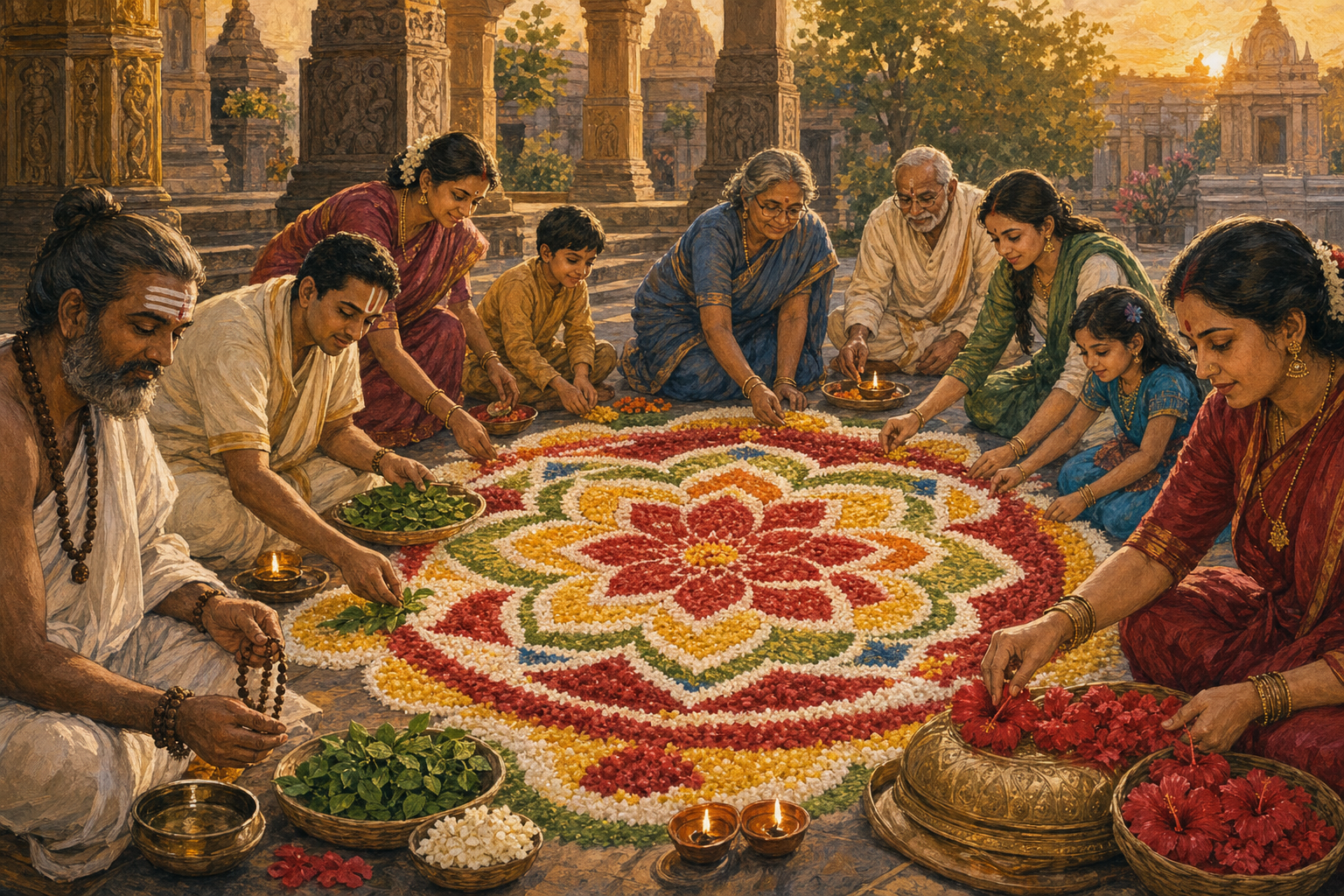
The Hindu civilizational field has long made room for plurality. The Rig Vedic expression Ekam sat vipra bahudha vadanti presents truth as one while allowing the wise to speak of it in different ways. The idea of an Ishta, including an Ishta-devata or chosen form of the Divine, gives this plurality a practical home. A person can be firmly rooted in one practice without claiming that every other authentic approach must look the same.
Bhakti, jnana, karma, and raja yoga place different capacities and disciplines at the foreground. Their coexistence does not mean that distinctions are meaningless. It means unity need not depend on uniformity. The useful question is not whether all paths are identical, but whether difference must become hostility.
This distinction becomes especially important when speaking about Buddhism, Jainism, and Sikhism. These traditions developed within the civilizational world of Bharat and share overlapping concerns with Hindu traditions, including karma, ahimsa, meditation, ethical discipline, and teacher-disciple transmission. They also maintain distinct disciplines, histories, authorities, and goals. Shared vocabulary does not guarantee an identical meaning in every tradition.
Use two sentences whenever unity is at risk of becoming erasure. First identify the kinship: these are Dharmic traditions of Indian origin with centuries of interaction and overlapping ethical and philosophical concerns. Then protect the distinction: Hinduism, Buddhism, Jainism, and Sikhism are not interchangeable names, and each community should be allowed to state its own identity.
Legal terminology needs the same restraint. Article 25 of India’s Constitution uses an inclusive construction of Hindu in a particular explanatory context involving Buddhists, Jains, and Sikhs. That limited legal mechanism is not a declaration that four traditions have the same theology. When a constitutional term appears in debate, identify the clause and purpose before drawing civilizational conclusions from it.
Before applying any umbrella to a mixed community, check three things:
- Scope: Are you discussing a shared civilizational history, or making a claim about doctrine and practice?
- Purpose: Is the umbrella needed for cooperation, education, public policy, or historical description?
- Self-identification: Have the people concerned accepted the name, or is it being imposed on them for someone else’s argument?
If the scope is broad and cooperative, Dharmic traditions is usually safer than declaring every participant Hindu. If the subject is specifically Hindu theology, ritual, scripture, or institutions, say Hindu. Precision protects unity because it removes the fear that cooperation requires surrendering distinct identity.
A short FAQ for difficult terminology questions
Which term should I use for myself?
Use the term that is both truthful and intelligible in the setting. Hindu is usually best for a public religious or civilizational identity. Sanatana Dharma is more exact when you are explaining the enduring principles behind your life. If a lineage or school defines your actual practice, add its name rather than expecting the umbrella to convey it.
Is Hindu merely a foreign or geographic label?
It began primarily as an external geographic and civilizational designation associated with Sindhu, but its use did not stop there. It developed into a communal, cultural, religious, and eventually self-adopted identity. Its origin explains why the term is broad; it does not prove that present Hindu identity is false.
Are Hinduism and Sanatana Dharma exact synonyms?
They overlap, but they are not exact synonyms in every context. Hinduism ordinarily names the publicly recognised religious and civilizational field. Sanatana Dharma foregrounds the timeless order, obligations, practices, and aims understood to animate a dharmic life. Many Hindus use both because each supplies something the other does not.
Should Buddhists, Jains, and Sikhs be called Hindu?
Do not apply that identity to them without qualification or consent. Dharmic traditions of India acknowledges civilizational kinship while preserving their distinct names. A context-specific legal use of Hindu should not be converted into a blanket theological or personal designation.
The next time someone asks you to choose one label, answer the level of the question first. Use Hindu where a public identity is needed, Sanatana Dharma where enduring principles are at issue, and the precise school or lineage where practice matters. Then let the name point beyond itself: toward ethical discipline, inquiry, compassion, and the work of self-realisation.
References
