

When trust breaks in a family, temple, association, or neighbourhood, you can feel trapped between two bad choices: remain silent for the sake of harmony, or pursue punishment until the conflict consumes everyone. Dharmic justice refuses that choice. It asks you to stop harm without hatred, establish the truth without humiliation, and demand repair without treating any human being as permanently beyond reform.
The practical sequence is clear: protect whoever remains at risk, identify the duty that was violated, require meaningful restitution, correct the conditions that enabled the wrong, and make reintegration depend on demonstrated change. That is how justice becomes social renewal rather than another turn in a cycle of grievance.
Begin with what must be restored
Punishment asks, “What should the wrongdoer suffer?” Dharmic justice begins one step earlier: “What has been disturbed, and what would put it right?” The distinction matters. A penalty can be imposed while the victim remains unsafe, the loss remains unpaid, the institution remains corrupt, and the same conduct remains easy to repeat.
Dharma is larger than a rulebook. It concerns the duties and relationships that sustain life. Karma concerns the consequences generated by intentional conduct. Ṛta points to the deeper regularity within which life remains intelligible. Together, dharma, karma, and ṛta connect inner character, social responsibility, and an ordered world. Justice therefore has to address more than the visible offence. It must also address the habits, loyalties, incentives, and failures of courage that allowed the offence to grow.
Before deciding on a remedy, write down answers to these questions:
- What conduct must stop immediately?
- Who has been harmed, and what protection do they need now?
- Which duty was violated: honesty, non-harm, stewardship, fidelity, restraint, care, or responsible use of authority?
- What material, relational, or reputational loss can actually be repaired?
- What change would make repetition less likely?
- Who has the legitimate responsibility to oversee the remedy?
If a discussion spends more time protecting the institution’s image than protecting the harmed person, it has already drifted from dharma. If it focuses only on the offender’s intentions while ignoring consequences, it has confused explanation with accountability. Intention matters, but good intentions do not erase foreseeable harm or remove the duty to repair it.
The Dharmic traditions do not collapse into a single doctrine, yet they offer a strong public grammar for this work. Hindu traditions connect right action with dharma, karma, prāyaścitta, and loka-saṅgraha, the cohesion of the world. Buddhism gives close attention to intention, ethical discipline, and the communal order of the Vinaya. Jain thought intensifies the demands of ahiṃsā and uses anekāntavāda to cultivate humility about partial viewpoints. Sikh thought joins remembrance and seva with the courage to confront injustice through the responsibilities associated with miri and piri. Their metaphysical accounts differ, but none reduces justice to revenge.
This shared orientation gives you a useful test: a response is more Dharmic when it protects the vulnerable, tells the truth, restrains predation, requires repair, and preserves a genuine path back to responsible participation. A response is less Dharmic when it conceals harm, rewards loyalty over truth, incites a crowd, or uses spiritual language to preserve power.
Use the least coercion capable of providing real protection

Dharmic restraint does not mean beginning with the gentlest response in every case. It means using no more force than protection and accountability require. When the danger is limited and the person is receptive, correction can begin inwardly or interpersonally. When the conduct is repeated, concealed, coercive, or dangerous, a merely private conversation is inadequate.
A sound response moves through the following forms according to the seriousness of the situation:
- Self-correction: conscience, reflection, prayer, meditation, or counsel leads the person to stop the conduct voluntarily.
- Direct repair: the person acknowledges the specific wrong, returns what was taken, corrects a falsehood, compensates a recoverable loss, or apologises without demanding immediate forgiveness.
- Community accountability: trusted people establish facts, hear affected parties, set conditions for restitution, and monitor whether commitments are fulfilled.
- Institutional protection: a governing body removes access, changes authority, applies proportionate sanctions, and records the decision so that the same failure cannot be quietly repeated.
- Formal intervention: competent public authorities are involved when safety, serious wrongdoing, or legal duties place the matter beyond the proper scope of informal mediation.
Do not treat this as a ladder that must always be climbed from the bottom. If there is violence, a credible threat, coercion, danger to a child or vulnerable adult, serious financial misconduct, or a risk that evidence will disappear, protection comes first. Do not pressure the harmed person into a private settlement, and do not confront a dangerous person alone. Spiritual fellowship is not a substitute for emergency services, safeguarding procedures, courts, regulators, or professional support where those are needed.
For less acute disputes, mediation can preserve dignity while still producing a firm result. The mediator’s job is not to manufacture equal blame. It is to clarify what happened, distinguish verified conduct from assumption, identify the relevant duties, and establish a remedy that can be checked. When one party controls money, status, employment, access to worship, or social belonging, that power imbalance must be acknowledged before anyone calls the process voluntary.
Prāyaścitta is especially useful here when understood as ethical rehabilitation rather than ceremonial escape. A rite, vow, fast, donation, or apology cannot purchase immunity from consequences. Credible atonement has observable parts:
- The person names the action plainly, without passive language or blame-shifting.
- Recoverable losses are restored as far as possible.
- Restrictions remain in place while trust is being rebuilt.
- A disciplined practice addresses the disposition behind the conduct, such as greed, anger, deception, or attachment to status.
- Changed behaviour continues when public attention has moved elsewhere.
Forgiveness and reinstatement are separate decisions. A harmed person may release personal hatred without supporting the offender’s return to authority. A community may welcome someone to worship while still withholding financial control, teaching responsibility, or access to vulnerable people. Reintegration should follow demonstrated fitness for the role; it should not be demanded as proof that others are spiritually mature.
Suppose a temple committee discovers unexplained use of donations. A Dharmic response would secure the accounts, preserve the records, remove unilateral access, establish the facts through a suitably independent review, and give the responsible person a fair opportunity to answer. If misuse is established, the remedy would address restitution, proportionate consequences, and improved controls. If the conduct may require formal reporting, the committee should obtain appropriate professional guidance rather than negotiating secrecy. The wider community can then be told what failed, what was decided, and what safeguard changed without turning confidential details into gossip.
That response is neither soft nor vindictive. It protects the institution without making reputation its highest good. It leaves room for repentance without allowing repentance to become a substitute for repair.
Do not turn karma into an excuse for inaction
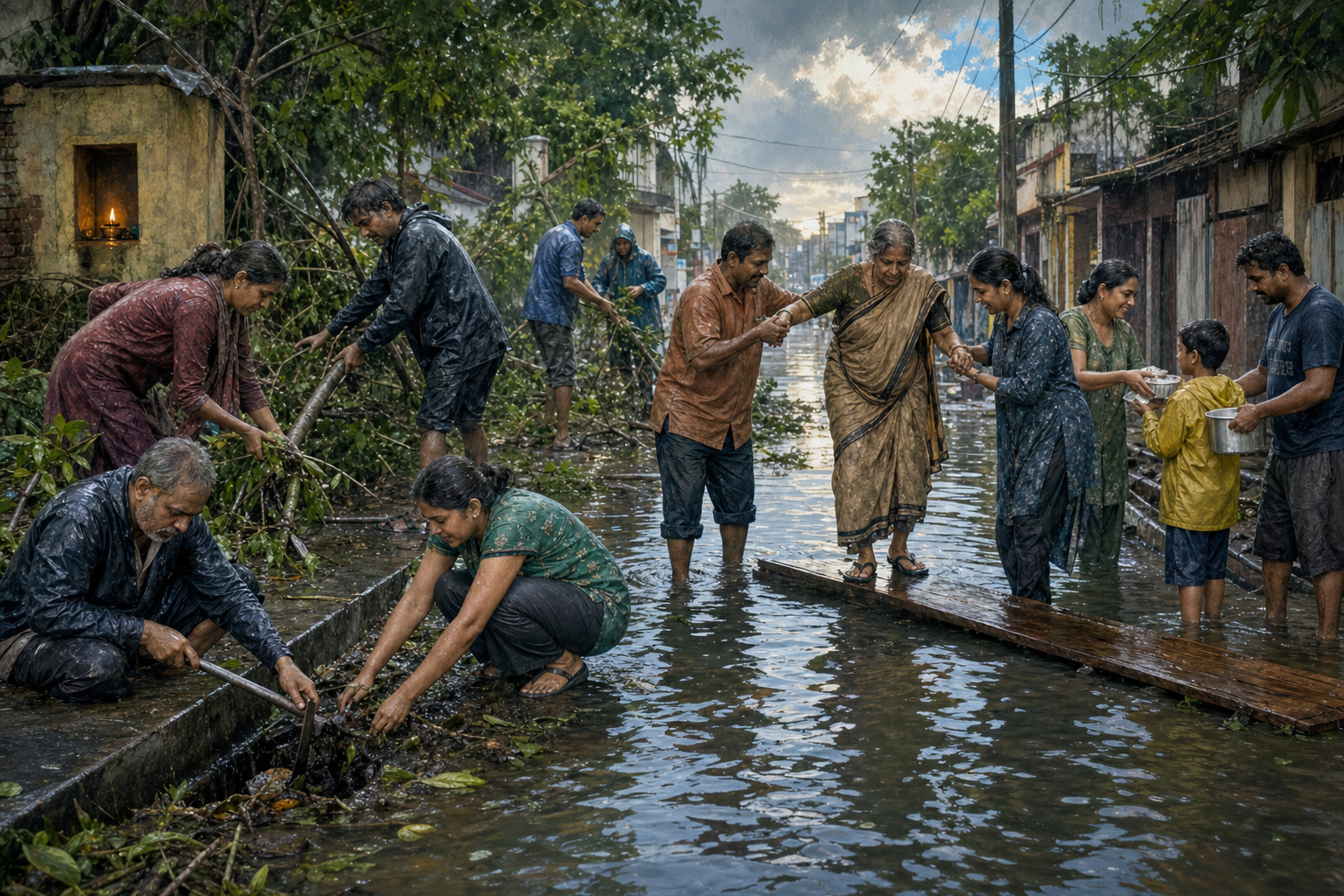
Karma is often invoked precisely where moral clarity is most needed. Someone suffers, and an observer says it must be the result of past actions. Someone exploits others, and the community says karma will eventually deal with the offender. Someone feels trapped by inherited conditions, and karma is presented as a reason to accept them. Each move turns moral causality into social passivity.
You cannot infer a person’s unseen karmic history from their present suffering. Claiming that a victim must have deserved an injury adds another injury: it converts a doctrine of responsibility into a licence for indifference. In a justice process, evaluate observable conduct, available evidence, entrusted duties, and present consequences. Speculation about previous lives cannot establish guilt, excuse neglect, or decide a remedy.
Nor can you outsource your own duty to cosmic law. If a person is being harmed and you hold a role capable of protecting them, waiting for karma is itself an action with consequences. A parent, teacher, trustee, employer, public official, or spiritual leader has responsibilities attached to the role. Refusal to act does not become neutral because it is expressed in devotional language.
The Bhagavad Gita’s vision of dharma-saṁsthāpana is active: when ordinary order fails, protection and the restoration of dharma require intervention. The wider Dharmic architecture places conscience, restitution, community order, and disciplined daṇḍa within one system of accountability. Coercive authority is not the first or only instrument, but it remains necessary where predation will not yield to counsel.
Ahiṃsā must be read with the same seriousness. Non-harm does not require you to preserve the conditions under which harm continues. Restraining access, removing authority, exposing a verified deception, or seeking lawful protection can prevent a greater injury. The Dharmic question is not whether an intervention feels severe in isolation. It is whether the intervention is necessary, proportionate, evidence-based, and directed toward protection rather than vengeance.
Anekāntavāda also needs careful use. Many-sidedness encourages you to ask what your viewpoint may have missed; it does not require you to pretend that every account is equally supported. Humility improves investigation when it prompts better questions, fair hearing, and willingness to correct an error. It obstructs justice when it becomes endless uncertainty after the material facts are clear.
Keep three boundaries in view: compassion does not cancel consequence, context does not erase principle, and uncertainty about ultimate karma does not remove present duty. Those distinctions let you remain spiritually grounded without becoming morally evasive.
Build justice into ordinary community life

A community that discusses ethics only after a scandal is already working at a disadvantage. People usually follow the norms they hear repeatedly, see rewarded, and watch respected peers embody. Consumer culture can use affirmation, repetition, and social contagion to normalise acquisition and status. The same mechanisms can make generosity, restraint, service, and mutual care more socially natural.
Affirmation identifies what the community honours. Repetition moves that value from occasional inspiration into habit. Social contagion makes the habit visible enough to spread. Renewal needs all three. A slogan without practice produces moral theatre. Private practice without fellowship struggles to change public norms. Fellowship without a clear ethical centre can transmit gossip, rivalry, and conformity as easily as virtue.
At the personal level, choose a small discipline you can sustain:
- Use one affirmation that directs attention beyond the self, such as Sarve bhavantu sukhinaḥ.
- Keep five to ten minutes for japa, breath-led dhyāna, or another steady contemplative practice appropriate to your path.
- Perform one act of dāna or seva each week, preferably where another person’s actual need determines the service.
- At the end of the day, ask where fear, anger, greed, or status distorted your judgement and what repair is still possible.
The aim is not to feel virtuous. Abhyāsa makes ethical attention more available when a difficult decision arrives. If your practice does not affect how you handle money, speech, power, disagreement, or responsibility, increase the connection between contemplation and conduct rather than merely adding more ritual.
Families can make the same movement concrete. A brief expression of gratitude at meals affirms sufficiency. A regular practice of asking forgiveness makes acknowledgment less threatening. A shared monthly service commitment teaches that seva belongs to ordinary household life, not only to saints or institutions. Adults must model the difficult part: admitting a mistake without adding an excuse.
For a neighbourhood, temple, sangha, or sangat, a recurring gathering can combine five elements:
- Short silent sitting to reduce reactive speech.
- Collective recitation or remembrance that establishes the ethical intention.
- Mutual learning focused on one duty or one recurring community problem.
- Planning for a specific act of service or institutional improvement.
- A shared meal that allows relationships to grow across status boundaries.
This structure can take different forms. Hindu satsanga may use mantra, kīrtana, and seva. Buddhist sangha may centre mindful attention and compassionate action. Jain fellowship may use pratikramaṇa to examine harm, possession, and the need for forgiveness. Sikh sangat offers the powerful discipline of preparing, serving, and eating langar together. Plural cooperation does not require pretending that these traditions are identical. It requires choosing shared public duties while allowing each community to retain its own theological language and sādhanā.
Service alone, however, does not guarantee accountable institutions. A community can feed strangers generously while mishandling complaints inside its own walls. Pair visible seva with less glamorous disciplines: written responsibilities, more than one person controlling important assets, recusal when decision-makers have a conflict, a known channel for raising concerns, recorded decisions, and follow-up on promised remedies. Goodwill is valuable, but a sound process protects people when goodwill fails.
Measure only what will improve the work. Volunteer hours, participation, food shared, funds restored, commitments completed, and recurring problems can all reveal whether intention is becoming practice. Add brief accounts of reconciliation, de-escalation, or unmet need so that numbers do not conceal human consequences. If an activity attracts many participants but leaves the same vulnerable people unheard, participation alone is not success.
Most importantly, reward truth-telling before a crisis. Leaders can thank the person who identifies a genuine weakness, publish how a problem was corrected, and admit institutional error without waiting for exposure. What a community honours in small moments determines whether people will speak when the stakes become high.
Key takeaways
- Protect the vulnerable before negotiating reconciliation.
- Judge visible conduct through evidence and duty, not speculation about unseen karma.
- Require acknowledgment, restitution, safeguards, and sustained change; an apology alone is not repair.
- Use the least coercive response capable of stopping the harm, but escalate promptly when informal correction cannot protect people.
- Keep forgiveness separate from reinstatement into authority.
- Turn values into culture through affirmation, repeated practice, visible seva, and accountable community processes.
Choose one breach of trust that is within your responsibility. Put four lines on paper: what must stop, who needs protection, what repair is possible, and what safeguard must change. Then identify the person or institution with the legitimate duty to act. That small exercise prevents moral concern from dissolving into either outrage or helplessness.
Pair the remedy with a durable practice: honest review, steady abhyāsa, one recurring act of seva, and a process that lets people raise concerns safely. Social renewal begins when your community learns from repeated experience that truth will be faced, power will be restrained, harm will be repaired, and sincere transformation will still have a path home.
References
- DharmaRenaissance Blog — Divine Lawkeeper: How Dharma and Karma Make God the World’s Most Just Policeman
- Dandavats — Affirmation, Repetition, and Social Contagion: A Dharmic Roadmap from Greed to Renewal
