

You may have reached a practical impasse in Vedanta. If knowledge of Brahman liberates, why are worship, meditation, ethical discipline and the grace of the Lord given so much importance? And if you can already explain Brahman, Atman and moksha, why does ordinary fear, anger or insecurity still return?
The answer depends on what you mean by knowledge and which Vedantic account of liberation you are following. Advaita, Vishishtadvaita and Dvaita agree that ignorance must end, but they do not define the error, the truth that replaces it or the role of devotion in exactly the same way. Once you keep those distinctions clear, you can stop collecting doctrines and begin using your chosen path as a disciplined means of transformation.
Liberating knowledge corrects an error; it does not add another belief
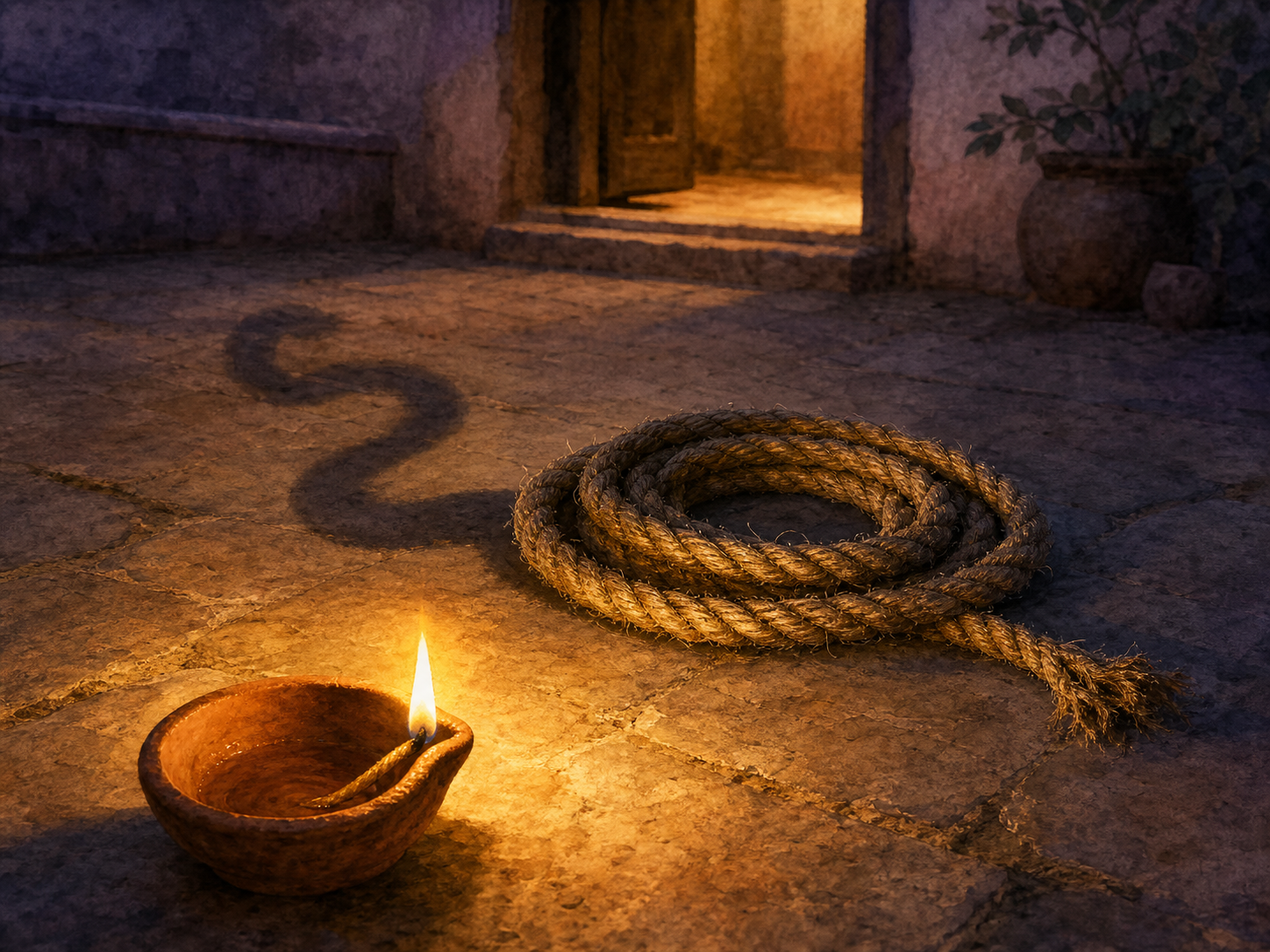
Avidya is more than an empty space in your education. It is a misapprehension already operating in the way you see yourself, the world and the Supreme. You can therefore possess religious information while the underlying mistake remains intact.
The traditional rope-and-snake example makes the mechanism precise. In poor light, a rope is mistaken for a snake. Running, striking or bargaining with the imagined snake cannot solve the problem because the problem is inaccurate seeing. Once the rope is recognized, the fear loses its object. Vedanta applies this logic to bondage: the error is removed by knowledge adequate to the error, not merely by producing a more pleasant experience.
This does not mean that every difficulty is imaginary or that practical action is unnecessary. If a duty has been neglected, you must act. If your conduct is causing harm, you must correct it. The narrower Vedantic claim is that no finite action can, by itself, disclose the ultimate truth about the self and Brahman. Action can change conditions. Knowledge corrects misidentification.
It helps to distinguish three levels that are often collapsed into one:
- Information: You can define Brahman, quote a mahavakya or describe your school correctly.
- Reasoned conviction: You understand the teaching, can answer major objections and no longer regard it as internally incoherent.
- Assimilated recognition: The teaching governs how you understand yourself when attachment, praise, loss, fear or conflict puts pressure on you.
The first two are necessary, but they are not automatically the third. Aparoksha-jnana names knowledge that is not merely remote or second-hand. It is not a spectacular sensation manufactured by meditation. It is the recognition of reality without the old error standing between the teaching and your self-understanding.
This is also why the Upanishadic distinction between apara vidya and para vidya matters. Ordinary disciplines can make you learned and capable. Higher knowledge is that by which the imperishable is realized. The useful question is therefore not simply, How much have I studied? Ask instead: What mistaken identification is this teaching meant to remove, and does that identification still organize my life?
Before adding another practice, complete this sentence in the language of your own sampradaya: Bondage persists because I mistake ______ for ______. If you cannot fill the blanks clearly, your next need is not a more intense experience. It is systematic teaching.
The three major paths do not mean the same thing by realization

Brahman is the unsurpassable reality across Vedanta, often spoken of through the language of sat, cit and ananda and approached as nirguna or saguna according to the teaching context. Yet the schools disagree about the final relation among Brahman, the individual soul and the cosmos. That disagreement changes the content of liberating knowledge.
| Vedantic path | What must be known | The error being corrected | How liberation is approached |
|---|---|---|---|
| Advaita Vedanta | Atman is Brahman; limitation does not define the nondual reality of the self. | Superimposing finitude and separateness upon nondual reality. | Scriptural inquiry ripens through shravana, manana and nididhyasana into immediate knowledge. |
| Vishishtadvaita | Narayana is the Supreme whole, while souls and the cosmos are real modes within that whole. | Misunderstanding the soul’s real nature and its relation to the Lord. | Knowledge is inseparable from loving devotion, surrender and divine grace. |
| Dvaita | Vishnu is Supreme, and the differences among the Lord, souls and the world are real. | Failing to recognize the soul’s dependence upon the Supreme. | Right understanding culminates in unwavering devotion to Vishnu. |
These are not three interchangeable descriptions of one final proposition. Advaita’s identity claim, Vishishtadvaita’s qualified nonduality and Dvaita’s affirmation of real difference cannot all be treated as literally identical conclusions. Their shared concern with ignorance does not erase their metaphysical disagreement.
This matters when you choose a practice. If you follow Advaita, measuring progress only by the intensity of devotional emotion can distract from the inquiry into Atman and Brahman. If you follow Vishishtadvaita, treating devotion and surrender as temporary devices to be discarded after an impersonal insight misrepresents the path. If you follow Dvaita, interpreting dependence upon Vishnu as an illusion awaiting cancellation contradicts the knowledge the tradition means to establish.
The same caution applies to nirguna and saguna. Do not assume that nirguna simply means an empty abstraction or that saguna means a lower truth every school must eventually abandon. Learn how your lineage uses these terms, what it regards as ultimately real and what liberation discloses. A borrowed vocabulary can conceal a major doctrinal contradiction.
When evaluating where you stand, use three questions:
- Do you understand the final relation your path affirms among Brahman, the soul and the world?
- Does your current practice actually serve that understanding, or have you combined methods whose final aims conflict?
- Are you judging your path by its own account of liberation, or by an experience described in another school?
You do not need hostility toward another Vedantic school to practice one coherently. You do need enough intellectual honesty to let each school state its own conclusion.
Action, devotion and meditation have path-specific roles
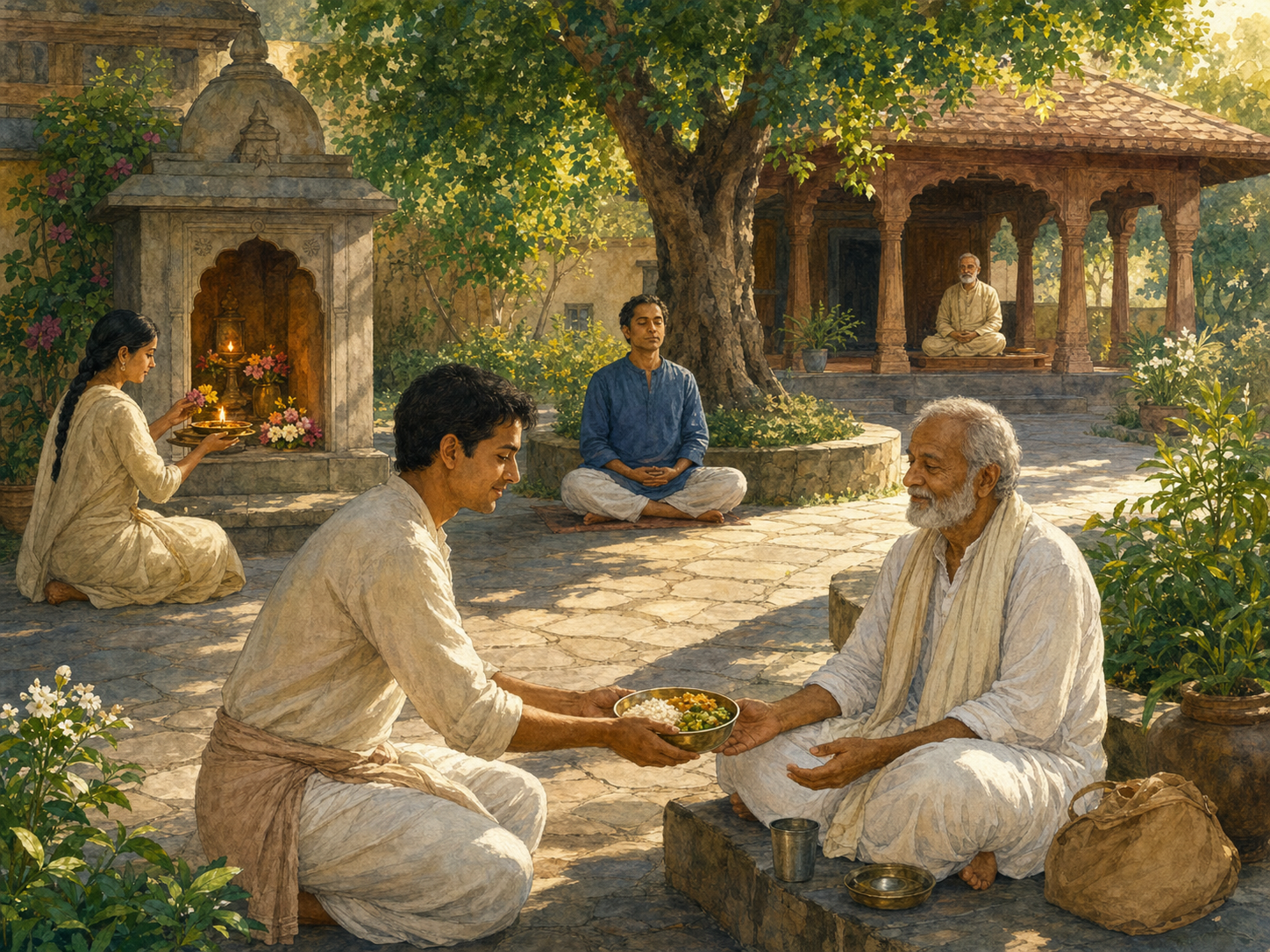
The slogan that only knowledge destroys ignorance expresses Advaita’s causal analysis most sharply. An action can produce, modify, purify or rearrange something, but Brahman is not a product waiting to be made. Karma and upasana therefore do not manufacture moksha. They help create citta-shuddhi: the clarity and steadiness in which the teaching can be heard without habitual distraction or resistance.
That supporting role is indispensable. A mind governed by resentment, compulsion, vanity or constant agitation can turn even a mahavakya into another identity to display. Ethical action reduces inner conflict. Devotional contemplation loosens self-importance. Meditation steadies attention. These disciplines do not compete with knowledge; they make genuine assimilation possible.
Advaita gathers this preparation under sadhana-catushtaya, the fourfold qualification:
- Viveka: discernment between the enduring and the transient.
- Vairagya: dispassion toward finite objects as sources of final fulfilment.
- Shamadishatka-sampatti: the disciplined mental virtues required for steady inquiry.
- Mumukshutva: a serious desire for liberation rather than occasional philosophical curiosity.
Use these as a diagnostic, not as a badge. When study feels sterile, ask where the actual obstruction lies. If you cannot follow an argument because attention scatters, more manana will not help until steadiness improves. If you understand the teaching but repeatedly seek completeness through status or possession, examine vairagya. If liberation is always postponed behind the next worldly achievement, look honestly at mumukshutva.
Vishishtadvaita and Dvaita require a different emphasis. In these paths, knowledge does not mature by leaving the personal Lord behind. Loving surrender and grace in Vishishtadvaita, and devotion grounded in real dependence upon Vishnu in Dvaita, belong to the path’s positive vision of truth. Bhakti is not merely mental preparation for a conclusion that later cancels the devotee-Lord relation.
You can therefore test supporting practices by their intended fruit:
- If karma makes you more possessive about being virtuous, it is feeding the identity it was meant to refine.
- If worship increases humility, steadiness and freedom from self-centred demand, it is doing real preparatory or devotional work.
- If meditation becomes an escape from inquiry, duty or relationship, calmness alone is not evidence of liberating knowledge.
- If study produces sharper arguments but not greater integrity, the teaching has not yet been adequately assimilated.
The practical balance is straightforward: do not ask action to perform the work of knowledge, and do not use the primacy of knowledge as an excuse to abandon the disciplines that make you capable of receiving it.
Move from scriptural teaching to lived recognition
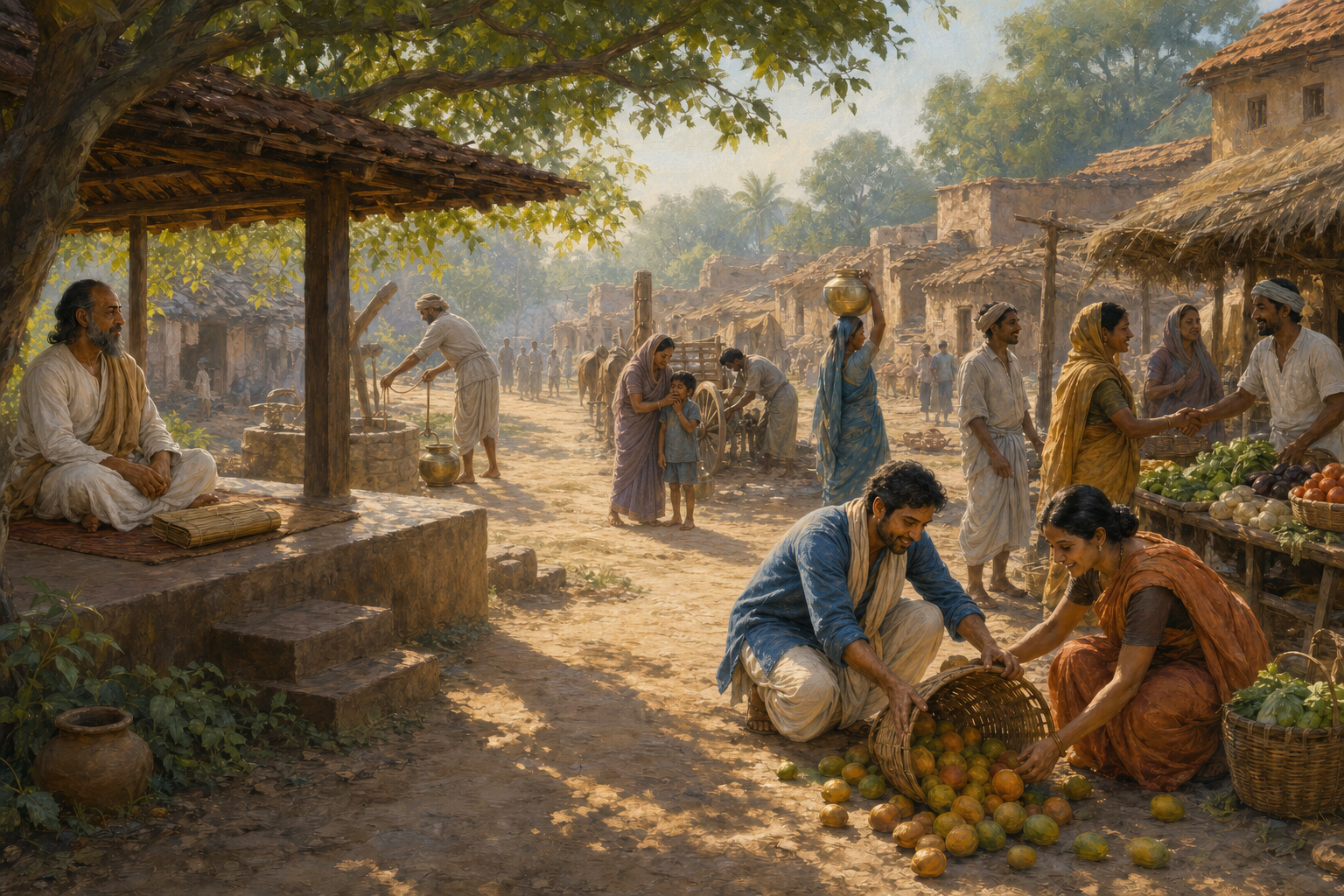
Brahman is not an empirical object that the senses can inspect. Nor can inference, working only from already available observations, independently deliver the final Vedantic vision. Shabda, especially Upanishadic teaching as unfolded within a lineage, functions as the relevant pramana or means of knowledge. Reason remains essential, but it tests and clarifies the teaching rather than inventing Brahman as a philosophical hypothesis.
A reliable study cycle has five movements:
- Identify the proposition. Work with one definite teaching about Brahman, the soul or their relation. In Advaita this may be a mahavakya such as tat tvam asi or aham brahmasmi. Do not begin with a cloud of loosely connected quotations.
- Hear it systematically through shravana. Learn how the words are unfolded within the chosen school. Preserve the tradition’s definitions instead of silently replacing them with meanings borrowed from another lineage.
- State your doubt through manana. Write the objection as a complete sentence. Is the teaching unclear, apparently contradictory or contrary to experience? A named doubt can be examined; vague unease usually survives.
- Resolve the doubt with reasoning. Follow the teaching’s logic until you know why the objection succeeds or fails. Repetition cannot substitute for this step.
- Assimilate through nididhyasana. Contemplate the understood teaching and notice where habitual self-identification continues to override it. The aim is not to produce blankness but to remove the gap between clear understanding and your reflexive sense of self.
Advaita may also employ neti, neti and adhyaropa-apavada. Neti, neti loosens the assumption that any limited, objectifiable feature exhausts the self. Adhyaropa-apavada first uses a provisional explanation and then withdraws its limiting elements once it has served its purpose. These are disciplined teaching methods, not permission to dismiss the world, the body or your duties with a casual declaration that nothing matters.
Keep a simple record after study with three headings: Teaching, Unresolved doubt and Lived contradiction. Under the third heading, note where your conduct still assumes the opposite of what you say you understand. If you affirm inner completeness but collapse when recognition is withheld, that reaction identifies material for assimilation. If you affirm dependence upon the Lord but treat worship as a transaction for controlling outcomes, the contradiction is equally instructive.
Do not confuse passing states with stable knowledge. Absorption, peace or devotional intensity can be valuable, but every state changes. More dependable markers of maturation include less compulsive reactivity, greater inner sufficiency and more spontaneous compassion. They are not standalone proofs of moksha, and they do not replace doctrinal clarity. They show whether the old error is losing its control over ordinary life.
Key takeaways for choosing and practising your path
- Liberating knowledge is not the accumulation of Brahman-related concepts. It is knowledge that corrects the misapprehension responsible for bondage.
- Advaita, Vishishtadvaita and Dvaita agree that ignorance must end but disagree about what is finally known. Do not flatten identity, qualified unity and real difference into one proposition.
- In Advaita, karma, devotion and meditation prepare the mind while knowledge directly removes ignorance. In Vishishtadvaita and Dvaita, devotion to the Supreme belongs intrinsically to the realization being cultivated.
- Use shravana to receive a definite teaching, manana to remove articulated doubts and nididhyasana to assimilate what has become clear.
- Judge practice by whether it reduces the error your school identifies. Unusual experiences, verbal fluency and sectarian certainty are unreliable substitutes.
- Remain with one question long enough to resolve it. Mixing advanced conclusions from several schools often creates the appearance of breadth while preventing depth.
At your next study session, choose one proposition about Brahman and the soul. Write down its lineage-specific meaning, your strongest unresolved objection and one ordinary reaction that still contradicts it. Then decide whether you need clearer hearing, more reasoning or deeper assimilation. That small act turns Vedanta from a collection of elevated words into a path you can actually follow.