
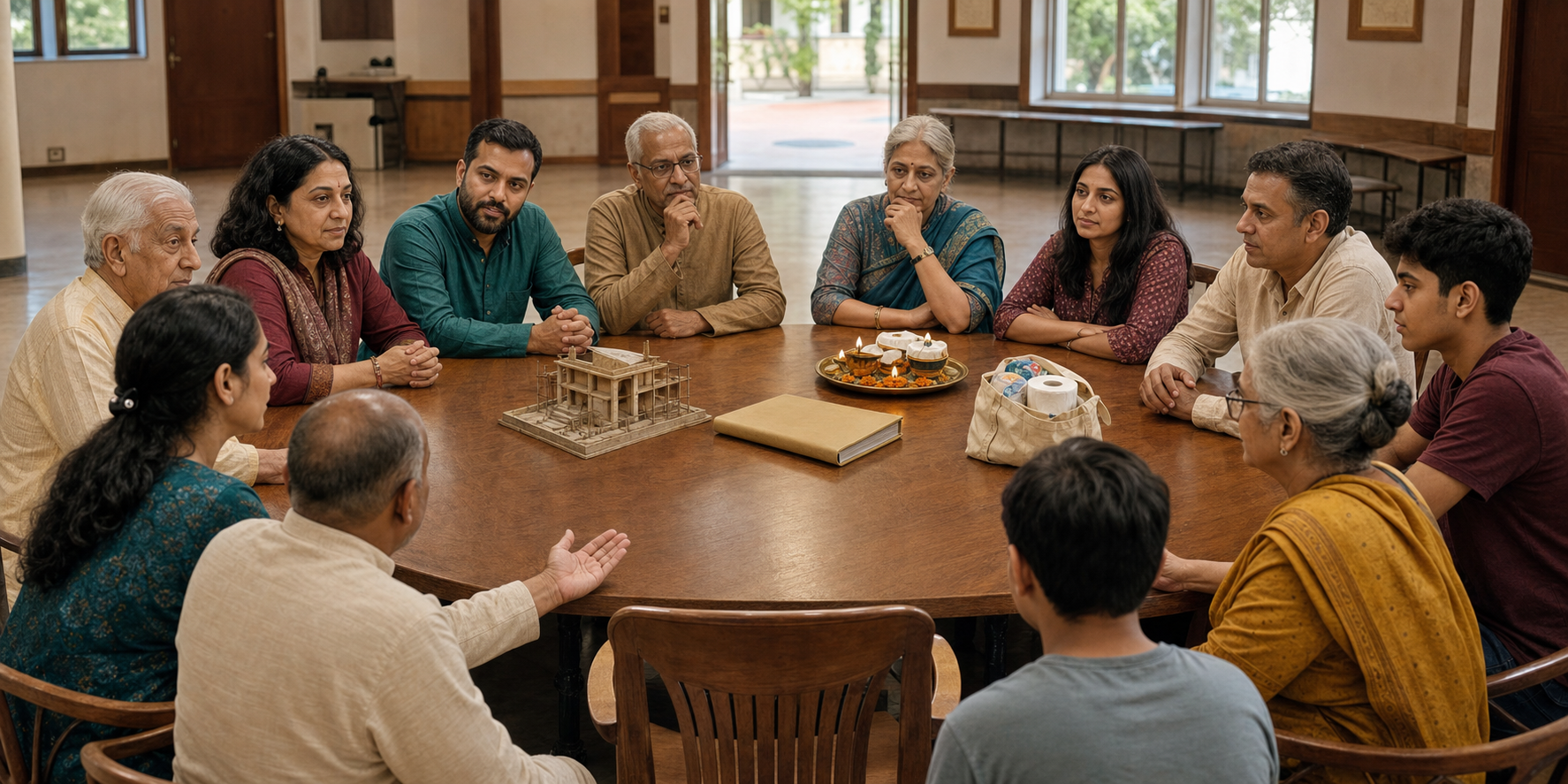
You have a renovation proposal, a scholarship request, a festival budget and a family asking for urgent help on the same meeting agenda. Each demand can be defended in the language of dharma. Your real problem is governance: what comes first, who gets heard and how will you know whether the institution served people rather than merely enlarging itself?
A human-centered approach gives trustees, administrators and community leaders a practical answer. It protects the institution’s religious purpose while making dignity, compassion and accountable seva visible in budgets, programs and decisions. It can guide a temple, matha, vihara, monastery, derasar, gurdwara or inter-Dharmic service body without pretending that these institutions are interchangeable.
Put dignity before institutional prestige
Dharma is weakened when institutional prestige displaces human dignity. The warning sign is not the presence of ritual, architecture or celebration. It is an institution that can describe its ceremonies in detail but cannot say whether vulnerable children are safe, fed and learning.
Human-centered governance therefore needs a hierarchy of attention. Immediate threats to dignity – hunger, interrupted education, preventable exclusion, unsafe conditions and unmet health needs – should be examined before optional spending on display or status. This does not require hostility to ritual. The committee should identify what is essential to worship, teaching and preservation, distinguish it from embellishment, and then make the trade-off openly.
Put a decision rule in the institutional charter: when legitimate uses of resources compete, give priority to the option that prevents serious harm or expands human capability, provided it does not violate the institution’s essential religious purpose. A rule this clear prevents the loudest donor, office-holder or faction from quietly becoming the institution’s moral compass.
Every proposal placed before the governing body should state the human need, the people affected, the consequence of delay, the religious or service purpose, the expected result, the responsible person and the route for complaints. Return a proposal that cannot answer those questions. Approval should not depend on eloquence alone.
Key takeaways
- Governance turns dharmic values into rules for allocation, access, safety and accountability.
- Ritual and seva are complementary duties; the practical task is to protect essentials while challenging prestige expenditure that has no defensible priority.
- Distinct traditions can retain their doctrines and disciplines while accepting a shared minimum duty toward human dignity.
- A service commitment must appear in the annual budget before it can be treated as an institutional priority.
- Communities should be able to see results, question decisions and seek redress without exposing beneficiaries’ private information.
Translate Dharmic values into board-level duties

Terms such as Ahimsa, karuna, dana and seva become useful to a governing body only when they constrain a decision. If a value never changes a budget, safety rule, leadership appointment or service design, it remains ceremonial language.
| Dharmic resource | Governance duty | What you should expect to see |
|---|---|---|
| Sanatana Dharma’s concern for welfare and the Ishta principle | Protect human well-being while allowing legitimate diversity of spiritual paths | Service access that is not conditioned on adopting one form of worship, alongside clear protection for the institution’s own practice |
| Buddhist karuna, dana and disciplined Sangha life | Organize compassion rather than leaving it to occasional sentiment | A named service team, a dependable routine and attention to the suffering the program is meant to reduce |
| Jain Ahimsa and Anekantavada | Minimize avoidable harm and resist the certainty that only one viewpoint can reveal every consequence | A review of unintended harms, respectful consideration of dissent, and serious commitments to people, animals and the environment |
| Sikh seva and sarbat da bhala | Make shared welfare a normal function of community life | Practical nourishment, volunteer service, social equality and logistics that can expand during an emergency |
These principles do not erase doctrinal boundaries. A derasar does not need to become a gurdwara, and a temple does not need to imitate a vihara’s religious discipline. Institutions can borrow governance lessons without borrowing one another’s ceremonies. Langar can teach dependable mass nourishment; Jain animal care can teach a comprehensive application of non-harm; temple schools and clinics can teach the use of sacred endowments for local uplift; Buddhist community programs can teach disciplined care for mental well-being.
This is also where pluralism becomes more demanding than polite language. Anekantavada should lead a committee to test its preferred view against affected people’s experience. Ishta should make room for different spiritual temperaments. Neither principle requires moral indecision. The governing body can maintain firm institutional boundaries while admitting that office, age, wealth or theological confidence does not make one person omniscient.
Make seva part of the operating model
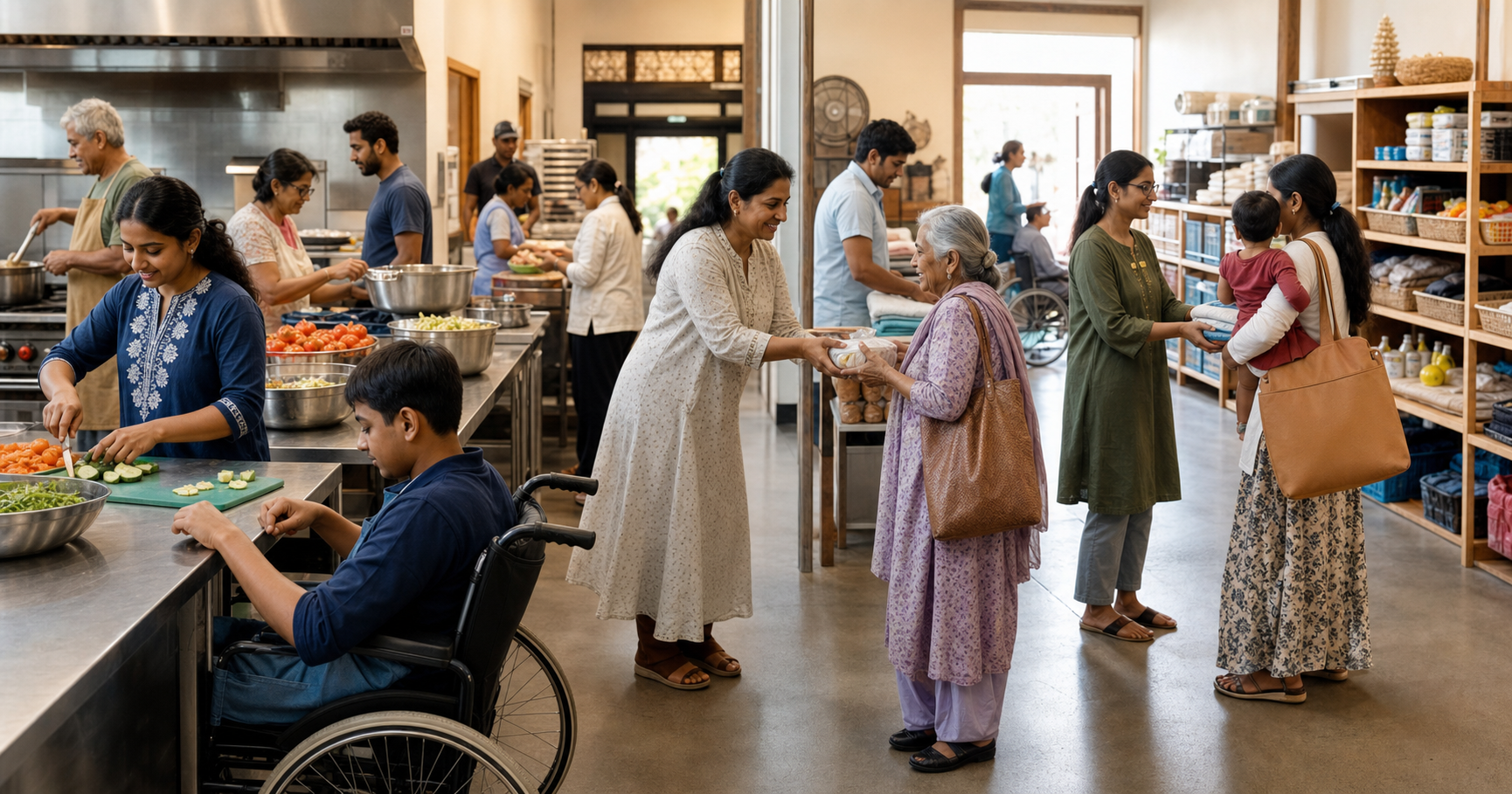
Seva becomes fragile when it depends on leftover money, one energetic volunteer or a burst of generosity around an utsava. Treat it as a core operating function instead. A workable model joins ethical priority, pluralist inclusion, service design and transparent governance.
- Choose a need the institution is equipped to address. Education, nutrition, preventive healthcare, shelter, livelihood support, mental well-being, environmental stewardship and animal welfare are all legitimate fields, but a committee should not launch them all at once. Ask the community council, current service partners and affected families where the unmet need is clearest.
- Adopt a service floor in the annual budget. It should be a declared share of available resources dedicated to defined human-development work, not whatever remains after every ceremonial and capital request is approved. The available material does not justify one universal percentage, so the governing body should choose a realistic floor, explain it and publish whether it was met.
- Define the service before announcing it. Record who may use it, how people enter, what continuity they can expect, who owns delivery, which qualified partners are required, what information will be collected and where a person can complain.
- Connect festivals to the recurring mission. Blood donation, eye care, scholarship distribution, river cleaning and food-security work can surround an utsava and draw volunteers into service. The festival campaign should strengthen an ongoing program rather than create a highly photographed day with no follow-through.
- Coordinate where cooperation adds capacity. Institutions in the same city or district can pool emergency logistics, avoid calendar clashes, share appropriate infrastructure and review common service commitments while keeping their religious identities and finances distinct.
Set guardrails before collecting donations
Good intentions do not remove the need for professional boundaries. A mobile clinic, maternal-care program or mental-health service should work with qualified practitioners and protect confidentiality. Ayurveda, Yoga, meditation and mindfulness may complement care where appropriate, but the institution must not present them as replacements for evidence-based medical or psychological treatment.
Educational work needs equally explicit protection. A scholarship program should watch whether a child remains in school, not merely count the award ceremony. Its design should address economic pressure, safety and risks such as early marriage that can force a girl out of education. Women should also have real routes into program design, financial oversight and leadership; asking women to deliver seva while excluding them from decisions preserves the imbalance under a kinder name.
Digital tools can reduce leakage and make grievances easier to submit, but a beneficiary registry is not harmless merely because it is efficient. Collect only information needed to deliver the service, obtain meaningful consent, restrict access and publish aggregate results rather than identifiable stories. A family should not have to exchange its privacy for food, schooling or care.
Measure human outcomes without bureaucratizing compassion
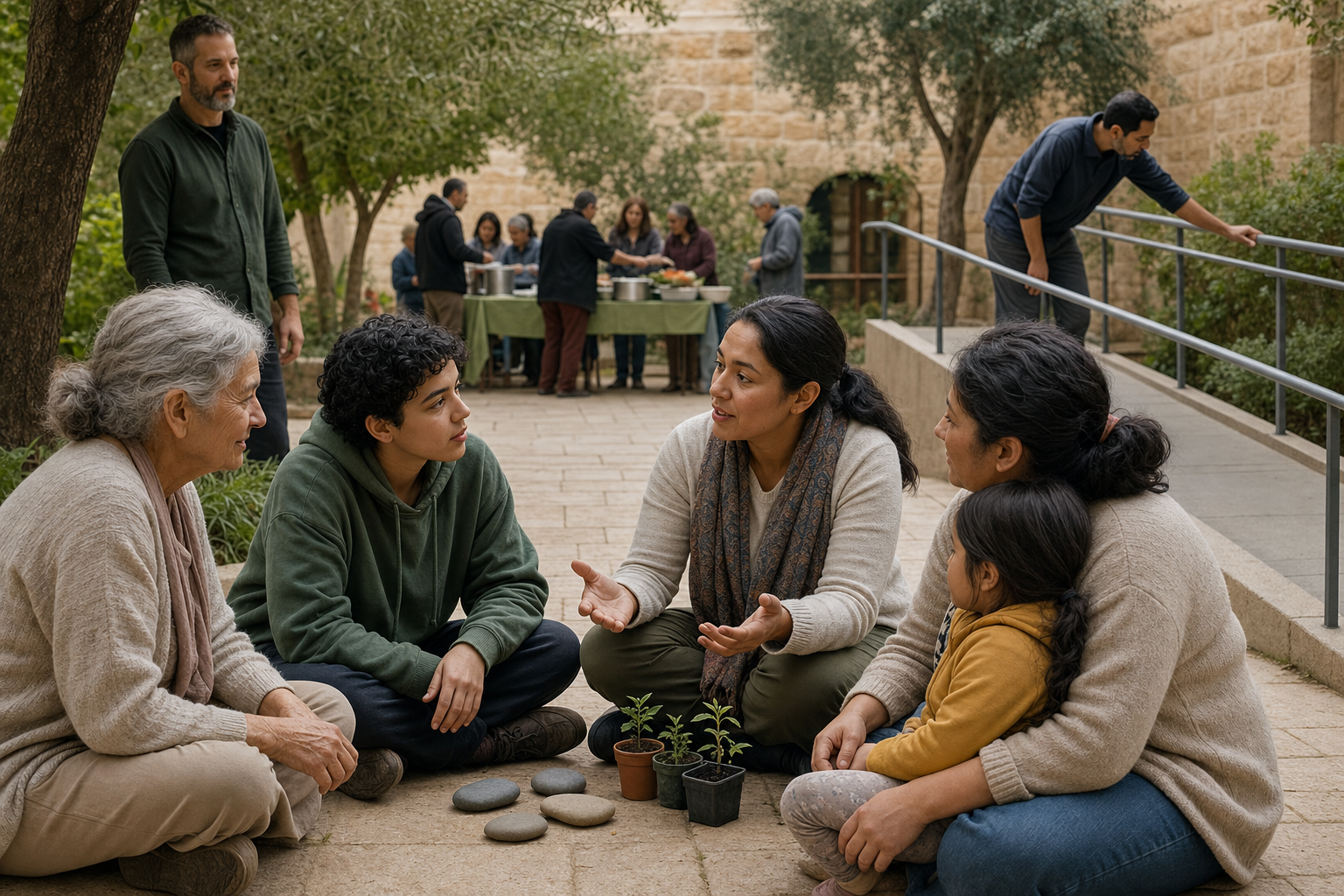
Counting activity is easy. Showing human benefit is harder. Meals served, clinic visits and training enrolments describe output; they do not by themselves show improved nutrition, preventive coverage or employment. Track the service delivered and the change it was designed to support, using measures proportionate to the program.
- For education, record children supported and whether they remain in school.
- For nutrition, record meals provided and, where qualified partners can assess it responsibly, whether nutritional conditions improve.
- For healthcare, record preventive coverage, clinic use and whether people reach appropriate care.
- For shelters, record whether residents move toward safe and stable rehabilitation rather than reporting bed use alone.
- For livelihood programs, record completion and subsequent employment, not only registration.
- For work addressing violence or substance abuse, examine whether the local harm the program targets is actually declining.
The governing body should publish an annual Human Dignity Report. It should identify the needs selected, the resources allocated, the services delivered, the outcomes observed, the commitments missed and the correction planned. It should also show procurement clearly enough for the community to understand how service money was used. An independent audit can strengthen confidence in the financial record, while community oversight tests whether the program met a real need.
A public dashboard can make this information easier to follow, but it should remain modest. Use aggregated figures, explain what each measure means and do not turn suffering into publicity. A dashboard that displays large totals while concealing dropout, exclusion or unresolved complaints is another form of spectacle.
Measurement should discipline compassion, not replace it. If a program misses its intended result, the correct response is not to search for a more flattering number. Speak with the affected people, examine the design and then continue, revise or end the program with reasons recorded.
Give people a voice and begin with one full cycle
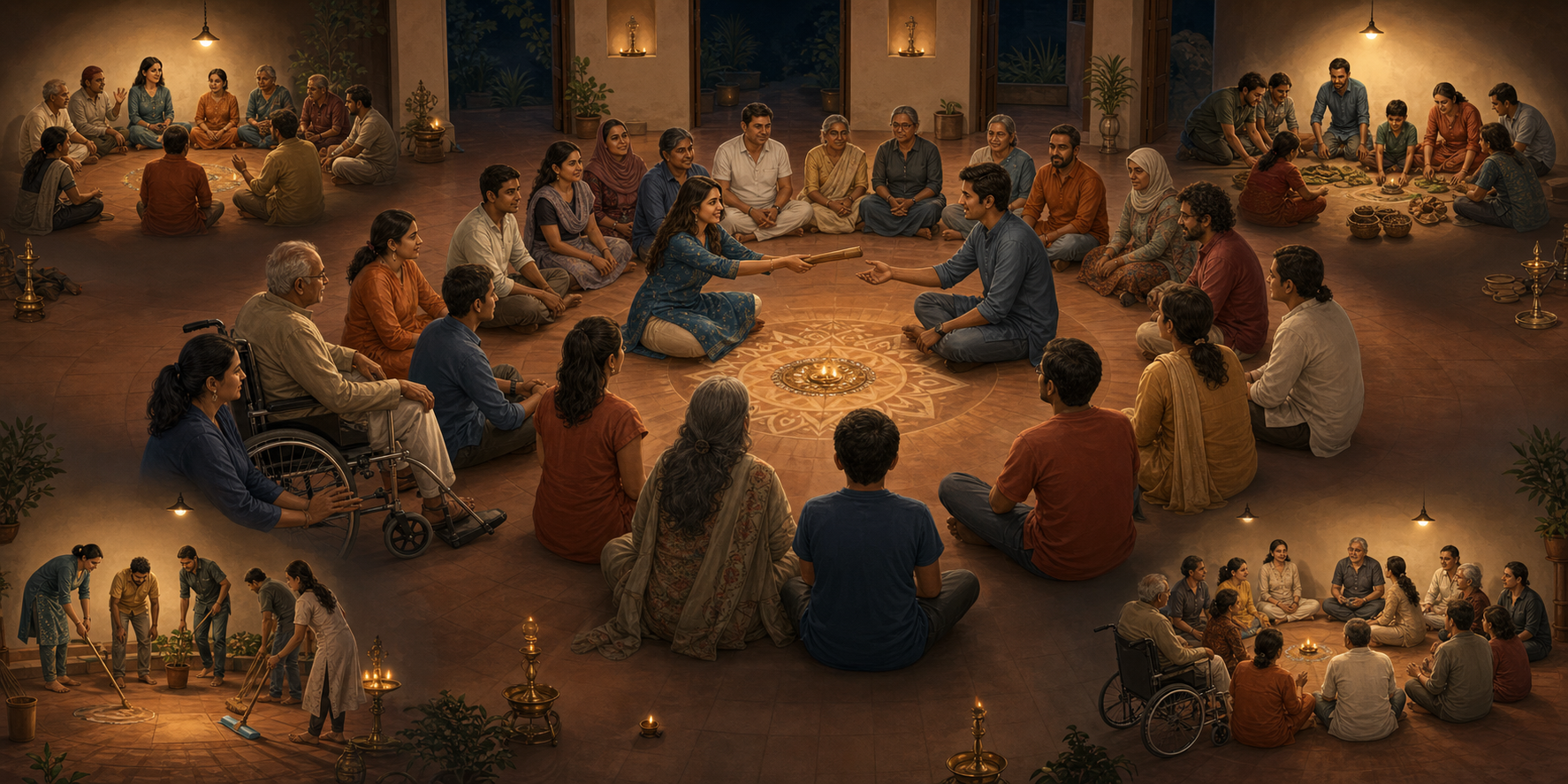
A governing committee cannot become human-centered by publishing figures while keeping every consequential decision inside the same narrow circle. Create a community council that includes women, youth, elders and relevant local civic expertise. Where safety and privacy permit, include people who use the services. State whether the council advises, reviews or must approve particular decisions; symbolic consultation produces symbolic accountability.
The grievance route matters just as much as representation. People should know how to report exclusion, unsafe conduct, misuse of funds or mistreatment without having to confront the person who controls their access to help. Assign responsibility for receiving, examining and closing complaints. Publish the process and aggregate resolution information, but protect identities.
You can begin in the next complete planning cycle:
- Adopt the dignity-first decision rule and place it in the charter or governing resolution.
- Constitute the community council and define its authority before asking it for advice.
- Review the annual budget by separating essential religious functions, recurring seva commitments and optional prestige expenditure.
- Select one recurring service with a named owner, eligibility rules, professional safeguards and an outcome to monitor.
- Choose one festival-linked campaign that recruits people into that recurring service rather than competing with it.
- Open a protected grievance route and explain it wherever the service is delivered.
- Publish the Human Dignity Report, commission independent financial scrutiny and let the governing body record what will continue, change or stop.
Red flags trustees should stop
- A proposal defines success only through attendance, publicity, construction or money raised.
- Beneficiaries can receive help but have no safe way to question its conditions or report mistreatment.
- Personal information is collected without a delivery purpose, meaningful consent or restricted access.
- Traditional wellness practices are marketed as substitutes for qualified clinical care.
- Women and young people supply volunteer labour but remain absent from fiscal oversight and program design.
- An inter-Dharmic initiative demands religious sameness instead of cooperation around a defined human need.
- A festival campaign has a launch plan and photographs but no owner for what happens afterward.
At your next meeting, put one pending proposal through this process before approving it. Ask whom it serves, what harm it prevents, what institutional purpose it protects, how the result will be known and where an affected person can appeal. If the proposal cannot survive those questions, revision is not an obstacle to dharma. It is governance doing its dharmic work.