
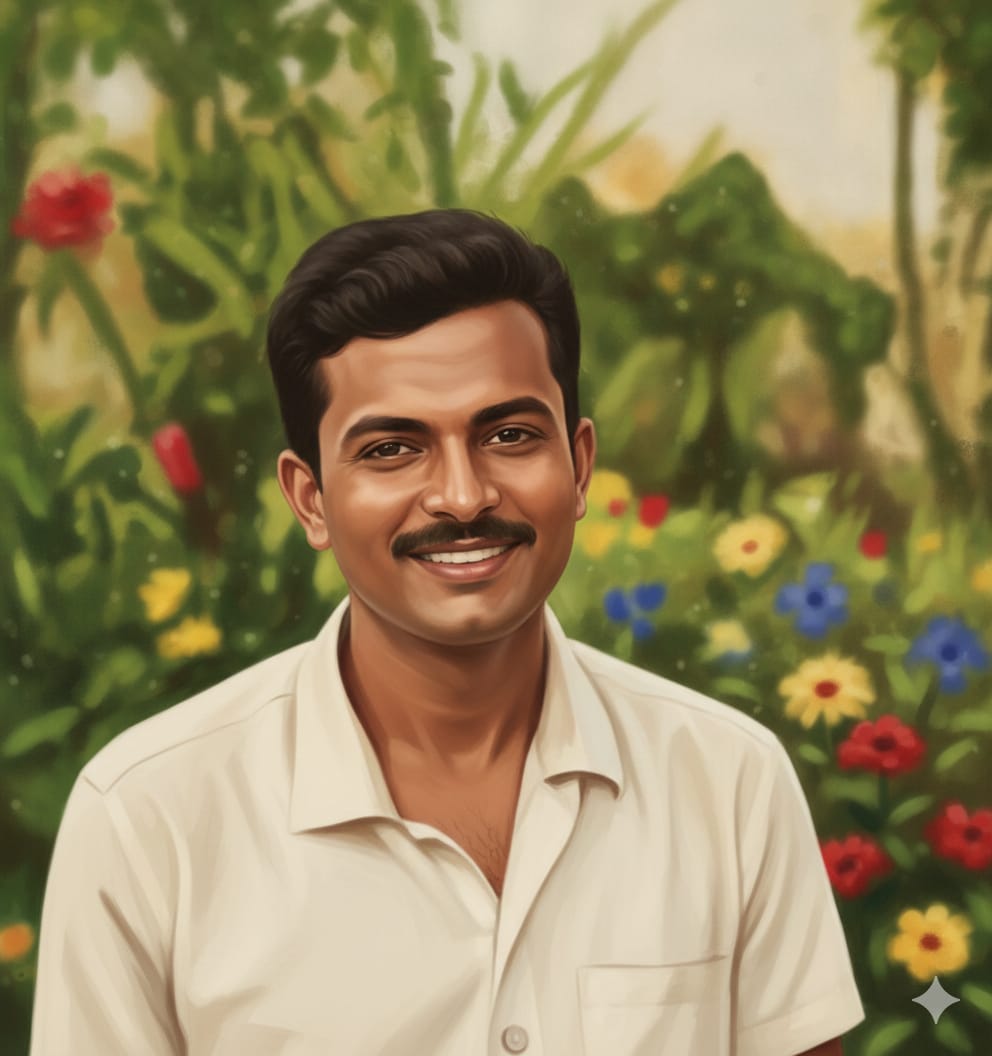
Dhirendra Datta Chowdhury of Noagaon village, better known across Sreemangal as Panu Babu, belongs to a difficult category in the history of Bangladesh: the wartime organiser whose contribution survives in family testimony and community memory but not in the state’s official register of freedom fighters. His life joined several defining experiences of twentieth-century Bengal—British colonial rule, the political tensions of East Pakistan, the 1971 Liberation War, post-independence reconstruction and later struggles over recognition, security and property.
His story is emotionally compelling precisely because it is not a conventional account of battlefield heroism. It concerns the less visible labour that makes resistance possible: mobilising volunteers, arranging elementary training, sustaining political networks, encouraging recruits and serving a damaged community after the fighting ends. It also raises an important historical question: how should a nation remember people whose service was locally known but never successfully translated into official documentation?
The biographical record available for this account is derived primarily from family testimony, local recollection and a testimonial reportedly issued by Professor Muzaffar Ahmed. Several episodes—especially the arrest and torture in East Pakistan, the 1979 assault and the later property dispute—are therefore presented with explicit attribution. The absence of independently cited military, judicial or police records does not make such testimony irrelevant, but it requires a careful distinction between documented historical context and claims that still await fuller archival corroboration.
A local life within the national struggle
The Bangladesh Liberation War emerged from a prolonged constitutional and political crisis. Economic inequality between East and West Pakistan, the Bengali language movement, demands for provincial autonomy and the refusal to transfer power after the 1970 election progressively destroyed the legitimacy of Pakistan’s central government in the east. Following the military crackdown of 25 March 1971, resistance spread among Bengali members of the armed forces, police personnel, political activists, students, workers, peasants and other civilians. This wider chronology is documented by Banglapedia’s history of the Liberation War.
The war was never sustained by a single social group or political organisation. Regular forces, sector-based formations, local resistance units and irregular guerrillas performed different functions. Behind them stood people who recruited volunteers, transported information, found shelter, maintained political morale and connected local communities to training centres. The historical importance of those activities is easy to underestimate because they often produced fewer formal records than military commands and major battles.
Panu Babu’s reported contribution must be understood within that decentralised environment. The account does not establish that he held a formal military rank or commanded a recognised unit. It instead describes an organiser operating through political and community relationships—first in and around Sreemangal and later in camps in India. His experience illustrates how the boundary between political mobilisation, logistical support and armed resistance could become fluid during a people’s war.
Family background and an early education in public life
Dhirendra Datta Chowdhury was born during British rule in Noagaon village of Sreemangal. At the time, the area belonged to the South Sylhet Subdivision of Sylhet district; it now lies in Moulvibazar district. He was the fourth of several children born to Jatindramohan Datta Chowdhury and Bindubasini Datta Chowdhury.
The Datta Chowdhury household was regarded as prosperous and socially established. That position gave the family local visibility, but it also exposed its members to the changing political pressures of the colonial and postcolonial periods. Jatindramohan reportedly served as a local leader of the Indian National Congress during British rule. When the Union Parishad system was introduced in 1960, he became one of the first elected members of the local council.
This family history placed electoral responsibility and political organisation close to Dhirendra’s everyday life. Public service was not an abstract ideal encountered only in books; it was visible in village meetings, local disputes and the practical demands placed upon an elected representative. His later political commitments can therefore be understood partly as a continuation of a household tradition in which local leadership carried social obligations.
Dhirendra began his education at Noagaon Government Primary School and later attended Sreemangal Victoria High School. After completing his secondary education, he was offered a teaching position at his former primary school. He declined because the salary was too low, a decision that reflected practical economic concerns rather than a rejection of education or community work.
He subsequently travelled to Kailashahar in Tripura, India, and completed his Intermediate, or IA, studies at a local college. The cross-border journey was geographically natural for many residents of the Sylhet–Tripura region, where older cultural and family connections survived the political boundary created by Partition. His education in India also gave him experience beyond his village without severing his attachment to Sreemangal.
A government position in India reportedly became available to him, offering the possibility of stability and a predictable career. He nevertheless returned to East Pakistan. Family recollection interprets that decision as an expression of attachment to his homeland. In retrospect, it became one of the pivotal choices of his life: he exchanged personal security for a future marked by political activity, persecution and uncertain income.
Arrest, torture and political persistence
According to the family account, local informants disclosed Dhirendra’s presence to the Pakistani military after his return. He was arrested and transported to Comilla Cantonment. The available narrative does not specify the date of the arrest, the formal allegation against him, the length of his detention or the circumstances of his release. Those omissions prevent a complete reconstruction of the episode.
The family maintains that he was subjected to severe torture, including electric shocks, while in custody. Such treatment reportedly produced lasting physical and psychological consequences. Rather than presenting the allegation as independently adjudicated fact, a responsible biography records it as family testimony consistent with the broader history of political repression in Pakistan while acknowledging that further evidence—detention records, medical documents or corroborating witnesses—would strengthen the account.
The significance of the episode lies partly in what followed. Dhirendra did not withdraw permanently from political life after his release. He resumed work with the National Awami Party associated with Professor Muzaffar Ahmed, commonly identified as NAP–Muzaffar. His persistence suggests that imprisonment altered his health without extinguishing his political convictions.
NAP–Muzaffar belonged to the progressive and left-oriented currents that opposed authoritarian rule and supported Bengali political rights. By 1971, however, resistance required cooperation beyond party boundaries. The account places Dhirendra alongside activists connected with NAP, the Awami League and the Student Union. That collaboration is historically important because it demonstrates how a shared demand for liberation could unite people who retained different ideological identities.
Organising resistance in March and April 1971
During March and April 1971, Dhirendra reportedly helped mobilise local volunteers and arrange basic preparation for prospective fighters. The exact scale, location and curriculum of this training are not specified. It would therefore be misleading to describe him as the commander of a formal military school. His role is better understood as local mobilisation: identifying willing participants, building confidence, connecting people to organisational networks and helping them take the first steps toward active resistance.
These tasks demanded practical judgement. A volunteer needed to be assessed, directed and often moved without attracting the attention of informants or military patrols. Families had to decide whether to shelter organisers or allow young relatives to depart. Food, transport and reliable information mattered alongside weapons. In this environment, trust became a form of infrastructure, and organisers such as Panu Babu reportedly helped create it.
The political crackdown transformed familiar landscapes into contested terrain. Roads that had connected markets and villages became potential military routes; homes could become temporary shelters; the border with India became both an escape route and an entry point into the organised war effort. For residents of Sreemangal and the wider Sylhet region, resistance was therefore experienced not only as a national cause but also as an immediate struggle over the safety of families and neighbourhoods.
Dhirendra later took part in Liberation War activities moving through Moulvibazar, Sherpur and Sylhet. The source narrative does not identify a unit, commanding officer or individual engagement, so his precise operational status remains unclear. What it does preserve is a route of participation and retreat as Pakistani forces expanded their offensives.
Heavy bombardment, encirclement and the superior weaponry of the Pakistan Army forced many early resistance groups to withdraw. This was a national pattern rather than evidence of a collapse in commitment. Historical accounts record that dispersed fighters crossed into India, reorganised, trained and later returned through structured sectors or guerrilla networks. Dhirendra’s reported movement into India fits that broader sequence.
Work in India and the human infrastructure of war
India became an indispensable rear area for the Bangladesh war effort. Refugees crossed the border in immense numbers, while young volunteers entered camps for screening and training. The Liberation War Museum records that India provided refuge, logistical support and training assistance, while Indian citizens, political groups and cultural figures also campaigned for Bangladesh internationally.
Within that larger system, Dhirendra reportedly worked in training camps as a political organiser and recruiter. He campaigned for independence, encouraged young people to join the struggle and helped direct newly prepared fighters toward the front. These were not ornamental duties. A guerrilla force depended upon a continuing flow of motivated recruits who understood why they were fighting and where they were expected to go.
His reported activities also reflected the political character of the Liberation War. Training was not limited to the mechanical use of weapons. Volunteers needed an account of the country they hoped to establish and the legitimacy of the struggle they were joining. Political organisers helped translate the national crisis into a comprehensible moral and civic commitment.
The NAP, Communist Party and Student Union jointly organised a special guerrilla force during the war. Dhirendra’s family, however, acknowledges that his name was not placed on its official list. This distinction is crucial: his reported camp work and association with the participating organisations support the family’s account of involvement, but they cannot by themselves prove formal enlistment in the listed force.
Bangladesh achieved victory on 16 December 1971. The achievement rested upon armed resistance inside the country, political direction from the provisional government, civilian support, international advocacy and decisive Indian assistance. For organisers returning from the camps, independence brought relief, but it also opened the much longer task of rebuilding institutions and communities devastated by war.
From liberation to local reconstruction
Dhirendra returned to Noagaon after independence and became involved in local development. The transition from wartime mobilisation to village reconstruction reveals continuity in his public life. Both required cooperation, credibility and the ability to persuade residents that collective effort could improve their circumstances.
In Bangladesh’s first Union Parishad election in 1973, he contested for membership under the Fish symbol. He won by what the family describes as a substantial margin. The result suggests that his reputation extended beyond a narrow party circle and that voters associated him with service during a formative period in the new republic.
As a Union Parishad member, he became known locally for honesty, integrity and attention to public welfare. Local government rarely produces dramatic historical scenes, yet it shapes daily life through roads, sanitation, dispute resolution, relief and access to public institutions. His elected service gave practical expression to the ideals that had animated his political struggle.
There is a recognizable human pattern in this phase of his biography. Communities often remember an official less for speeches than for whether he listened, intervened fairly and remained accessible when ordinary people faced difficulties. The endurance of Panu Babu’s reputation indicates that residents judged his public conduct as well as his wartime claims.
Political pressure after 1975
The political environment changed sharply after the upheavals of 1975. Left-oriented organisations, including NAP, entered a difficult period, and Dhirendra’s elder brother, Rasendra Datta Chowdhury, was arrested for political reasons. The family’s experience demonstrates how national shifts in power could enter village life through surveillance, detention and pressure upon politically active households.
Dhirendra remained associated with NAP and continued organisational work. He distributed the Soviet publication Udayan and the party newspaper Natun Bangla, using print as a means of political education. In an era before digital communication, newspapers and periodicals were essential tools for carrying ideological debate from urban centres into smaller towns and villages.
Distributing political literature was also a declaration of persistence. It kept local networks active and exposed the distributor to criticism or retaliation. Dhirendra’s commitment cannot be assessed solely by whether every position promoted in those publications proved correct; historically, it demonstrates his continuing belief that citizens should be politically informed and organised.
In 1979, an eight-party alliance organised a procession near Sulav Bhandar in Sreemangal’s New Market. According to the account preserved by the family, activists associated with the Bangladesh Nationalist Party attacked the march and assaulted Dhirendra. Rasendra, observing the violence from a distance, reportedly rushed forward to protect his brother and was beaten as well.
The family later understood Rasendra to have been the principal target, although both brothers suffered in the incident. This interpretation should be treated as testimony rather than a judicial finding in the absence of cited case records. Even with that limitation, the episode belongs to a broader history of political violence in which public processions became sites of intimidation and rival activists were treated as enemies rather than democratic opponents.
Rasendra’s subsequent career provides another dimension to the family’s political legacy. In 1983, during the military rule of President Hussain Muhammad Ershad, he was elected Chairman of Sreemangal Union Parishad. Local residents reportedly continued to remember the development projects undertaken during his tenure. The brothers’ combined record linked political conviction with an enduring interest in village administration.
A life deliberately kept modest
Dhirendra never married. Although he was born into a prosperous and respected family, he chose a comparatively modest way of life. The secure teaching and government careers once available to him might have produced greater financial stability, but he repeatedly placed political work and public service ahead of personal advancement.
That decision should not be romanticised to the point of concealing its cost. Political commitment without stable income can lead to dependence, limited healthcare and vulnerability in old age. His later hardship was not merely a dramatic conclusion to a heroic story; it exposed the material insecurity that can confront people who spend their most productive years serving movements and communities without building personal reserves.
Local descriptions consistently emphasise his courage, accessibility and honesty. These qualities explain why the affectionate name Panu Babu survived more strongly than an official designation. A familiar name can function as a form of community recognition, carrying memories of conduct that no certificate fully captures.
The difficult machinery of freedom-fighter recognition
Official recognition is not simply a ceremonial matter in Bangladesh. Gazette inclusion can establish legal status, public honour and access to state benefits. It also creates an authoritative record for later generations. Exclusion therefore has both practical and historical consequences, especially when witnesses die and private documents deteriorate.
The government accepted online applications for enlistment between 6 October 2013 and 31 October 2014, according to the National Freedom Fighters Council, or JAMUKA. Applications were intended to move through local verification, evidentiary review and recommendations before possible gazette publication. This procedure shows why awareness, health, documentation and organisational follow-up could determine whether a claim entered the formal system.
By 2014, Dhirendra was seriously ill and unable to complete the online application process, according to his family. Relatives also acknowledge that they did not possess sufficient awareness of the procedure or pursue the organisational follow-up needed to place his case before the authorities. His exclusion was therefore not attributed to a formal finding that he had played no wartime role; rather, his claim was never successfully converted into an approved application.
A second problem concerned the roster of the NAP–Communist Party–Student Union special guerrilla force. The family states that Dhirendra’s name was never entered on the official list, despite his political association and reported camp activities. Once recognition became dependent upon individual applications and established rosters, that omission acquired consequences far beyond the administrative circumstances in which it first occurred.
The politics of these lists became nationally contested. A 2013 gazette recognised 2,367 members of the joint special guerrilla force, but that recognition was cancelled in 2014. In 2016, the High Court directed the government to restore their status, as reported by The Daily Star. The dispute illustrates how organisational membership, gazette publication and procedural decisions shaped the official memory of the war.
This wider legal history does not automatically establish Dhirendra’s eligibility because his family concedes that his name was absent from the relevant force list. It does, however, clarify the bureaucratic environment surrounding his case. Recognition depended not only upon what a person did in 1971 but also upon whether that service appeared in records capable of surviving later verification.
The family continues to preserve a testimonial issued by Professor Muzaffar Ahmed, President of NAP and an adviser to the wartime provisional government. The document reportedly certifies Dhirendra’s Liberation War contribution. Its evidentiary value depends upon its wording, date, signature, provenance and relationship to other records, but it is plainly an important starting point for historical investigation.
A rigorous preservation effort would include high-resolution scans of both sides of the testimonial, a physical assessment of its paper and ink, a complete transcription and comparison with authenticated documents signed by Professor Muzaffar Ahmed. Testimony from surviving camp associates, electoral records from 1973, contemporary party correspondence and local newspaper archives could provide additional corroboration. Such work would serve historical accuracy whether or not it eventually produced state recognition.
Property insecurity and late-life hardship
The family describes another period of insecurity beginning after 2004. It alleges that a group led by local figures identified as Joynal and Harun, and encouraged by influential interests in Noagaon, attempted to take control of property belonging to three unmarried siblings. Family members say they were intimidated into signing legal documents on a 13-inch stamp.
According to the same account, former Sreemangal Municipality Mayor Md Ahad Mia and officers of Sreemangal Police Station intervened, preventing the immediate attempt and arresting people allegedly involved. The family further claims that efforts to obtain the property continued. Because no deed, police report, case number or court judgment is supplied in the source material, these statements should not be interpreted as established findings against any named person.
The episode nevertheless reveals a form of vulnerability frequently faced by elderly or unmarried property holders. Ill health, weak legal awareness and the absence of immediate descendants can make even socially respected families susceptible to coercion. In Dhirendra’s case, the alleged dispute deepened the contrast between a life devoted to public welfare and the insecurity surrounding his own household.
His final years were marked by serious illness and financial difficulty. He received only limited medical treatment, according to the family. The long-term effects attributed to earlier torture, a lifetime without secure employment and inadequate resources in old age formed a painful final chapter.
Dhirendra Datta Chowdhury died on 20 December 2015. He left no spouse or children to organise a public campaign around his memory. The responsibility for preserving his testimonial, recounting his experiences and seeking a fair assessment of his contribution consequently fell to relatives and the local community.
How Panu Babu’s legacy should be assessed
A careful assessment should avoid two opposite errors. The first would be to treat the absence of official recognition as conclusive proof that Dhirendra performed no wartime service. The second would be to convert every remembered episode into verified fact without examining records. Historical justice requires empathy, but it also requires disciplined attention to evidence.
The strongest available interpretation is that he was a politically committed local organiser whose wartime work was remembered by his family and community, reportedly certified by a senior NAP leader, but never incorporated into the state’s completed recognition process. That formulation honours the evidence that survives while remaining candid about what has not yet been independently demonstrated.
His post-war record strengthens the broader portrait of service. Election to the Union Parishad in 1973, continued political education and a reputation for integrity show that his public commitment did not end with victory. Liberation, in his life, appears to have been understood not only as the defeat of an occupying military but also as the continuing construction of accountable local institutions.
Panu Babu’s story also expands the meaning of participation in the Liberation War. Battles and commanders remain essential to military history, but resistance also depended on recruiters, couriers, political educators, camp workers, hosts and village organisers. When such roles are omitted, the historical record can become narrower than the movement that produced independence.
Community memory is not an infallible substitute for archives, yet it is often the place where archival recovery begins. Oral-history interviews with surviving relatives, neighbours, political colleagues and former trainees could identify dates, locations and additional witnesses. Each interview should be recorded with informed consent, preserved in its original language and compared against contemporary documentation.
Local institutions could also assist by preserving Union Parishad election results, meeting books, development records and newspaper reports connected to the Datta Chowdhury family. A publicly accessible digital collection would allow researchers to examine the evidence rather than relying indefinitely upon retellings. Such a project would benefit the history of Sreemangal as a whole, not merely one family.
There is a wider ethical lesson in this biography. Nations need official registers, but administrative lists inevitably reflect the quality of surviving records, the accessibility of procedures and the capacity of families to pursue claims. An unlisted name may represent a rejected claim, an unsubmitted claim, a lost record or an overlooked form of service. Those possibilities should never be carelessly treated as identical.
In Noagaon and across Sreemangal, Dhirendra Datta Chowdhury continues to be remembered as Panu Babu: an honest political worker, a Liberation War organiser and a representative devoted to ordinary people. That memory does not by itself confer legal status, but it remains historically significant. It identifies the values by which his neighbours measured him—courage, integrity, sacrifice and service.
His legacy ultimately reaches beyond the question of whether one name appears in a gazette. It asks whether Bangladesh can preserve the layered history of independence with sufficient care to include local organisers and undocumented contributors while maintaining rigorous standards of evidence. Remembering Panu Babu responsibly means doing both: honouring the testimony that has survived and continuing the archival work needed to test, deepen and secure it for future generations.
Inspired by this post on Hindu Post.

Leave a Reply
You must be logged in to post a comment.