
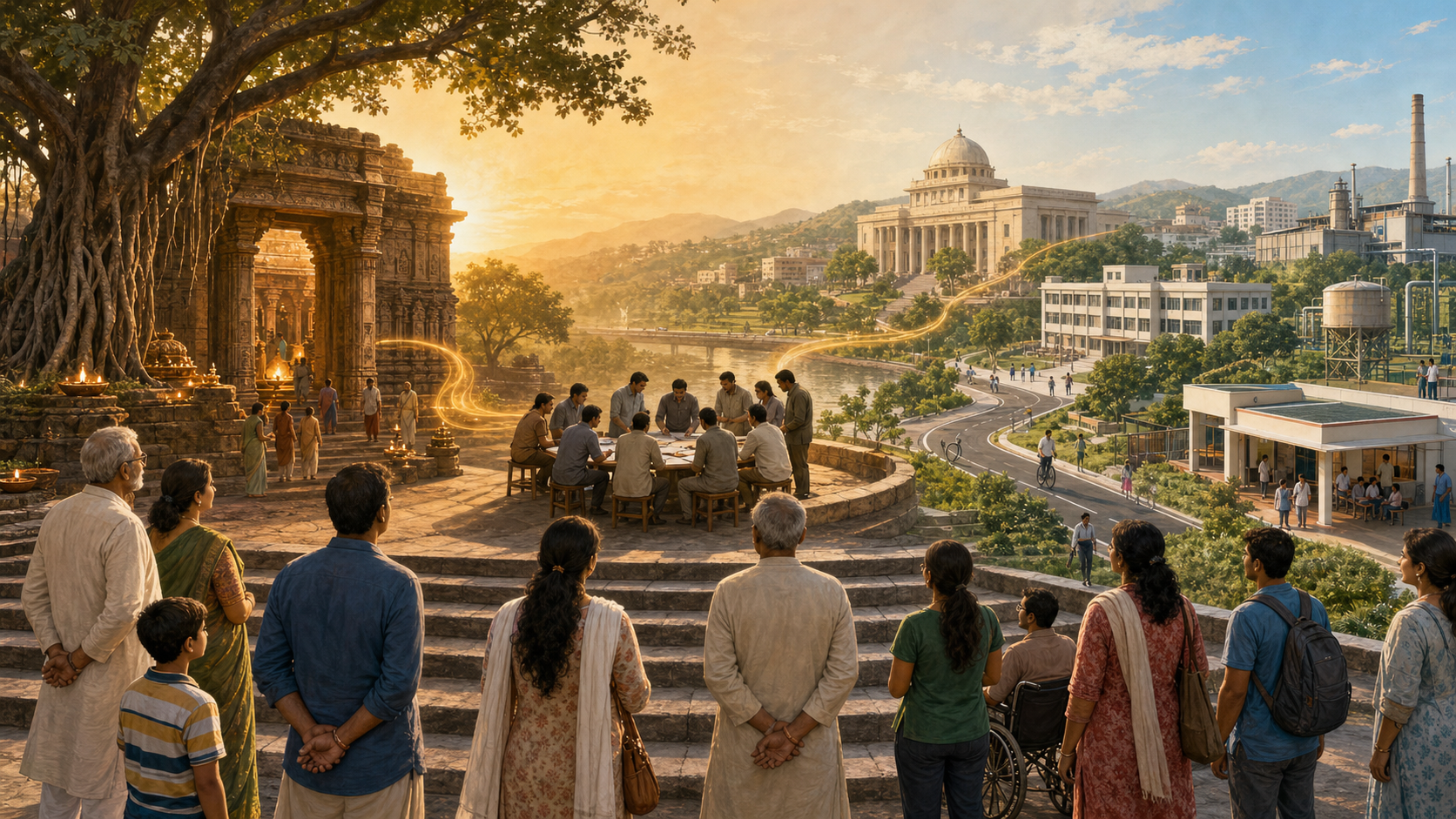
If you support Hindu civilizational confidence but do not want every claim of “true Hindutva” to dictate your political judgement, state politics can be difficult to read. The loudest argument often answers the wrong question: who owns the identity, rather than what those invoking it will do with public power.
You do not have to choose between cultural conviction and political scrutiny. A useful test is to look for three conversions: civilizational confidence into fair institutions, ideological energy into a disciplined party, and an electoral mandate into visible public outcomes.
Separate civilizational purpose, party strategy and state duty
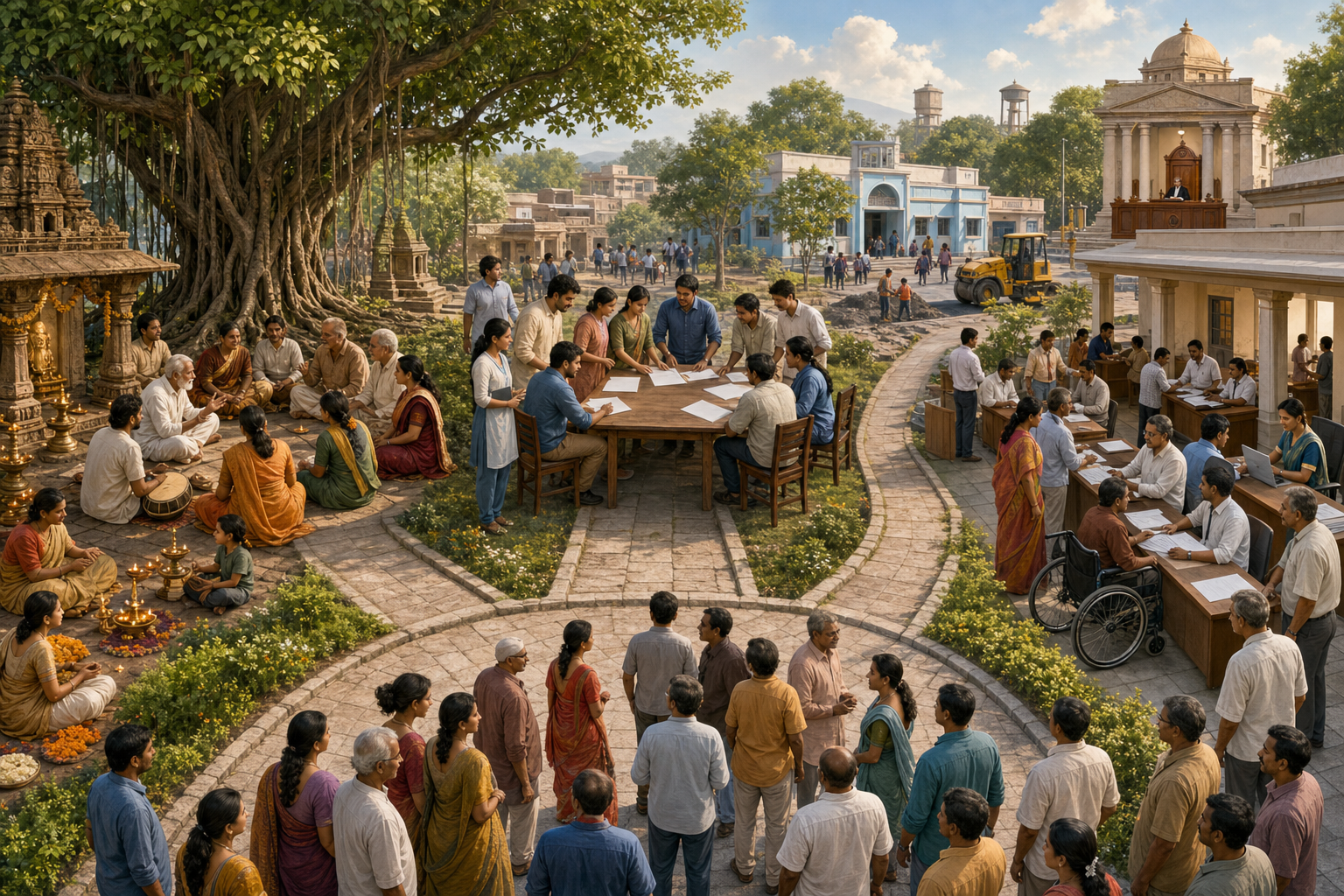
Hindutva can operate as a civilizational commitment, an organizing identity and a governing claim. Those roles overlap, but they are not interchangeable. Confusion begins when a party answers criticism at one level by retreating to another.
| Political layer | The question you should ask | The warning sign |
|---|---|---|
| Civilizational | What cultural inheritance, institution or practice is being protected? | Identity is invoked without a defined objective. |
| Organizational | Can leaders and cadres pursue that objective coherently? | Factional status is presented as ideological principle. |
| Governmental | Which public authority will act, and what outcome will citizens see? | A slogan is used to avoid questions about delivery. |
This distinction protects both the voter and the idea. A failed road project is not automatically a verdict on Hindu civilization. Support for a temple, festival or cultural institution is not automatically proof of administrative competence. A leadership quarrel is not necessarily a philosophical disagreement.
When you hear a Hindutva claim, classify it before accepting or rejecting it. Is it a cultural objective, a party-mobilization strategy or a government commitment? Then ask for the instrument appropriate to that level: a clearly stated principle, an organizational rule, or a policy with an accountable office and a visible result.
Do not let “true Hindutva” become a contest over ownership
In Maharashtra, remarks attributed to Eknath Shinde and a rebuttal from Devendra Fadnavis turned “true Hindutva” into a point of friction within the Shiv Sena-BJP coalition. Partners can share cultural commitments and constituencies while still competing for primacy. That makes the language of authenticity politically potent but analytically weak.
The decisive question is not which leader applies the strongest adjective to Hindutva. It is whether the disagreement clarifies policy or merely rearranges status. A real ideological dispute should reveal a difference in priorities, methods or standards. If no such difference can be identified, the voter is probably watching a competition for ownership of a common political inheritance.
You can test a coalition dispute with four questions:
- What changed? Identify the policy, administrative decision or agreed priority affected by the dispute. If nothing changed, treat the episode primarily as political positioning.
- Who remains responsible? Coalition partners should not use ideological sparring to blur responsibility for transport, policing, rural investment, skills, small-business support or other state functions.
- What is still shared? Ask leaders to state their common cultural and constitutional commitments in the same forum, not through competing fragments of rhetoric.
- When will performance be reviewed? A joint statement matters more when it is connected to public milestones and periodic reporting.
A coalition does not need artificial unanimity. It needs legible disagreement. Citizens should be able to see where the partners differ, what they have nevertheless agreed to deliver and which leader is answerable for each part. Without that clarity, “true Hindutva” becomes a shield against accountability rather than a standard of conduct.
In a growth state, test whether Hindutva can broaden
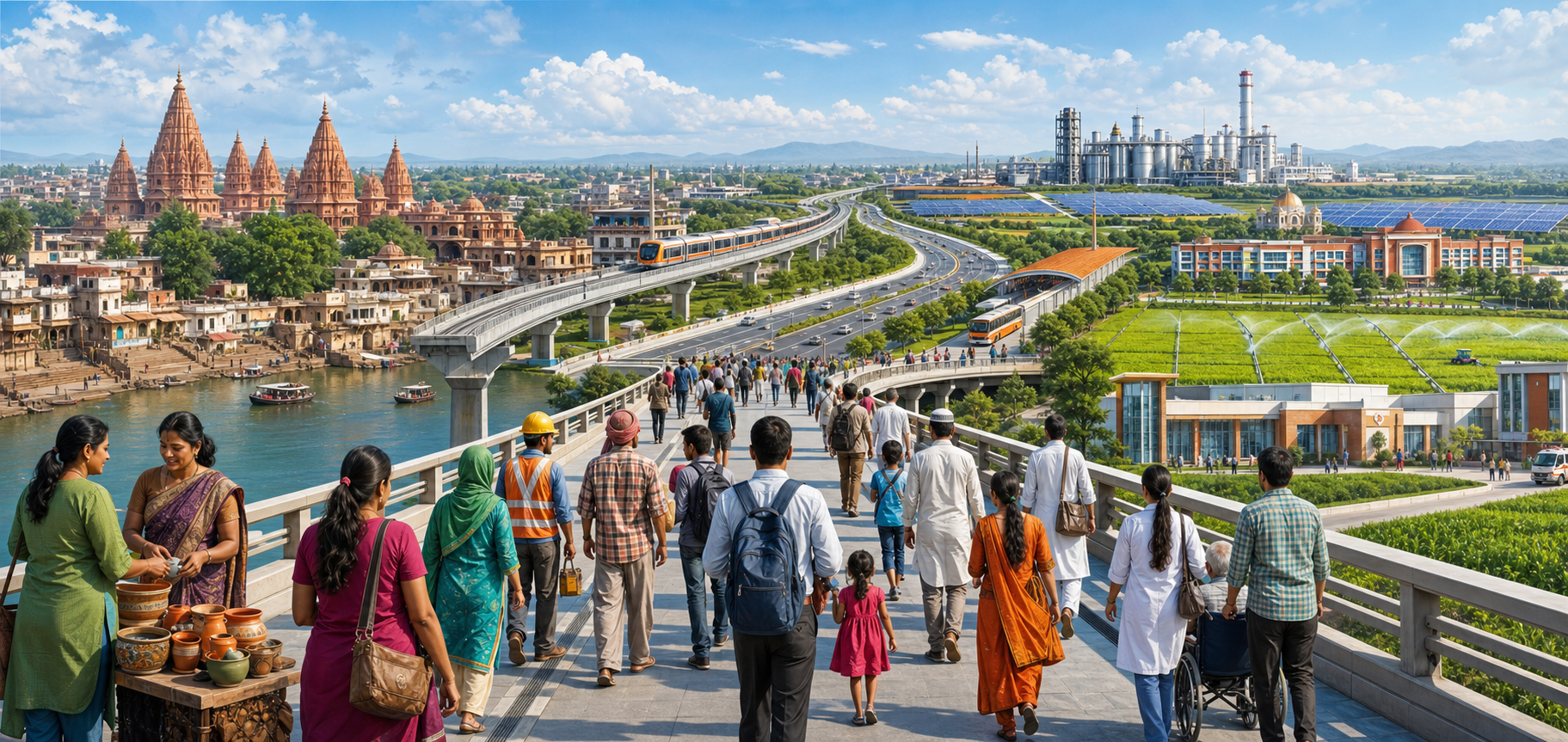
A party seeking durable growth in a state faces a different test. At a Huzurabad party meeting, Union Minister Bandi Sanjay Kumar argued that “Hindutva alone” could energize the BJP in Telangana. That proposition may rally cadres, but mobilization is only the first stage of a state strategy.
The next stage is translation. Cultural confidence must acquire meaning for women, young people, first-time voters, urban residents and rural communities. Employment, education, safety, infrastructure and social protection do not sit outside the ideological project. They determine whether the project can govern rather than merely campaign.
Use four tests when a state unit presents Hindutva as its principal source of momentum:
- The coherence test: Does the party apply its declared principles consistently inside its own organization? Questions concerning the place of figures such as Raja Singh show why leader selection, inclusion and message discipline cannot be treated as secondary details.
- The breadth test: Can the party explain what its agenda means beyond its most committed cadre? Repeating the same slogan to every constituency is not the same as building a broad mandate.
- The localization test: Are urban and rural priorities separately identified, with a clear connection between cultural continuity and material development?
- The durability test: Does public engagement continue through service, policy work and community presence after the mobilizing event has passed?
Organizational inconsistency is especially costly for an ideological party. If leaders say cultural clarity is indispensable while internal decisions appear driven by factional convenience, supporters are asked to apply a standard that the organization itself will not follow. The remedy is not greater rhetorical intensity. It is a transparent explanation of roles, expectations and decision-making.
Apply a Dharmic standard of confidence, restraint and service
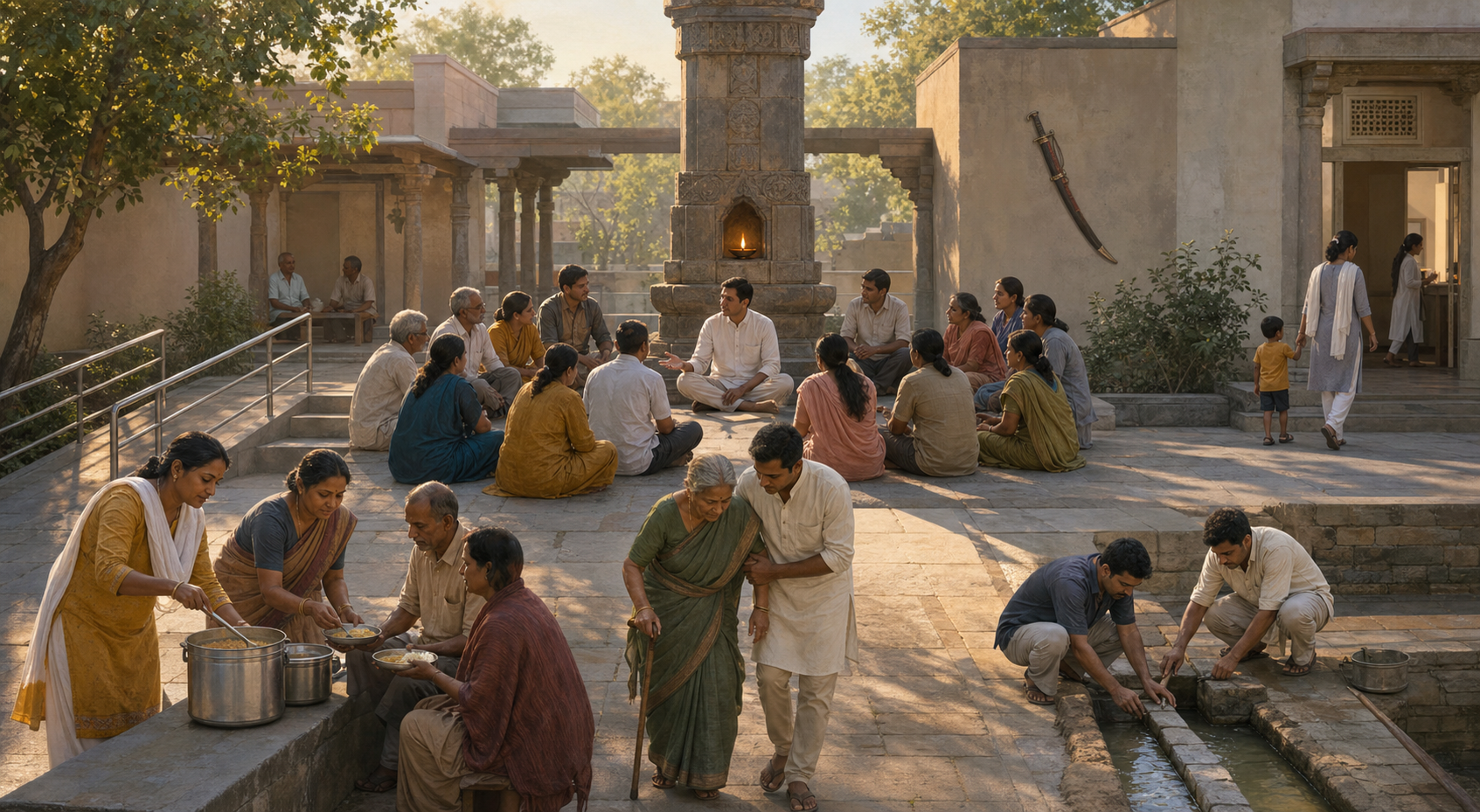
Hindutva is a language of political and civilizational identity. Dharma offers a deeper ethical standard by which the use of that identity can be judged. Keeping the two analytically distinct prevents the conduct of a party from becoming the measure of an entire civilization.
The Dharmic traditions do not share one theology, and their concepts should not be collapsed into a campaign formula. They do, however, offer political disciplines that are useful in a plural society:
- Dharma as responsibility: Authority creates duties. A leader invoking civilization must accept responsibility for the institutions, decisions and consequences under that leader’s control.
- Jain anekantavada: A partial viewpoint should not be mistaken for the whole truth. In politics, this counsels restraint toward claims that one faction possesses the only authentic expression of a shared inheritance.
- Buddhist karuna: The effects of public decisions on human dignity and vulnerability matter. Administrative harshness does not become Dharmic merely because it is wrapped in cultural language.
- Sikh seva and sarbat da bhala: Public service should produce a wider good. A political movement earns trust when its cultural confidence strengthens service beyond its immediate supporters.
This framework does not require Hindus to dilute their civilizational claims. It asks political actors to carry those claims responsibly. Cultural continuity, fair institutions and minority rights need not be treated as mutually exclusive. A Hindu-majority society can protect its inheritance while insisting that public institutions serve citizens consistently.
For any proposed policy, ask two questions together: does it protect or strengthen a legitimate cultural good, and does the state implement it through fair and competent institutions? Passing only the first test produces symbolism without trustworthy government. Passing only the second may produce administration without cultural confidence. A serious BJP-aligned state project must be able to address both.
Key takeaways: a five-question voter test
- What exactly is the cultural objective? Look for a named practice, institution, freedom or civilizational interest, not an undefined appeal to identity.
- What will the state actually do? Ask for the policy, administrative action or public commitment that converts the objective into practice.
- Who owns the result? A minister, department or coalition partner should be identifiable. Shared rhetoric must not mean ownerless delivery.
- Can the organization embody its own message? Leadership disputes, exclusions and alliance tensions should be resolved through intelligible principles rather than shifting convenience.
- Who benefits from success? A durable Dharmic politics should strengthen Hindu cultural confidence while producing order, opportunity, service and institutional fairness for the wider public.
A claim that cannot answer the first question is an identity signal. One that answers the first but not the next two is a campaign promise. One that answers all five is a political programme worthy of continued scrutiny rather than automatic trust.
The next time a leader invokes “true Hindutva” or presents Hindutva as the answer to a state’s political future, write down those five answers. If the mechanism, responsible authority and public outcome remain missing, withhold the blank cheque. For a pro-Hindu voter, that is not ideological hesitation. It is the discipline of requiring political capital borrowed from a civilization to be repaid through responsible government.
References
- Struggle for Hindu Existence – Fadnavis-Shinde “True Hindutva” Clash: Maharashtra Coalition Tensions and Dharmic Unity
- Struggle for Hindu Existence – BJP’s Hindutva Push in Telangana Gains Pace: Bandi Sanjay Calls for Party Unity and Strategy
