

If you are trying to decide whether Joseph Vijay’s TVK government has a distinctly Christian political character, don’t begin with the label attached to it. Begin with the event beneath the label. That is where you can separate a documented intervention from a much larger claim about the nature of an entire government.
The immediate controversy reveals three themes worth watching: caste identity after conversion, demands for state benefits on behalf of Christian communities, and the use of an office-holder’s religious identity to characterise a whole administration. The first two are plainly present. The third remains an inference that requires substantially more evidence.
What JCD Prabhakar actually put before the Assembly
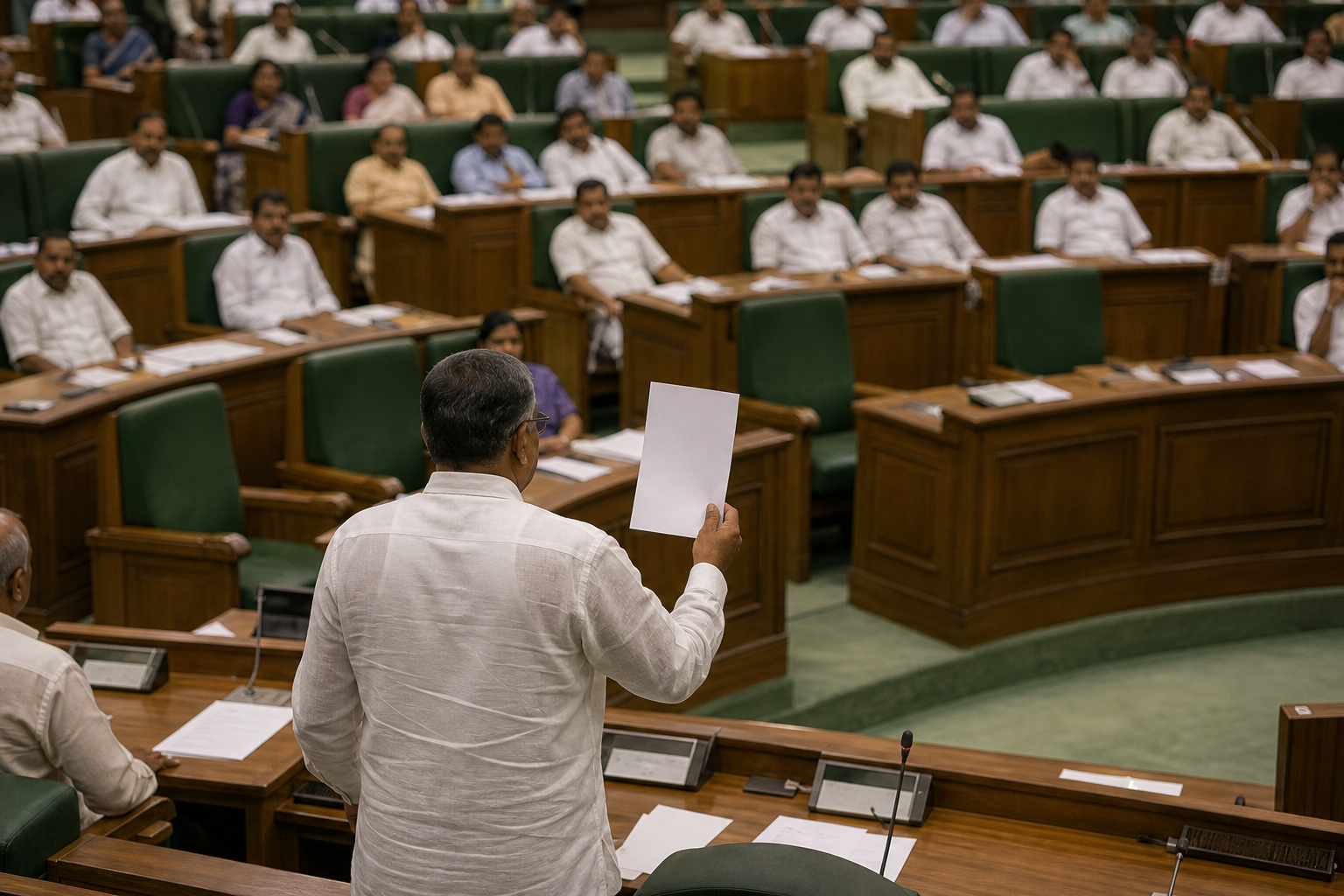
On 28 August 2026, Tamil Nadu Assembly Speaker JCD Prabhakar identified himself as a Vanniyar Christian while advocating reservation benefits for Christians converted from the Vanniyar community. He said he belonged to the Tamil Nadu Deccan Vanniyar Christian Association, recalled personally petitioning former Chief Minister MGR in 1985, referred to later efforts under Jayalalithaa, and urged the present government to respond favourably in connection with the demand for a caste-based survey. Those are the specific acts and claims available for examination.
This was not merely a private declaration of faith. Prabhakar joined religious identity, caste identity, organisational membership and a request for state action in one Assembly intervention. That makes it politically significant. A citizen’s Christianity is personal; an office-holder’s advocacy for a defined Christian constituency is public conduct and may properly be scrutinised.
Yet the distinction between significance and proof matters. The episode demonstrates that a senior constitutional office-holder is willing to present Vanniyar Christian identity as a basis for political representation. It does not, by itself, demonstrate that every branch of the TVK government is directed by Christian doctrine, that Hindus face unequal treatment, or that the administration has adopted a programme of Christian religious supremacy. Those would be separate claims requiring separate evidence.
Conversion has not erased caste from political bargaining
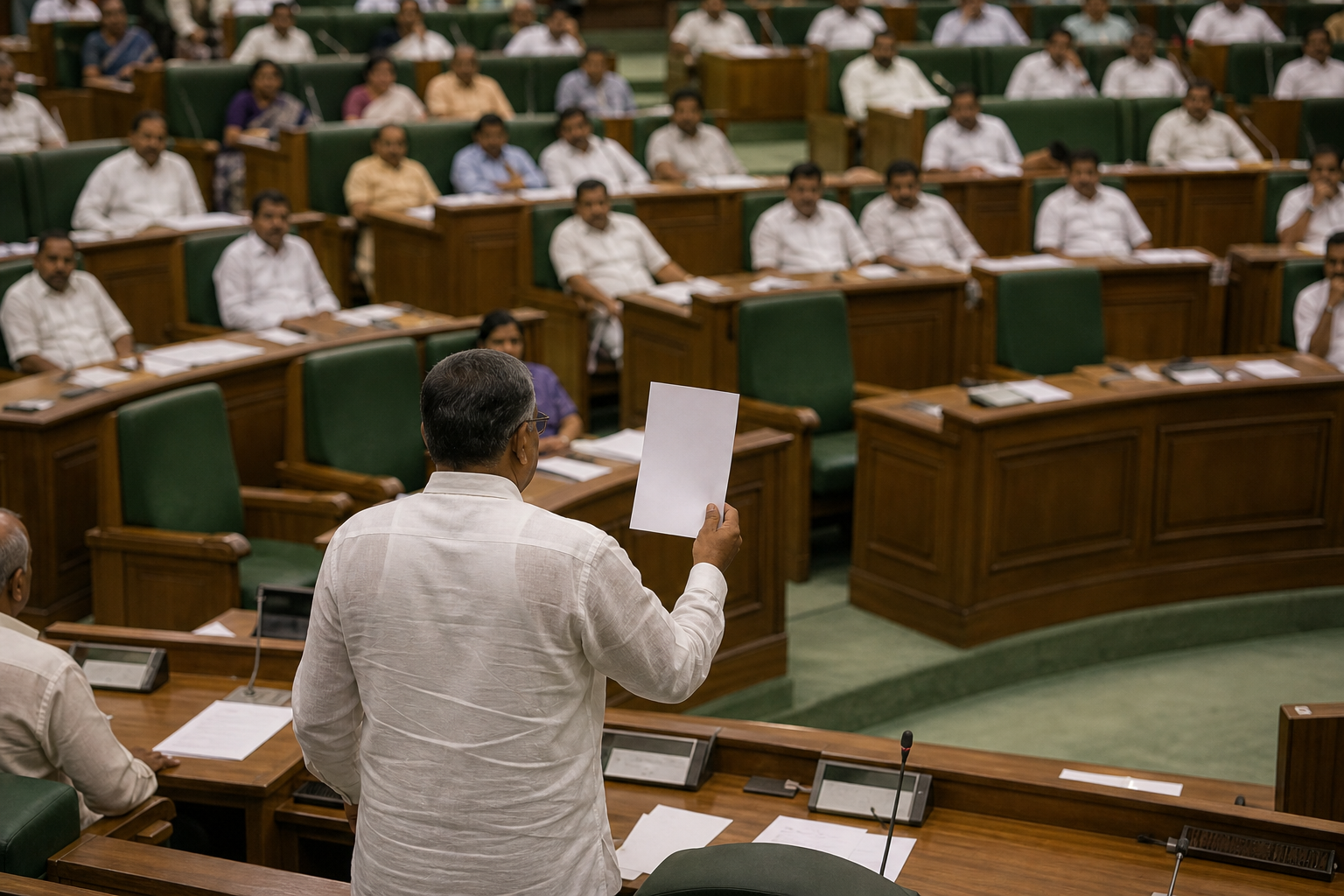
The most revealing theme is not simply Christianity. It is the persistence of caste identity across religious conversion. The expression “Vanniyar Christian” asserts that conversion changed religious affiliation without dissolving the social community from which the convert came. The reservation demand then asks the state to recognise that continuing identity in public policy.
That creates a question many political slogans avoid: if caste disadvantage continues after conversion, what exactly changed, and what remained? Christian institutions and political representatives may emphasise religious belonging in one setting and inherited caste location in another. Hindu voters should notice this dual structure because it affects how constituencies are organised and how claims on the state are framed.
You should also avoid the opposite mistake. The continued use of a caste name does not prove that every convert has identical social circumstances or political motives. What it does prove in this instance is narrower: caste ancestry is being presented as relevant to a Christian community’s eligibility for state benefits. The proper response is to test that policy claim openly, using consistent criteria, rather than pretending conversion automatically settles the social question.
When you encounter similar demands, ask four concrete questions. Which group is being defined? What disadvantage is claimed to continue after conversion? What evidence would a caste-based survey collect? Would the proposed rule be applied consistently to comparable communities? These questions expose the policy mechanism. Religious accusation alone does not.
Representation becomes a religious political theme when it seeks state action
A politician may mention his faith for many reasons. The decisive point here is that Prabhakar connected his identity to an association, a history of petitions and a current demand. That connection turns identity into representation: he was not only saying who he is, but also indicating whose claim he was advancing.
This is where scrutiny should become precise. Membership in a Christian association is relevant when that association’s objective is carried into legislative advocacy. It is not sufficient evidence that every official decision is religiously motivated. The useful question is not, “Is this office-holder Christian?” It is, “What public benefit, classification or institutional change is being requested through that identity?”
That distinction protects serious Hindu political criticism from becoming careless religious profiling. A strong case examines conduct, beneficiaries and policy design. A weak case treats a Christian name or affiliation as self-proving evidence of conspiracy. The former can persuade people beyond an existing political camp; the latter gives defenders of preferential politics an easy way to avoid the substance.
The Speaker’s reference to efforts under MGR and Jayalalithaa also complicates any claim that the demand originated wholly inside TVK. By his own account, the campaign reaches back to 1985 and crossed more than one political period. TVK may choose to advance, modify or reject it, but the demand itself cannot responsibly be described as a creation of Joseph Vijay’s government on the evidence presently available.
Why the “Christian fundamentalist government” charge needs a higher test

Calling the administration a Christian or “Christhutva” fundamentalist government is a sweeping political judgement. It goes beyond saying that one Christian office-holder advocated for Christian converts. It attributes a governing character to the whole regime. If you use that description, you should be able to show a pattern at the level of policy, appointments, expenditure, official symbolism or unequal treatment.
A credible test would look for repeated government action, not merely repeated criticism. Has the administration formally adopted the reservation demand? What eligibility rules would it use? Are benefits being extended or withheld according to religion? Do comparable Hindu, Jain, Buddhist or Sikh claims receive materially different treatment? Is the Chief Minister directing the policy, or is an office-holder urging the government to act? Each answer moves the judgement from rhetoric toward evidence.
The distinction between advocacy and adopted policy is especially important. Prabhakar urged the government to act. That wording indicates a demand directed at the administration, not proof that the administration had already approved it. Conflating the two makes the accusation easier to challenge and obscures the moment when a proposal actually becomes government policy.
Consistency matters as well. If religiously framed advocacy is objectionable because the state should remain impartial, apply that standard regardless of which community benefits. If the objection is instead that conversion should end caste-based eligibility, state that principle clearly and test it against evidence of continuing disadvantage. Mixing those arguments produces heat but no usable standard.
Key takeaways
- The documented controversy concerns an Assembly Speaker who publicly combined Vanniyar caste identity, Christian affiliation, association membership and advocacy for reservation benefits.
- The strongest Christian political theme is organised representation seeking state recognition, not the office-holder’s private faith by itself.
- The demand shows that caste can remain politically operative after religious conversion, at least in the way this constituency describes itself.
- The reservation campaign was described as extending back to 1985, so it predates Joseph Vijay’s TVK government.
- An appeal to the government is not the same as an enacted government policy.
- One intervention cannot establish the religious character of an entire administration; that conclusion requires a demonstrable pattern of official conduct.
How to judge what happens next
The next useful evidence will not be another slogan. It will be the government’s response. Watch whether TVK produces a formal proposal, announces criteria for a caste-based survey, identifies the intended beneficiaries or explains how converted communities would be classified. A public demand becomes an administrative programme only when those mechanisms appear.
You can evaluate future developments with a five-step check:
- Record the exact act: a speech, party promise, government order, budget allocation or implemented benefit.
- Identify the actor: an individual office-holder, the party, the Chief Minister, the Assembly or an administrative department.
- Identify the beneficiary and the eligibility rule, not merely the religious language surrounding the demand.
- Compare the treatment of similarly placed Dharmic and non-Dharmic communities under the same standard.
- Reserve a regime-wide label for a repeated, connected pattern that can be attributed to the government itself.
This method does not require you to ignore warning signs. It makes those signs harder to dismiss. If TVK repeatedly converts sectarian demands into preferential state action, the case for a Christian political orientation will grow. If the government declines the demand or applies a neutral rule across communities, the stronger accusation will need revision. Evidence should be allowed to sharpen the conclusion in either direction.
For now, treat Prabhakar’s intervention as a real and consequential example of Christian constituency politics operating through caste and reservation. Then watch the decision that follows. Your judgement of Joseph Vijay’s sarkar should rest on what the government does with the demand, not on how forcefully either side names it.
References
