
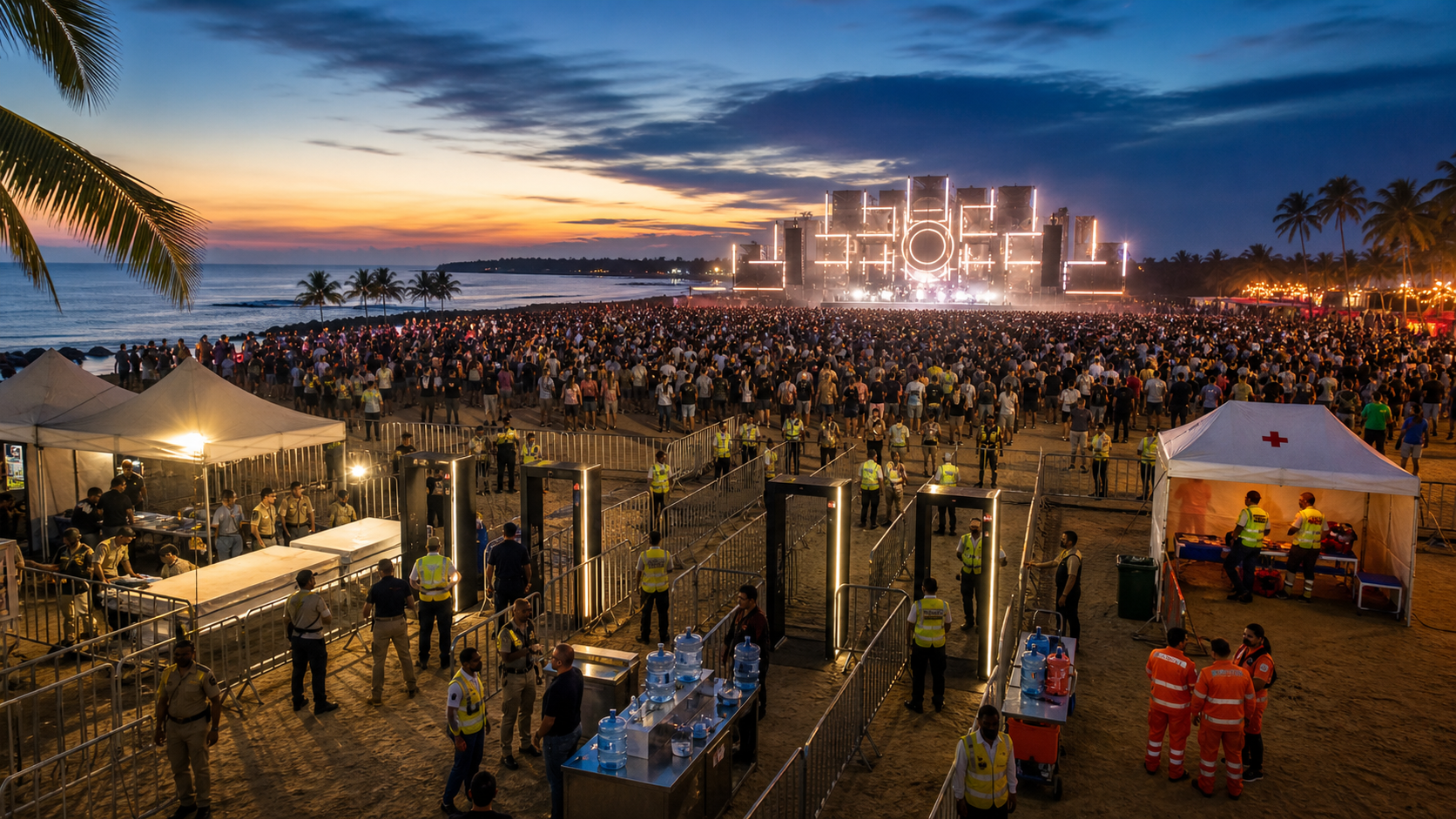
If you’re holding a Sunburn ticket, arranging travel, or deciding whether someone in your family should attend, the first question is simple: has the festival been cancelled? A legal notice does not, by itself, cancel an event. It does create a serious dispute that deserves more than either panic or a casual assurance that everything is under control.
Your decision should turn on two verifiable facts: the festival’s official legal status and the quality of its operational safeguards. Allegations are not findings of guilt, but unresolved questions about crowds, drugs, medical response, and regulatory compliance are not minor paperwork issues either.
A legal notice is not a cancellation order
Nasha Virodhi Sangharsh Abhiyan has demanded a comprehensive safety action plan within 72 hours and warned that an inadequate response could lead to a High Court petition seeking a stay on the festival. Each part of that sequence has a different legal meaning.
- A legal notice communicates demands, objections, and the action the sender may pursue. It is not a judicial ruling.
- A petition would ask the High Court to intervene. Filing or threatening a petition does not mean the requested relief has been granted.
- A stay would be an interim court order capable of stopping or restricting the event while the disputed safety and regulatory questions are examined.
The 72-hour period is therefore a deadline demanded for the organisers’ response. It is not an automatic countdown to cancellation, an automatic extension of permission, or a substitute for an order from the competent authority. No organiser response, filed petition, or court order is established by the facts presently available.
When a new message circulates, identify what it actually is before forwarding it. A photograph of a legal notice is not a court order. A statement that a petition will be filed is not proof that one has been filed. A filed case is not the same as a stay. Check the date, issuing body, case or order details where applicable, and the festival’s status through official organiser and local-authority channels before changing travel plans.
If a petition reaches the High Court, the relevant questions may include compliance with licensing conditions, the adequacy of risk assessments, and whether the proposed mitigation measures are credible. Any stay would be preventive interim relief, not a final declaration that every allegation has been proved. If your ticket, refund, business, or legal rights depend on the outcome, rely on the operative official notice or court order and obtain qualified legal advice rather than acting on social-media summaries.
What a credible safety plan must actually show
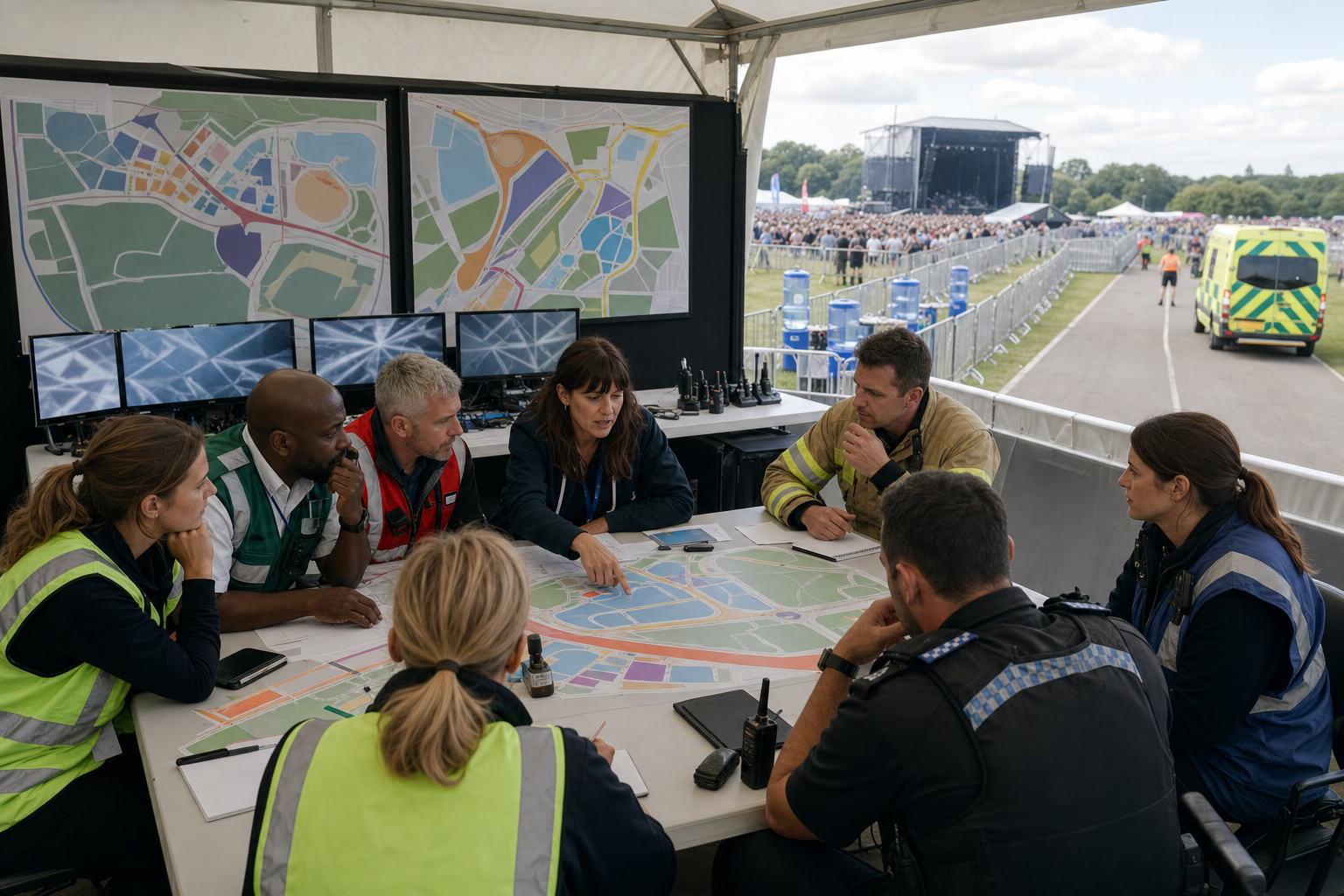
A credible plan is more than a promise to maintain “strict security.” It identifies who is responsible, what will happen when conditions deteriorate, how different teams will communicate, and which parts of the system can be independently checked.
- Crowd management: The plan should address entry flows, queues, congested areas, exit routes, emergency access, and the authority to slow or stop admission when conditions become unsafe.
- Anti-drug operations: Organisers should explain how venue security coordinates with law enforcement, how suspected possession or supply is escalated, and how an apparent drug-related medical emergency reaches clinicians without delay.
- Medical readiness: On-site triage, rapid-response personnel, accessible treatment points, and a workable route for transferring a patient all need operational owners. Merely saying that an ambulance will be present does not explain the response chain.
- Crisis communication: Attendees need to know where authoritative instructions will appear. Staff also need a command structure for issuing warnings, directing evacuation, changing entry procedures, or correcting false information.
- Vetting and access control: Security personnel and vendors should be vetted, responsibilities should be defined, and age-verification rules should be applied consistently rather than improvised at the gate.
- Monitoring within the law: Real-time surveillance can support crowd and incident management, but its use must remain aligned with local regulation. Technology does not cure a missing response protocol.
- Independent accountability: Compliance audits, independent safety oversight, and a public summary of safeguards give residents and attendees something more reliable than competing claims.
You can test any announced plan with three questions. First, who owns each task? Second, what event triggers action, such as pausing entry or calling a medical team? Third, what evidence will show that the promised staff, coordination, and oversight are in place? If an announcement cannot answer any of these, it is probably describing intentions rather than readiness.
Some tactical details should remain confidential because publishing them could weaken security. That does not justify total opacity. Organisers can disclose command responsibilities, medical arrangements, coordination structures, attendee instructions, and audit mechanisms without revealing sensitive deployment information.
What you should do before and during the festival
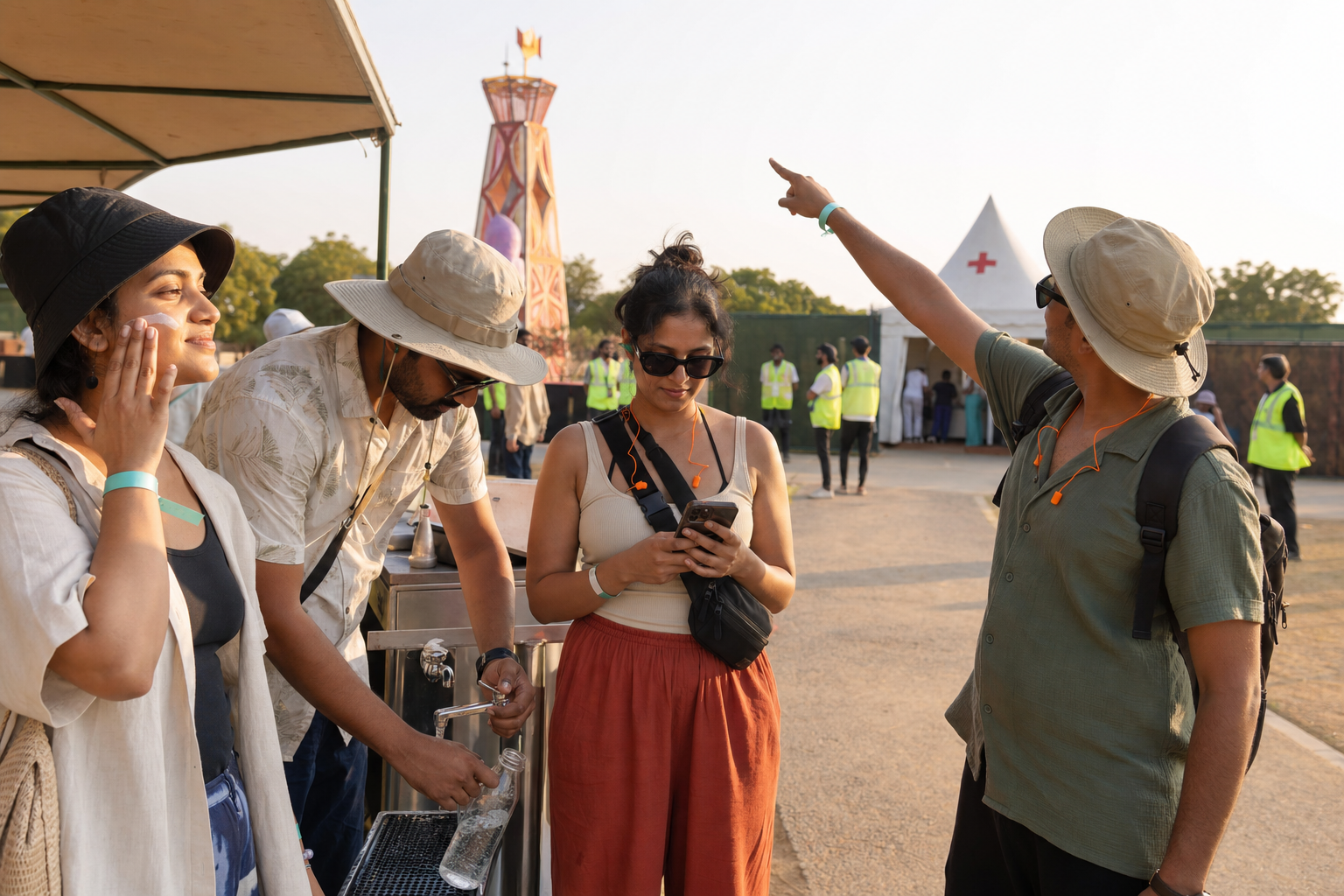
If you plan to attend
- Verify the event’s status on the day you travel. Look for current information from the organiser and the relevant local authority. If an operative authority or court order conflicts with promotional messaging, follow the order.
- Read the entry, age-verification, prohibited-item, and medication rules before leaving. If you need prescribed medication, check the venue procedure in advance and keep it identifiable.
- On arrival, locate more than one exit, the nearest medical point, and a place where your group can meet if mobile service becomes unreliable or you become separated.
- Agree on transport before the event begins. Do not leave the return journey dependent on someone who may become impaired.
- Do not accept, carry, or consume an illegal or unknown substance. An unfamiliar product cannot be made safe by a seller’s assurance or a friend’s guess about its contents.
- If someone becomes unresponsive, severely confused, or seriously unwell, contact on-site medical personnel immediately. Give clinicians honest information about what may have been consumed, do not try to diagnose the person yourself, and do not leave the person alone while help is being obtained.
You do not need to investigate suspected drug selling or confront anyone yourself. Report the location and observable conduct to designated security or law enforcement. Personal confrontation can increase the danger and may interfere with a proper response.
If your child, relative, or friend is attending
Ask for a plan, not a vague promise to “be careful.” Agree on the official channel they will use to check the event’s status, their transport in both directions, a meeting point, a check-in arrangement, and the person to contact if plans change. If age restrictions apply, confirm the actual entry rule rather than assuming a ticket overrides it.
The most useful conversation about drugs is direct: unknown substances create risks that neither friendship nor festival branding can control, and seeking medical help must take priority if something goes wrong. Fear of embarrassment should never be allowed to delay an emergency response.
If you live or work near the venue
Focus complaints on conditions that authorities can verify: blocked emergency access, dangerous crowding, failures at an entry point, or observed suspicious conduct. Record the time and location, preserve relevant material lawfully, and use the designated official channel. Do not turn appearance, clothing, musical taste, or an unverified rumour into an accusation against an individual.
Residents can also ask practical questions before the gates open: which routes must remain available to emergency vehicles, which authority receives urgent complaints, how traffic diversions will be communicated, and who can order corrective action if the operating plan fails.
Firm drug control does not require collective suspicion
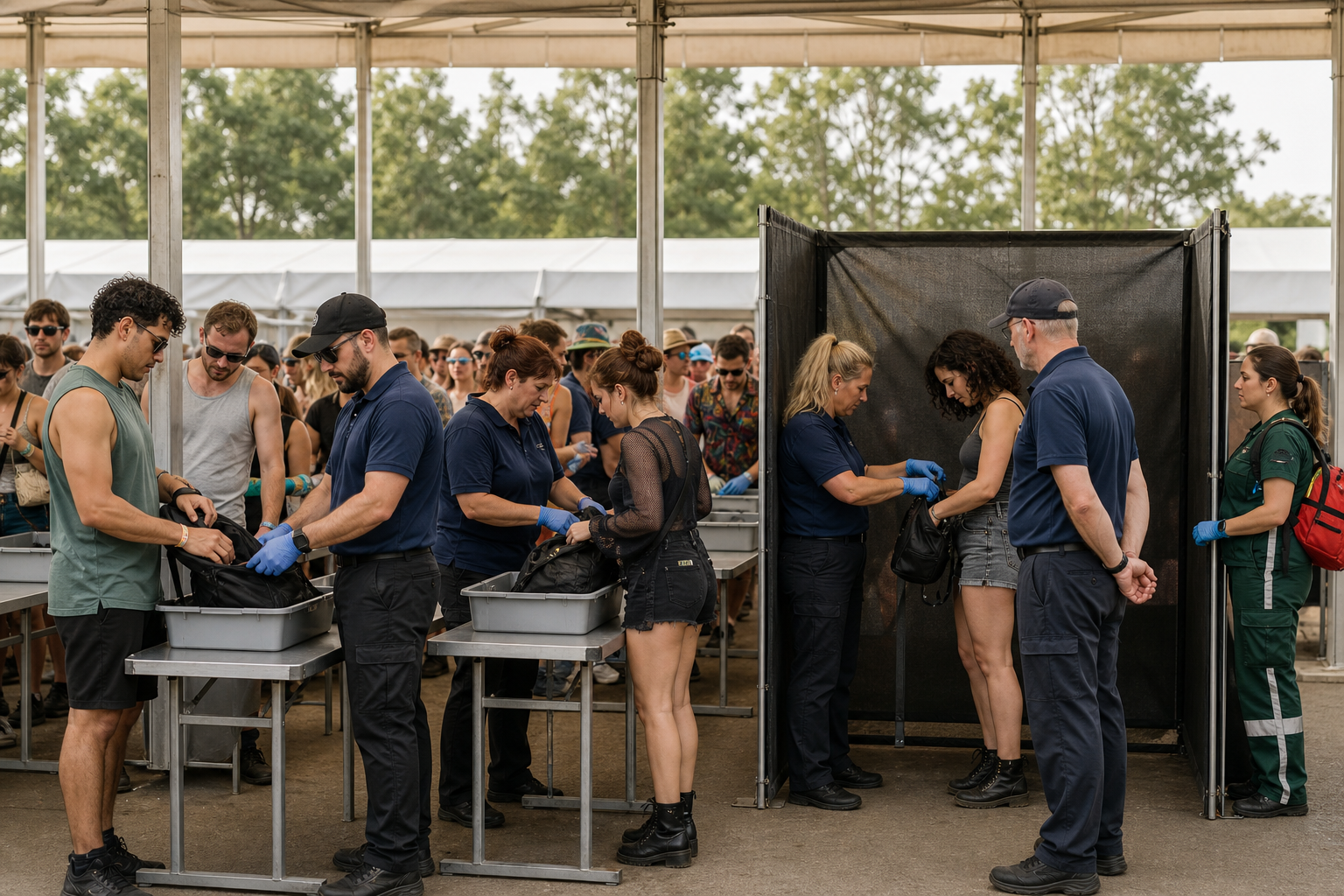
A serious anti-drug policy combines prevention, detection, law-enforcement coordination, medical readiness, and accountability. A slogan such as “zero tolerance” tells you almost nothing unless it is connected to trained people and a defined response. Harm reduction without action against illegal supply is incomplete; enforcement without an immediate medical pathway is also incomplete.
Surveillance, searches, and security escalation must operate within applicable law. An attendee’s presence at an electronic-music festival is not evidence of drug use, and an allegation against the event is not proof against every organiser, vendor, or guest. Proportionate enforcement is stronger because it directs attention toward conduct and evidence rather than stereotypes.
The Dharmic case for scrutiny rests on duties that Hindu, Buddhist, Jain, and Sikh communities can readily recognise: safeguarding young people, protecting life, preserving social harmony, and expecting responsible conduct from institutions with power. That case does not require hostility to music, celebration, or youth culture. It requires the freedom to celebrate to be matched by the duty to prevent foreseeable harm.
This balance also gives organisers a fair route forward. If they can demonstrate regulatory compliance, credible risk controls, effective medical and anti-drug coordination, and accountable oversight, a lawful festival need not be treated as guilty by association. If they cannot, public authorities and the Court may need to consider interim safeguards before exposing attendees and the surrounding community to unresolved risk.
Watch for the difference between evidence and reassurance. A public safety summary, named lines of responsibility, documented coordination, and independent review are positive signs. Repeated assertions that “all arrangements are in place,” with no explanation of command, medical response, or escalation, leave the central questions unanswered.
Key takeaways
- The legal notice and its 72-hour demand do not themselves cancel Sunburn; an operative authority or court order would change the event’s legal status.
- The warning of a possible High Court petition should be taken seriously without treating untested allegations as judicial findings.
- A credible safety plan needs crowd controls, law-enforcement coordination, medical triage, crisis communication, vetting, age verification, lawful monitoring, and accountable oversight.
- Attendees should verify official status, know exits and medical points, arrange transport, avoid illegal or unknown substances, and seek immediate professional help in an emergency.
- Drug control is most defensible when it is evidence-based, medically prepared, lawful, proportionate, and transparent.
Before you commit to travel, save the current official status, ask what operational safeguards have been disclosed, and make a concrete transport and emergency plan with your group. If those basic answers remain unavailable, treat the uncertainty itself as a risk and reconsider attending until it is resolved.
References
