
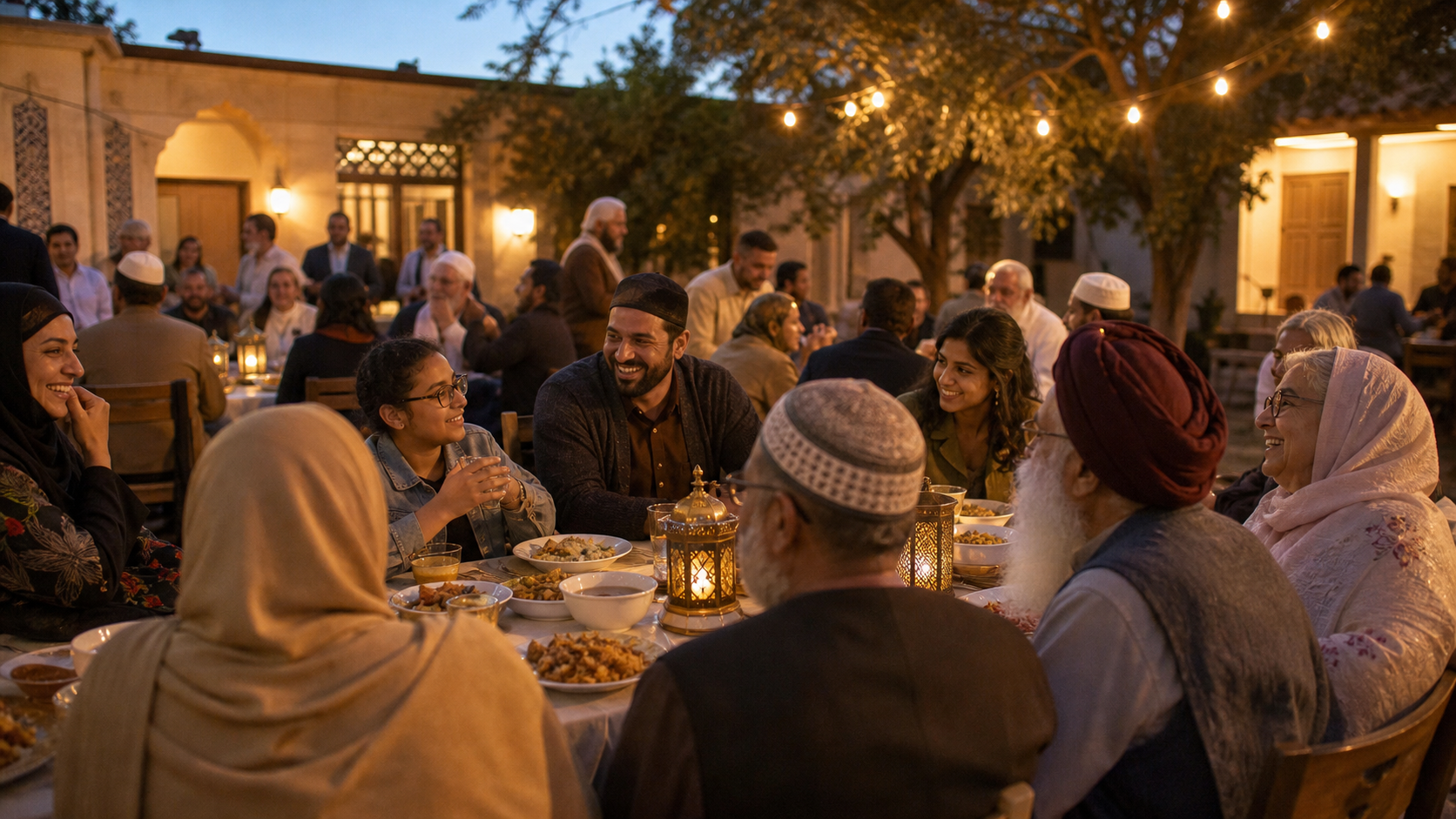
You have been asked to organize a celebration that welcomes people of different faiths, but two risks are already apparent. Make the gathering too generic and it loses its spiritual center. Make it too inward-facing and guests feel like spectators at somebody else’s event.
You do not have to solve this by blending traditions or pretending their teachings are identical. A strong interfaith celebration lets the host community remain recognizably itself while giving every guest an honest, unpressured way to share in hospitality, reflection, service, and joy.
Define the unity you are actually offering
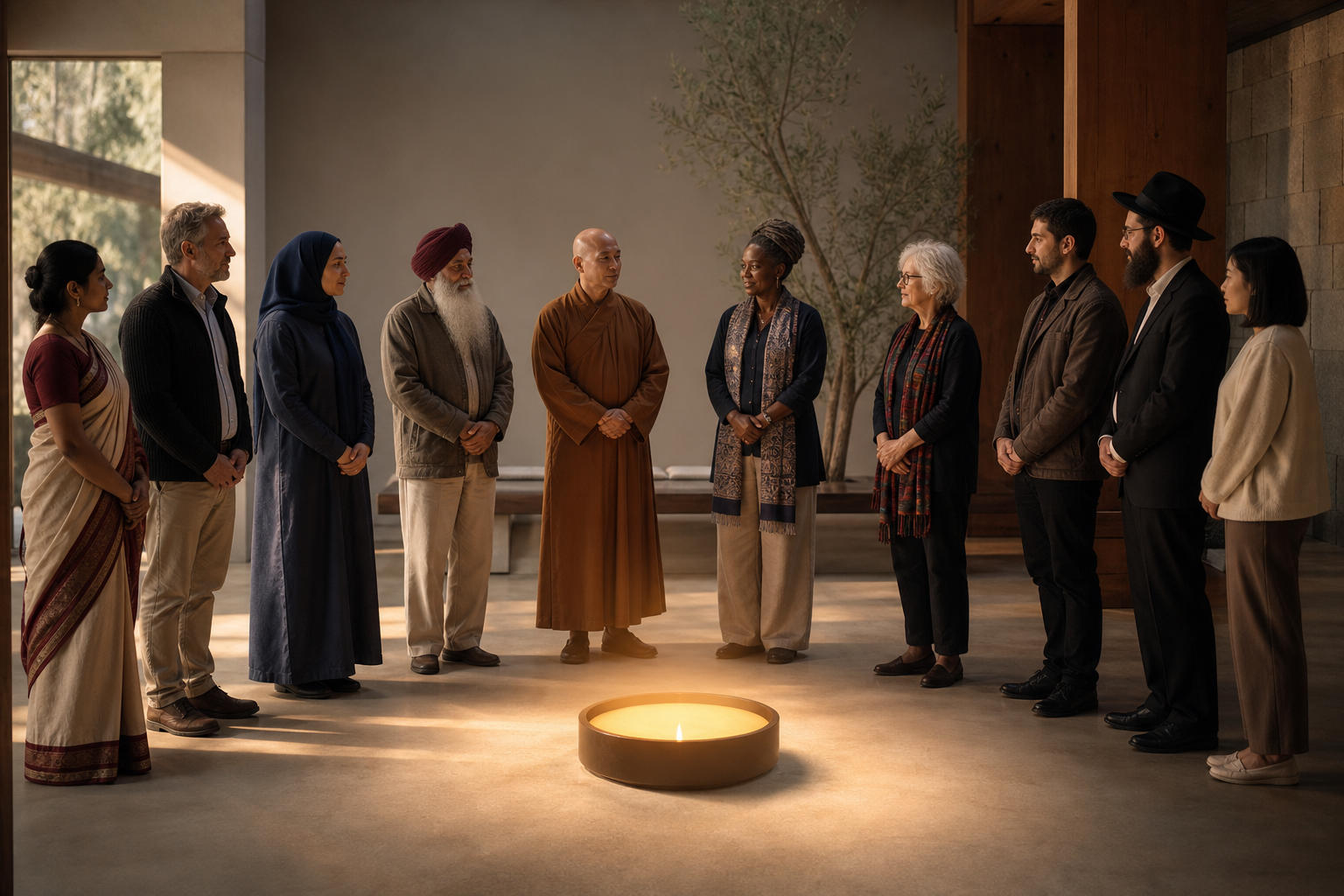
Interfaith unity should describe a relationship, not manufacture a new theology. Hinduism, Buddhism, Jainism, Sikhism, and Christianity contain distinct teachings, histories, disciplines, and forms of worship. A festive evening does not erase those distinctions, and it should not ask anyone to speak or act as though it does.
The workable meeting point is shared ethical action. Compassion, service, gratitude, and joy can shape how people treat one another even when they understand the source and meaning of those virtues differently. This is unity without forced sameness.
Before choosing food, speakers, music, or decorations, write one sentence explaining the promise of the gathering. It should identify the host, the occasion, the common purpose, and the freedom retained by every guest. For example: “Our Dharmic community is hosting this Christmas gathering so neighbors can share a meal, express gratitude, and strengthen relationships; guests may join or observe each part according to their own convictions.”
Use that sentence in the invitation, the volunteer briefing, and the opening welcome. It prevents three common misunderstandings: guests do not mistake hospitality for conversion, volunteers do not turn openness into theological vagueness, and the host community does not feel required to conceal its identity.
Then connect each declared value to something guests can actually experience:
- Compassion: assign greeters to notice people arriving alone, introduce newcomers, and explain unfamiliar parts of the program without making anyone feel conspicuous.
- Service: give participants a useful shared task, such as supporting a community need, helping with hospitality, or contributing to a future service effort.
- Gratitude: acknowledge cooks, cleaners, volunteers, families, teachers, and guests rather than reserving attention for prominent speakers.
- Joy: make room for food, conversation, music, stories, or family participation without treating enjoyment as a distraction from spiritual purpose.
This test exposes empty language quickly. If “respect” has no corresponding choice in the program, it is only a slogan. If “service” appears in a speech but gives participants nothing to do, it will not create a relationship. Every value on the invitation should be visible in the room.
Build an evening with a clear moral and social arc

A collection of festive activities can entertain people without helping them meet. Community develops more reliably when the program moves from welcome to shared experience, from shared experience to meaningful conversation, and from conversation to a next action.
- Welcome people into a named occasion. Explain who is hosting, why this festival is being marked, and what kind of participation will be invited. Do this before guests encounter a practice they may not understand.
- Share food with practical clarity. Ask about dietary and accessibility needs when people respond to the invitation. Label ingredients and explain any serving customs. If the host has chosen vegetarian, sattvic, or other food standards, state that plainly instead of presenting them as restrictions discovered at the table.
- Offer a concise spiritual frame. Connect the celebration to gratitude, compassion, service, or another value that will guide the evening. Let the host speak from its own tradition without claiming that every guest interprets the value in the same way.
- Create an optional reflective moment. Silence, a short reading, contemplative music, or separate contributions from represented traditions can work when their purpose is explained. Guests should know whether they are being invited to worship, listen, reflect, or simply remain present.
- Move into guided conversation. Use prompts about lived practice rather than questions that demand theological agreement. Small conversations usually give newcomers more room than a succession of formal speeches.
- Give the gathering an outward direction. Invite a concrete act of service, a future meal, or another suitable point of contact. Celebration becomes community when goodwill can travel beyond the room.
- Close with gratitude and clear follow-through. Thank people across roles, repeat the next opportunity, and explain how guests can opt in to further contact.
A Krishna Wisdom Christmas gathering brought approximately seventy people, including families, students, and newcomers, into an evening of a themed feast, conversation, contemplation, and collective appreciation. The useful pattern is not a particular decoration or menu. It is the movement between hospitality, reflection, and human connection.
You can adapt that architecture to Diwali, Vaisakhi, Mahavir Jayanti, Buddha Purnima, Christmas, or a community occasion that is not tied to one festival. The host tradition and sacred meaning will change. The need for a readable sequence will not.
Good conversation prompts also make a substantial difference. Ask, “Which practice in your home teaches gratitude?” or “What does service look like outside formal worship?” You can also ask, “What helps you welcome a neighbor without hiding your own beliefs?” These questions invite experience. They do not ask a guest to defend an entire religion or settle a doctrinal dispute over dinner.
Make participation voluntary and boundaries visible

A guest cannot give meaningful consent to an activity that has not been explained. Before any prayer, chant, recitation, ritual gesture, or offering, tell people what will happen and what participation means. Give them three equally respectable choices: join, observe, or quietly decline.
The host can say: “We will now offer a prayer from our tradition. You are welcome to participate, remain seated and listen, or use the moment for reflection in your own way.” That sentence removes the social test from the ritual. Nobody has to imitate devotion to prove goodwill.
This principle protects Dharmic integrity as much as it protects visitors. Inclusion does not require a Hindu, Buddhist, Jain, or Sikh host to hide its sacred images, vocabulary, food disciplines, or forms of reverence. It requires the host to explain what guests are seeing and to avoid assigning them a religious role they did not choose.
Set the same boundary around speech. Tell speakers and facilitators that the gathering is not a platform for recruitment, surprise fundraising, denunciation of another path, or claims that one participant represents every member of a faith. A Christian guest should not be expected to explain all Christianity, just as one Hindu should not be asked to summarize the breadth of Hindu sampradayas.
Avoid the opposite mistake as well: “All religions are really the same” may sound welcoming, but it achieves harmony by dismissing differences that matter to practitioners. A better formulation is: “Our teachings are not identical, but we can meet in respect and serve together.” That is a claim the gathering can demonstrate through conduct.
Prepare volunteers for awkward moments before guests arrive. If someone makes a dismissive or proselytizing remark, the facilitator should not turn the celebration into a public argument. Interrupt calmly, name the boundary, and redirect the exchange: “We are here to describe our own practice and learn about one another, not to judge an absent community. Let us return to the question.” Speak privately afterward if further clarification is needed.
Visible boundaries create trust because nobody has to guess what might happen next. That trust is more valuable than an appearance of effortless agreement.
Give the relationship somewhere to go next
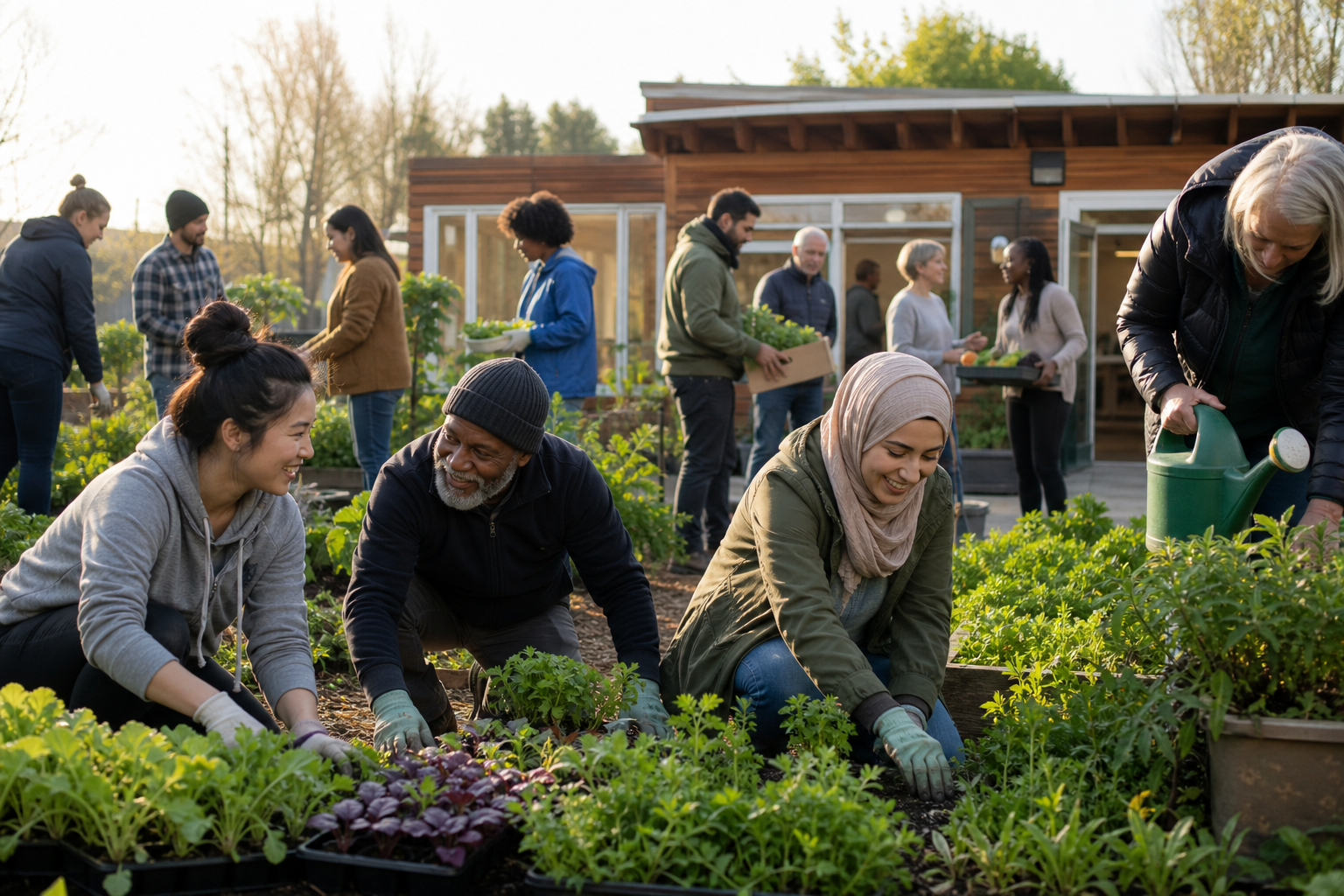
One warm evening can introduce people, but it cannot carry the full burden of community building. Before announcing the celebration, decide what participants will be able to do afterward. Otherwise the event ends at the precise moment people have become willing to know one another.
Choose a next step that matches the purpose of the gathering:
- A service activity gives compassion a common object and allows participants to cooperate without negotiating doctrine.
- A rotating community meal lets different hosts explain their customs in their own spaces and voices.
- A calendar of celebrations that are genuinely open to visitors helps neighbors arrive with accurate expectations.
- A facilitated discussion can continue a question that emerged during the evening, provided it retains the same rules of consent and respectful representation.
Make follow-up voluntary. Do not add every attendee to a mailing list simply because they registered for one celebration. Offer separate choices for event notices, service opportunities, and planning roles. Someone may welcome a meal without wanting an ongoing interfaith program, and respecting that distinction is part of the hospitality you promised.
Attendance alone will not tell you whether the gathering built community. Review the evening with sharper questions:
- Did newcomers receive an introduction and a real conversation, or did established friends remain in closed circles?
- Could participants recognize the host’s spiritual identity without feeling pressured to adopt it?
- Were people able to decline an activity without embarrassment or scrutiny?
- Did every claimed value appear in a practical choice?
- Is there a named person responsible for the promised follow-up?
Invite feedback from both regular members and first-time guests. Regular members can tell you whether openness diluted or misrepresented their tradition. Newcomers can identify customs, language, or transitions that insiders assumed were obvious. Those are different forms of knowledge, and you need both before repeating the event.
Success does not mean nobody encountered a difference. It means people could encounter difference without humiliation, concealment, or coercion – and still find something worthwhile to do together.
Key takeaways
- Build unity around ethical conduct and shared action, not a claim that distinct religions teach the same thing.
- Name the host, occasion, purpose, and freedom of participation in the invitation and opening welcome.
- Translate compassion, service, gratitude, and joy into visible choices rather than leaving them in speeches.
- Structure the event as a movement from hospitality to reflection, conversation, shared contribution, and follow-up.
- Explain religious practices before they begin and make joining, observing, and declining equally acceptable.
- Preserve the host’s Dharmic identity while setting clear boundaries against pressure, caricature, and proselytizing.
- Judge the gathering by the quality and continuity of relationships, not only by the size of the room.
For your next celebration, begin with the one-sentence promise, not the program. Once everyone involved can state what the gathering offers – and what it will never demand – the meal, reflection, conversation, and next step can all serve the same purpose.
References
