
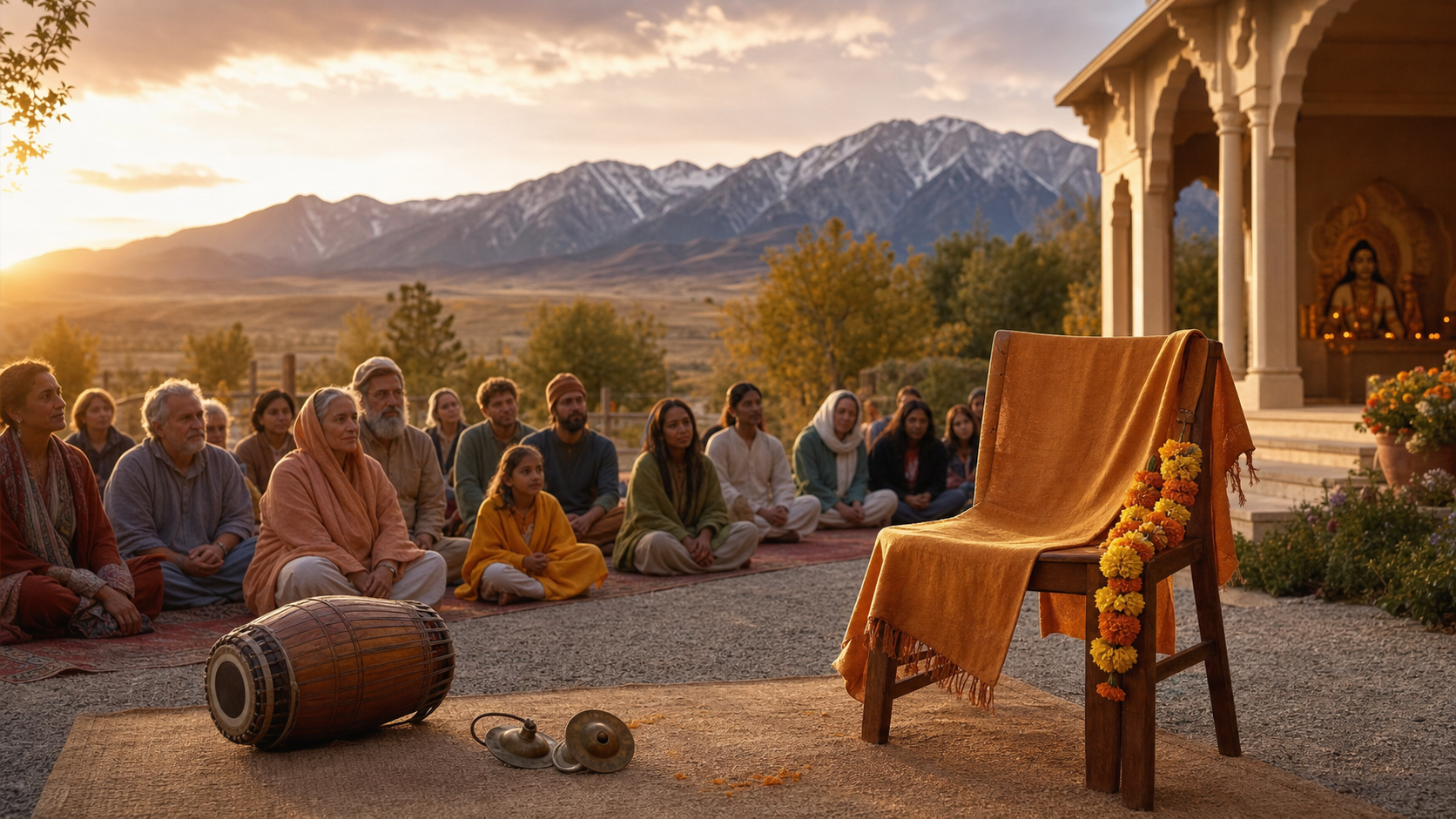
If your first encounter with Krishna bhakti in Utah came through kirtan, prasadam, yoga, or a welcoming festival, Caru Das may have helped create the setting in which it happened. His death leaves you with two questions at once: What is actually known about the collision, and what would a faithful response to his life look like?
The first answer requires restraint. The second calls for action. Christopher Caru Warden, known throughout the Krishna community as Caru Das, was 79 when he died from injuries sustained in a motor vehicle collision in Springville, Utah. His decades of devotional leadership deserve remembrance grounded in truth, kirtan, and practical seva.
What is confirmed about the Springville collision

Springville Police confirmed Warden’s death following the collision. The preliminary account says he was driving south on Main Street near 1400 North when his vehicle moved into oncoming traffic. Other people involved sustained injuries described as non-life-threatening.
That description establishes the movement of the vehicle, not why it happened. Authorities have not released a definitive causal analysis, and the investigation remains open. It would therefore be wrong to convert a preliminary lane-departure account into a conclusion about distraction, speed, health, age, or legal responsibility.
A full crash inquiry can include scene documentation, witness accounts, roadway and visibility assessments, vehicle inspections, and information from an event data recorder when one is available. Investigators may also consider whether an acute medical event preceded the vehicle’s movement. Until those checks are complete, any confident causal claim is speculation.
Warden’s age does not settle the question of fault. Drivers in advanced age groups can face a higher risk of dying after a collision largely because physical fragility increases the severity of injuries. That is different from evidence that an older driver caused a particular crash. If you share news of his death, keep the words preliminary and under investigation attached to the collision account.
The condition of the other people involved also deserves care. Non-life-threatening does not mean insignificant; it only describes the reported threat to life. Prayers for their recovery belong in the community’s response, while guesses about their identities, injuries, or responsibility do not.
Why Caru Das mattered beyond an organizational title
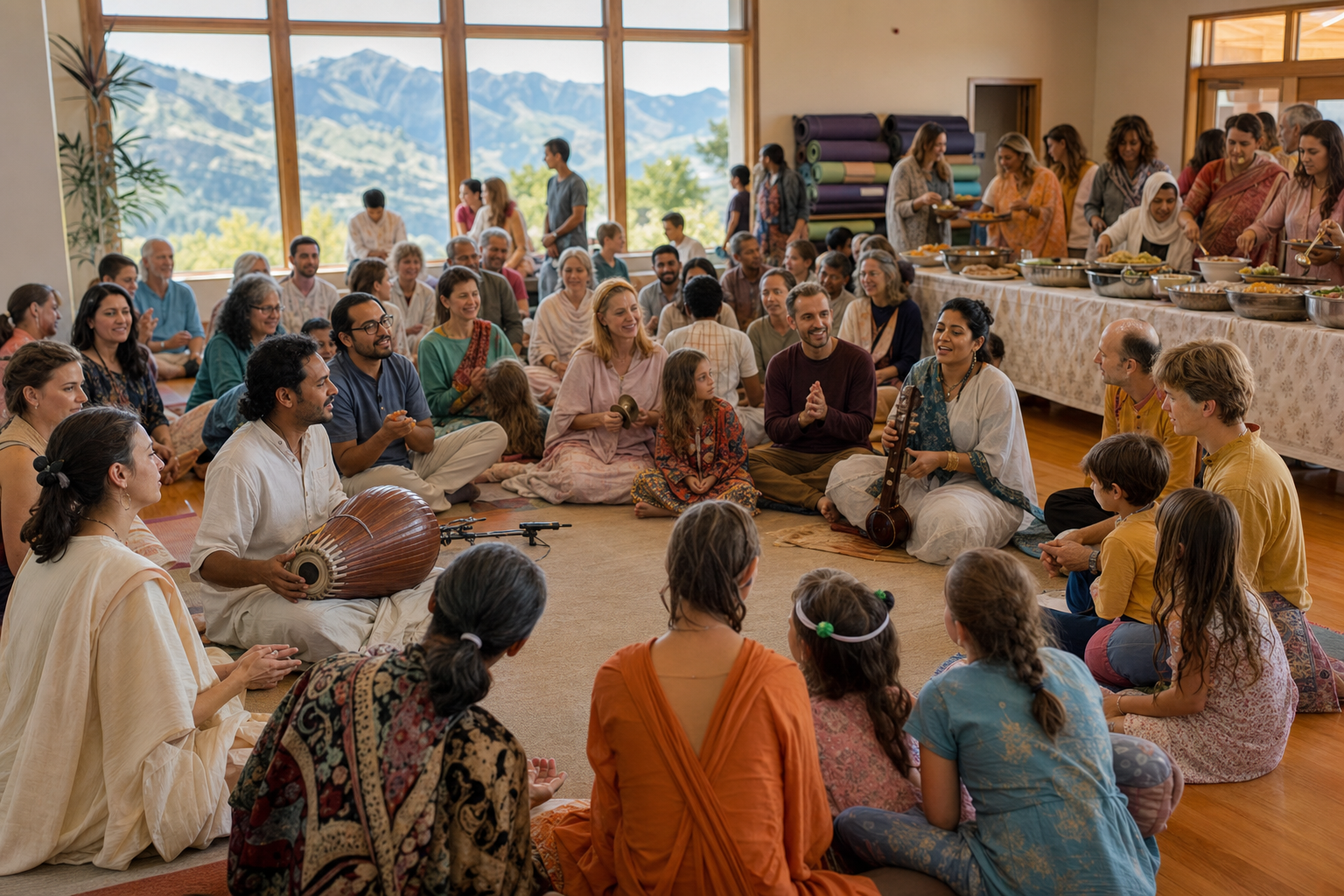
Caru Das served for decades as a guiding presence in Utah’s Krishna movement and as a prominent leader associated with the International Society for Krishna Consciousness. Under his stewardship, the community developed into a spiritual and cultural home for Hindu Americans and Utahns from many backgrounds.
The method was concrete. Kirtan gave people a way to participate through sacred sound. Vegetarian prasadam placed hospitality on a shared plate. Yoga offered an accessible point of contact, while family-friendly festivals allowed parents and children to enter together. A visitor did not need to arrive with theological vocabulary before listening, eating, moving, or joining a celebration.
That is a useful lesson for anyone involved in a temple, sangha, or dharmic association. Cultural advocacy is not limited to issuing statements or explaining doctrine. Trust grows through repeated encounters in which newcomers can find the entrance, understand what is happening, receive food graciously, and return without pressure. Caru Das’s public work joined bhakti, or devotional service, to seva, or service expressed in community life.
Hinduism, Buddhism, Jainism, and Sikhism remain distinct traditions and should not be flattened into a single system. Yet compassion, non-violence, and service provide a practical basis for friendship among them. Condolences from Hindu Americans and friends in Buddhist, Jain, and Sikh sanghas show how far relationships built through ordinary hospitality can extend.
Vasudhaiva Kutumbakam, the recognition of the world as one family, becomes more than a Sanskrit ideal when a neighbor is welcomed into kirtan, a child feels at home at a festival, or people of different faiths sit together over prasadam. That civic dimension of devotional life is central to Caru Das’s legacy.
How to remember him without neglecting the living
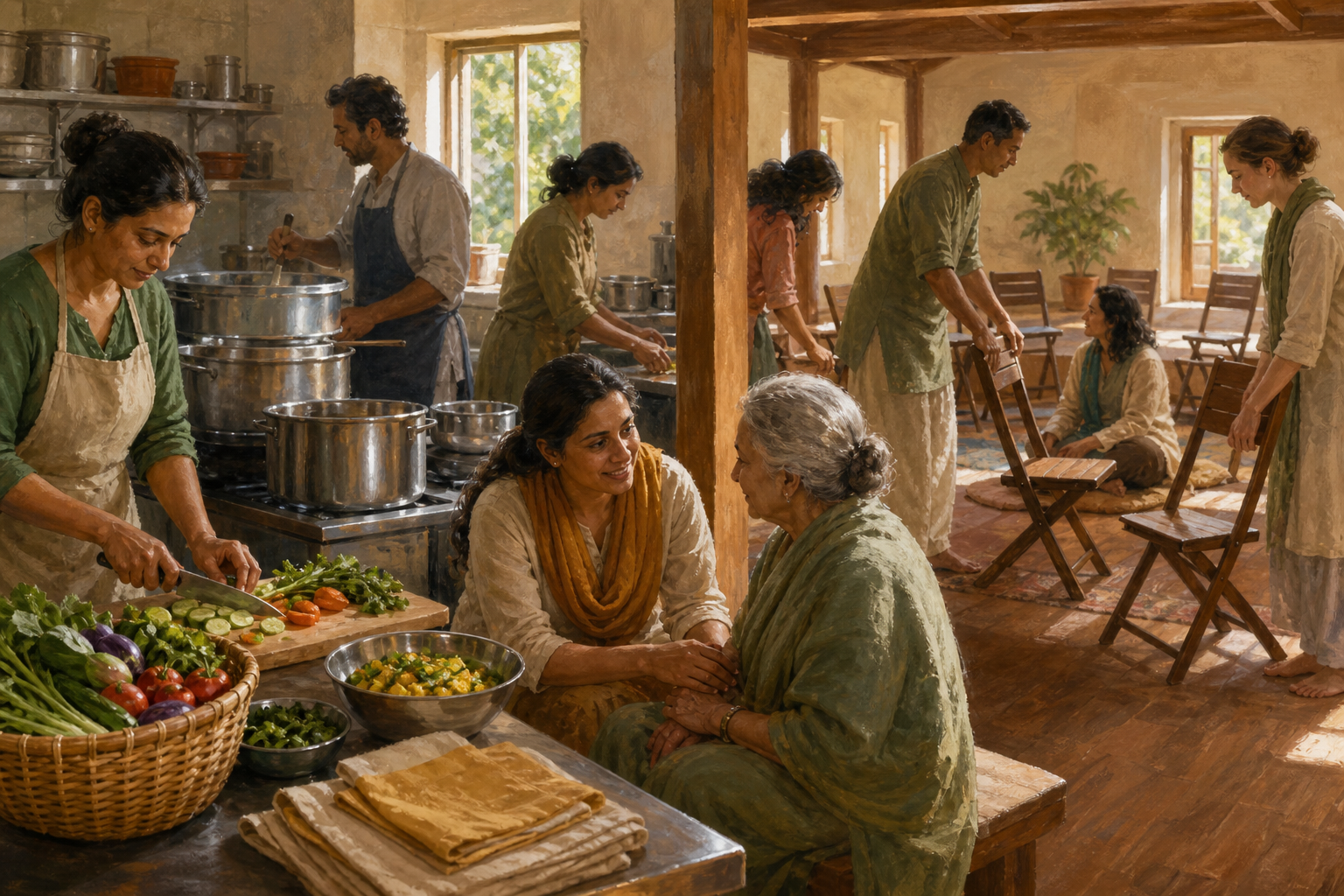
Vaishnava remembrance commonly brings together kirtan, reflection on a life of service, and care for those who are grieving. In this case, a balanced remembrance should face in two directions: toward the departed devotee and toward the people who still need support.
Let kirtan remain central rather than allowing speculation about the collision to dominate the gathering. The known facts can be stated briefly and accurately. The larger space should belong to prayer, gratitude, and memories that reveal how Caru Das practiced service.
Preserve specific memories rather than only general praise. If he welcomed you on a first visit, introduced you to kirtan, served you prasadam, encouraged your family, or gave you a responsibility, write down what happened. Include enough context for a community archive to retain the memory accurately. Small encounters often explain a spiritual leader’s influence better than a list of formal positions.
Support Warden’s family and the injured through confirmed community channels. Do not circulate an unverified fundraiser, private medical claim, or theory about the crash simply because it appears beside a familiar name. Accuracy is not coldness; in a moment of grief, it is a form of ahimsa.
Then add a corresponding act of seva. Volunteer to help serve a meal, welcome a newcomer, support a youth activity, assist with a festival, or bring a neighbor to a public program. The act does not need to imitate every part of Caru Das’s work. It should carry forward the union of devotion and hospitality that made that work recognizable.
Turn the tribute into a durable community practice
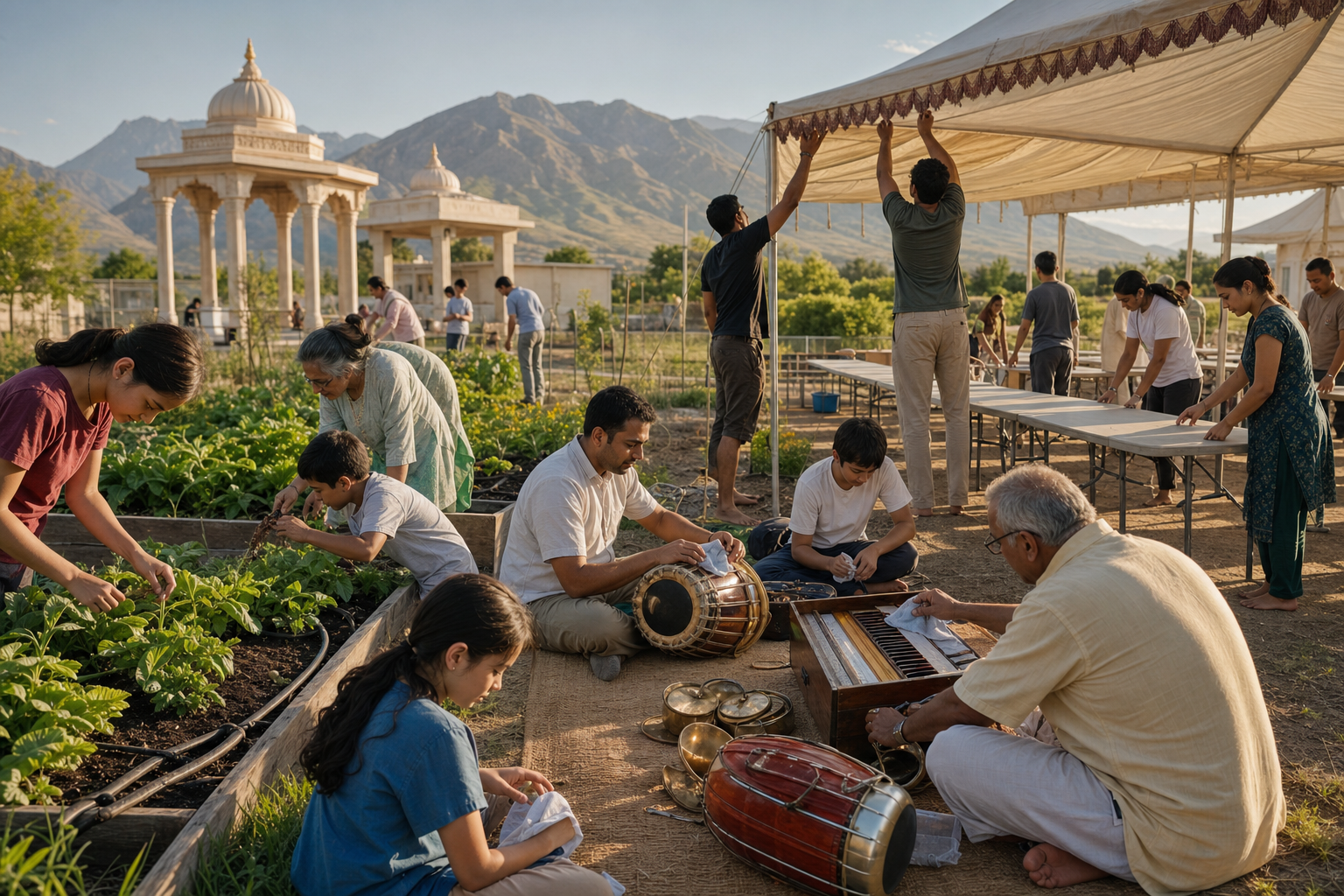
If you help lead a temple or sangha, walk through the next public event as though you have never attended before. Can a newcomer find the time and entrance? Is prasadam explained without jargon? Does someone greet a family that arrives alone? Can a visitor observe before participating? Is there a low-pressure way to volunteer or return?
Those details determine whether an event merely attracts a crowd or creates belonging. Protect the approachable combination that marked Utah’s Krishna programming: sacred music, vegetarian hospitality, embodied practice, and celebrations in which families can participate together.
Community leaders should also document the work that a long-serving leader may have carried personally. Record recurring festival responsibilities, volunteer roles, interfaith contacts, event procedures, and the practical steps used to welcome first-time guests. Hospitality becomes more resilient when it is a shared discipline rather than knowledge held by one person.
Attendance alone is an incomplete measure of that work. Notice whether newcomers return, young people accept responsibility, volunteers form lasting relationships, and neighbors from other traditions remain in contact. Youth engagement, volunteerism, interfaith goodwill, and a durable sense of belonging are among the civic results by which this kind of devotional leadership can be understood.
Key takeaways
- Christopher Caru Warden, widely known as Caru Das, died at 79 from injuries sustained in a collision in Springville, Utah.
- The reported movement into oncoming traffic is preliminary information, not a determination of cause or culpability.
- His lasting contribution was an accessible Krishna community shaped by bhakti, seva, kirtan, prasadam, yoga, festivals, and welcome across religious lines.
- A fitting remembrance includes prayer for Caru Das, support for his family, concern for everyone injured, and restraint toward unverified claims.
- You can extend his legacy by taking one concrete responsibility that helps another person enter dharmic community life.
Your next step need not be grand. Attend a kirtan, bring someone who has never been, take a volunteer duty, or send one precise memory to the community that Caru Das served. Keep the facts careful and the hospitality active. That combination of truth, devotion, and service is how a personal tribute becomes a living inheritance.