
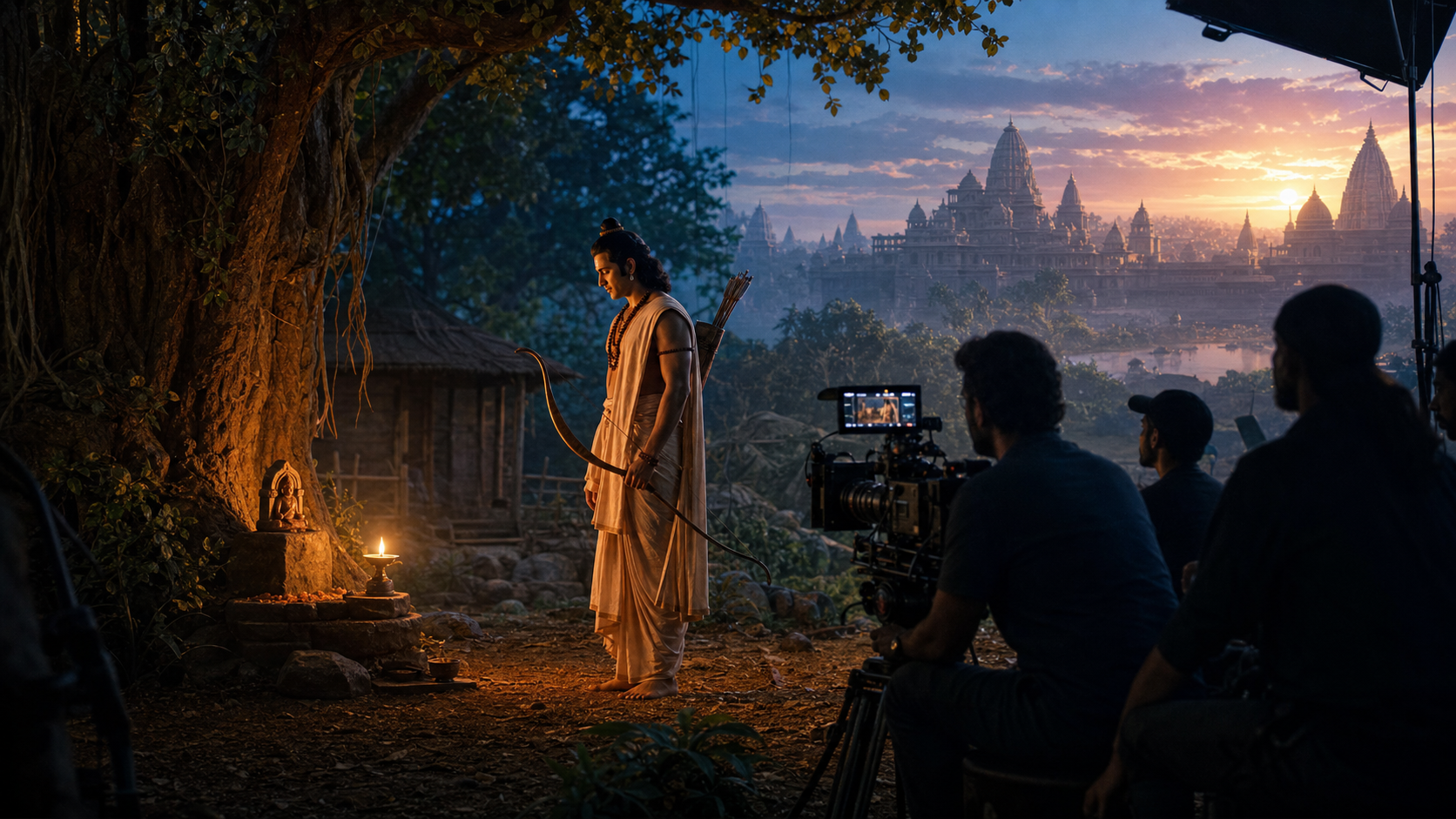
You may have the budget, the cast, the battle plans, and months of concept art. Yet if Sri Rama feels like a franchise hero wearing sacred costume, the film has already lost its centre. The problem will not be repaired by a larger Lanka, a louder score, or another layer of digital light.
If you are preparing, financing, writing, or evaluating a Ramayana adaptation, you need a test that works before expensive production begins: does each creative choice reveal dharma and invite bhakti, or does it merely display the epic’s recognizable objects? The distinction is practical. It changes the script, performance, sound, design, editing, and use of visual effects.
Write the dharmic purpose before you design the spectacle
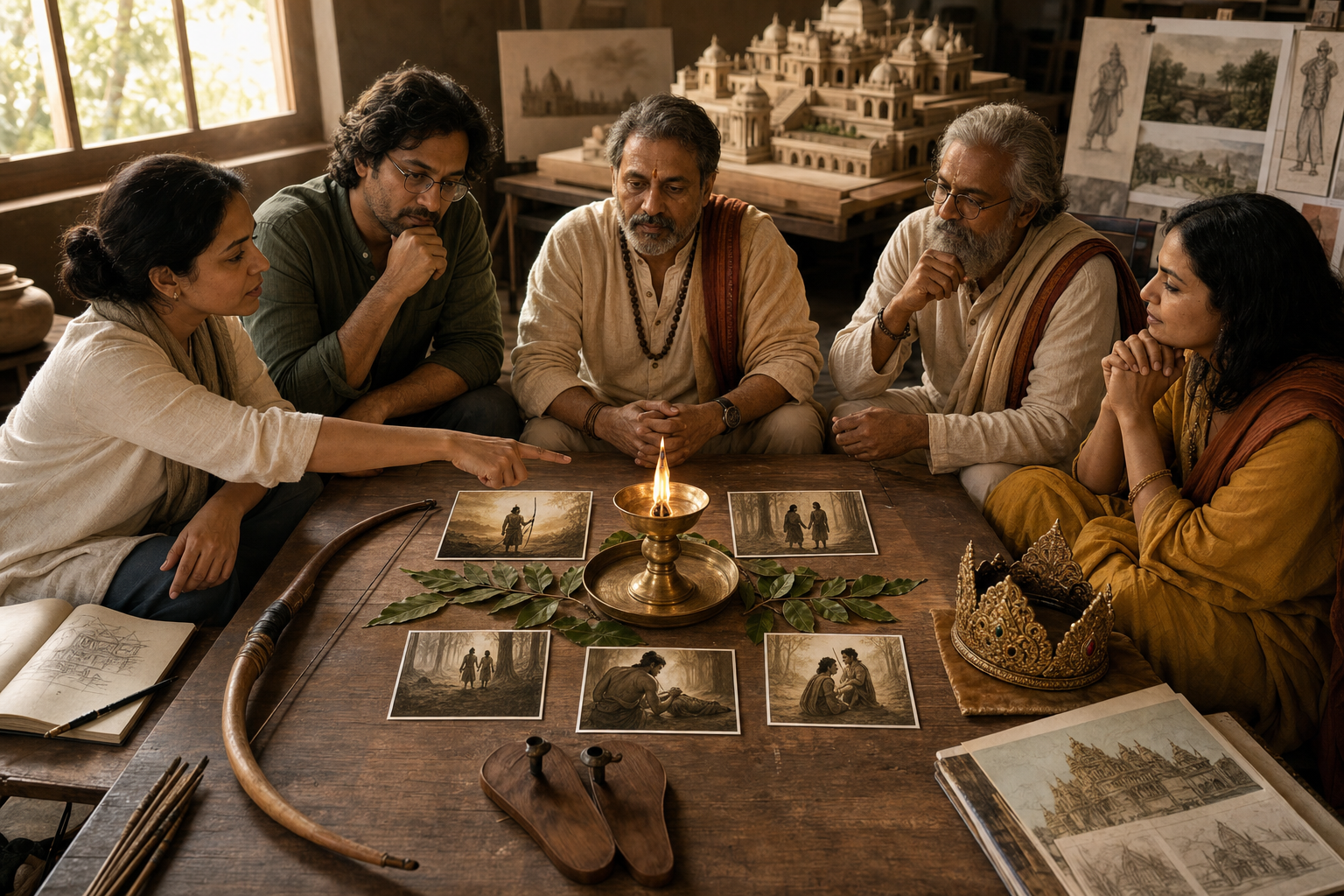
The Ramayana is itihasa, not a warehouse of characters and incidents waiting to be converted into intellectual property. Its dramatic power comes from choices made under the pressure of duty, affection, justice, sacrifice, and consequence. In lived Hindu experience, Sri Rama is also an intimate sacred presence carried through ritual, lullaby, remembrance, and ethical instruction. A screenplay must therefore do more than preserve plot points. It must preserve the relationship between the viewer and the one being portrayed.
Begin the adaptation bible with one sentence for each principal character. That sentence should identify the virtue, discipline, or failure the audience must be able to perceive without explanatory dialogue.
- Sri Rama: power governed by maryada. His courage matters because restraint, compassion, and duty direct it.
- Sita: the active moral centre of the story. Her dignity must appear through judgment, speech, endurance, and choice, not merely through what happens to her.
- Lakshmana: disciplined fire. His intensity should arise from vigilance and service rather than from comic irritability or uncontrolled anger.
- Hanuman: devotion joined to strategic intelligence. Bhakti does not diminish his capability; it gives his capability its purpose.
- Ravana: learning and prowess corrupted by ahamkara. His stature makes his descent into adharma more serious, but stature must not become an excuse to glamorize the descent.
These are not slogans to place in dialogue. They are controls on dramatic behaviour. If Sri Rama wins an exchange through humiliation, swagger, or impulsive violence, the scene may contradict his governing principle even when the event sequence remains recognizable. If Sita is present only so that other characters can react to her suffering, the plot may survive while its moral architecture collapses.
Audit every major scene with four questions:
- What duty is at stake, and who bears its cost?
- Which easier or more self-serving choice is being refused?
- What does the decision reveal that dialogue alone could not reveal?
- Does the audience leave admiring power, or understanding how power should be governed?
This audit becomes especially important in episodes involving Vibhishana’s counsel, the conduct of war, or judgment after Lanka. Such moments should be staged as dharma-sankata: genuine collisions of obligation requiring viveka. They are not invitations to flatten every position into moral equivalence. Nor should they be reduced to easy sermons in which the correct answer carries no cost. The drama lies in showing how duty, compassion, and justice can be held together under severe pressure.
Sri Rama does not need to become an angsty anti-hero in order to be dramatically compelling. The conflict can reside in the price of adhering to maryada when affection, grief, danger, or public responsibility pulls in another direction. That is a harder performance to write and direct, but it is also where the epic’s distinctive power resides.
Choose a Ramayana lineage and disclose your choices
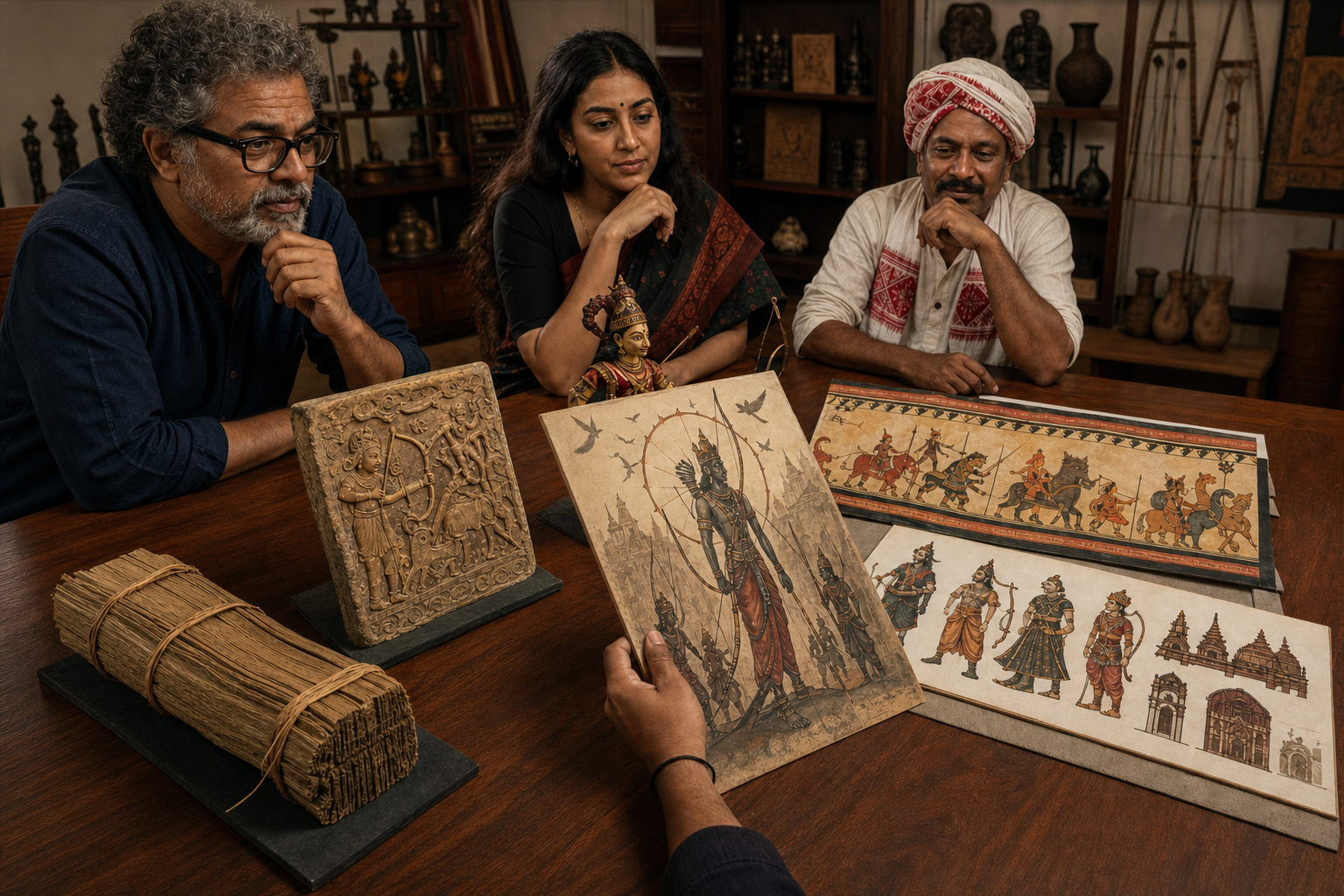
No single film can contain every Rama-katha. Valmiki’s Ramayana, Tulsidas’ Ramcharitmanas, Kamba Ramayanam, Adhyatma Ramayana, the Jain Paumacariya, and the Buddhist Dasharatha Jataka carry different poetic, devotional, philosophical, and ethical emphases. Responsible adaptation begins by choosing a textual spine. Otherwise, familiar incidents from different traditions can be combined without anyone in the production knowing what each version is trying to express.
Create a provenance ledger alongside the screenplay. For every episode, motif, or major departure, record four things:
- The textual or performance lineage supplying the episode.
- Whether the element belongs to the chosen narrative spine, a later popular retelling, or the film’s own invention.
- The dharmic or dramatic purpose served by including it.
- Any conflict it creates with another lineage already used in the screenplay.
The Lakshmana Rekha is a useful test. It is deeply established in popular memory but is not part of Valmiki’s Ramayana and appears in later retellings. A filmmaker need not discard it. The honest choice is to identify its lineage, understand its narrative function, and avoid presenting one later motif as though every Ramayana tradition contains it.
That clarity can appear in an opening note, closing credits, an official production companion, or other paratext. It need not interrupt the film with footnotes. A short declaration that the screenplay principally follows one named telling while drawing selected elements from others shows confidence rather than defensiveness. It also gives viewers a path into the wider tradition.
Plurality does not require homogenization. The Dasharatha Jataka can place greater emphasis on renunciation and ethical clarity. Jain Paumacariya reflects ahimsa and restraint, including revisions of martial details in keeping with Jain commitments. Sikh Gurbani often uses Ram as a name of the Supreme and connects remembrance with truthful living and seva. These traditions can illuminate shared values such as satya, karuna, daya, tyaga, and dharma, but their doctrinal differences should remain visible. A generic mixture labelled universal spirituality usually respects none of them.
The practical rule is simple: adaptation is permitted; unexamined borrowing is not. Once the lineage is clear, creative invention can enter into a responsible conversation with it instead of using sacred familiarity as a shortcut to emotional impact.
Direct rasa, then make image and VFX serve it
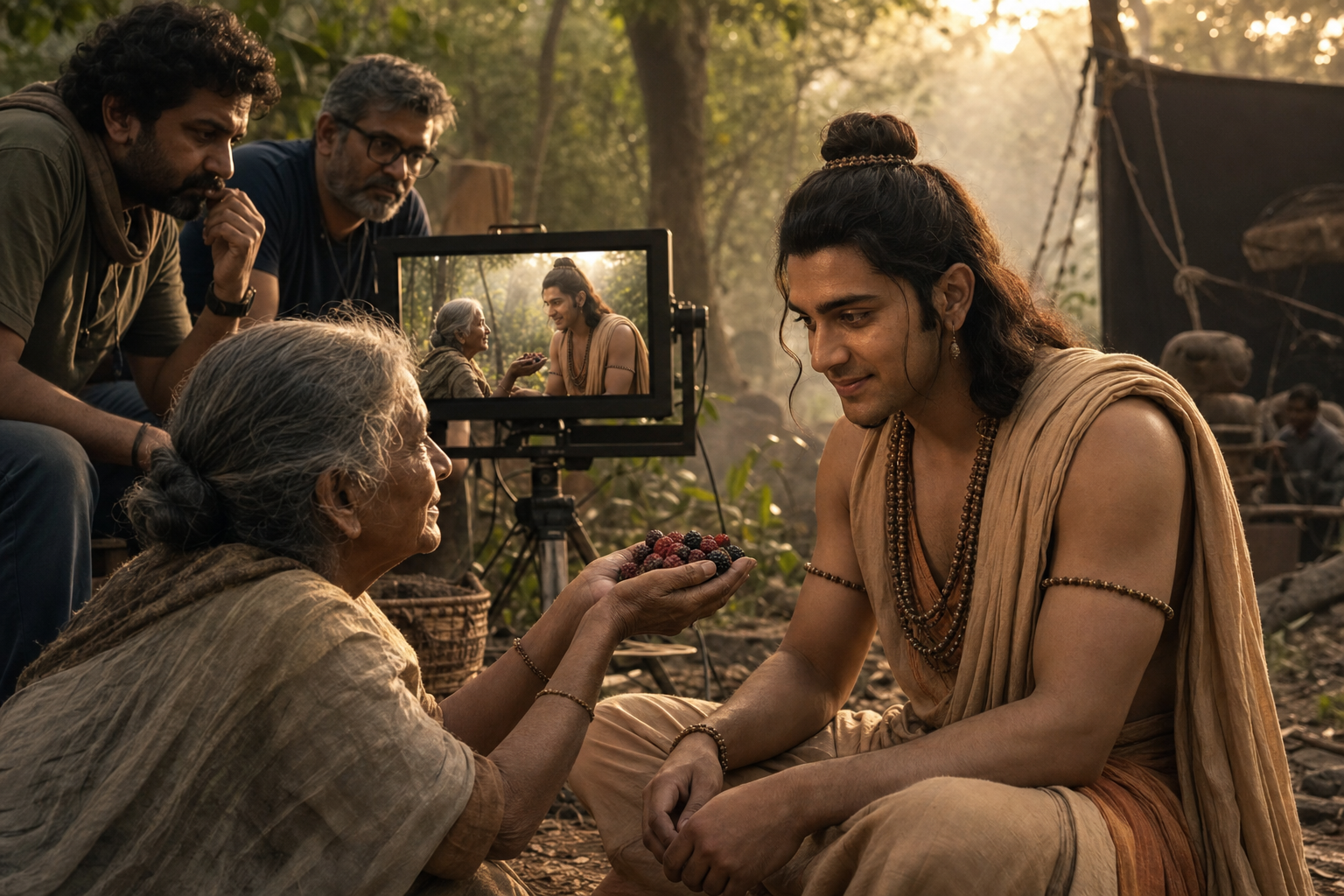
A Ramayana scene should not begin its visual life with the question of how impressive it can look. Begin with the state you want to awaken in the viewer. The rasa-bhava framework associated with the Natyashastra gives the production a precise vocabulary: vira for the heroic, karuna for compassion and sorrow, adbhuta for wonder, and shanta for tranquillity. In a sacred narrative, these rasas can open toward bhakti. They cannot substitute for it.
| Scene function | Governing rasa | Directing question |
|---|---|---|
| Vow, exile, or renunciation | Shanta with karuna | Can stillness carry the moral weight before music explains it? |
| Counsel, protection, or battle | Vira | Does strength remain ordered by dharma rather than rage? |
| Divine encounter or revelation | Adbhuta opening toward bhakti | Does the frame give the viewer time to behold rather than merely react? |
| Separation, loss, or grief | Karuna | Is feeling embodied through restraint, breath, and attention rather than announced? |
| Return, reconciliation, or restored order | Shanta | Does resolution produce inward quiet as well as outward celebration? |
This scene-level choice disciplines every department. A camera that never rests may create stimulation during a moment that requires darshan. Constant musical instruction may smother karuna. Rapid cutting can turn vira into mere aggression because the audience sees impact but not intention, geography, restraint, or consequence.
Sattvika-bhavas are the involuntary signs of profound feeling. They cannot be manufactured convincingly by instructing an actor to look devotional or to produce tears on cue. Breath, gaze, posture, vocal control, and the ability to remain present under silence give the camera something truthful to observe. When that preparation is absent, effects and music often become expensive camouflage for an emotionally vacant performance.
Apply the same discipline to visual theology. Shilpa Shastra traditions provide a grammar of royal and heroic lakshanas, kshatra bearing, symbolic objects, and dignified proportion. Costume, colour, insignia, weapons such as the Kodanda, and physical carriage should belong to the same imaginative world. The goal is not museum reconstruction. It is coherence: the viewer should intuit why this figure represents maryada before a speech declares it.
Avoid both decorative excess and symbolic emptiness. Gaudiness can make sacred kingship look like fantasy merchandising. Severe modernist minimalism can remove the signs through which the dharmic imagination recognizes character, office, vow, and relationship. For each important visual element, ask what it means, which lineage supports it, how it affects movement, and whether it helps the actor carry the role.
VFX should function as a sevak. Use it to establish action geography, strengthen atmosphere, preserve iconographic coherence, and make the wondrous intelligible. Do not let it become the protagonist. A useful review is to watch the sequence in a reduced-effects cut. If the ethical centre, primary rasa, and relationship between the characters disappear with the finished spectacle, the scene was never ready for spectacle.
Rehearse bhakti into performance, language, and sound
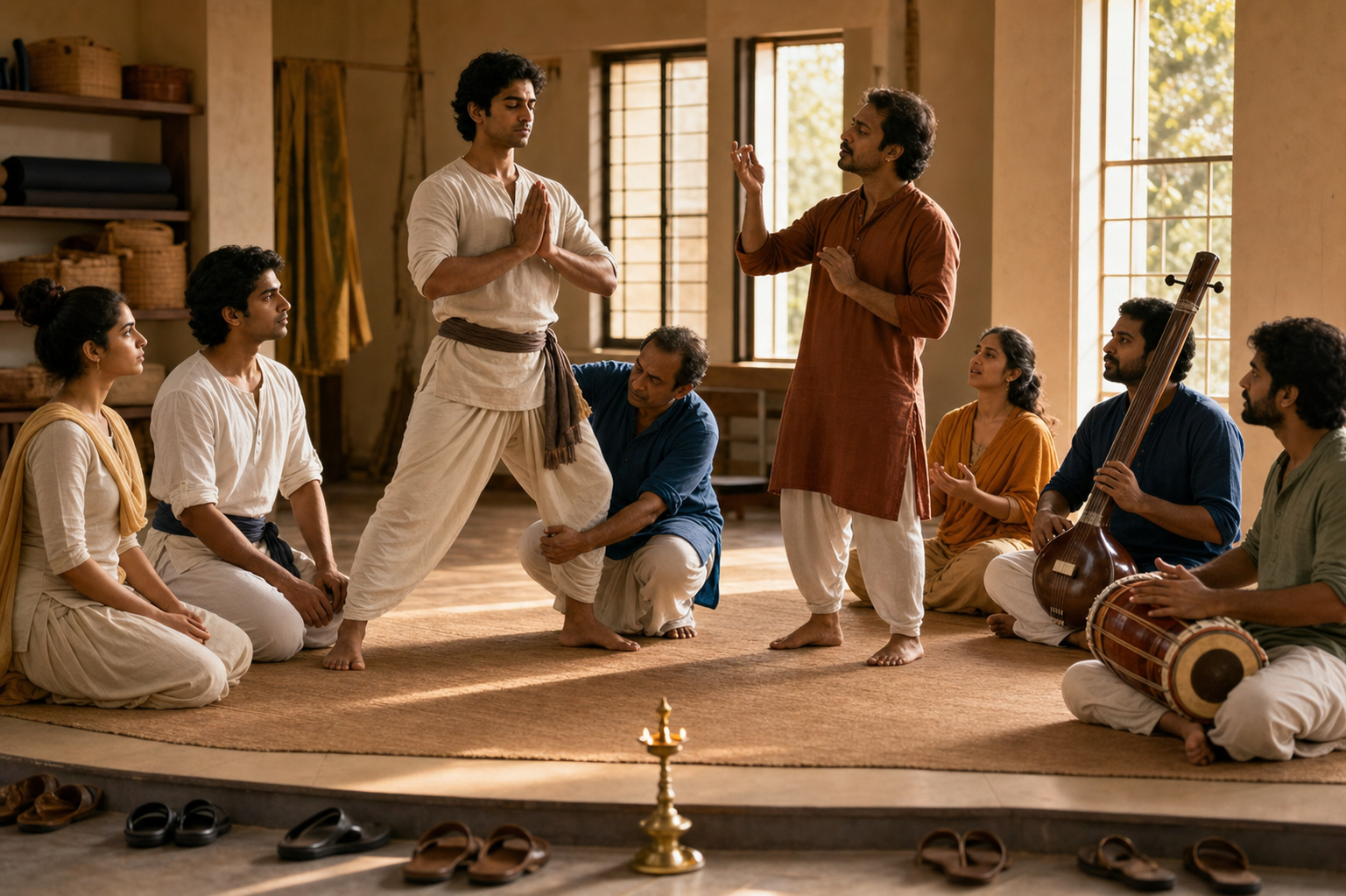
Bhakti cannot be added in post-production. Living performance traditions such as Yakshagana and Kathakali approach sacred portrayal through preparation that may include prayer, breath discipline, close attention to gesture, and acceptance of responsibility toward the role. A contemporary set can translate that seriousness into a repeatable rehearsal method without turning an actor’s private belief into a test of professional loyalty.
Use the following sequence before blocking a pivotal scene:
- Read the relevant passage from the production’s chosen textual lineage, not only the screenplay.
- Name the vow, duty, relationship, and temptation operating beneath the dialogue.
- Rehearse breath and stillness until the actor can hold attention without gestural clutter.
- Correct the pronunciation of names, mantras, and key dharmic terms before emotional habits harden.
- Block the scene only after the actor can explain what the character serves and what the character refuses.
Mantra-japa, pranayama, and study of selected passages can offer performers tonal and attentional anchors when undertaken respectfully. The craft objective is not public performance of piety. It is the steadiness required to portray reverence, command, grief, or surrender without exaggeration. Traditional gurus, senior performers, and specialists in abhinaya should be involved early enough to influence the work, not invited near release merely to endorse completed choices.
Language needs its own dramatic architecture. Vows and vrata call for an austere, elevated register. Domestic exchanges can be intimate and tender. Counsel and command should be economical and forceful. A single flattened register makes kingship, kinship, devotion, and battle sound interchangeable. Casual banter or imported idiom may work in ordinary entertainment, but placed inside a sacred turning point it can dissolve the rasa before the scene has formed it.
Accurate sound begins with the name itself. The long vowel in Rāma is not a decorative affectation. Guided diction should establish it consistently, along with the cadence of other names and mantras. Dialogue can also learn from chandas, while music can draw thoughtfully from the movement of doha and chaupai, the recitational quality of katha, the collective energy of kirtan, and appropriate raga traditions.
Do not turn those traditions into an indiscriminate sampler. Choose a coherent sonic grammar. Yakshagana’s narrative percussion, Kathakali’s abhinaya vocabulary, or carefully integrated Bharatanatyam motifs can carry meaning when the production understands their function. Silence, drone, and chant can mark a passage from loka, the ordinary field of action, toward aloka, a numinous presence. The transition works only when the film leaves room for the viewer’s attention to change.
Three inexpensive reviews can expose problems before the final mix and VFX lock:
- Text-only table read: listen for whether duty, hierarchy, tenderness, and counsel remain distinct without performance spectacle.
- Sound-only pass: close the image and test diction, rhythm, silence, musical restraint, and the emotional logic of the voices.
- Low-effects cut: reduce visual ornament and check whether performance and rasa still carry the scene.
Support these reviews with a core research room that brings together textual lineage, Sanskrit and regional-language diction, rasa and abhinaya, design, music, and visual effects. The VFX lead belongs in that conversation early because technology should be designed around the scene’s devotional and ethical purpose. The same is true of the composer and production designer. Bhakti is not one department’s assignment.
Key takeaways for the next production meeting
- Define what each principal character reveals about dharma before approving dialogue, costume, or action design.
- Select a primary Ramayana lineage, label later popular motifs, and record original inventions transparently.
- Give each pivotal scene a governing rasa and protect the stillness, pacing, and attention required to evoke it.
- Judge design and VFX by whether they clarify character, sacred symbolism, and action rather than merely increasing scale.
- Prepare actors through textual study, breath, disciplined stillness, accurate diction, and consultation with living performance traditions.
- Test the film through a table read, a sound-only pass, and a reduced-effects cut before technical polish conceals structural weakness.
If a Ramayana project is on your desk now, pause the asset build long enough to stage one pivotal scene with no effects and minimal music. Choose a vow, a scene of counsel, or an encounter with Hanuman. If Sri Rama’s maryada, Sita’s moral agency, and the devotional relationships cannot be heard and seen at that stage, the script and performance are not ready. Repair them there. Spectacle will then have something sacred to magnify.