
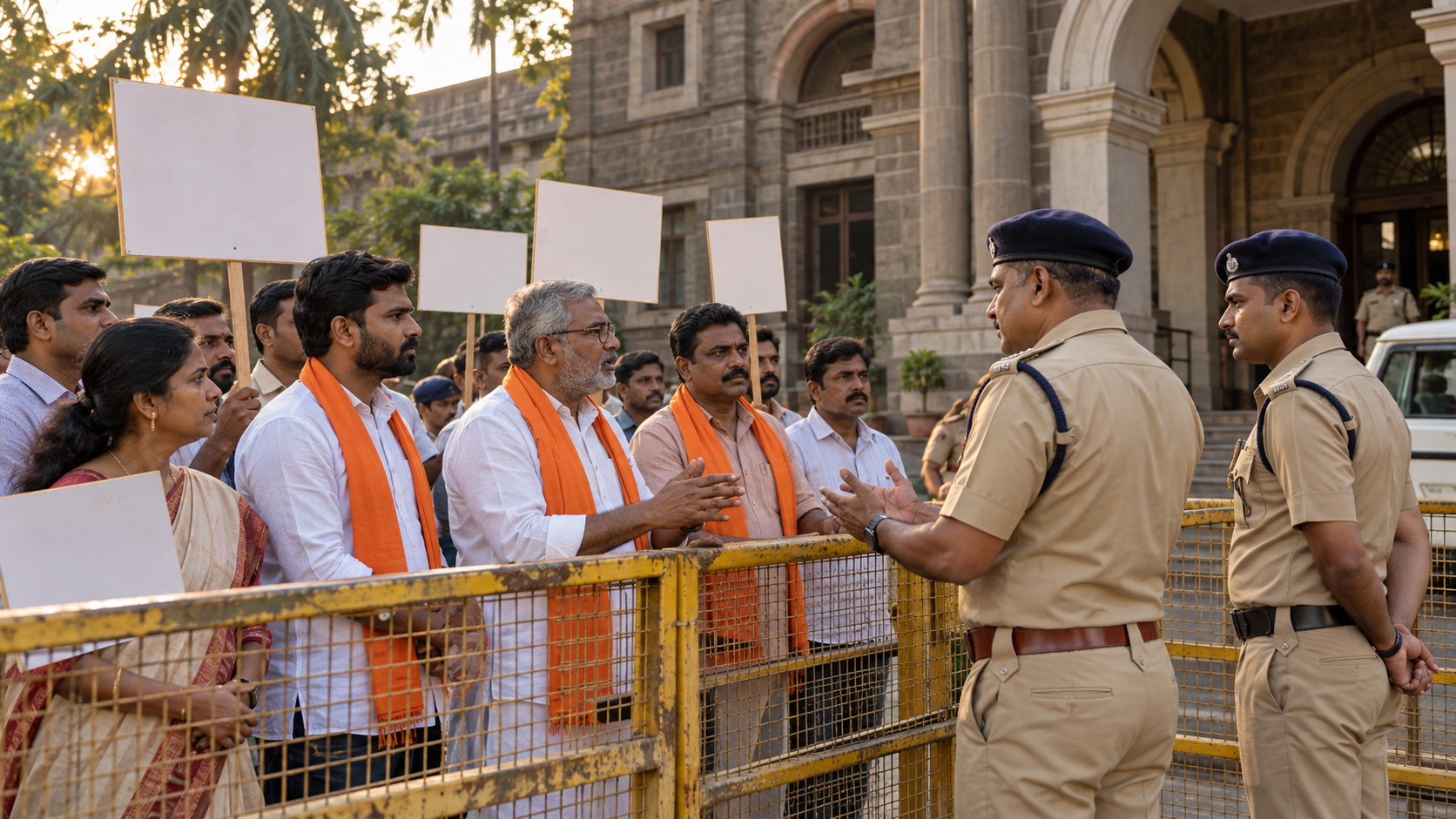
If you are trying to decide whether police in Kolhapur targeted Hindu voices or simply followed an ordinary complaint process, the available public claim does not settle the question. You do not have to choose between passive trust and instant outrage. You can demand the records needed to compare the speech, the allegation and the police response.
Sakal Hindu Samaj has demanded the immediate withdrawal of cases against pro-Hindu activists who criticised Amruta Fadnavis’s statement concerning non-Hindu entry into Garba. The organisation has characterised the action as selective and warned of street protests. That establishes the dispute and the organisation’s position. It does not, by itself, establish why the cases were registered or whether comparable speech received different treatment.
Start by separating the known facts from the disputed claim

Three elements are presently clear: pro-Hindu activists criticised a statement attributed to Amruta Fadnavis; cases were reportedly registered against those activists; and Sakal Hindu Samaj wants those cases withdrawn because it considers the police response selective.
The information supplied publicly does not answer the questions that decide the merits. It does not reproduce the activists’ complete words, identify the precise allegations in the case records, set out the police explanation or provide examples of materially comparable speech that was treated differently. Those gaps matter. A conclusion reached without filling them will usually reflect political confidence rather than evidentiary confidence.
Do not turn the claim that policing was selective into a declaration that selectivity has already been proved. But do not make the opposite mistake either. The existence of a police case can impose a real burden even before any allegation is adjudicated, so demands for clarity, proportionality and consistent treatment deserve a serious response.
If you are evaluating public messages about the dispute, look for language that preserves this distinction. A careful statement says that cases were registered and that their withdrawal has been demanded. A careless statement jumps immediately to guilt, innocence, persecution or vindication without showing the underlying record.
Use a real test for selective policing
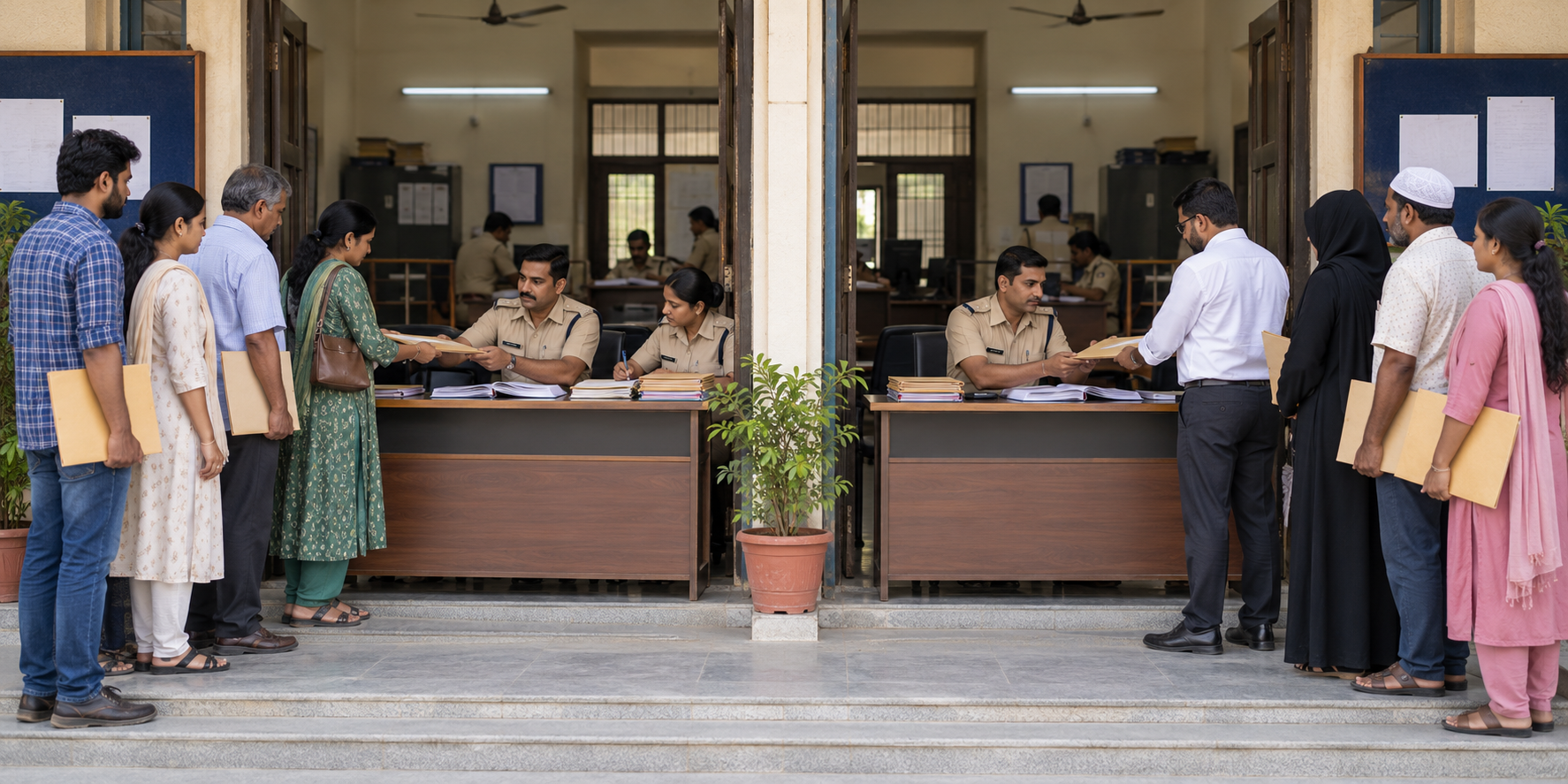
Selective action is not established merely because the affected speakers are pro-Hindu or because the underlying controversy concerns a Hindu festival. The meaningful test is whether materially similar conduct received materially different treatment without a relevant explanation.
You can test that proposition with five questions:
- What exactly did each activist say or publish? Obtain the full recording, complete post or unedited statement. A clipped sentence cannot reliably establish tone, context, a threat or the absence of one.
- What action did the police actually take? Distinguish a complaint received by police, a matter formally registered, questioning, detention, arrest and a later charging decision. These are not interchangeable stages.
- What conduct is being used as the comparator? The comparison should involve similar words, audience, medium, context, reach and alleged harm. A harsh opinion is not automatically comparable to a personal threat, and an unreported post is not automatically comparable to conduct that generated a formal complaint.
- Was the comparator handled by the same authority under reasonably similar circumstances? Decisions made in another place, at another procedural stage or on a substantially different allegation may reveal a broader concern, but they do not prove unequal treatment in this particular matter.
- Has the police explanation been requested in writing? The public may not be entitled to every investigative detail, but authorities should be asked to identify the procedural basis for their action to the extent the law permits.
The strongest evidence would be a compact comparison table prepared from authentic records: the exact expression, the complaint or case status, the alleged legal basis, the police step taken and the outcome. If an organisation cannot yet fill those columns, it should describe selective policing as an allegation under examination, not as a completed finding.
This discipline does not weaken Hindu advocacy. It prevents officials from dismissing a serious grievance as a slogan. One well-documented comparison is more useful than dozens of unrelated examples gathered from social media.
Keep the Garba disagreement distinct from the police question
The controversy contains two disputes, and mixing them produces more heat than clarity. One concerns the religious and cultural character of Garba and the terms on which people should participate. The other concerns the state’s response to criticism about that issue.
You may believe that Garba’s Hindu devotional character should be protected. Someone else may take a different view of participation. That disagreement does not answer whether any particular criticism crossed a lawful boundary, nor whether police used the same standard for speakers on opposing sides.
- Criticising Amruta Fadnavis’s position is not the same act as threatening her.
- Arguing for participation rules at a religious event is not the same act as harassing an individual participant.
- Using forceful cultural language is not automatically the same as inciting unlawful conduct.
- Defending an organiser’s authority over an event is a different question from defending every word used by every supporter.
- Objecting to a speaker’s tone is different from deciding that criminal process is a necessary and proportionate response.
These distinctions protect both cultural self-respect and public credibility. A movement should be able to defend Hindu traditions while correcting any supporter who substitutes intimidation for argument. At the same time, officials should not treat an unpopular or uncompromising cultural position as sufficient proof of unlawful conduct.
The relevant question is therefore not whether the criticism made someone uncomfortable. It is what was said, what specific allegation followed, what police measure was used and whether comparable expression was handled by the same standard.
Build the record before taking the dispute to the street

Sakal Hindu Samaj has warned of street protests if the cases are not withdrawn. Public assembly can demonstrate that a grievance has community support, but a poorly controlled protest can replace the original issue with a new controversy. Activists should therefore complete the evidentiary and organisational work first.
- Preserve the original material. Save complete videos, posts, notices and correspondence with their dates and context intact. Do not add captions that blur the difference between what the record shows and what an organiser believes.
- Obtain the available case documents. A lawyer familiar with the relevant jurisdiction should identify the exact allegations, procedural stage and available remedies. Do not rely on forwarded messages for legal conclusions, and do not assume that a public demand for withdrawal describes the mechanism by which a matter can legally end.
- Prepare a one-page chronology. Record the original statement, the activists’ response, the complaint or police step, requests for clarification and subsequent official answers. Label disputed points as disputed.
- Submit a written representation. Ask for review of the cases, state the reasons precisely and attach genuine comparators if unequal treatment is alleged. Preserve proof that the representation was delivered.
- Use one authorised spokesperson. The spokesperson should publish verified updates, correct errors promptly and refuse to speculate about facts that remain unavailable.
- If a protest proceeds, follow locally applicable legal requirements identified by counsel and responsible organisers. Establish a clear route or venue, time, marshals and conduct rules. Prohibit threats, property damage, doxxing and attempts to obstruct officials or opponents.
The public demand should be equally precise: review the cases under the same standards applied to materially comparable expression, give the affected people the process due to them and communicate a reasoned outcome within lawful limits. That demand is harder to misrepresent than a general accusation that every police action involving Hindu activists is hostile.
People named in a public campaign also face reputational and legal consequences. Verify identities before publishing them, avoid declaring complainants dishonest without evidence and do not release personal information merely to increase pressure. If a proposed statement accuses a named person of misconduct, have counsel review it before publication.
Key takeaways
- The established public fact is that Sakal Hindu Samaj has demanded withdrawal of cases and alleged selective action; the merits of that allegation require the underlying records.
- A credible selectivity claim compares substantially similar speech, complaints, procedural stages and police responses.
- The question of participation in Garba is distinct from the question of whether criticism about it justified police intervention.
- Complete recordings, authentic case documents and a dated chronology should come before slogans or street mobilisation.
- Peaceful, disciplined advocacy protects both the people facing cases and the credibility of the wider Hindu cause.
If you belong to a Hindu organisation responding to this dispute, begin with the dossier: complete speech, case documents, chronology and genuine comparators. If those materials show unequal treatment, they can turn a political accusation into a focused demand for accountability. If they show important differences between the cases being compared, revise the claim rather than concealing the weakness. Dharmic public action should be firm enough to resist unfairness and disciplined enough to follow the truth wherever the record leads.
References

Leave a Reply
You must be logged in to post a comment.