
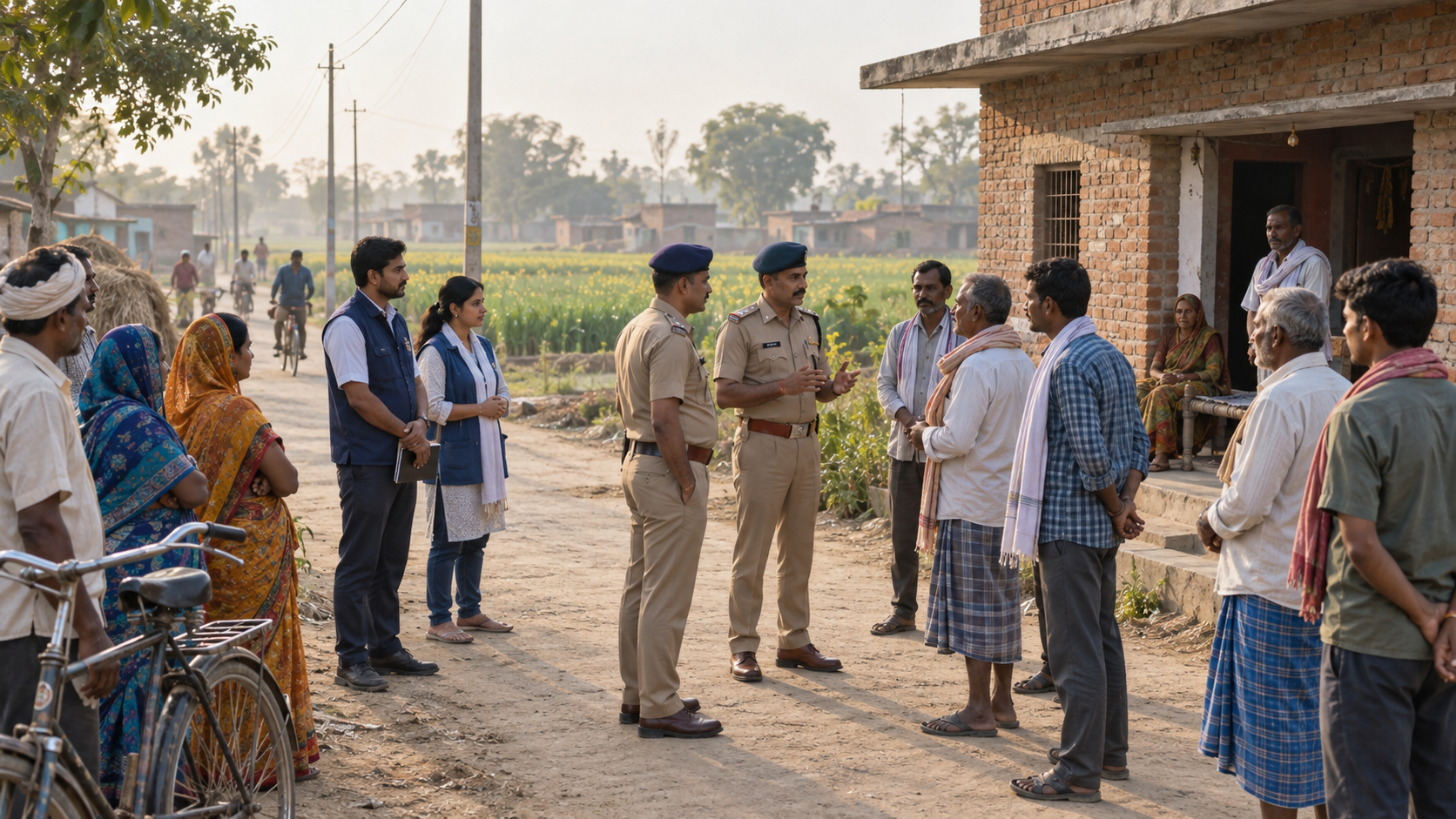
If you have received a message claiming that missionaries were converting villagers near the Bihar-Uttar Pradesh border, the useful question is not whether you should be concerned. It is what can be proved, which police station has jurisdiction, and how you can protect vulnerable families without turning an allegation into a street verdict.
The present facts are narrow: villagers alleged conversion-related missionary activity in Balurwa, Hindu activists arrived from neighbouring Kushinagar, and Bhitha police opened an inquiry. That sequence warrants attention and follow-up. It does not yet establish that a conversion occurred, that anyone acted unlawfully, or that every person at the gathering shared the same purpose.
Key takeaways
- The Balurwa matter is an allegation under police investigation, not an adjudicated finding of unlawful conversion.
- Balurwa is under Bhitha police station in Bihar. The involvement of activists from Uttar Pradesh does not transfer jurisdiction or make Uttar Pradesh law automatically applicable.
- If you witness suspected coercion, inducement, fraud, or intimidation, document observable facts and notify police. Do not detain people, seize property, force statements, or stage a confrontation.
- A prayer gathering, charitable activity, or missionary presence is not by itself proof of an offence. Investigators need evidence connecting a proposed religious change to an allegedly unlawful method.
- The strongest long-term Hindu response combines lawful vigilance with dependable seva, legal awareness, cultural education, and support for families facing social or economic distress.
What the Balurwa incident establishes, and what it does not
The limited facts presently available
Balurwa village falls under Bhitha police station in Bihar and lies close to Uttar Pradesh’s Kushinagar district. Locals alleged that a Christian missionary group was conducting activities connected with religious conversion in a field. Vishva Hindu Parishad and Bajrang Dal workers from the Uttar Pradesh side reached the location and informed police. Some people reportedly left when the activists arrived, and Bhitha SHO Naresh Kumar confirmed that information had been received and an investigation was underway.
Those facts justify asking the police what they found. They do not answer the central legal questions. Leaving when activists arrive can look suspicious, but it is not proof of conversion, coercion, fraud, or allurement. The presence of missionaries may establish religious outreach; it does not, without more evidence, establish an unlawful method.
The questions that still require evidence
- What was the stated purpose of the gathering?
- Did anyone ask a participant to change religion, renounce a previous faith, or take part in a conversion ceremony?
- Were money, treatment, education, employment, protection, or other benefits offered on the condition that a person change religion?
- Did any participant describe a threat, deception, pressure campaign, or abuse of dependency?
- What words were spoken, what materials were distributed, and what physical or digital evidence was preserved?
- Were the people present organisers, invited participants, observers, workers, or passers-by?
- What conclusion did Bhitha police reach after interviewing those involved?
Until those questions are answered, use precise language: “suspected conversion-related activity was reported in Balurwa” is accurate. “A conversion racket was caught” asserts facts that have not yet been established. This distinction is not softness. It protects the credibility of Hindu complainants and prevents exaggeration from becoming the easiest way to dismiss a legitimate concern.
The border setting makes discipline especially important. Information and activists can cross a state line in minutes, while police powers remain tied to jurisdiction and evidence. Uttar Pradesh activists may give information or serve as witnesses, but they do not acquire police authority after entering Bihar.
How to respond when a suspected-conversion alert reaches you
A conversion alert often arrives as a short video, a forwarded voice message, or an urgent telephone call. The first version may omit the location, time, speaker, or conduct that supposedly made the gathering unlawful. Your job is to turn an emotionally charged alert into information the police can test.
- Confirm the location before mobilising anyone. Record the village, landmark, police-station area, district, and state. In a border belt, naming only the nearest market or town can send a complaint to the wrong police unit.
- Contact police instead of assembling a crowd. Give the exact location, describe any immediate risk, and state what has actually been observed. If nobody is in danger, avoid language suggesting an emergency that you cannot substantiate.
- Assign simple roles. One person can communicate with police, one can keep a written chronology, and willing witnesses can remain available. A swelling crowd adds noise, creates fear, and makes later accounts harder to separate.
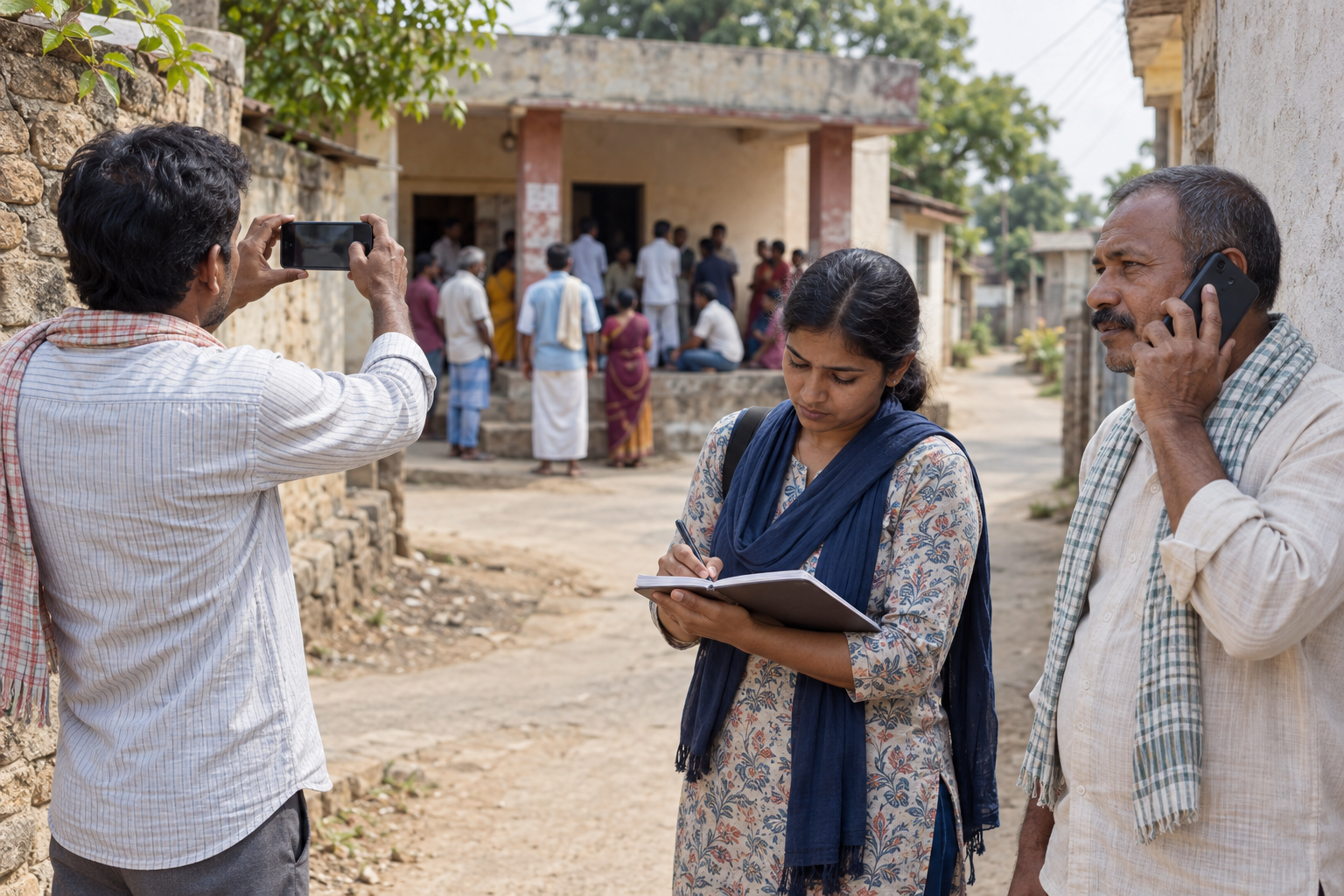
- Record only from a lawful position. Note the time, visible activities, signs, distributed materials, identifiable speakers, and exact words you personally heard. Do not trespass, force entry, search bags, take phones, or seize pamphlets.
- Preserve original evidence. Keep the first video, photograph, audio file, or message in its original form. Do not add music, captions, cuts, or accusations before giving it to police. Retain the sender details and transmission time where available, and ask investigators how they want the original file supplied.
- Separate witnesses before collecting accounts. Ask each willing adult what happened in their own words. Record what the person saw or heard separately from what someone else told them. Do not make a villager repeat a statement before activists, organisers, or a crowd.
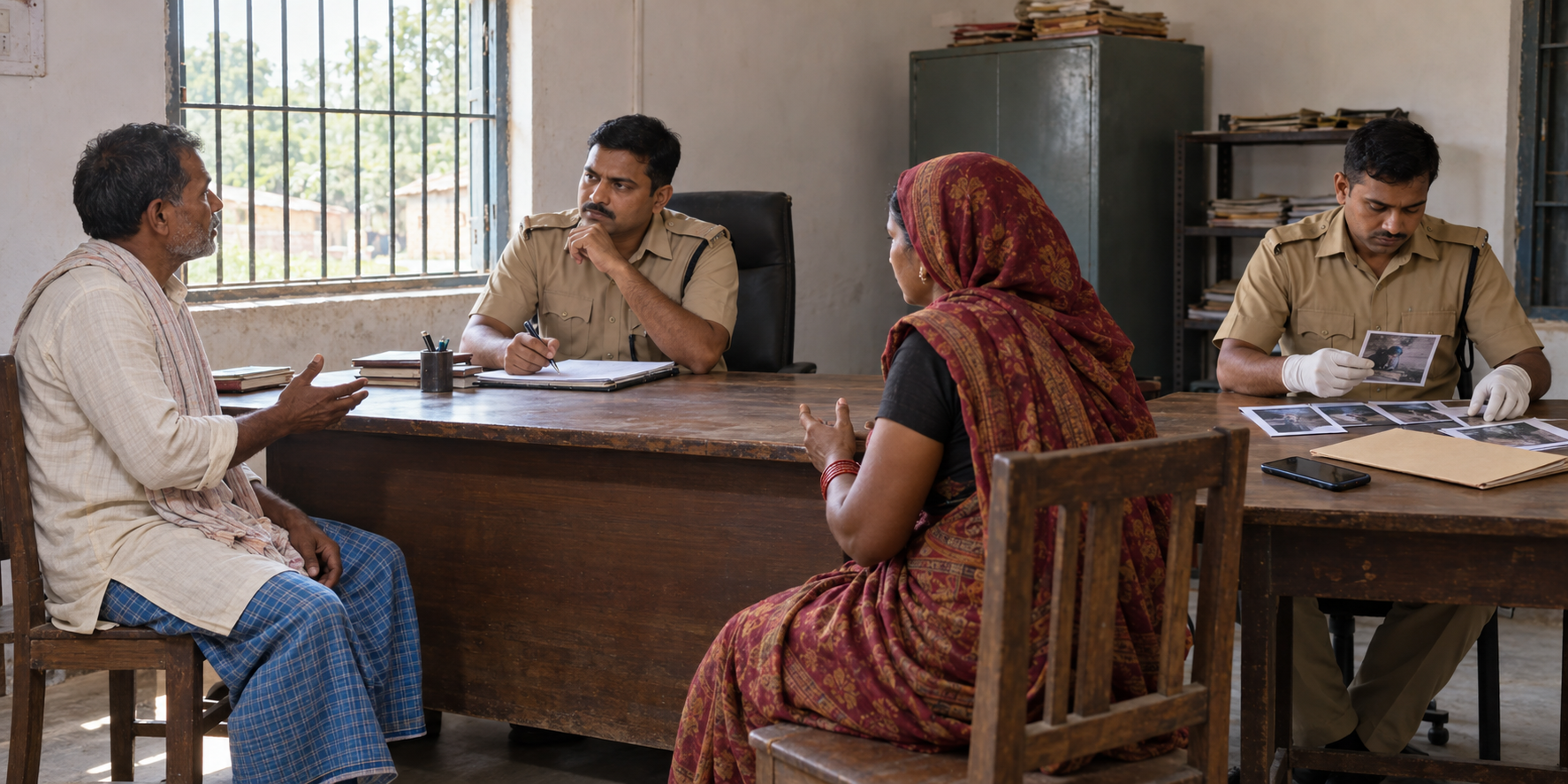
- Submit a factual written complaint. Divide it into direct observations, information received from named witnesses, and attached material. Request an acknowledgement or complaint reference if the local process provides one.
- Follow the inquiry without announcing a verdict. Ask whether statements were recorded, whether evidence was collected, and whether any case was registered. Publicly describe the matter as an allegation or inquiry until authorities or a court establish more.
Do not detain participants, block exits, demand that someone chant a slogan, compel a declaration of faith, damage property, or expose the identities of children and vulnerable adults. Such conduct can endanger people, create legal exposure for activists, and contaminate the very evidence needed for a credible complaint.
If there is an immediate threat to a person, safety comes first: alert police and move the endangered person to a safe public setting if they voluntarily agree. Do not turn protection into custody. An adult who is free to leave must remain free to leave.
The legal question is method, evidence, and jurisdiction
Three different things are often collapsed into the word “conversion”: a person’s voluntary change of belief, an attempt to persuade that person, and an attempt that allegedly uses a prohibited method. The moral and legal dispute in Balurwa cannot be resolved until those categories are separated.
The Uttar Pradesh Prohibition of Unlawful Conversion of Religion Act, 2021 addresses conversion through force, coercion, undue influence, allurement, fraudulent means, or marriage. Balurwa, however, is in Bihar. Bihar does not have the same high-profile standalone framework described for Uttar Pradesh, although police can still investigate conduct such as cheating, criminal intimidation, trespass, or public-order offences when the evidence supports them.
Do not cite the Uttar Pradesh statute as though its procedures automatically control an event in Bihar. If relevant acts occurred on both sides of the border, give each police unit the places, times, witnesses, and conduct connected to its state. Let investigators and qualified lawyers determine jurisdiction rather than trying to settle it through activist assertion.
A useful evidence test has three parts:
- The proposed religious act: What change, declaration, ceremony, affiliation, or renunciation was requested?
- The disputed method: What threat, deception, pressure, conditional benefit, or abuse of influence is alleged?
- The connection: What evidence shows that the disputed method was used to obtain the religious act?
The third part is where many public claims remain weak. A meal, medical camp, lesson, charitable visit, or prayer meeting does not alone prove that aid was conditional on conversion. Conversely, calling an event charity or prayer does not end the inquiry if a participant can show that essential assistance was expressly tied to changing faith. Investigators need the words used, the conditions imposed, the people involved, and corroborating material.
Religious identity is not evidence of criminal conduct. A Christian organiser should not be presumed guilty because of being Christian, just as a Hindu complainant should not be presumed violent or dishonest because of organisational affiliation. Judge the alleged act, the method, and the proof.
This is general civic guidance, not advice for an individual’s case. Anyone asked to sign a statement, facing an accusation, or considering a complaint with serious allegations should consult a lawyer qualified to practise in Bihar. A poorly framed accusation can harm an innocent person and weaken a genuine case.
A strong Hindu response begins before the next complaint
If you care about protecting dharma, do not make police intervention the first and only form of community presence. Families who hear from Hindu organisations only when a missionary gathering is suspected may reasonably ask where that concern was during illness, unemployment, migration, school difficulty, or social exclusion.
Make seva dependable and transparent
- Create a confidential local contact through whom families can report religious pressure, threats, fraudulent promises, or urgent social needs.
- Maintain transparent community funds with recorded eligibility rules. Hindu seva should not reproduce the conditional assistance that activists object to elsewhere.
- Connect households with legitimate health care, education, legal-aid, identity-document, and welfare channels. Use qualified providers where professional advice is required.
- Offer children sustained cultural education rather than a lecture delivered after a controversy. Teach local temple traditions, festivals, family histories, and the reasons behind practices in language they understand.
- Keep regular contact with elderly people, migrant households, socially isolated families, and anyone in acute distress. Contact should offer support, not surveillance or a test of orthodoxy.
- Designate trained community members to receive alerts, document facts, communicate with police, and discourage crowd action.
- Maintain a case log containing the complaint date, evidence supplied, police acknowledgement, follow-up contact, and final outcome. Restrict access to protect personal information.
Missionary outreach is often feared most where state services are thin and community ties have weakened. Whether that broader pattern is ultimately established in any particular village, the practical lesson remains sound: asking a family to remain Hindu while leaving it alone in a crisis is not an adequate defence of dharma. Seva becomes credible through reliability, dignity, and the absence of hidden conditions.
Demand a verified outcome, not permanent suspicion
Bhitha police should be allowed to investigate, but the matter should not simply disappear into an indefinite inquiry. Community representatives can submit written follow-ups asking whether an offence was found, whether further evidence is needed, and whether the matter has been closed.
If evidence supports an offence, authorities should act under the law that applies in Bihar. If the allegation cannot be substantiated, that outcome should also be acknowledged. Hindu organisations strengthen their future complaints when they correct early claims that later evidence does not support. Accountability must apply to missionaries, officials, witnesses, and activists alike.
Before the next alert, prepare a one-page incident form with fields for the exact location, time, observed words and actions, witness contact details, evidence location, police acknowledgement, and follow-up owner. Keep current contact details for the relevant Bihar police station and a Bihar-qualified lawyer. That modest preparation will do more for a genuine case than a hundred forwarded messages.
Protecting dharma in Balurwa and other border villages requires refusing two failures at once: complacency about coercive conversion and recklessness about proof. A Hindu community that combines seva, accurate documentation, lawful pressure, and acceptance of verified outcomes is harder to exploit and harder to discredit.


References
