

If you’ve encountered the claim that a Hindu minor was taken to Sonagachi, don’t let a communal label make the decisions for you. The immediate duties are clearer: protect the child, preserve evidence, demand verifiable updates, and distinguish religious identity from a motive that still has to be proved.
The allegation is grave, but the publicly available details are limited. That calls for vigilance without exaggeration. A responsible Hindu response should be firm about the reported harm while refusing to turn an arrest or a headline into a verdict.
What is alleged, and what remains unproved

A Hindu minor was allegedly lured to Kolkata with an offer of domestic work, rescued from the Sonagachi red-light area, and two Muslim suspects were reportedly arrested. Those details describe the accusation and the reported police action. They do not establish guilt, religious motivation, or the existence of a larger network.
Several facts needed for a confident judgment are not available: the child’s precise age, the date and route of travel, the police station handling the matter, the complaint or case number, the offences recorded, the identities and roles of the accused, the agency that conducted the rescue, and the status of any court proceedings. There is also no official record here establishing romantic grooming, an organized religious conspiracy, or a plan to target the child because she was Hindu.
- Claimed: a Hindu minor was induced to travel to Kolkata through an apparent offer of domestic work.
- Reported: she was recovered from Sonagachi and two Muslim suspects were arrested.
- Not established by the available facts: guilt, conviction, a romantic relationship, religious targeting, or an organized trafficking network.
Use those three levels when you discuss the case. Say that conduct is alleged when it has not been adjudicated. Say that suspects were arrested, not that they were convicted. If reliable official information later establishes more, update the description then.
The alleged job offer matters more than the slogan

The label ‘love jihad’ implies that romance or marriage was used to deceive a Hindu woman or girl for a religious purpose. Yet the recruitment method described here is an offer of domestic work. Unless further evidence demonstrates a romantic element, applying that label as a settled explanation risks obscuring the mechanism that families most need to notice.
A false employment offer can exploit financial pressure, a young person’s wish for independence, or trust in someone who appears able to arrange work and travel. The practical warning sign is not the suspect’s religious identity by itself. It is an adult offering a minor distant work while bypassing guardians, withholding a verifiable address, controlling travel arrangements, demanding secrecy, or changing the destination after departure.
If you are trying to understand a similar situation, ask concrete questions. Who offered the work? Was the employer independently verified? What address was given? Who paid for or arranged the journey? Did the destination change? Were the child’s phone, money, or documents taken? Was she prevented from contacting family? Answers to those questions can reveal coercion far more reliably than a communal slogan.
Religious identity may be relevant to accurate reporting, especially when a Hindu child is the alleged victim. It is not a substitute for evidence of motive. Keeping that distinction does not weaken Hindu advocacy. It makes the demand for justice harder to dismiss and keeps attention on the acts that investigators must prove.
What to do when a minor may be in danger

If this resembles a situation in your family or community, do not attempt a private rescue and do not confront a suspected trafficker. That can cause the child to be moved, provoke retaliation, or destroy evidence. Use police and qualified child-protection authorities.
- Report the danger promptly. Tell local police and the appropriate child-protection authority that the missing or endangered person is a minor and that you suspect coercion or trafficking. If the risk is immediate, use the local emergency channel.
- Preserve the original evidence. Keep messages, call logs, usernames, phone numbers, photographs, employment promises, addresses, travel details, payment records, and names of possible witnesses. Do not edit screenshots or continue messaging merely to provoke a response.
- Build a factual timeline. Record what happened, when it happened, who observed it, and how each fact is known. Separate direct evidence such as a message or ticket from conclusions such as a suspected motive.
- Request a written reference for the report. Note the police station or agency, the responsible contact, and any complaint or case number provided. Keep copies of everything submitted.
- Give sensitive information to investigators, not social media. Public accusations can alert suspects, expose the child, spread incorrect identities, and complicate a prosecution.
- After recovery, put welfare before publicity. A minor may need qualified child-welfare, legal, medical, and psychological support. Do not pressure her to repeat an account for community meetings, videos, or political messaging.
A family does not need to solve the entire case before reporting danger. Its job is to communicate the risk clearly and preserve what it knows. Determining offences, responsibility, and motive belongs to investigators and the courts.
How Hindu advocates can pursue accountability responsibly
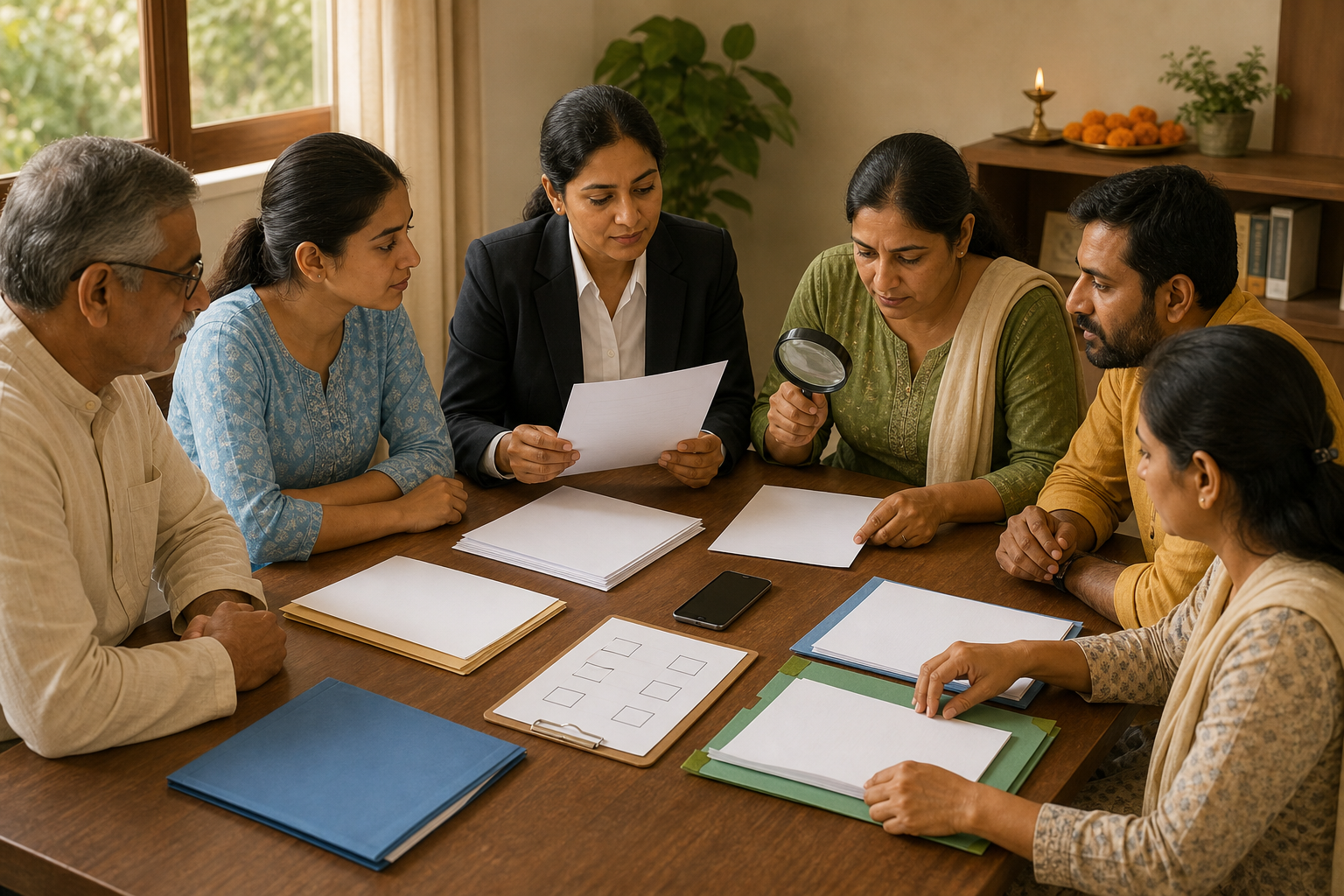
Concern for a Hindu minor deserves organized follow-through. It does not require publishing her name, face, school, home address, family details, or alleged experiences. Once identifying information spreads, it may remain searchable long after the criminal process ends. The child bears that cost, not the people who shared it.
Community organizations and concerned readers can press for answers without prejudging the case. Ask for verifiable information on the rescue, the recorded offences, the custody or remand status of the accused, the child’s placement with the appropriate welfare authority, and whether investigators found evidence of additional victims or participants. Phrase each request as a question until documentation supplies the answer.
- Use ‘alleged’ for conduct that has not been proved in court.
- Use ‘arrested’ or ‘accused’ rather than ‘guilty’ or ‘convicted’ unless a judgment exists.
- Describe the reported employment inducement accurately instead of silently converting it into a romantic relationship.
- Do not infer a religious conspiracy solely from the faiths attributed to the victim and suspects.
- Correct earlier claims when verified facts change, even when the correction is less dramatic.
- Keep the child’s safety, privacy, rehabilitation, and access to justice ahead of communal publicity.
This standard protects both justice and credibility. If evidence eventually demonstrates religious targeting or an organized network, disciplined documentation will make that conclusion stronger. If it does not, restraint prevents an unproved claim from displacing the serious allegation that a minor was deceived and taken into a dangerous environment.
Key takeaways
- Treat this first as an alleged child-trafficking and exploitation case, not as a slogan.
- The reported religious identities are descriptors; they do not by themselves prove a religious motive.
- The alleged offer of domestic work is the recruitment warning sign families should examine closely.
- An arrest is not a conviction, and several basic procedural facts remain unavailable.
- If a minor may be at risk, preserve evidence, contact police and child-protection authorities, avoid confronting suspects, and protect the child’s identity.
The next useful step is verification. Follow the case through identifiable police, child-welfare, and court records if they become available. Until then, defend the child with urgency, speak with precision, and refuse to make her ordeal carry claims that the evidence has not yet proved.
References
