
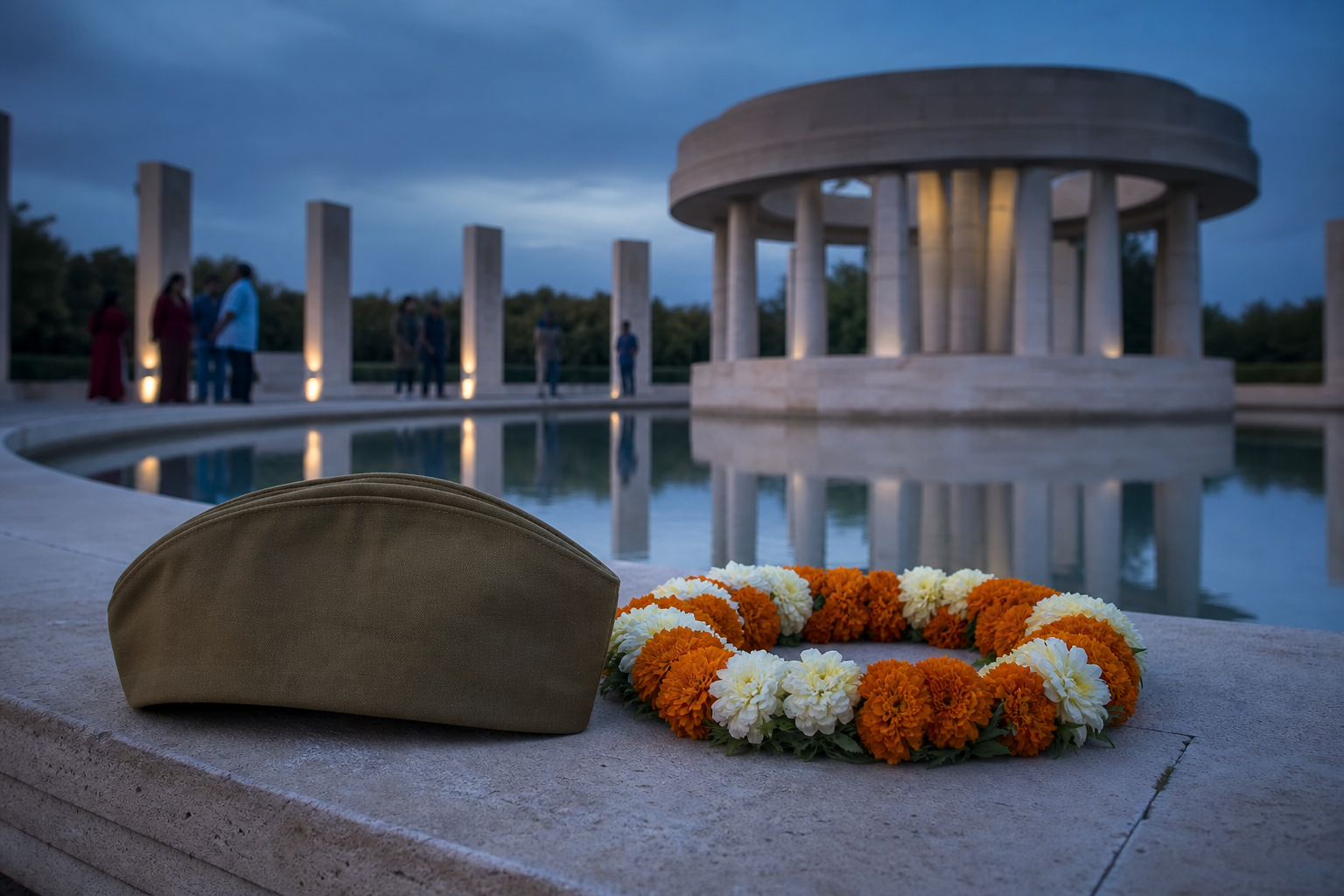
If you watched the viral dance at Washington’s National World War II Memorial, you may feel pushed into one of two camps: condemn the performers, or defend them against an ugly backlash. That is a false choice.
You can say that a choreographed performance was wrong for a place of mourning, demand the same standard from every visitor, and refuse to turn two people’s poor judgment into a verdict on Indians or Hindus. That is the position most likely to protect both the memorial and the truth.
Key takeaways
- A war memorial should not be treated as a ready-made set. If an activity competes with mourning, requires strangers to yield space, or turns remembrance into scenery, move it elsewhere.
- Criticize the exact conduct. Do not infer the character of an ethnic, national, or religious community from one viral clip.
- Unequal outrage matters, but other visitors’ misconduct does not make this performance appropriate. The answer is one rule applied consistently.
- Indian participation in the Second World War is not an excuse for bad memorial etiquette. It is a necessary correction when Indians are portrayed as outsiders to the war’s history.
- Do not attach immigration accusations, employment rumors, or demands for collective punishment to a question of public decorum without verified evidence.
Judge the setting before judging the people
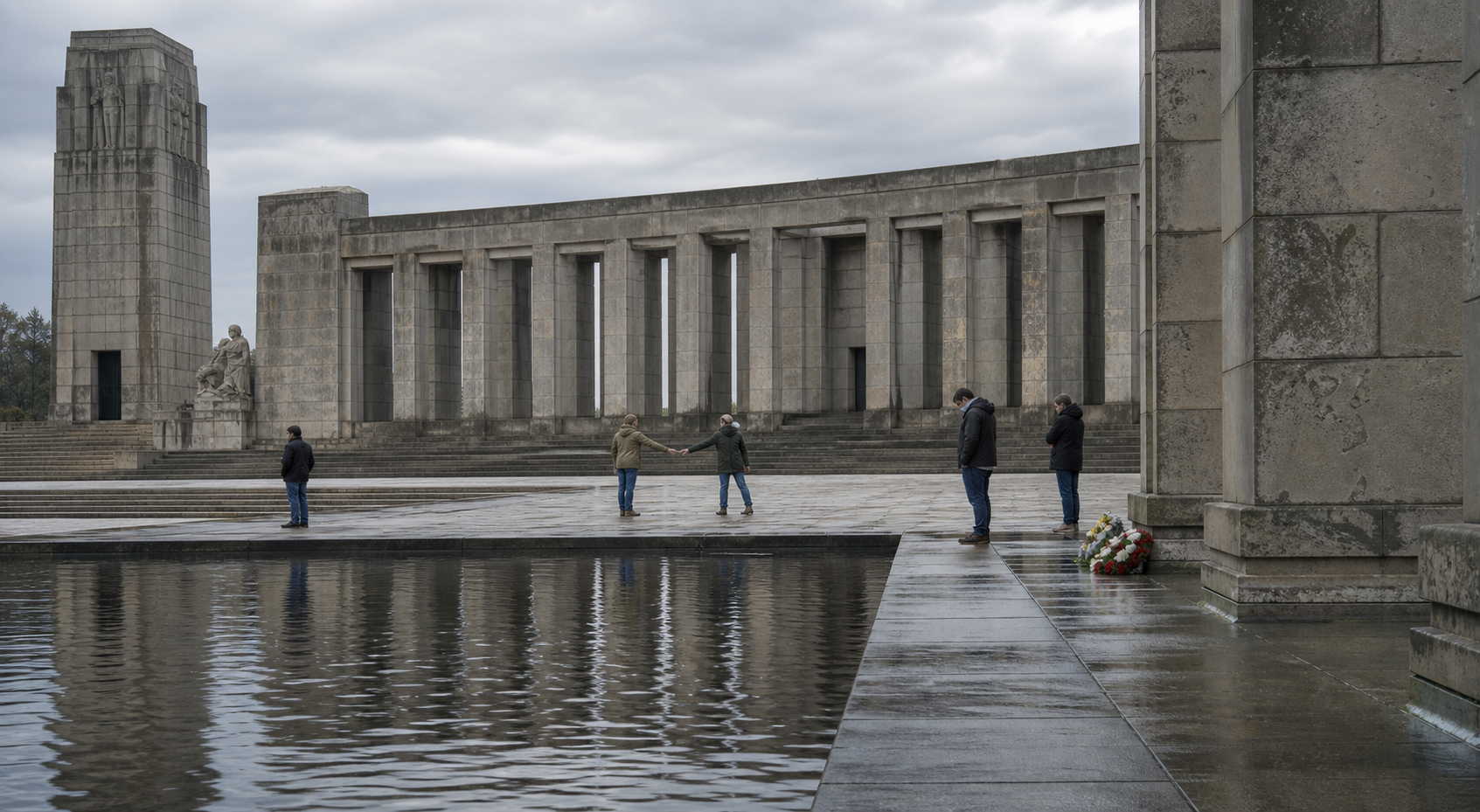
The short, choreographed dance and the reaction it provoked raised a straightforward question before it raised any cultural one: what conduct does a commemorative space require?
A memorial is not interchangeable with a plaza, park, or tourist viewpoint. Families of the fallen, veterans, and ordinary visitors enter it expecting room for reflection. A performer does not need to damage stone or interrupt a ceremony before becoming intrusive. Music, repeated takes, conspicuous choreography, and an audience gathered around a camera can change the character of the space.
Intent is relevant, but it is not the whole test. A creator may intend celebration, beauty, or harmless fun while still using a setting in a way that displaces its purpose. Ask a simpler question: would a grieving family have to wait, move, lower its voice, or enter your frame so that you can complete the recording? If the answer might be yes, relocate.
The National Park Service prohibits wading in the memorial’s fountain, climbing on architectural elements, damaging resources, and disrupting other visitors. Ordinary handheld photography and unobtrusive filming are generally different from a staged production. A performance involving amplified sound, blocked access, a commercial setup, or production equipment may require prior permission or a permit. A permit, where available, addresses authorization; it does not remove your obligation to behave with restraint around mourners.
If you plan to record at any war memorial, use this sequence before the camera comes out:
- Read the posted rules and current official guidance for that specific site. Do not assume that permission at an ordinary public park applies to a memorial.
- Decide whether the memorial is the subject of your recording or merely an impressive backdrop. Documentary images of the site are different from using it as a stage.
- Avoid choreography, amplified music, costume changes, repeated takes, and equipment that claims shared space.
- Stay away from inscriptions, wreaths, fountains, ceremonial areas, and people engaged in private remembrance.
- If the recording is staged, promotional, monetized, or operationally more than casual handheld filming, confirm permit requirements before arriving.
- When any doubt remains, use a nearby civic plaza or park. The artistic idea survives; the risk of intruding on remembrance does not.
Call out unequal outrage without excusing the dance
Some reactions did not stop at memorial etiquette. They moved into xenophobic language, anti-Indian caricature, and hostility toward Hindus or South Asians more broadly. That shift must be named plainly. A rule against staged dancing at a memorial can be universal. A claim that Indians are inherently uncivilized, ungrateful, or unfit to belong is prejudice wearing the language of decorum.
Earlier images and clips have appeared to show non-Indian visitors dancing, entering the fountain, or taking suggestive forced-perspective photographs around the same monument. Not every circulating comparison has been independently verified, so do not build your argument around a montage whose dates, locations, or context you cannot establish. The defensible point is narrower: comparable conduct deserves comparable scrutiny, regardless of the visitor’s identity.
Use four checks when deciding whether criticism is principled or prejudicial:
- Conduct: Does the criticism identify what happened, such as staging a dance, obstructing access, climbing, or entering a fountain?
- Impact: Does it explain how that conduct compromises remembrance or affects other visitors?
- Remedy: Does it ask for a proportionate response, such as removing the recording, apologizing, following site rules, or choosing another location?
- Scope: Does it remain directed at the people involved, or does it expand into claims about Indians, immigrants, Hindus, or an entire civilization?
The first three can support a serious civic judgment. Failure on the fourth exposes collective blame. Watch the balance of the language: if someone spends more time discussing ethnicity than conduct, the memorial is probably becoming a pretext.
Precision also matters when naming Hinduphobia. An insult aimed at Indian nationality is not automatically anti-Hindu, because India and its diaspora contain many faiths. The label becomes appropriate when the attack invokes Hindu identity, symbols, practices, or civilizational stereotypes. Using the terms carefully makes the case against prejudice stronger, not weaker.
Restore India’s war record without using it as a permission slip
Indian sacrifice does not make every act by an Indian visitor respectful. Nor does a descendant inherit a personal exemption from the norms of a memorial. History should correct erasure, not function as a license.
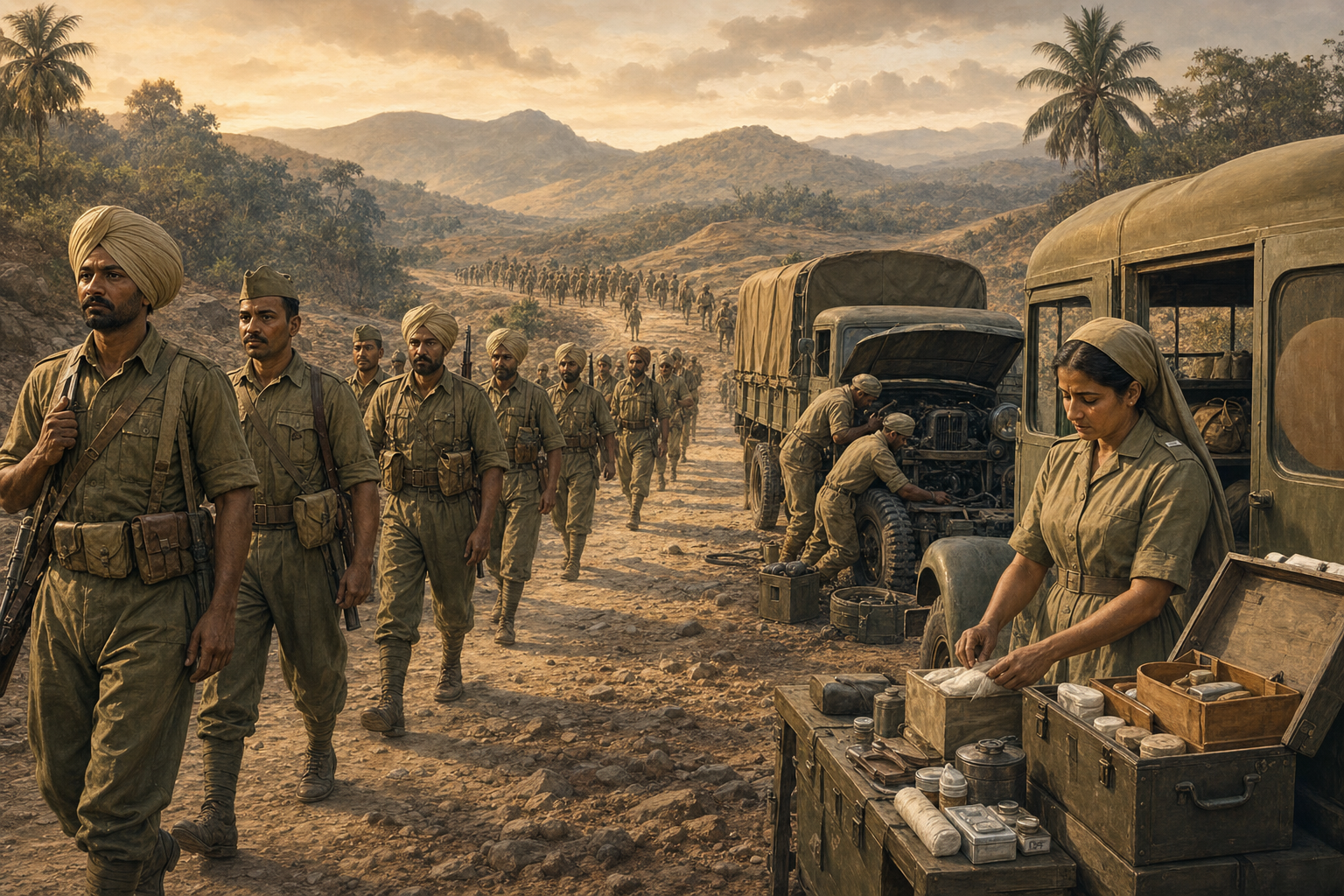
But history becomes indispensable when the backlash portrays Indians as foreign to the memory of the Second World War. Undivided India fielded approximately 2.5 million personnel in the war’s largest volunteer army. Hindus, Sikhs, Muslims, Christians, Buddhists, Jains, and others served across a force whose diversity reflected the subcontinent. Indian units fought in North Africa, Italy, and the Burma campaign, including the decisive battles of Imphal and Kohima.
More than 87,000 Indian soldiers died. Field Marshal Claude Auchinleck maintained that Britain could not have survived the two World Wars without the Indian Army. That judgment does not erase colonial command or settle every question about why individual soldiers enlisted. It does establish that Indian service was central, not incidental, to the Allied war effort.
The Indian civilian cost was greater still. The 1943 Bengal Famine killed an estimated two to three million people amid a wartime policy framework. Military sacrifice abroad and mass suffering at home belong to the same historical field, even though they must not be collapsed into a single statistic.
If you invoke this record, preserve its complexity:
- Say undivided India when discussing the wartime force. The service belongs to the shared history of peoples now living in several states, not to a retrospective monopoly.
- Name the force’s religious breadth. Indian military memory should not erase Sikh, Muslim, Christian, Buddhist, Jain, or other participants while correcting Western erasure.
- Use volunteer army as a historical description of the force, not as proof that every soldier enlisted from the same motive or enjoyed equal freedom under colonial rule.
- Keep military deaths and famine deaths distinct. Both matter, but they represent different forms of loss and different historical questions.
- Use the record to challenge the claim that Indians stand outside WWII remembrance, not to silence a family that found the performance distressing.
This distinction is the centre of a credible Dharmic response. We can honor the dead truthfully while accepting that shared sacrifice increases our responsibility toward a memorial; it does not reduce it.
Choose a response that corrects more than it inflames
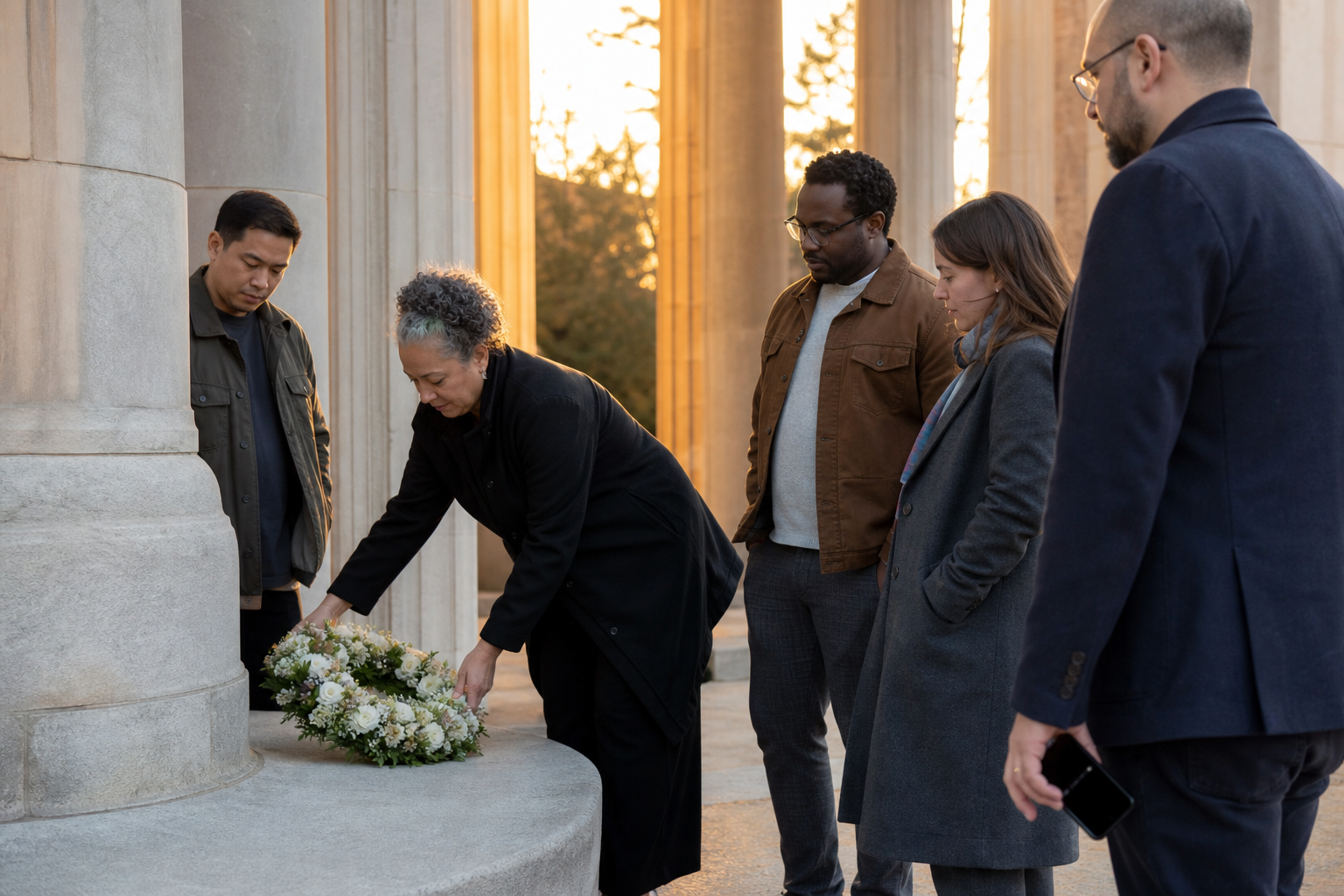
Online outrage rewards the fastest and broadest accusation. A useful response does the opposite: it narrows the charge, verifies the facts, and widens the historical memory. You do not need a long thread. Four sentences can establish the whole standard:
A choreographed dance was out of place at a war memorial and should not be repeated there. The same rule should apply to every visitor. Racist, xenophobic, or anti-Hindu abuse does nothing to honor the dead. Indians are not outsiders to WWII memory, and their immense military and civilian sacrifices deserve recognition.
If you are moderating a community page or joining the discussion, make the response proportionate:
- Do not repost humiliating edits merely to condemn them. Repetition can enlarge the harassment while adding no factual value.
- Remove slurs, threats, doxxing, and collective attacks even when they appear beneath a legitimate criticism of the performance.
- Do not circulate claims about a person’s visa, employer, business activity, or legal status unless reliable public evidence establishes them. A memorial video is not proof of an unrelated immigration violation.
- If you share comparison footage, verify that it shows the same location and that its date and context are known. Otherwise, state the consistency principle without leaning on uncertain examples.
- Link the public back to Indian wartime history. A concise factual explanation of the 2.5 million who served and the more than 87,000 who died does more lasting work than trading insults.
If you made the recording, the strongest response is also the simplest: remove or stop promoting it, acknowledge why the setting was unsuitable, and film the work elsewhere. Do not use Indian sacrifice to evade responsibility. If you lead a Dharmic organization, pair any statement against prejudice with clear guidance on memorial conduct and a programme of remembrance that includes the subcontinent’s multi-faith service.
Ahimsa does not require silence in the face of racial hostility, and seva does not require defending every act committed by someone from our community. Both call for disciplined speech: protect the dignity of the dead, protect living people from dehumanization, and tell the history accurately.
Before you publish your next comment or record at a commemorative site, apply the same test: preserve the mourner’s space, criticize only what the evidence supports, reject collective blame, and remember India’s dead by name and history rather than by slogan.
References
