
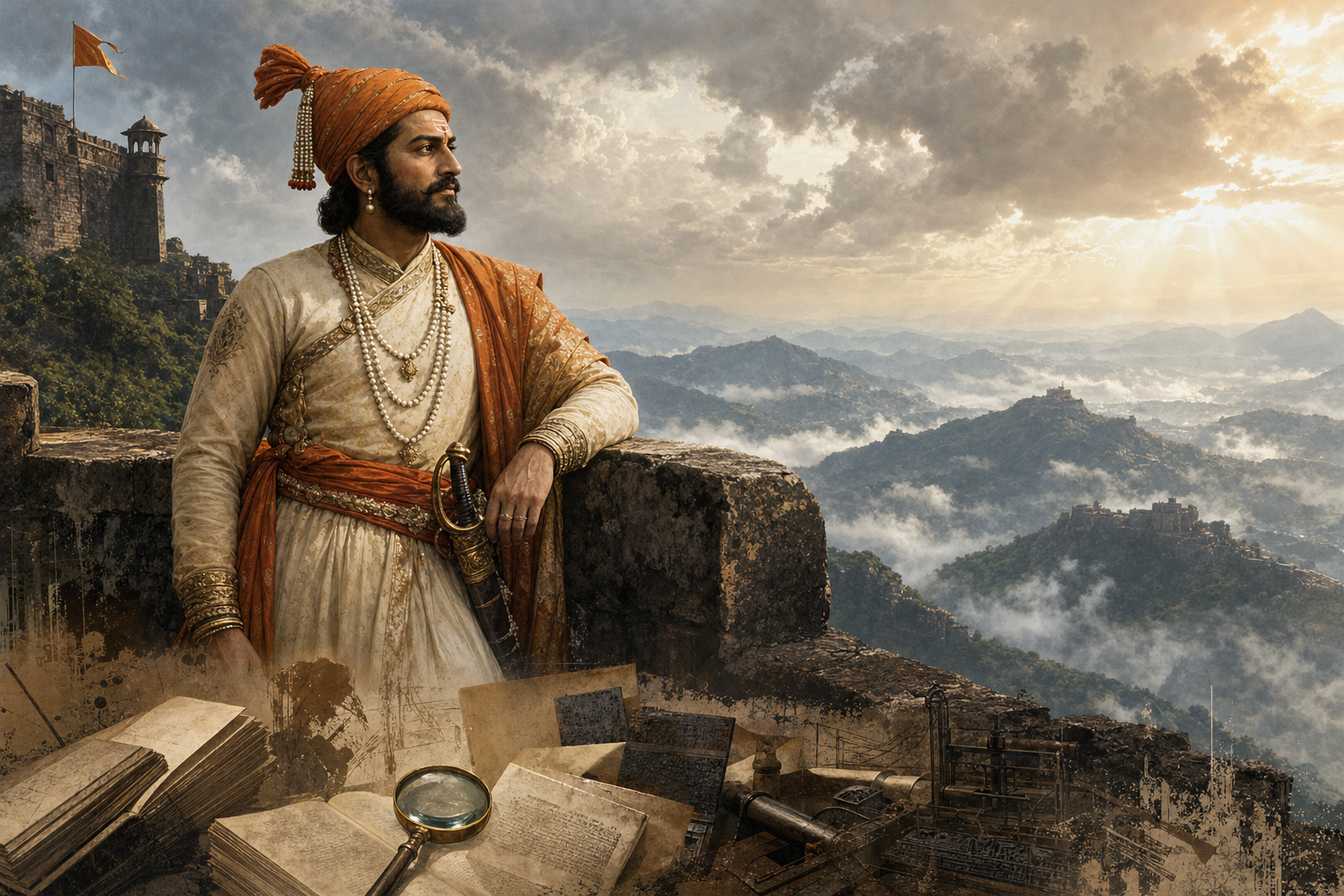
If you have just seen Shivaji Maharaj cast as a newly manufactured right-wing hero or an anti-Muslim figure, the immediate temptation is to answer the insult rather than examine the claim. That usually produces more heat, gives the original frame a second life, and leaves the historical question untouched.
You can respond more effectively. Verify the exact portrayal, separate Shivaji’s historical identity from his contemporary political use, test whether the same standards are being applied to every community, and explain Hindu remembrance in affirmative terms. The goal is neither Western approval nor an uncritical legend. It is a public account strong enough to survive scrutiny.
First verify what the outlet actually said

Do not argue with a paraphrase as though it were a transcript. The present controversy attributes two related frames to France24 and The New York Times: Shivaji as an anti-Muslim figure, and Shivaji as a newly elevated hero being used by right-wing Hindus. Those descriptions may accurately reproduce the underlying coverage, partially reproduce it, or compress a more qualified argument. You need the original headline, passage, or broadcast segment before deciding which.
This distinction matters because three different voices can become mixed together online: the outlet’s own words, a commentator’s interpretation of those words, and the caption added by the person sharing the controversy. If you rebuke an outlet for language it did not use, even a valid criticism of its broader framing becomes easy to dismiss.
- Open the original item, not only a reaction clip or screenshot. Record the headline, date, author or presenter, and the relevant paragraph or timestamp.
- Copy the outlet’s exact wording. Mark separately any description supplied by a critic, social-media account, or video caption.
- Read enough before and after the disputed line to identify its object. Is the label aimed at Shivaji, at a present-day celebration, at a political organisation, or at everyone who honors him?
- Check whether the outlet supplies evidence for the label or merely places it in a headline, introduction, or voice-over.
- If the original cannot be accessed, state that limitation. Say that the portrayal has been reported in a particular way; do not put unverified words inside quotation marks.
Be equally precise about the target. Criticising France24 or The New York Times is not the same as proving what Western media collectively believe. Western journalism is not a single institution with one editorial mind. Name the outlet and the claim. Precision keeps your criticism falsifiable, and therefore credible.
Separate the three claims hidden inside one label
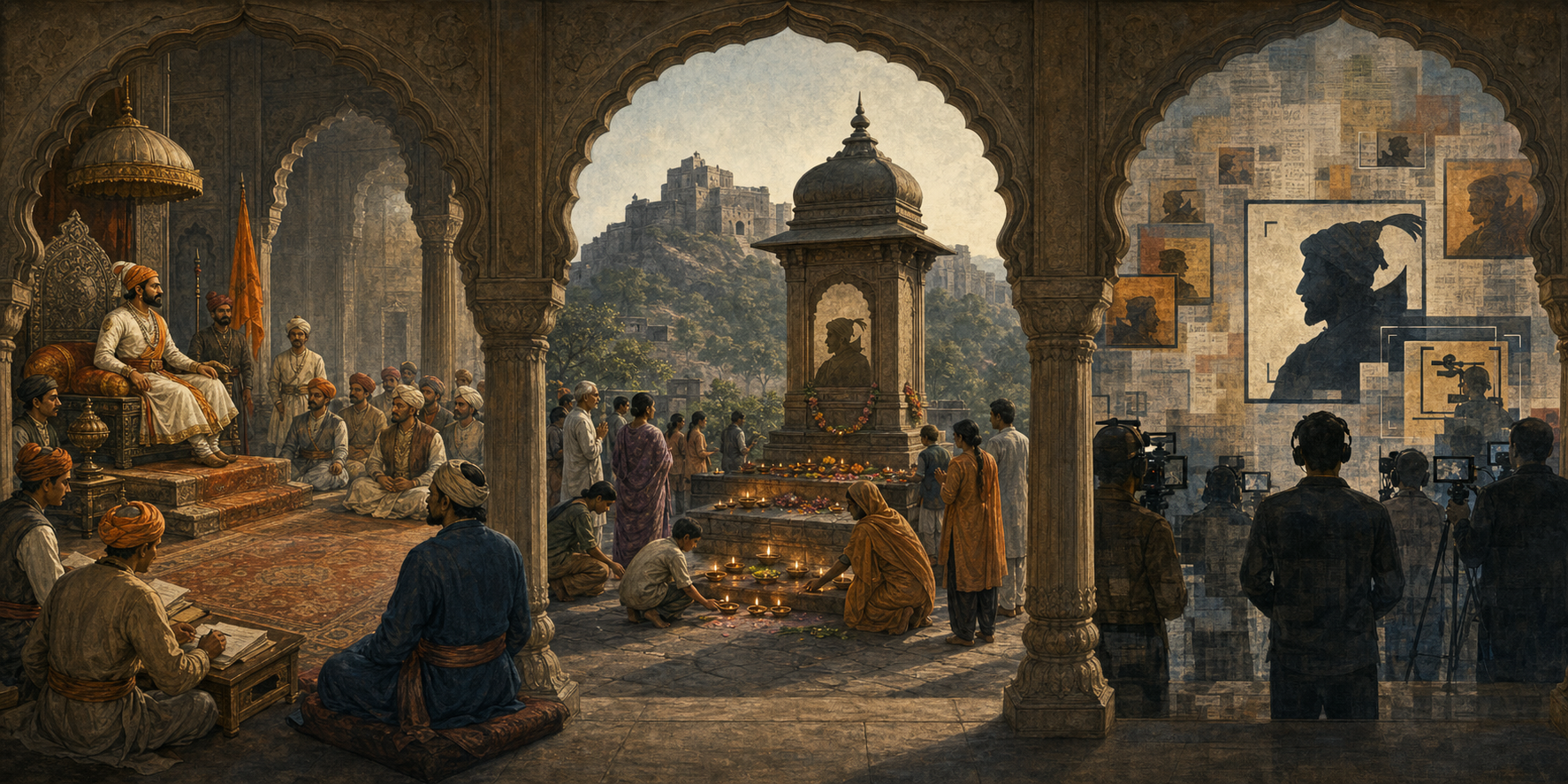
A phrase such as anti-Muslim Hindu hero appears to make one judgment, but it often bundles three separate questions. Untangle them before you answer.
- The historical question: What did Shivaji do, under what conditions, against which political or military actors, and with what stated purpose? This requires evidence about conduct and context.
- The commemorative question: Why do Hindus remember him? A community may honor courage, resistance, sovereignty, or protection without adopting every action of a historical ruler as a rule for the present.
- The contemporary political question: How is Shivaji’s name or image being used by a party, movement, institution, or campaign now? That use can be examined on its own evidence.
An outlet might make a defensible observation about a current campaign and then overreach by treating the campaign as the origin of Shivaji’s importance. The reverse error is also possible: a defender might invoke genuine historical reverence as though it placed every contemporary use of his image beyond criticism. Neither inference holds. A symbol can possess inherited meaning and also be politically mobilised in the present.
The word new needs especially close attention. New to whom? New to an international newsroom, newly visible in one election cycle, newly adopted by a particular organisation, or newly important to Hindus? Those are not interchangeable propositions. Increased visibility in a media cycle does not prove that the underlying memory was recently invented. Ask for evidence supporting the specific kind of novelty being alleged.
The anti-Muslim or Islamophobic label also needs an identified object. A modern category can sometimes help examine an older pattern, but it cannot replace historical reasoning. Ask which act, policy, statement, or representation establishes hostility toward Muslims as Muslims. Then ask whether the evidence concerns Shivaji himself or a present-day speaker invoking him. Opposition to a ruler, army, or political order is not automatically hostility toward every person sharing a religious identity.
You do not have to choose between a flawless saint and a communal villain. A Dharmic account can honor protection and courage while still examining conduct. Reverence need not mean historical infallibility, just as critical inquiry need not begin by distrusting Hindu memory.
Test the frame for asymmetry, then make a bounded correction
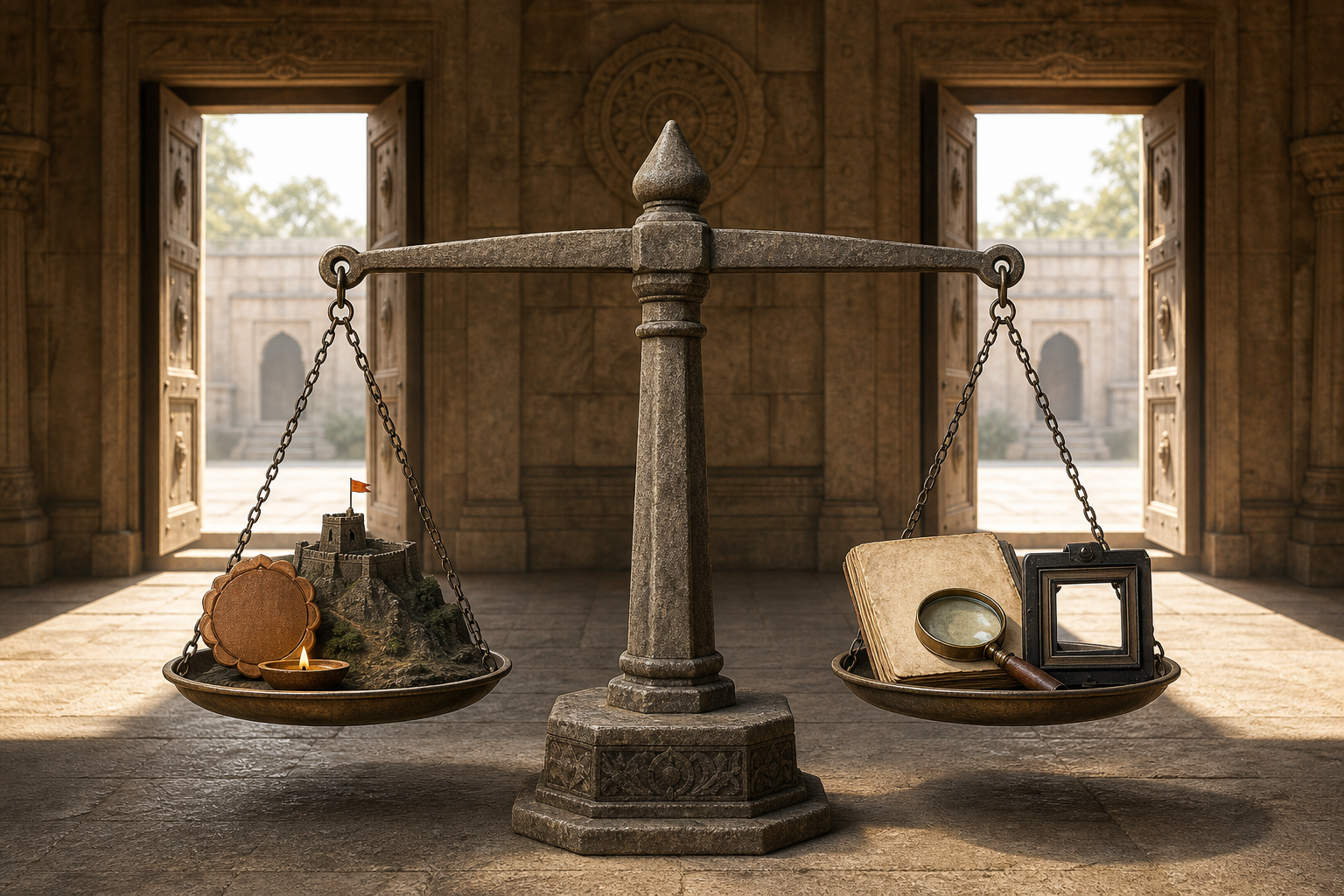
Feeling offended tells you that a portrayal has touched something important. It does not yet demonstrate what is wrong with it. Turn that reaction into questions another reader can independently test.
- Test the evidence: Does the portrayal name conduct that supports its moral label, or does the label do all the argumentative work?
- Test the timeline: Does newly visible quietly become newly invented? Ask what evidence establishes the claimed beginning.
- Test the level of analysis: Are a historical figure, modern political organisation, festival crowd, and Hindu population treated as one actor?
- Test the historical background: Is resistance discussed without explaining the coercion, conflict, or insecurity to which it responded?
- Test the comparative standard: Would the outlet describe another community’s defender with the same suspicion, or allow that community to explain its own inherited meaning?
- Test the scope: Does evidence about one speech or procession become a conclusion about everyone who reveres Shivaji?
Once you identify the failure, correct only what you can establish. If the problem is an unsupported novelty claim, challenge that claim. If the problem is the collapse of historical conflict into religious hatred, restore the missing distinction. If the problem is an inflammatory present-day speech, do not defend the speech merely because the speaker invoked a respected Hindu figure.
You can adapt this wording: "This portrayal joins three different issues: Shivaji’s historical conduct, his place in Hindu memory, and the way a present organisation invokes him. Please show the evidence for describing his stature as newly created, and distinguish criticism of the current campaign from a judgment on Hindu remembrance. Hindus can honor a defender without treating present-day Muslims as enemies."
That last sentence is essential. A defense of Hindu dignity loses its moral and persuasive force when it turns into abuse of Muslims, Christians, French people, white people, journalists as a class, or any other population. Collective insult does not correct collective stereotyping. It reproduces the same intellectual failure with the identities reversed.
Colonial history and institutional blind spots may help explain why some narratives receive more sympathy than others. They are not, by themselves, proof that a particular sentence is false. Lead with the sentence, its evidence, and the missing context. Discuss the wider pattern after you have established the case.
Keep the public correction short enough to inspect. Link the full item. Quote one disputed line. State the category error or unsupported inference. Supply the relevant context you can verify. End by stating what Shivaji’s remembrance means to Hindus, rather than allowing the hostile label to define the entire exchange.
Build Hindu public memory that carries its own evidence
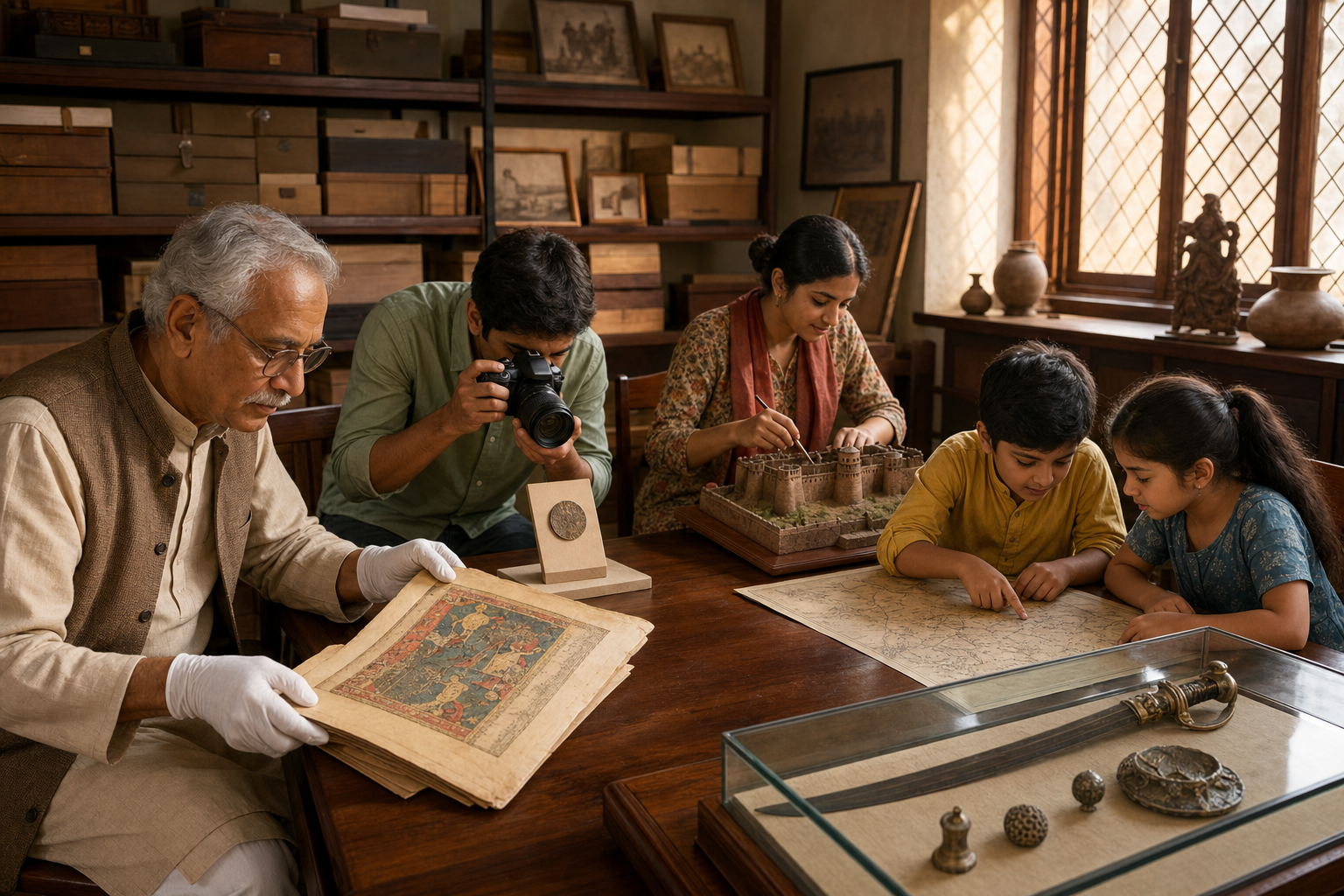
Hindus should not have to wait for an overseas newsroom to decide which Hindu figures are historically important. But independence from an external narrative requires more than indignation. It requires durable institutions of memory: teaching, translation, preservation, exhibitions, reading groups, and careful public explanation.
The proposal to create permanent displays of Hindu warriors in temples points toward a constructive possibility. A statue or picture can establish presence, but it cannot teach context on its own. Without dates, evidence, translated records, and an explanation of why the person matters, a display may strengthen emotion while leaving visitors unable to answer the first skeptical question.
If your temple, school, cultural centre, or family association wants to present Shivaji’s legacy, begin with an editorial standard before collecting images.
- Write the purpose in one sentence. State the Dharmic quality being explored, such as protection, courage, responsibility, or civilisational continuity. Do not define the display by hostility to another community.
- Label the status of each claim. Distinguish documented history, traditional remembrance, and contested interpretation. Visitors should never have to guess which kind of statement they are reading.
- Cite identifiable evidence. Give the author, work, edition, translator, and page or passage when available. A QR code can lead to a reading list, but the essential attribution should remain visible at the display.
- Separate actors carefully. Name rulers, armies, courts, movements, and policies rather than turning an entire religion into a timeless collective agent.
- Explain historical terms. Do not assume a child or first-time visitor understands the political vocabulary, titles, or institutions surrounding the events.
- Include disagreement honestly. Where interpretations differ, identify the precise point of dispute. Confidence grows when visitors can see where the evidence ends and judgment begins.
- Invite knowledgeable review. Ask people capable of checking history, language, translation, and presentation to review the material before it becomes permanent.
A tradition that remembers only contemplatives can leave the false impression that Hindu civilisation endured by abstraction alone. A tradition that remembers only warriors can make defense look like permanent enmity. Public memory needs sages, householders, teachers, reformers, artists, rulers, and defenders, each presented in the moral context appropriate to the life being remembered.
This is where Hindu identity becomes more than a reaction to media coverage. You learn who matters through your own institutions, examine the record without surrendering the right to interpret it, and teach the next generation why remembrance carries obligations as well as pride. A pro-Hindu historical standard is not one that declares every favorable claim true. It is one that refuses presumptive suspicion of Hindu memory while insisting that Hindu claims be accurate enough to defend.
Key takeaways
- Verify the original headline, passage, or broadcast segment before repeating a disputed portrayal.
- Name the outlet and exact claim; do not turn one or two examples into a claim about all Western media.
- Separate Shivaji’s historical conduct, his inherited place in Hindu memory, and his contemporary political use.
- Ask what new or anti-Muslim refers to, which evidence supports it, and whether the same standard is applied elsewhere.
- Correct the narrow error, state the positive Hindu meaning, and reject collective hostility toward people living now.
- Build temple and community exhibits with citations, claim labels, historical context, and review standards.
Choose one portrayal you have encountered and apply this method to it. Locate the original, isolate its strongest claim, write a five-sentence correction, and attach the evidence a fair-minded reader would need. If your community wants a Shivaji display, begin with a one-page purpose and evidence policy before choosing the first image.
The aim is not to obtain permission to remember. It is to make Hindu historical memory so precise, self-possessed, and ethically clear that a caricature can no longer carry the argument.