
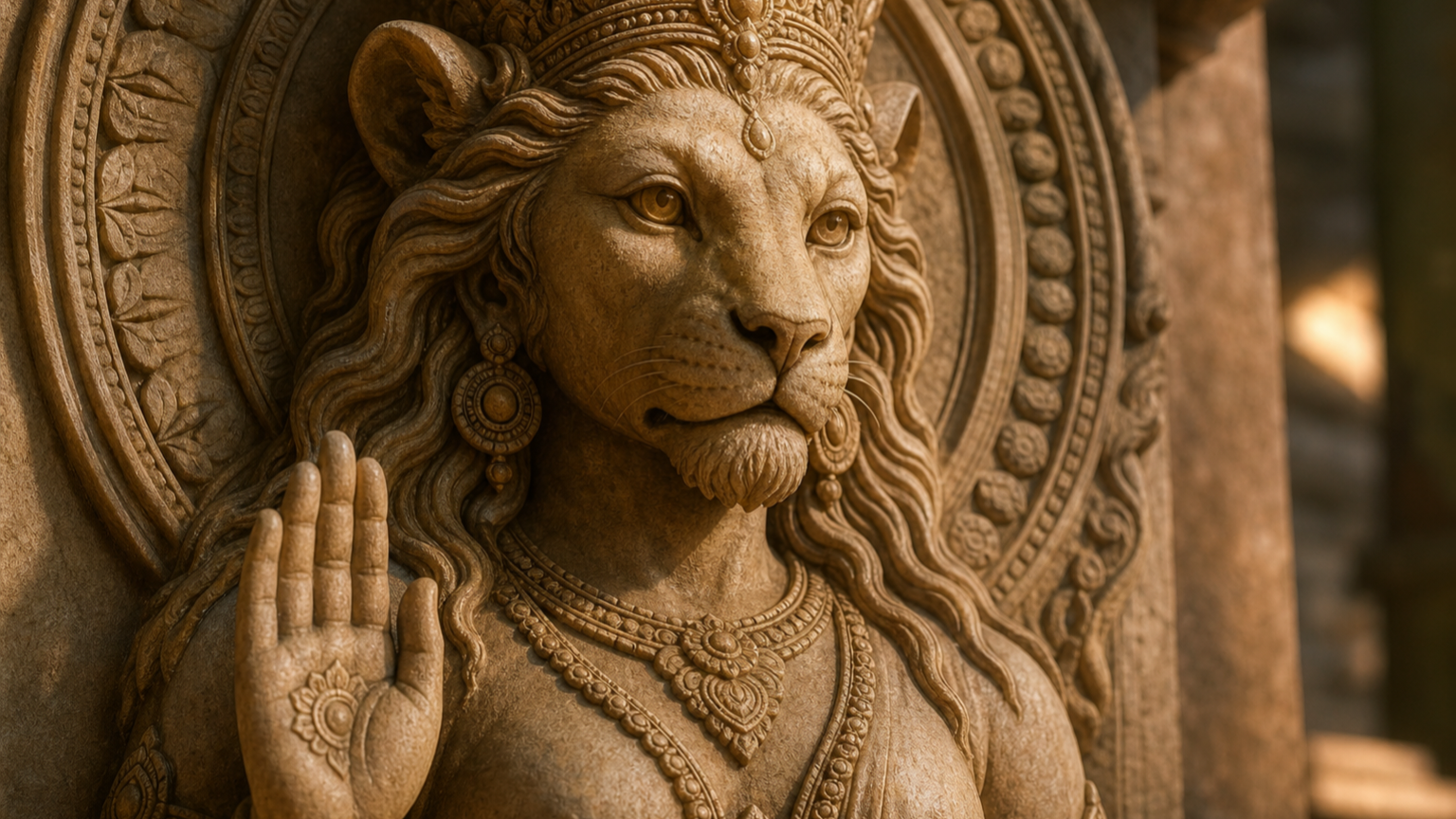
You may have encountered Navakandam in a sensational claim about medieval Tamils, a devotional story stripped of context, or an argument that an old sacrifice should be admired simply because it was old. Before accepting any of those conclusions, you need to separate three questions: what is historically attested, what the act meant within its own culture, and what a Dharmic reader should make of it now.
The soundest answer neither conceals the violence nor reduces Tamil civilisation to it. Navakandam belongs to the history of devotion, martial courage, public ritual, and cultural memory. It can be studied with respect without being revived, romanticised, or converted into instructions.
Key takeaways
- Navakandam describes a historical form of bodily self-sacrifice, variously explained as cutting nine veins or nine parts of the body.
- It is attested in medieval Tamil Nadu between the 11th and 13th centuries, but attestation does not establish how frequent, uniform, or widely approved it was.
- Temple inscriptions and literary works provide different kinds of evidence. They should support one another without being treated as interchangeable.
- Most references connect the vow with the goddess Kotravai and place it within a martial and ritual world.
- A contemporary Dharmic reading preserves the history while directing sacrifice toward ahimsa, self-discipline, seva, dana, and dhyana rather than bodily harm.
What the name establishes – and what it does not
Navakandam refers to an extreme act in which a person offered his own body through cutting. The surviving descriptions give two related explanations: the cutting of nine veins or the cutting of nine bodily parts. Its presence is attested in Tamil Nadu from the 11th through the 13th centuries.
That definition sets a firm boundary around what you can responsibly say. It identifies a bodily sacrifice, a ninefold idea, and a medieval Tamil setting. It does not, by itself, supply a standard anatomical procedure. The difference between “nine veins” and “nine parts” is a warning against false precision. A confident modern diagram may look authoritative while adding details the historical definition does not establish.
The date range also needs care. Evidence within three centuries does not prove an unchanged practice throughout every year, district, dynasty, or social group in that interval. Nor does the appearance of a vow in an inscription or poem turn it into the ordinary behaviour of medieval Tamil society. Presence is not prevalence.
This distinction protects Tamil history from two opposite errors. One error treats Navakandam as proof that an entire civilisation was governed by indiscriminate violence. The other treats every remembered sacrifice as a universal ideal awaiting restoration. Neither conclusion follows from the evidence. What survives is a window into a particular meeting of devotion, courage, crisis, and public meaning.
No responsible historical inquiry requires reenactment or anatomical reconstruction. If this subject connects with a present urge to injure yourself, stop engaging with graphic material and seek immediate help from local emergency or crisis services, a qualified health professional, and someone you trust. Historical understanding is never a reason to put a living person in danger.
Read inscriptions and poetry as different kinds of evidence
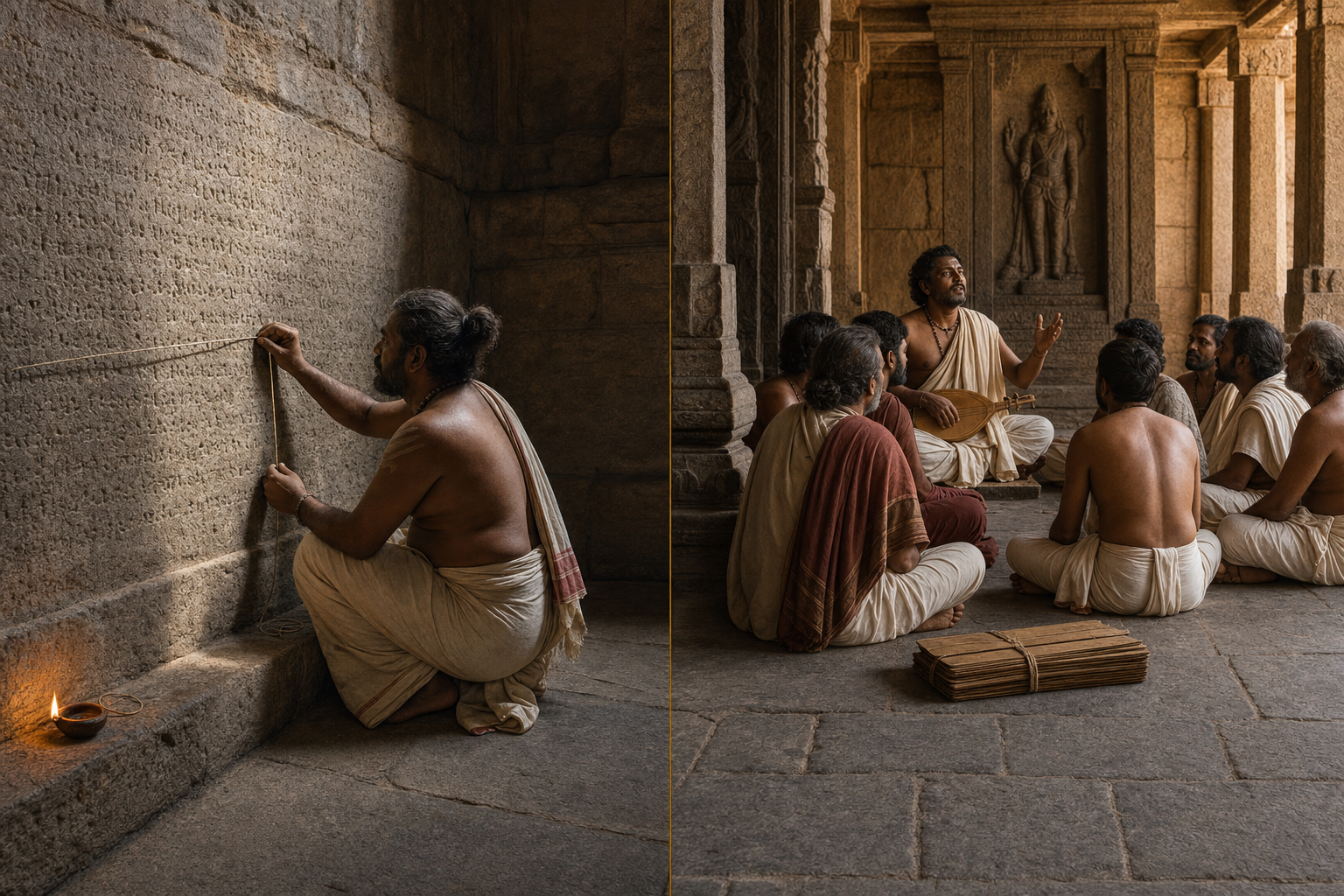
Navakandam appears in two broad evidentiary settings: temple inscriptions and Tamil literary memory. The named literary works include Silappadhikaram, Kalingathup Bharani, and Takkayakap Bharani. Bringing these materials into one inquiry is useful, but only after recognising that they answer different questions.
- A temple inscription places a vow, sacrificial ideal, or ritual memory in a public and institutional setting. It shows that a community considered the matter significant enough to record.
- A literary passage shows that an audience could recognise the image and understand its emotional or moral force. A dramatic scene may embody devotion or courage without functioning as a census of real-life behaviour.
- A later retelling primarily establishes cultural memory. It can show how an act was remembered even when it cannot independently verify every detail of an earlier event.
When someone makes a large claim about Navakandam, use the following reading test before repeating it:
- Identify the kind of evidence. Is the claim based on an inscription, a literary scene, or a later retelling?
- Ask what is actually attested. Does the evidence preserve a vow, celebrate an ideal, describe a completed act, or merely invoke a familiar image?
- Separate the recorded words from the interpretation. “This practice was known” is a smaller and safer claim than “everyone approved of it.”
- Check the scope. A reference tied to one temple or narrative cannot automatically represent all of Tamil Nadu across three centuries.
- Notice what remains unknown. Do not fill gaps about frequency, social status, compulsion, or exact procedure with speculation.
This method does not weaken the historical case. It makes the case more credible. An inscription can establish public commemoration without measuring popularity; literature can preserve cultural intelligibility without proving routine performance. Keeping those functions distinct allows both forms of evidence to contribute what they genuinely contain.
Why Kotravai, warfare, and public memory belong together
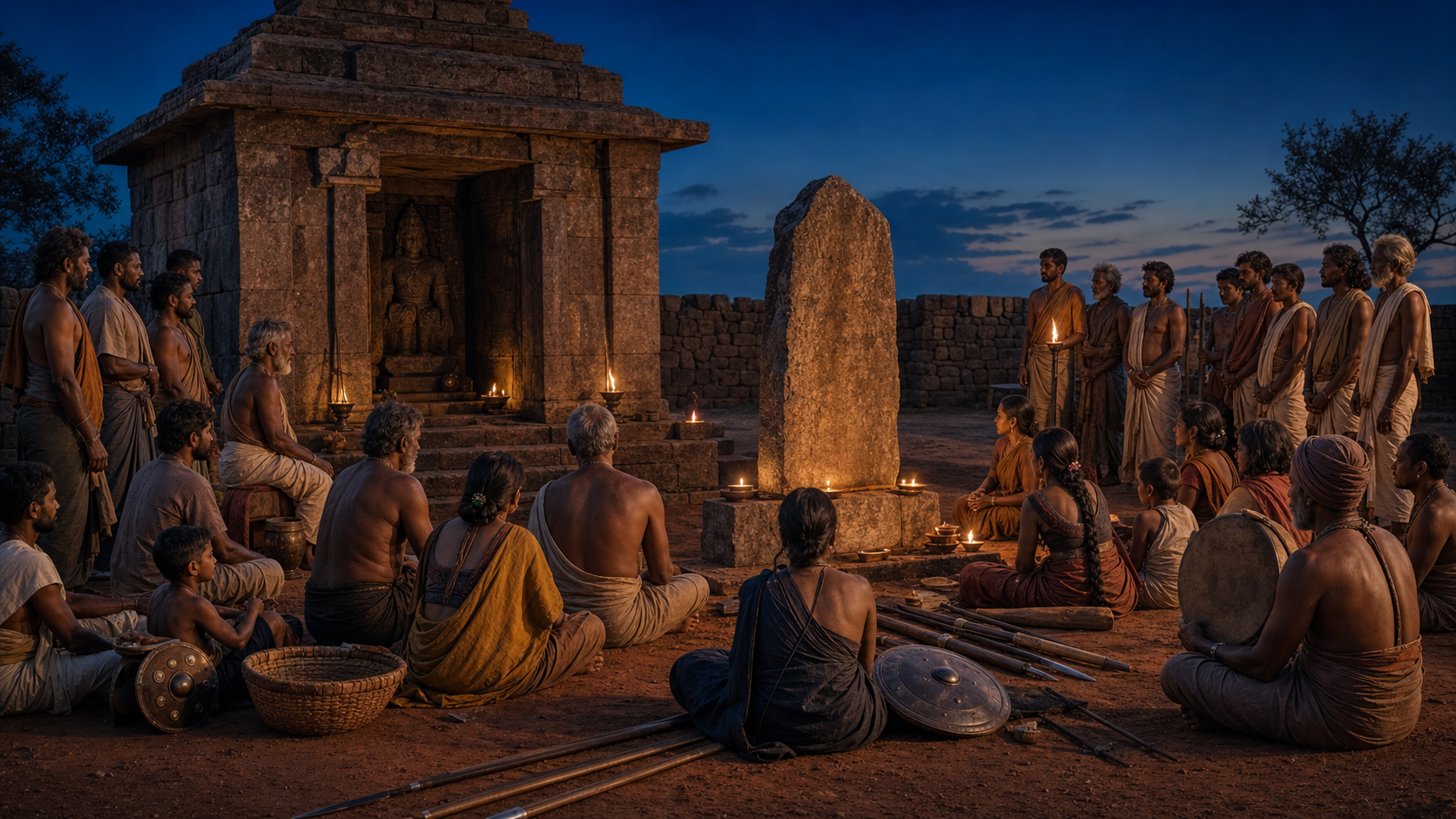
Most references place the Navakandam vow in devotion to Kotravai. That association matters because the act was not remembered merely as private injury. It belonged to a symbolic world in which the body could become an offering, martial courage could receive religious meaning, and a community could preserve the sacrifice as part of its public memory.
The wider setting brings together goddess devotion, warfare, crisis, consecration, and social order. These connections help explain why an extreme act could become culturally legible. They do not prove that every devotee was expected to perform it or that medieval Tamil ethics recognised only one form of courage.
Three relationships are especially useful when interpreting the practice:
- Devotee and deity: the body was imagined as something that could be dedicated in fulfilment of a vow.
- Courage and community: personal resolve acquired public meaning when it was recorded, narrated, or connected with collective danger.
- Event and memory: inscription and literature could carry the image beyond the immediate occasion, allowing later generations to encounter it as an emblem of devotion.
This is why the word “sacrifice” needs discipline. Used historically, it describes how an act was framed within its own religious and social world. Used carelessly, it can become praise. Explanation is not endorsement, and moral discomfort is not a failure to understand the past.
A simple three-label test can keep your interpretation honest. First, make the descriptive claim: Navakandam was known and recorded. Second, make the interpretive claim: it expressed a convergence of devotion, martial valour, and public ritual. Third, address the prescriptive question separately: nothing about its historical existence requires a person to imitate it now. Trouble begins when those three claims are collapsed into one.
Honour the history without romanticising the harm
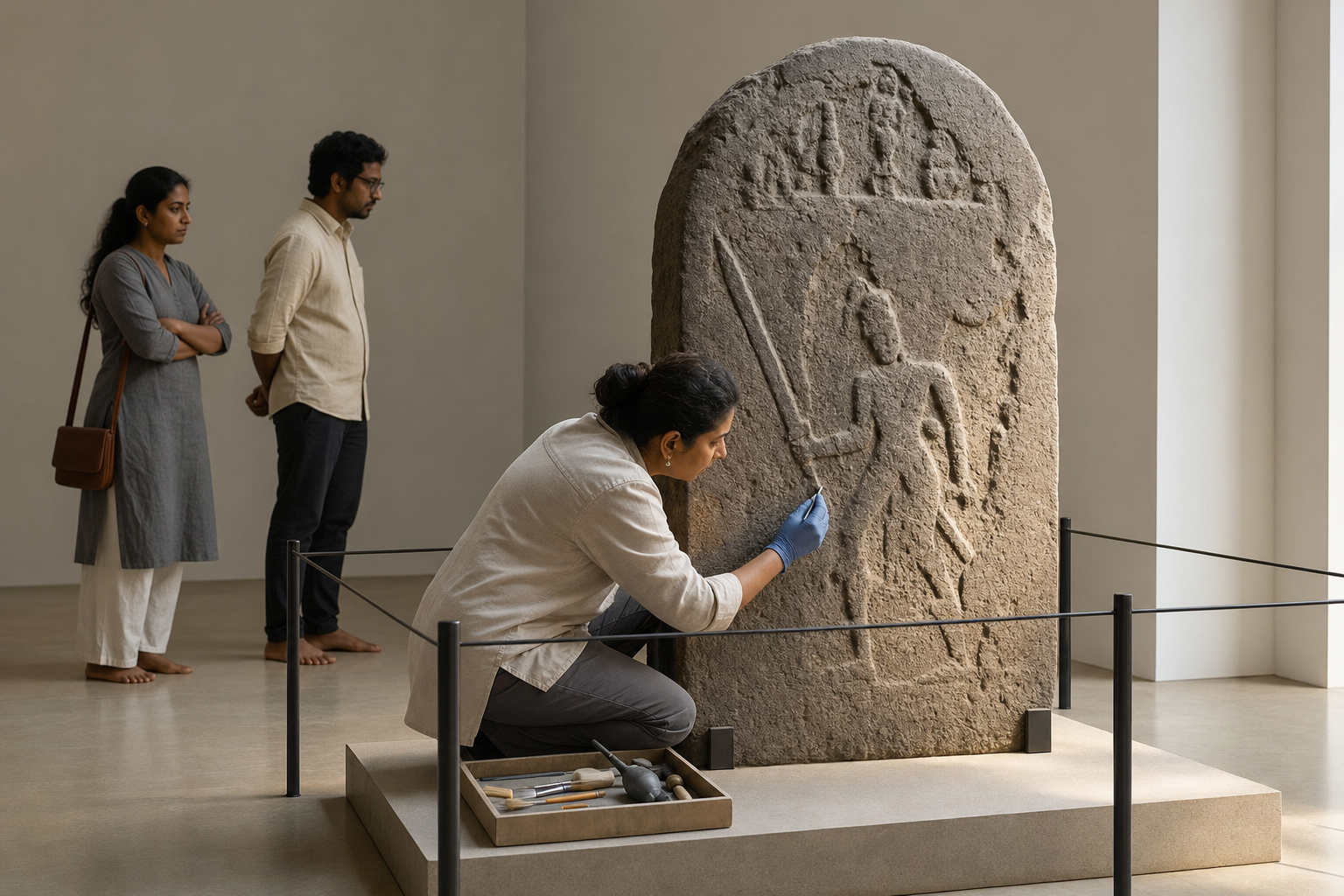
A mature Dharmic response does not have to choose between erasure and glorification. Erasure deprives Tamil civilisation of part of its historical complexity. Glorification confuses fidelity to heritage with literal repetition. We can instead preserve the name, setting, deity, texts, and inscriptions while making an unambiguous ethical distinction between remembered courage and bodily self-destruction.
Hinduism, Buddhism, Jainism, and Sikhism are distinct traditions; they should not be flattened into a single doctrine. Yet a contemporary inter-Dharmic reflection can meet around ahimsa, compassion, self-discipline, and service. Within that life-affirming frame, the sacrifice demanded of you is not a bodily wound. It is the relinquishing of ego, anger, greed, and indifference.
That shift becomes real only when it changes conduct. Seva turns personal energy toward useful service. Dana loosens possessiveness through giving. Dhyana disciplines attention before anger becomes action. A vow can protect life, sustain a temple or community, support someone in distress, or correct a harmful habit. These practices do not rewrite the medieval record. They answer a different question: what should devotion produce in a living community now?
If you teach, discuss, or write about Navakandam, use this sequence:
- Name the act plainly, without graphic embellishment.
- Place it in medieval Tamil Nadu and give the attested 11th-to-13th-century range.
- Identify the evidentiary setting: temple inscription, literary passage, or cultural retelling.
- Explain the connection with Kotravai, martial ethos, ritual symbolism, and public memory.
- State the limits: the evidence does not establish universal practice, uniform procedure, or continuous acceptance.
- Make the present ethical boundary explicit. Historical respect does not require imitation.
- Direct the idea of sacrifice toward self-mastery, compassion, and service that preserve life.
This sequence lets you defend the integrity of Tamil cultural history without sanitising what the act involved. It also prevents present-day ethics from being projected backward as though medieval people inhabited our assumptions. We owe the past accuracy and the living responsibility.
The next time Navakandam appears in a speech, video, classroom, or devotional discussion, ask for the evidence type before accepting the conclusion. Then keep history and prescription in their proper places. Remember the courage people sought to express, study the world that made the expression meaningful, and choose a form of sacrifice that leaves you and your community more capable of dharma.
References
