

If you are trying to understand why Kalapahar’s name still carries such force in Odisha, a simple tale of an invader and a damaged shrine is not enough. You need to see what the Jagannath Mandir held together: worship, political legitimacy, economic resources, and Odia cultural identity. Its violation threatened all of them at once.
You also need a disciplined way to tell the history. The political conquest, the account preserved in the temple chronicle, and the legends that accumulated later are related, but they are not identical kinds of evidence. Keeping those layers distinct makes the story more credible without making its civilisational wound any smaller.
Begin with the historical spine: conquest, then sacrilege
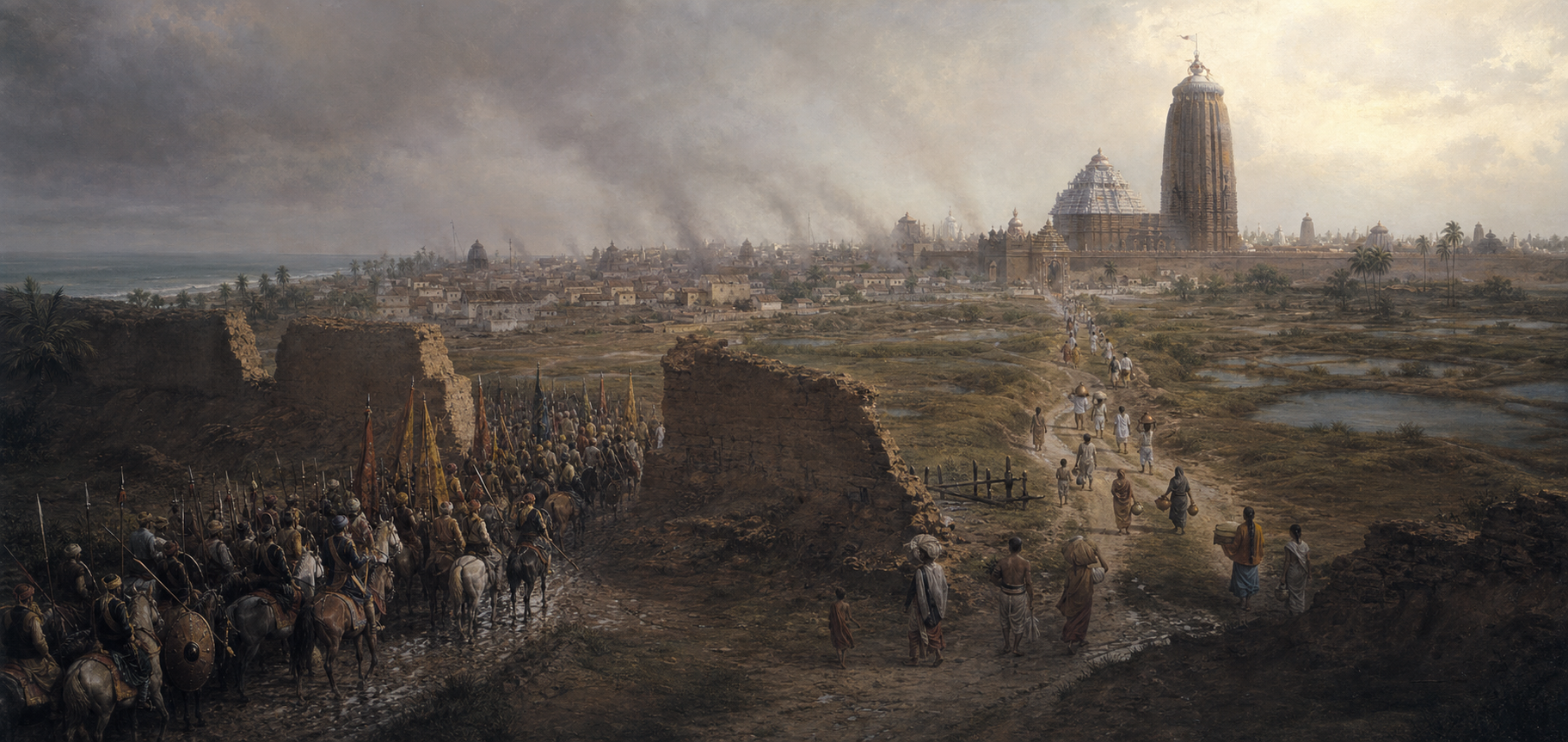
In 1568, the Afghan ruler Sulaiman Karrani conquered Odisha, Mukunda Deva was defeated, and the region lost its political independence. Kalapahar was among the commanders of the invading forces. That sequence matters: the assault on Puri occurred within the destruction of an independent political order, not as an isolated episode of vandalism.
The Madala Panji, the traditional chronicle of the Jagannath Mandir, identifies Kalapahar as the commander who attacked Puri and attempted to destroy the sacred forms of Jagannath, Balabhadra, and Subhadra. It also preserves the account that temple servants secretly removed the deities to protect them.
When you recount this history, match your wording to the evidence. Say that Sulaiman Karrani conquered Odisha in 1568. Say that the Madala Panji records Kalapahar’s assault and the safeguarding of the deities. Say that Kalapahar became associated with later stories of iconoclasm and sacrilege. Those verbs prevent a traditional account, a political event, and later folklore from being flattened into one undifferentiated claim.
This precision is not a concession to those who would minimise temple destruction. It is how you make denial harder. A claim stated more strongly than its evidence can bear is easy to attack; a carefully bounded claim forces attention back to the rupture that is actually documented.
Jagannath was the centre of an Odia civilisational order
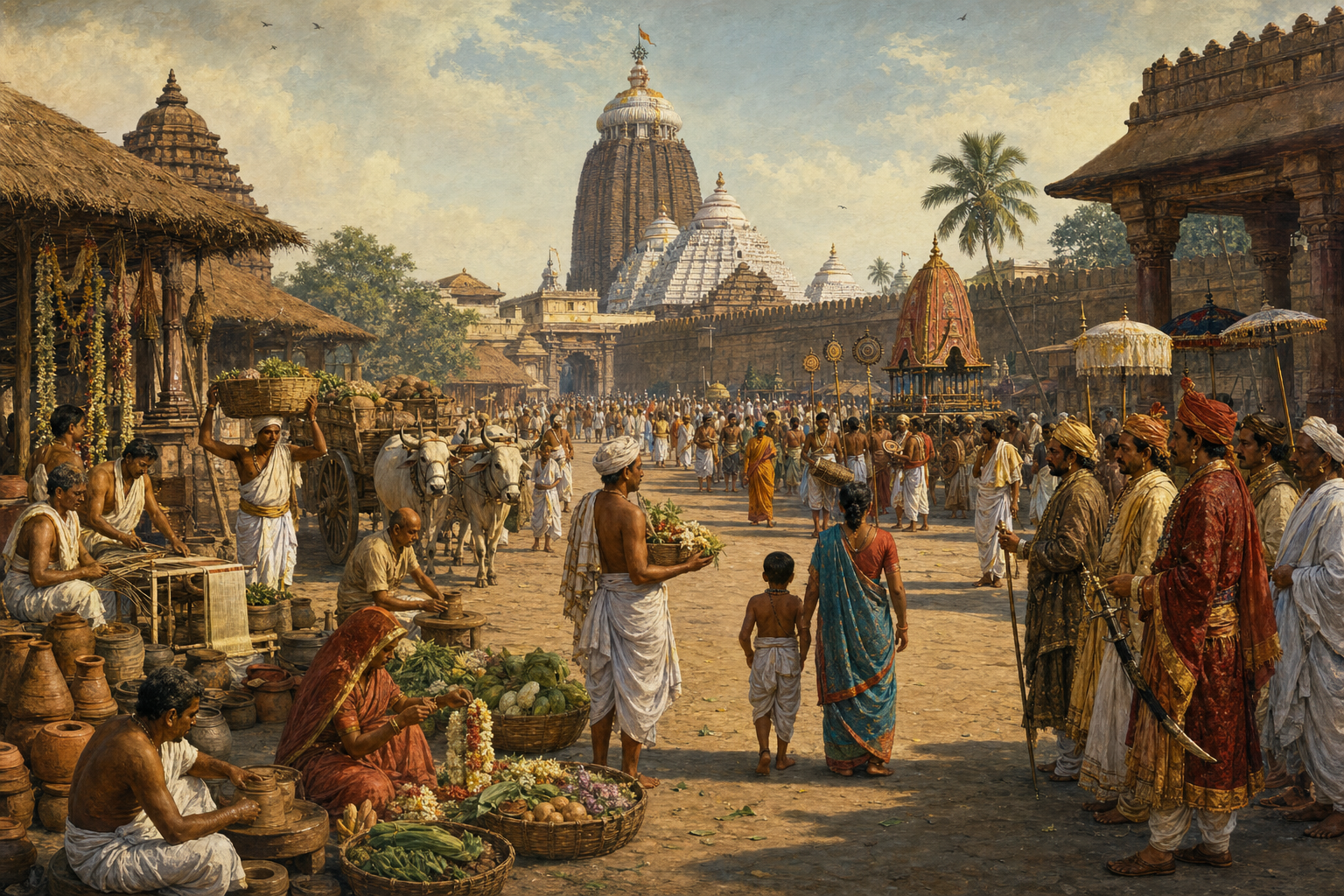
The Jagannath Mandir cannot be understood as one shrine among many. Historian Hermann Kulke describes Jagannath as the ideological centre of the Gajapati kingdom, whose rulers drew legitimacy from their relationship with the deity. Religious authority, royal power, economic resources, and cultural belonging converged at Puri.
That changes how you should interpret the assault. If you describe only the attempted destruction of the sacred forms, you miss the political meaning of striking the institution that legitimised the kingdom. If you describe only the fall of Mukunda Deva, you miss why the conquest entered Hindu memory as sacrilege. The political and sacred dimensions must be held together.
This is a useful test whenever you study an attack on a major Mandir: ask what the institution organised beyond worship. Did it connect rulers and subjects? Did it hold resources? Did it embody a community’s account of itself? In Puri, all those functions met in Jagannath. The attack therefore registered as an assault on Odisha’s civilisational centre, not merely on a building or a set of objects.
If you are teaching this episode to a child, a class, or a community group, establish that role before describing the destruction. Otherwise, listeners hear that a temple was attacked but never learn why the event remained culturally charged for centuries.
How Kalapahar’s name became a moral category
Kalapahar’s place in memory extends beyond the biography of one military commander. In Odisha and Bengal, a person who destroys Mandirs, murtis, or cherished traditions may still occasionally be described as acting like Kalapahar. His name became shorthand for desecration.
That linguistic survival tells you something precise: the memory of the assault remained morally potent long after the campaign ended. It does not, by itself, authenticate every anecdote later attached to Kalapahar. A proverb can demonstrate the depth of a reputation; it cannot independently verify the details of a particular story.
This distinction helps you avoid two opposite errors. The first is to repeat every inherited story as though each detail had the same documentary standing. The second is to dismiss collective memory because folklore grew around a historical figure. Legends can expand while the underlying wound remains real. Historical discipline asks you to identify which is which.
Notice, too, what the expression condemns. Kalapahar is remembered not simply as a victorious enemy commander but as a destroyer of sacred continuity. That is why reducing the episode to a routine change of dynasty misses its enduring meaning in Hindu memory.
The history of resistance begins with the custodians
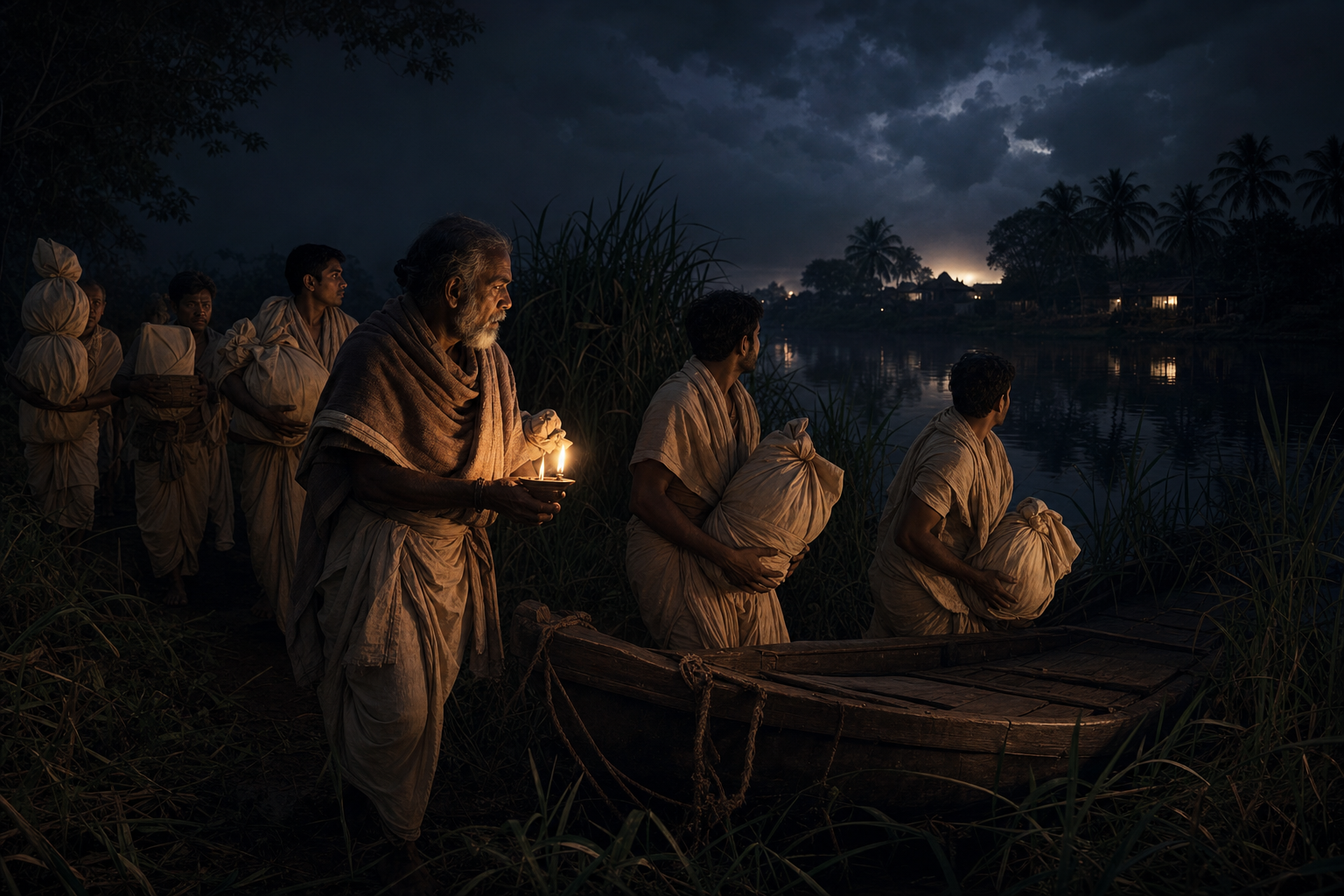
The most important corrective to a destruction-only narrative is the action of the temple servants. The Madala Panji’s account of their secretly removing Jagannath, Balabhadra, and Subhadra places Hindu agency at the centre of the episode. The Mandir was attacked, but its custodians did not simply surrender the sacred forms to the invaders.
Resistance does not always look like victory on a battlefield. Under overwhelming pressure, it can mean concealment, evacuation, preservation, and the maintenance of continuity until open worship can endure again. In this episode, safeguarding the deities was not peripheral to resistance; it was resistance directed at the invader’s most consequential target.
Key takeaways
- Anchor the account in 1568. Begin with Sulaiman Karrani’s conquest of Odisha and the defeat of Mukunda Deva.
- Identify the kind of testimony you are using. Attribute the temple account of the assault and rescue of the deities to the Madala Panji.
- Explain why Puri mattered. Jagannath joined sacred authority, Gajapati legitimacy, economic resources, and Odia identity.
- Do not use folklore as automatic proof. Later legends reveal the power of collective memory, but each detailed claim still needs its own basis.
- Tell the story of preservation as well as violation. Remembering the custodians prevents Hindu history from being reduced to a catalogue of what invaders destroyed.
This framing does not soften the trauma. It makes the historical picture more complete. Kalapahar remains an agent of conquest and sacrilege, but he is no longer the only person acting in the story. The custodians who protected the deities become visible as bearers of Odisha’s sacred continuity.
A practical discipline for protecting sacred memory
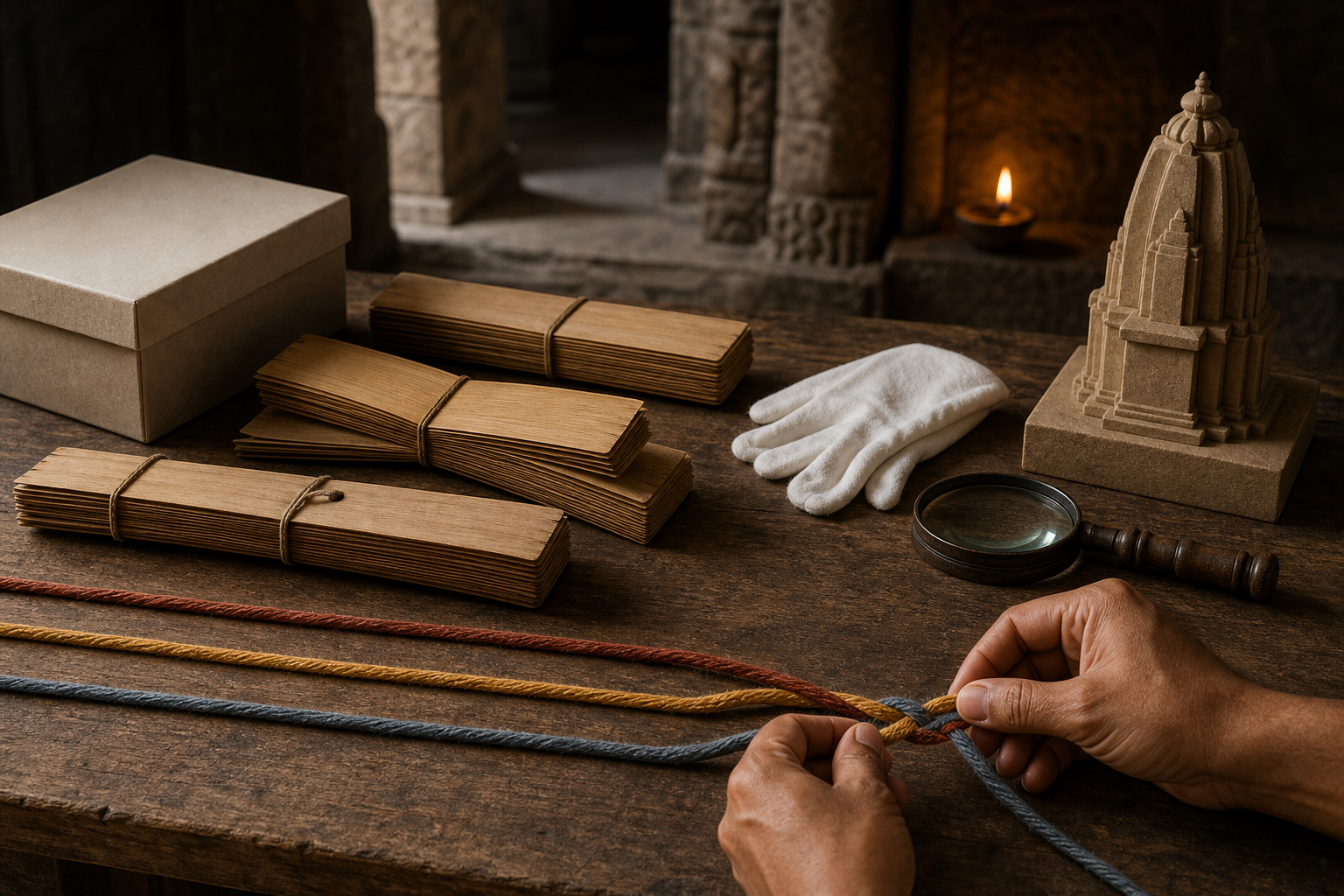
Sacred heritage is weakened both by forgetting and by careless retelling. Before you share a claim about Kalapahar, identify its layer. Is it part of the political history of the 1568 conquest? Is it preserved in the Madala Panji? Or is it a later legend whose historical status is uncertain? Label it accordingly. If you cannot establish the status of a dramatic anecdote, present it as tradition or leave it out.
Then restore the institution around the event. Name Jagannath, Balabhadra, and Subhadra rather than referring vaguely to temple idols. Explain the connection between Jagannath and the Gajapati state rather than treating the Mandir as an interchangeable monument. Use Mukunda Deva, Sulaiman Karrani, Kalapahar, and 1568 where those specifics belong. Exact names make the account teachable and checkable.
Finally, include the act of preservation. A telling that ends with the invader at the temple doors gives destruction the last word. A telling that follows the custodians as they safeguard the deities shows why Odisha’s sacred tradition outlived the political catastrophe. The point is not to deny the wound but to understand how a living civilisation carried its centre through it.
You can honour this history without turning it into either a slogan or an antiquarian dispute. The next time Kalapahar’s name is invoked, ask which layer of the record is being claimed. Then tell the fuller sequence: Odisha lost its independence, its sacred centre was assaulted, its custodians acted, and Jagannath remained central to Odia identity. Accurate remembrance is itself a form of stewardship.