
If you are trying to decide whether India’s industrial weakness was caused by incapable business leaders or by the Licence Raj, do not begin by choosing a hero. Begin by asking who possessed the power to approve, delay, restrict, or prevent an economic decision.
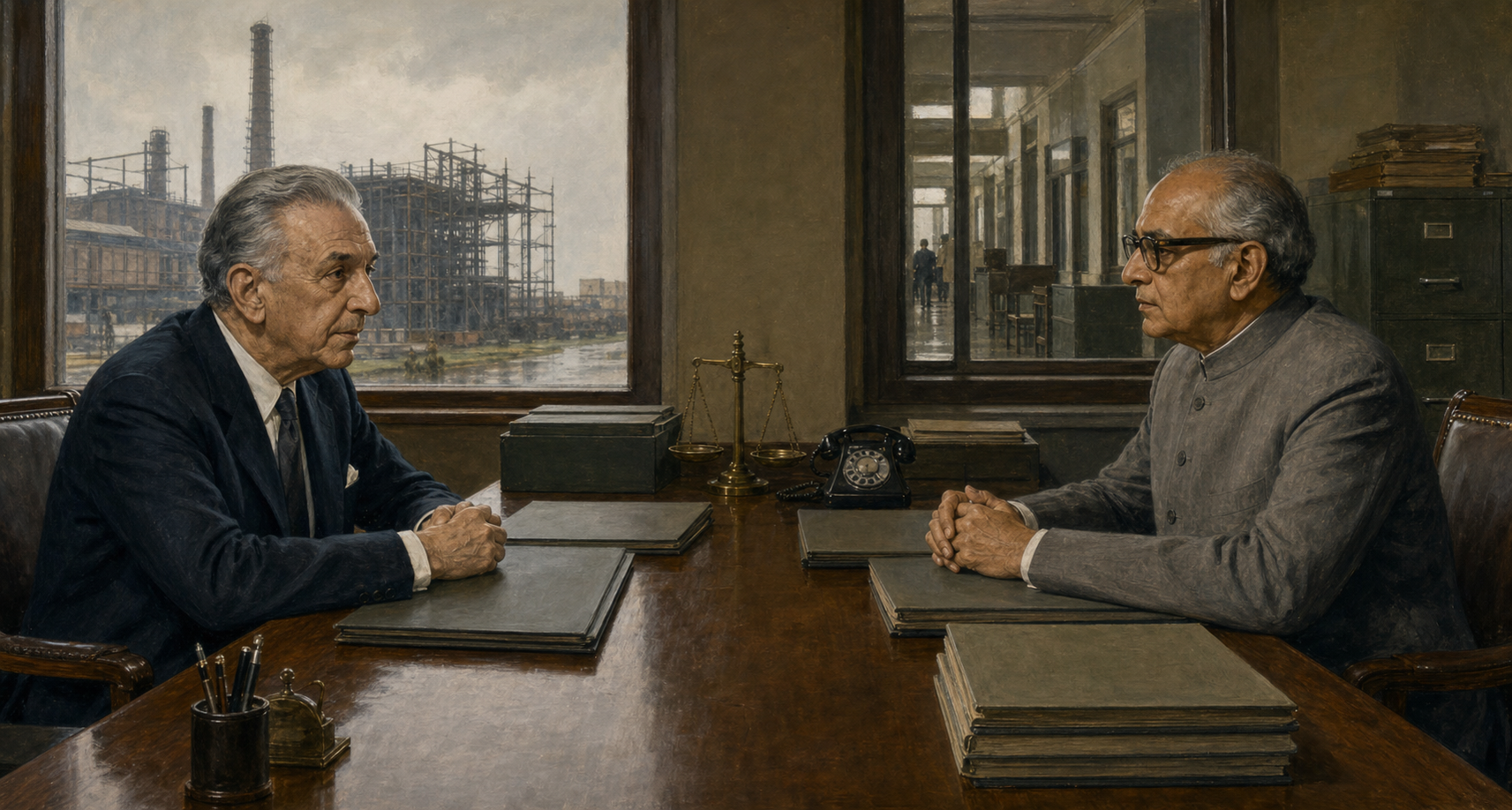
A sharp version of this dispute emerged on 1 August 1984, when P. N. Haksar challenged the 80-year-old JRD Tata to explain why India’s leading industrialists had not matched their counterparts in Europe and Japan. The exchange matters because the question contains a theory of economic failure: the opportunities were supposedly adequate, but the business class did not measure up. Before you accept that theory, you need to test its assumptions.
Haksar’s question already contained a verdict
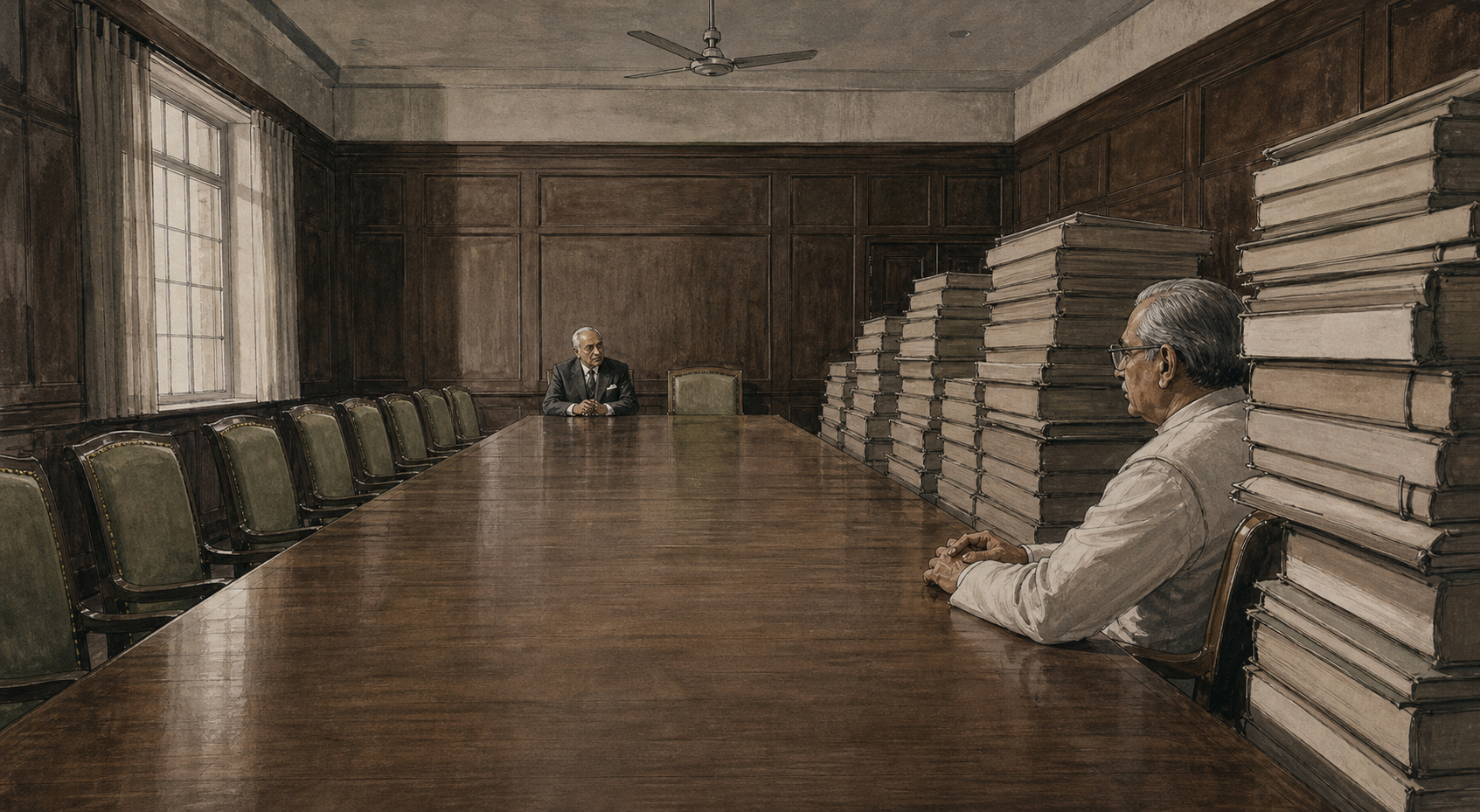
Haksar did not ask only what had gone wrong. He placed responsibility on a particular social class:
P. N. Haksar, letter to JRD Tata, 1 August 1984
The word bourgeoisie is not merely an unfriendly synonym for businesspeople. It belongs to a class-based account of history in which owners of capital have a defined economic role and bear responsibility for how that role is performed. Haksar’s political formation therefore matters. He became involved in communist politics while in England from 1936, worked for the Communist Party of India after returning to Bharat in 1942, served as secretary of its Nagpur unit, and later formally left the party. He subsequently became a prominent civil servant, diplomat, and strategist, serving as Indira Gandhi’s principal secretary and close confidant from 1967 to 1973.
That background does not make his question false. It tells you what hypothesis he brought to the discussion: India’s capitalist class had failed to use the opportunities available to it. Dismissing the question because Haksar was a Marxist would be intellectually lazy. Accepting its premise without examining state power would be equally lazy.
When you encounter a claim of this kind, rewrite it as a proposition that can be tested: Given the permissions, inputs, technology, capital, and competitive conditions actually available, Indian industrialists could have produced results comparable to Europe and Japan but failed to do so. That formulation forces the argument to identify both the opportunity and the failure. A label such as incompetence cannot substitute for either.
The Licence Raj changes where accountability begins
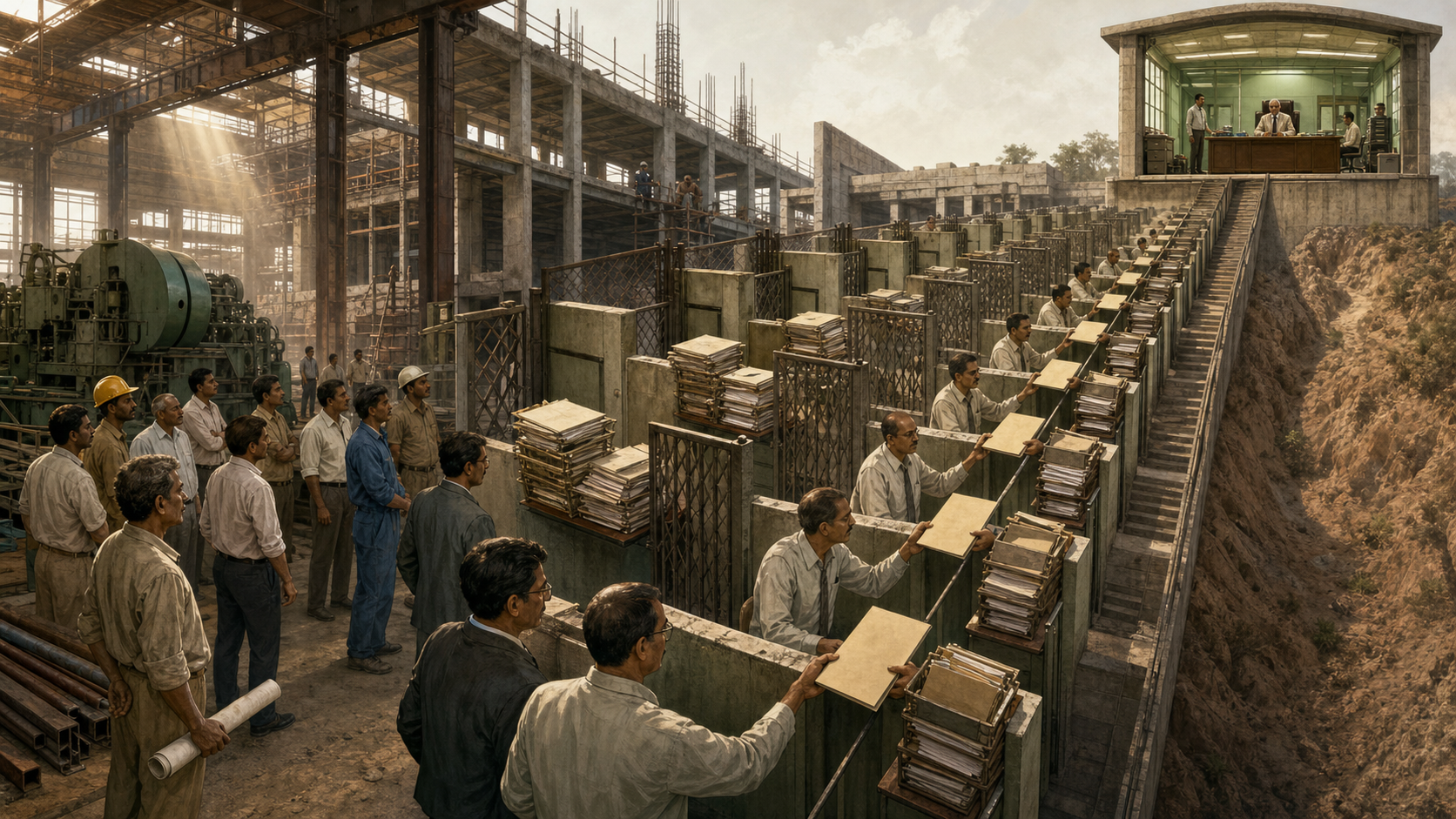
The Licence Raj was a system in which administrative permissions shaped whether enterprises could enter fields, expand capacity, or undertake important production decisions. In such a system, the economic outcome is not produced by the businessman alone. It is jointly produced by the enterprise, the rules, and the officials who administer them.
This does not automatically absolve industrialists. A firm may perform poorly even when permission is available. An established company may welcome restrictions that keep new competitors out. Business leaders may devote energy to securing official favour instead of improving products or productivity. The correct conclusion is not that private enterprise was always innocent. It is that responsibility must be separated into three different categories:
- Constraint: the state prevents, narrows, or delays an action that an enterprise is willing and able to take.
- Adaptation: the enterprise changes its conduct to survive within the rules, even when that conduct is economically inefficient.
- Capture: an enterprise seeks selective protection, restricted competition, or another privilege from the state.
These categories stop two familiar distortions. The first treats every industrial shortcoming as proof that businessmen lacked ability. The second treats every industrialist as a helpless victim of government. A serious history of the Licence Raj must identify which mechanism operated in each disputed decision.
The Europe-and-Japan comparison also requires more work than Haksar’s question provides. You cannot compare business performance responsibly while ignoring differences in permission systems, access to capital and technology, exposure to competition, and the freedom to scale. The comparison becomes meaningful only after those conditions are made comparable. Otherwise, the result has been assumed before the investigation begins.
Do not turn JRD Tata into a cardboard hero
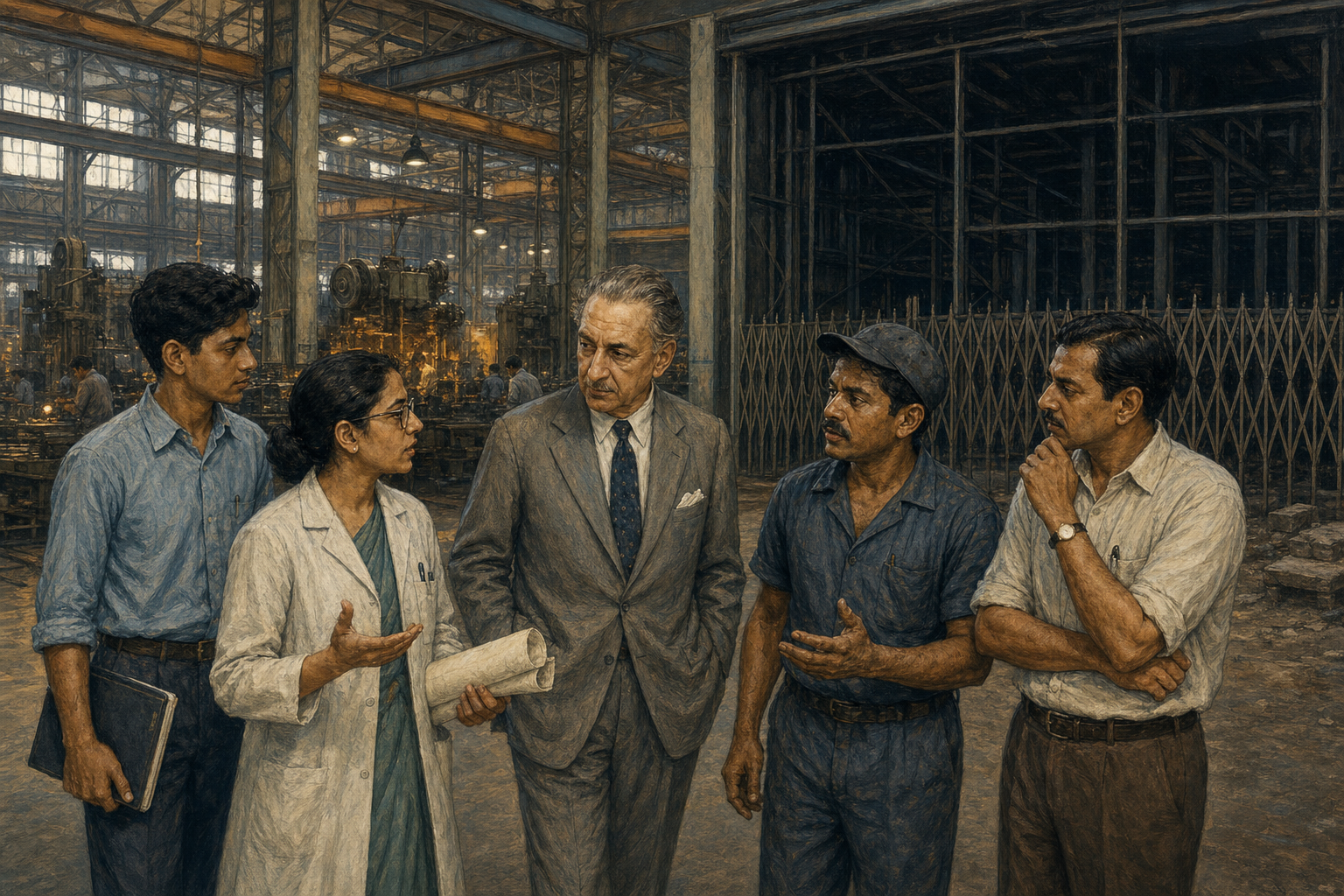
Haksar addressed his challenge to JRD Tata, then the head of the Tata business family, and invoked Tata’s age as a reason for national reflection. That made the letter personal, but it also made Tata a symbolic representative of Indian industry.
You should resist the temptation to make the symbolism do the work of evidence. Haksar’s question establishes that he blamed leading members of the business class for failing to match foreign counterparts. It does not, by itself, establish which Tata investment was obstructed, which permission was denied, how long a decision was delayed, or whether a particular enterprise underperformed despite having genuine freedom to act. Nor should Tata’s answer be reconstructed from an opponent’s question when the full reply is not in front of you.
This distinction is especially important when a historical exchange circulates as a short quotation. Separate what is stated from what is inferred:
- Stated: Haksar asked why leading Indian industrialists had not matched European and Japanese counterparts.
- Reasonable inference: he believed the failure lay substantially with India’s business class.
- Still requiring evidence: whether policy offered industrialists sufficient freedom, whether Tata accepted the premise, and which side better explained particular economic outcomes.
This discipline allows you to respect JRD Tata without turning him into an all-purpose argument against the state. The fair defence of an industrialist is not that a celebrated name must have been right. It is a documented causal chain showing what the enterprise attempted, what the state controlled, what decision followed, and who benefited or lost.
A Dharmic test places duty where power sits
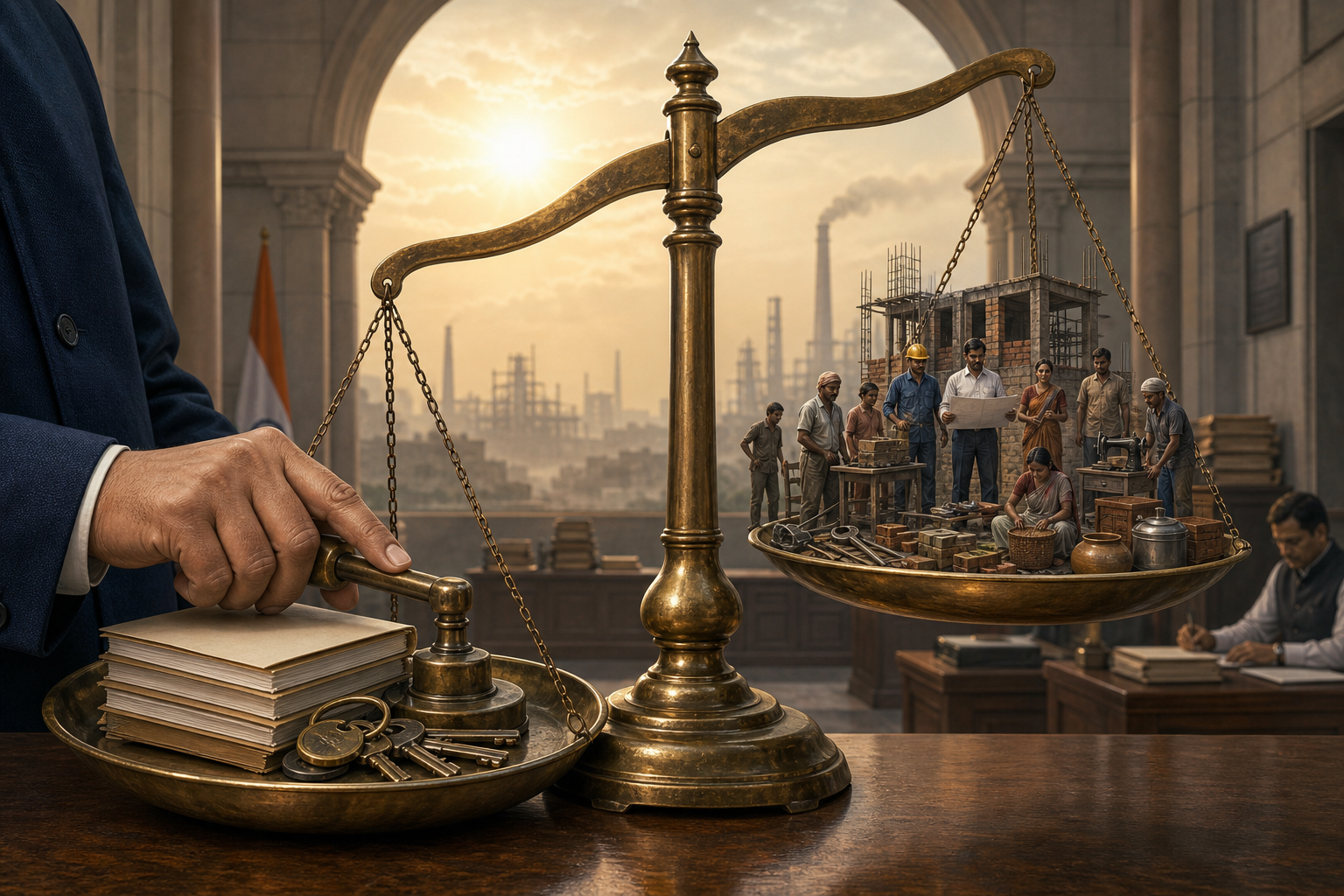
A Dharmic reading does not require unconditional loyalty to either bureaucracy or capital. Dharma assigns obligations in relation to power. The state bears duties because it can make and enforce rules. An industrial house bears duties because it controls capital, management, and productive assets. Neither can escape scrutiny by pointing only at the failures of the other.
Apply four questions whenever you assess a Licence Raj dispute:
- Who held the decisive power? Identify whether the disputed action depended on an administrative permission or remained within the enterprise’s control.
- What duty followed from that power? Officials owed the country predictable and public-minded administration. Industrialists owed it competent stewardship, productive investment, and honest dealing.
- Was the rule general or selective? A stable rule applied to all is different from a discretionary permission that can favour one applicant, delay another, or protect an incumbent.
- Who bore the cost? Look beyond the immediate state-business argument to workers, consumers, smaller competitors, and the nation’s productive capacity.
This approach is more demanding than declaring one camp virtuous. If officials restricted productive action, responsibility begins with the authority that imposed the restriction. If a company had room to act and wasted it, responsibility rests with management. If businesses helped preserve restrictions that protected them from competition, state control and private privilege became partners. That third possibility is often the one missed by arguments built around heroes and villains.
The same test also protects a pro-Bharat economic outlook from becoming reflexively pro-corporate. Bharat’s economic sovereignty is not served merely by transferring arbitrary power from officials to favoured industrial houses. It is served when productive capability grows, rules are intelligible, enterprise is answerable for performance, and public authority is answerable for the constraints it creates.
Key takeaways
- Haksar’s 1984 question was not neutral; it located India’s industrial failure primarily in the competence of its business class.
- His Marxist formation helps explain that framing, but it neither proves nor disproves the claim.
- Under a licensing system, responsibility cannot be assigned until you know which decisions belonged to the enterprise and which required state permission.
- Business can be constrained by regulation, adapt inefficiently to it, or use it to exclude competitors. These are different historical claims and require different evidence.
- A Europe-or-Japan comparison is incomplete unless it also compares the institutional freedom under which enterprises operated.
- A Dharmic judgment should place duty where power actually sat, while holding both public authority and private capital to account.
The next time someone uses the Haksar-Tata encounter to settle the history of the Licence Raj, write the proposed causal chain in one sentence. If it omits the state’s permission power, it is incomplete. If it treats every businessman as helpless, it is incomplete in the opposite direction. That small habit will help you distinguish economic history from ideological theatre.
References
