
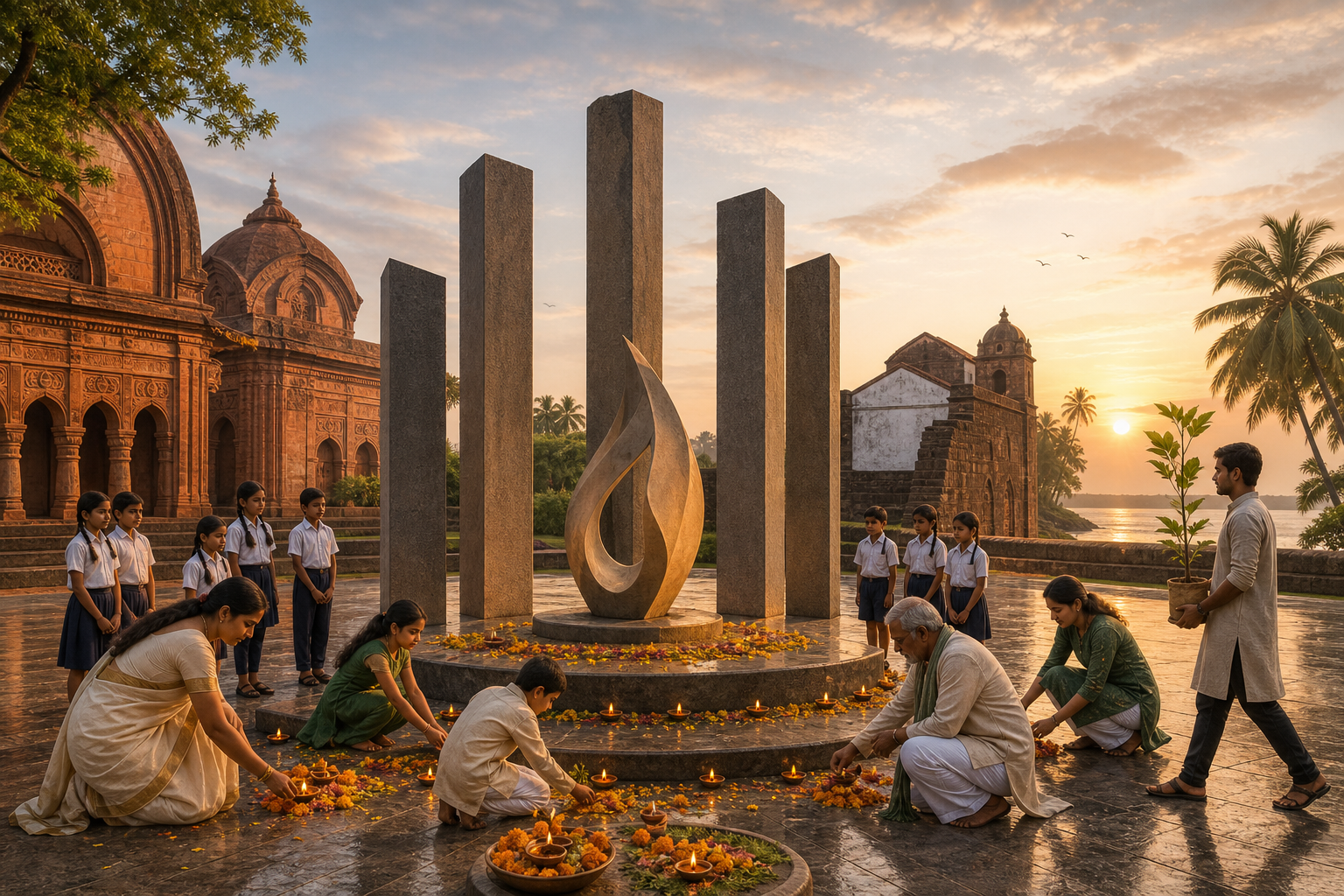
Public memory does not live in archives alone. Reports from Bengal and Goa show it being constructed through commemorative dates, street names, monuments, ceremonies, classrooms and acts of service. Read together, the two accounts reveal that remembering regional sacrifice is also a negotiation over whose courage enters the civic landscape, how historical suffering is explained and what obligations remembrance creates in the present.
One source centres on West Bengal Day on 20 June 2026 and the reported renaming of Suhrawardy Avenue as Gopal Mukherjee Road. The other describes a Hindu Janajagruti Samiti tribute at Hat Katro Khamb in Old Goa on Goa Revolution Day. These are distinct commemorative settings, and the reports do not independently settle every historical question they raise. Their contrast nevertheless offers a useful framework for understanding how regional martyrs, defenders and freedom fighters can be honoured without reducing complex histories to slogans.
Dates, names and monuments carry memory differently
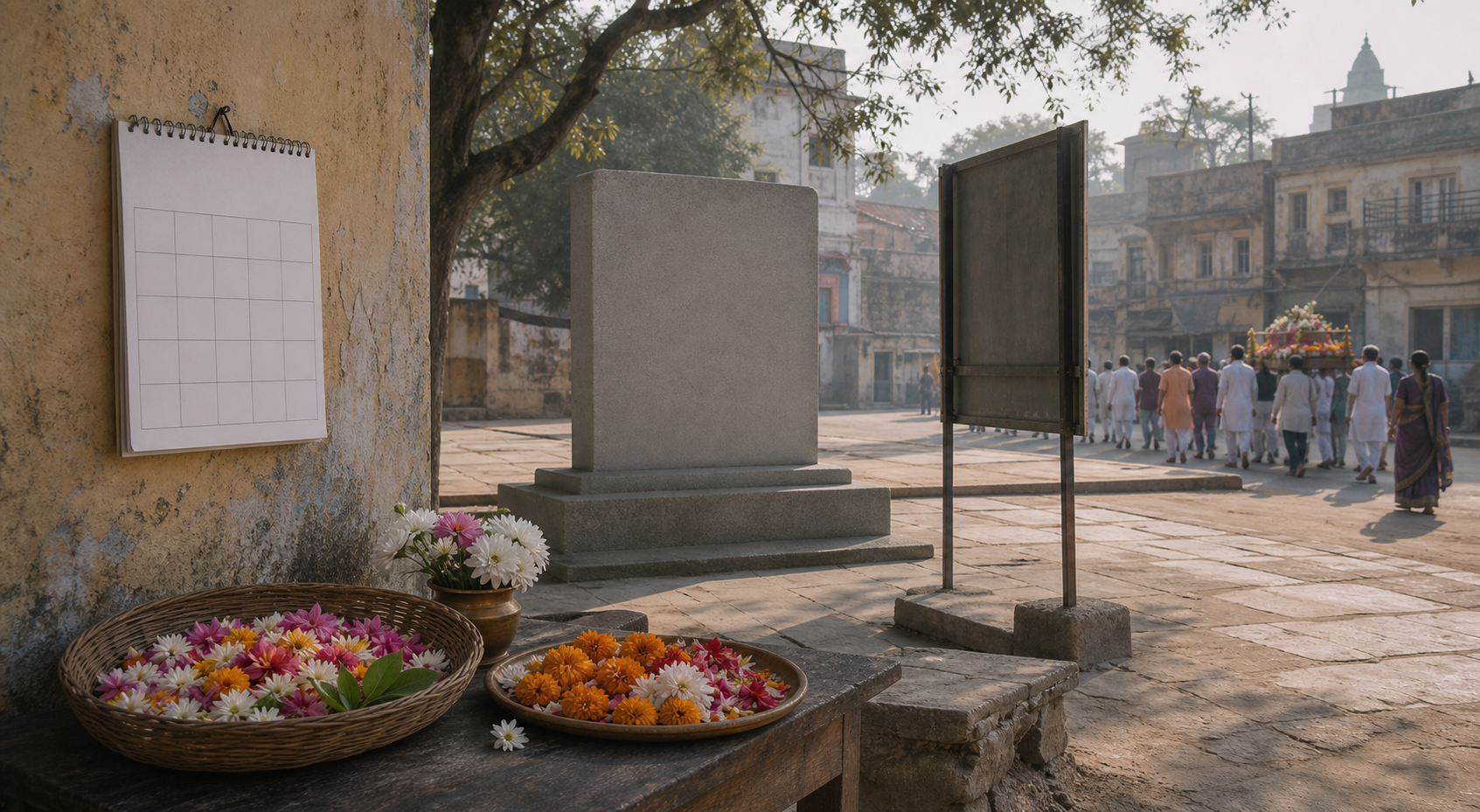
The Bengal account presents 20 June as a constitutional anniversary. According to that source, the Bengal Legislative Assembly met on that date in 1947 to determine the province’s constitutional future, a process that culminated in Bengal’s partition and the formation of West Bengal within India. The report says the 2026 observance connected this history with heritage walks, school seminars, archival exhibitions and family accounts of migration and resettlement.
The Goa report describes another kind of temporal anchor. It identifies 18 June as Goa Revolution Day and associates the date with the mass civil resistance catalysed in 1946 by Dr. Ram Manohar Lohia and Dr. Juliao Menezes against Portuguese rule. The HJS ceremony linked this modern liberation memory to Hat Katro Khamb, a stone pillar that the report says had once served as a pillory in the colonial justice system.
| Vehicle of memory | Reported example | Distinct civic effect |
|---|---|---|
| Commemorative date | West Bengal Day on 20 June and Goa Revolution Day on 18 June | Creates a recurring occasion for education, ceremony and public reflection |
| Street name | The reported change from Suhrawardy Avenue to Gopal Mukherjee Road | Places a chosen figure within everyday navigation and neighbourhood identity |
| Historic monument | Hat Katro Khamb in Old Goa | Confronts visitors with a surviving material trace associated with coercive rule |
These forms are not interchangeable. A commemorative date periodically gathers a public around an interpretation of the past. A road name embeds an honour in ordinary civic life. A surviving monument gives memory a physical location but requires conservation and careful explanation. Used together, such forms can connect constitutional history, local experience and material heritage. Used without context, each can compress a complicated past into a single official message.
Regional remembrance includes more than one kind of sacrifice
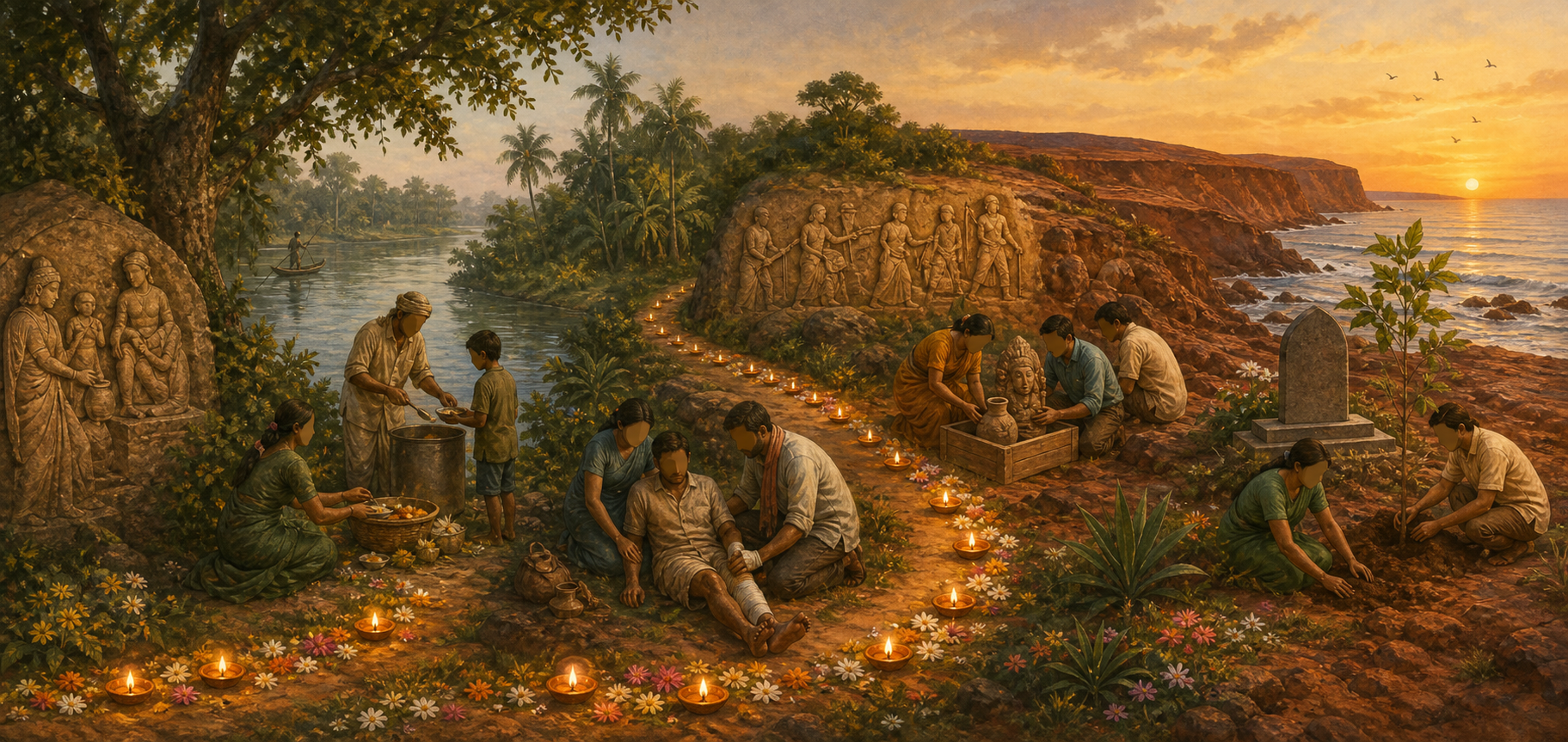
The two reports assign visibility at different scales. The Bengal article foregrounds named personalities. It discusses Dr. Syama Prasad Mookerjee through his reported work in higher education, governance, industrial development and constitutional debate. It separately presents Gopal Chandra Mukherjee, commonly remembered as Gopal Mukherjee or Gopal Patha, as a neighbourhood organiser of community self-defence during the violence of 1946.
The Goa account instead says the ceremony honoured both known and unknown martyrs associated with resistance to colonial repression. Its floral offerings, collective silence and invocations reportedly brought elders, students and community members to a site whose significance extends beyond a single biography. This emphasis recognises that public struggles leave many participants unnamed even when later remembrance becomes organised around a few prominent leaders.
A responsible vocabulary should preserve distinctions among martyrs, freedom fighters, community defenders, institution-builders, victims and witnesses. The sources place these roles within related narratives of courage, but they do not make them identical. Treating every admired historical actor as the same kind of hero can obscure what each person did, the conditions under which they acted and the evidence available about them.
Regional memory is also produced by more than governments. In the accounts considered here, state observances, municipal decisions, civic organisations, heritage authorities, schools, families and neighbourhood groups all act as custodians. Their authority differs: a municipal resolution can alter signage, a historian can test a claim against records, a family can preserve an experience absent from official files, and a community ceremony can give otherwise abstract history emotional meaning. Durable memory depends on these forms of stewardship correcting and complementing one another.
Honour requires context rather than historical flattening
The reported Kolkata renaming illustrates the central difficulty of memory policy. The Bengal source presents Gopal Mukherjee as a symbol of local courage while acknowledging that Huseyn Shaheed Suhrawardy remains a debated figure in relation to the disturbances of 1946. It calls for attention to archival evidence, administrative conditions and the wider political climate. That approach leaves room to honour one figure without pretending that changing a sign resolves the historical debate surrounding either name.
The same source reports a proposal for QR codes linking new street signs to open-access historical resources explaining both names. This is more than a technological addition. It separates commemoration from erasure: the street can carry a new civic honour while the interpretive record preserves the history of the previous name, the reasons for the change and the evidence relevant to competing assessments.
The Goa report faces a related challenge at Hat Katro Khamb. It connects the pillar with colonial punishment and situates it against the history of the Goa Inquisition, which the account says was instituted in 1560, suppressed in 1774, restored in 1778 and abolished in 1812. At the same time, it argues against sensationalising suffering. Its preferred model resembles a site of conscience: archival documentation, oral history, multiple perspectives and community engagement are used to promote understanding rather than to turn pain into an instrument of present hostility.
Both accounts therefore point toward an ethical test for public commemoration. Recognition should be explicit enough to restore neglected courage, but interpretation should be broad enough to disclose uncertainty, controversy and historical setting. Heroic compression, in which one personality comes to represent an entire era, weakens this balance. So does symbolic substitution, in which ceremonies or renamings take the place of conservation, research and education.
The sources frame this balance through a dharmic horizon encompassing Hindu, Buddhist, Jain and Sikh traditions. The Goa report invokes dharma, ahimsa and satya, while the Bengal account stresses seva and describes service initiatives associated with remembrance. Within this synthesis, those concepts function best as disciplines upon memory: truthfulness demands evidentiary care, non-violence rejects retaliatory uses of suffering, dharma creates a duty to protect dignity, and seva converts tribute into present assistance.
Key takeaways
- Regional memory becomes more durable when commemorative dates, named places and historic sites are supported by accessible interpretation.
- The Bengal and Goa reports honour different roles, including civic leaders, neighbourhood defenders and known or unknown martyrs; careful language should preserve those distinctions.
- Recognition and contextualisation are complementary: communities can honour courage while retaining evidence about contested people, institutions and events.
- A dharmic memory ethic is most constructive when satya, ahimsa, dharma and seva guide research, civic conduct and care for others.
- Education, conservation and transparent public process determine whether a tribute becomes lasting civic knowledge or remains a passing symbol.
From symbolic tribute to durable public knowledge
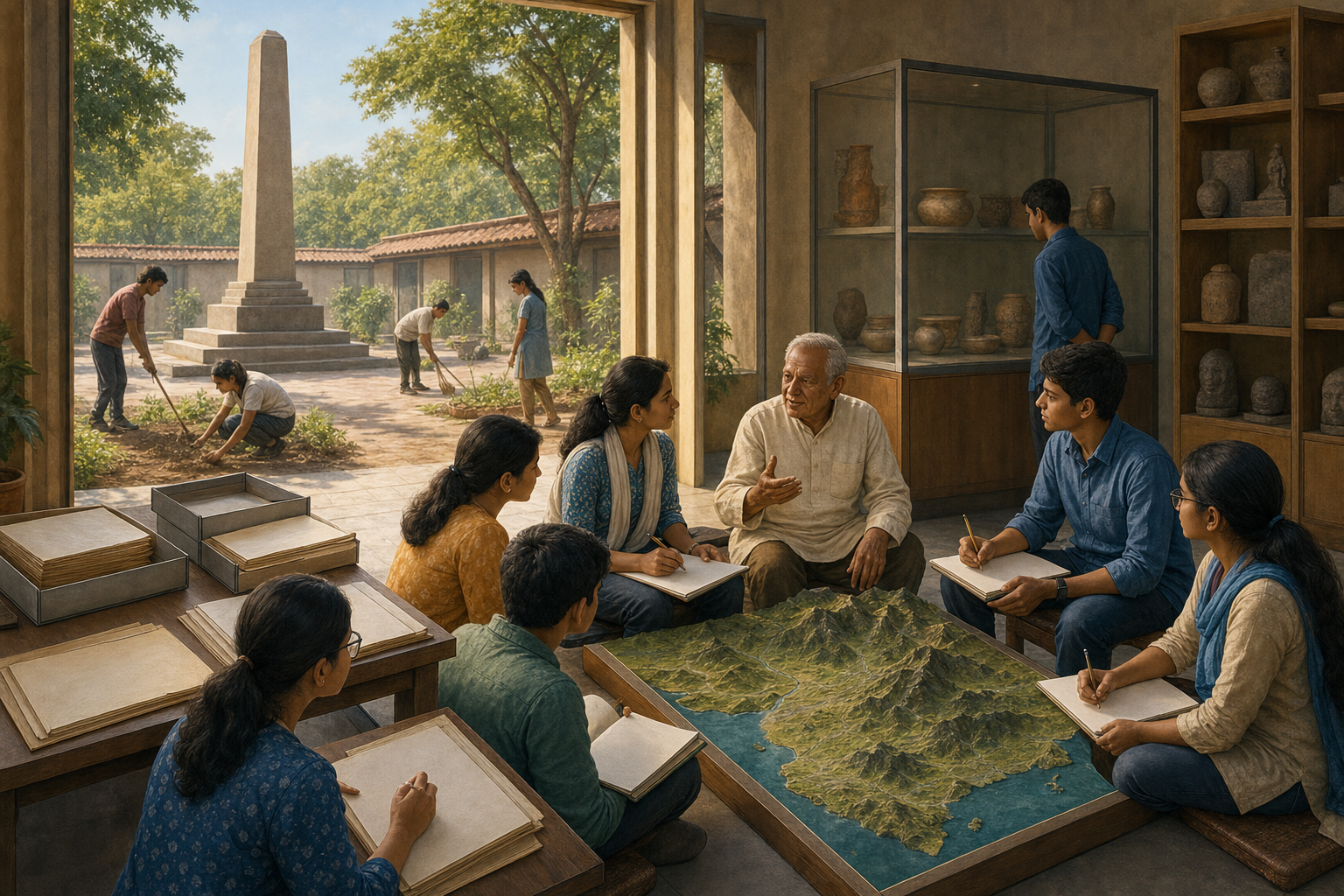
A practical memory policy begins by pairing every marker with a layered record. The Bengal report recommends Bengali and English signage, explanatory QR links and micro-histories prepared with input from historians, archivists, urban designers and community representatives. The Goa account similarly proposes multilingual interpretation, digital guides and context-rich panels. Such resources can distinguish documentary evidence, oral testimony, popular memory and later interpretation instead of presenting all four as equally certain.
Education should then connect the large historical frame with the local one. The Bengal article describes teaching 1905 and 1947 together while combining constitutional developments with village records, family letters and neighbourhood testimony. The Goa report proposes school modules, field visits and an interpretation of Old Goa that connects faith, trade, colonialism and liberation. In both cases, regional history becomes more intelligible when students can move between public events and their effects on particular communities.
Material stewardship is equally important. The Goa source calls for condition assessments, non-invasive diagnostics and preventive conservation for the exposed stone pillar. The Bengal source describes heritage clean-ups and recommends orderly administrative implementation of street renaming, including public notifications and updates for emergency, navigation and postal systems. These details matter because neglected monuments and confusing civic records can undermine the respect a symbolic decision is meant to express.
Finally, remembrance can be tested by what it enables people to do. The Bengal report links commemoration with blood donation, food distribution and community heritage work; the Goa ceremony is presented as a commitment to freedom of conscience, dignity and non-coercion. These examples suggest that the strongest memorial culture does not ask citizens merely to inherit grievance. It asks them to acquire historical literacy, care for vulnerable neighbours and strengthen institutions capable of preventing future injustice.
If regional commemorations continue to unite evidence, conservation, plural participation and service, the memory of sacrifice can remain locally rooted without becoming socially enclosed. That is the forward task: to make every honoured date, name and monument an invitation to responsible citizenship.
References
- DharmaRenaissance Blog — West Bengal Day 2026: Historic Unity Celebrations as Suhrawardy Avenue Becomes Gopal Mukherjee Road
- Hindu Jagruti Samiti — Solemn HJS tribute at Hat Katro Khamb on Goa Revolution Day honors martyrs, strengthens unity