
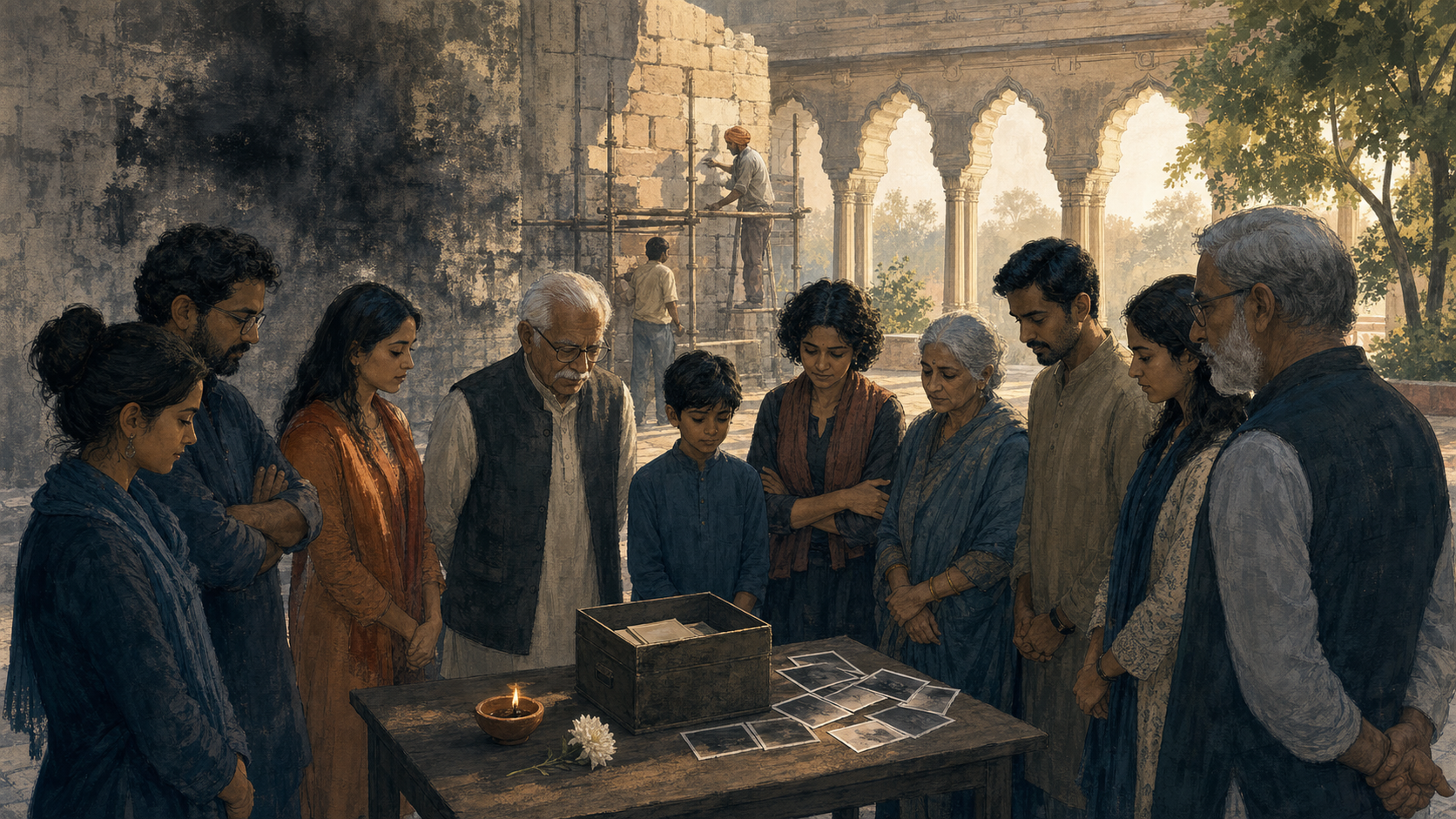
You may have arrived here after an anniversary, a family story, a heated argument, or a social-media claim about an old atrocity. You don’t want suffering erased. You also don’t want memory turned into permission to hate people who had no part in the crime.
That tension cannot be resolved by forgetting, forced equivalence, or vague appeals to harmony. It requires a disciplined way to remember: establish what happened, name who suffered, distinguish evidence from allegation, pursue accountability, and refuse inherited guilt. This is how historical memory can protect a community without imprisoning it.
Decide what remembrance is meant to accomplish
Before organising a commemoration or entering an argument, ask what you want memory to do. Remembrance can honour victims, preserve evidence, seek justice, teach warning signs, or rebuild trust. It becomes dangerous when its unstated purpose is to transfer guilt from identified perpetrators to an entire religious community.
This distinction matters because truth, justice, forgiveness, and reconciliation are different acts. Truth asks what happened. Justice asks who was responsible and what accountability is due. Forgiveness belongs to those who were harmed; outsiders cannot demand it from them. Reconciliation asks whether people who must share a society can build trustworthy relationships without denying the past.
A Dharmic approach should be candid about adharma. Ahimsa does not require silence about violence, and unity does not require flattening every episode into equal blame. The deaths of Guru Arjan in 1606 and Guru Tegh Bahadur in 1675, for example, belong to a specific Sikh memory of sacrifice. Guru Tegh Bahadur’s defence of freedom of conscience also carries an ethical claim beyond one panth: another person’s right to worship cannot depend on whether we share that person’s belief.
Use a simple purpose test before you speak or publish:
- Does this remembrance identify the victims and the harm clearly?
- Does it attach responsibility to people, organisations, policies, or institutions supported by the evidence?
- Does it protect the living from repetition, or merely recruit them into an old quarrel?
- Would you use the same standard of evidence if the victims belonged to another community?
If a speech names a whole community but cannot name the responsible actors, the event, or the evidence, it is not careful remembrance. It is mobilisation through grievance.
Build a record sturdy enough to carry moral judgment
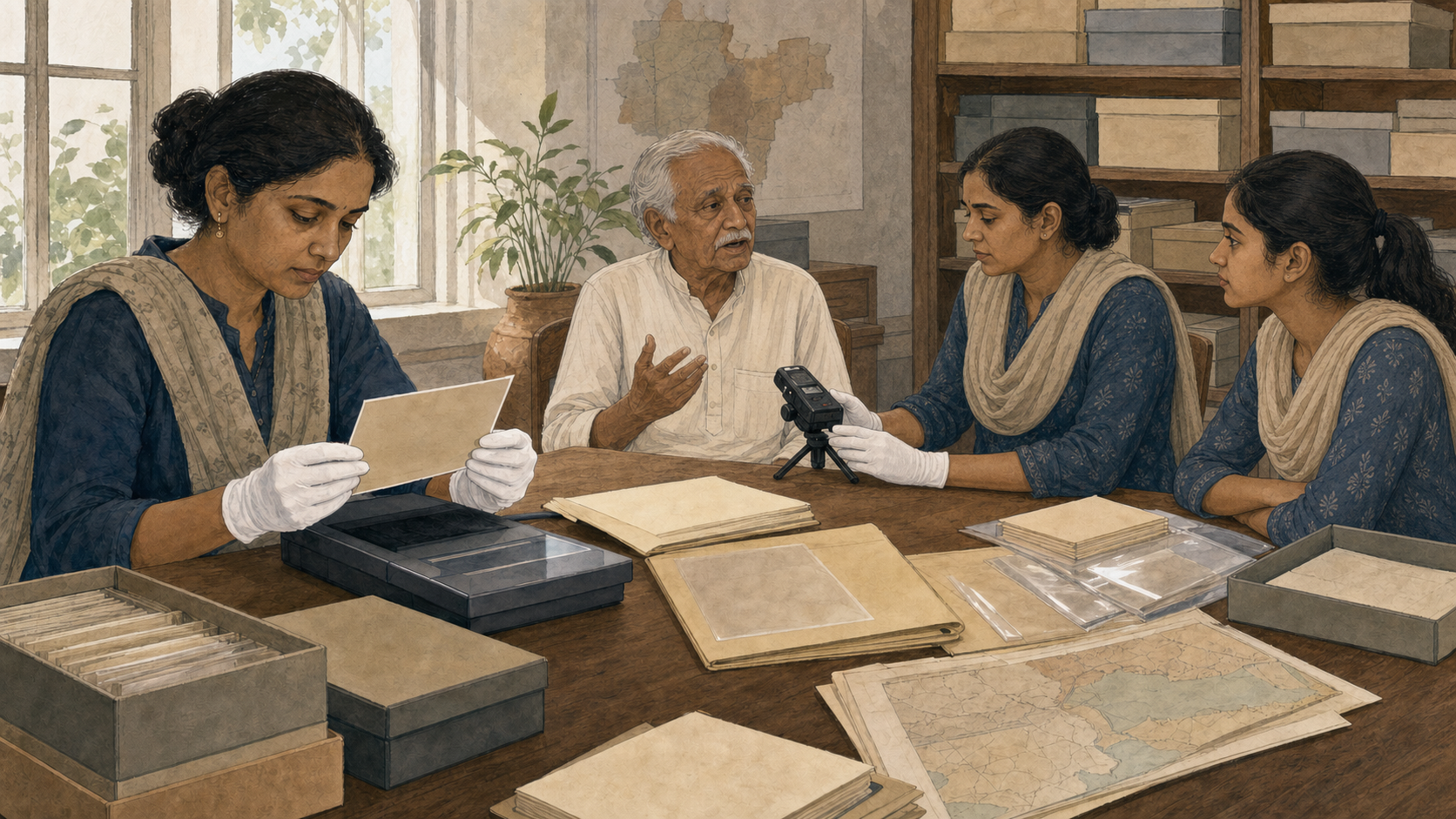
Strong feelings do not make a weak claim reliable. Before drawing a civilisational or political lesson, separate the material in front of you into distinct layers: established events, supported context, contested claims, inherited memory, and your own moral interpretation. Do not blend them into a single confident narrative.
What Malegaon in 1921 teaches about contested memory
In April 1921, three days of unrest in Malegaon brought arson, attacks on homes, looting, temple desecration, displacement, and severe damage in Hindu neighbourhoods. The violence arose amid Khilafat mobilisation under British rule, when the Indian National Congress had aligned with the Khilafat Movement and Gandhi supported cooperation with its leaders.
That context belongs in the record, but context is not exoneration. Political strategy, religious rhetoric, local anxiety, rumour, policing failures, and administrative lapses may help explain how violence became possible. They do not make the destruction of homes or temples less real.
The same discipline applies to disputed details. One line of period claims holds that Mohammad Ali sought a fatwa encouraging resistance to colonial government, reportedly with support from several hundred ulema. The claim should remain labelled as an archival contention rather than being silently promoted to settled fact. Likewise, disagreement over the long-term communal consequences of the Congress-Khilafat alliance should be presented as disagreement. You can condemn documented violence without pretending that every disputed proposition has been resolved.
Why 1984 must be named without euphemism
The events of 1984, including Operation Blue Star and the anti-Sikh violence that followed, remain a deep wound. Saying only that there was unrest hides the identity of those targeted. Naming anti-Sikh violence does not assign guilt to every Hindu, every institution, or every Indian. It identifies the character of the harm so that legal documentation, memorial work, constitutional protection, and demands for accountability can address it honestly.
For any episode, prepare a memory ledger before preparing a conclusion:
- Established event: Record the date, place, victims, forms of harm, and sequence that the available evidence supports.
- Supported context: Note the political mobilisation, rhetoric, institutional action, economic tension, or administrative failure relevant to the outbreak.
- Contested claim: Preserve the exact uncertainty. Use terms such as alleged, reported, disputed, or attributed when that is all the record justifies.
- Inherited memory: Label whether a family account was witnessed, heard from a witness, or repeated across later generations.
- Moral judgment: State your conclusion only after the preceding layers are visible. Do not disguise inference as fact.
This method does not drain history of moral force. It prevents an easily challenged detail from being used to dismiss a well-established wrong.
Tell the whole truth without assigning inherited guilt
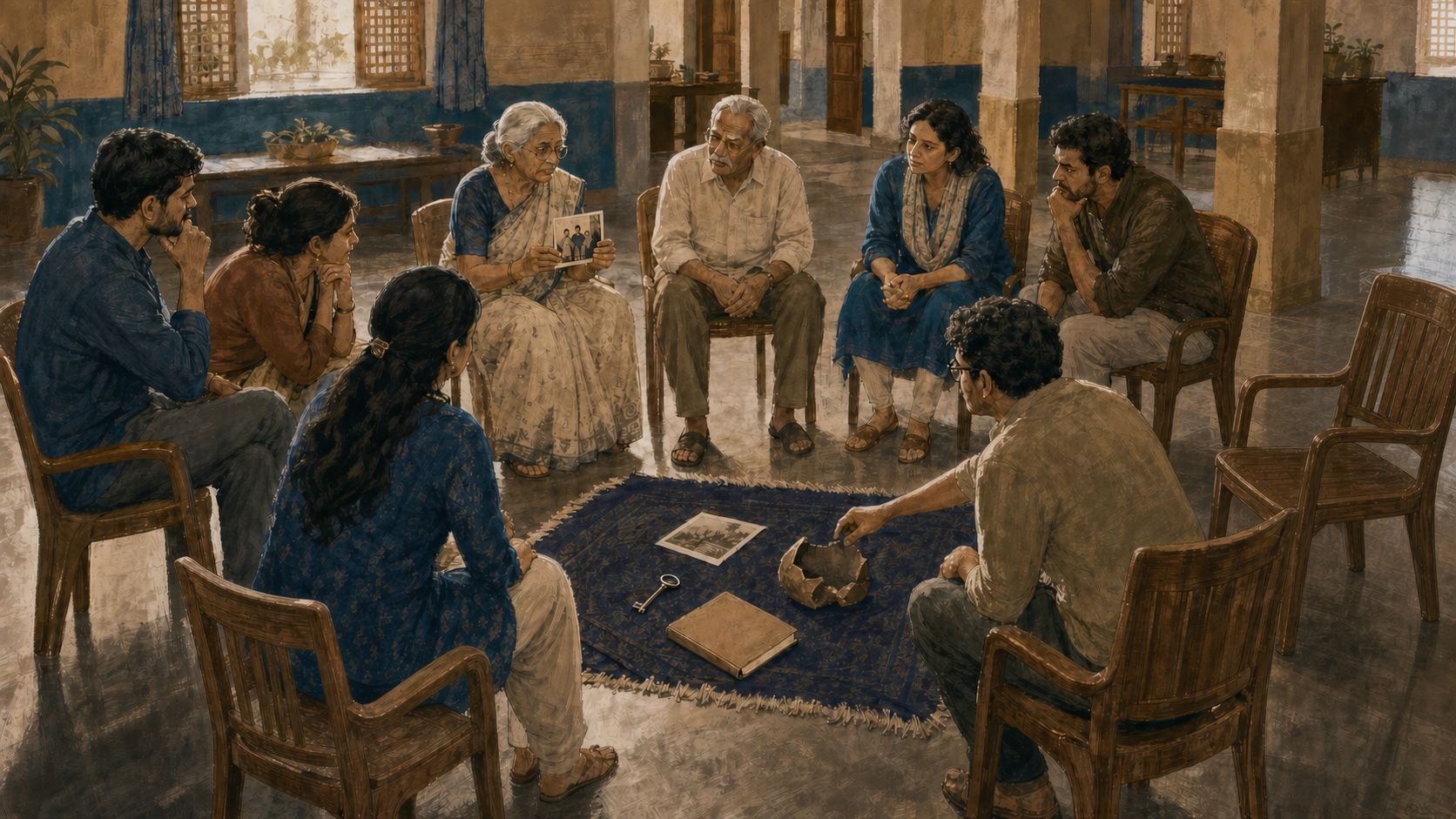
Historical honesty requires two refusals at once. Refuse to erase the identity of victims. Refuse to treat religious identity as hereditary criminal liability.
That means speaking plainly about Hindu neighbourhoods attacked in Malegaon and Sikhs targeted in 1984. It also means remembering that Partition in 1947 brought displacement and violence to Sikhs, Hindus, and others. These histories are not interchangeable, but each deserves precise language and the same rule against collective blame.
Stories of rescue belong in the record too. Families remember neighbours who sheltered people, escorted them to safety, shared food, or refused to join a mob. Such accounts reveal that communal identity did not mechanically determine conduct. But place them carefully. If a commemoration rushes to a consoling rescue story before it has named the victims and the crime, compassion becomes a device for changing the subject.
The Sikh tradition offers a particularly useful moral vocabulary here. The Khalsa, formed at Anandpur Sahib in 1699 under Guru Gobind Singh, joins spiritual discipline to the duty to resist injustice. The memory of the Vadda Ghallughara in 1762 preserves persecution and survival, while langar, seva, kirtan, and the gurdwara show how a wounded community can sustain identity through service rather than vengeance. Sarbat da bhala directs moral concern toward the welfare of all without asking anyone to forget who was harmed.
When you write or speak, use nouns narrower than the community itself. Say rioters, organisers, officials, political leaders, armed actors, or institutions when the evidence supports those terms. Avoid sentences beginning with Hindus, Muslims, Sikhs, or any other collective when the sentence actually describes the conduct of particular people. Grammatical precision is a civic safeguard: it prevents a claim about perpetrators from becoming an accusation against millions.
Move memory from argument into disciplined practice
A community does not become historically literate merely by holding stronger opinions. Memory has to be organised so that families, students, religious institutions, and local associations can distinguish testimony from rumour and mourning from mobilisation.
At home: preserve the chain of memory
- Write down who witnessed the event and who later heard the account. Do not present a third-generation retelling as direct testimony.
- Preserve names, locations, documents, photographs, and the original language of a recollection where available. Add interpretation separately.
- Ask what the family member directly saw, what the person inferred, and what was learned later. Those are different kinds of knowledge.
- Record acts of protection as well as injury, but do not use the former to dilute the latter.
- If someone does not wish to recount a traumatic event, do not treat disclosure as a duty owed to the family or community.
In a classroom or reading group: teach verbs of certainty
Ask readers to mark each historical claim with the verb it warrants: happened, was documented, was alleged, was interpreted, or was remembered. This small exercise exposes where a narrative leaps from evidence to certainty.
Then require separate responses to separate questions: What is established? What remains disputed? Who was harmed? What institutions failed? What conduct prevented greater harm? What safeguard would reduce the chance of recurrence? Students learn more from this structure than from being handed a slogan about unity or blame.
In public commemoration: pair memory with responsibility
A useful commemoration should name the event, recognise the victims, identify uncertainty honestly, and end with a present obligation. That obligation might be defending a neighbour’s freedom of worship, supporting a credible memorial or educational effort, correcting a false claim circulated by one’s own side, or joining a shared seva project.
Joint remembrance should not mean negotiating away facts until nobody is uncomfortable. It should mean that people can stand beside one another while the victims’ experience is named accurately. Interfaith vigils, educational programmes, shared seva, curricular attention to Sikh contributions, and heritage walks in Amritsar and Anandpur Sahib provide practical forms for that work. The model can be adapted elsewhere: learn the local history, honour its victims, and undertake service that makes present-day neighbours safer.
Stop historical memory from becoming a new spark

Communal escalation rarely begins with a complete, carefully tested account. It feeds on a fragment: an inflammatory speech, a decontextualised image, an unattributed claim, or a rumour presented as urgent fact. Malegaon’s experience shows why volatile rhetoric, mass mobilisation, local tension, and administrative failure must be read together rather than in isolation.
Before forwarding material about a communal atrocity, pause over questions that can actually change your decision:
- Does it identify a place and date, or does it rely on a frightening image with no verifiable setting?
- Does the linked material support the caption, or is the caption doing all the argumentative work?
- Is a contested allegation labelled as contested?
- Does it distinguish perpetrators and responsible institutions from an entire faith community?
- Is it preserving evidence, seeking help, or preventing harm? If none applies, what will forwarding it accomplish?
If you discover that something you shared was false, correct it in the same place and with comparable visibility. Quietly deleting it protects your pride, not the people exposed to the misinformation.
Public leaders and institutions need an equally clear sequence. Name the victims and immediate harm. Reject retaliation without attaching a qualification. Preserve evidence and seek credible investigation. Protect threatened places of worship and neighbourhoods. Correct false claims promptly. Only then speak about long-term dialogue. A premature call to move on can sound like impunity; an accusatory generalisation can create the next target.
Reconciliation requires truth, accountability, and shared work
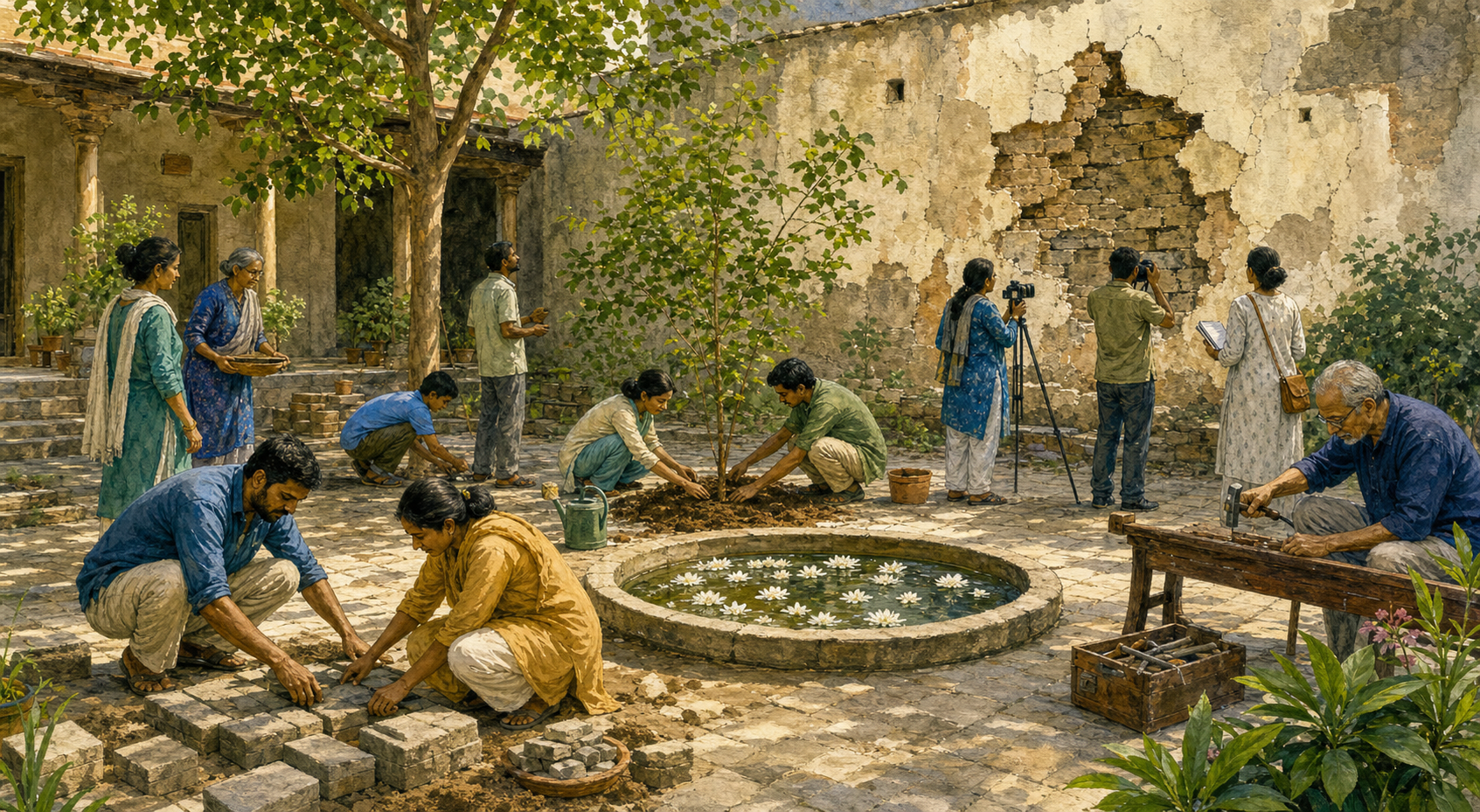
Reconciliation fails when it is treated as a mood. It needs parallel tracks.
- Truth: Maintain accurate records, protect testimony, teach the context, and mark disputed claims honestly.
- Accountability: Pursue responsibility through credible legal, institutional, and civic channels. Dialogue cannot substitute for justice.
- Relationship: Create repeated opportunities for neighbours to serve, learn, and protect one another. A ceremonial embrace without ongoing conduct is not restored trust.
These tracks do not always move at the same speed. A family may be ready to join a neighbourhood service project while still demanding accountability. Another may support accurate education but decline a public reconciliation ceremony. Do not make participation in symbolic harmony the price of having suffering recognised.
Key takeaways
- Name victims and harms precisely; euphemism weakens both memory and prevention.
- Separate established events, contested claims, inherited recollections, and moral conclusions.
- Assign responsibility as narrowly as the evidence allows; reject hereditary and collective guilt.
- Include stories of mutual protection only after the original wrong has been acknowledged fully.
- Pair commemoration with an accountable act: preserve testimony, correct misinformation, teach the history, defend freedom of worship, or serve together.
- Treat reconciliation as the work of truth, justice, and reliable conduct, not as pressure on victims to forget.
Start with the episode closest to your family, town, gurdwara, temple, school, or civic association. Build its memory ledger. Invite corrections to the facts. Remove language that assigns guilt by birth. Then connect the remembrance to a concrete duty toward living neighbours. The past cannot be repaired, but the way you carry it can either widen the wound or help prevent its return.
References
- SikhNet – Blood-Stained Chapters in Sikh History: Remembering Martyrdom, Resilience, and Dharmic Unity
- Dharma Dispatch – Malegaon 1921: Untold Lessons from the Khilafat Unrest, Gandhi’s Strategy, and Communal Healing
