

Guru Arjan Dev Ji’s martyrdom is often approached as a story of extraordinary endurance. Read together, the two supplied accounts offer a more demanding interpretation: the central subject is sehj, the disciplined steadiness that prevents suffering, fear, and anger from taking command of conscience.
This perspective connects the Guru’s shaheedi with the life that preceded it, the institutions he helped strengthen, and the forms of service through which Sikh communities continue to remember him. It also clarifies why serenity under coercion is neither passivity nor approval of injustice.
Sehj is composure with a moral centre
Both the first supplied article and the second supplied article describe sehj as a cultivated spiritual condition rather than a passing feeling. Their shared emphasis is on a mind that remains anchored in truth while anger, fear, ego, or despair exert pressure. The first locates this balance in Naam, Gurbani, humility, remembrance of hukam, and grace; the second presents prayer, reflection, truthful conduct, and compassionate action as practices that make such balance possible.
That distinction matters. Emotional calm can arise because a person is comfortable, detached, or simply unaware of what is happening. Sehj, as presented in these accounts, is tested precisely when comfort disappears. It does not eliminate pain or disagreement. It creates enough inner freedom for a person to respond without surrendering either truth or compassion.
The articles also place sehj in conversation with other dharmic disciplines. The first compares it with the steady wisdom of the Bhagavad Gita, Buddhist equanimity, and Jain practices concerned with forgiveness, non-attachment, and non-violence. The second similarly discusses Hindu shanti, Buddhist work on craving and aversion, and Jain vigilance against harm. These are presented as meaningful parallels, not interchangeable doctrines: Sikh sehj retains its particular foundation in the Guru, Naam, hukam, seva, and truthful living.
Key takeaways
- Sehj is a trained capacity for truthful action under pressure, not a naturally quiet personality.
- Shaheedi signifies spiritual and moral witness, not death considered apart from its purpose.
- Acceptance of Divine Will does not make coercion just or remove the duty to recognise injustice.
- Langar, sangat, kirtan, and chabeel turn inward steadiness into shared practices of equality and care.
- Teaching sehj requires emotional honesty: feelings are acknowledged, then guided by truth, dignity, and compassion.
The Guru’s constructive life frames his shaheedi
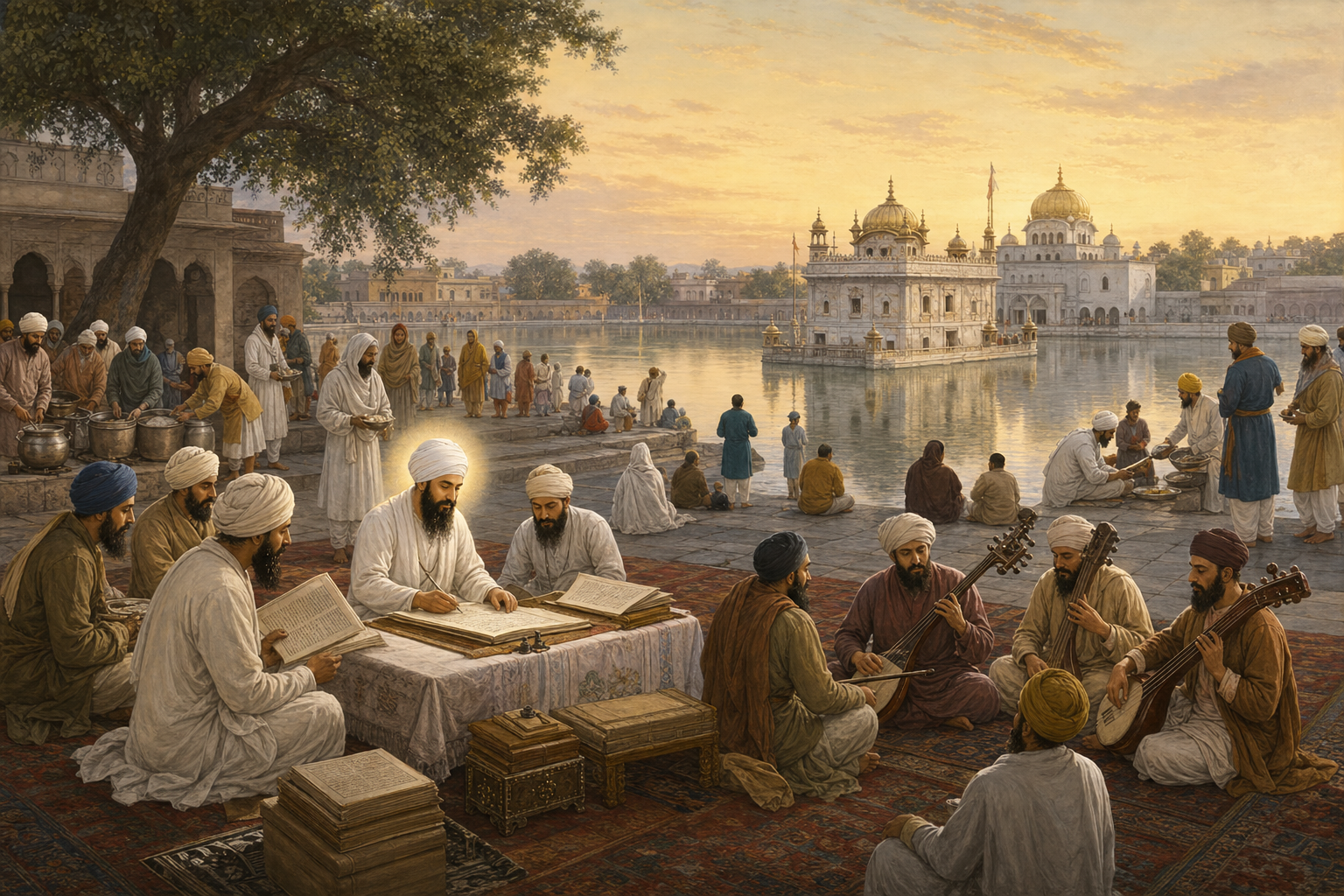
A focus on the manner of Guru Arjan Dev Ji’s death can obscure the scale of the life being defended. Both accounts identify him as the fifth Sikh Guru and report his compilation of the Adi Granth in 1604. The first article explains that the scripture gathered hymns of the Sikh Gurus alongside compositions of Bhagats from varied social and religious backgrounds. The second treats this inclusiveness as a form of peace education: difference did not prevent the recognition of spiritual wisdom.
The first account also associates Guru Arjan Dev Ji with the completion of Harmandir Sahib, the placement of the Adi Granth there, and an ethos of accessibility expressed through sangat, pangat, langar, and seva. It additionally identifies him as the composer of Sukhmani Sahib. The second account develops the educational significance of these contributions, presenting scripture, sacred music, collective worship, and the shared meal as institutions that repeatedly train attention, humility, equality, and service.
Taken together, these details change the interpretive centre of the martyrdom. Guru Arjan Dev Ji is remembered not only as one who endured suffering, but as a poet, compiler, builder, teacher, and organiser of communal life. His spiritual composure was therefore not withdrawal from the world. It had already taken public form in an inclusive scripture, an accessible sacred centre, devotional music, and practices that placed people together without the ordinary claims of rank.
Shaheedi names witness without glorifying suffering
The supplied accounts approach the historical setting with different emphases. The first situates the martyrdom amid Mughal imperial politics under Emperor Jahangir, concern about the Sikh community’s expanding influence, and Sikh narratives about demands involving sacred hymns, punitive payment, or submission against conscience. Importantly, it also notes that scholars continue to examine the precise political and documentary details. That qualification should remain visible rather than turning every element of traditional memory into an uncontested historical claim.
According to that article, traditional Sikh accounts describe Guru Arjan Dev Ji undergoing severe bodily suffering in Lahore in 1606. The second article concentrates less on the political sequence and more on the meaning of shaheedi as witness: an unwavering commitment to truth, justice, and spiritual integrity when worldly authority demands compromise. These angles are complementary. One preserves the setting and the limits of documentary certainty; the other explains why the remembrance cannot be reduced to the fact of death.
The first article associates the moment with Tera Kiya Meetha Lage, explaining it as an experience of Divine Will as sweet. Its interpretation explicitly rejects fatalism. Sweetness does not mean that cruelty becomes good, that pain is unreal, or that resistance is unnecessary. It describes an inward relationship to the Divine that coercion cannot sever.
This is the crucial difference between accepting hukam and endorsing an oppressor’s conduct. The first concerns the spiritual orientation from which suffering is met; the second would be a moral judgement about the injustice itself. Sehj holds those questions apart. It permits clear recognition of wrongdoing while refusing to let hatred reproduce that wrongdoing within the person who has been harmed.
Memory becomes credible through institutions and service
The first article reports that Guru Arjan Dev Ji’s martyrdom helped prepare the way for Guru Hargobind Sahib Ji’s later articulation of Miri-Piri, joining spiritual authority with temporal responsibility. In that account, Sikh history absorbed a lasting lesson: peace could not be equated with helplessness, and compassion sometimes required disciplined protection. Sehj therefore belongs beside responsibility, not outside it.
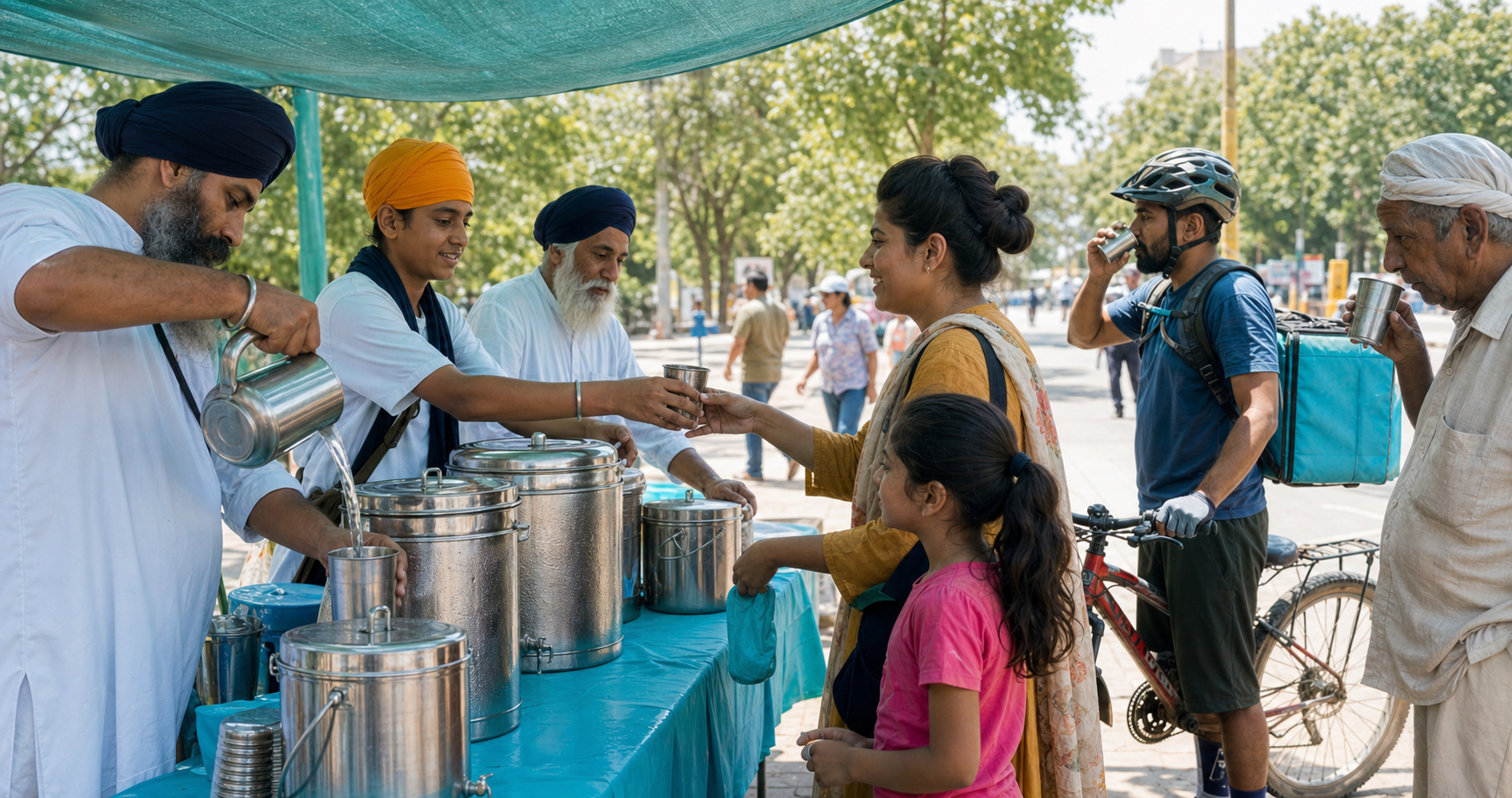
The same article interprets the serving of chabeel, a cool sweet drink offered during the shaheedi remembrance, as embodied theology. The symbolism reverses the logic of cruelty: heat is answered with coolness, and remembered pain becomes hospitality to strangers. The response is neither forgetfulness nor revenge, but service.
The second article expands this insight through the gurdwara, sangat, langar, and kirtan. Langar makes equality tangible by bringing people into a shared practice of receiving and serving food. Kirtan trains attention through devotional sound rather than argument alone. Sangat places spiritual development within a community that can sustain memory and accountability. The synthesis is significant: sehj may be inwardly realised, but it is socially cultivated and publicly expressed.
These practices also guard against reducing martyrdom to spectacle. A community most faithfully honours moral courage when remembrance shapes how people eat together, listen together, serve one another, and meet strangers. The measure of memory is not the intensity of emotion it produces on one day, but the habits it forms over time.
Teaching sehj without teaching silence
The second article makes childhood education a central concern. It warns against two distortions: removing so much hardship from the story that shaheedi loses its meaning, or emphasising suffering in a way that cultivates fear and hostility. Its preferred frame places the martyrdom within Guru Arjan Dev Ji’s larger legacy of sacred music, gathered wisdom, community nourishment, service, and devotion. Pain remains real, but pain does not become the whole identity of the story.
This approach begins with emotional literacy. A child experiencing unfairness can first identify anger, sadness, embarrassment, confusion, or fear. The next task is not to suppress that feeling, but to ask what response would preserve truth and dignity without increasing harm. Pausing before reacting, declining to humiliate someone, and choosing truthful speech are modest practices, yet they reproduce the essential movement of sehj from impulse toward governed action.
The same framework applies beyond childhood. The first article connects the sakhi with pressures such as anxiety, humiliation, family conflict, workplace injustice, and social fragmentation. In each setting, sehj should not be used to demand quiet obedience from someone who has been mistreated. A faithful application asks whether injustice can be confronted without allowing panic, vengeance, or contempt to decide the method.
Guru Arjan Dev Ji’s shaheedi thus leaves a continuing discipline rather than a formula for passive endurance. Its future relevance will depend on whether remembrance keeps producing people and institutions capable of combining clear conscience, emotional self-command, protective responsibility, and generous service.

References
- DharmaRenaissance Blog — The Sweet Power of Sehj: Guru Arjan Dev Ji’s Martyrdom and Inner Courage
- DharmaRenaissance Blog — The Power of Sehj: How Guru Arjan Dev Ji’s Shaheedi Teaches Children Peace