

If you are deciding whether to support a 16 May remembrance of the Goa Inquisition, you may be weighing two legitimate concerns. You do not want the suffering of earlier generations erased. You also do not want their memory turned into inherited hostility toward neighbors who bear no personal responsibility for a colonial institution.
You do not have to choose between truth and harmony. The stronger choice is disciplined remembrance: name the coercion without euphemism, distinguish established facts from disputed claims, preserve family memories, and make reconciliation depend on public work rather than polite silence.
Key takeaways
- Support a 16 May observance only if it identifies historical institutions and policies as responsible, rather than assigning inherited guilt to present-day Christians.
- Use the date accurately. The 16 May 1546 correspondence associated with Francis Xavier’s appeal preceded the establishment of the Goan tribunal in 1560.
- Distinguish the Inquisition’s formal jurisdiction over baptized Christians from the wider colonial restrictions imposed on Hindu and Muslim religious life in particular Portuguese-controlled territories.
- Do not make an uncertain death toll or prosecution total carry the case. The documented machinery of coercion, its penalties, and its effects on community life already require honest commemoration.
- Ask for durable outcomes: archival work, oral histories, a multilingual exhibition, school materials, site interpretation, and an annual interfaith commitment against religious coercion.
What 16 May can honestly commemorate
May 16 is not the anniversary of the tribunal’s opening. It is commonly associated with a 1546 request by Francis Xavier for inquisitorial authority in Portuguese India. The Portuguese Crown established the tribunal fourteen years later, in 1560. That distinction matters because a commemoration loses credibility when advocacy, authorization, and operation are collapsed into one event.
The most defensible meaning of 16 May is therefore the remembrance of a political threshold: religious coercion was being recommended as an instrument of colonial governance. The date can also open a wider examination of the institution subsequently created, the laws surrounding it, and the communities that adapted under pressure.
If the phrase “Black Day” is used, its meaning should be written into the declaration. “Black” should describe the moral darkness of coercion, confiscation, imprisonment, exile, suppression, and execution. It must not become a label for a living religious community. A formal subtitle such as “Day of Remembrance for Victims of Religious Coercion in Goa” would make that boundary harder to manipulate.
Before you endorse a resolution, petition, or public event, look for four commitments in its wording:
- It explains why 16 May 1546 was chosen and does not imply that the tribunal began on that day.
- It recognizes the tribunal established in 1560 and the broader colonial regulations that constrained non-Christian religious life.
- It honors people who were investigated, punished, displaced, dispossessed, or forced to conceal and relocate religious practices.
- It rejects both religious coercion and collective blame, including hostility toward present-day Catholics or other Christians.
A declaration that omits the fourth commitment is vulnerable to communal use. One that omits the first three risks becoming an exercise in managed forgetting. Responsible remembrance requires all four.
Accuracy protects memory from denial and communal blame

The case for remembrance becomes stronger, not weaker, when its claims are carefully bounded. Precision prevents critics from using one exaggeration to dismiss an entire history. It also prevents anger at a colonial system from being redirected toward people alive now.
Keep the chronology visible
| Date | What happened | Why the distinction matters |
|---|---|---|
| 16 May 1546 | Correspondence by Francis Xavier is widely associated with an appeal for inquisitorial jurisdiction in Portuguese India. | This marks advocacy for the mechanism, not the opening of the tribunal. |
| 1560 | The Portuguese Crown established the Tribunal do Santo Oficio in Goa by royal authority. | Institutional responsibility belongs within the Portuguese colonial and inquisitorial system. |
| 1774 | The tribunal was suspended during the Pombaline reforms. | Its history was not a single period of completely uniform activity. |
| 1778 | The tribunal was reinstated. | The restoration shows that suspension did not end the institution. |
| 1812 | The Goa Inquisition was finally abolished. | This marks the institutional endpoint, although social memory continued. |
This chronology also disciplines claims about Francis Xavier. His surviving correspondence is widely connected with the 1546 recommendation, although historians continue to scrutinize its exact wording and emphasis. It is inaccurate to say that he opened or personally ran the tribunal in 1546. It is equally inadequate to pretend that advocacy for inquisitorial machinery carries no moral significance merely because the Crown acted later.
Public history can acknowledge that Catholics venerate Xavier’s missionary legacy while plainly censuring support for coercive religious enforcement. Veneration cannot grant immunity from historical examination. Criticism, in turn, does not require turning a complex early-modern figure into a substitute target for hostility toward Christians now.
Separate the tribunal from the wider colonial regime
The Goa Inquisition’s formal jurisdiction centered on baptized Christians accused of heresy, apostasy, Judaizing, Islamizing, or concealed religious practice. Its punishments included penances, fines, property confiscation, exile, incarceration and, in capital cases, execution.
Hindu and Muslim life was also constrained through a related but legally distinct layer of power. Royal ordinances and municipal regulations periodically restricted public worship, temple reconstruction, processions, and other forms of religious expression in particular territories under firm Portuguese control. These measures were not identical to an inquisitorial prosecution, even when their effects converged in the same household or village.
Use verbs that preserve this difference. The tribunal investigated and prosecuted baptized people under its religious jurisdiction. Colonial authorities restricted and displaced Hindu and Muslim public practices through law and administration. Communities concealed, rerouted, relocated, and rebuilt their religious lives. Those statements are both more accurate and more revealing than saying only that “everyone was persecuted by the Inquisition.”
Geography needs the same care. Restrictions applied in particular Portuguese-controlled zones, not in an undifferentiated territory untouched by political boundaries. Families responded by moving rituals into homes, changing procession routes, relying on shrines outside the tightest jurisdictions, and sustaining religious networks across borders. Noticing those adaptations restores agency to the people being remembered; they were not merely passive recipients of colonial policy.
Do not build the case around a fragile number
Surviving registers, rosters, notarial manuscripts, and ecclesiastical materials provide only a partial reconstruction. Modern estimates vary because of archival gaps, different counting methods, and polemical inflation. A count of proceedings, a count of accused individuals, a count of particular sentences, and an estimate of wider community harm are different measures. They should never be exchanged as though they mean the same thing.
If a speech, leaflet, or social-media graphic presents a dramatic total without explaining its archive and counting method, do not repeat it. Ask three questions: What exactly is being counted? Which surviving records support the total? How are missing records and repeat proceedings handled? If those questions cannot be answered, leave the number out.
The absence of a final total does not erase the institution. Its legal structure, categories of accusation, spectrum of penalties, colonial setting, and long duration can be established without false precision. Honest uncertainty is more durable than an impressive figure that can be easily discredited.
Build a memorial practice, not a one-day reaction
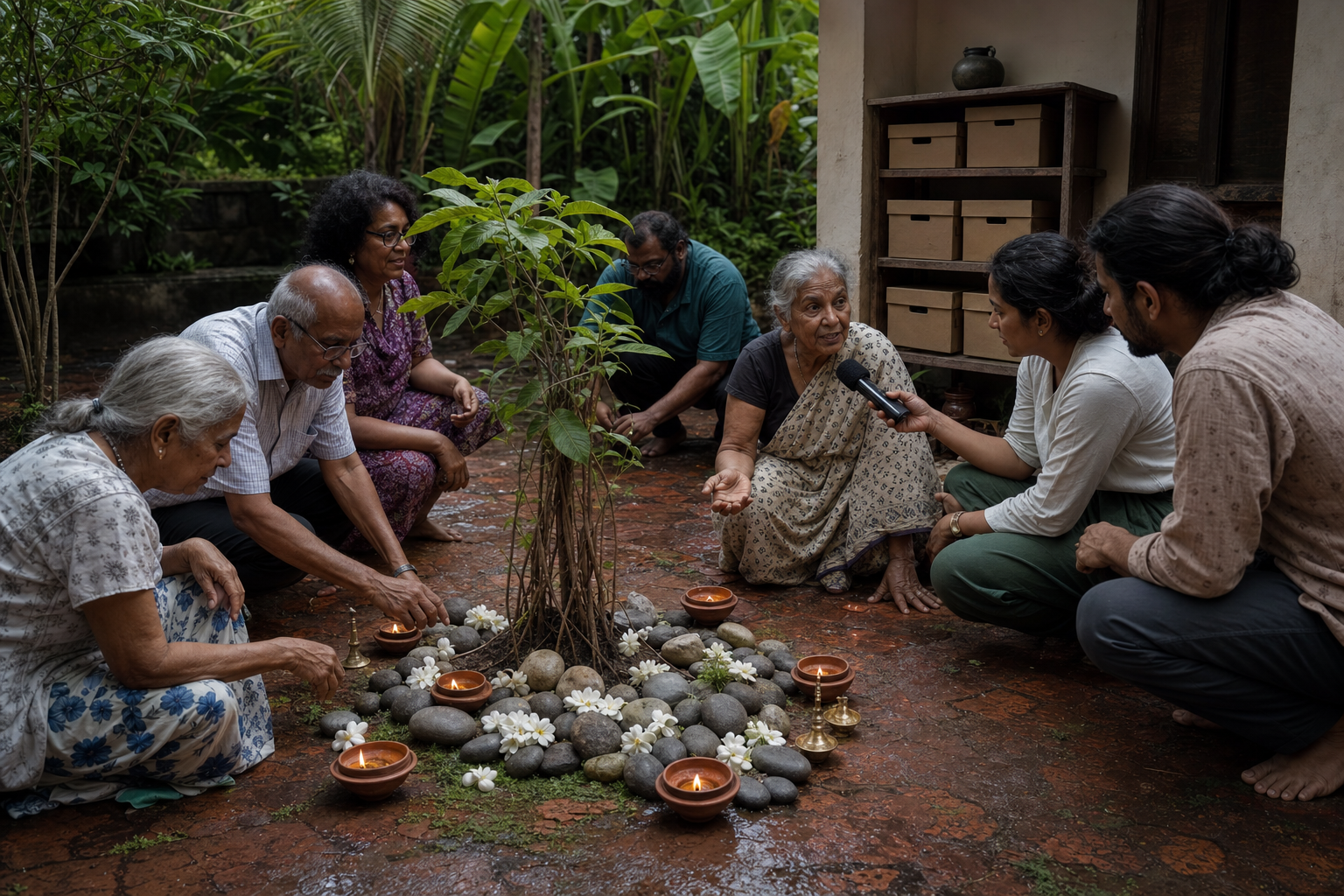
A yearly declaration can focus attention, but attention is not yet public memory. If nothing remains after the speeches, the observance will depend each year on outrage, counter-outrage, and whatever claim travels fastest online. Goa needs material that a student, descendant, pilgrim, resident, or visitor can examine when no rally is taking place.
A serious remembrance programme should produce six connected public goods:
- An expert commission with published rules. Include historians of Portuguese India, Church history, colonial law, and Goan society. Publish the commission’s mandate, evidentiary standards, bibliography, areas of agreement, and unresolved disputes. Its purpose should be an auditable historical record, not a compulsory official opinion.
- A permanent multilingual exhibition in Old Goa. Use facsimiles and translations of royal orders, tribunal materials, maps, and community testimony where records and rights permit. Label each item by type: legal order, trial material, administrative regulation, later recollection, or oral history. Visitors should be able to see how different forms of evidence answer different questions.
- A consent-based oral-history archive. Record memories of concealed ritual, migration, altered festivals, family shrines, and rebuilding across communities. Preserve the original language alongside a translation. Record who conducted the interview, when it occurred, what the speaker consented to release, and which claims are personal memory rather than independently verified chronology.
- A classroom module built around distinctions. Students should learn the timeline, the tribunal’s formal jurisdiction, the wider colonial restrictions, the problem of incomplete records, and the ways communities adapted. Teaching them how to evaluate a claim is more valuable than handing them a politically convenient total.
- Interpretation at relevant places. Carefully written plaques, guided heritage walks, and a digital map can connect institutional history with villages, routes, shrines, and changing jurisdictions. A marker should state what is known about that location, the basis for the claim, and what remains uncertain.
- An annual interfaith roundtable with a deliverable. Hindu, Buddhist, Jain, Sikh, Christian, and Muslim representatives should not meet merely for photographs. Each gathering should release something usable: newly catalogued records, translated material, recorded testimony, a teacher resource, or a joint statement addressing a current form of religious coercion.
Relevant archival pathways include the Arquivo Nacional da Torre do Tombo in Lisbon, diocesan holdings, published collections of Xavier’s correspondence, vernacular chronicles, and local family histories. These bodies of material do not have identical evidentiary status. That is precisely why professional cataloguing and contextual notes matter.
Oral memory deserves particular care. A family’s account of flight, a hidden shrine, or an interrupted ritual calendar can reveal how coercion was experienced and transmitted. It should be preserved without forcing it to prove every institutional detail. Conversely, an archive’s silence about one family does not automatically invalidate that family’s memory. The responsible approach keeps testimony, documentary corroboration, and uncertainty visible together.
If you have family material to contribute, begin with consent and provenance. Record who owns a letter, image, ritual object, or recording; how it entered the family; whether names may be published; and whether the original can be digitized. Do not upload private testimony or identify living relatives publicly before they have agreed. Preservation should not create a new injury.
You can judge whether an official proposal is serious by looking for responsibility, timetable, and output. Who will appoint the commission? Which institution will preserve recordings? In what languages will materials appear? When will the first exhibition or school resource be available? What will be published after the first observance? A ceremonial date without answers to those questions is an intention, not yet a memory policy.
Reconciliation must place duties on the living
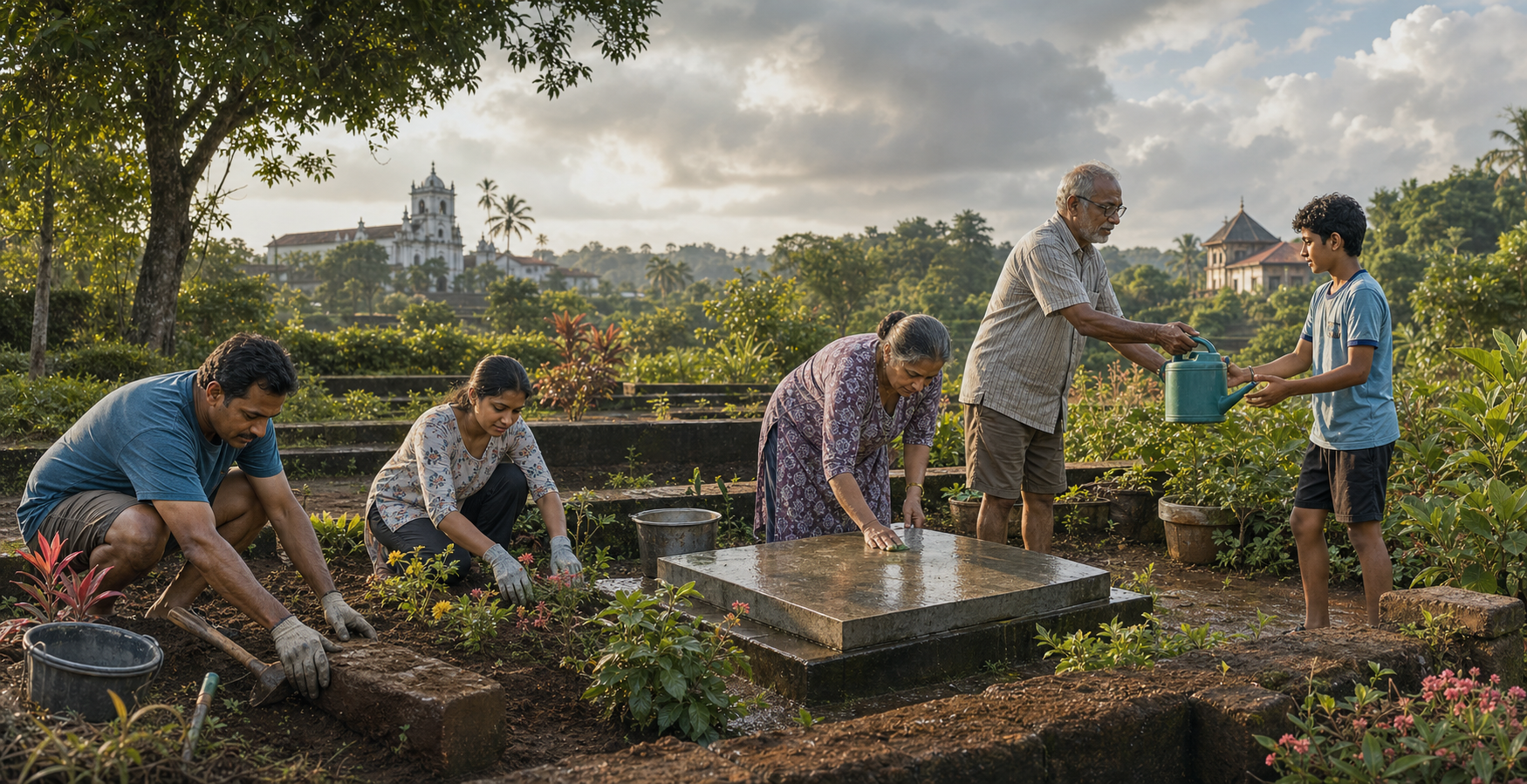
Reconciliation does not mean declaring that descendants should be finished with grief. It does not require victims’ communities to dilute historical language until no perpetrating institution can be named. Nor does it require a Catholic neighbor to accept personal guilt for decisions made by a colonial Crown, tribunal, or missionary centuries ago.
It is better understood as a civic agreement about truth, relationship, and non-recurrence. Historical responsibility can be assigned to the documented authorities, policies, and actors involved. Present responsibility belongs to all of us: preserve the record, refuse denial, prevent retaliatory hatred, and defend freedom of conscience now.
A dharmic framework gives this agreement moral shape. Satya requires claims that survive scrutiny. Ahimsa forbids turning remembrance into intimidation. Karuna asks us to recognize suffering without rationing compassion by religious identity. Shraddha treats ancestral memory with reverence rather than using it as disposable political material.
Those principles translate into different duties for different participants:
- The Goa government should protect records, commission rigorous interpretation, teach the history, and ensure that commemorative events remain peaceful and open to scrutiny.
- Catholic and other Christian institutions can acknowledge the coercive history of inquisitorial power, assist responsible access to relevant holdings where possible, and join an explicit rejection of forced or state-backed religious conformity. This is institutional honesty, not inherited personal guilt.
- Dharmic organizations should center affected communities, verify claims before circulating them, reject inflated numbers, and prevent criticism of colonial Christianity from becoming abuse of Christians. Evidence discipline is part of defending dharma.
- Schools, museums, and universities should show disagreement where it exists, distinguish legal institutions from broader social effects, and give students enough context to recognize both denial and exaggeration.
- Residents and descendants can preserve family histories, correct careless claims within their own circles, attend cross-community events, and insist that dialogue produce records and commitments rather than staged harmony.
Francis Xavier’s place in public commemoration will remain sensitive. A mature label does not need to choose between devotional praise and historical censure. It can state that he is venerated within Catholic tradition, explain the correspondence associated with the request for inquisitorial authority, note the scholarly scrutiny of its wording, and identify the Crown’s later role in establishing the tribunal. Readers can then confront the moral tension rather than being protected from it.
You should seek revision when a remembrance proposal treats every current Christian as a proxy for the colonial regime, relies on unsupported numerical claims, erases baptized Christians from the history of inquisitorial prosecution, or portrays interfaith participation as betrayal. You should also seek revision when a reconciliation proposal refuses to name coercion, reduces remembrance to a generic celebration of harmony, or asks affected families to trade truth for social comfort.
The useful middle is not neutrality between persecution and its victims. It is moral clarity about the persecution, factual care about how it operated, and solidarity among living communities against its recurrence.
Before the next 16 May, choose one durable task. Record an elder with consent. Ask an elected representative for the proposed declaration’s exact wording. Request a primary-source classroom module. Support an archive-backed plaque or exhibition. Invite a Christian neighbor or institution to join a public rejection of religious coercion without demanding inherited guilt. That is how remembrance stops being a contest over the past and becomes protection for the future.