
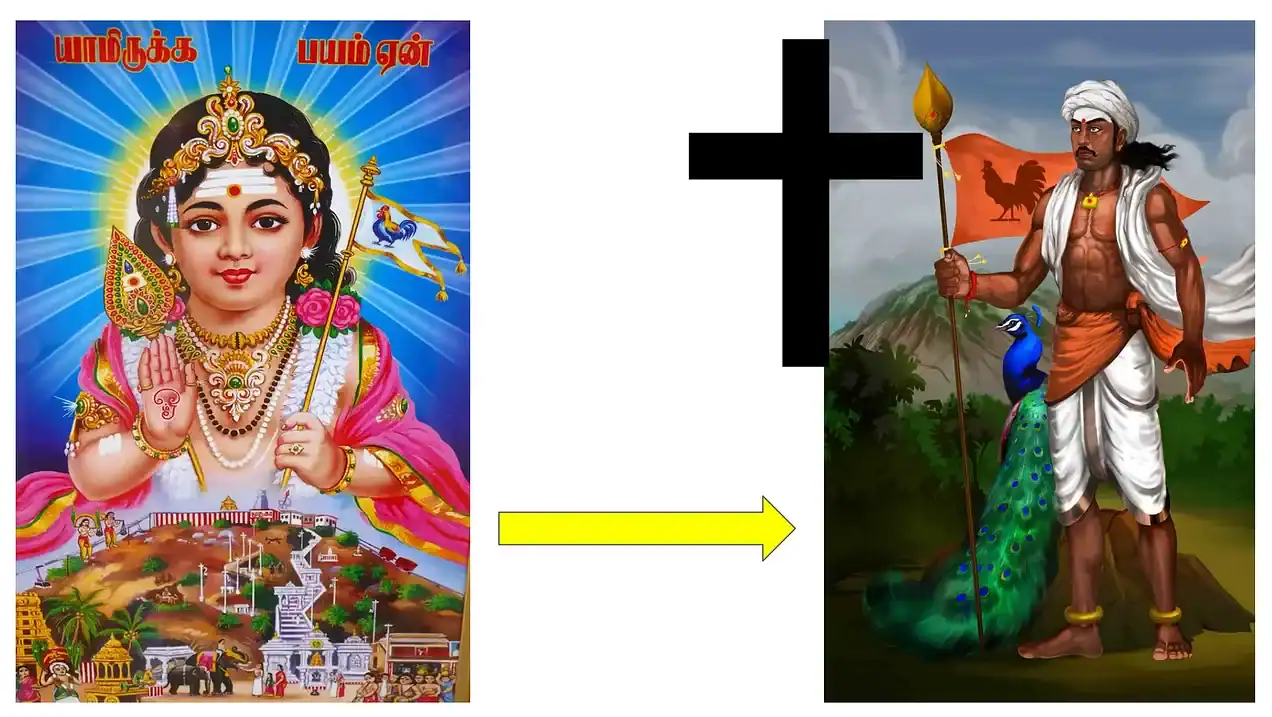
Debates over Murugan’s identity are not merely disputes about names. They concern who has authority to define a deity and whether a sacred tradition may be translated into categories its devotees do not accept.
A Hindu Post excerpt approaches this dispute through euhemerism, the idea that gods originated as remarkable human beings whose stories were later elevated. The useful question is not only whether that theory is historically persuasive, but also what it does when imposed upon a living tradition.
What euhemerism changes in a religious debate
Euhemerism interprets accounts of divine beings as transformed memories of human rulers, heroes, or ancestors. As a method of inquiry, it can prompt questions about how stories develop. As a polemical device, however, it can quietly decide the conclusion in advance: the deity is treated as human, while the tradition’s own account of divinity is set aside.
That distinction matters. Historical study asks what evidence can establish about texts and communities. Theology asks what a sacred figure means within a tradition. One field may inform the other, but neither automatically cancels the other. Calling a deity an ancestor is therefore not a minor change of vocabulary; it replaces one kind of claim with another.
The ancient frame reported by Hindu Post
According to Hindu Post, the argument begins with Euhemerus of Messene around 300 BCE. The excerpt says he composed the Sacred Inscription, also called Hiera Anagraphe, as a fictional travel account about Panchaea, a utopian island in the Indian Ocean. There, the narrator supposedly encountered a golden column presenting the purported history of Zeus, Uranus, Cronus, and other Olympian gods.
The source interprets this ancient framework as the precursor of a much later Christian strategy against non-Christian religions. It further presents contemporary attempts to identify Murugan primarily as a Tamil ancestor as another expression of that pattern. This is the source’s thesis, not an independently demonstrated conclusion in the supplied excerpt. The excerpt does not include the full historical chain or the primary-source passages on which the longer argument reportedly relies.
Why the competing descriptions of Murugan are unequal
The three positions mentioned by the source are not simple alternatives. Describing Murugan as pan-Indian or exclusively Tamil concerns the geographical and cultural reach of devotion. Describing him as an ancestor instead changes his theological category. A discussion can therefore appear to be about regional identity while also redefining what devotees believe Murugan to be.
Regional rootedness and wider belonging do not logically exclude each other. A deity may be cherished through a particular language, landscape, name, and inherited practice while also commanding reverence beyond that setting. Protecting Tamil heritage need not require reducing Murugan to a historical personality, just as affirming a wider Hindu identity need not erase Tamil forms of devotion.
Key takeaways
- Euhemerism explains gods as elevated human beings or ancestors.
- Hindu Post links the modern Murugan controversy to this older interpretive method.
- Regional identity and divine status answer different questions and should not be conflated.
- The supplied excerpt states a historical thesis but does not contain enough evidence to verify its full continuity.
How such claims should be evaluated
A responsible evaluation should first identify the category being asserted: historical ancestry, symbolic interpretation, cultural ownership, or theological truth. It should then ask what evidence supports that category, whether the tradition’s own texts and teachers are being represented fairly, and what assumptions connect an ancient theory to a modern controversy.
Primary-source quotations can clarify what an earlier writer said, but resemblance alone does not establish an unbroken strategy across different centuries and settings. Conversely, the absence of a complete proof in an excerpt does not settle the argument against the source. It means readers should distinguish the reported thesis from the evidence needed to sustain it.
Dharmic solidarity without theological flattening
A confident Dharmic response can defend Murugan’s divinity while honoring the Tamil inheritance through which millions understand him. It need not manufacture uniformity among Hindu sampradayas, nor pretend that Hindu, Buddhist, Jain, and Sikh traditions teach identical doctrines. Unity becomes stronger when each tradition can speak in its own sacred vocabulary while extending respect to the others.
The enduring task is to meet reductive interpretations with historical literacy, theological clarity, and cultural confidence. That combination can protect distinct traditions without turning legitimate regional affection into civilizational fragmentation.
Inspired by this post on Hindu Post.
