
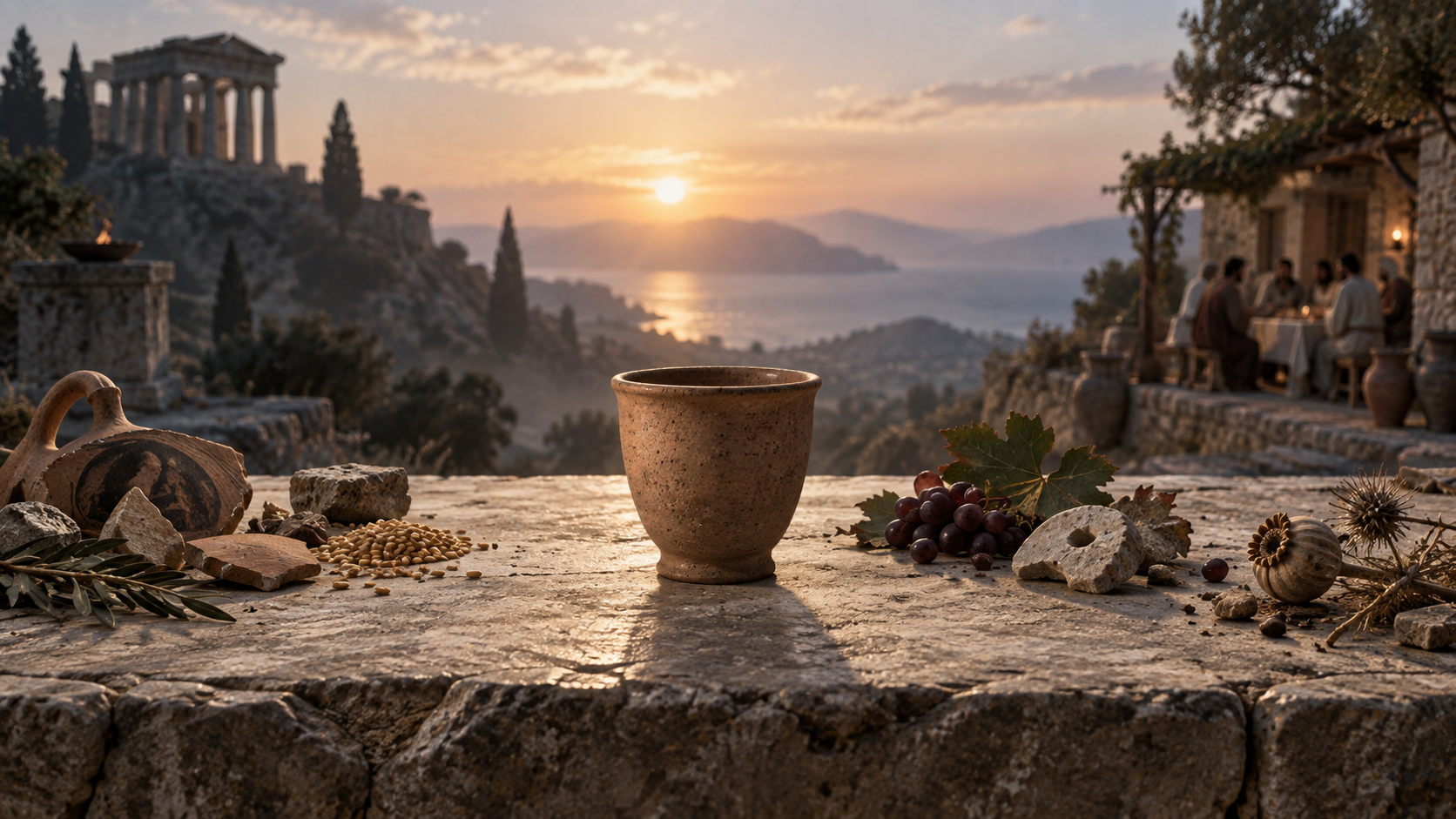
You may have encountered the arresting claim that the Christian Eucharist began as a psychedelic sacrament inherited from the Greek Mysteries. It can sound like a revelation that either explains Christianity at once or discredits its conventional history at once. It does neither.
The responsible question is narrower: how much of the proposed path from Eleusis to early Christianity is historically anchored, how much is plausible inference, and where does speculation begin? Once you separate those levels, you can take the possibility seriously without treating a provocative theory as an established origin story.
Key takeaways
- Eleusis, its initiatory drink called kykeon, and its promise of a transformed relationship with death form a real ancient setting for the theory.
- Similarities between Greek initiation and Christian sacrament make cultural transmission possible; similarity alone does not establish a direct lineage.
- Secret gatherings, sacramental wine, visionary language, and later suppression are circumstantial clues. They are not proof that the Christian Eucharist contained a psychedelic substance.
- A mystical experience can alter a person’s fear of death without proving that consciousness survives bodily death.
- A historical hypothesis is not a dosing manual. Do not attempt to reconstruct an uncertain ancient sacrament or use unsupervised psychoactive drugs on its authority.
The theory is a chain of claims, not one discovery
The strongest way to examine psychedelic theories of Christian origins is to break the proposed history into separate links. The most ambitious version, associated with Brian Muraresku, runs roughly as follows:
- Ancient Greek initiates used a ceremonial drink in rites that produced overwhelming visions and weakened the fear of death.
- These practices moved from the Eleusinian and Dionysian worlds into the religious environment in which Christianity developed.
- Jesus or the earliest Christian communities preserved the Mystery tradition by relocating the sacrament from a restricted pilgrimage centre to ordinary wine served in homes and other private meeting places.
- Gnostic communities retained an emphasis on direct knowledge of the divine during the second and third centuries CE.
- The institutional Church of the fourth century eliminated rival rites, excluded unacceptable writings, and turned an experiential sacrament into a symbolic one.
These are five propositions, not five descriptions of the same fact. Evidence that psychoactive substances were used somewhere in antiquity supports the first proposition. It does not automatically establish use by Jesus, a psychoactive Eucharist, an unbroken transmission into Gnostic communities, or deliberate removal of a drug from Christian worship.
This distinction matters because the theory often persuades through accumulation. Eleusis had a sacred drink. Christianity has sacred wine. Both concern death and transformation. Both include initiation and secrecy. The parallels become impressive when placed side by side, but a collection of parallels remains a case for investigation, not a demonstrated genealogy.
What the surviving evidence can actually carry
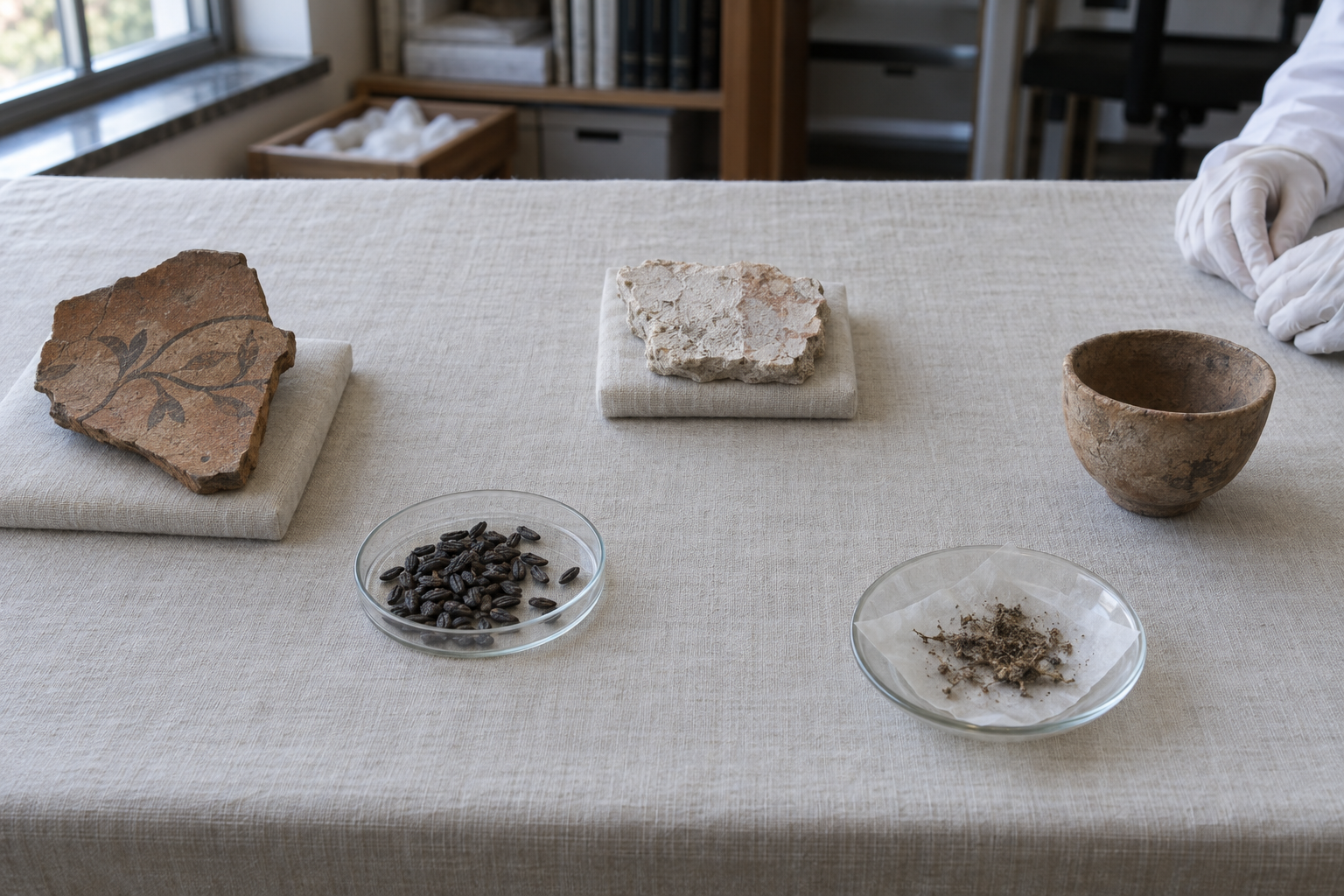
Several historical anchors give the theory more substance than a free-floating conspiracy story. Eleusis was a major spiritual centre of the Greek world. Initiates drank kykeon and understood the rite as an encounter with a reality beyond ordinary mortal identity. Plato referred to the perfected vision associated with initiation. Roman figures including Cicero and Marcus Aurelius later entered the tradition, showing that it survived beyond its earlier Greek setting.
Early Christian practice also supplies a setting in which intimate or secret rites were possible. Eucharistic gatherings took place in houses and, in some circumstances, catacombs rather than only in public monumental buildings. The sacrament centred on wine, while Christian language gave that wine a significance far beyond an ordinary drink. Gnostic communities of the second and third centuries placed unusual weight on gnosis, or direct knowledge, rather than mere assent to an institution’s teaching.
The strongest circumstantial case therefore concerns religious continuity. Greek-speaking Christians did not develop in a cultural vacuum. A Mediterranean audience already knew sacred meals, initiations, mystery, divine encounter, and promises concerning death. Christian communities could adapt that religious vocabulary even if they did not copy a recipe or administer the same substance.
That last qualification is decisive. Cultural inheritance can occur at several levels:
- Language: familiar words and images are given Christian meanings.
- Ritual form: an initiatory meal or drink is adapted to a new community.
- Religious promise: the initiate is offered a changed relationship with death.
- Material practice: the same psychoactive preparation is transmitted and consumed.
The first three do not prove the fourth. To establish a psychoactive Christian Eucharist, you would want evidence located inside an identifiable early Christian context: a securely connected preparation, a liturgical direction, a recipe, a residue, or an explicit description whose meaning cannot be explained by ordinary wine or symbolic language. Evidence of ceremonial psychedelic use elsewhere in antiquity makes the hypothesis possible, but it cannot do the work of specifically Christian evidence.
The same restraint applies to Christianity’s rapid expansion. A portable household sacrament may help explain how a religious experience could travel without requiring pilgrimage to Eleusis. Yet portability does not tell you what was in the cup. Nor does Christianity’s growth prove that converts required a pharmacological catalyst. Social networks, ritual belonging, teaching, hope, discipline, and communal care can also make a movement portable and durable.
Suppression explains missing evidence, but cannot replace it
The fourth century changed what could survive. In 367 CE, Athanasius of Alexandria called for the rejection of apocryphal writings he considered defiling or mythical. Near the end of that century, Emperor Theodosius outlawed the Mysteries. Pagan monuments and initiatory institutions were attacked or destroyed as imperial Christianity consolidated its authority.
This history should affect how you read the archive. Victorious institutions preserve approved texts, define orthodoxy, and often leave rival communities visible chiefly through condemnation. The absence of a practice from the later canon cannot by itself show that the practice never existed.
But the reverse inference is equally unsound. Destruction cannot tell us exactly what the destroyed community did. Censorship may explain why evidence is scarce; it does not supply the missing recipe, identify the substance, or prove that a condemned writing taught psychedelic initiation. Use suppression to explain possible gaps in the record, not to fill those gaps with whichever practice the theory requires.
Institutional motive also needs careful handling. Direct access to the divine can threaten a hierarchy whose authority depends on mediation. Gnostic claims to personal gnosis could therefore conflict with bishops defining a common creed, canon, and chain of authority. That conflict is historically relevant even if no psychedelic was involved. Contemplation, prophecy, private revelation, rival teaching, or charismatic leadership can create the same institutional problem.
Theories that extend the line from Greek rites through early Christianity and then into medieval or Renaissance witchcraft need another complete set of evidence. The same is true of claims that women secretly preserved the original sacrament while a male hierarchy removed them and demonised their practices. Exclusion, demonisation, and gendered power deserve examination, but they do not establish chemical continuity. Each additional century makes documented transmission more important, not less.
A Dharmic lens separates experience from liberation
Dharmic readers will recognise the deeper issue beneath the historical argument: is sacred knowledge something you receive from an authority, or something you can realise directly? Hindu, Buddhist, Jain, and Sikh traditions differ profoundly, yet their wider civilisational setting leaves room for disciplined transformation rather than reducing religion to belief in a past revelation.
That makes the experiential side of the theory intelligible. Reports of ego dissolution, unity, sacred light, visionary beings, or freedom from the fear of death resemble the kinds of questions Dharmic traditions take seriously. They challenge a religious system when that system insists that access to the sacred must always pass through one historical event and its authorised custodians.
Still, a Dharmic framework should make us more discriminating, not less. An intense state is not automatically moksha, nirvana, kevala jnana, or any other claim of liberation. Traditional paths ask what remains when the state passes: Was ignorance weakened? Did conduct change? Did attachment return unchanged? Was insight integrated through discipline, discernment, and ethical life?
Keep four levels separate when someone describes a psychedelic mystical experience:
- Experience: the person felt ego boundaries dissolve or encountered a sacred realm.
- Psychological effect: the experience reduced fear of death, depression, or addiction for that person.
- Metaphysical interpretation: consciousness exists independently of the body and survives bodily death.
- Historical conclusion: such experiences generated the doctrines and sacraments of early Christianity.
A person can report the first level sincerely and undergo the second without establishing the third or fourth. Subjective certainty is part of the phenomenon that needs interpretation; it is not independent proof of the interpretation. Even a lasting therapeutic benefit would tell you little by itself about what an early Christian community put in its wine.
This is also where a pro-Dharma reading should resist an easy appropriation. Christianity does not become secretly Dharmic merely because a proposed sacrament produced non-dual or death-transcending experiences. Similar human experiences can receive very different philosophical explanations. The useful comparison concerns direct realisation, disciplined transformation, and institutional authority – not a claim that all traditions are interchangeable.
Use five questions before accepting the next dramatic claim
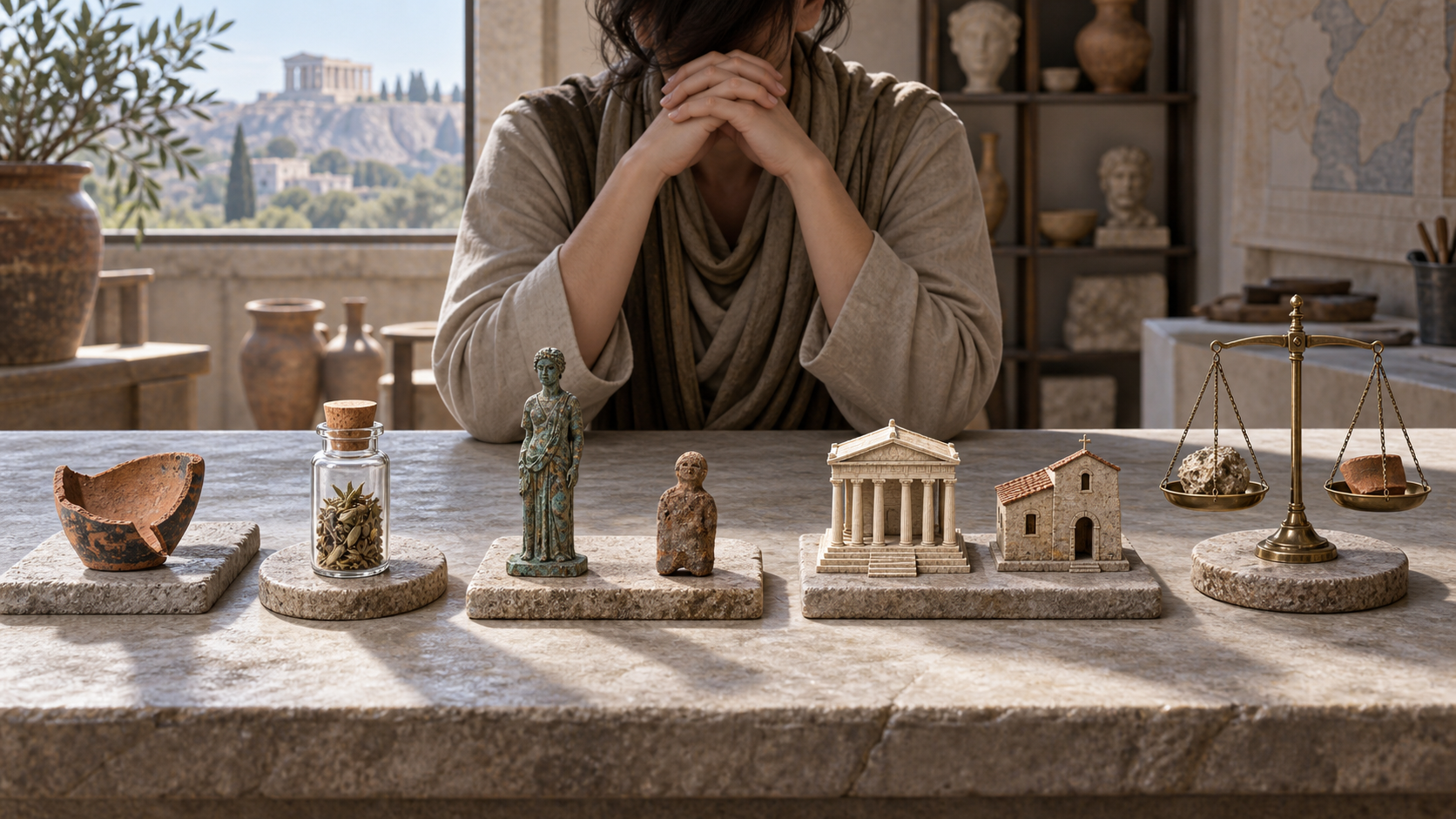
You can evaluate a book, lecture, or documentary about psychedelic Christian origins without choosing between instant belief and instant dismissal. Apply these five questions to each link in its argument:
- What is the exact claim? Ceremonial psychedelics existed in antiquity, kykeon was psychoactive, some Christians used psychoactive wine, and Jesus intended to preserve Eleusis are different propositions. Do not let evidence for the broadest one silently validate the narrowest.
- Where and when does the evidence belong? A finding from a pagan sanctuary can establish ancient use in that sanctuary. Ask what connects it to a Christian community, a Eucharistic setting, and the relevant century.
- Does the clue identify a substance or only an experience? Visions, unity, immortality, and loss of death anxiety may be compatible with a drug experience. They can also appear in ritual, contemplative, devotional, or symbolic settings. Phenomenology alone rarely identifies its cause.
- Is there a documented route of transmission? Shared Greek language and Mediterranean proximity make borrowing plausible. A strong historical claim still needs people, communities, texts, practices, or material remains that bridge the institutions rather than merely resemble one another.
- What would count against the claim? If every missing record is called proof of suppression and every surviving symbol is called coded drug language, the theory cannot be tested. A serious proposal must distinguish evidence that would strengthen it from evidence that would weaken it.
A simple three-label method helps. Mark a proposition attested when direct evidence establishes it in the relevant setting. Mark it compatible when the context permits it but a link is missing. Mark it conjectural when analogy, secrecy, or institutional motive is doing most of the work. In the psychedelic-origin theory, Eleusis and its transformative sacrament belong near the attested end; a direct Eleusis-to-Eucharist chemical lineage remains conjectural unless specifically Christian evidence closes the gap.
Do not turn this historical inquiry into self-experimentation. The proposed composition of kykeon is not a reliable modern preparation, and ancient ritual context does not make an unknown substance safe. Unsupervised psychoactive use can carry psychological, medical, and legal consequences. If your interest is therapeutic rather than historical, take it to a licensed clinician and follow the law where you live; experimental university settings are not equivalent to private reconstruction.
The productive next step is modest. Choose one link – kykeon, Christian wine, Gnostic gnosis, or fourth-century suppression – and ask what evidence would establish that link without borrowing certainty from the others. That habit preserves the theory’s genuinely challenging questions while keeping historical imagination answerable to history.
References
- DharmaRenaissance Blog – The Immortality Key: Uncovering the Secret History of the Religion with No Name
