
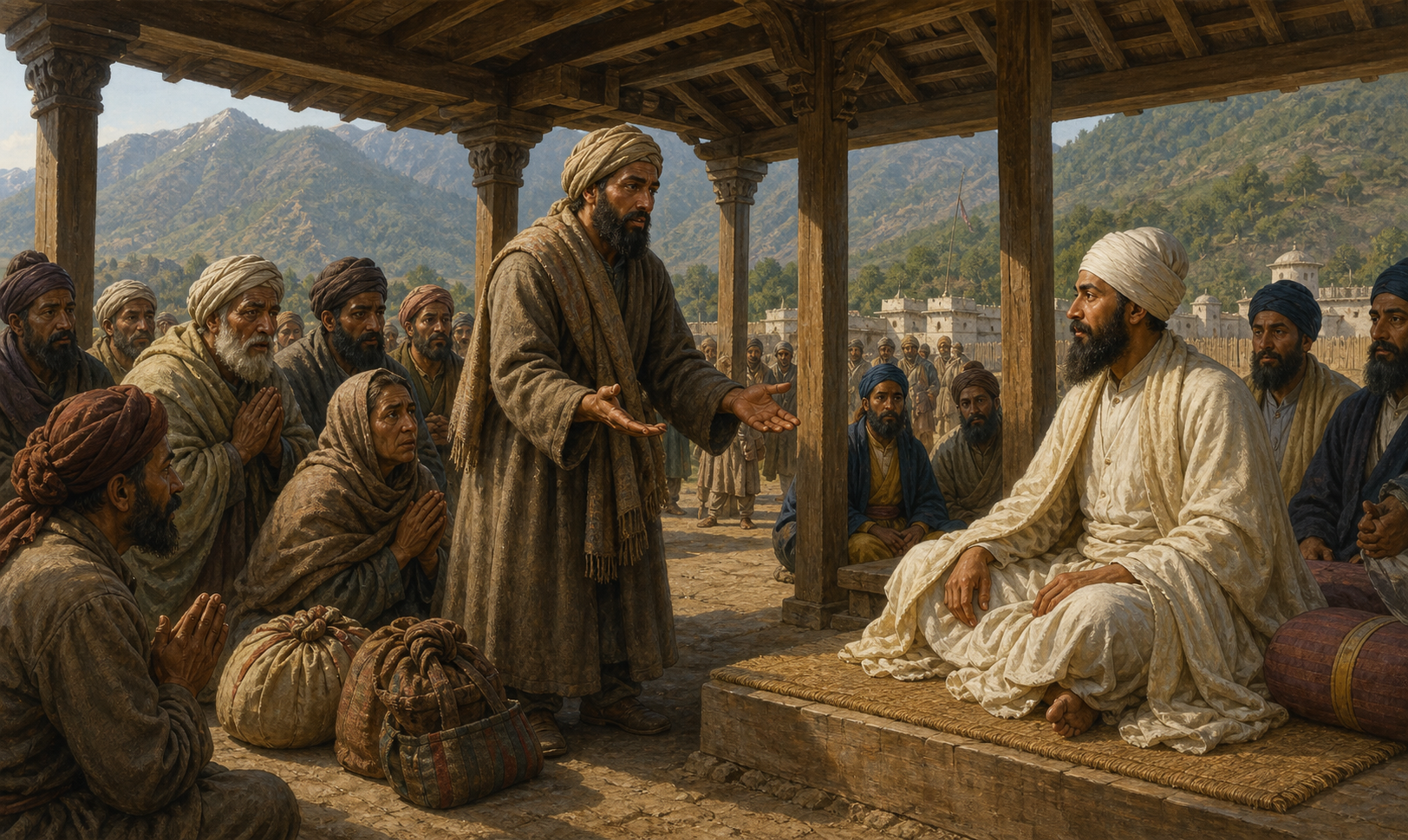
If you know of Guru Tegh Bahadur’s martyrdom but cannot explain where Bhai Kirpa Singh fits, you are missing the human bridge between Kashmir’s appeal for help and the Sikh defense of conscience. His place in this history helps you see how solidarity moves: someone must carry suffering beyond the community experiencing it, place it before moral authority, and remain faithful after the decisive moment has passed.
Read the story in its proper sequence and it becomes more than a tribute to two courageous men. It gives you a practical standard for religious freedom: protect another community’s right to remain itself, even when its customs are not your own and defending it carries a real cost.
Start with Bhai Kirpa Singh at Mattan, not with Delhi
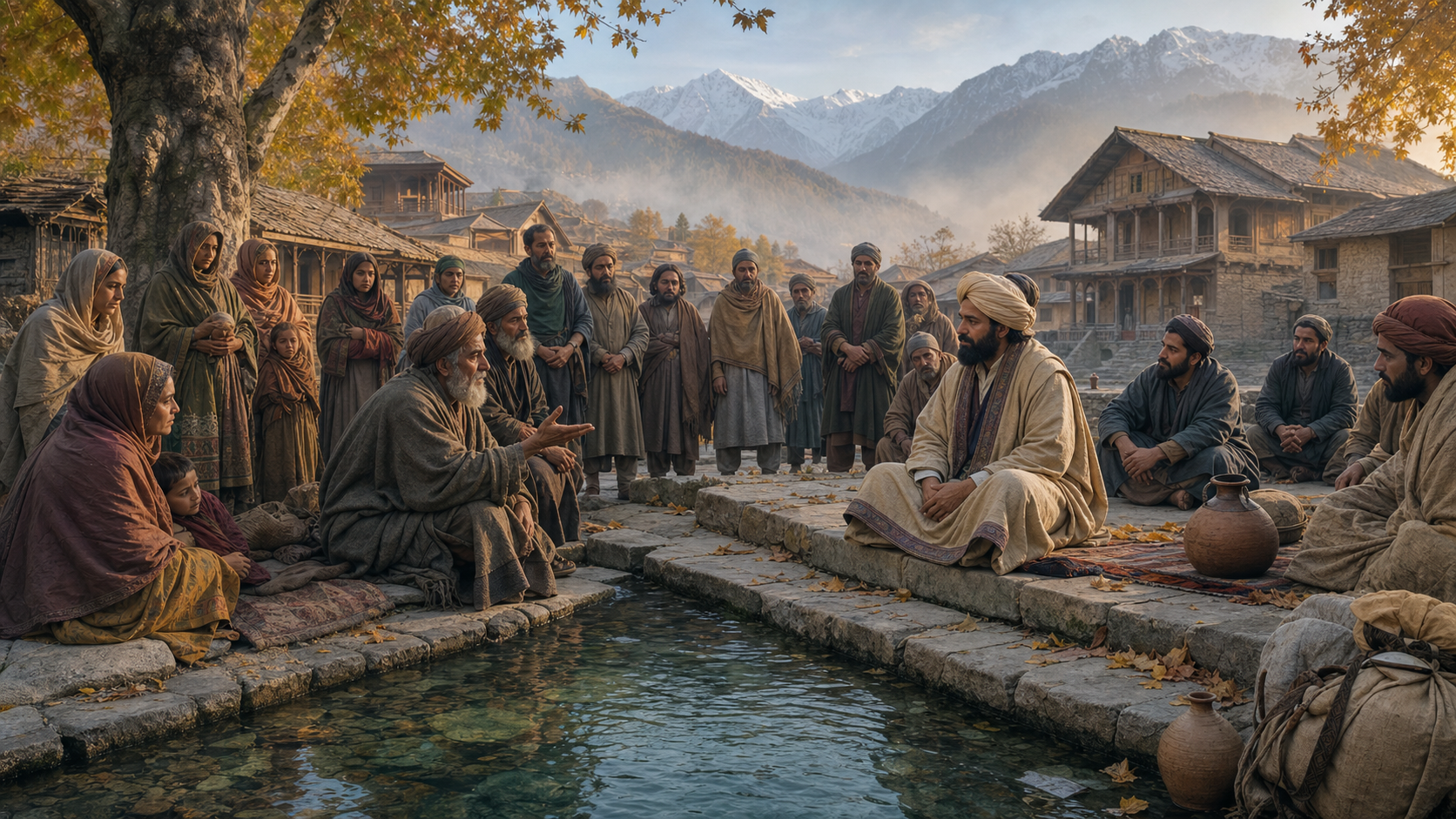
Bhai Kirpa Singh came from Mattan in Kashmir and is remembered in some traditions as Kripa Ram Datt. That qualified wording matters. It respects the name by which Sikh memory knows him without pretending that every detail of a seventeenth-century life has been preserved in one uncontested form.
Mattan, also associated with Martand, places him within a landscape shaped by the Martand Sun Temple, temple heritage, and Kashmir’s traditions of Shaiva learning. His journey into close devotion to the Sikh Gurus therefore connects two sacred worlds without collapsing either one into the other. A bridge has meaning because the shores remain distinct.
This is the first point to preserve when you teach or discuss him. Do not make Bhai Kirpa Singh important by turning him into the sole hero of a collective crisis. Describe him more carefully: a devoted Sikh from Mattan whose remembered life stands within the encounter between Kashmiri Pandits and Guru Tegh Bahadur. That formulation gives him a definite place while leaving room for the communal character of the appeal.
It also corrects a common weakness in the way religious history is told. Great sacrifices rarely begin at the place of martyrdom. They begin when a threatened community finds someone willing to hear its fear, carry its case, and treat its survival as a matter of dharma. Bhai Kirpa Singh belongs to that chain of responsibility.
At Anandpur in 1675, an appeal became a universal test
Seventeenth-century Kashmir experienced mounting religious pressure and social anxiety during Aurangzeb’s reign. Within Sikh historical memory, a Kashmiri Pandit delegation associated with Mattan reached Guru Tegh Bahadur at Anandpur Sahib in 1675. The delegation did not bring the Guru an abstract debate. It brought the immediate problem of how a vulnerable people might resist coercion without possessing the power to protect itself.
The order of events is essential. First came coercion. Then came an appeal beyond the affected community. Next came a moral decision by someone who was not being asked merely to express sympathy. Finally came the acceptance of personal sacrifice. If you jump directly from persecution to martyrdom, you lose the deliberation that gives the sacrifice its universal meaning.
Guru Tegh Bahadur’s answer was not to make protection conditional on conversion, assimilation, or theological agreement. The principle remembered at Anandpur is that people must be free to preserve their own path. His readiness to place his life behind that principle culminated in his martyrdom in Delhi in 1675.
It is therefore too narrow to describe the event only as one religious community helping another. That description is true as far as it goes, but it misses the harder claim. Guru Tegh Bahadur defended a rule that would have to remain valid even when protector and protected worship differently. The Kashmiri Pandits did not have to become replicas of their defenders in order to deserve defense.
This is why the episode occupies such an important place in the shared civilizational memory of Hindus and Sikhs. Solidarity did not require the erasure of religious boundaries. It required recognition that coercion against one path threatens the moral conditions under which every path can be followed sincerely.
The freedom being defended was the right to remain different
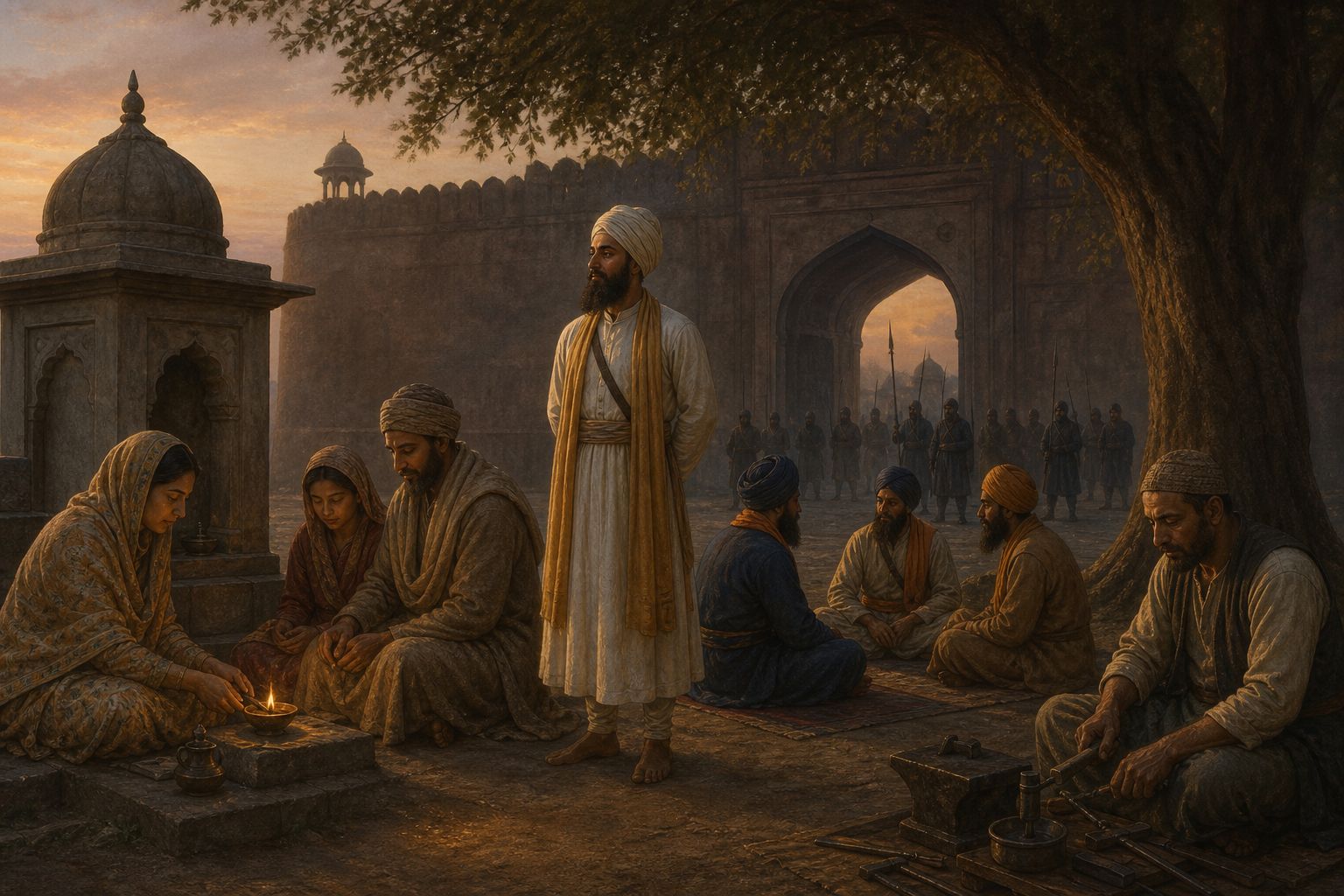
Religious freedom is sometimes weakened into a polite demand that everyone regard all beliefs as interchangeable. That is not what this history requires. Guru Tegh Bahadur did not need to abandon his convictions in order to defend the convictions of Kashmiri Pandits. Strong faith and principled pluralism were not opposites.
The distinction matters whenever you hear someone invoke tolerance. Tolerance can mean little more than permitting another community to exist while it remains quiet, dependent, or culturally invisible. The freedom at stake here was more substantial: the ability to retain worship, inherited identity, language, and sacred heritage without being forced into another religious form.
You can test a modern claim of religious solidarity with three questions. Can the people being defended remain recognizably themselves? Is the defender willing to bear any cost, or is all the danger left with the vulnerable? Would the same principle still apply if the threatened tradition were not the defender’s own? A claim that fails these tests may be group loyalty, political convenience, or public performance, but it is not the freedom exemplified by the events of 1675.
This standard also prevents historical remembrance from curdling into hostility toward people in the present. The moral force of Guru Tegh Bahadur’s sacrifice lies in opposition to coercion, not in permission to imitate coercive thinking against someone else. You honor the principle by resisting collective blame, refusing forced conformity, and defending the space in which distinct communities can practice their traditions openly.
For a dharmic audience, the lesson is exacting. Solidarity is not proved by celebrating shared origins or values when circumstances are comfortable. It is proved when another community’s sacred continuity becomes your concern before its members have surrendered what makes them different.
Kirpa Singh’s later life turns witness into discipline
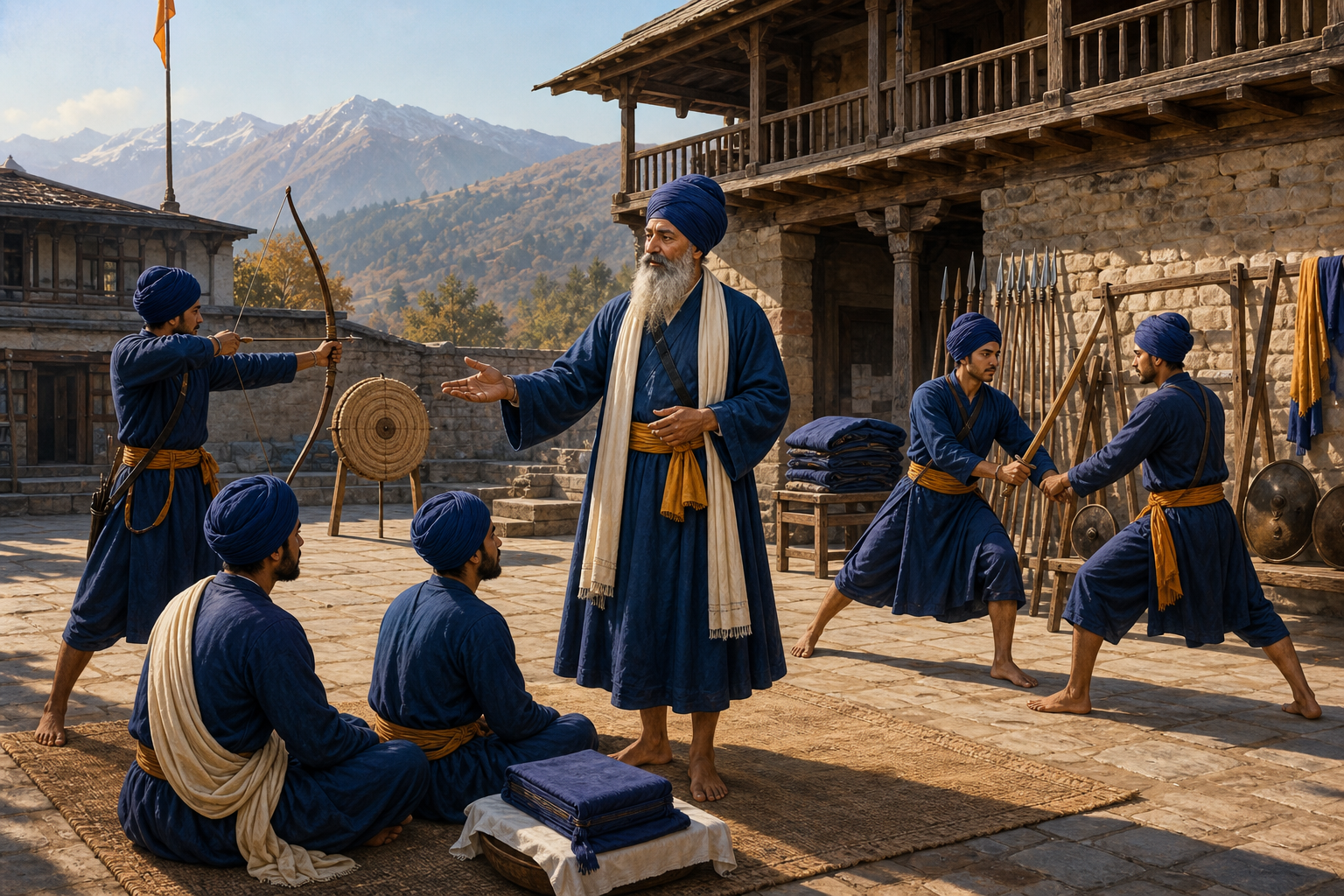
The story did not end in Delhi. Following Guru Tegh Bahadur’s martyrdom, Bhai Kirpa Singh is remembered as remaining closely connected to the Sikh community under Guru Gobind Singh. His later reputation joins seva and learning with courage. That combination matters because public bravery without years of service can become spectacle, while learning without a willingness to act can remain safely detached from suffering.
The larger Sikh mission entered another decisive stage with the formal inauguration of the Khalsa in 1699. Guru Tegh Bahadur’s self-offering and the later formation of a disciplined community of protection should not be flattened into one event, but neither should they be treated as unrelated. Both answer coercion by placing duty above personal security. One reveals the cost of conscience through martyrdom; the other gives a community a durable form in which courage, service, and defense can be practiced.
Sikh tradition further remembers Bhai Kirpa Singh attaining martyrdom at the Battle of Chamkaur in 1704, where the defenders faced overwhelming odds. This part of his life should be presented with the same care used for his name: it belongs to a powerful historical and devotional remembrance, and not every remembered detail carries the same kind of documentary certainty.
That caution does not make the remembrance empty. Its meaning comes from the shape of the life being preserved. Mattan, Anandpur, Delhi, the Khalsa, and Chamkaur form a moral progression: encounter suffering, submit it to the Guru’s guidance, serve after loss, enter disciplined responsibility, and remain steadfast under danger. Bhai Kirpa Singh is valuable to remember precisely because courage appears here as a sustained practice rather than a sudden emotion.
If you are explaining this history to a student, child, or community gathering, keep that progression visible. Do not introduce Kirpa Singh only at the delegation and then let him disappear after Guru Tegh Bahadur’s martyrdom. His later association with Guru Gobind Singh shows what fidelity after a great sacrifice can demand. The witness must become service, and service must be prepared to protect what the martyrdom affirmed.
Key takeaways for remembering the legacy responsibly
- Name Bhai Kirpa Singh precisely: he was a Sikh of Mattan and is remembered in some traditions as Kripa Ram Datt. Preserve that qualification instead of turning a traditional identification into false certainty.
- Keep the 1675 sequence intact: pressure in Kashmir, the delegation associated with Mattan, the audience at Anandpur Sahib, Guru Tegh Bahadur’s moral decision, and his martyrdom in Delhi. The decision between appeal and sacrifice is the heart of the history.
- Define the freedom clearly: the protected community must be allowed to retain its own worship and identity. Agreement with the protector is not an admission price for protection.
- Respect Sikh and Kashmiri Pandit identities as distinct. Their solidarity is meaningful because it crosses a boundary without erasing it.
- Carry the story beyond homage. When worship, heritage, or language is threatened, ask whether you would defend the same freedom for people whose practices you do not share.
The next time you recount Guru Tegh Bahadur’s sacrifice, give Bhai Kirpa Singh more than a passing name. Place him at Mattan, explain the appeal at Anandpur, distinguish established chronology from devotional remembrance, and follow his fidelity into the community of Guru Gobind Singh. Then leave your listeners with the question the history places before us: whose freedom are we prepared to defend when defending it offers us no advantage?
That question is the useful inheritance. Answer it in your school, family, gurdwara, temple, and civic life by making room for communities to speak in their own voices and preserve their own sacred forms. Memory becomes dharma when it changes whom you are willing to protect.
References
