
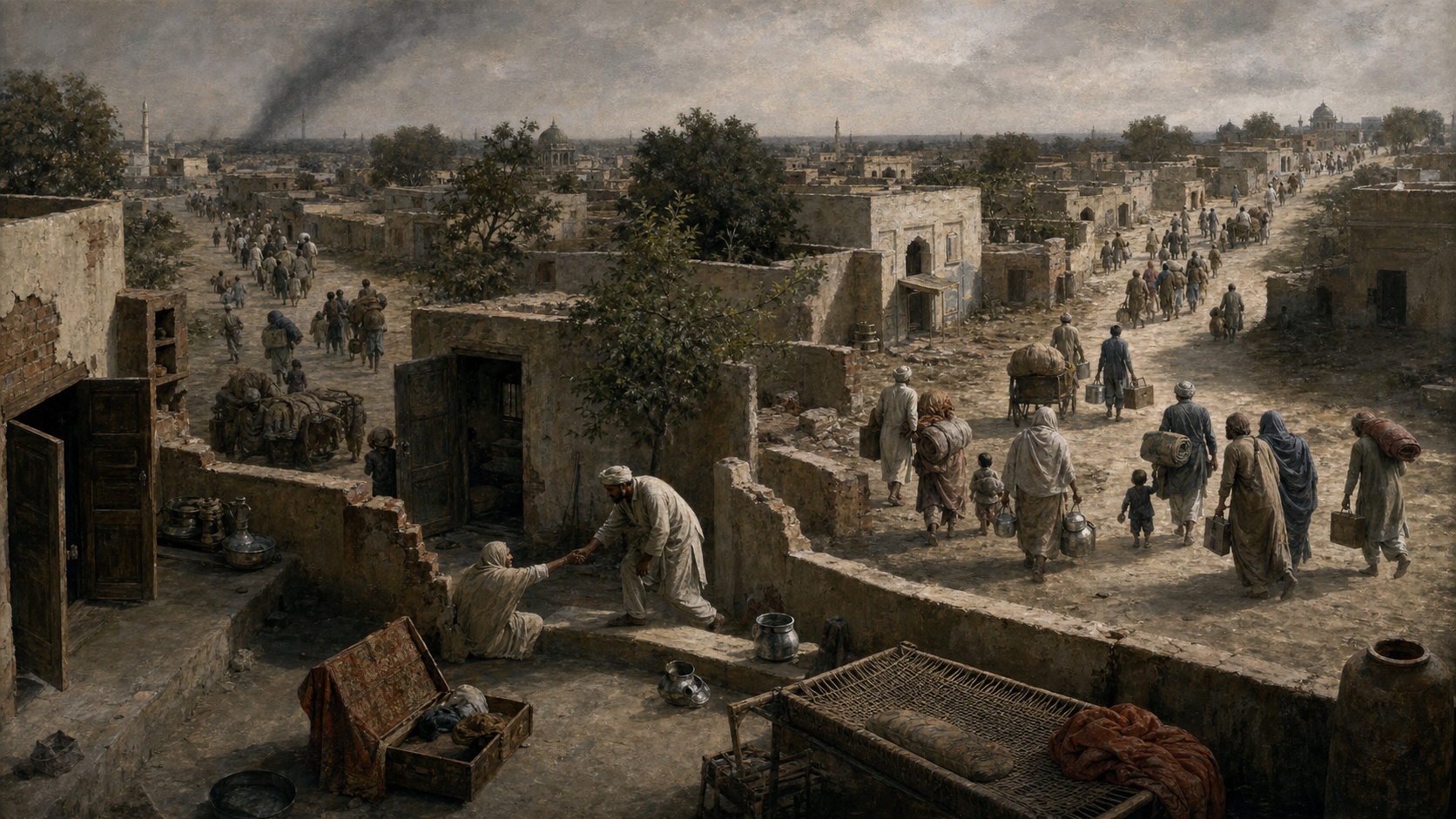
If the Batwara 1947 trailer left you wondering whether Partition is being retold through a reassuring saviour story, you do not have to choose between two crude positions: celebrating every appeal to communal harmony or rejecting any sympathetic Muslim character. You can recognise individual courage and still question what a narrative makes central, marginal or invisible.
That distinction matters because Partition displaced millions, killed families and emptied communities from places where they had lived for generations. The useful question is not whether a righteous protector could have existed. It is whether exceptional decency is being made to carry more historical weight than the violence, dispossession and civilisational rupture surrounding it.
A humane character is not the historical argument
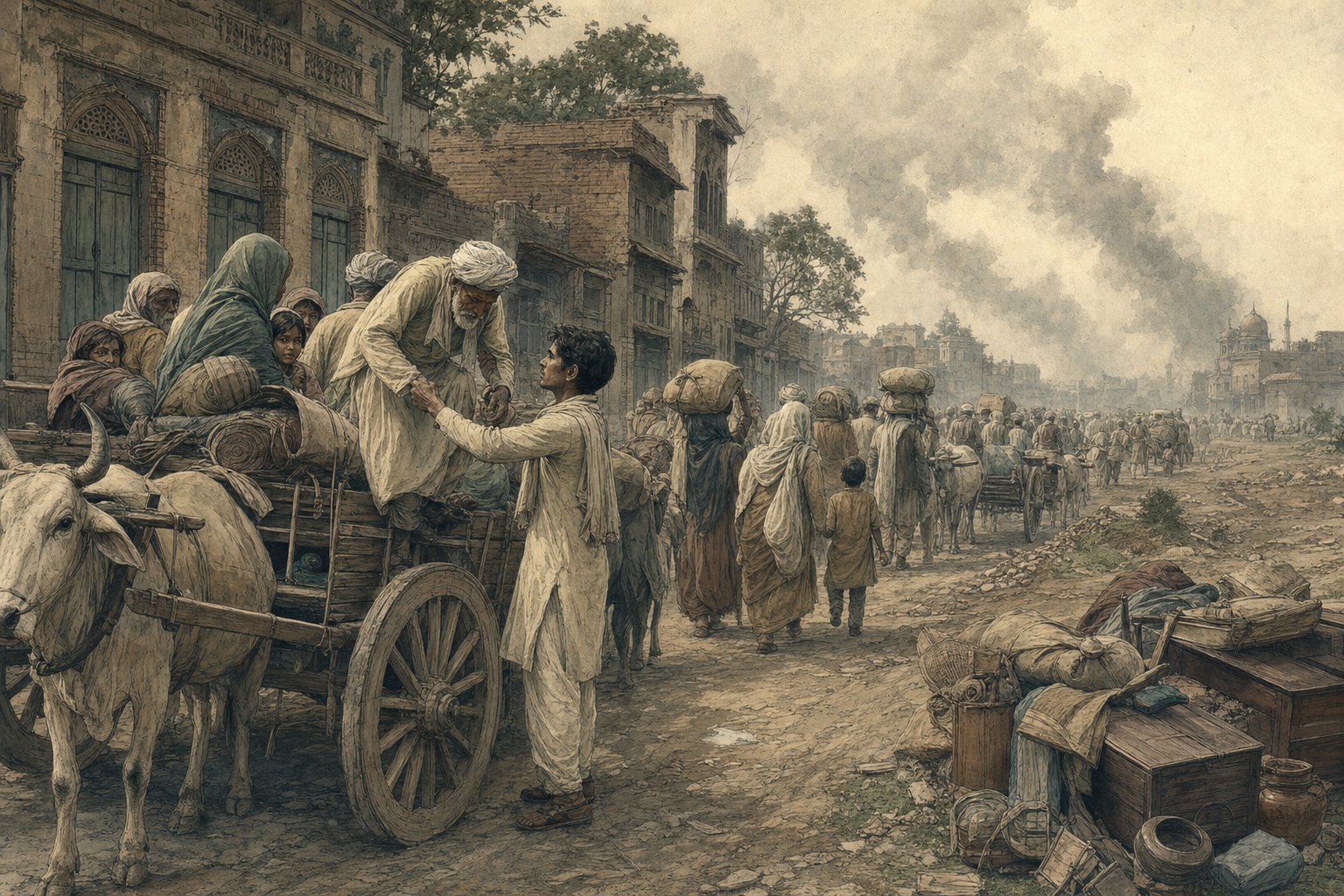
A Muslim man protecting a Hindu woman or defending a temple is not, by itself, a falsification of history. Human beings do not become morally uniform during communal violence. Any truthful account must leave room for courage, betrayal, fear, sacrifice and contradiction within every community.
But plausibility is only the first test of historical storytelling. A scene can be plausible while the larger arrangement remains misleading. Selection decides whose terror you inhabit, whose loss becomes scenery, who receives moral agency and who appears chiefly as someone waiting to be rescued. A drama can avoid inventing an event and still bend memory through emphasis.
This is where many arguments about Batwara 1947 go wrong. The important issue is not the protagonist’s religion. It is the narrative burden placed upon him. Does his goodness illuminate one human possibility amid catastrophe, or does it become a device through which the audience is encouraged to reinterpret the catastrophe itself?
Try a simple counterfactual test: mentally remove the saviour character. What understanding of Partition remains? If the answer is little more than an atmosphere of irrational hatred, the story may have personalised virtue while obscuring historical causation. If victims retain names, motives, memories, losses and agency of their own, the character is less likely to consume the history around him.
Use four tests to identify selective Partition storytelling

You do not need to judge a historical drama by whether it confirms your politics. Judge how it distributes attention. Four tests make that assessment more precise.
<!– wp:list {