
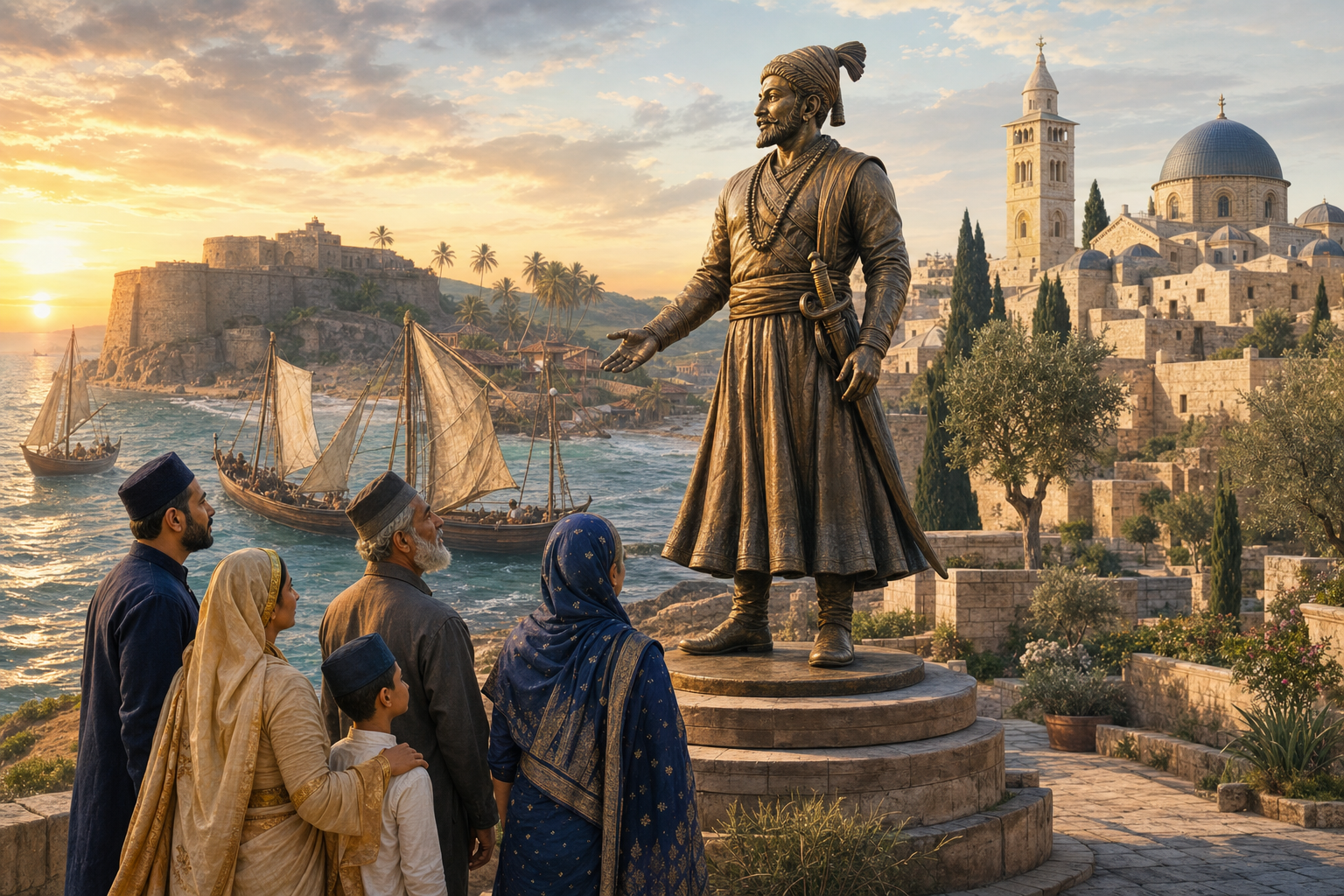
If you have encountered the claim that Israel will install a statue of Chhatrapati Shivaji Maharaj, it is easy to react before asking what the memorial would actually commemorate. Celebration alone misses the history. Skepticism alone misses the diplomatic opportunity.
The key is the Bene Israel, a Jewish community whose identity was shaped for centuries on Maharashtra’s Konkan coast. Seen through their experience, the proposed statue is not simply a foreign tribute to an Indian ruler. It can become a public account of Jewish belonging in India, maritime service under the Maratha polity, migration to Israel, and the capacity of a diaspora to connect two nations. You can judge the proposal by whether it tells that full story.
Key takeaways
- The proposed memorial matters because Shivaji and the Bene Israel meet within the history of Maharashtra and the Konkan coast. Without that connection, the statue risks becoming a generic diplomatic gesture.
- The Bene Israel’s roughly 2,000-year presence in India belongs to community tradition and should be described as such. Oral history deserves respect, but it should not be presented as though it were identical to a dated inscription or military service roll.
- Community and regional memory associates Bene Israel artisans, sailors, soldiers, and technical workers with the maritime world developed by Shivaji and his successors. A credible display should preserve the distinction between a well-grounded historical connection and claims that require named primary evidence.
- A statue becomes heritage diplomacy only when interpretation, community participation, education, preservation, and continuing exchange are built around it.
The Bene Israel story makes the memorial intelligible
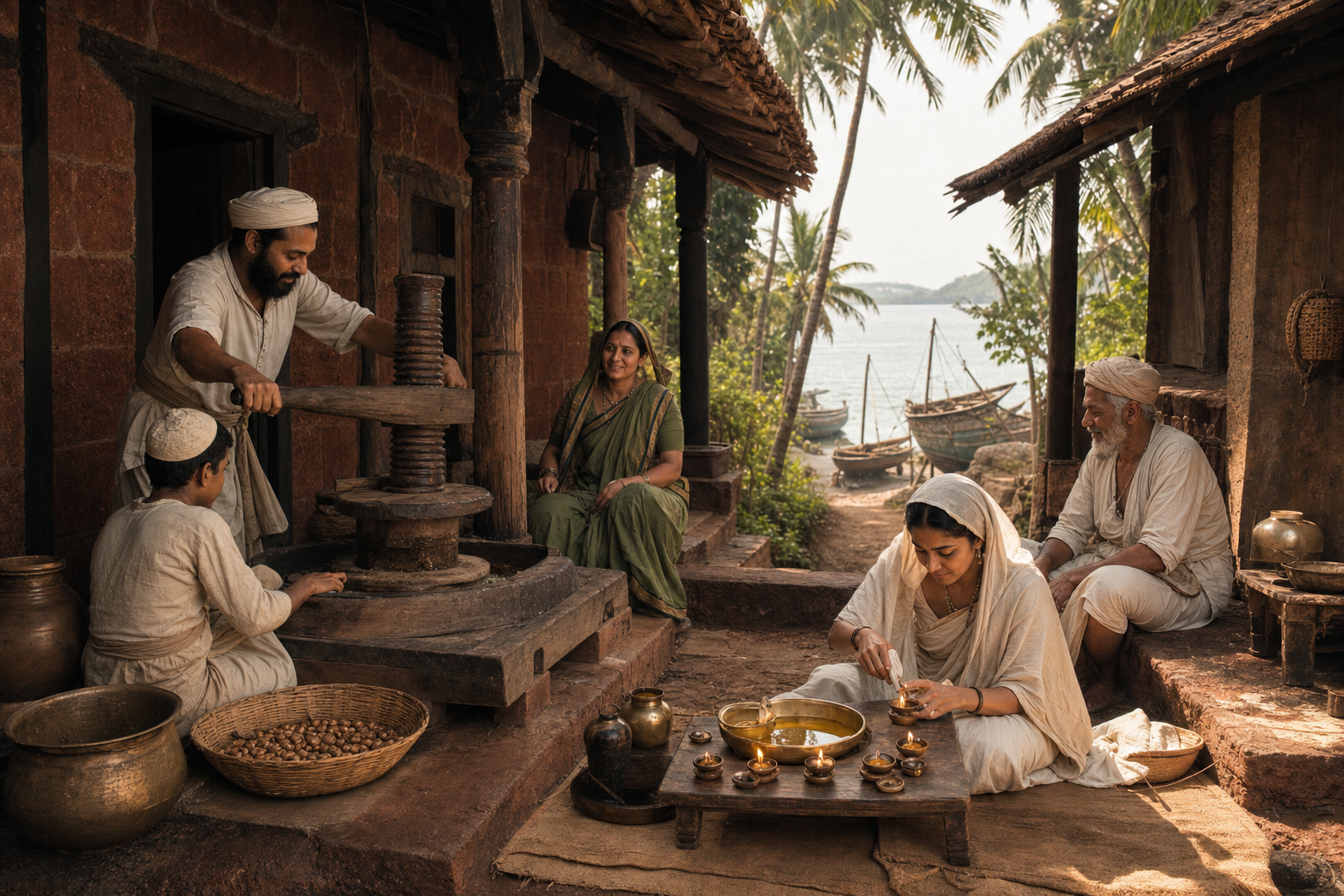
Begin with the community rather than the monument. Bene Israel tradition places its beginnings in the Konkan roughly two millennia ago, following a shipwreck and settlement near Navgaon and Revdanda. That account is an inherited memory of origin. Its value does not depend on pretending that every element has the same evidentiary status as an archival document.
The more revealing part of the story is what followed. The Bene Israel became deeply Maharashtrian while maintaining Jewish religious practice. They spoke Marathi, adopted regional forms of dress, and worked within local society. Their traditional name, Shanwar Teli, joined two parts of that life: oil pressing as an occupation and observance of the Sabbath on Saturday.
This is not a minor example of cultural assimilation. It shows that rootedness and religious distinctiveness do not have to cancel each other. A community can speak the language of its neighbours, participate in a regional economy, serve common institutions, and still preserve its own sacred obligations. That is the first lesson the memorial should make visible.
Synagogues in Mumbai and coastal Maharashtra became durable institutional anchors. Knesset Eliyahoo and Magen David belong within this wider Maharashtrian Jewish landscape. They should not be presented as isolated curiosities. They are evidence of an established communal life in which Jewish worship and Indian civic belonging existed together.
Successive waves of aliyah, or migration to Israel, began from the 1950s onward. Migration changed the community’s geography without erasing its Indian inheritance. Marathi language, Konkan memories, military traditions, foodways, family histories, and synagogue connections could now travel with Bene Israel families into Israeli society. That is how a regional Indian history became material for relations between two states.
When you hear that Israel may honour Shivaji, therefore, ask whose memory is doing the connecting. The strongest answer is not an abstract claim of friendship between governments. It is the living memory of people who can understand themselves as Jewish, Indian, Maharashtrian, and Israeli without treating those identities as mutually exclusive.
Why Shivaji is the historical hinge
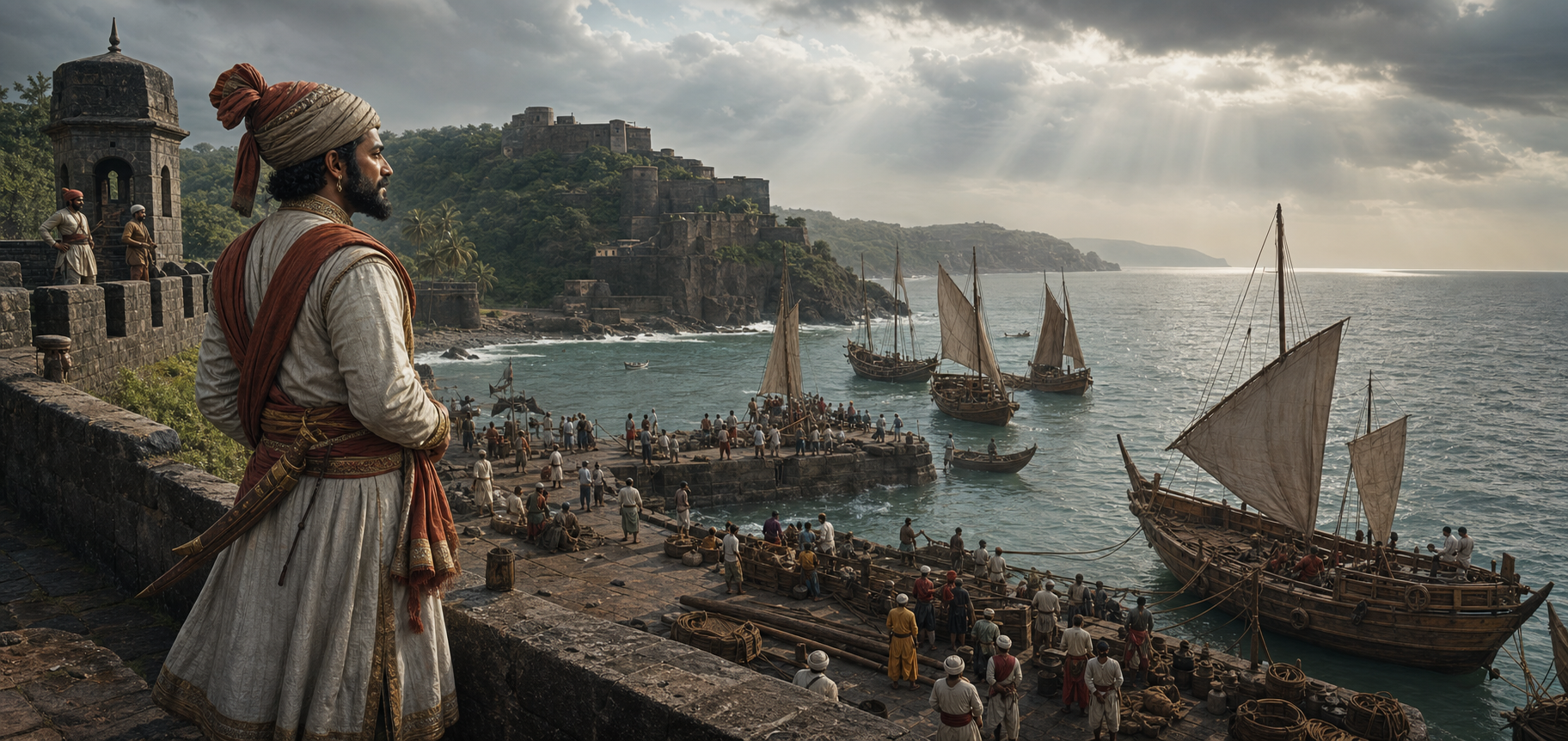
Shivaji is not merely a famous Indian name placed in an Israeli setting. The connection turns on the Konkan maritime world. His statecraft recognized that control of the western coast required ships, fortified harbours, logistics, skilled labour, and protection of coastal routes. Sindhudurg and Vijaydurg remain powerful symbols of that strategic turn toward seaborne strength.
Bene Israel participation is remembered within this coastal system. Community records and regional histories associate Jewish artisans, sailors, soldiers, and other workers with shipbuilding, navigation, logistics, coastal defence, and service under the Maratha polity founded by Shivaji and continued by his successors. These roles fit the occupational and geographic setting of the Konkan.
The fit, however, is not permission to embellish. A plausible historical relationship is not the same thing as a complete roster of named individuals. If a plaque claims that a particular person served in a particular fort, ship, campaign, or rank, the curator should be able to identify the record supporting that statement. Where the evidence remains communal or regional memory, the label should say so plainly.
A useful way to read or present this history is to separate four kinds of claim:
- Origin tradition: the shipwreck, the early settlement around Navgaon and Revdanda, and the roughly two-millennia chronology belong to the Bene Israel’s account of their beginnings.
- Cultural continuity: Marathi language, regional dress, the Shanwar Teli identity, Sabbath observance, occupational life, and synagogues show a community embedded in Maharashtra while remaining Jewish.
- Maritime service memory: Bene Israel participation in the Maratha coastal world should be presented as a remembered contribution supported at the level the available records permit.
- Later public service: Bene Israel men and women contributed to civic, educational, medical, administrative, military, and economic life, with many serving in the British Indian Army and the Royal Indian Navy before later migration connected this Indian inheritance to Israel.
This evidence ladder prevents two common errors. One is to dismiss oral tradition because it is not an official register. The other is to turn community memory into a level of precision it cannot carry. Responsible commemoration honours both memory and method.
Shivaji’s relevance also extends beyond ships. He represents kshatra: disciplined courage exercised for protection, political order, and the defence of a community’s ability to live securely. The Bene Israel connection gives that ideal a human scale. Maritime power is no longer only a story of rulers and forts; it becomes a story of the skilled communities whose labour made coastal security possible.
When a statue becomes credible heritage diplomacy
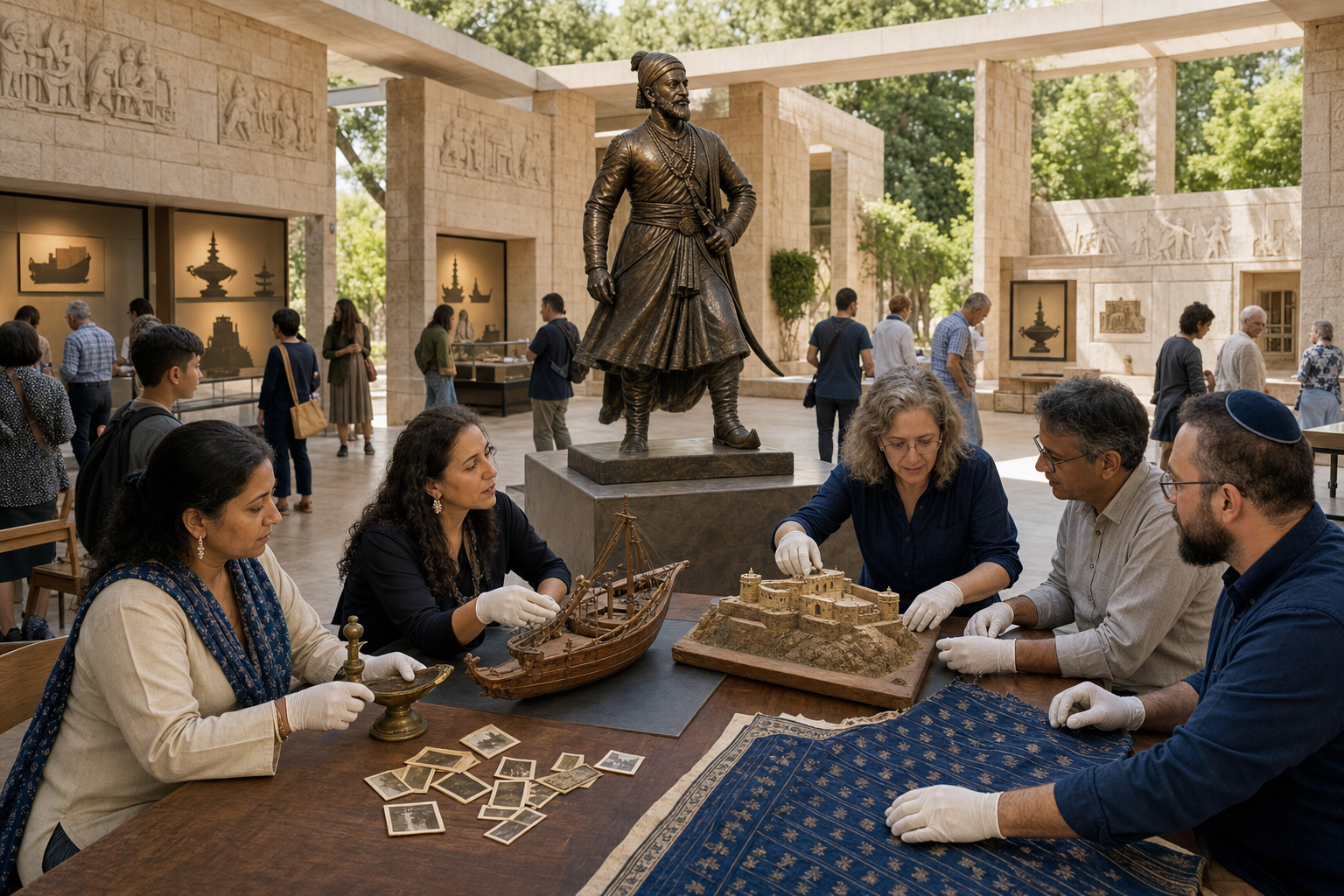
A monument can create attention, but attention is not yet understanding. The statue will function as heritage diplomacy only if visitors can answer three questions after seeing it: why Shivaji is being honoured in Israel, how the Bene Israel connect him to that country, and what this history asks India and Israel to preserve together.
Test the proposal before treating it as completed fact
The installation should be treated as proposed until its location, commissioning body, design, interpretive text, and unveiling arrangements are publicly confirmed. This distinction is especially important online, where an announcement, an aspiration, a commissioned work, and an installed memorial are often compressed into the same headline.
Before you share or endorse the project, look for the following:
- Project status: Is the statue proposed, approved, commissioned, completed, or installed? Use the most precise available word.
- Responsible institutions: Who owns the site, commissioned the work, selected the artist, and approved the inscription?
- Bene Israel participation: Were community representatives involved in deciding how their history would be presented?
- Historical scope: Does the memorial distinguish oral tradition, community memory, documented institutions, and named archival evidence?
- Public access: Will visitors be able to read the explanation, attend programmes, and follow links to deeper material?
- Long-term care: Who will maintain, insure, secure, and repair the statue after the unveiling?
These questions are not obstacles to celebration. They protect the memorial from becoming a one-day ceremony followed by years of ambiguity.
Build interpretation around the object
The statue should be the entrance to the history, not its substitute. A museum-quality panel can explain Shivaji’s maritime strategy, the Konkan setting, Bene Israel settlement and occupations, later military service, and migration to Israel. A second panel can distinguish community tradition from claims supported by named records.
Language choices matter. In an Israeli setting, Hebrew and English would make the account broadly accessible, while Marathi would acknowledge that the history being commemorated has a Maharashtrian voice. A QR code can lead visitors to primary documents, synagogue histories, maps, oral accounts, military records, and longer explanations that cannot fit on a plaque.
The best public programme would give the Bene Israel an active role rather than treating them as historical scenery. Community members could contribute family photographs, Marathi memories, accounts of synagogue life, military service histories, and stories of migration. Historians and curators could then label each contribution by type and provenance. That combination gives personal memory dignity without asking it to impersonate archival proof.
Different audiences need different entry points. Younger visitors can follow a map from the Konkan coast to Israel and learn the meanings of Sabbath, Shanwar Teli, aliyah, and kshatra. Older students can examine how ports, forts, skilled workers, and minority communities contribute to state formation. Adults can consider how a diaspora carries more than nostalgia: it carries language, civic memory, institutional relationships, and a practical reason for two countries to remain interested in one another.
Preservation must be planned before installation. Public statues, including statues of Gandhi in several countries, have faced vandalism. Discreet surveillance, appropriate lighting, insurance, a named maintenance authority, a community contact network, and a rapid restoration procedure should therefore be part of the commission. A damaged memorial that remains neglected communicates indifference more loudly than its inscription communicates friendship.
Finally, measure the memorial by what continues after the ceremony. School materials, travelling exhibitions, synagogue and fort heritage projects, translations, archival work, and recurring India-Israel cultural programmes would turn a fixed object into a durable relationship. If nothing survives except photographs of an unveiling, the diplomatic value will be thin.
Ahimsa and kshatra belong in the same civilizational account
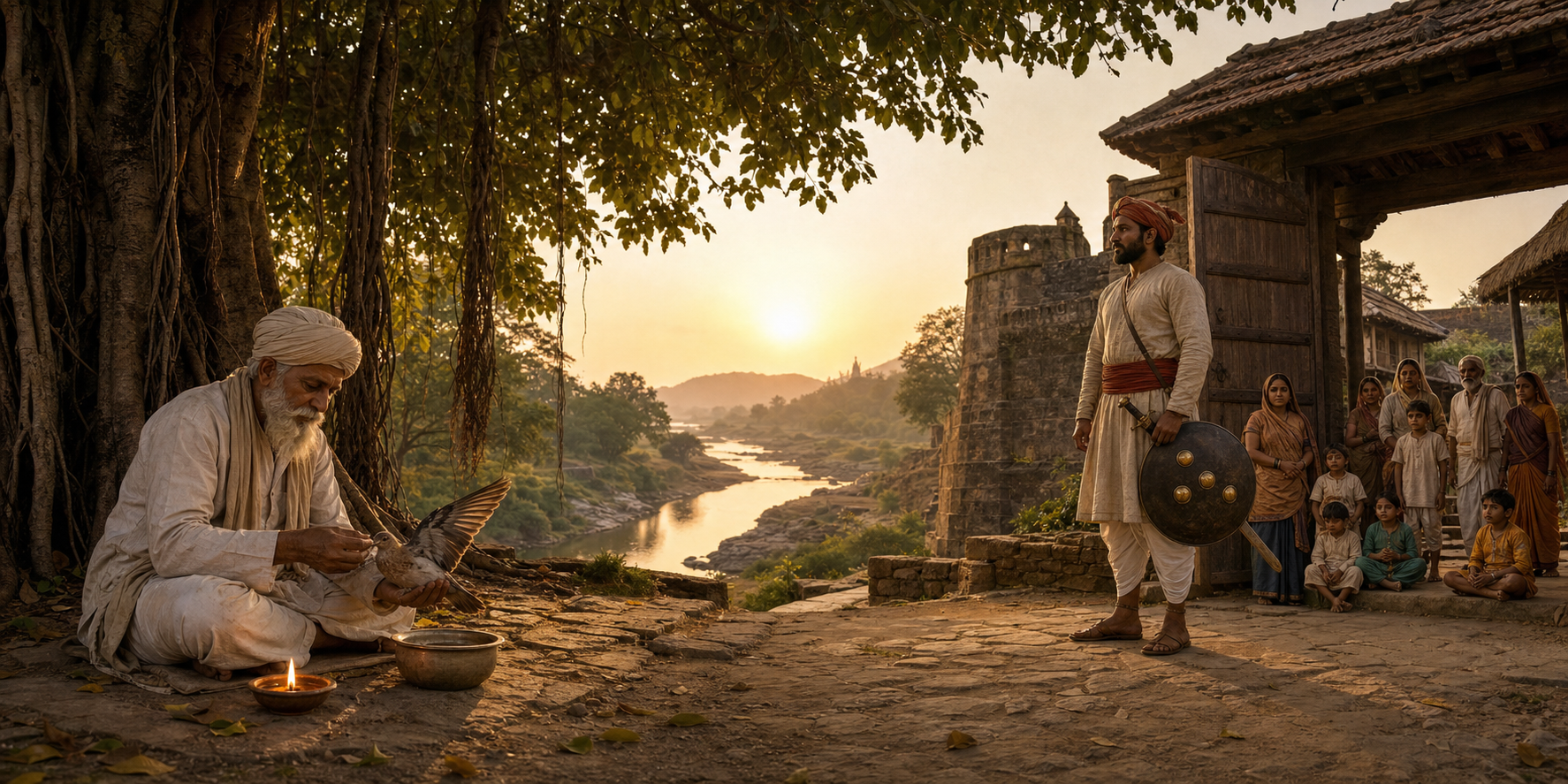
The proposed Shivaji memorial also raises a question for Hindu temples and Dharmic institutions: which virtues do we make visible to the next generation? Many communities are comfortable commemorating ahimsa through Gandhi, the Buddha, Jain tirthankaras, and teachings of restraint. They are sometimes less confident about presenting kshatra, the disciplined duty to protect.
That hesitation creates an incomplete picture of dharma. Ahimsa restrains cruelty, ego, vengeance, and needless harm. Kshatra addresses the duty that arises when people, institutions, sacred places, or civic order require defence. The two are not simple opposites. Protective courage needs moral limits, while non-violence needs an account of what a person should do when restraint alone leaves others exposed.
The Bhagavad Gita’s framing of dharma-yuddha is relevant here because it places conflict within questions of duty, justice, discipline, and ethical consequence. It should not be reduced to approval of violence, and it should not be imposed as though Hindu, Buddhist, Jain, and Sikh traditions all use identical theological language. A strong Dharmic exhibition allows each tradition to speak in its own terms while showing the shared practical question: how should moral communities combine compassion with the responsibility to protect?
Institutions can make that balance concrete. Place figures associated with ahimsa alongside exemplars of ethical courage such as Shivaji Maharaj, the Sikh Gurus, Rani Durgavati, and Rani Chennamma. Do not merely place names in a row. Give each person or tradition a short account of the threat faced, the duty recognized, the limits observed, and the public good defended.
In a temple complex, distinguish devotional, educational, and civic spaces. A historical ruler placed without explanation may confuse visitors about whether the display is liturgical or commemorative. An educational gallery, library, assembly hall, or exterior heritage court can give the figure an intelligible setting. Captions should explain why the person is present and how the example relates to dharma rather than partisan loyalty.
A Konkan-focused display could then connect these ethical ideas to material history: a coastal map, the forts of Sindhudurg and Vijaydurg, an explanation of maritime logistics, Bene Israel religious and occupational life, later service in the British Indian Army and Royal Indian Navy, and migration to Israel from the 1950s onward. Visitors would encounter courage not as a slogan but as navigation, engineering, labour, public service, continuity, and protection.
This is the standard by which the proposed statue should be judged. It should not ask Israel to validate Shivaji for Indians, nor use Bene Israel history as a decorative bridge between flags. It should let a community’s layered past explain why Shivaji, Maharashtra, India, and Israel can meet honestly in one public place.
If you are involved in a temple, cultural organization, school, or diaspora association, begin with one practical request: ask the organizers to publish a project brief before the unveiling. It should state the memorial’s status, historical claims, evidence labels, languages, community partners, educational programme, and maintenance plan. That single document will reveal whether the project is prepared to carry history after the ceremony ends.
References
