
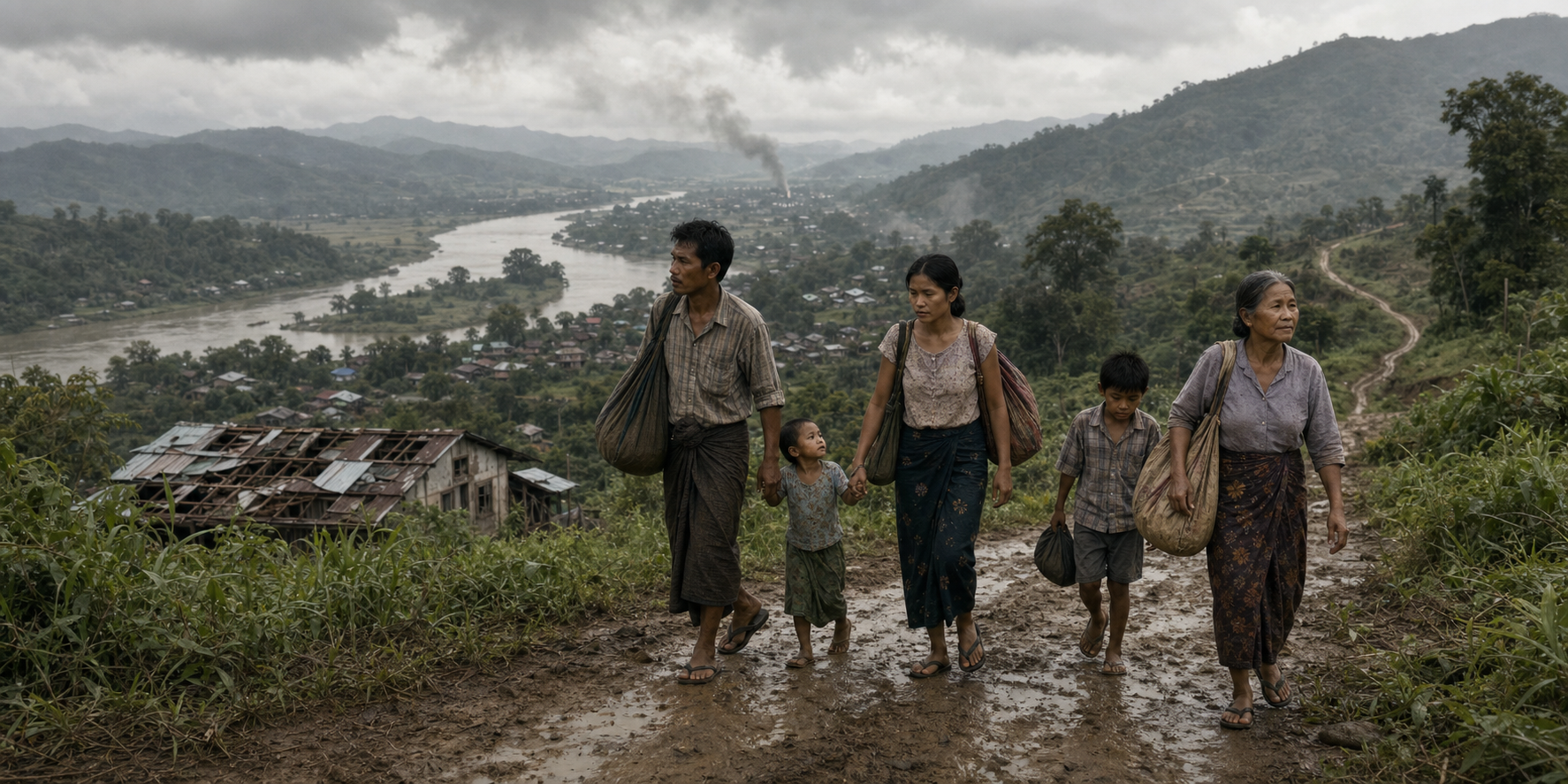
Myanmar’s emergency is not simply a contest for the capital. It is a nationwide struggle in which territorial fragmentation, attacks affecting civilian areas, repeated displacement and the breakdown of essential services continually reinforce one another.
The supplied DharmaRenaissance Blog report traces the present escalation to the military overthrow of the elected government led by Aung San Suu Kyi on 1 February 2021. The figures below are claims reported by that article, not independently verified or corroborated by additional member sources.
One crisis, several measures of human displacement
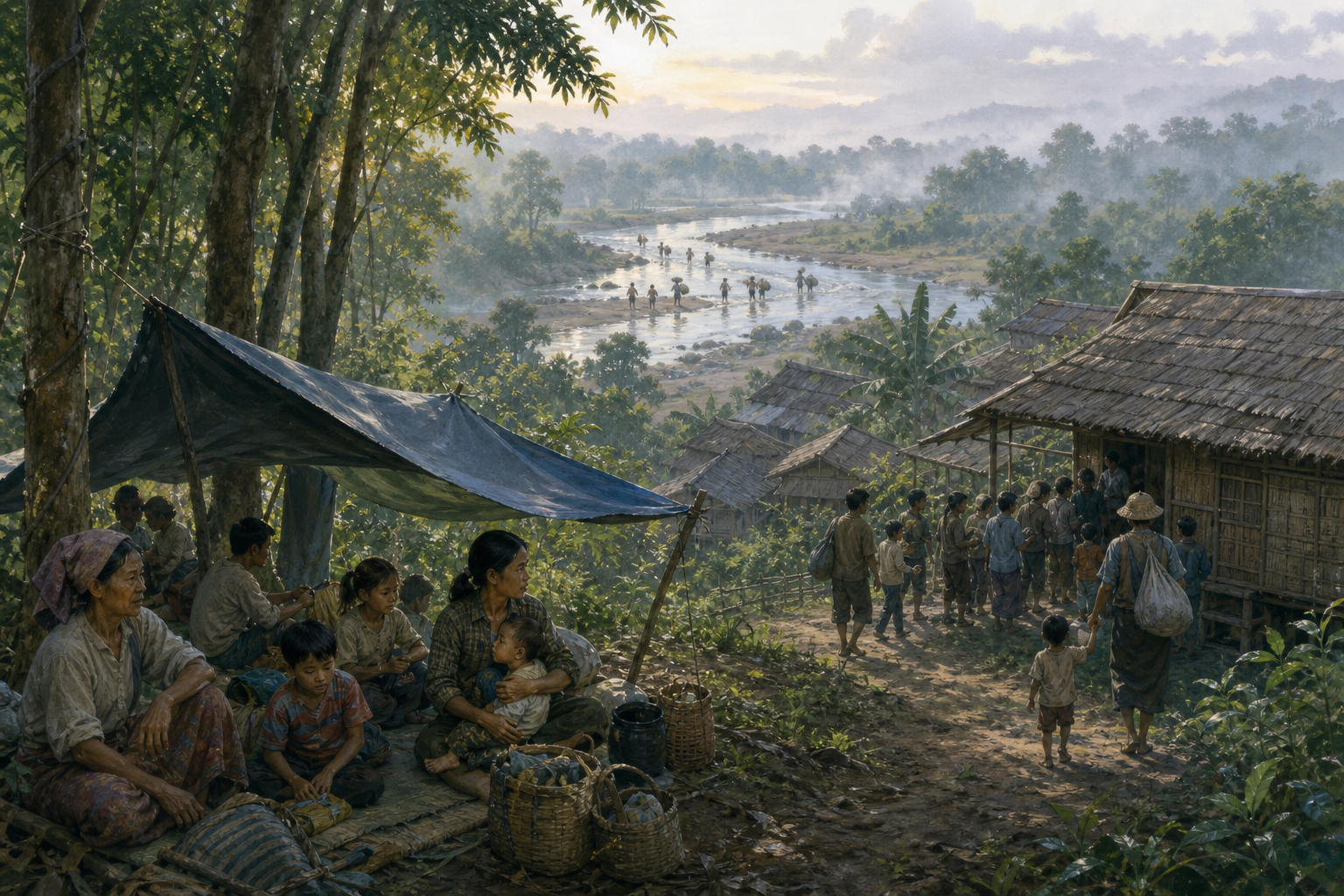
The report says more than 5.3 million people from Myanmar are living in extremely difficult circumstances. It separately cites about 3.7 million internally displaced people and more than one million people who have sought refuge in neighbouring countries, including Bangladesh, Thailand and India.
These figures describe related but distinct dimensions of the emergency. A refugee has crossed an international border, while an internally displaced person remains within the country. The totals should not automatically be added or treated as measurements taken on the same date: humanitarian estimates may use different definitions, reporting periods and geographic coverage.
The distinction also changes what protection is possible. People who cross a border encounter immigration rules and the capacity of a host community. Those remaining inside Myanmar may be closer to their land and livelihoods but exposed to shifting front lines, blocked routes and repeated flight. The report identifies India’s Manipur and Mizoram states as directly affected, noting that cross-border ethnic, family and cultural ties make displacement a social and administrative issue as well as a geographic one.
Fragmented control turns relief access into a local question
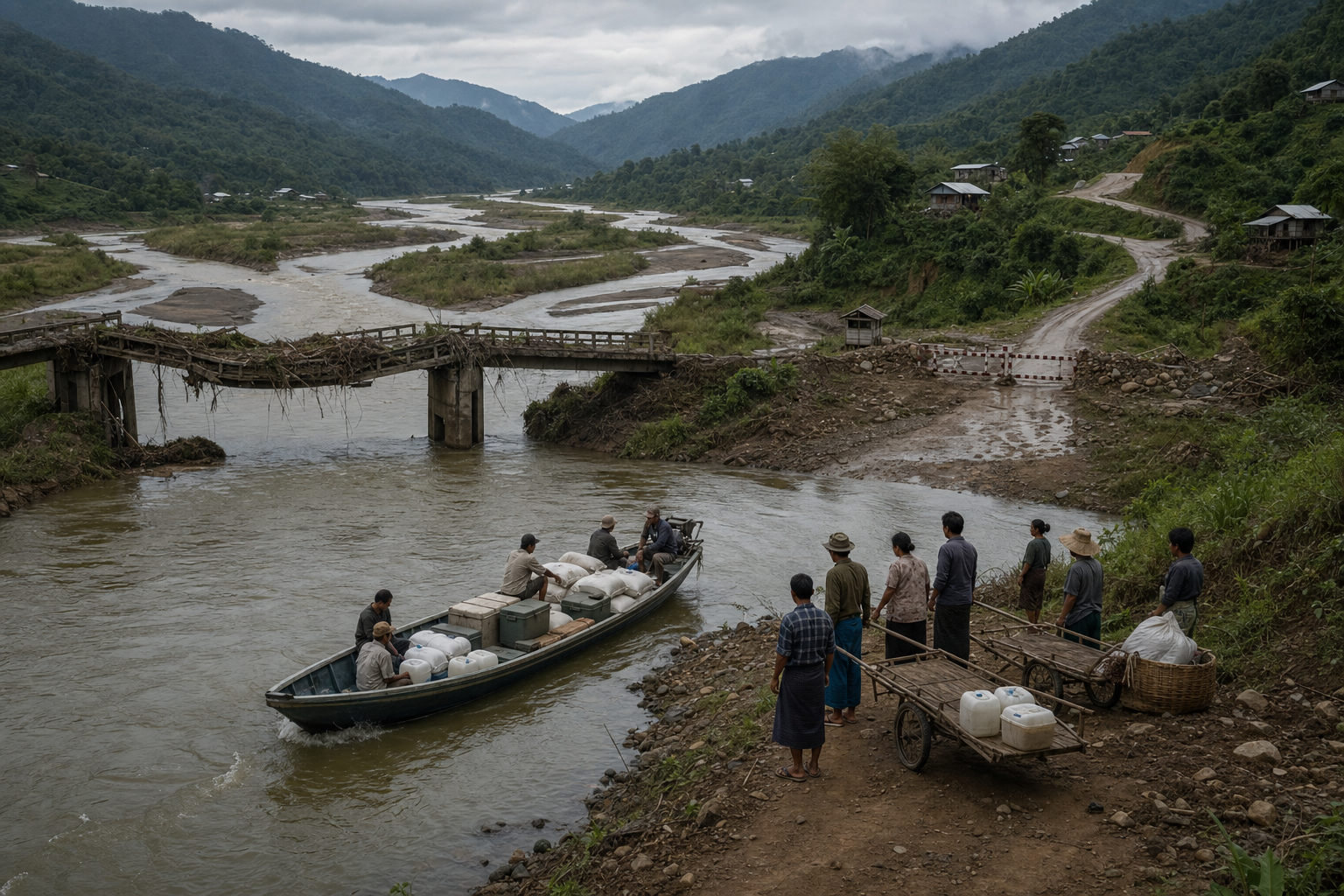
The conflict cannot be understood through a simple government-versus-rebels map. Citing available assessments, the source places the government’s influence at roughly 30 percent of the country, while ethnic armed organisations and People’s Defence Forces reportedly exercise administrative influence across about 40 percent. It describes control in the remaining areas as fluid and contested.
Such percentages are best read as broad assessments rather than precise borders. Influence may mean the ability to patrol a road, collect revenue, administer justice, operate a school or restrict access. For civilians and relief agencies, the authority controlling a route or township can matter more immediately than the actor claiming sovereignty over it.
Rakhine State illustrates this fragmentation. The article reports that the Arakan Army has established administrative control over about 70 percent of the state. It presents the struggle around the state capital, Sittwe, as consequential not only militarily but also for port access, administration, relief distribution and the wider regional balance.
The same report says military forces have used combat aircraft, drones and paramotors to drop explosives after facing sustained challenges from pro-democracy and ethnic armed groups. It cites reports of schools, medical facilities and displacement camps being affected, particularly amid violence in Rakhine and central Myanmar. When fighting reaches places intended for learning, treatment or refuge, the practical boundary between battlefield and civilian space collapses.
Repeated flight converts an emergency into structural loss
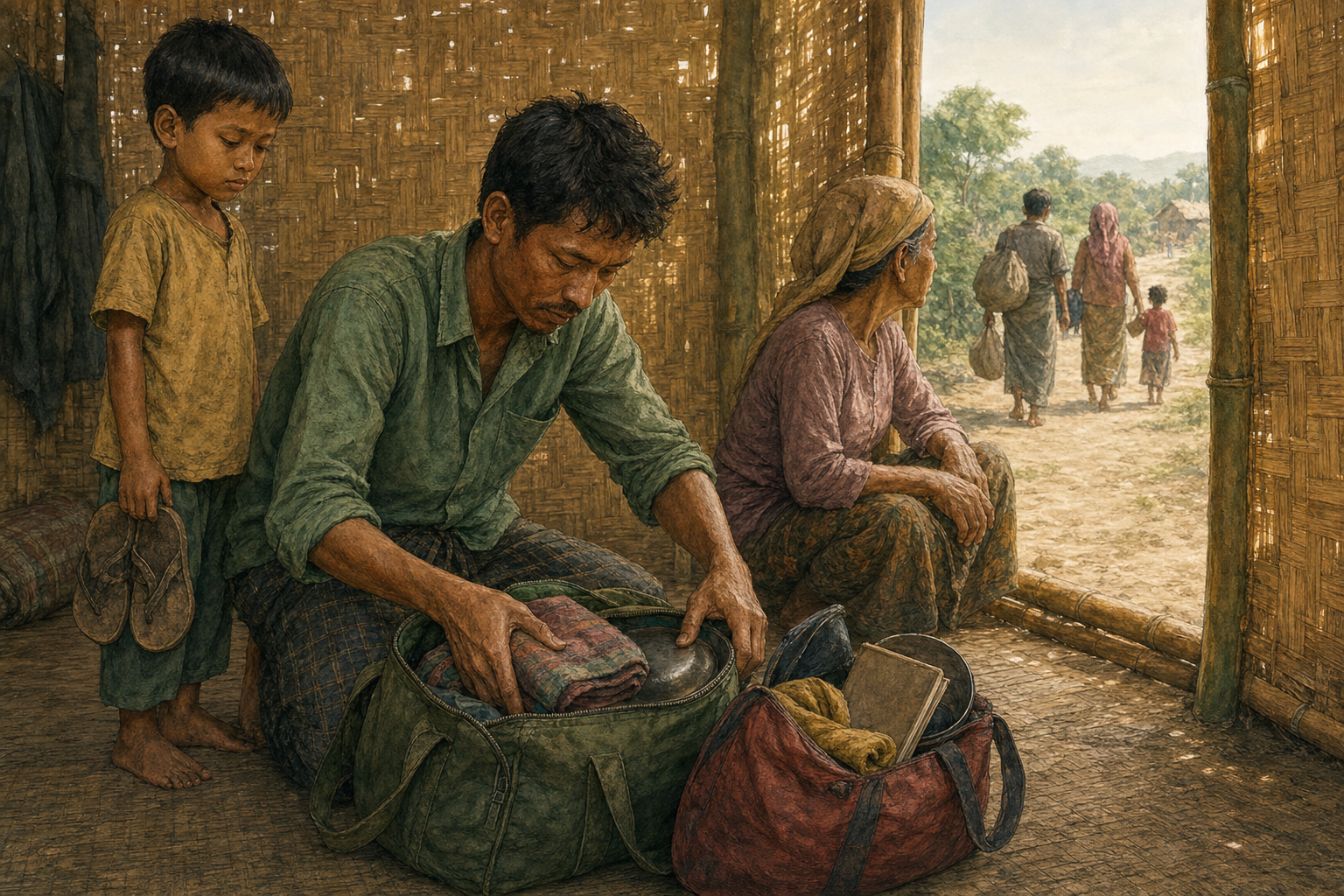
Displacement is often described through the number of people who have left home, but duration and repetition are equally important. The source reports that hundreds of villages have emptied and thousands of families have changed location more than once. Each new move can consume savings, interrupt aid registration and separate families from local support networks.
The loss extends beyond housing. Families may also lose access to farmland, markets, places of worship, ancestral land and familiar community institutions. The report describes food, clean water, health care, safe shelter and education as increasingly uncertain for people living in borderlands, forests and conflict-affected areas. Against the poverty already described by the source, prolonged war risks turning temporary deprivation into an intergenerational disadvantage.
Regional policy adds another layer. According to the article, Myanmar matters to India because of northeastern security, connectivity and its Act East policy; it matters to China because of access towards the Indian Ocean, energy corridors and Belt and Road interests. The source also notes that Min Aung Hlaing’s visits to India and China gave him diplomatic visibility. These interests help explain why neighbouring governments may simultaneously seek stability, preserve strategic access and confront humanitarian pressure at their borders.
War damage continues through schools, clinics and public trust
The report attributes to the United Nations an estimate of more than 75,000 deaths during the preceding five years. Fatalities are only one measure of harm. Injury, disability, psychological trauma, interrupted livelihoods and mistrust between communities can persist long after an individual attack or displacement.
Education is presented as a particularly severe long-term risk. The article projects that more than six million children and young people could be outside school during the 2026-27 academic session. It also says that about half of the country’s roughly 13 million school-age children have already lost access to formal education. The interruption involves more than closed buildings: teacher availability, safe travel, textbooks, examinations, digital access and household income all affect whether learning can continue.
Health care faces a parallel breakdown. The source reports attacks affecting clinics, deaths among medical personnel, disrupted medicine supplies and closures of private hospitals. A weakened health system endangers not only people wounded in combat but also pregnant women, newborns, older people and patients requiring continuing care. If medical facilities are perceived as unsafe, delayed treatment becomes another indirect consequence of war.
The article also describes journalists, editors and media organisations as targets within a broader campaign of political detention. Suppression of independent reporting has humanitarian consequences: it makes casualties harder to document, obscures local needs and reduces the information available to civilians deciding whether a road, clinic or shelter is safe.
What an effective humanitarian response must recognise
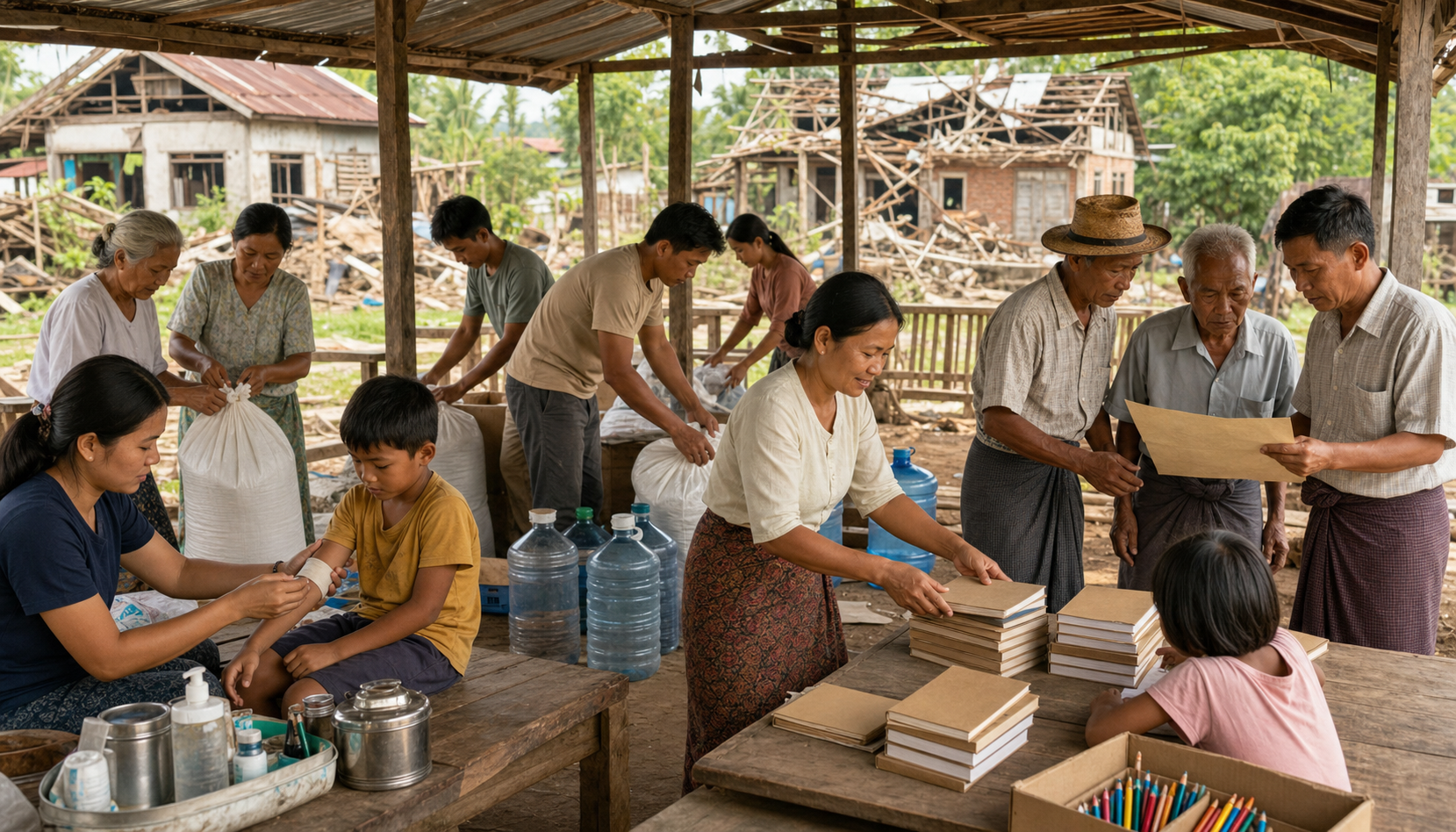
Relief cannot wait for a single political settlement or assume that one authority can guarantee nationwide delivery. Fragmented control requires access arrangements suited to particular routes and communities, while repeated displacement demands continuity rather than one-time assistance.
Key takeaways
- Displacement statistics measure different populations and may reflect different reporting periods; they require attribution and careful comparison.
- Territorial control is fluid, so civilian protection and humanitarian access must be assessed locally rather than inferred from national claims.
- Emergency shelter and food are indispensable, but preserving education, health care and livelihoods is necessary to limit lasting social damage.
- India and other neighbours face humanitarian pressures alongside strategic and border-security interests; neither dimension makes the other disappear.
- Independent information is part of civilian protection because access decisions depend on credible reporting about violence, routes and essential services.
The decisive test will be whether assistance can keep reaching civilians as lines of control change. Without protected access to learning, treatment and livelihoods, even families that survive the fighting may remain trapped in the war’s consequences for years.