

You may be facing two absolute claims about the CJP protest: that it was simply democratic dissent, or that it was the opening move of a colour revolution. Neither conclusion should be accepted merely because it fits your politics. The responsible question is narrower: what evidence would turn an alarming theory into a credible finding?
You can take the possibility of organised destabilisation seriously without treating suspicion as proof. That distinction protects Bharat twice over: it helps expose a real operation if one exists, and it denies agitators the grievance they gain when lawful dissent is indiscriminately branded subversive.
The allegation is serious, but its status matters
The established starting point is limited: CJP protested in New Delhi on 10 October 2026 against Chief Election Commissioner Gyanesh Kumar. The colour-revolution allegation goes much further. It holds that a grievance directed at one constitutional institution could be widened into public confrontation with the state, with Prime Minister Narendra Modi and Home Minister Amit Shah becoming the eventual political targets.
A pre-protest warning is central to the concern. Saurav Das predicted a “civil war-like situation,” deaths of protesters at the hands of right-wing extremists, and subsequent blame directed at the government and Delhi Police. The timing makes the warning relevant to an investigation. It does not, by itself, show foreknowledge, coordination, foreign involvement or a plan to cause violence.
Keep three levels separate whenever you assess this controversy:
- Observed event: a protest occurred at a stated place, time and institutional target.
- Recorded statement: a named person made a particular prediction before the event.
- Operational inference: the protest and prediction formed part of a coordinated attempt to destabilise the elected government.
The first two levels can help investigators test the third. They cannot be silently collapsed into it. A provocative forecast may be irresponsible rhetoric, political theatre, informed anticipation or genuine foreknowledge. Deciding among those explanations requires evidence that is independent of the forecast itself.
The phrase “colour revolution” also has no magical diagnostic power. Public anger, emotionally resonant stories, common slogans, visual symbols and criticism of the government can appear in ordinary political mobilisation as well as in a destabilisation campaign. Calling these features “hallmarks” identifies a hypothesis to examine. It does not establish who organised the activity, who financed it, or what its participants intended.
Use five evidence tests before accepting the label

A credible assessment should rely on converging evidence. One dramatic speech, a coordinated hashtag or an ominous prediction is weak on its own. The case becomes materially stronger only when financial, organisational, digital and operational records point in the same direction and ordinary explanations no longer fit.
- Follow the money with records. Investigators should identify who paid for transport, venues, equipment, advertising, communication services and professional organisers. They should distinguish lawful domestic political support from concealed foreign direction or prohibited financing. A foreign connection cannot responsibly be inferred from English-language messaging, international attention, NGO participation or visual similarity to an overseas protest.
- Reconstruct the message timeline. Collect the earliest available versions of slogans, graphics, talking points and videos. Record exact timestamps, accounts and distribution paths. Repetition alone proves little because supporters routinely copy material after it becomes public. Stronger evidence would show coordinated preparation or controlled distribution before the message appeared openly.
- Identify command relationships. Ordinary protests require organisers, marshals, transport coordinators and media teams. Those roles are not evidence of conspiracy. The relevant question is whether communications connect identifiable decision-makers to deliberate violence, deceptive mobilisation, attempts to provoke a lethal response, or instructions to override the announced purpose of the gathering.
- Track when the objective changes. Investigators and journalists should compare the protest’s stated demand with later speeches, instructions and actions. Criticism expanding from the CEC to the Union government can be normal politics. A stronger warning sign would be evidence of a planned transition from a specific institutional complaint to an extra-constitutional attempt to remove or paralyse the government.
- Test claims of pre-positioned blame. A forecast of deaths deserves scrutiny when it appears before a tense event. The decisive evidence would be non-public operational knowledge, prepared material tied to a planned incident, or communication with people responsible for producing the predicted confrontation. A prediction that later resembles events is not enough unless those links can be shown.
These tests matter because the same surface behaviour can have different causes. Identical graphics may come from a central campaign team or from supporters downloading a popular template. Transport funding may be lawful political spending or a concealed financial channel. A change in slogans may be planned escalation or a spontaneous response to events. Evidence must decide between those possibilities.
The burden should remain on whoever asserts a covert operation. That does not mean security agencies must wait for violence. It means preventive investigation should be specific, lawful and directed at conduct, money and communication rather than at the mere fact that citizens assembled against an officeholder.
Bangladesh and Nepal are warnings, not proof of equivalence
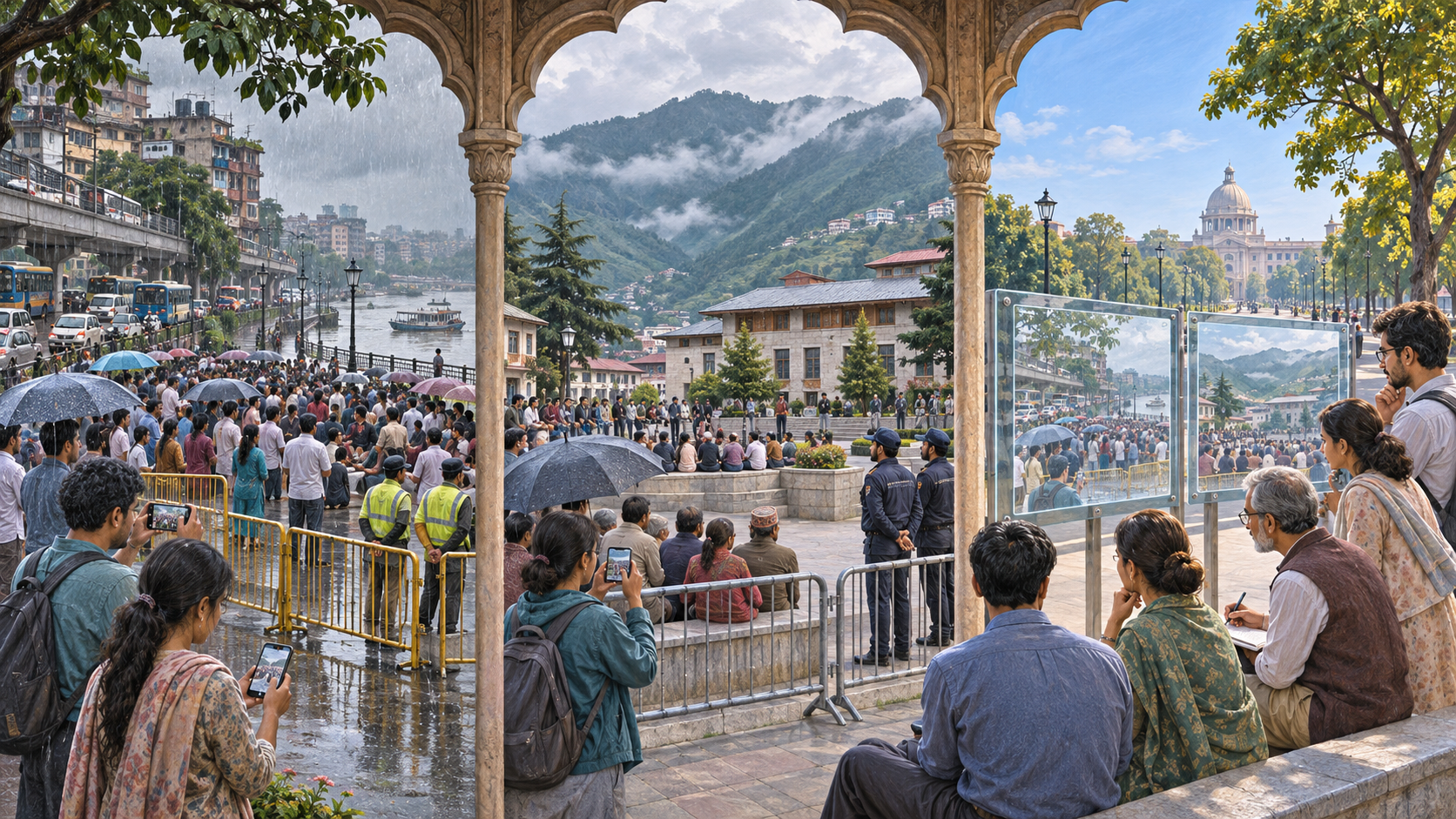
Bangladesh in 2024 and Nepal in 2025 have been invoked as precedents for a protest evolving into a broader challenge to the government. The Bangladesh comparison carries a grave human cost: an estimated death toll of up to 1,400 between 1 July and 15 August 2024. That scale explains why Indian authorities should plan for escalation before anyone is killed.
But an analogy establishes a possible danger, not an identical operation. It cannot prove that CJP has the same structure, sponsors, intentions, social conditions or trajectory. To make that case, investigators would still need evidence specific to Delhi: financial trails, communications, operational instructions and identifiable acts.
The most useful lesson from a foreign crisis is therefore practical. A serious injury or death can transform the meaning of a demonstration within minutes. The original demand may disappear beneath disputed videos, partisan accusations and calls for retaliation. Authorities should plan medical access, clear lines of communication with organisers, preservation of video evidence and rapid factual briefings before such an incident occurs.
You should apply the same discipline when a violent clip reaches your phone. Confirm that it depicts the stated city and date. Look for the sequence before and after the visible moment. Separate a verified casualty from an unverified claim about who caused it. A real death does not automatically prove the identity or motive of the perpetrator, and a confident caption is not a substitute for evidence.
Security and civil liberty must be protected together
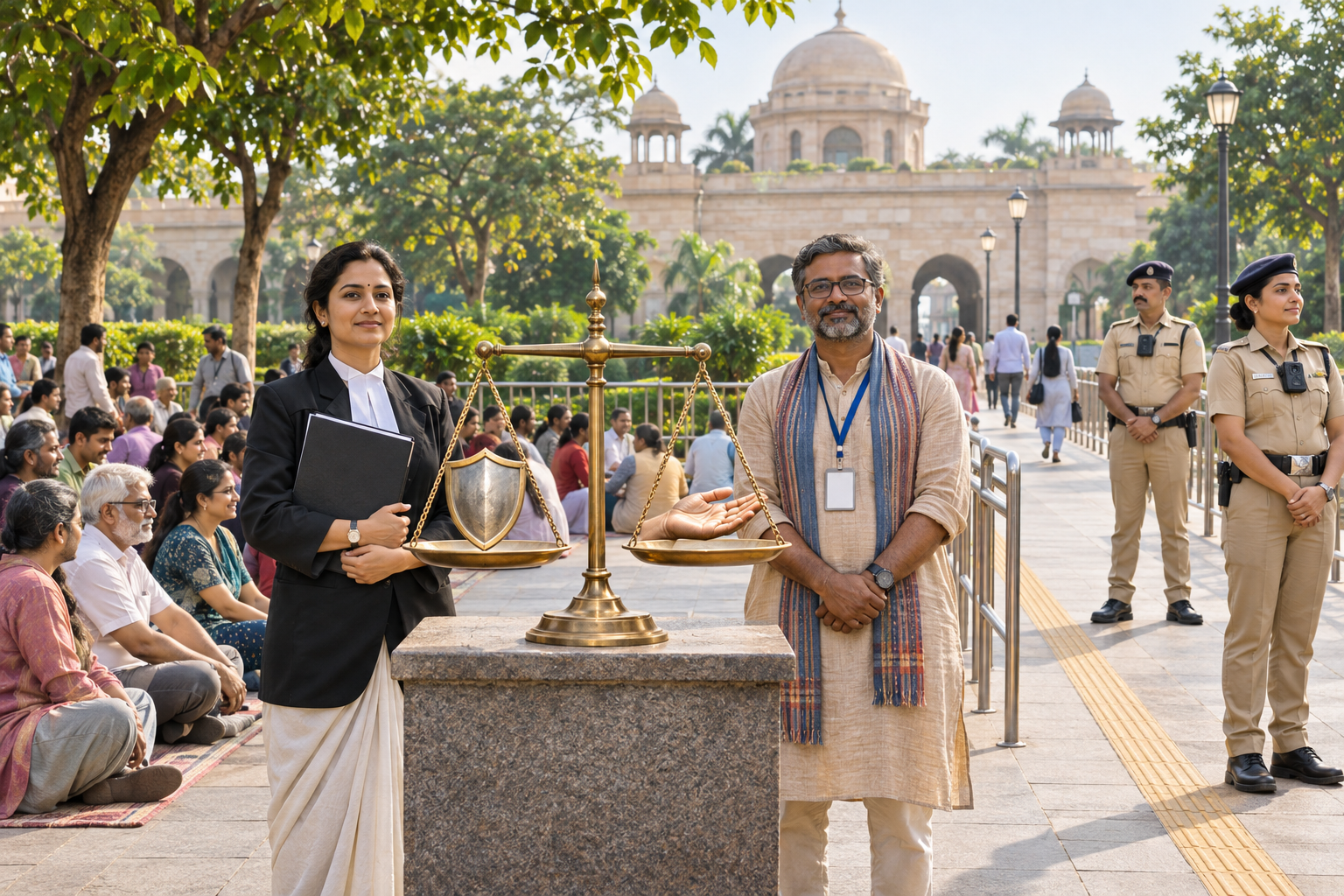
Bharat does not have to choose between vigilance and democratic confidence. A competent state can investigate concealed financing, threats, coordinated deception and preparations for violence while protecting peaceful participants. Indeed, those duties reinforce one another. Indiscriminate repression can supply the very images and grievances that a destabilisation strategy would exploit, while official passivity can leave citizens and police exposed to an organised provocation.
The sound response is targeted. Security agencies should preserve evidence early, trace funds under lawful authority, examine credible threats, distinguish organisers from ordinary participants and pursue individuals on the basis of conduct. Public officials should clearly label what is confirmed, what is under investigation and what remains an allegation. Withholding operational details during an active inquiry may be necessary; using secrecy to imply guilt is not.
Police planning should also reduce the opportunity for a manufactured confrontation. A defined route, visible liaison officers, accessible medical teams, functioning cameras and clear warnings before enforcement make later disputes easier to resolve. Force must be tied to an immediate threat or unlawful act, not to the political identity of the crowd. Protest organisers, for their part, should publish behavioural rules, identify marshals and isolate anyone attempting to breach barriers or incite an attack.
Journalists and political commentators have a separate responsibility. Before repeating the colour-revolution label, they should identify the evidence supporting agency, coordination and intent. Before dismissing it as paranoia, they should address the pre-event messaging and any documented financial or operational links. The reader should be able to tell whether a statement reports a fact, advances an inference or makes an accusation.
A Dharmic political ethic supports this balance. Satya requires fidelity to evidence even when a preferred conclusion feels obvious. Ahimsa requires practical steps to prevent foreseeable bloodshed, not merely peaceful language after violence. Rajadharma requires the state to protect constitutional order while exercising power under law. None of these duties permits naivety, and none excuses collective suspicion.
Key takeaways: what you should do now

- Treat “colour revolution” as an investigative hypothesis until evidence establishes financing, coordination, intent and operational conduct.
- Separate the confirmed protest, the pre-event prediction and the allegation of a covert campaign. They are three different claims with different evidentiary burdens.
- When you encounter a viral image or video, verify its date, location, original uploader and surrounding sequence before sharing it.
- Preserve threatening or apparently coordinated material with its URL, account name and timestamp. Do not dox private individuals or invite online retaliation.
- Demand specificity from both sides. “It has all the hallmarks” is not proof, while “it is only dissent” does not answer documented evidence if financial or operational links emerge.
- Judge the state by two outcomes at once: whether it prevents planned violence and whether peaceful citizens retain their constitutional space to protest.
If you intend to follow this controversy, keep a simple evidence log with four columns: date, verified event, exact claim and supporting record. Mark later corrections instead of deleting the original entry. That small habit will stop predictions, rumours and confirmed facts from merging into one political story.
The next responsible step is not to choose a camp and then search for proof. It is to insist that authorities investigate concrete links, that organisers reject violence openly, and that every public claim be kept at the level the evidence can bear. Bharat is best protected when vigilance is disciplined by truth.
References

Leave a Reply
You must be logged in to post a comment.