
If you are trying to decide whether India can preserve its Russian resource relationship while deepening economic ties with the United States, the useful answer is neither a simple yes nor an automatic no. Joint investment is conceivable, but it would depend on a sequence of political, legal and commercial decisions that has not yet been completed.
The practical question is not whether three flags can appear beside the same project. It is whether India can turn a temporary overlap of interests into durable access to energy and strategic materials without accepting an American veto over its foreign policy or exposing Indian firms to sanctions. The framework below will help you distinguish a serious opening from an attractive diplomatic headline.
Why the interests overlap – and where they do not
India enters this discussion with two immediate concerns. Access to discounted Russian oil supports its energy-security position, while pressure from Washington over those purchases could complicate a trade agreement described as nearing completion. In the scenario being considered, the threatened penalty could reach tariffs of up to 100 percent. That figure represents a possible coercive measure, not proof that such a tariff has already been imposed.
Washington would have a different reason to participate. Investment in Russian mineral deposits could reduce Moscow’s dependence on China, limit Beijing’s leverage over future supply and create additional access to materials that matter for industrial and technological competition. Supporting India’s rise as another major centre of economic power would also fit that logic.
Moscow, meanwhile, wants capital, technology and room to diversify. Russian Deputy Prime Minister Denis Manturov has acknowledged Russia’s close relationship with China and its purchase of Chinese products while also emphasizing the goal of technological sovereignty. India is a longstanding strategic partner that can help Russia diversify without presenting itself as a replacement patron.
This produces a genuine area of overlap, but not a shared grand strategy. India wants affordable resources and strategic autonomy. The United States may want leverage over Russia as much as it wants cooperation with Russia. Moscow wants relief from Western constraints without surrendering control over its assets. China is the common factor in all three calculations, but each capital understands the China challenge differently.
That difference matters because the diplomatic opening remains preliminary. Prime Minister Narendra Modi’s call with President Donald Trump came amid trade negotiations and American pressure concerning Russian oil. Separately, a U.S. envoy to Belarus reportedly had approval to explore sanctions relief for Moscow in exchange for prisoner releases. Belarusian President Alexander Lukashenko then proposed a joint Belarusian-Russian-American fertilizer plant, after Trump said the United States was working on a major Belarusian potash purchase. These are signals that transactional resource diplomacy may be possible. They are not yet an India-U.S.-Russia investment agreement.
Keep four stages separate whenever you assess the next announcement:
- Political signal: a leader, envoy or minister expresses interest in cooperation.
- Sanctions decision: the relevant authorities define which entities, assets, payments and services are permitted.
- Project agreement: named participants settle ownership, financing, technology, output and governance.
- Execution: banks process payments, insurers accept exposure, equipment moves and the project begins operating.
A proposal can advance through the first stage and still fail at any of the next three. Until the asset, participants and legal permissions are identifiable, treat the development as diplomacy rather than an investable project.
A viable proposal must pass six gates
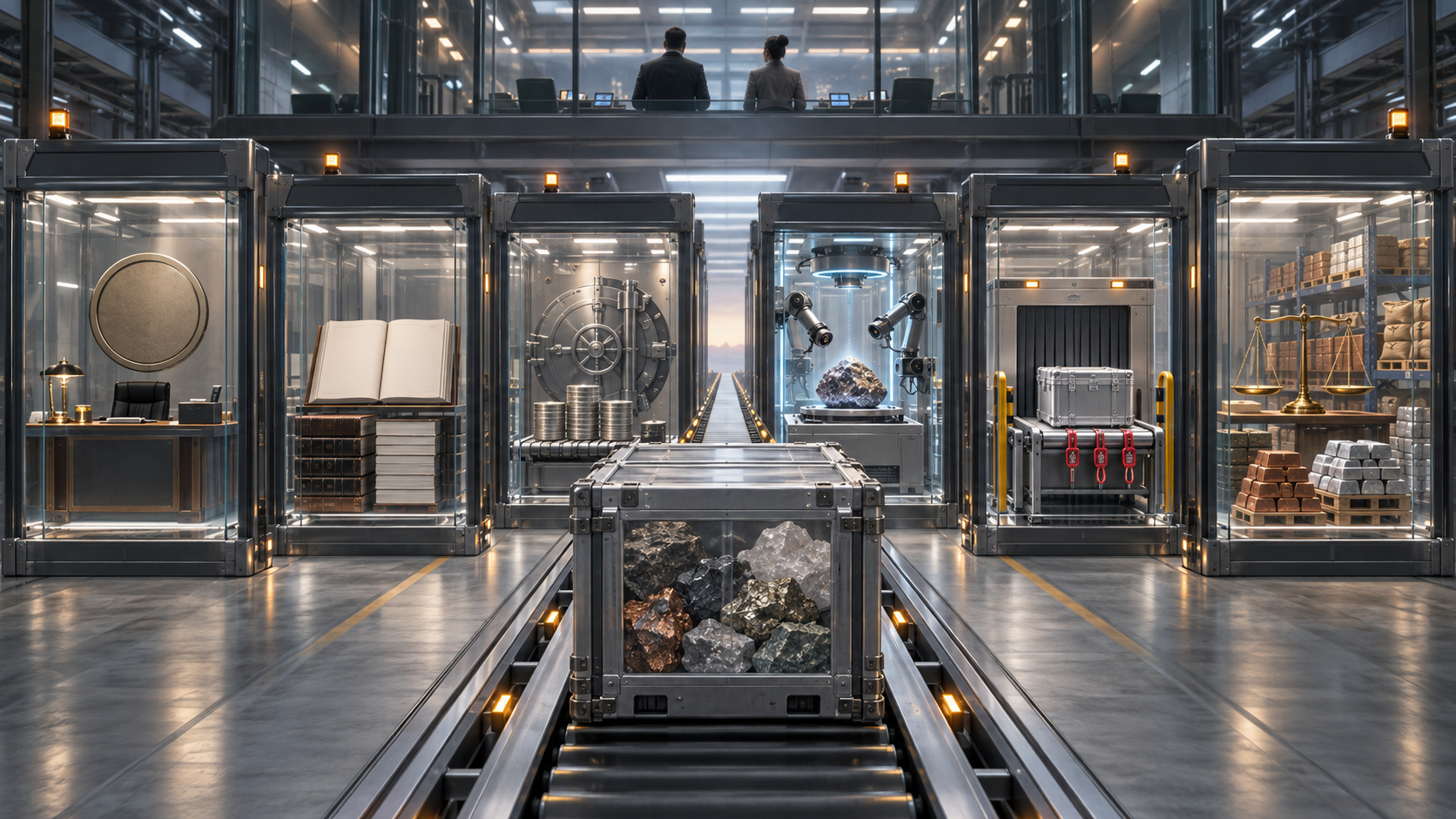
India should not begin with a sweeping declaration about cooperation across Russia’s resource economy. It should test one project against six gates. Failure at any one of them can leave Indian capital stranded or make the promised resource access unusable.
- A defined asset and output. The parties must name the deposit, processing facility or energy project, not merely a sector. They must also specify what will be produced, where it will be processed and who can purchase the output. A memorandum about critical minerals is not yet a mineral supply.
- Written sanctions coverage. Partial sanctions relief may cover one company or activity without protecting its lenders, contractors, ships, insurers or technology suppliers. Before an Indian entity commits money, sanctions counsel in every relevant jurisdiction should verify the complete transaction chain. Political assurances are not a safe substitute for written authorization.
- A commercial case independent of symbolism. A strategically attractive deposit can still be uneconomic once extraction, processing, transport and financing are included. The project must withstand ordinary due diligence on costs, infrastructure, environmental obligations, delivery schedules and customer demand.
- Workable governance and technology terms. The partners need clear rules for ownership, board control, operational decisions, data, intellectual property and dispute resolution. If American technology is central, its continued availability cannot rest on an informal political understanding. If India provides capital or guaranteed purchases, it needs corresponding rights rather than ceremonial participation.
- Balanced strategic dependence. Replacing exclusive dependence on China with exclusive dependence on the United States would not deliver technological sovereignty for Russia. Nor should India exchange dependence on imported resources for dependence on Washington’s discretionary permission. A durable structure must leave all three parties with reasons to keep it operating.
- Protection against reversal. Sanctions can return, political relations can deteriorate and banks can withdraw even when a transaction remains nominally legal. Contracts therefore need phased capital commitments, termination rules, protection for delivered equipment and a plan for payments, inventory and personnel if permissions are withdrawn.
The second gate is the one most likely to be misunderstood. Sanctions relief is not a single switch. A government may permit an investment while private banks or insurers still judge it too risky. The safe course is to make each investment phase conditional on verified legal permissions and operational counterparties, rather than paying first and hoping the financial system follows.
Start with critical minerals, not a prestige project
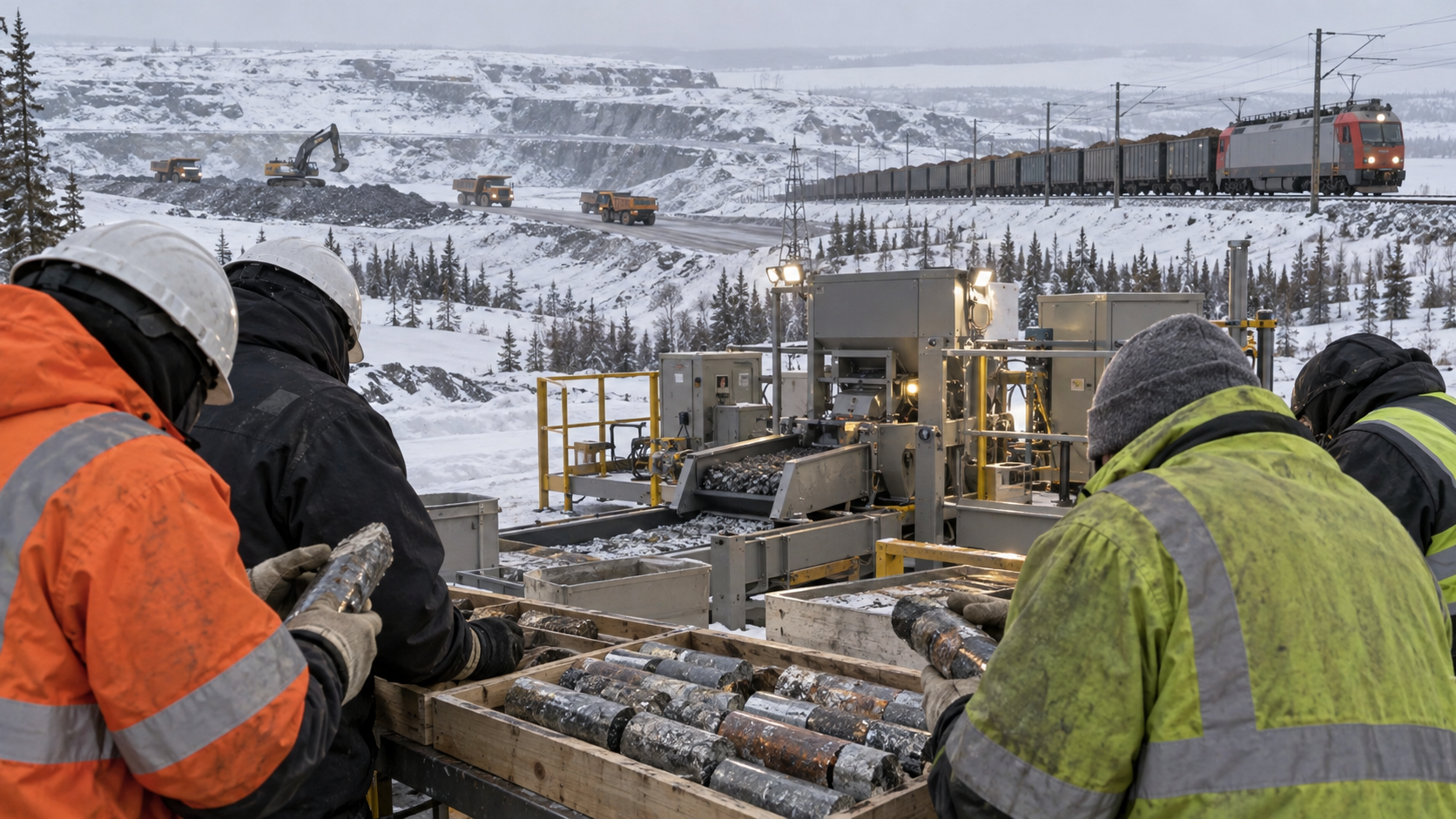
The first project should maximize shared interests while minimizing political symbolism. That points toward a carefully selected critical-minerals or rare-earth venture, subject to proof that the deposit, processing route and transport economics are sound. It does not point toward the largest or most politically charged energy asset available.
| Resource class | Strategic attraction | Main obstacle |
|---|---|---|
| Critical minerals and rare earths | Could diversify Russian dependence on China, support India’s industrial growth and fit the U.S. interest in broader supply chains | Mining access alone is insufficient; processing technology, logistics, financing and long-term buyers must also be secured |
| Fertilizer and potash | The proposed Belarusian-Russian-American fertilizer plant provides a political model for resource cooperation across existing divides | A Belarusian proposal does not establish Russian approval, sanctions coverage or a commercial role for India |
| Oil and LNG | Directly connects Russian production with India’s energy-security needs | These assets carry the greatest sanctions exposure and are tied most closely to U.S. pressure over India’s Russian purchases |
Critical minerals offer the clearest strategic overlap. Russia wants greater technological independence from China. India needs inputs for industrial expansion. The United States has an interest in reducing China’s control over important supply chains. The Russian Far East has consequently been presented as a place where India and its Quad partners could pursue diversification.
That strategic fit is only a reason to investigate. It does not establish that a particular deposit is commercially recoverable, that suitable processing exists or that the output can be transported at a competitive cost. New Delhi should insist on geological, technical and logistical due diligence before treating any mineral concession as a strategic victory.
Fertilizer may provide a useful second track. Lukashenko’s proposal shows how resource cooperation can be framed as a practical transaction rather than an alliance. India could examine whether a comparable structure would improve supply security and remain commercially credible. But the existence of a Belarusian concept cannot be treated as Russian consent or American sanctions clearance.
Arctic LNG 2 would make a dramatic showcase, and it has been floated as a possible case after Chinese involvement reportedly receded in summer 2024 under U.S. sanctions pressure. That same history makes it a poor first proof of concept. A pilot should reveal whether the trilateral mechanism works; it should not begin with one of the assets most visibly associated with the sanctions dispute. LNG could become a later-stage option if formal relief and reliable financing are already functioning.
What New Delhi should put on the table
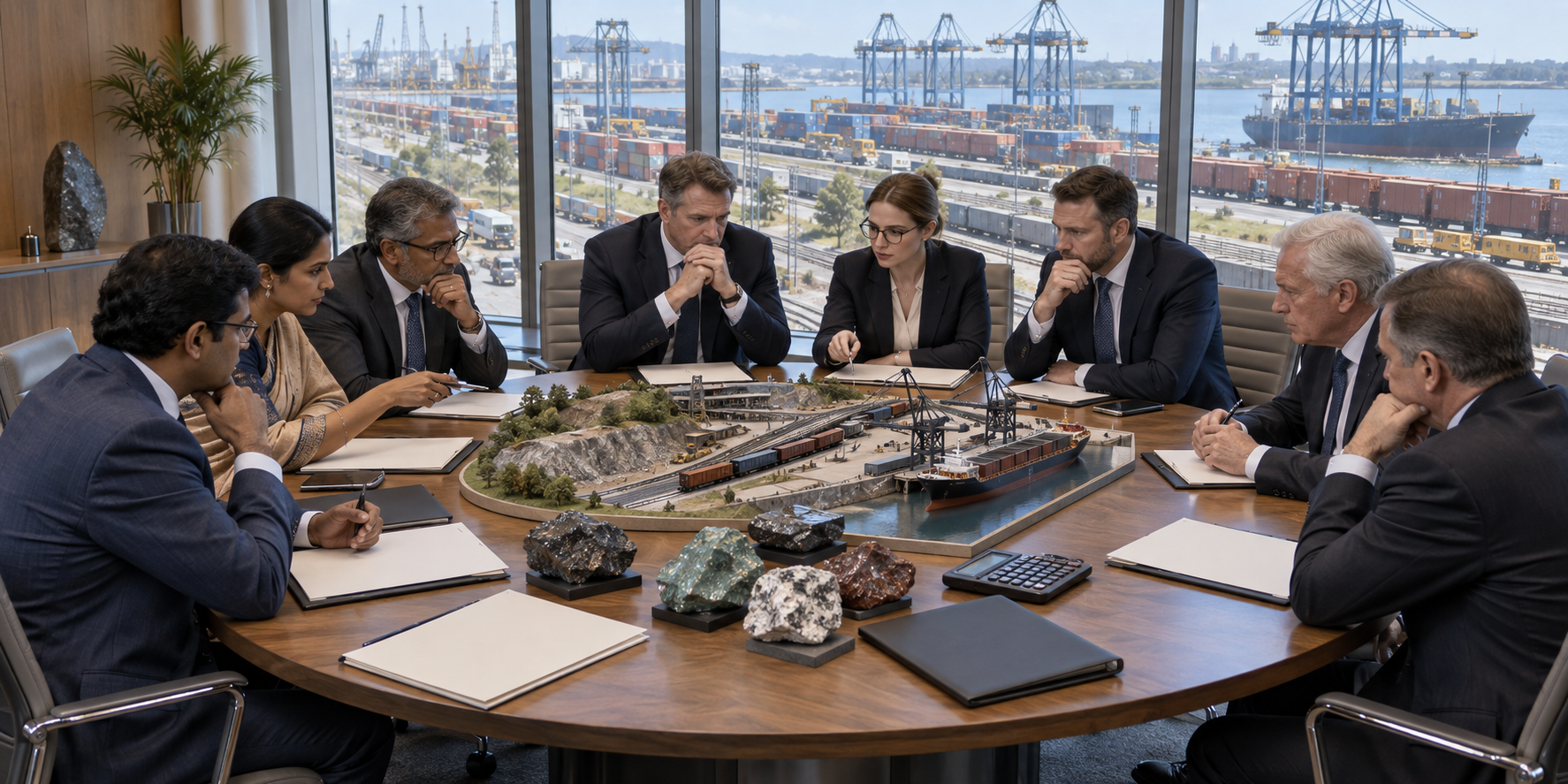
India’s strongest move would be a conditional project framework, not a promise to reduce Russian oil purchases in return for vague future opportunities. A concession on an existing source of energy security should not be exchanged for an investment possibility that has no named asset, license or financing.
A credible Indian proposal would contain five concrete elements:
- One initial resource class: begin with a critical-minerals screening programme rather than an open-ended commitment across oil, gas, mining and fertilizer.
- A sanctions-first process: ask Washington to specify which Russian entities, transactions, technologies, payments and support services it is prepared to authorize before companies spend development capital.
- A visible Indian economic role: secure equity, governance rights, processing participation or long-term offtake. India should be a co-designer and beneficiary, not a diplomatic conduit between Washington and Moscow.
- Phased commitments: separate technical assessment, pilot development and full-scale construction. Each phase should proceed only when its legal, financial and operational conditions are satisfied.
- Non-exclusivity: preserve India’s freedom to obtain energy and strategic materials from multiple partners. Diversification should increase autonomy, not shift the point at which another government can interrupt supply.
This structure would force each capital to reveal what it actually wants. Washington would have to decide whether reducing Russia’s reliance on China is important enough to justify usable sanctions relief. Moscow would have to offer investable assets and meaningful rights rather than seek capital on restrictive terms. India would have to identify where strategic access justifies the cost and risk.
New Delhi should also set a clear red line: no binding change to its Russian oil policy merely for exploratory talks. The trade-off becomes serious only when reciprocal commitments are equally concrete. That means a named project, written permissions, identified financial channels, enforceable commercial terms and a defined Indian share of the benefit.
This is not an argument for rejecting a trade accommodation with the United States. It is an argument for valuing each concession correctly. India’s relationship with Russia, its economic engagement with the United States and its competition or cooperation with China are separate instruments of statecraft. Combining them may create leverage, but collapsing all three into one bargain could allow a failure in one relationship to disrupt the others.
Key takeaways and signals to watch
- Joint India-U.S. investment in Russian resources is strategically plausible, but no completed trilateral investment framework has been established.
- The overlap is narrow but real: India wants secure supplies, Russia wants capital and diversification, and the United States has an interest in reducing Chinese leverage.
- A political signal is not sanctions clearance. Written coverage must extend to investors, banks, technology suppliers, transport and insurance.
- Critical minerals are a more coherent first test than a highly visible oil or LNG project, provided the deposits and processing chain pass commercial due diligence.
- India should not trade an existing energy-security benefit for an undefined future opportunity. Concessions should follow reciprocal, enforceable commitments.
- The strongest evidence of progress would be a named asset, identified participants, explicit sanctions treatment, financing and offtake terms, and a plan for political reversal.
When the next announcement arrives, look for nouns and obligations: which asset, which firms, which authorization, which payment channel, which buyer and who bears the loss if policy changes. If those details are missing, you are looking at diplomatic positioning rather than a bankable resource partnership. India should keep the option open, but advance only when cooperation measurably strengthens strategic autonomy.
References

Leave a Reply
You must be logged in to post a comment.