
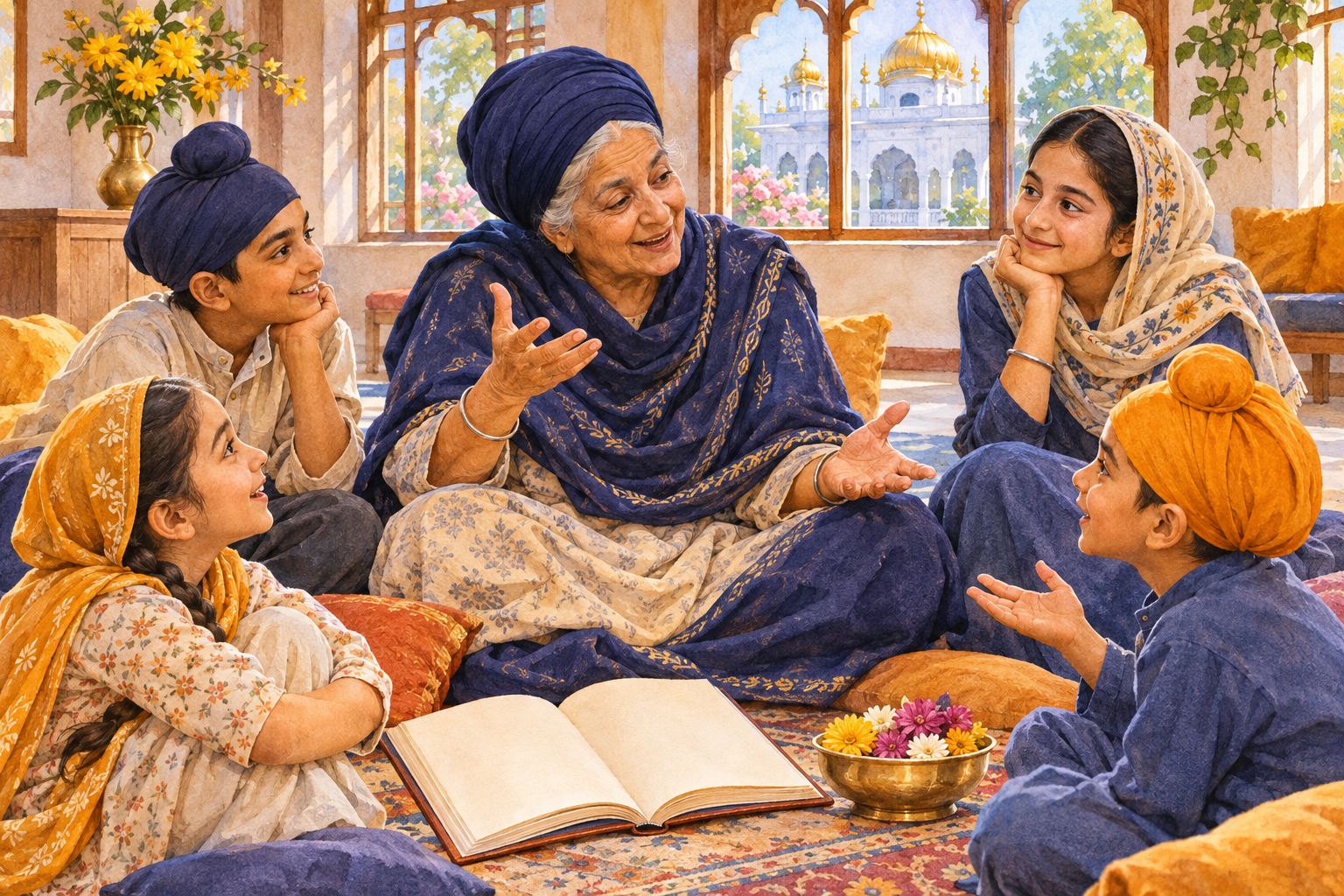
You may know the feeling: a child can repeat a Sikh name or event for a lesson, yet cannot explain why it matters on Monday morning. The problem is rarely a lack of information. It is that information has not yet become meaning.
Good Sikh faith education helps a young person recognize a value, watch someone struggle to live it, and then connect that struggle with a choice in their own life. Storytelling can make that movement possible, but only when we treat the story as the beginning of a conversation rather than a decorated lecture.
Begin with the question behind the story
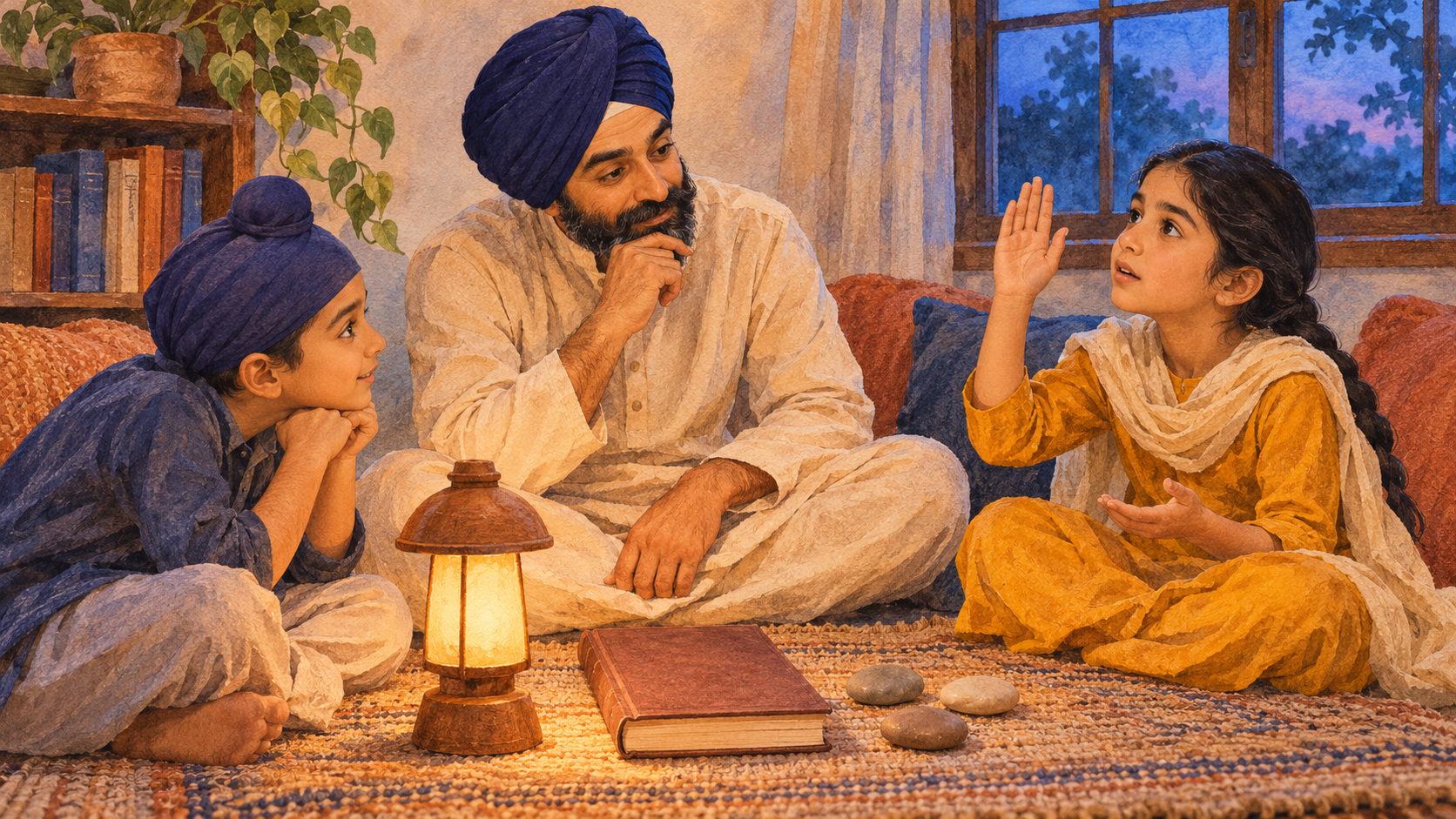
Before choosing a story, decide what the child is actually trying to understand. Is the question about courage, belonging, service, honesty, equality, identity, sacrifice, or responding to unfairness? A story selected only because it is famous may add another fact to memory without addressing the question in front of the child.
Start with one sentence: “By the end, I want this child to notice that…” Complete it with an insight rather than a slogan. “Courage can include telling the truth when silence would be easier” gives you something concrete to teach. “Courage is important” does not.
This distinction also helps you avoid turning every narrative into a generic morality tale. Sikh storytelling should reveal a recognizably Sikh way of seeing and acting. If the lesson could be detached from Sikhi without changing anything, the connection needs more work.
The responsibility therefore begins with who will tell our Sikh stories, but it does not end there. The teller must also know why this story is being told to this child at this moment.
Build the lesson around choice, not just achievement

Children often hear religious history as a procession of exceptional people doing exceptional things. That can inspire admiration, but admiration alone leaves the listener outside the story. The child sees a distant hero rather than a human choice.
Bring the decision into view. What pressure did the person face? What easier option was available? What value shaped the response? What did the choice cost? Those questions turn an episode into moral reasoning without reducing it to a simple command.
- Context: Give only the background the listener needs in order to understand the difficulty.
- Choice: Name the decision point clearly. Let the child see that another path was possible.
- Consequence: Explain what followed without pretending that every right action produces an easy result.
- Connection: Ask where a similar value might guide an ordinary decision at home, at school, online, or among friends.
Do not rush to explain the moral before the child has encountered the tension. If you announce the answer first, the rest becomes a comprehension exercise. Tell enough of the situation for the listener to wonder, “What should happen now?” Then pause. That moment of uncertainty is where attention becomes judgement.
Make conversation part of faith education
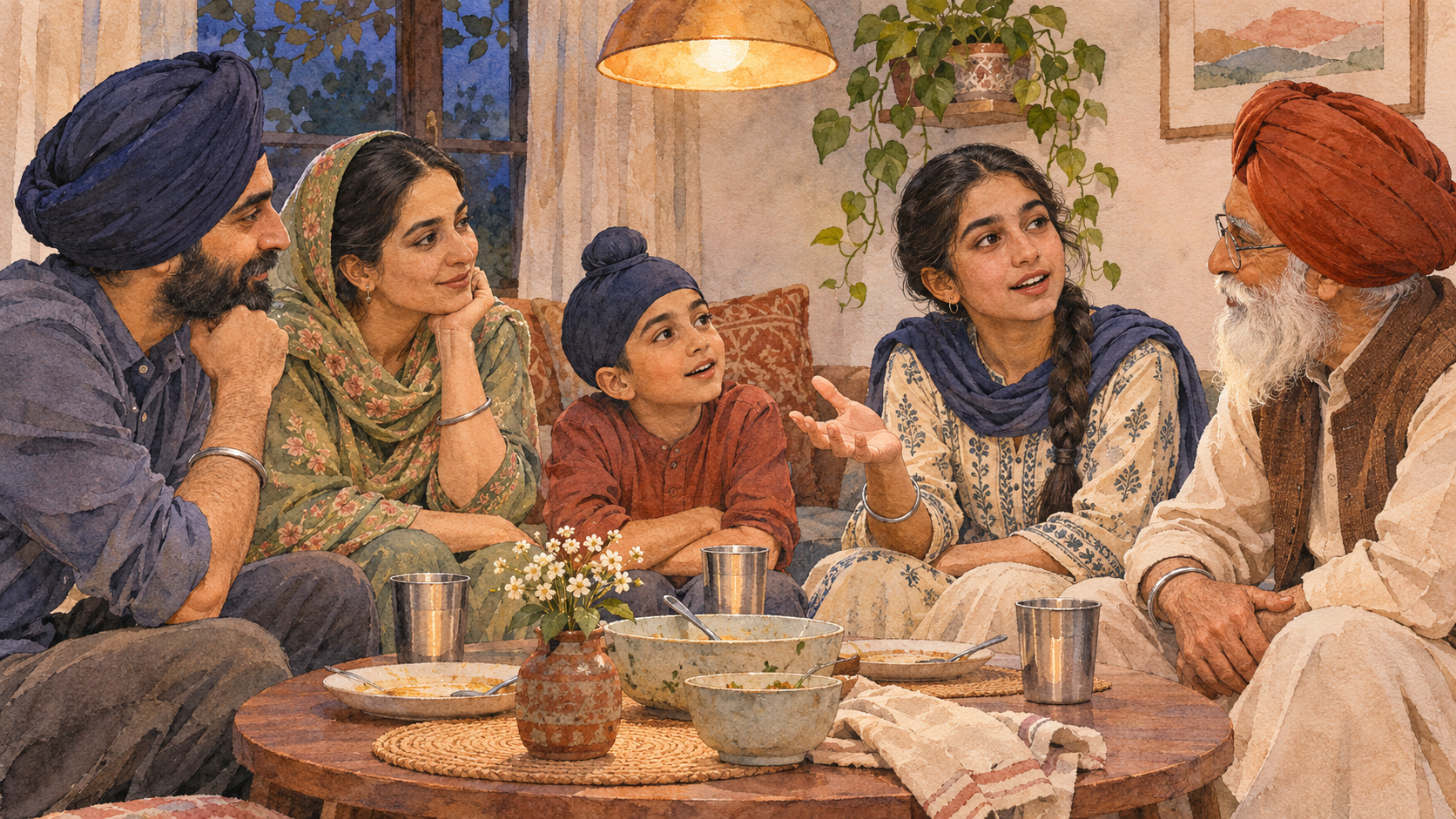
Faith education becomes more durable when adults make room to talk about Sikhi, including the questions that do not have tidy answers. A child who asks why someone acted in a certain way is not necessarily rejecting the lesson. The child may be trying to make the lesson intellectually and morally coherent.
Replace the usual “What did you learn?” with questions that invite thought:
- Which choice in the story was hardest to understand?
- What might have made the easier option tempting?
- Which value became visible through action rather than words?
- Would you have known what to do in that situation?
- Where might you face a smaller version of that choice?
- What part would you like to hear again or ask someone else about?
Listen before correcting. If an answer is incomplete, ask the child to explain the reasoning behind it. You will then know whether the difficulty is a missing fact, an unfamiliar word, an ethical disagreement, or a gap between the historical situation and the child’s present world.
You also do not need to pretend certainty when you do not know something. Say that you will check, speak with a knowledgeable elder or educator, and return to the question. The important part is returning. That teaches the child that sincere inquiry belongs within faith, and that religious knowledge deserves care rather than improvisation.
Adapt the telling without emptying the tradition
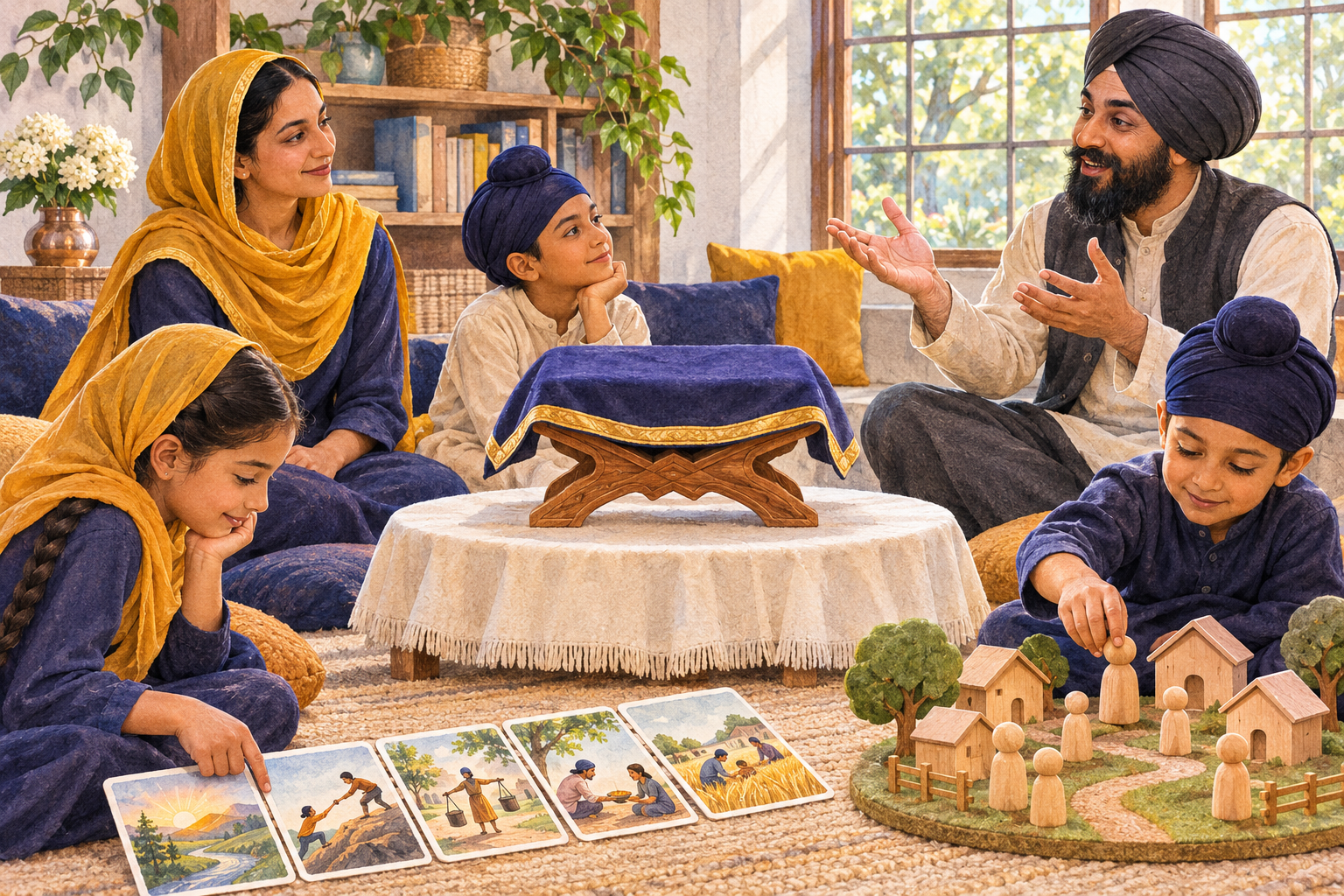
Age-appropriate storytelling does not mean changing the tradition until nothing difficult remains. It means controlling the amount of context, the complexity of language, and the emotional detail while keeping the central choice intact.
With a younger child, use a clear sequence and one central value. With an older child, spend more time on motive, competing duties, consequences, and the danger of judging a historical situation only by present assumptions. If a story includes persecution, violence, or death, decide beforehand what the listener needs to know in order to understand the moral stakes. Graphic detail is not evidence of seriousness.
Preserve important Sikh terms, but do not make vocabulary the entrance exam. Introduce a term in context, explain it in plain language, and use it again naturally. A child should be able to grasp the idea before being tested on pronunciation or recall. Over time, the vocabulary becomes attached to meaning rather than to anxiety about giving the approved answer.
The same discipline applies when you use animation, video, audio, picture books, or social media clips. Ask four questions before sharing anything:
<!– wp:list {
Leave a Reply
You must be logged in to post a comment.