

If your child opens a Class VIII history reader and asks whether Khudiram Bose was a terrorist, a one-word answer will fail them. So will a campus argument that treats Swami Vivekananda or Bharat Mata as the property of one political camp.
You need a method that protects historical truth, acknowledges moral complexity and recognises Bengal’s Dharmic inheritance without turning history into a loyalty test. The key is to separate what happened, how it is classified, what a disputed word means to a present-day reader and why that word or symbol is being used now.
Start with four questions, not one verdict
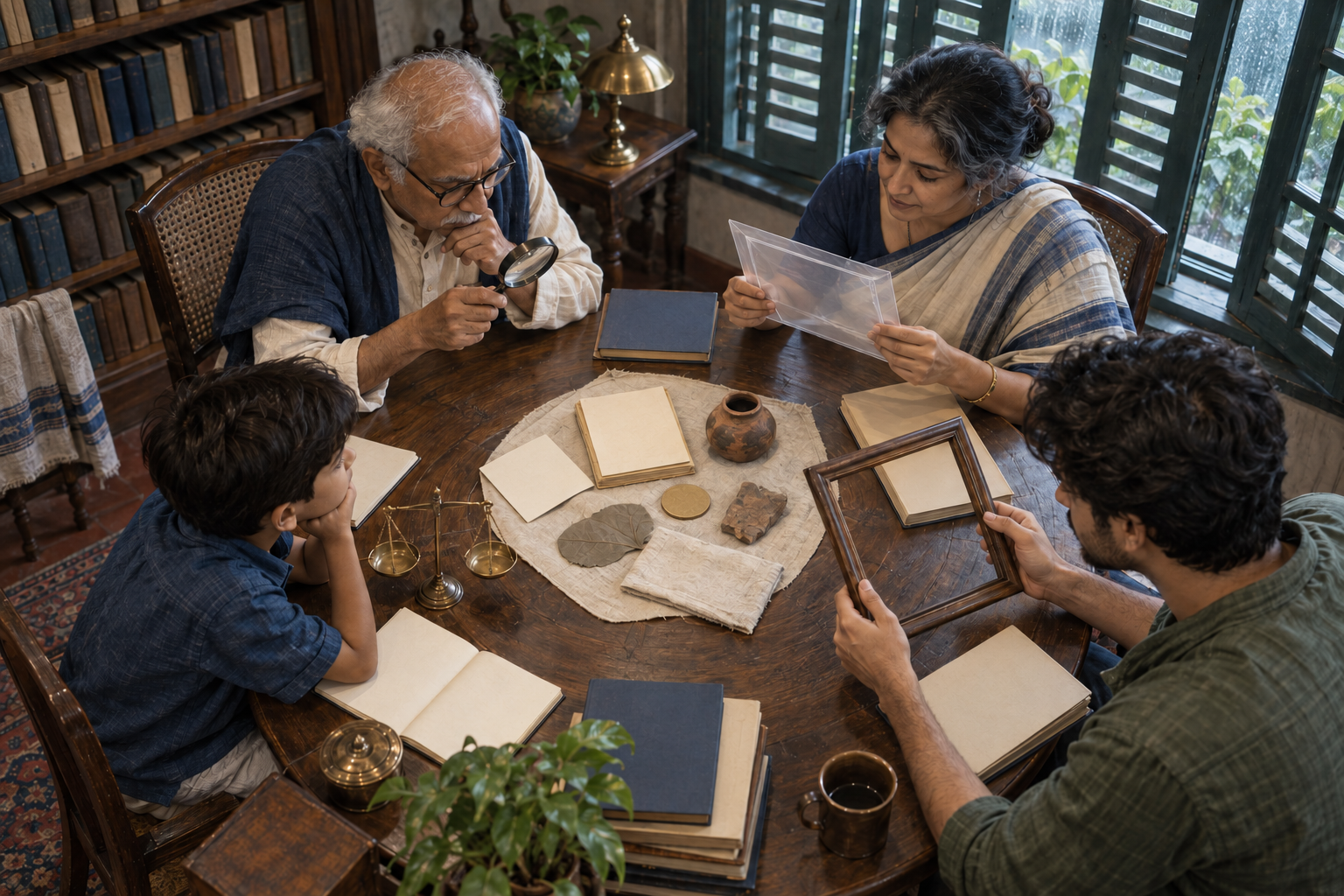
Most cultural disputes become unmanageable because four different questions are compressed into a single accusation. Before defending or condemning anyone, separate them:
- What happened? Establish the target, method, participants and consequences before applying a moral label.
- What exactly is being classified? A tactic, an organisation, a movement and a person’s entire identity are not interchangeable categories.
- What does the disputed term communicate now? A historically inherited label can carry a much broader and more condemnatory meaning for a present-day Class VIII student.
- What work is the label or symbol doing in the current dispute? It may be explaining history, defending a political position, delegitimising an opponent or claiming exclusive ownership of cultural memory.
This distinction is not an escape from judgement. It makes sound judgement possible. You can recognise an anti-colonial objective, condemn the killing of civilians and still question whether a modern identity-label accurately explains the person, tactic and historical setting.
The same method applies to cultural symbols. An objectionable act by an event organiser does not erase the civilisational value of an image. Nor does reverence for the image require you to endorse every organisation that displays it.
Khudiram Bose: defend memory without deleting the victims

In 2014, students using a West Bengal Class VIII history reader encountered Khudiram Bose, Prafulla Chaki and Jatindranath Mukherjee, or Bagha Jatin, under the Bengali heading biplobi santrasbad. Its English counterpart, Our Past, Our Heritage, placed them on page 112 under the categories of revolutionary terrorism, extremism and terrorism. The accompanying explanation contrasted isolated attacks on British officers around 1908 with an organised freedom movement.
The historical event itself must not be softened. Kingsford was the intended target of the bomb associated with Khudiram Bose and Prafulla Chaki. It struck the wrong carriage. Miss Kennedy died within an hour, and her mother, Mrs Kennedy, later died from her injuries on 2 May. Kingsford survived. Khudiram was hanged at the age of eighteen in Muzaffarpur jail on 11 August 1908.
A serious defence of Khudiram’s place in anti-colonial memory must retain every one of those facts. Civilian deaths do not become irrelevant because the intended target was a colonial officer. But the unintended deaths also do not erase the anti-colonial purpose and turn a young revolutionary’s entire historical identity into an unexplained modern label.
Two shortcuts should therefore be rejected. Saying only “terrorist” makes the classification appear self-explanatory and can hide the colonial setting, intended target and political objective. Saying only “martyr” can hide the means used and the human consequences. Neither teaches a student how to think historically.
A clearer classroom explanation would identify Khudiram as a young anti-colonial revolutionary involved in an attempted bombing of Kingsford in 1908, state that the bomb struck the wrong carriage and killed Mrs Kennedy and her daughter, and then explain that some histories classify such individual attacks as revolutionary terrorism. The student can then examine whether that technical classification clarifies the tactic or whether its contemporary meaning unfairly defines the whole person.
That last distinction matters. “He participated in a bombing” describes conduct. “The bombing was an act of political violence” classifies an act. “Revolutionary terrorism” classifies a method or historical current. “He was a terrorist” converts a contested classification into a total identity. Good history should tell you when and why it is making that move.
West Bengal’s education minister, Bratya Basu, called the controversy necessary and welcome and maintained that the pre-Independence meaning of “terrorist” was not relevant in the present. Yet the chapter remained in place. That defence makes the semantic problem more important, not less: if the older meaning is no longer current, a schoolbook must explain it instead of expecting a thirteen- or fourteen-year-old reader to supply the missing distinction.
How to audit a disputed textbook page
If you are a parent, teacher or former student challenging such wording, do not begin with a sweeping charge against the entire curriculum. Build a small, verifiable case:
- Record the book title, language, class level, publication details and page number. Photograph the full spread, not only the inflammatory phrase.
- Compare the Bengali and English wording. Ask whether the English term carries the same range of meaning as the Bengali expression or adds a stronger contemporary association.
- Mark where the wording appears. A chapter heading, glossary definition, historian’s quotation and examination question perform different functions.
- Write the underlying chronology without labels: intended target, method, actual victims, outcome and punishment.
- Ask what the category includes and excludes. If targeted anti-colonial attacks are called terrorism, does the text define the criterion and apply it consistently?
- Propose replacement wording that preserves the attempted assassination and civilian deaths while explaining the anti-colonial objective and the disputed terminology.
- Request a written response from the school or curriculum authority. A precise correction request is harder to dismiss than a general allegation of bias.
A useful representation can be brief: identify the exact heading, explain how its present meaning may cause students to misunderstand the historical category, insist that the failed attack and deaths remain in the account, and request a glossary note or revised heading. The aim is better history, not flattering history.
Bengali identity and Dharmic inheritance are not rival boxes

The cultural dispute takes a different form when the contested object is an image rather than a textbook label. At the Satyajit Ray Film and Television Institute, an event organised by the Akhil Bharatiya Grahak Panchayat, described as an RSS-backed consumer organisation, became a political flashpoint. News18’s account alleged that opponents kicked and tore a poster bearing Swami Vivekananda’s image and desecrated images of Bharat Mata.
Those allegations should be distinguished from the wider political interpretation placed upon them. A partisan description cannot, by itself, settle every disputed detail of a campus confrontation. Raw recordings, complete sequences, statements from participants and the institution’s response matter when you are deciding precisely who did what.
The cultural question is clearer. Swami Vivekananda cannot be confined to a choice between “Hindu” and “Bengali.” He is both. His spiritual inquiry and nationalist defiance have also attracted Bengalis outside explicitly Hindu political organisations, including people on the Left. Respect for him therefore cannot be dismissed as imported, non-Bengali politics.
The same problem confronts attempts to place Bharat Mata outside authentic Bangaliana. The original Bharat Mata portrait was created by Abanindranath Tagore. A Bengali artist’s contribution to a pan-Indian national imagination does not make the image politically neutral, but it does defeat the claim that Bengali regional culture and civilisational nationalism occupy separate, sealed worlds.
Use four tests when a cultural symbol becomes a political weapon
- Test the provenance. Ask who created the image, where it emerged and what it meant before the present dispute. Bharat Mata’s Bengali artistic history is relevant even when present-day organisations deploy the image for their own purposes.
- Reject exclusive possession. No party acquires ownership of Vivekananda because it displays him frequently. An opponent also does not make him disappear from Bengal’s inheritance by associating him with that party.
- Separate symbol from sponsor. You can oppose the destruction of an image without endorsing the event organiser. You can criticise an organiser without degrading the cultural figure it invokes.
- Separate evidence from interpretation. First determine the observable act: a poster was removed, damaged, kicked or torn. Only then assess whether it was protest, intimidation, desecration or something else. Do not let a caption make that decision for you.
This method prevents an easy manipulation. One side cannot use a revered figure as a shield against criticism, while the other cannot treat contempt for that figure as proof of ideological sophistication. Bengal’s inheritance is larger than either manoeuvre.
Respond in a way that improves the historical record
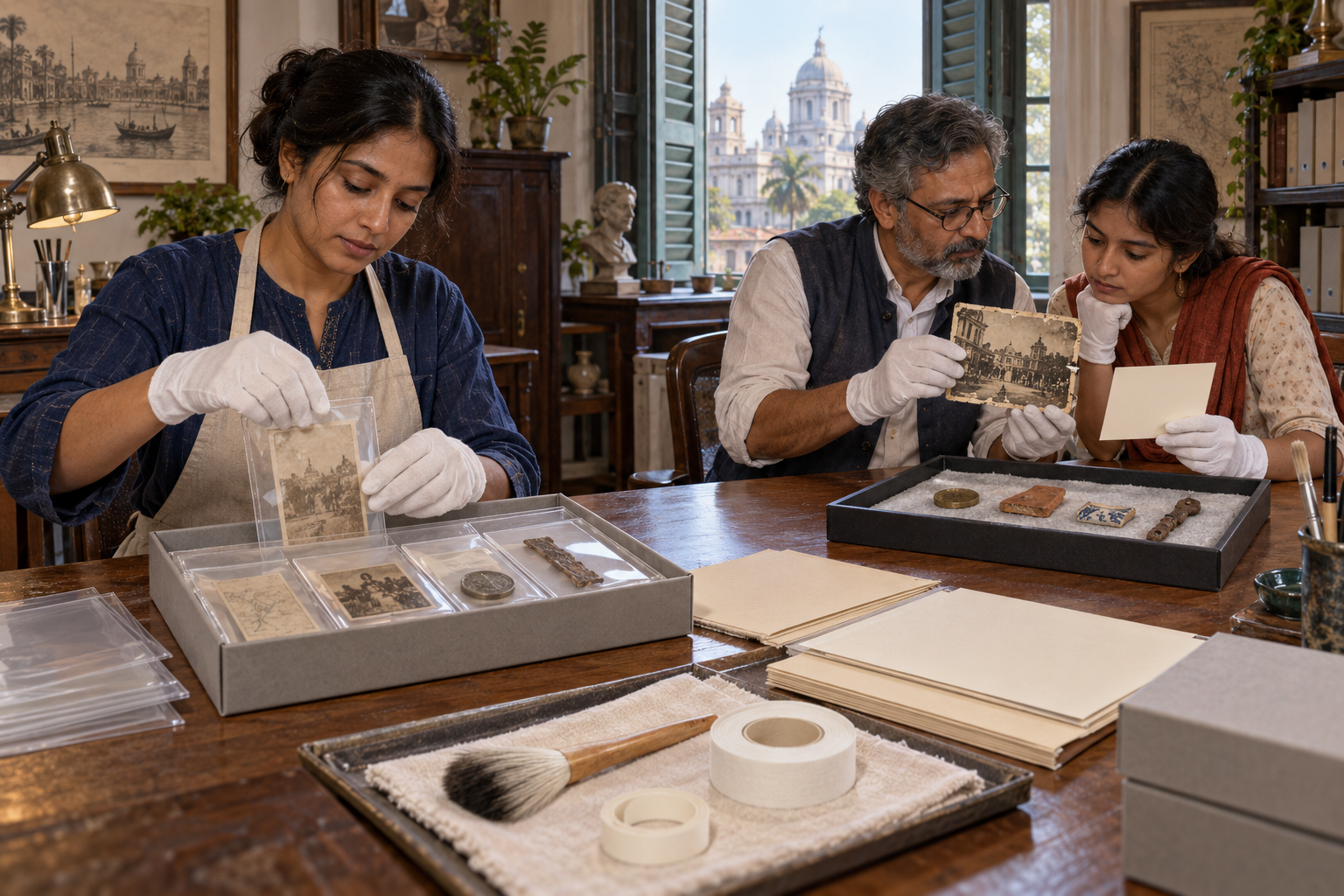
A pro-Dharmic response is strongest when it refuses both erasure and retaliation. If you face a disputed lesson, exhibition, poster or campus event, use this sequence:
- Narrow the claim. Say exactly what is wrong: an undefined label, an omitted context, damaged property or exclusion from a shared space. Do not accuse an entire generation or institution when the evidence concerns one passage or incident.
- Preserve the context. Keep the full textbook page, complete video sequence, event notice and institutional statement. Cropped images are persuasive for a few minutes and unreliable thereafter.
- Acknowledge the hardest fact for your own side. In Khudiram’s case, that means the deaths of Mrs Kennedy and her daughter. In a campus dispute, it may mean objectionable conduct by an organiser whose cultural symbol you are defending.
- Ask for a proportionate remedy. A disputed historical category may require a definition, revised heading or contextual note. A damaged image may require restoration, an apology and equal access to cultural expression. The remedy should address the act you can establish.
- Refuse the proxy war. Do not let a curriculum question become a referendum on every Left or Hindu organisation. Do not let criticism of an RSS-linked organiser become permission to insult Vivekananda or Bharat Mata.
- Teach the three-layer answer. Explain the event, the contested classification and your moral judgement separately. A young reader should be able to repeat all three without contradiction.
For the textbook dispute, a focused request might ask the authority to replace an unexplained identity-label with a description of the anti-colonial objective, the attempted bombing, its unintended victims and the historically specific use of “revolutionary terrorism.” For a campus dispute, a focused statement might condemn damage to Vivekananda’s image while explicitly withholding endorsement from any sponsoring organisation. Precision keeps cultural defence from becoming partisan obedience.
There is also a standard worth applying symmetrically: would you accept the same teaching method, evidentiary shortcut or treatment of a revered image if the political positions were reversed? If not, the principle needs repair. Dharmic cultural confidence does not require a double standard.
Key takeaways
- Describe the event before choosing the label, and distinguish a violent tactic from a person’s complete historical identity.
- Keep the uncomfortable facts. Khudiram’s anti-colonial objective and the deaths of Mrs Kennedy and her daughter belong in the same account.
- Ask what a disputed historical term communicates to a present-day student, not only what specialists may once have meant by it.
- Do not confuse criticism of an organisation with rejection of the cultural figures or images it invokes.
- Regional Bengali identity and Dharmic or pan-Indian identity overlap; Vivekananda and Abanindranath Tagore’s Bharat Mata make that overlap impossible to dismiss.
- Seek a specific remedy: clearer terminology, fuller context, restored material, an apology or equal cultural access.
The next time a textbook screenshot or campus clip reaches you, spend the first few minutes writing four lines: the exact act, the label applied to it, the material fact missing from the argument and the remedy you want. That small discipline will do more for Bengal’s historical memory than another round of slogans.
References
- Hindu Post – Page 112: How Khudiram became a terrorist in a Bengal schoolbook
- Hindu Post – How Communists Have Started Losing The Culture War In West Bengal

Leave a Reply
You must be logged in to post a comment.