
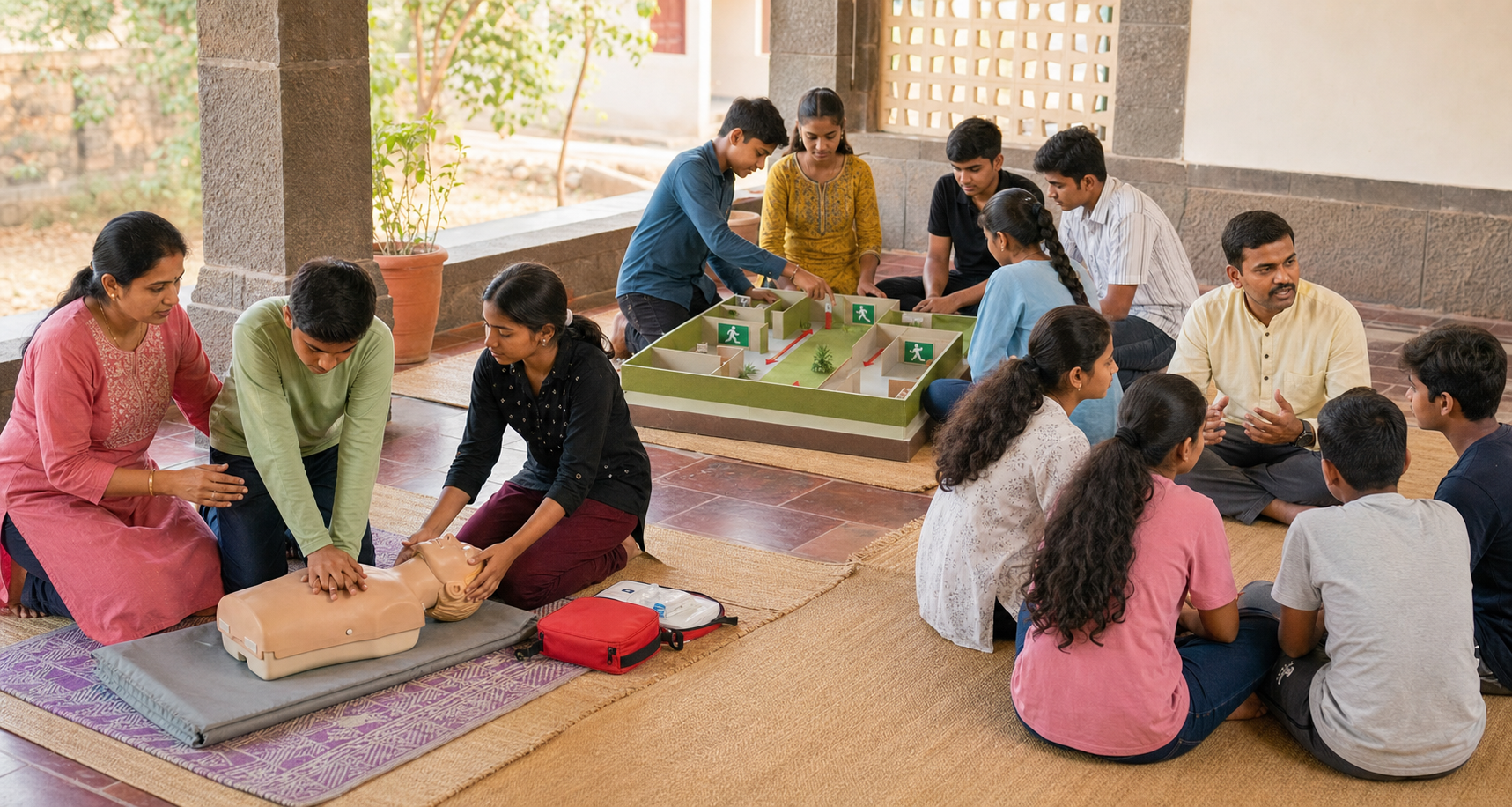
If you are deciding whether to enrol your child, support a local program or organise one through a school, temple or mandal, do not judge preparedness by the intensity of its slogans or the drama of its demonstrations. Ask a simpler question: what will a young person be able to do more safely, thoughtfully and responsibly after attending?
Maharashtra has seen two distinct approaches: practical safety instruction for students and public discussion about ideological threats to Dharma and national institutions. Both can contribute to preparedness, but neither is sufficient by itself. A sound initiative should develop physical confidence, intellectual discernment and a disciplined commitment to seva.
Preparedness must produce capacity, not merely emotion
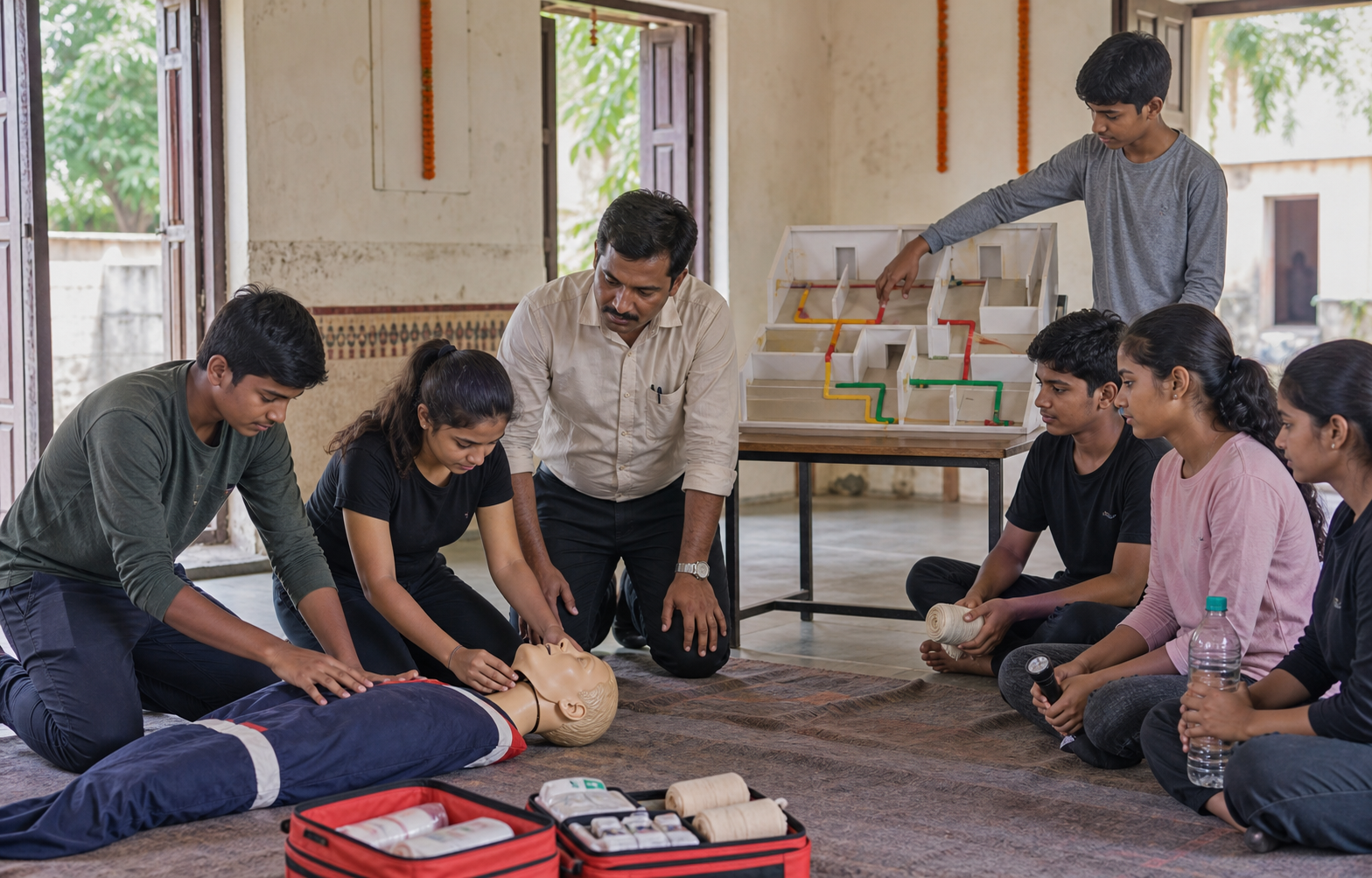
At a Solapur school, Hindu Janajagruti Samiti trainers used self-defence demonstrations to emphasise courage, discipline and practical safety skills. In Pune, speakers at a symposium called on young people to protect God, Nation and Dharma while warning of what they regarded as Leftist ideological attacks on important institutions.
These formats address different vulnerabilities. A physical demonstration asks whether a student can recognise danger and respond without freezing. An ideological seminar asks whether a young person can recognise a hostile argument, understand its consequences and answer it. The first concerns immediate personal safety; the second concerns civic and cultural judgment.
The useful test is what remains when the event ends. Applause is not a safety skill. Agreement with a speaker is not evidence of critical understanding. A participant should leave with a repeatable action: identify an exit, call for help, distinguish an allegation from a proven fact, verify a quotation, report an incident through the proper channel or take up a defined seva responsibility.
Dharma sets a higher standard than aggression. Courage must be governed by truth, proportion and restraint. A youth initiative that creates fear, hostility or reckless confidence may mobilise emotion while leaving the participant less prepared for the real world.
Build physical safety around escape, judgment and supervision
A self-defence demonstration can awaken interest and make basic movements visible. It cannot, by itself, establish competence. Reliable action develops through supervised practice, correction and repetition under conditions suited to the student’s age, physical ability and prior experience.
Before enrolling a young person, ask the organiser for clear answers to these questions:
- Who is the instructor, what training does that person have, and who is accountable for the session?
- Is the instruction adapted for the ages and abilities present, or is everyone being taught the same movements?
- What safeguarding rules govern physical contact, demonstrations, photography and interaction with minors?
- Does the session begin with awareness, distance, verbal boundaries, exits and seeking help before it introduces physical techniques?
- How are drills controlled so that students are not struck, humiliated or pressured to participate beyond their comfort?
- What follow-up practice is available after the initial demonstration?
- What is the procedure if a participant is injured, distressed or discloses a real safety concern?
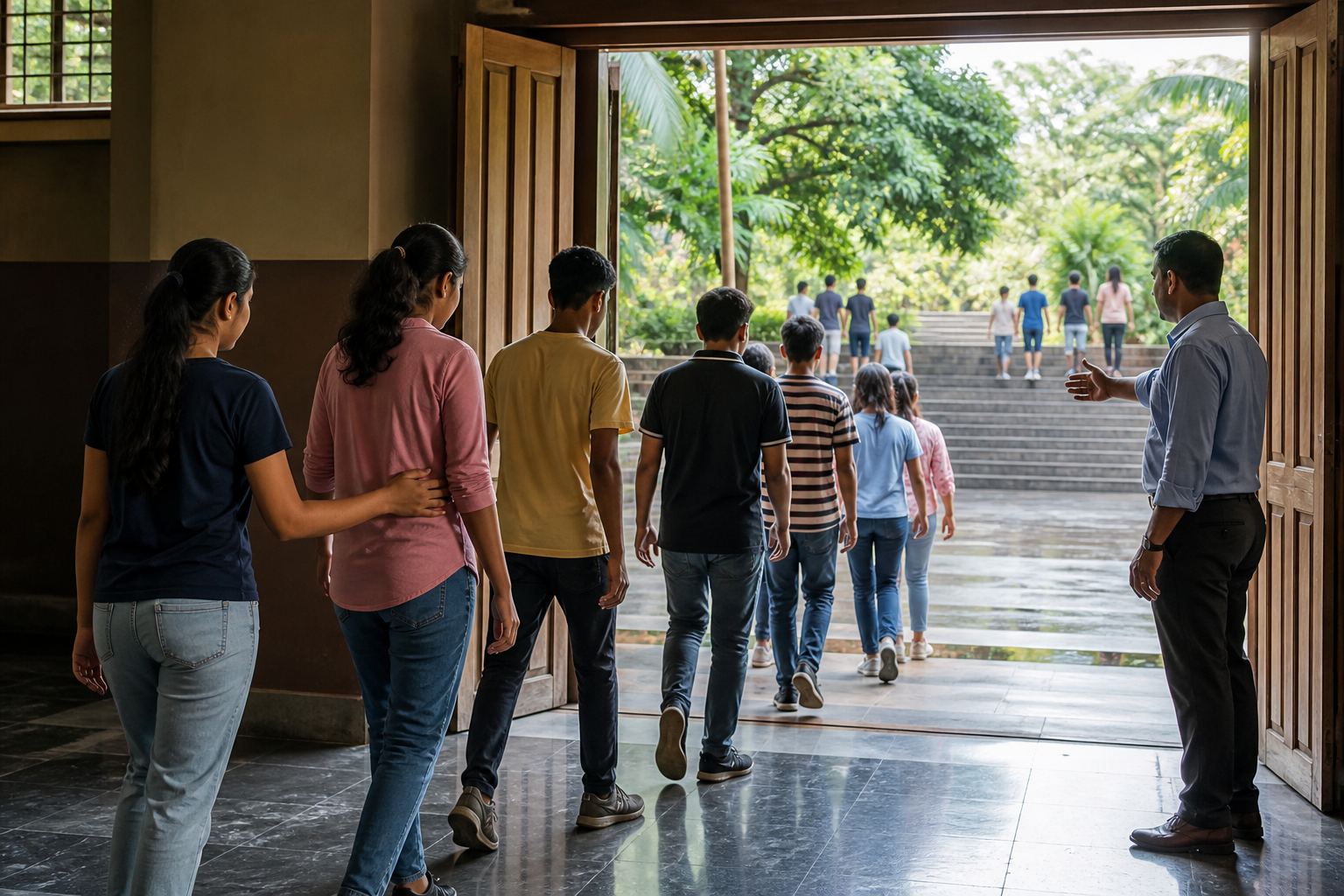
The objective should never be to teach a child to stay and win a confrontation. The safer objective is to notice danger early, create distance, leave, attract attention and reach a trusted adult or the appropriate emergency service. Physical action is a last resort when safe withdrawal is not available. Techniques can injure the learner or another person, so they should not be copied from a demonstration or practised without qualified supervision.
Good drills test decisions as well as movement. Ask a student to identify the nearest usable exit, name an adult who can help, practise a clear refusal and move toward a safer location. At a crowded community event, young volunteers should know the meeting point, the responsible coordinator and the process for reuniting a separated child with a parent or guardian. These ordinary actions are more likely to be useful than a spectacular technique remembered only vaguely.
Parents should also listen to the language used by instructors. Promises that a brief session will make children able to defeat attackers are a red flag. So are drills built around anger, humiliation or communal stereotypes. Confidence should arise from preparation and judgment, not from the illusion that danger is easy to control.
Teach ideological awareness as disciplined inquiry
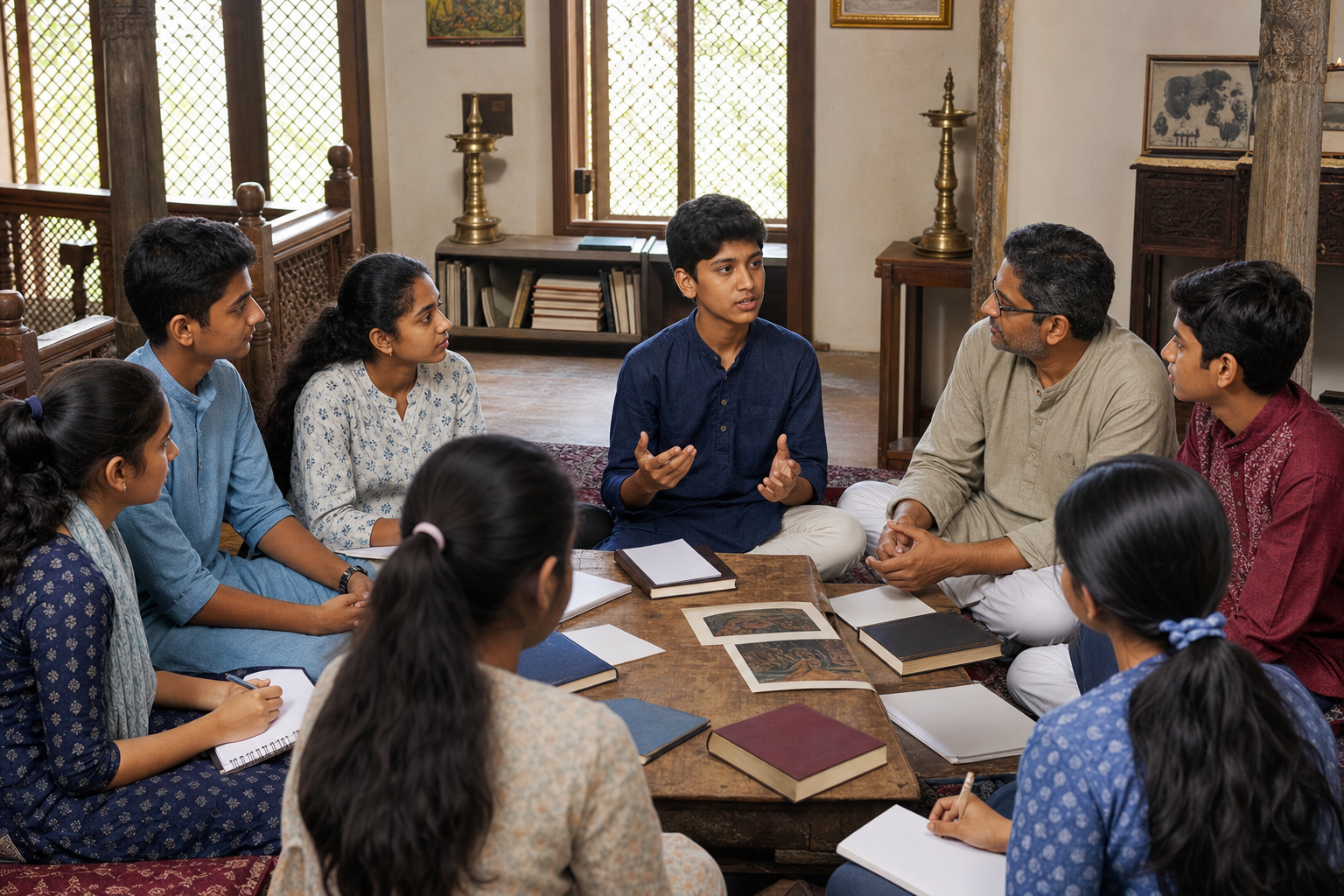
The Pune symposium centred on the label ‘Urban Naxalism’ in relation to the CJP movement. Its speakers presented a particular political diagnosis: that Leftist ideology was attacking key national institutions. Because that is a contested interpretation rather than a neutral description, a responsible preparedness program should teach young people how to examine the case, not merely repeat its conclusion.
A young Hindu who can test an argument is harder to mislead than one trained only to recognise approved and disapproved labels. For every serious political or cultural claim, teach participants to ask:
<!– wp:list {