
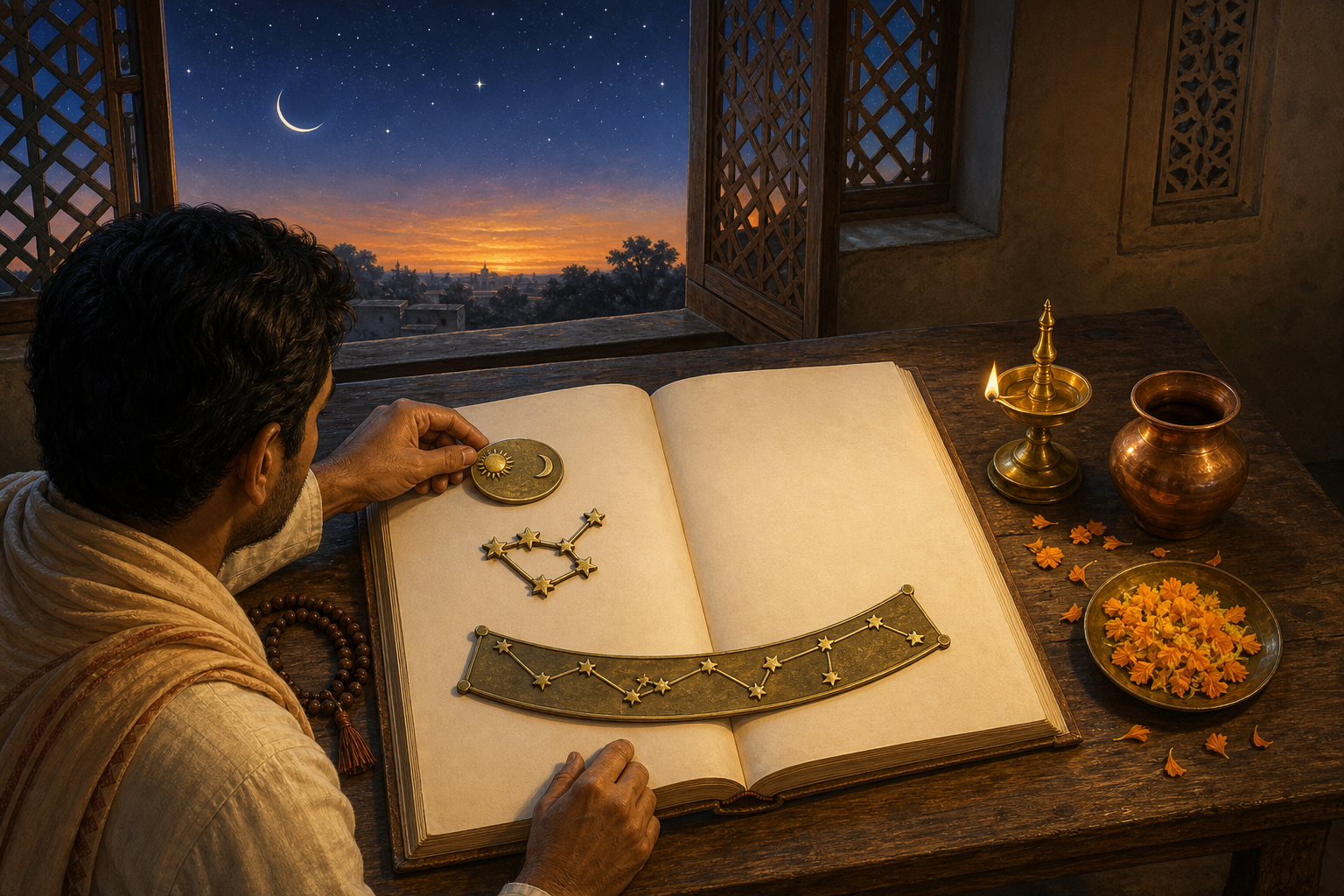
You open a Panchang to plan a puja and find three different labels: a tithi, a Nakshatra and a Rashi. Then someone in the family asks for your birth Rashi, while an app displays something else. The entries can look contradictory when they are actually answering different questions.
You can clear up most confusion by making three distinctions: the day is not the same as the moment, Nakshatra is not the same as Rashi, and a birth calculation is not the same as today’s Panchang. Once those distinctions are in place, the calendar becomes a practical aid to sankalpa and observance instead of a collection of unfamiliar Sanskrit terms.
Before interpreting anything, fix the place and time

A Panchang date must be read for a location. Tithi, Nakshatra, Rashi and auspicious or restricted periods can change during the civil day, while the way they are assigned to a date also depends on local sunrise. That is why reliable planning begins with a region-specific Panchang and its local timings, not a screenshot forwarded from another city.
Before using any entry, write down four things:
- The city or location for which the Panchang was calculated.
- The civil date and the local time zone shown by the calendar.
- The exact clock time of the puja, journey, ceremony or other intended action.
- Whether each displayed time marks the beginning of a period or its end.
The last point prevents a common error. If a Panchang says Saptami until 8:53 AM, Saptami does not begin at 8:53 AM. It ends then, and Ashtami follows. On Saturday, December 27, 2025, for example, Shukla Paksha Saptami continued until 8:53 AM before the transition to Ashtami in most regions. An observance at 8:30 AM and one at 9:00 AM therefore fell under different tithis in the stated calendar.
Do not label the whole date Saptami merely because Saptami was present at sunrise, and do not label the whole date Ashtami merely because Ashtami occupied most of the later hours. Read the interval that contains your intended action. If the event matters enough to require a muhurta, confirm the calculation for its actual location rather than silently transferring the 8:53 AM example to another place.
Tithi, Nakshatra and Rashi answer different questions
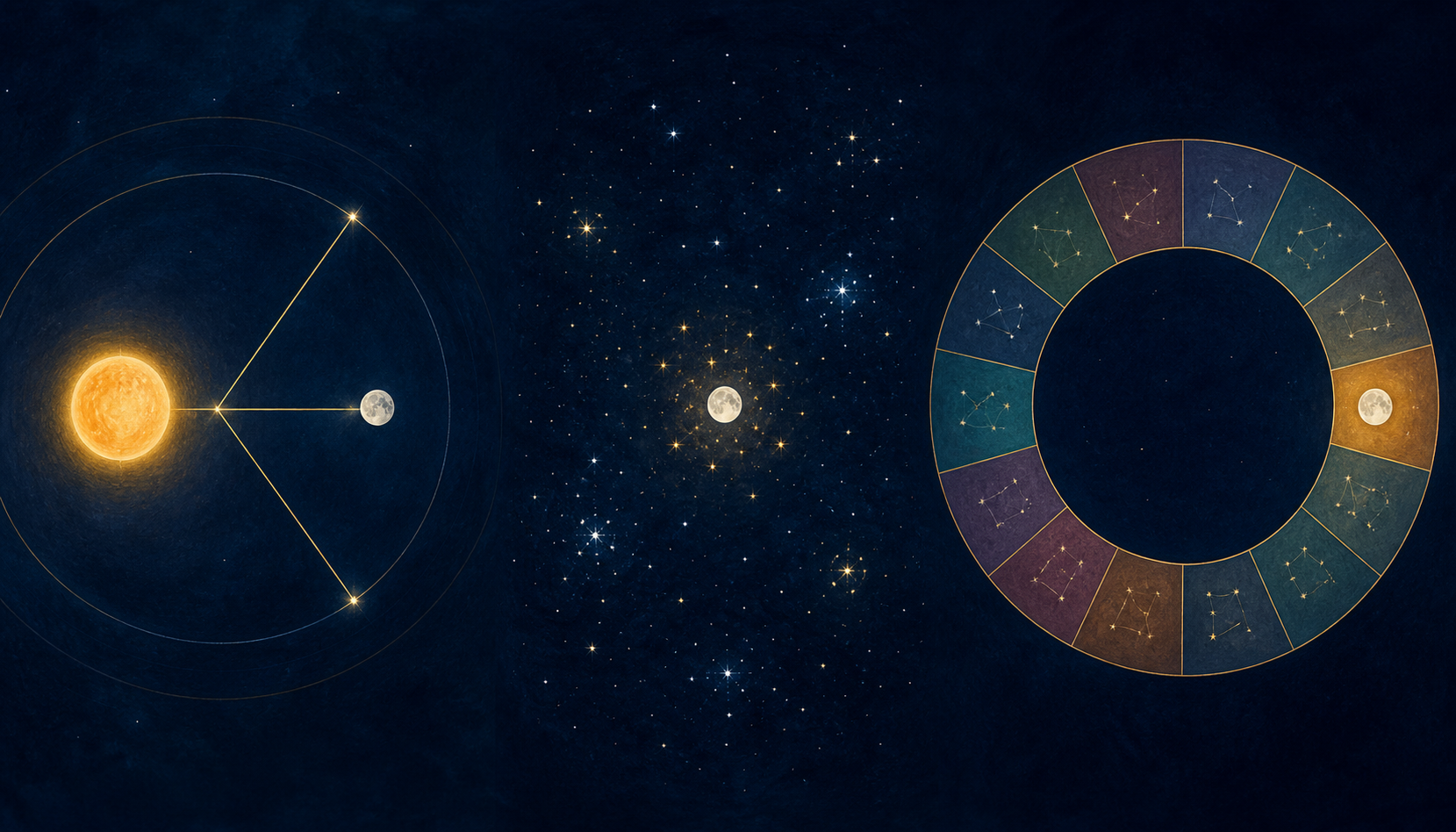
The three entries work together, but they are not interchangeable. A useful way to read them is to ask what decision each field is helping you make.
| Field | What it describes | What you use it for |
|---|---|---|
| Tithi | The lunar day within a waxing or waning phase | Identifying the observance in force and its changeover time |
| Nakshatra | The lunar mansion occupied at the relevant moment | Refining the character of a time or identifying a person’s birth Nakshatra |
| Pada | One of the four quarters of a Nakshatra | Locating the Moon more precisely and mapping the Nakshatra to a Rashi |
| Rashi | A 30-degree segment of the sidereal zodiac | Identifying the Moon’s zodiacal sign at the relevant time, including Janma Rashi at birth |
| Muhurat indicators | Local supportive or restricted time windows | Choosing an exact interval after the relevant calendar conditions have been checked |
Tithi usually supplies the first layer for a vrata or festival because it tells you which lunar observance is active. Nakshatra and Rashi describe other aspects of the same moment. Shubh Muhurat, Abhijit Muhurat and cautions such as Rahu Kalam then concern the usable clock window. A favourable label in one field does not erase a restriction in another.
Think in terms of overlap. Suppose your chosen tithi ends during the morning, a supportive muhurta begins later, and the Nakshatra changes between them. You cannot combine the morning tithi, the later muhurta and the earlier Nakshatra as though they all operated simultaneously. The relevant combination is the one actually present during the same interval.
Traditional associations help you shape an observance, but they should not be treated as mechanical promises. In the December 27 transition, waxing Saptami carried associations of vitality, disciplined intention and steady progress; Surya arghya was a fitting morning practice. Ashtami shifted the emphasis toward restraint, prayer, vrata, japa and reflective study. The practical reading was therefore to begin with purposeful activity and then move toward inward consolidation after the change. It did not mean that every external task before 8:53 AM was guaranteed to succeed or that ordinary duties became forbidden afterward.
Your family, temple or sampradaya may prescribe a more specific rule for a particular vrata. Follow that rule when it is known. The general Panchang reading helps you understand the timing; it does not replace the observance’s own tradition.
Pada is the bridge from Nakshatra to Rashi
The question नक्षत्र के अनुसार राशि कौनसी है? cannot always be answered from the Nakshatra name alone. The missing piece is often the pada.
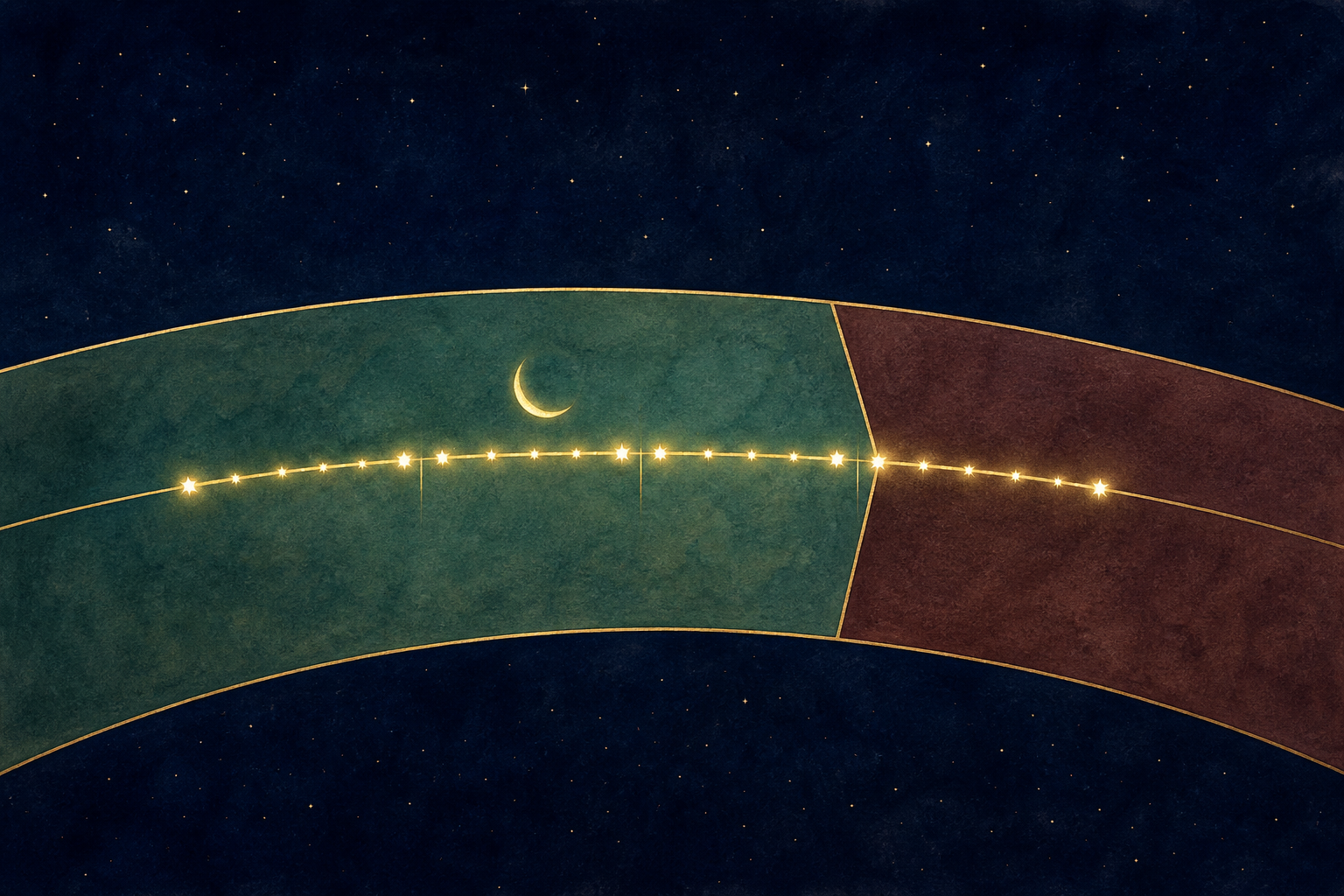
Each Nakshatra covers 13°20′ and is divided into four equal padas. Each pada therefore covers 3°20′. A Rashi covers 30°. Because the boundaries do not always coincide, one Nakshatra can extend across two Rashis. The Nakshatra-pada mapping places each quarter in a definite Rashi within the chosen sidereal calculation.
Krittika shows why the distinction matters. Its first pada belongs to Mesha, while its second, third and fourth padas belong to Vrishabha. If you know only that the birth Nakshatra is Krittika, you do not yet have enough information to choose between those two Rashis. If you know Krittika pada one, the answer is Mesha. If you know Krittika pada two, three or four, the answer is Vrishabha.
This gives you a dependable rule:
<!– wp:list {