

If your family calendar says Vaishakh begins on April 3, while a temple calendar marks April 18, you are probably looking at two valid month-reckoning systems. The Moon is not being calculated two different ways; the lunar month is being given two different starting points.
For practical planning, remember one distinction: the Amanta calendar makes the Chaitra-to-Vaishakh month change on April 18, 2026, while the Purnimanta calendar is already in Vaishakh by then. The underlying tithi changes at 5:13 PM IST on April 17, when Amavasya ends and Shukla Pratipada begins.
First decide which lunar calendar you are using
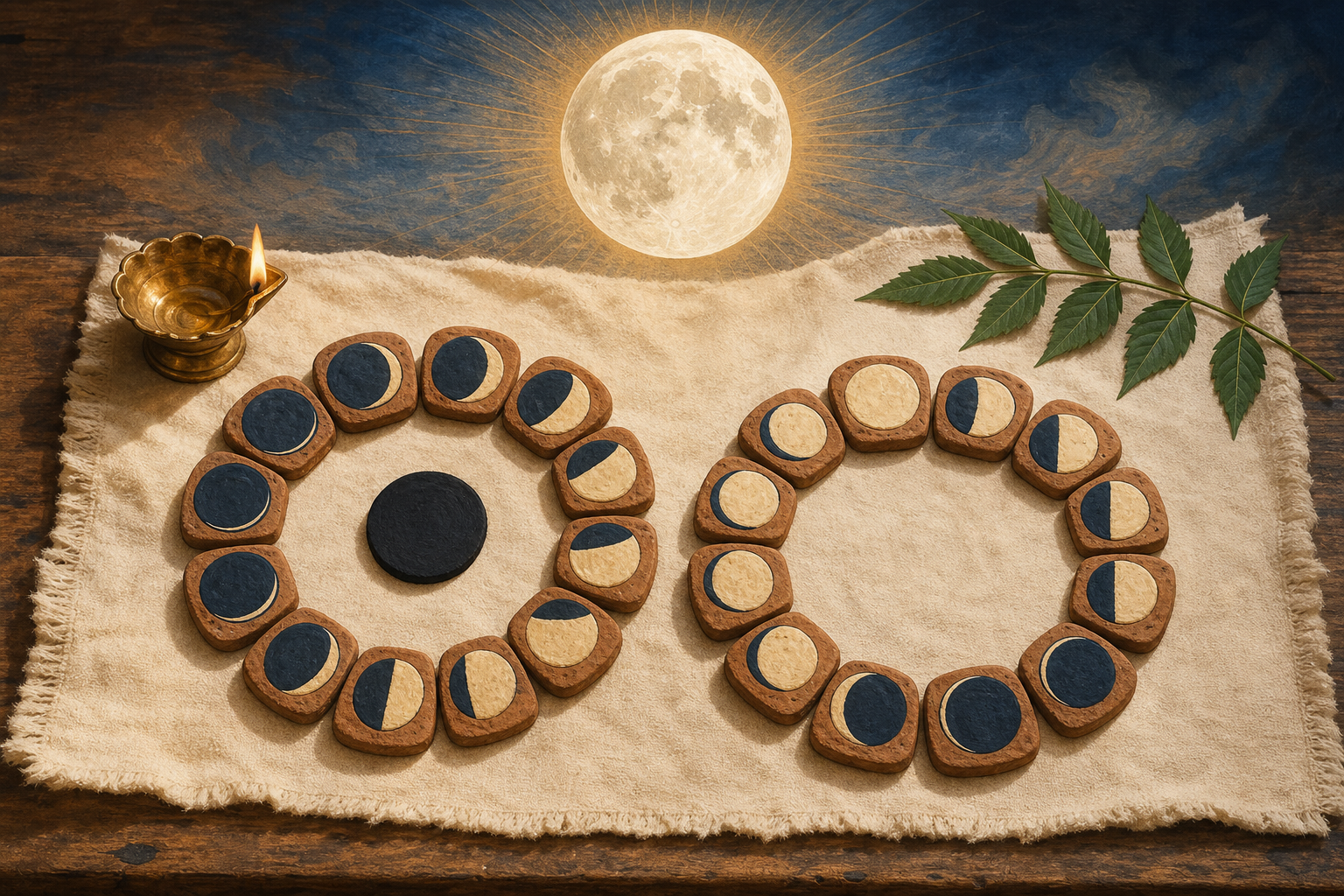
A Hindu lunar month contains a waxing fortnight, Shukla Paksha, and a waning fortnight, Krishna Paksha. Amanta and Purnimanta calendars use the same lunar tithis, but they place the boundary between named months at different points in that cycle.
- Purnimanta reckoning begins a named month after Purnima and ends it at the next Purnima. It is widely followed in North and much of Central India.
- Amanta reckoning ends the month at Amavasya and begins the next month with Shukla Pratipada. It is standard in Maharashtra, Goa, Gujarat, Telangana, Andhra Pradesh, and Karnataka.
That difference produces the following 2026 calendar map:
| Calendar system | Vaishakh 2026 | April 17 | April 18 |
|---|---|---|---|
| Purnimanta | April 3 through May 1 | Vaishakh Amavasya | Vaishakh Shukla Pratipada; the named month is already underway |
| Amanta | April 18 through May 16 | Chaitra Amavasya | Vaishakh Shukla Pratipada; this is the named month transition |
This is the most important correction to make in your planner: April 18 is not a second beginning of Vaishakh for every region. It is specifically the Amanta beginning. In Purnimanta usage, April 18 changes the paksha from Krishna to Shukla without changing the month name.
If you are announcing a puja to relatives who use different regional calendars, do not write only “the first day of Vaishakh.” Use a complete description: “Saturday, April 18, 2026 – Shukla Pratipada and the Amanta opening of Vaishakh.” That wording preserves the shared tithi while making the regional convention explicit.
Treat April 17 and 18 as a two-stage handoff

A tithi is governed by the changing angular relationship between the Sun and Moon, not by midnight on a civil clock. Each tithi corresponds to a 12-degree step in their geocentric longitudinal separation. This is why a tithi can begin in the afternoon, continue overnight, and end during the next civil day.
In most of India on IST, Amavasya continues until 5:13 PM on Friday, April 17. Shukla Pratipada then runs for 22 hours, ending at 3:13 PM on Saturday, April 18. Small city-level differences can arise from longitude, local sunrise, the chosen ayanamsha, and the computational convention used by an almanac.
Those boundaries give you a clear sequence for observance:
- Before 5:13 PM on April 17, keep the emphasis on Amavasya: completion, quiet japa, simple upavasa where appropriate, snana-dana, and remembrance of ancestors.
- If your family performs Pitru Tarpana or Darsha Shraddha, follow your inherited parampara or priestly guidance. Do not improvise a lineage-specific rite from a generic calendar entry.
- After 5:13 PM, Shukla Pratipada is active. You can light a diya, write a sankalpa, prepare the puja space, select a text for study, or organize the seva you intend to begin in Vaishakh.
- Use the morning of April 18 for the household month-opening observance. Pratipada is present at sunrise and remains until 3:13 PM IST, making the daylight identity of the day unambiguous for most locations in India.
The 5:13 PM boundary is not, by itself, a universal shubh muhurta. It tells you when the tithi changes; it does not automatically settle every other calendrical factor. For personal prayer, Brahma Muhurta begins approximately one hour and 36 minutes before local sunrise. Abhijit Muhurta is centered on true local midday and extends roughly 24 minutes on either side. Rahu Kalam, Yamaganda, Gulika, and Choghadiya also depend on local sunrise, sunset, weekday, and seasonal day length.
For an ordinary household puja, the sunrise presence of Pratipada may be the main fact you need. For a samskara, griha-pravesh, marriage-related rite, or undertaking tied to a particular lagna, use a city-calibrated panchang or competent jyotisha guidance rather than copying a national clock time.
Keep the physical observance as clean as the intention. At a ghat or temple, carry biodegradable offerings, avoid single-use material where possible, and remove everything you brought. Sacred water and sacred ground should not bear the waste of our worship.
Keep lunar Vaishakh separate from solar Vaisakh
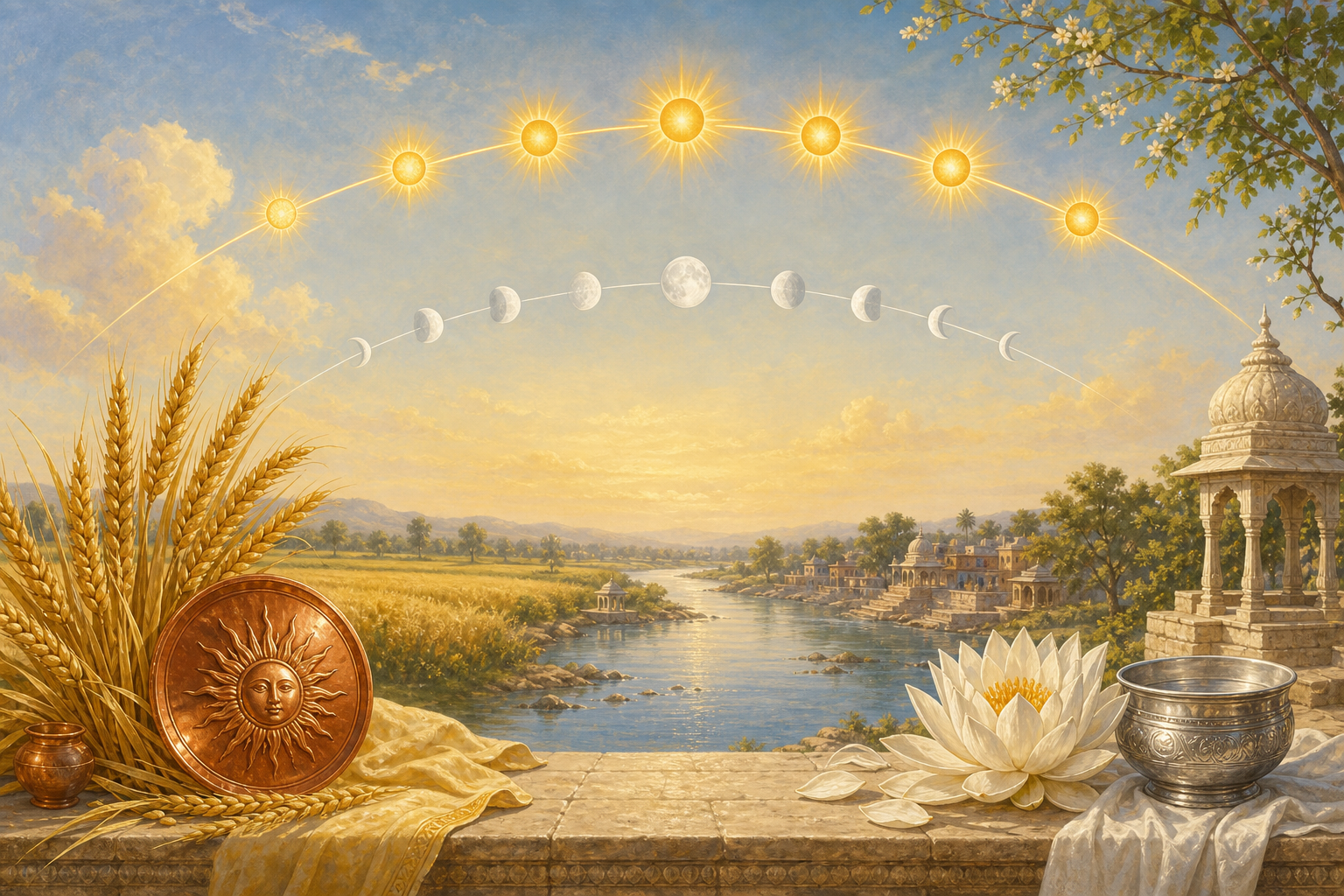
Mid-April also brings Mesha Sankranti, the Sun’s entry into Mesha. That solar transition anchors the solar Vaisakh month in Punjab and several regional new-year observances. It sits close to the Amanta lunar month change, but the two events are not interchangeable.
Vaisakhi, observed around April 13-14 and honored in Sikh tradition as Khalsa Sajna Diwas, follows the solar transition. It does not wait for the Amanta lunar Vaishakh beginning on April 18. Puthandu, Vishu, and Pohela Boishakh likewise belong to regional solar-calendar frameworks associated with the same seasonal turn.
When a calendar entry or invitation uses the word “Vaisakh,” ask what actually controls the date:
- If it names Mesha Sankranti, Vaisakhi, or a regional solar new year, use the relevant solar calendar.
- If it names Shukla Paksha, Krishna Paksha, Amavasya, Purnima, Ekadashi, or Tritiya, use the lunar tithi.
- If it merely says “Vaishakh month,” identify whether the household follows Amanta or Purnimanta reckoning.
- If several communities are participating, print the Gregorian date, tithi, and calendar convention together.
This distinction lets us recognize a shared season of renewal without flattening different traditions into one calendar. Hindu lunar observances, Sikh Vaisakhi, Buddhist lunar holy days, and Jain fasts can resonate through discipline, compassion, remembrance, and seva while retaining their own histories and methods of reckoning.
Plan the rest of Vaishakh by tithi, not a copied date
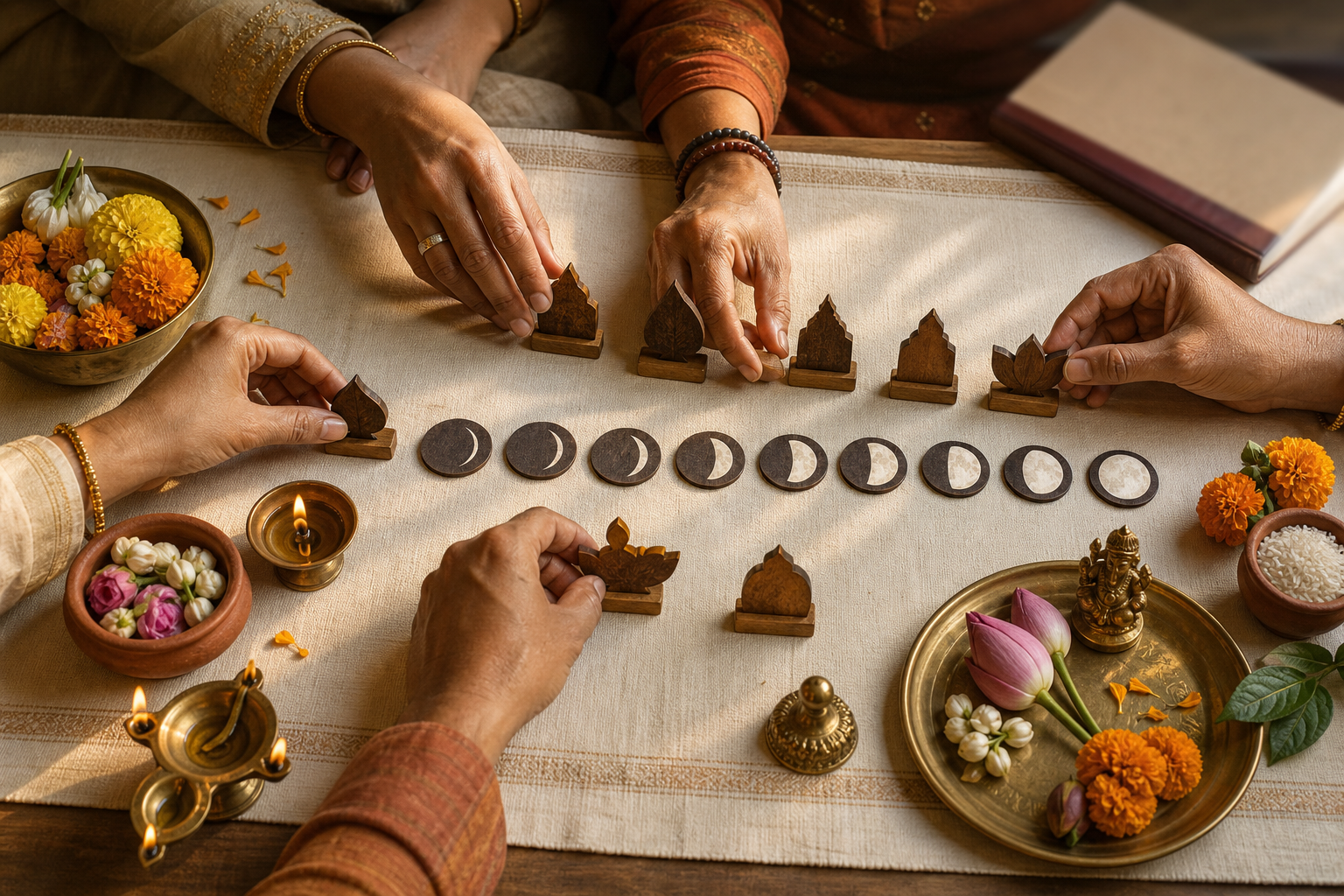
Once you have chosen the correct regional calendar, build your Vaishakh schedule around the controlling tithi. Do not infer festival dates merely from the first and last Gregorian dates of the month. A tithi can cross midnight, begin after sunrise, or end before the daylight period required by a particular vrata.
- Akshaya Tritiya falls on Vaishakh Shukla Tritiya. It is associated with japa, dana, yajna, study, and worthy beginnings; Jain communities also mark Varshi-Tap Parana in connection with the day.
- Mohini Ekadashi belongs to Shukla Paksha, while Apara Ekadashi belongs to Krishna Paksha.
- Pradosha Vrat occurs once in each paksha, so it appears twice within the lunar month.
- Masik Shivaratri falls on Krishna Chaturdashi, and Vaishakh Amavasya is associated with tarpan and pitru-karya where family custom permits.
- Vaishakh Purnima carries several distinct observances, including Buddha Purnima or Vesak, Kurma Jayanti, and Satyanarayana Puja in many Hindu households.
Enter these names in your planner first, then fill in the Gregorian date and local tithi interval from one trusted regional panchang. That order prevents a common mistake: borrowing a date from another city or calendar system and assuming the month label alone guarantees the same observance rule.
Your daily Vaishakh practice does not need to be elaborate. A pre-dawn bath at home, steady japa, svadhyaya, anna-dana, water distribution during the warmer season, and tree care all give the month a practical ethical shape. Buddhist Uposatha practice, Jain upavasa and pratikramana, and Sikh simran and seva also show how restraint and service can be lived without erasing the distinctions among paths.
Key takeaways
- Amavasya ends at 5:13 PM IST on April 17, 2026; Shukla Pratipada then continues until 3:13 PM IST on April 18.
- Amanta Vaishakh runs from April 18 through May 16, so April 18 is the Chaitra-to-Vaishakh month transition in that system.
- Purnimanta Vaishakh runs from April 3 through May 1, so April 18 begins its Shukla Paksha but not a new named month.
- Solar Vaisakh and Vaisakhi are tied to Mesha Sankranti around April 13-14, not to the Amanta new-moon boundary.
- For any observance, record the tithi, Gregorian date, location, and calendar system. Use a city-specific panchang when the exact sunrise relationship or muhurta matters.
Before you save or circulate a date, add one small label beside it: Amanta, Purnimanta, or solar. On April 17, complete what belongs to Amavasya. On the morning of April 18, begin the Amanta Vaishakh month with a sankalpa you can sustain through practice, charity, and service.
References
- DharmaRenaissance Blog – Definitive Panchang for April 17, 2026: Chaitra Amavasya Timings, Nakshatra, Rashi, Shubh Muhurat
- DharmaRenaissance Blog – Vaishakh 2026 Guide: Verified Dates, Auspicious Observances, and Dharmic Unity