
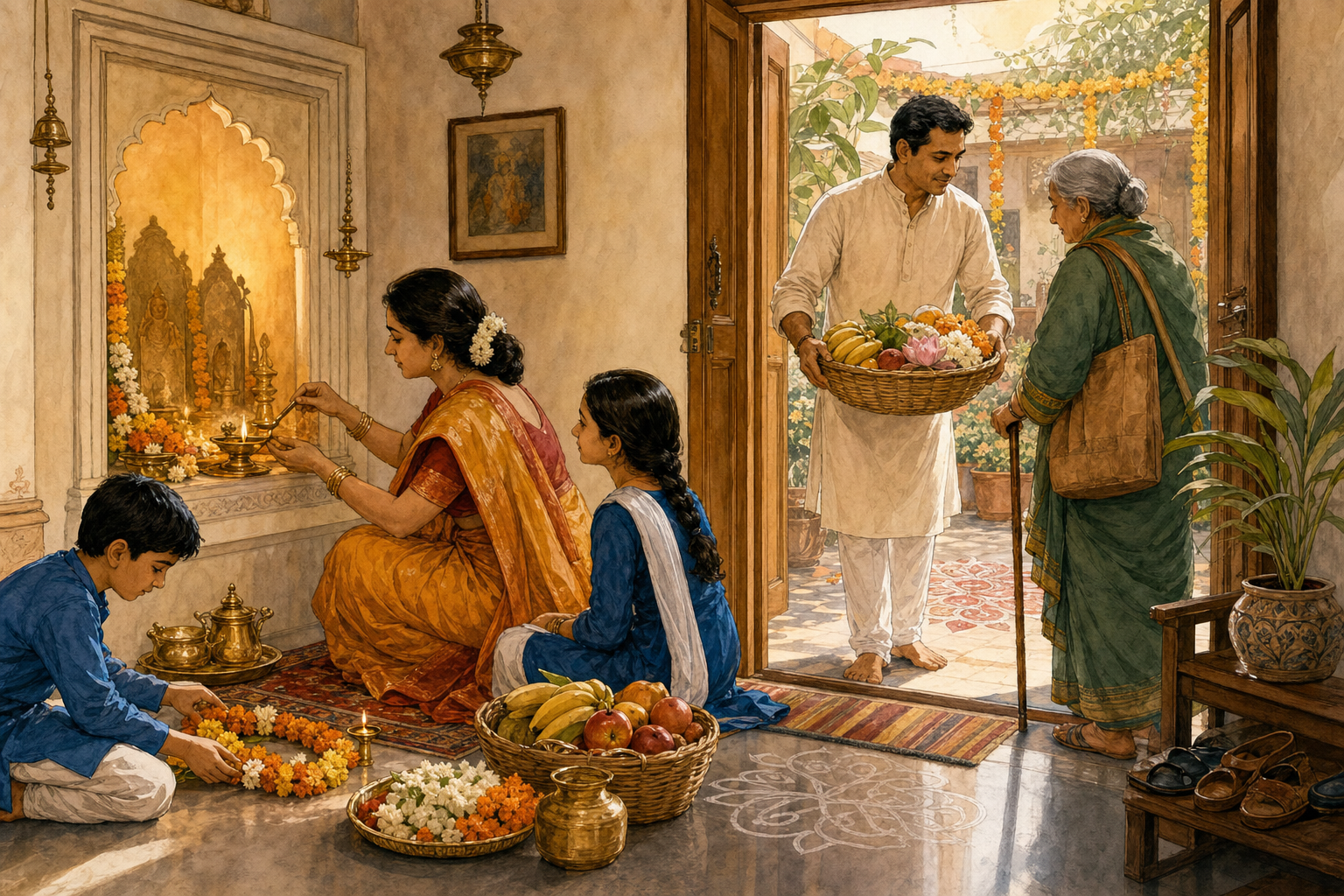
In your family, a woman may light the lamp, maintain the altar, remember the vrata, prepare festival offerings, and teach the children how to perform aarti. A man may fund the celebration, drive everyone to the temple, arrange a visiting teacher, or spend the evening at a committee meeting. If you are trying to decide which of them is more devout, the contrast can mislead you.
The useful question is not whether Hindu women or men are naturally more religious. It is which forms of devotion each person performs, which responsibilities have been assigned by custom, and which contributions your usual way of looking fails to count. That distinction can help you understand your family more honestly, distribute religious work more fairly, and preserve dharma without preserving every inherited imbalance.
Before comparing devotion, decide what you are measuring
Religiosity is not a single activity. It can include puja, temple attendance, vrata, recitation, seva, and charitable giving. It can also include meditation, philosophical study, pilgrimage, teaching children, maintaining a temple, preparing prasada, or quietly caring for someone so that another family member can attend worship.
These activities do not become interchangeable merely because all of them can express dharma. Daily puja is personal practice. Preparing its materials is ritual maintenance. Teaching a child is transmission. Managing a temple renovation is institutional seva. Each matters, but each reveals something different.
A narrow measure can therefore manufacture a simple answer. Ask only who performs household puja, and women may appear far more engaged. Ask only who holds committee positions or pays for infrastructure, and men may dominate the picture. Ask only about formal attendance, and you may miss private meditation, caregiving, preparation, and work done behind the scenes.
Survey wording can introduce another distortion. People do not always describe their practices in the same language, and social expectations can influence what they report. A person who performs a rite because the family expects it may report frequent observance. Another person may regard regular seva as duty rather than religion and leave it unmentioned. Frequency is useful information, but it is not a direct reading of inner conviction.
When you assess devotion in a home or community, keep four questions separate: What does the person practise? What religious work does the person enable? What knowledge does the person transmit? What responsibility does the person carry? You will get a clearer answer than you would from asking who merely looks more religious.
Why household devotion so often has a woman’s face
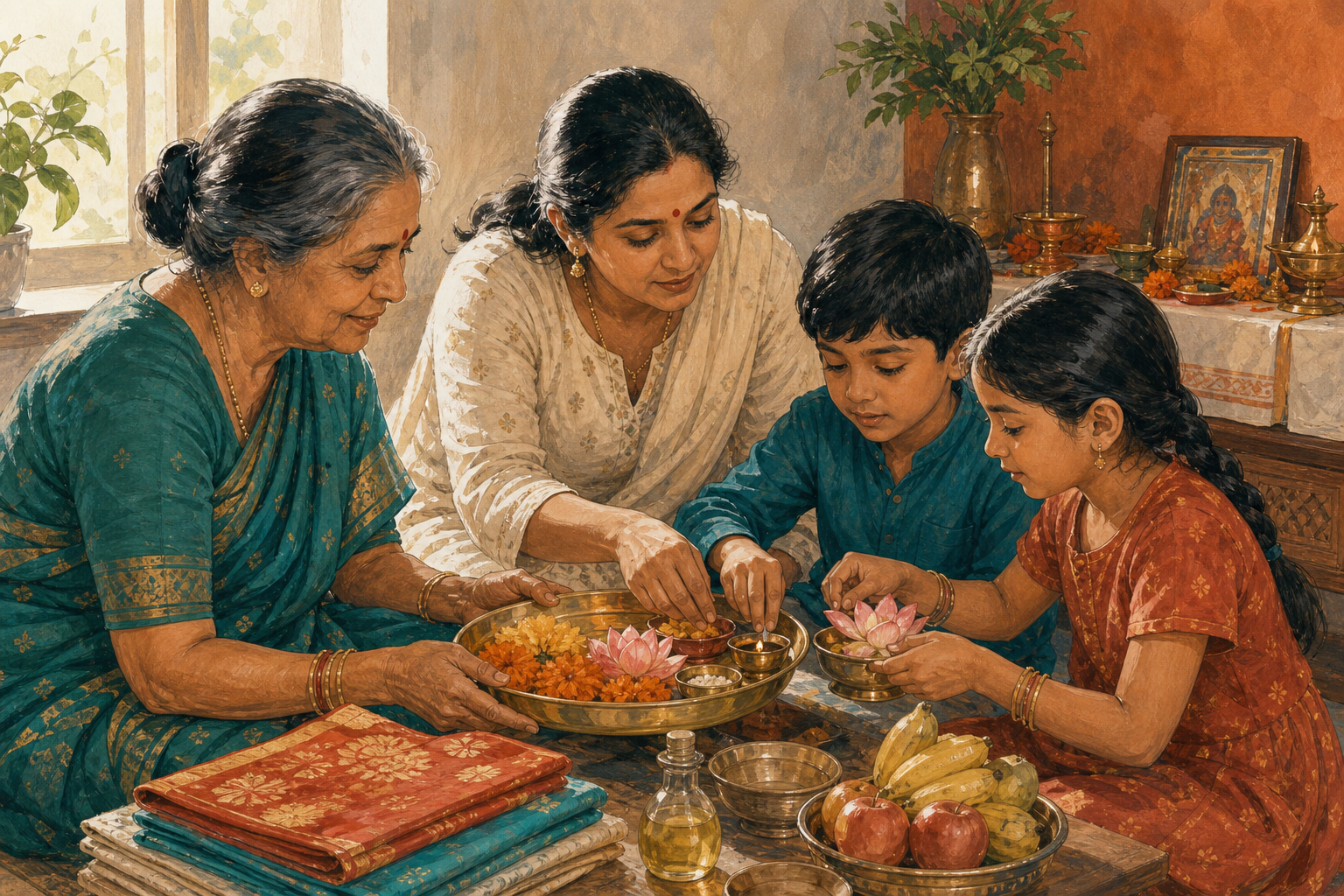
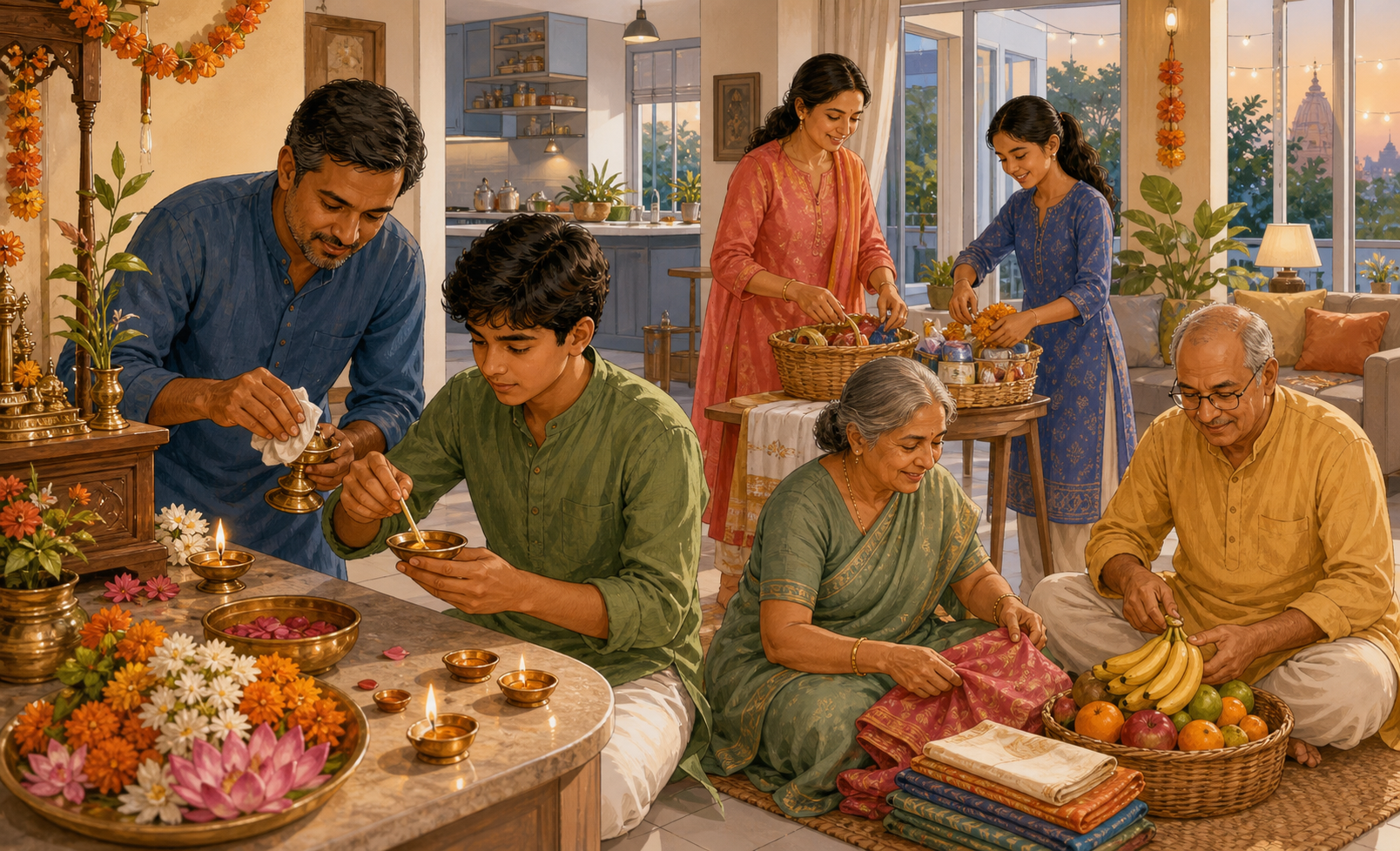
Household worship is repetitive, visible, and easy to remember. Someone cleans the altar, obtains flowers, prepares the offering, protects the timing of the rite, guides younger family members, and restores the space afterward. In many Hindu families, that someone is a woman.
This pattern has been reinforced by traditional divisions of labor. Caregiving and responsibility for cultural memory often placed women near the daily machinery of family religion. Depending on region, lineage, and family custom, observances such as Karva Chauth, Varalakshmi Vratam, and Navaratri can make that stewardship particularly visible. Women also commonly sustain altars, offerings, samskaras, and festival rhythms between the larger public occasions.
Repetition matters. A large temple celebration may attract attention for a day, but daily abhyasa forms the devotional atmosphere in which a child grows up. The child notices who lights the lamp, who knows the prayer, who treats prasada with reverence, and who resumes the practice after an exhausting day. This is not decorative domestic work. It is one of the ways a civilization reproduces itself.
Yet visibility does not reveal motive. The same rite can be a freely embraced sadhana, an affectionate family duty, an obligation accepted without enthusiasm, or some combination of all three. Do not assume that a woman is spiritually fulfilled simply because she performs the family rites competently. Ask whether she has time for the study, meditation, satsang, pilgrimage, or teaching that she personally values.
There is an equally important caution in the other direction. Calling domestic worship mere social conditioning erases the intelligence, discipline, and devotion with which many women preserve it. An inherited role can contain genuine bhakti. The fair response is to recognize the practice without pretending that its gender assignment must remain fixed forever.
Men’s public service is real devotion, but not devotion by proxy
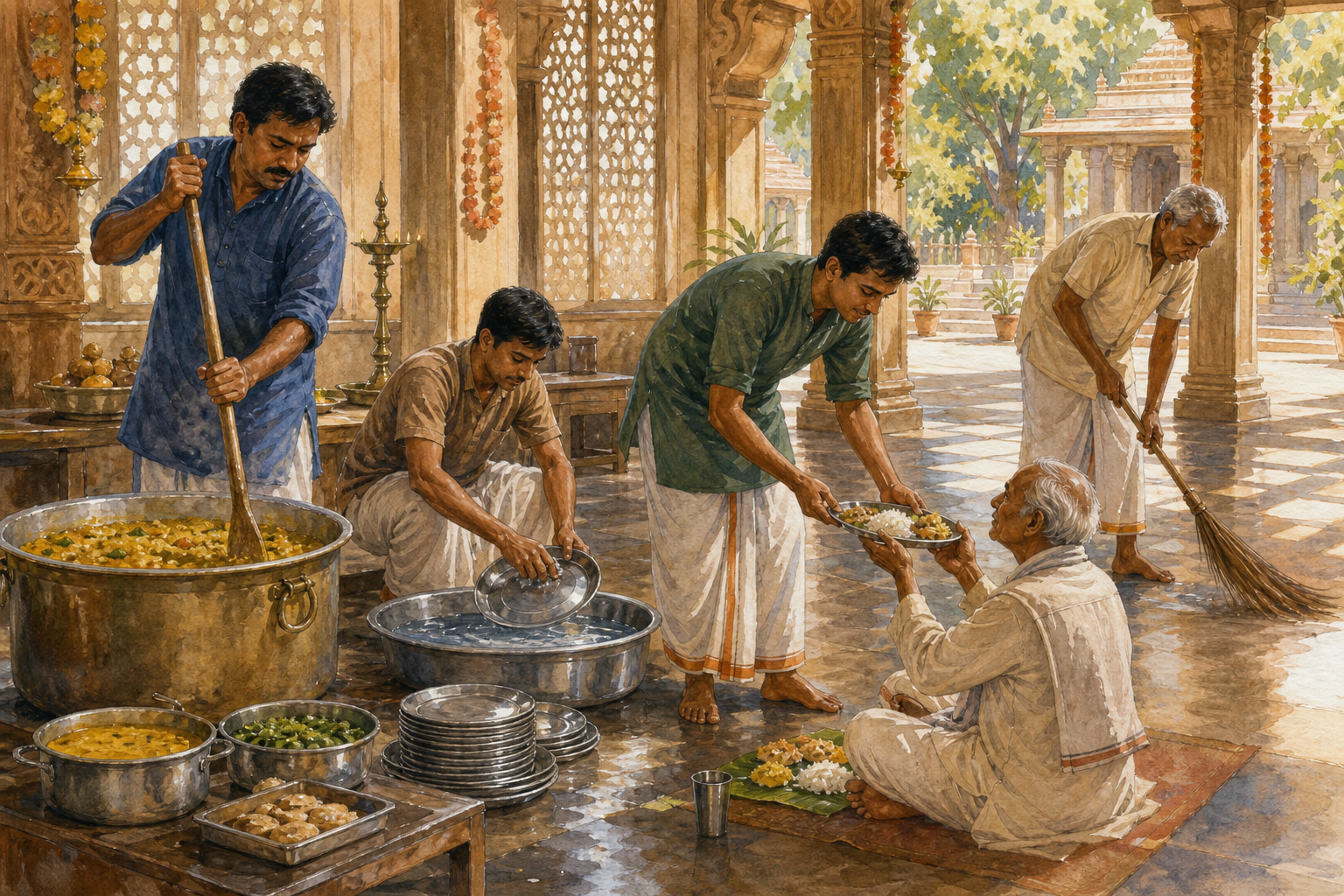
Men’s religious engagement is often easier to see outside the home. It may appear in yatra, public festivals, temple committees, fundraising, construction, logistics, scriptural study, teaching, or philosophical discussion. Monastic institutions and formal debate have also historically provided prominent channels for male participation.
These are not secondary contributions. A pilgrimage requires organization. A temple needs resources and maintenance. A festival needs permissions, transport, accounts, volunteers, and people willing to accept public responsibility. Treating this work as spiritually empty would merely replace one distorted measure with another.
But public service should not become devotion by proxy. Paying for the puja does not teach you its meaning. Holding a committee position does not maintain your personal sadhana. Building a temple does not, by itself, transmit prayer to your children. Institutional seva and personal practice can reinforce each other, but one should not be used to excuse permanent absence from the other.
If you are a Hindu man whose engagement is mostly public, ask a direct question: What practice would remain if your title, donation, and organizational role disappeared? The answer might be japa, study, meditation, home puja, bhajan, pilgrimage, or quiet seva. If no regular practice comes to mind, choose one you can actually sustain. You do not need to displace the person who currently maintains the household tradition; you need to learn enough to carry it with them.
The same test applies to everyone. Public recognition is not proof of inner depth, and domestic regularity is not proof of inner freedom. A mature community honors service while still inviting each person into direct practice.
Hindu spiritual authority is not allotted by gender
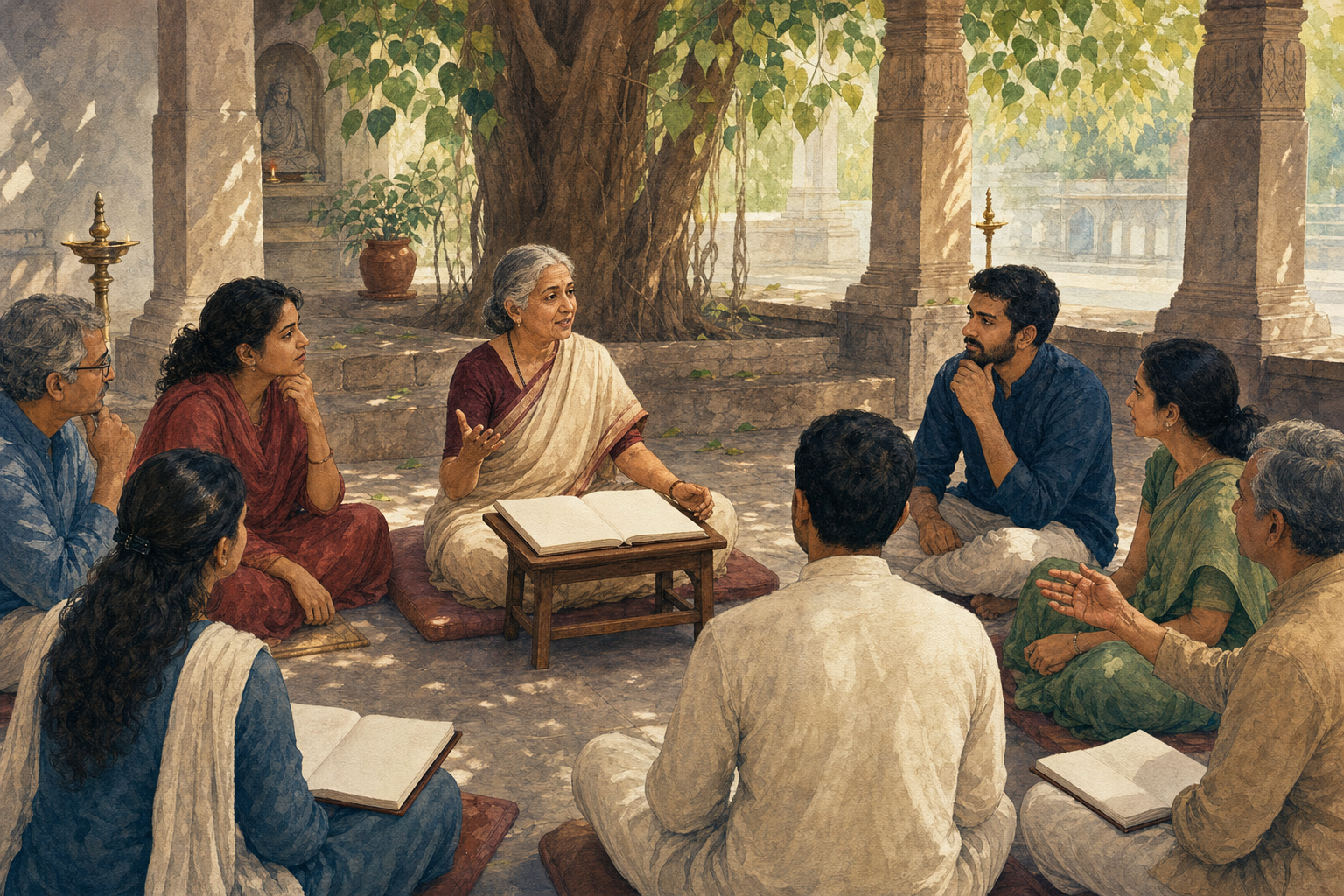
A social pattern should not be mistaken for a theological limit. Reverence for Shakti places the feminine at the heart of Hindu sacred life. The understanding of atman does not make spiritual realization the possession of a sex. Bhakti history likewise refuses a male-only or female-only map of devotion.
Andal, Akka Mahadevi, and Mirabai stand beside Tulsidas, Chaitanya, and Namdev as reminders that devotional attainment is not gender-bound. Their presence does more than provide an inspiring list of names. It prevents us from converting a familiar household arrangement into an eternal rule about who may know, teach, compose, renounce, lead, or realize.
This matters when you decide who teaches children, leads a study circle, explains a festival, represents the temple, or receives time for serious learning. Competence, commitment, knowledge, and the discipline of a particular sampradaya are relevant. A stereotype about women being naturally devotional or men being naturally philosophical is not.
Nor should complementarity become a polite name for exclusion. Different people can contribute in different ways without assigning all preparation and caregiving to women or reserving all authority and public speech for men. A division of work is healthy when it responds to ability, circumstance, and willing commitment. It becomes brittle when a person’s sex decides the role before anyone asks what that person can offer.
Family life is already making some of these distinctions easier to see. Urban schedules, education, changing caregiving arrangements, and diaspora conditions can push families toward shared evening puja, shared seva, and collaborative learning. Men may assume more domestic ritual responsibility while women lead classes and study groups. The change does not diminish tradition. It shows that the living transmission of dharma can adapt while its purpose remains intact.
The same interpretive caution is useful in Buddhist, Jain, and Sikh communities. Women may be especially visible in daily discipline and intergenerational teaching, while men may be more visible in institutions, public kirtan, langar, or organized seva. Similar social patterns do not erase the theological distinctions among these traditions, but they do warn us against treating public visibility as the whole of religious life.
Turn the observation into fairer practice
Key takeaways
- Women often appear more devout because frequent household practices and festival preparation are visible and readily counted.
- Men’s engagement often appears through institutional service, public events, pilgrimage, financial support, study, or teaching.
- These patterns describe a common division of religious labor; they do not establish different spiritual capacities.
- A fair assessment counts personal sadhana, ritual maintenance, transmission, and institutional seva separately.
You can apply that framework without turning your home into an argument over scores. Use it as a practical audit of what is being preserved, what is being neglected, and who is carrying more than everyone else notices.
- List practices before listing people. Write down the actual work of an ordinary week and the next festival: puja, aarti, japa, recitation, meditation, vrata, shopping, food preparation, altar care, transport, donations, teaching, invitations, committee work, setup, and cleanup. Add names only after the list is complete. This prevents the inventory from being built around a gender assumption.
- Sort the work by function. Mark personal sadhana, ritual maintenance, transmission, and institutional seva separately. Someone who prepares every offering but never receives uninterrupted time for personal practice is in a different position from someone who performs both. Someone who funds an event but does not participate directly is contributing in yet another way.
- Ask what is chosen and what is merely inherited. Let each adult, and each older child capable of answering, identify the practices that nourish them, the responsibilities they want to learn, and the duties that need to be shared. Do not assume that obligation cancels devotion, but do not assume that competent performance proves free choice.
- Make a concrete handoff. A man whose contribution has been mainly financial can learn the regular household sequence. A woman who always prepares the event can be given protected time to attend or lead its teaching component. Children can see men and women participate in both daily care and public responsibility. Keep any lineage-specific ritual disciplines intact while reconsidering tasks that rest only on habit.
- Audit the temple as carefully as the home. Check whether event times exclude caregivers, whether childcare is available, whether teaching and leadership pathways are genuinely open, and whether preparation and cleanup receive recognition alongside speeches and committee titles. Family-centered seva can help younger members see devotion as shared work rather than a role assigned to one sex.
The next time someone says that Hindu women are more religious, resist the quick yes or no. Ask which practices are being counted, where they occur, who makes them possible, and what remains invisible. Then take responsibility for one neglected part of your own dharmic life. That is more useful than ranking the people who have been carrying it.
References
