
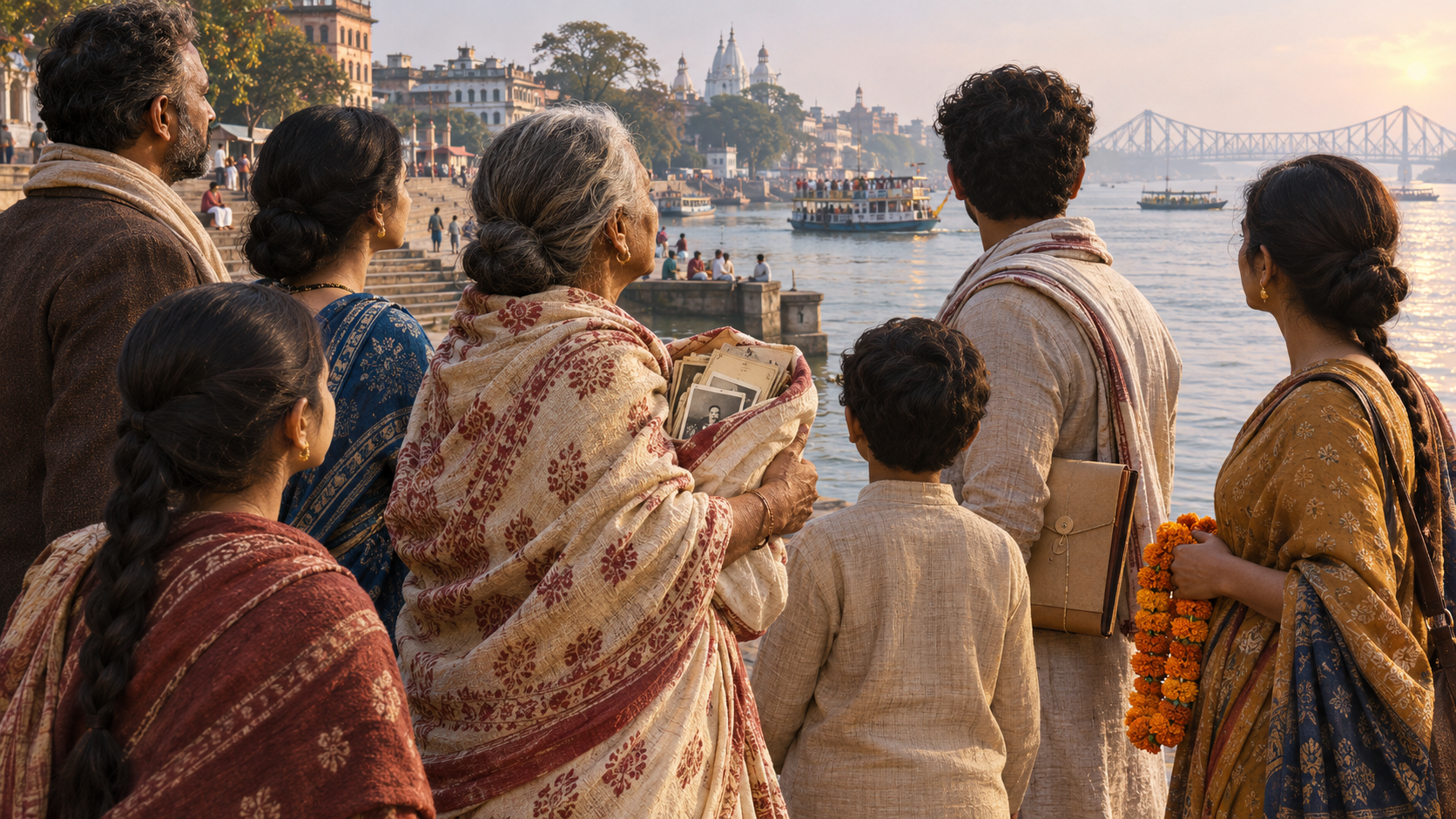
If your family carries the memory of an ancestor who left Bharat under colonial indenture, the Kolkata gathering in January can be more than a commemorative trip. It can help you recover family knowledge, place inherited traditions in their historical setting, and decide what your generation will pass forward.
The 19th Pravasi Bharatiya Divas will take place in Kolkata from 7 to 9 January 2027. Its theme, From Roots to Return: Reigniting Diaspora Connect with Bharat, puts the Girmitiya experience at the centre. The most useful way to approach it is with a defined family or community purpose, not merely a general wish to reconnect.
Why Kolkata matters to the Girmitiya story
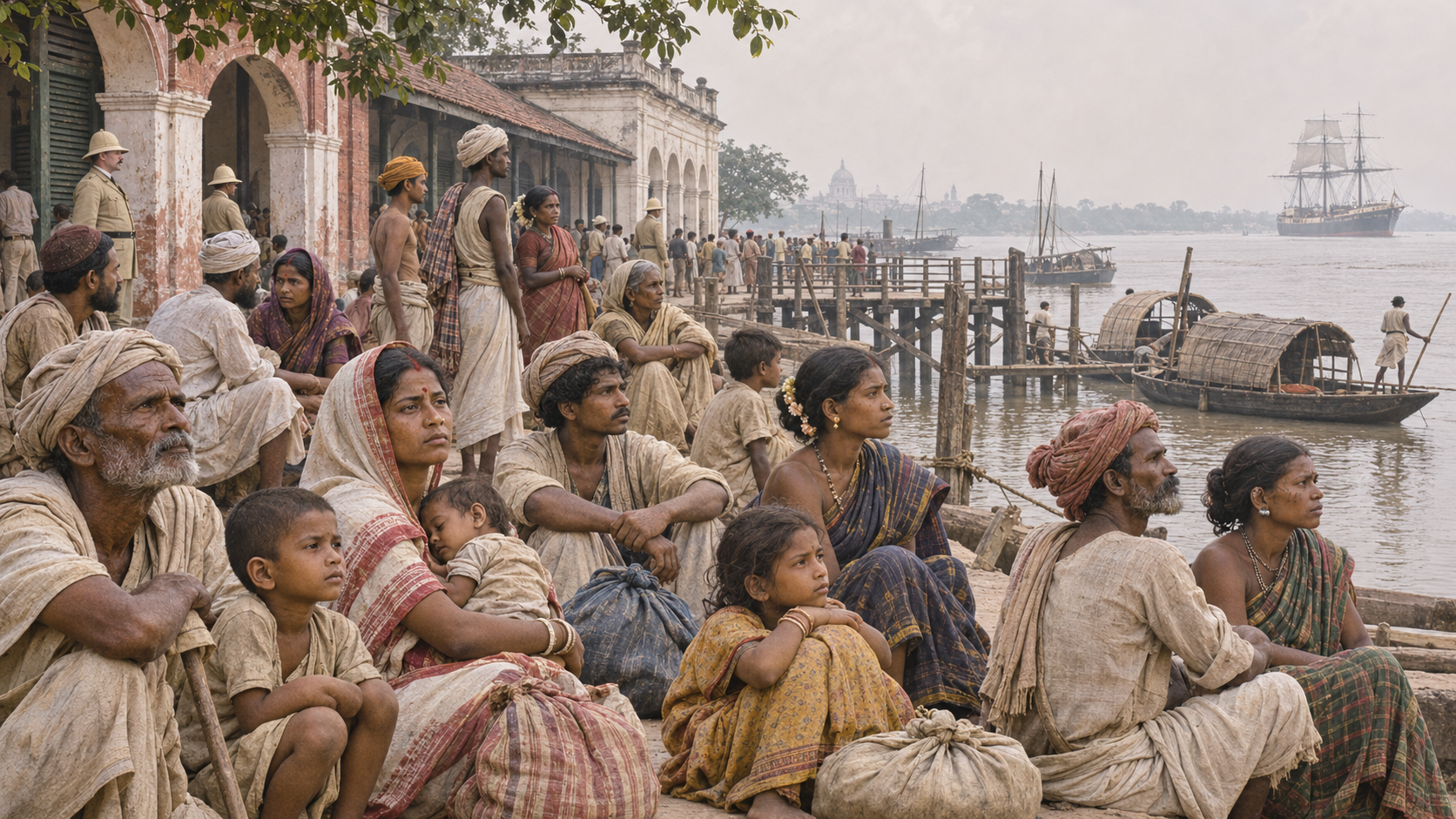
Girmitiya descendants belong to communities formed by Indians who left Bharat as indentured labourers during colonial rule. Their history contains hardship, separation and economic exploitation, but it cannot be reduced to victimhood. Descendants maintained cultural links with Bharat across generations, preserving forms of Dharma, language and song far from the places where their ancestors began.
Kolkata gives the 2027 convention a particular historical weight because ships departing from its port carried migrants and their civilizational inheritance overseas. A return to the city is therefore both geographical and intergenerational: descendants are retracing a route while bringing back traditions that survived in new lands.
The announced programme includes a Girmitiya conference, an exhibition on indentured migration and the first World Girmitiya Games. Mauritius, whose connection to indentured migration gives it a natural place in this conversation, is expected to be the chief guest. Prime Minister Narendra Modi is slated to inaugurate the main convention.
Key takeaways
- PBD 2027 runs in Kolkata from 7 to 9 January, with the Girmitiya legacy as a central focus.
- The gathering is most useful when you arrive with a specific family, cultural or community question.
- Prepare a compact family-history packet before travelling; do not expect a convention exhibition to solve your genealogy for you.
- Use the conference, Games and exhibition for different purposes rather than treating them as interchangeable attractions.
- Plan what you will carry home: corrected family records, recorded memories, community contacts or a cultural project with a clear next step.
Decide what a successful visit would give you
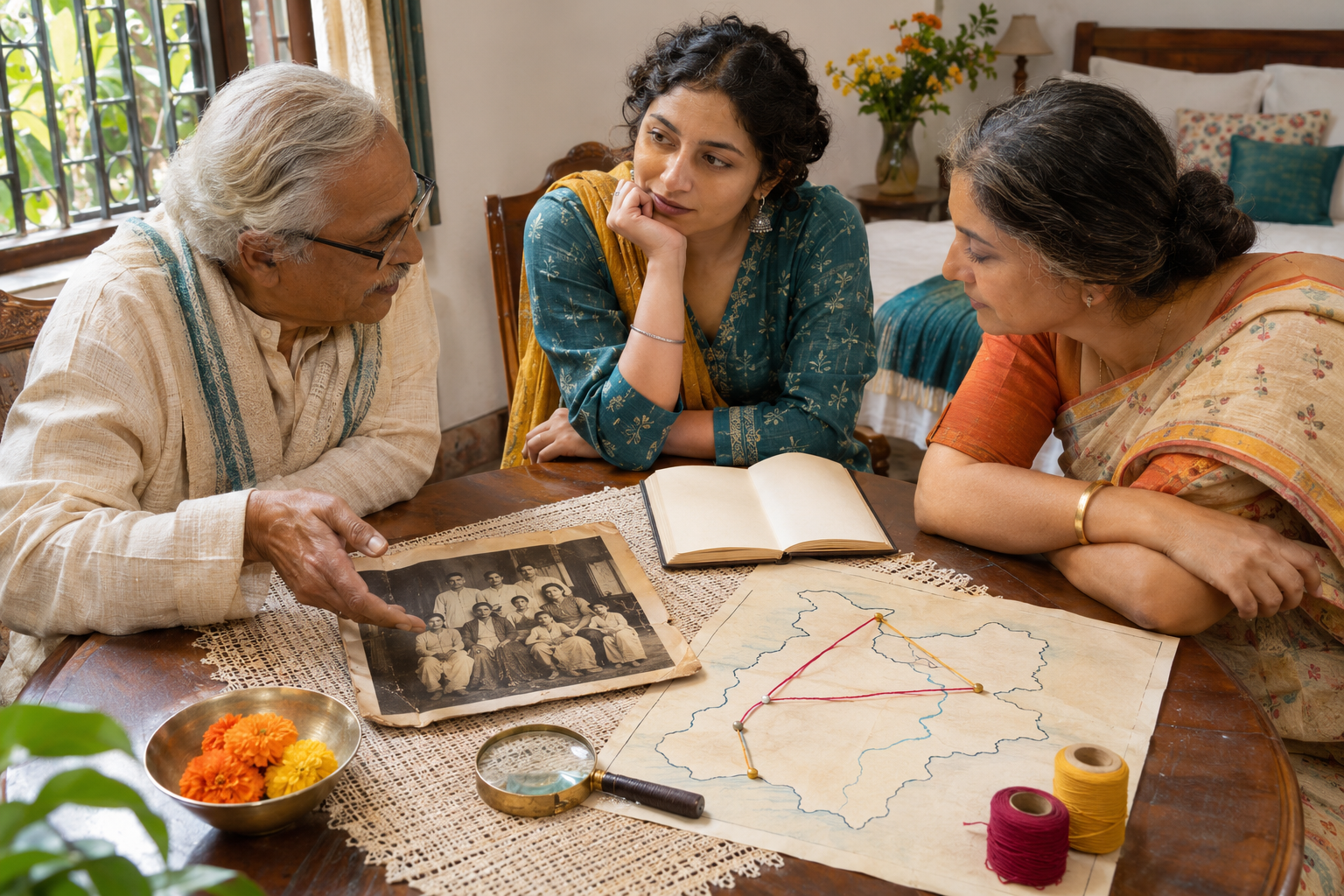
A large diaspora convention can produce photographs, speeches and business cards without resolving the question that brought you there. Before making travel plans, complete this sentence: After PBD 2027, our family or organisation should be able to…
Your answer should describe an outcome you can recognise. Choose a primary purpose from the following possibilities:
- Family history: clarify the known line between an indentured ancestor and the present generation, while marking the names, places and relationships that remain uncertain.
- Cultural continuity: document the language, songs, devotional expressions or community customs that your family associates with its Girmitiya inheritance.
- Youth involvement: give younger relatives a meaningful role in recording, organising and presenting the family story instead of asking them simply to attend.
- Community connection: meet people working on related histories and leave with an agreed method for staying in contact.
- Public memory: prepare material that can be shared responsibly in a school, temple, gurdwara, community association or local cultural programme.
Pick a secondary purpose only after choosing the primary one. This hierarchy matters because each programme element will compete for your time. When a session, meeting or ceremony does not serve either purpose, you can decline it without feeling that you have missed the reason for coming.
If several relatives are travelling, agree on roles before reaching Kolkata. Someone can concentrate on family-history questions, someone on cultural material, and someone on maintaining an accurate contact record. If you are travelling alone, keep the scope narrower. A modest question answered carefully is more valuable than a notebook full of disconnected impressions.
Build a family packet before you leave
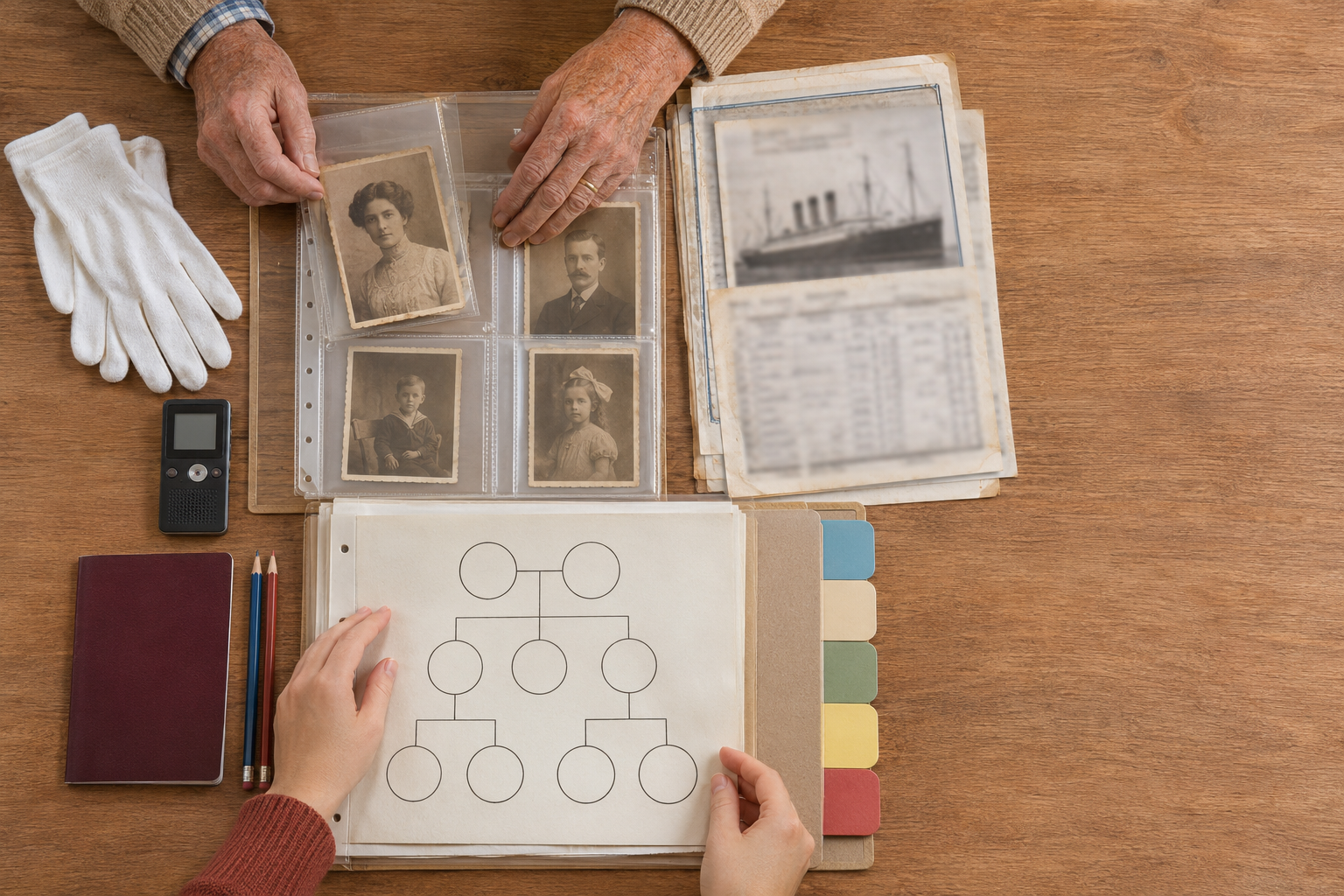
Your most important preparation is not ceremonial clothing or a sightseeing list. It is a portable account of what your family already knows. Without it, conversations begin with long explanations and often end before the useful question is reached.
Prepare a brief packet containing:
- A lineage sketch: arrange known relatives by generation, beginning with the earliest ancestor your family can identify. Preserve every spelling of a personal or place name rather than silently choosing the version that looks most familiar.
- A location list: include the places associated with departure, settlement and later family movement, but label uncertain information honestly.
- A record inventory: list the photographs, letters, certificates, religious books, song notebooks or other inherited material held by relatives. Note who currently keeps each item.
- A cultural inventory: record languages remembered or spoken, songs still performed, and Dharmic practices that the family consciously connects with earlier generations.
- Family memory: summarise what elders have said, identifying it as remembered testimony rather than documented fact.
- Open questions: write the gaps you want help understanding. Questions should be precise enough that another person can tell whether they have relevant knowledge.
- A shareable summary: create a short version that omits private addresses, identity documents and other sensitive information.
Keep three labels throughout the packet: documented, remembered and unknown. This prevents a cherished family story from being presented as established fact while still treating oral memory with respect. It also makes future corrections easier because you can revise a claim without erasing the person who preserved it.
Digitise fragile material before travelling. Carry copies for discussion and keep original documents secured at home or in another safe place. Losing an irreplaceable family record would turn a journey of recovery into a permanent loss. Give digital files descriptive names and include the identity of the person who supplied the item, whenever that is known.
Use each programme element for a different job
The Girmitiya conference, World Girmitiya Games and migration exhibition can serve the same broad theme without serving the same need. Assign each a function before the convention begins.
At the Girmitiya conference, pursue explanations and relationships. Turn a broad concern into a concise question. Instead of asking how to preserve Girmitiya culture, name what your community is losing or trying to transmit. When someone offers useful information, record the person’s name, community and the exact follow-up discussed. Ask permission before recording a conversation or circulating contact details.
At the World Girmitiya Games, look for intergenerational participation. Its importance is not limited to competition. As the first announced gathering of its kind, it can give younger descendants an accessible point of entry into a history they may otherwise encounter only through commemorative speeches. Do not assume eligibility, sporting format or schedules before detailed programme information is confirmed. Once those details are available, give younger family members responsibility for documenting the communities they meet and the connections they want to continue.
At the indentured-migration exhibition, pursue context. Compare its terminology, routes and place names with your prepared family packet. Photograph displays only where permitted, and capture the label as well as the image so that the information does not lose its context. Write down what the exhibition clarifies, what it challenges, and which family claim still requires evidence.
At the main convention, listen for usable commitments. High-level speeches can frame Bharat’s relationship with its diaspora, but your practical interest is what continues after the gathering. Note any named institution, programme or channel relevant to your purpose. A promise without a responsible body or follow-up route is not yet an action plan.
On 7 January, use the opening day to map the programme against your chosen outcome. Across 7 to 9 January, review your notes after each day and mark the conversations that require follow-up. This simple habit prevents the last day from becoming a hurried attempt to remember whom you met and why the meeting mattered.
Turn the return to roots into work at home
The convention’s language of roots and return deserves a serious reading. Return cannot mean that Girmitiya descendants are culturally incomplete until Bharat validates them. Their communities preserved an inheritance under colonial hardship and developed living traditions of their own. Kolkata should recognise that achievement, not measure every descendant against an imagined standard of cultural purity.
Nor should celebration soften the history of indentured labour into a generic migration success story. The honest Girmitiya account holds two truths together: ancestors endured a colonial labour system, and their descendants carried Dharma, language and song forward. Removing the hardship makes survival unintelligible; describing only hardship makes descendants appear as passive remnants rather than makers of enduring communities.
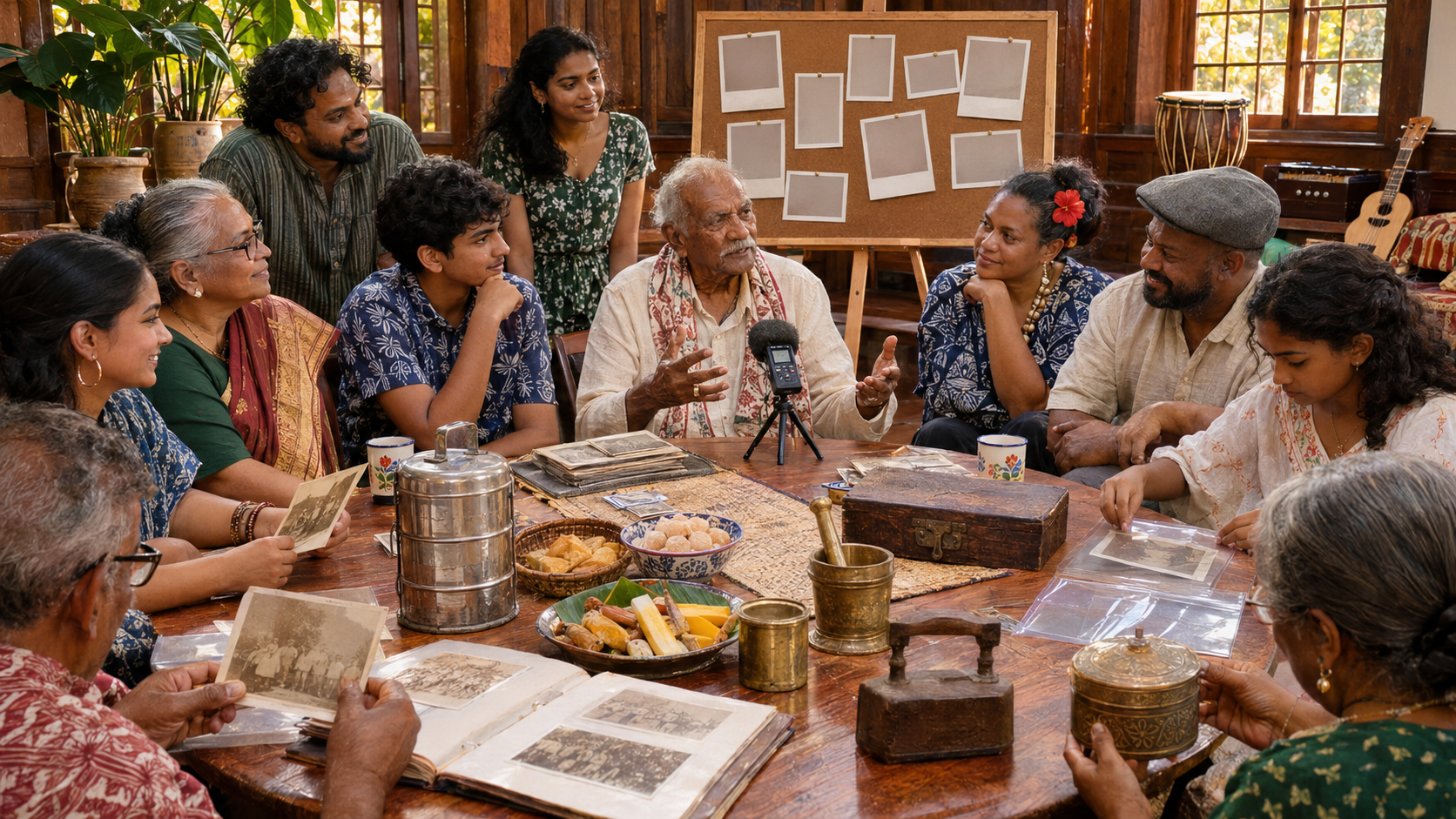
Before leaving Kolkata, decide what will happen to the material you have gathered. The next action might be an elder’s recorded account made with consent, a corrected lineage shared among relatives, a language or song session for younger members, or a community presentation that distinguishes evidence from memory. Name the person responsible and agree where the resulting files will be kept.
If you cannot attend PBD 2027, you can still use 7 to 9 January as a family deadline. Assemble the packet, speak with elders, identify unanswered questions and hold a local Girmitiya remembrance or learning session. Physical return to Kolkata is meaningful, but cultural return begins wherever a family chooses to recover its history carefully.
Arrive in Kolkata with questions, records and a plan for what comes next. Come home with more than photographs. Bring back something that can be checked, taught and entrusted to another generation.
References

Leave a Reply
You must be logged in to post a comment.