
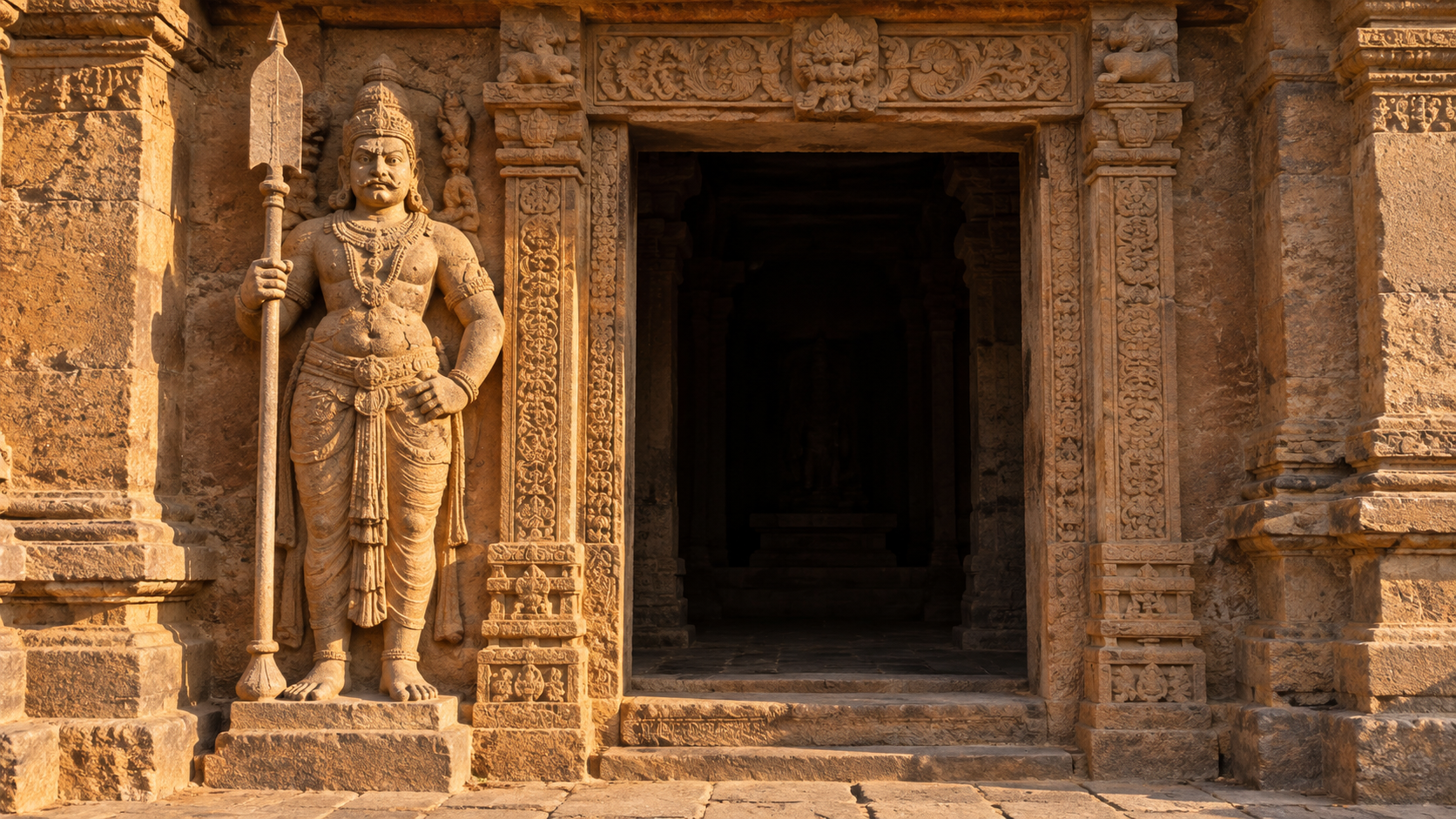
You are looking at a temple carving, bronze, painting or museum image. The figure holds a long shaft topped by a blade, but the familiar names do not quite fit. It is not clearly a trishula, spear or ordinary axe. You may be looking at a pattisa.
The difficult part is not learning one more weapon name. It is deciding whether the visible form, the figure’s role and the surrounding iconography support that identification. This guide gives you a disciplined way to do that without forcing a damaged or stylised image into a label it cannot securely bear.
Begin with the weapon’s silhouette
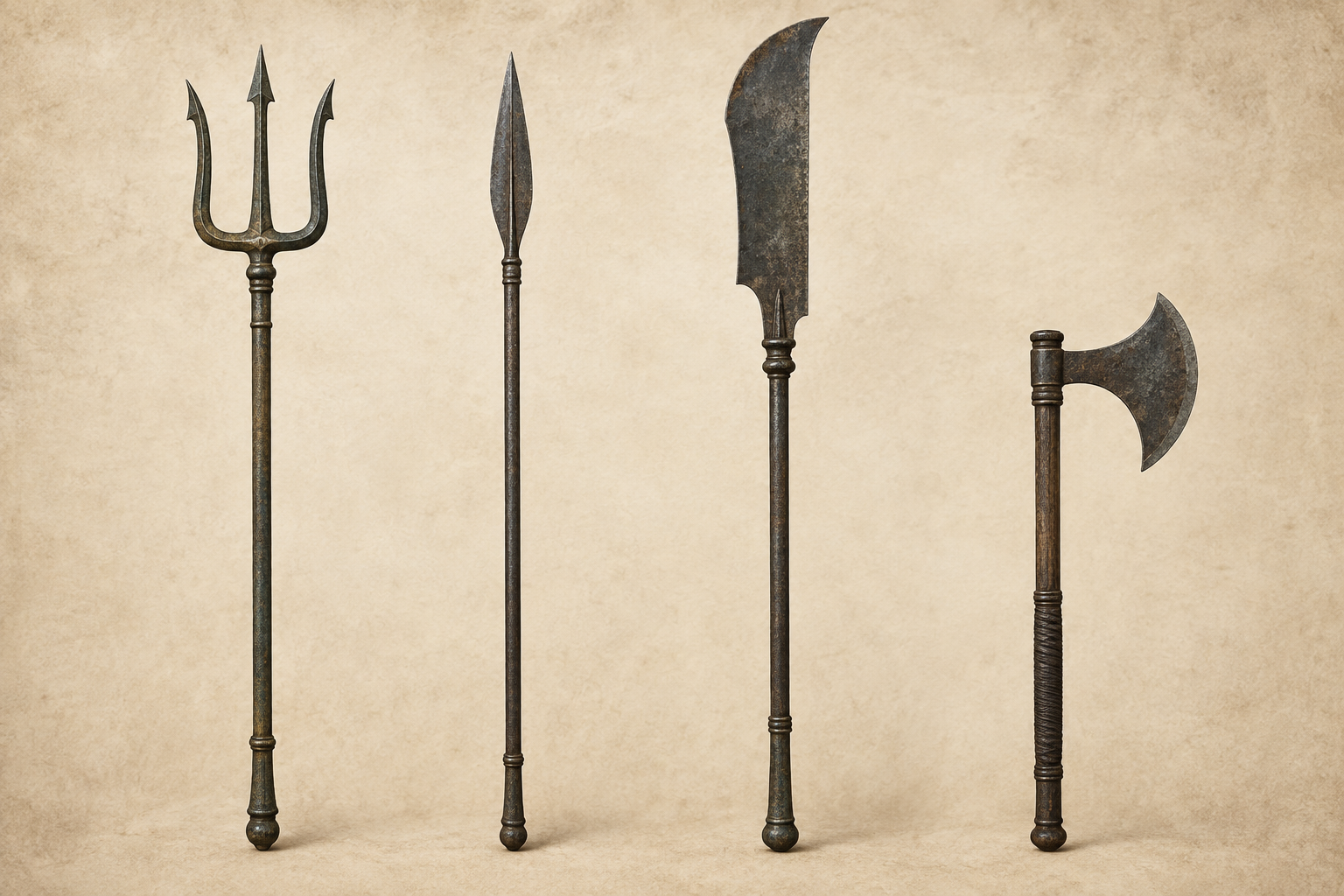
The pattisa, also written pattisha, is a sacred pole-axe or halberd-like weapon within the larger family of Hindu ayudhas. In practical visual terms, look for a substantial blade mounted at the end of a long shaft. Its profile should appear closer to a pole-mounted cutting weapon, or an axe-and-spear hybrid, than to a simple pointed spear.
The words “pole-axe” and “halberd” are useful comparisons, not guarantees that every pattisa will have one mechanically identical head. Temple sculpture compresses forms, painters stylise them, and weathering can erase the small projections that once made a weapon easier to recognise. Start with the overall construction rather than expecting a single standard outline.
- If three distinct prongs dominate the head, a trishula is the stronger identification.
- If the head is primarily one narrow point with no prominent lateral cutting element, begin with spear or lance rather than pattisa.
- If a broad blade is attached to a short working haft, an ordinary axe may be the better description.
- If a blade-bearing head crowns a conspicuously long shaft and combines cutting form with pole-weapon reach, pattisa becomes a serious possibility.
Do not decide from the blade alone. A chipped trident can resemble a spear, while a worn pole-axe can lose the feature that distinguished it from one. When the top of the weapon is incomplete, record what survives before supplying a traditional name.
Identify the whole figure, not an isolated object
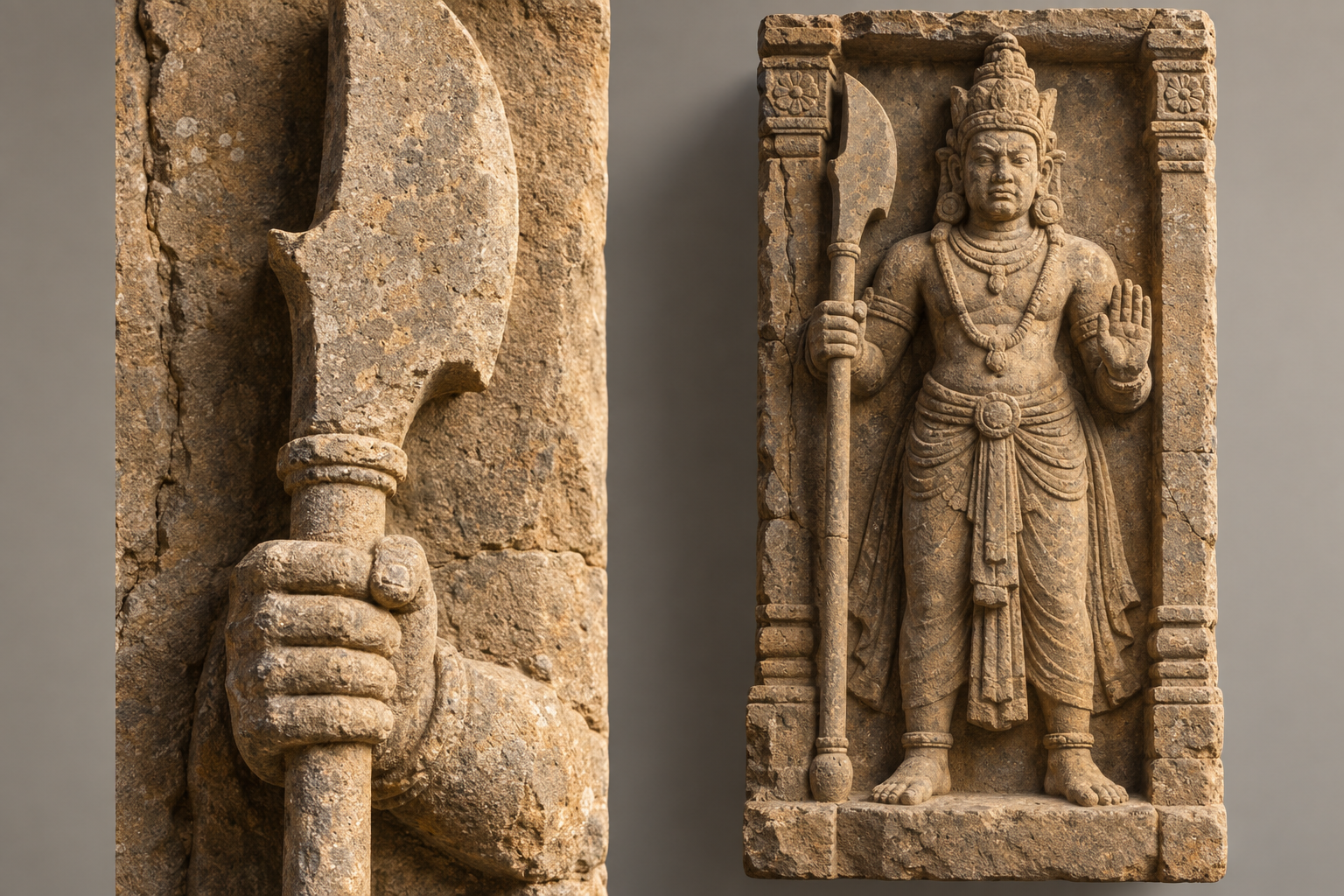
An ayudha belongs to an iconographic ensemble. The same broad weapon shape can be rendered differently across regions, periods and artistic media, while several divine figures may carry pole weapons. That makes context more reliable than a quick shape match.
- Trace the object from the hand to its upper end. Make sure the apparent blade and shaft are one continuous implement rather than overlapping objects.
- Count the figure’s hands and note every surviving attribute. A weapon gains identifying value when read beside the figure’s other objects, gestures and ornaments.
- Determine the figure’s apparent role. A weapon borne by a guardian figure has a different iconographic setting from one held in a narrative battle scene or a ceremonial procession.
- Inspect nearby figures and architecture. Paired guardians, directional placement, repeated weapons or an entrance-related composition may explain why martial attributes appear.
- Check any inscription, temple record, catalogue entry or established local identification. Use that evidence to test the visual reading, not merely to replace close observation.
If only the weapon is visible and the figure’s context is missing, use qualified language. “Pole weapon, possibly a pattisa” is more accurate than a confident identification built from an incomplete photograph. If you are preparing a museum label, archive record or educational caption, preserve that uncertainty in the final wording.
Searches should include both “pattisa” and “pattisha.” A difference in Roman spelling does not by itself indicate a different weapon. It often reflects the challenge of representing an Indic term in English letters.
Read the pattisa first as a guardian’s attribute
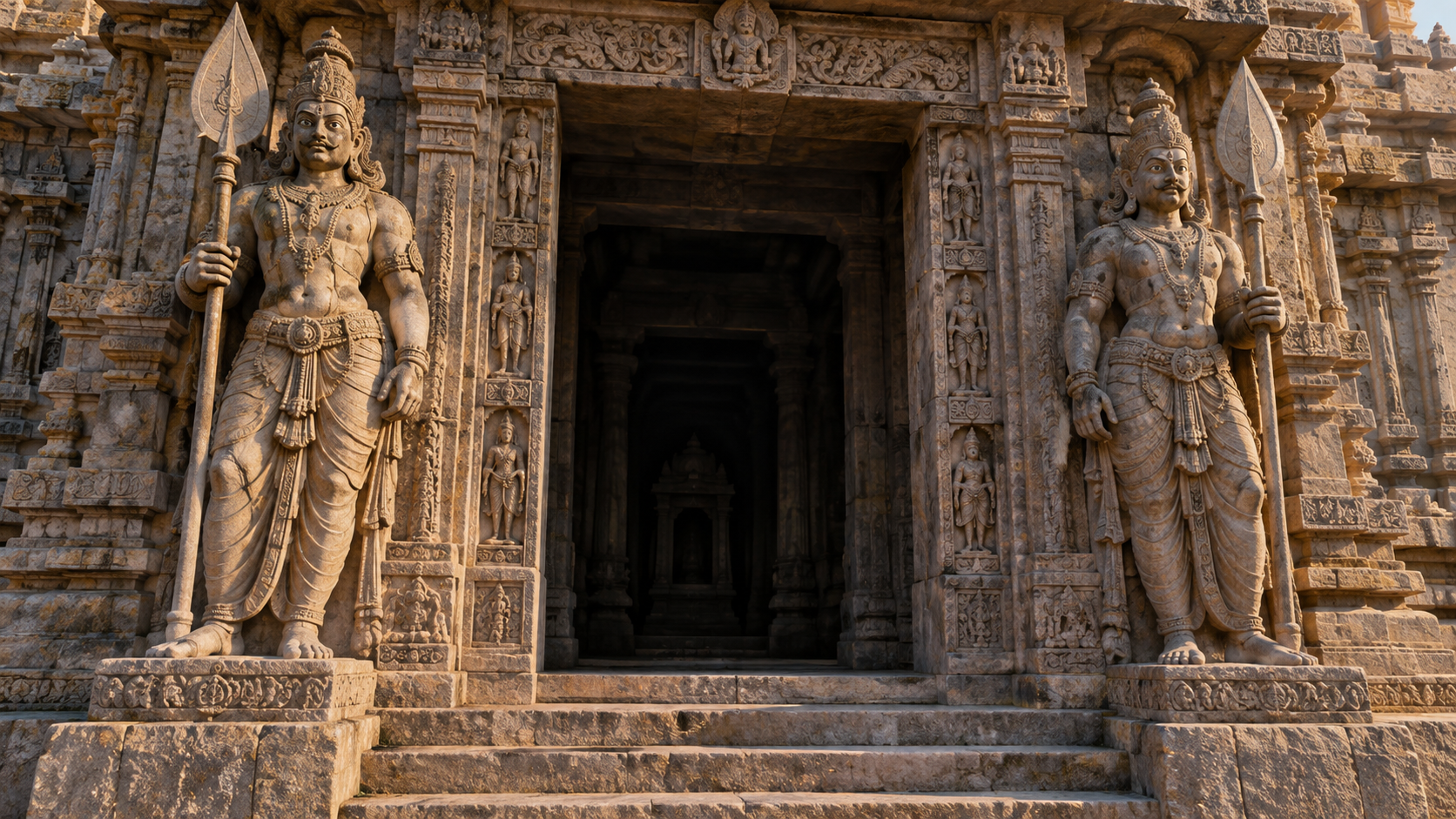
The pattisa is especially associated with divine guardians. In that setting, its most defensible first meaning is protective capacity: the guardian is equipped to confront a threat and preserve the sanctity of what has been placed under divine care. The long shaft adds a visual sense of reach and readiness, while the blade makes that capacity unmistakably martial.
This does not turn the image into a celebration of uncontrolled violence. In Hindu sacred art, a weapon held by a divine figure can signify disciplined force placed in the service of order. The guardian’s posture, expression and location determine whether the emphasis falls on active combat, watchfulness, authority or protection.
Read from the image outward. If the figure stands in an evident protective role, begin with guardianship. If the weapon appears within a narrative episode, let that episode govern the interpretation. If the surrounding evidence is absent, stop at “sacred pole-axe” rather than attaching an elaborate theological meaning that the image cannot confirm.
The object may also help distinguish one iconographic form from another, but it should rarely carry that burden by itself. Face, posture, number of arms, hand gestures, accompanying figures, vehicle, ornaments and placement can all be more decisive. A pattisa is a clue within a visual grammar, not a complete name tag.
Avoid the four common identification errors
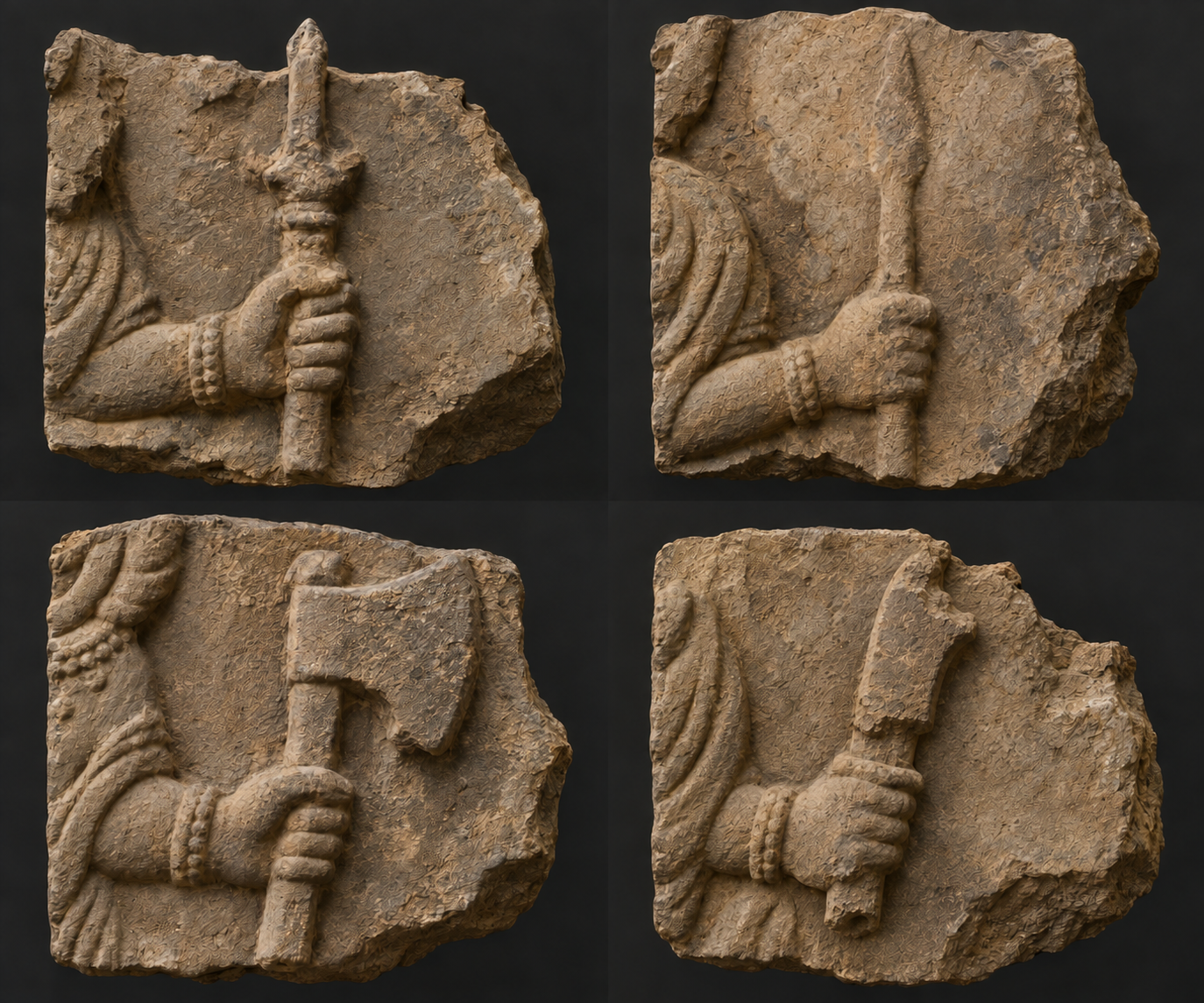
- Do not call every long-handled weapon a spear. Look for a lateral or broadened cutting element at the head.
- Do not call every divine pole weapon a trishula. The trident depends on a recognisable three-pronged terminal form.
- Do not identify a deity solely from the pattisa. Establish the figure’s identity from the complete set of attributes and the surrounding composition.
- Do not turn a probable identification into an absolute one. Damage, restoration, repainting and stylisation can obscure the feature on which the name depends.
There is also a subtler mistake: treating an unfamiliar weapon as a minor decorative detail because it lacks the instant recognition of the chakra or trishula. The pattisa belongs to the meaningful vocabulary of sacred ayudhas. When it appears with a guardian, its relative unfamiliarity to a modern viewer does not make it incidental to the image.
For your notes, separate observation from interpretation. Write “long shaft; broad terminal blade; possible upper point” before writing “pattisa; protective authority.” That small discipline makes it easier for another reader to check your conclusion and prevents symbolic expectation from changing what you think you see.
Key takeaways
- Pattisa and pattisha are variant spellings for a sacred pole-axe or halberd-like ayudha.
- The strongest visual clue is a blade-bearing head on a long shaft, not a simple point or three-pronged terminal.
- Weapon shape alone is insufficient; read the figure’s other attributes, role and setting.
- In a guardian context, protection, vigilance and disciplined force are safer readings than aggression for its own sake.
- When damage or missing context prevents certainty, label the object as a possible pattisa and state what remains visible.
Next time you encounter an unfamiliar pole weapon in Hindu sacred art, pause before reaching for the nearest familiar name. Trace its shape, place it back in the figure’s complete iconography and write down the evidence for your identification. If the form and guardian context align, you can name the pattisa with care; if they do not, an honest qualified description will serve the image better.
References

Leave a Reply
You must be logged in to post a comment.