
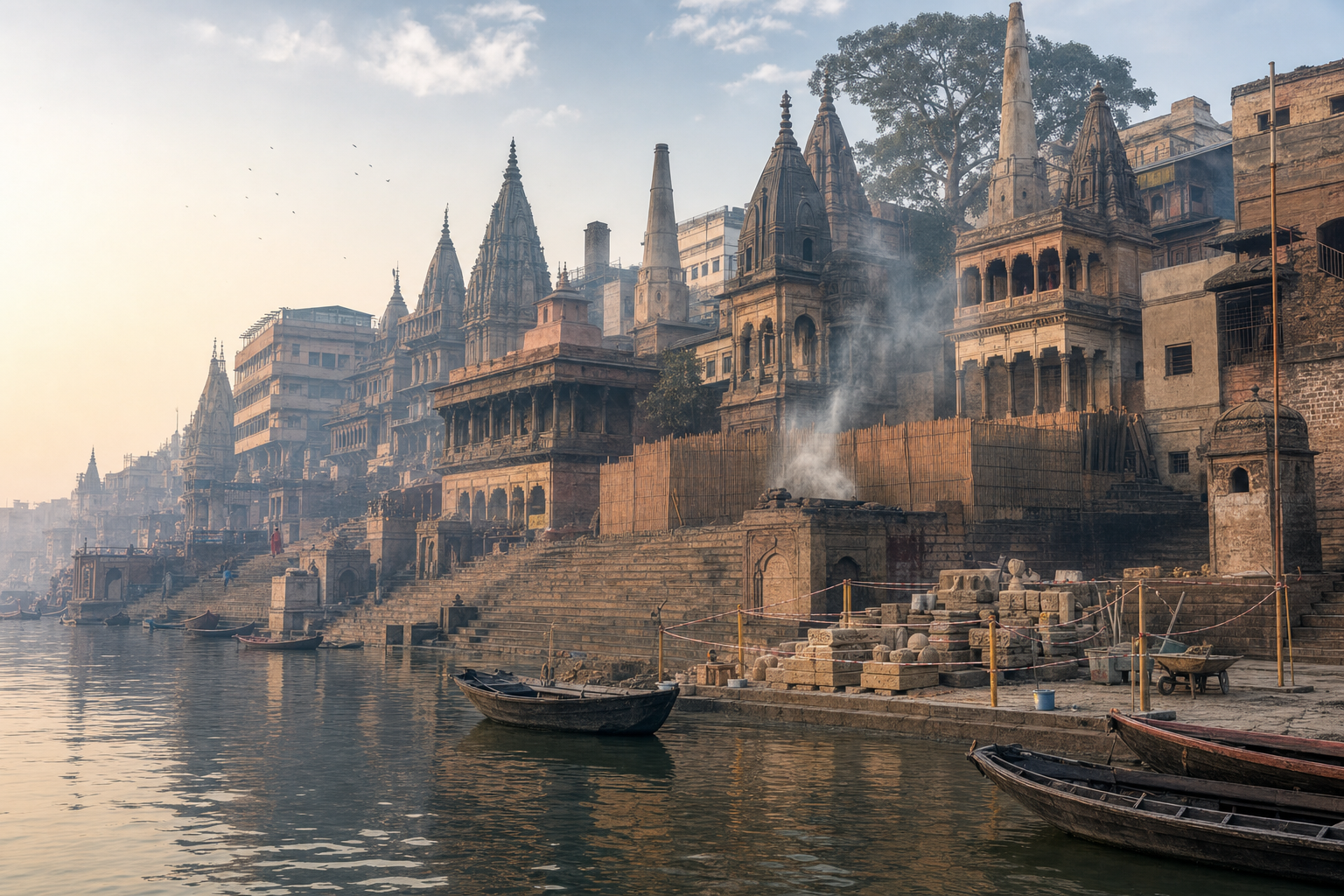
If you are trying to decide what to believe about the Manikarnika Ghat controversy, begin with two truths. The alarm is justified because the site is irreplaceable. A final verdict about authorization, responsibility, and the extent of damage still requires records that should be public.
That distinction matters. You do not have to choose between dismissing the outcry and repeating every allegation as proven. You can demand a standard of evidence equal to the sanctity of one of the oldest continuously operating cremation ghats on the Ganga.
Separate visible disturbance from conclusions that need proof
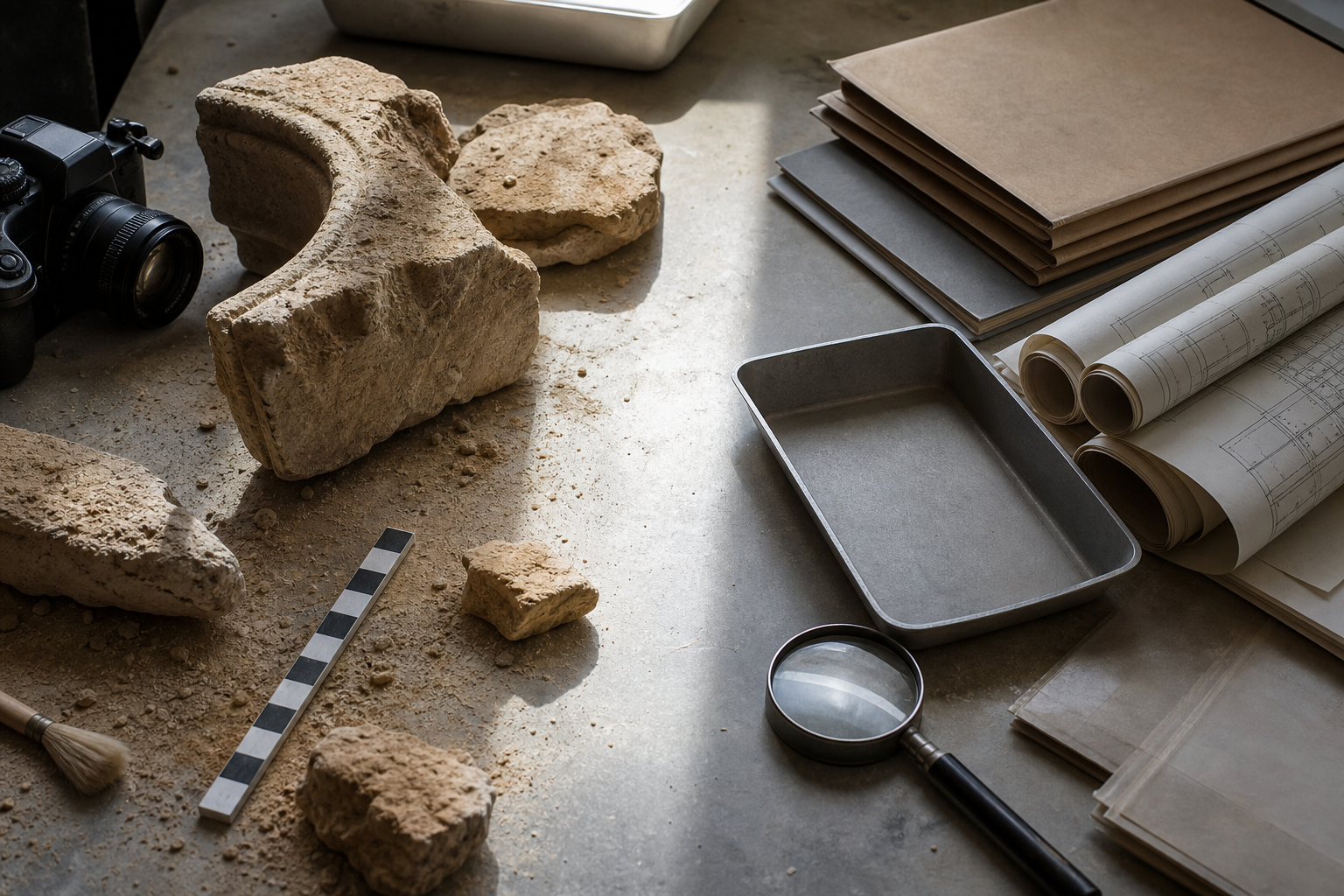
Local accounts, publicly circulating images, and appeals from community and political representatives have raised serious questions about work at the ghat. They justify scrutiny. They do not, by themselves, establish the complete project boundary, the condition of every affected structure, the approvals obtained, or the responsibility of each office and contractor.
This is where public discussion can go wrong in two directions. One side may treat the word “development” as proof that every intervention is beneficial. Another may treat every instance of dismantling as proof that restoration was never intended. Neither label can substitute for drawings, assessments, permissions, and an exact record of what was removed.
Conservation sometimes requires the careful disassembly of an unstable element. Destructive redevelopment can also be presented as repair. You distinguish the two by asking concrete questions:
- What exact structures, platforms, shrines, steps, walls, or architectural fragments were affected?
- Who identified a safety problem, and where is the signed structural assessment?
- Which authority approved the intervention, on what date, and under which heritage, urban-development, environmental, and riverfront procedures?
- Did the approved drawings require removal, repair in place, temporary dismantling, reconstruction, or replacement?
- Were historic materials numbered, photographed, stored, and protected for reuse?
- What conservation method was specified, and did the work on the ground follow it?
- Were ritual service communities consulted before work began, and were their objections recorded?
Until those answers are available, use precise language. Say that demolition or dismantling activity has been reported and documented visually, that the scope and authorization are disputed, and that disclosure is necessary. Do not upgrade an allegation into a finding. Do not downgrade visible disturbance into “routine work” without evidence either.
Manikarnika is living heritage, not vacant riverfront property
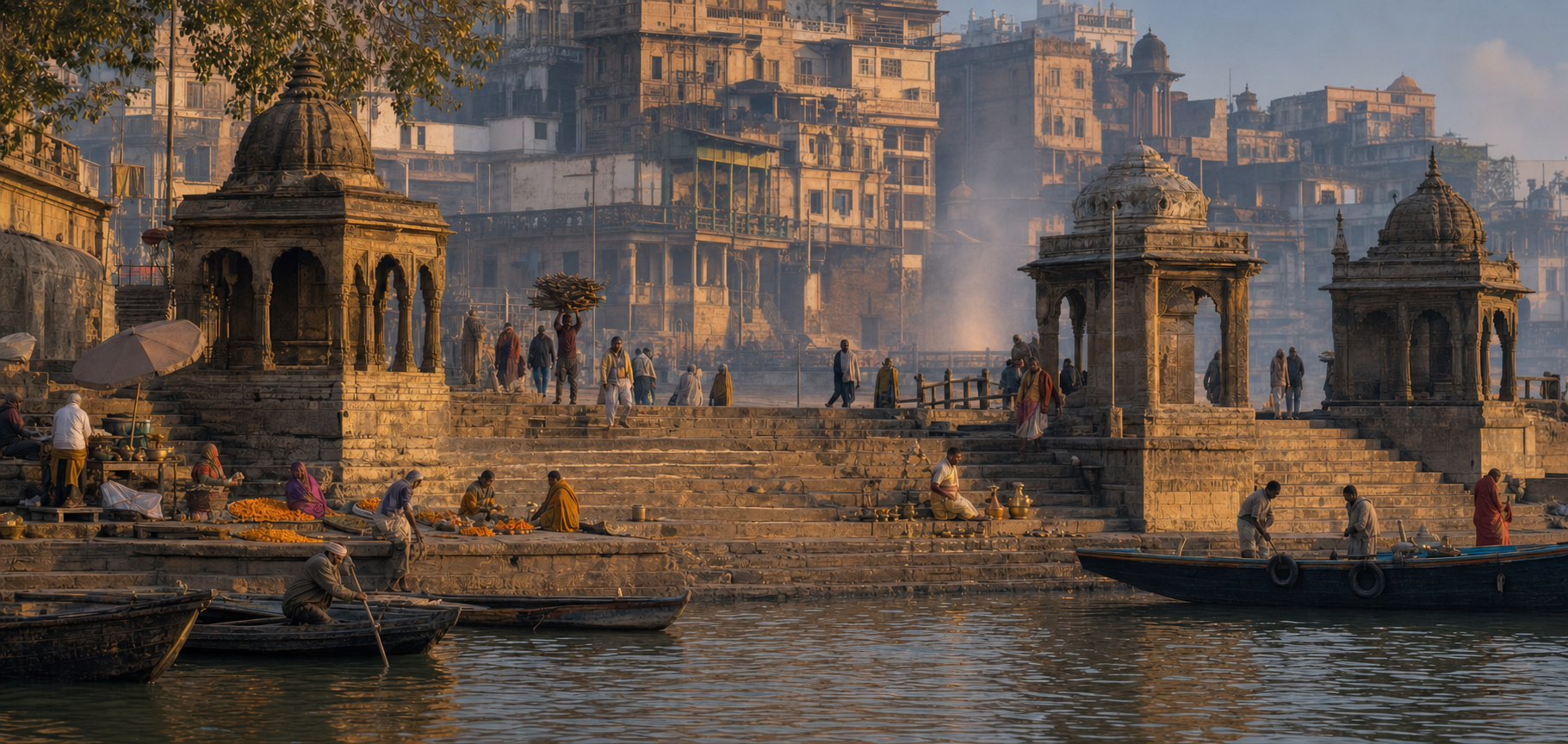
A conventional building project can be judged largely by its completed structure. Manikarnika cannot. Its significance resides in physical form, continuous sacred use, inherited duties, ritual knowledge, pilgrimage, family memory, and the relationship between the ghat and the Ganga.
This changes the basic test. The question is not simply whether the finished site looks clean, safe, or impressive. The question is whether intervention preserves the conditions under which the sacred place remains itself.
A new stone surface can imitate the outline of an old one while erasing age, workmanship, material evidence, and historical sequence. A redesigned circulation route can appear efficient while disrupting the movement of mourners or the work of hereditary ritual communities. A visually attractive reconstruction can still fail if it turns a functioning tirtha into scenery.
You should therefore judge any proposal against four connected forms of continuity:
- Material continuity: Historic fabric should be retained wherever it can be safely conserved. Replacement needs a documented reason, not merely a preference for uniform new construction.
- Ritual continuity: Antyeshti and associated practices must continue with dignity. Construction sequencing should be designed around sacred use rather than forcing sacred use to accommodate administrative convenience.
- Community continuity: Priests, cremation workers, residents, pilgrims, and families are bearers of knowledge about how the place functions. Consultation with them is evidence gathering, not ceremonial outreach.
- Environmental continuity: Work on a Ganga riverfront must account for drainage, waste, water interaction, structural stability, and river ecology. A sound wall intervention can still be a bad riverfront intervention if these relationships are ignored.
This is also why representation across dharmic traditions has value. Kashi is centrally sacred to Hindus, while its wider civilizational significance reaches Buddhist, Jain, and Sikh communities. Their inclusion can strengthen stewardship, provided it does not displace the ritual communities whose daily responsibilities give Manikarnika its living continuity.
The public needs a disclosure record, not another assurance
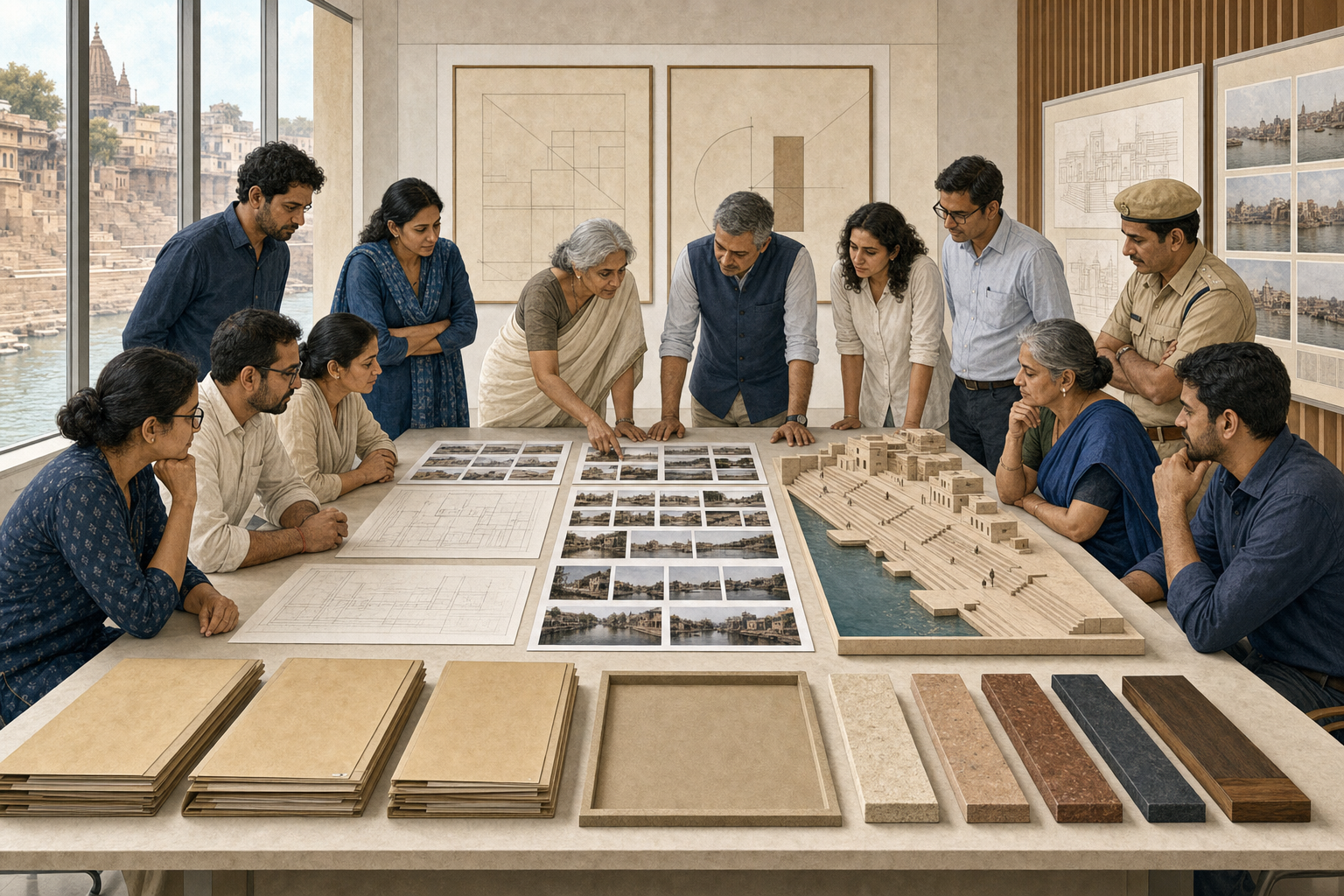
General promises to preserve heritage cannot resolve a dispute about a particular wall, shrine, platform, or set of steps. The fastest credible response is to publish the project record in one accessible place.
At minimum, that record should contain:
- the tender, contract scope, implementing agency, contractor, and supervision arrangements;
- site plans and drawings showing conditions before the work and every approved intervention;
- structural audits prepared by qualified engineers with conservation experience;
- heritage impact assessments and the reasons for choosing demolition, dismantling, repair, or replacement in each affected area;
- permissions and observations issued under applicable heritage, riverfront, environmental, and Uttar Pradesh urban-development procedures;
- Archaeological Survey of India conservation guidance and National Monuments Authority advice wherever those frameworks are relevant;
- the contractor’s method statement, including protection, removal, labeling, storage, reuse, and reconstruction procedures for historic fabric;
- dated photographic and measured surveys from before, during, and after the intervention;
- minutes of consultations with ritual service communities, residents, heritage bodies, and other affected groups; and
- a change log identifying any departure from the approved design, who authorized it, and why.
A document dump is not sufficient. Plans should identify affected features clearly, photographs should be dated and located, and permissions should be matched to the work they supposedly authorize. Otherwise, hundreds of pages can conceal the same unanswered question.
An independent, time-bound review should then compare three things: the condition recorded before intervention, the work that was authorized, and the work that actually occurred. Conservation architects, structural engineers, river-ecology specialists, legal experts, local community representatives, and representatives of Hindu, Buddhist, Jain, and Sikh traditions all have relevant roles. Members should disclose conflicts of interest, and the final findings should identify both compliance and departures rather than merely offering a collective endorsement.
This demand is neither anti-development nor inherently partisan. Prime Minister Narendra Modi and Chief Minister Yogi Adityanath have publicly emphasized the protection of Varanasi’s heritage. Transparent scrutiny is how such commitments acquire meaning when a sacred site is contested. Those who support the government should want a review strong enough to vindicate proper work or expose failures without favoritism.
Restoration must begin with evidence and minimum intervention
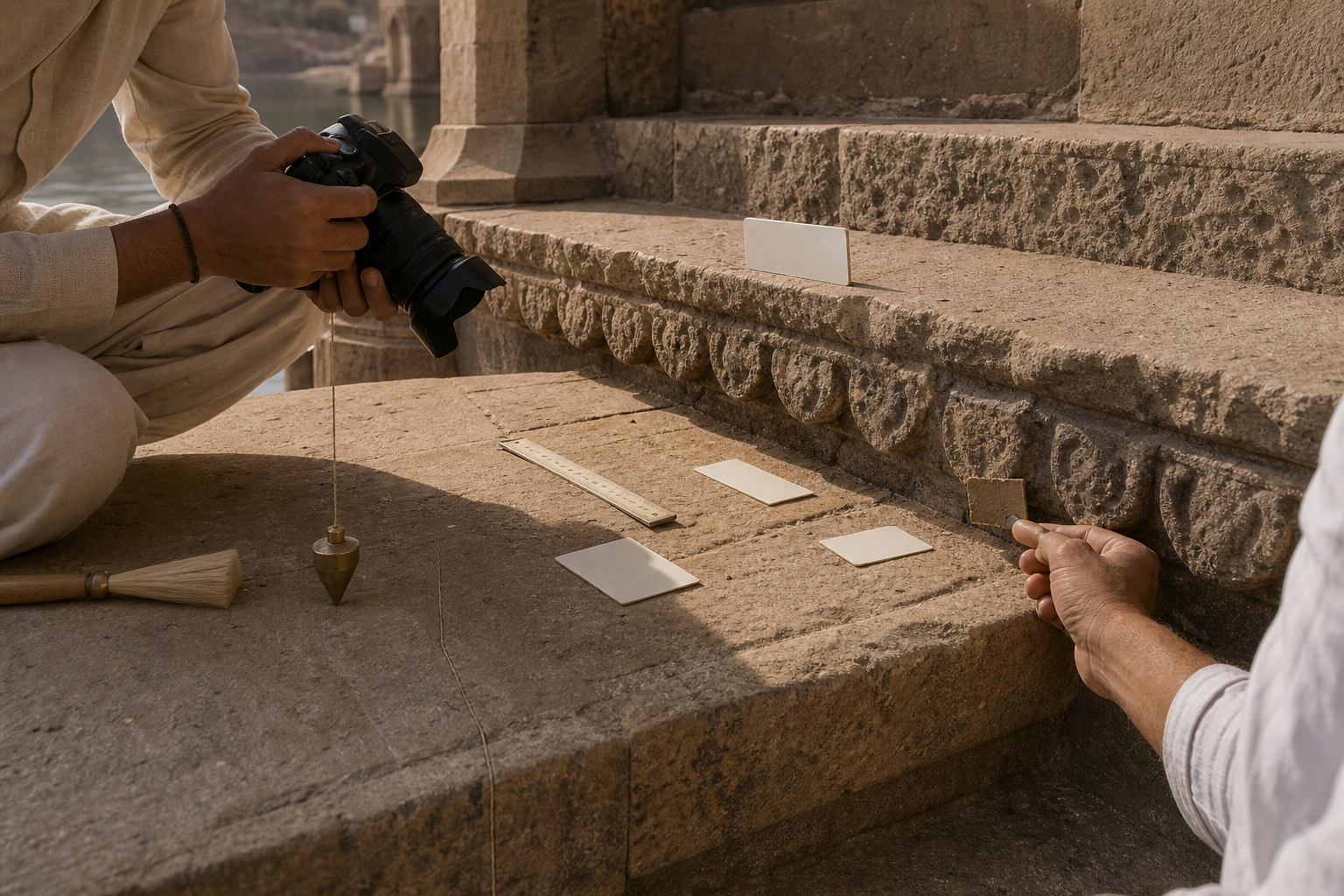
If historic fabric has been damaged or removed, speed alone will not repair the loss. A rushed reconstruction can destroy surviving evidence, introduce incompatible materials, and make later correction harder. The immediate priority is stabilization: protect vulnerable remains, control access where safety requires it, prevent further loss, and avoid irreversible work until the site has been recorded.
A credible recovery sequence would proceed as follows:
- Secure without erasing. Use temporary, reversible protection around unstable fabric. Safety measures should be proportionate and should not become an excuse for unrecorded clearance.
- Document the existing condition. Produce high-resolution photographs, measured drawings, material descriptions, archival comparisons, and a location-based inventory of displaced fragments.
- Record living knowledge. Collect oral histories and practical accounts from ritual workers, priests, residents, and regular users who can identify functions that may not appear on architectural plans.
- Diagnose before designing. Conservation engineers should distinguish structural danger from superficial deterioration. Each proposed removal should have a written technical justification.
- Compare repair options. Give preference to retaining original material, repairing in place, and using reversible or minimally invasive methods. If replacement is unavoidable, record what is lost and explain why retention was unsafe or impossible.
- Phase work around sacred practice. Agree on safe access, dignified routes for mourners, working areas for ritual communities, and clear daily coordination before construction resumes.
- Publish the restoration record. Show what was retained, reused, reconstructed, or replaced. A completion photograph alone cannot demonstrate conservation integrity.
Restoration should not mean manufacturing an imagined ancient appearance. Kashi’s riverfront carries layers created by continuous use. Conservation must read those layers before deciding which ones to retain, repair, or reveal. Uniformity may satisfy a redevelopment aesthetic while falsifying the history of the place.
Nor should ritual continuity be treated as a public-relations concern to be handled after engineering decisions. At Manikarnika, continued sacred function is part of the heritage being conserved. A technically stable project that humiliates mourners, obstructs essential rites, or marginalizes hereditary service communities has failed a central part of its brief.
How you can demand accountability without spreading confusion
If you want to help protect Manikarnika, your strongest contribution is disciplined public pressure. Outrage attracts attention; a precise demand makes evasion harder.
- Preserve context with every image. Keep the date, location, original caption, and identity of the person who captured it when known. Cropped or repeatedly forwarded images may show real damage while obscuring when and where it occurred.
- Separate observation from inference. “This feature is absent in the later image” is an observation. “It was removed without permission” requires the authorization record.
- Ask for named documents. Request the structural audit, approved drawing, method statement, heritage assessment, permissions, and fragment inventory. A general demand to “tell the truth” is easier to answer with another general statement.
- Protect the dignity of the site. Do not obstruct rites, enter controlled work areas, crowd grieving families, or treat cremation activity as protest imagery. Heritage advocacy loses its moral center when it disregards the people using the sacred place.
- Keep the demand cross-partisan. Focus on disclosure, independent assessment, responsibility for departures, and conservation-led restoration. The same standard should apply regardless of which party controls an office.
- Correct your own side when necessary. Remove miscaptioned material and acknowledge uncertainty openly. Credibility built this way is more durable than a dramatic claim that can be disproved.
Do not attempt to remove, relocate, or privately “save” architectural fragments. That can destroy provenance, interfere with an official investigation, create safety risks, and separate an object from the context that gives it meaning. Record the location from a safe and lawful position, notify responsible authorities and credible heritage bodies, and seek written acknowledgment.
Key takeaways
- The public evidence justifies urgent scrutiny, but responsibility and legality must be established through primary records and an independent review.
- Manikarnika must be evaluated as a living sacred landscape. Preserving ritual, community, material, and riverfront continuity is as important as structural appearance.
- The decisive records are the approved plans, structural audit, heritage assessment, permissions, work method, consultation minutes, and before-and-after documentation.
- Immediate stabilization should use reversible measures; permanent restoration should begin only after documentation and technical diagnosis.
- Your advocacy will be harder to dismiss if every claim is labeled as observed, reported, disputed, or verified.
The practical next step is simple: ask for the complete project record and an independent comparison between authorization and execution. Once those facts are public, proper conservation can be defended, lapses can be assigned, and restoration can proceed without asking Hindus to choose between safety and sacred continuity.
References
