
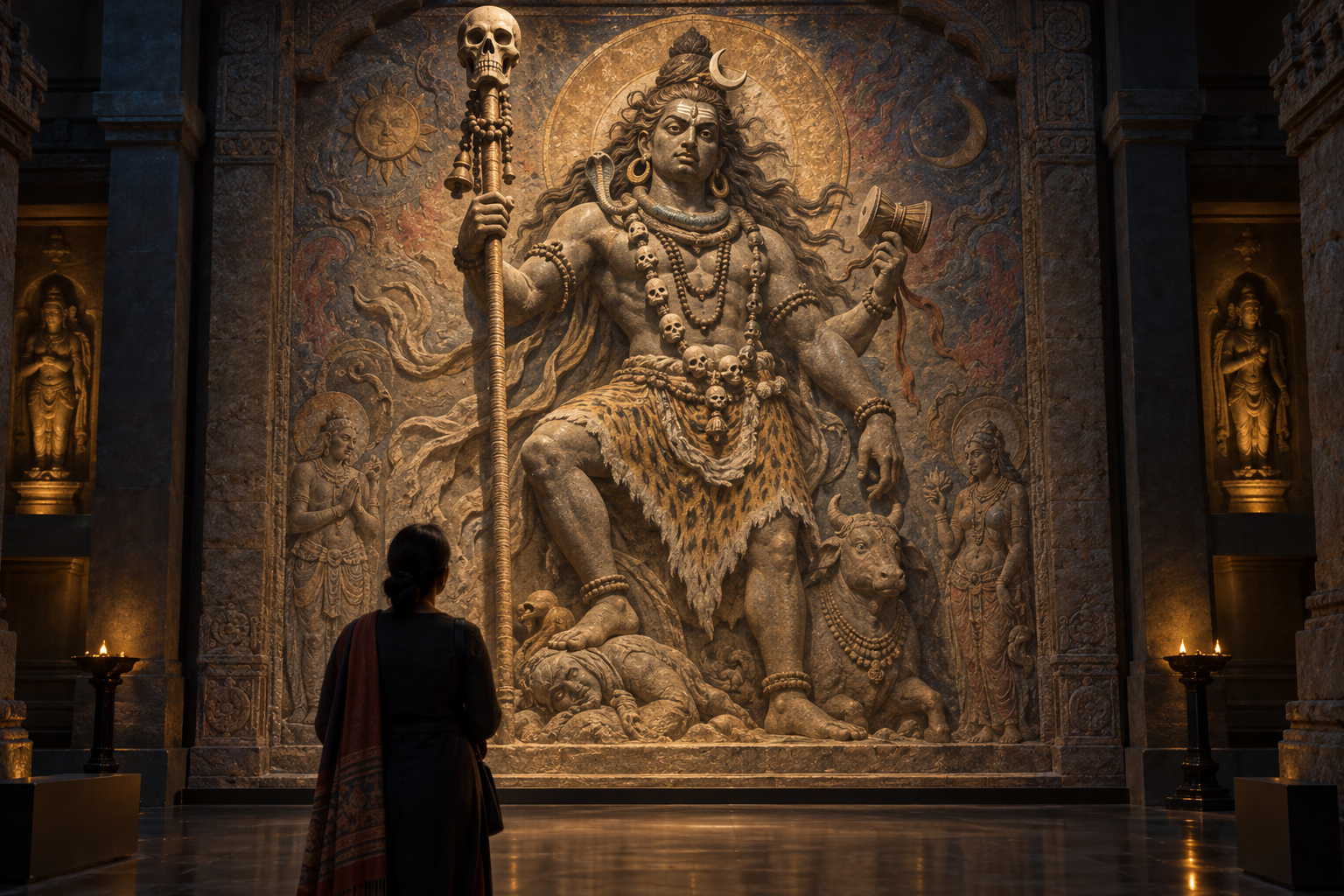
You are looking at a temple sculpture, painting, or image of a fierce deity. One hand holds a long staff crowned by a skull. The object can seem macabre if you read it only through modern ideas about horror, but that first reaction does not tell you what the image means.
Once you recognize the object as a khatvanga, you can read it more carefully. It brings mortality, renunciation, sacred power, and the transformation of fear into the same visual field. The key is to examine the whole image rather than treating the skull as an isolated sign.
First identify the khatvanga correctly
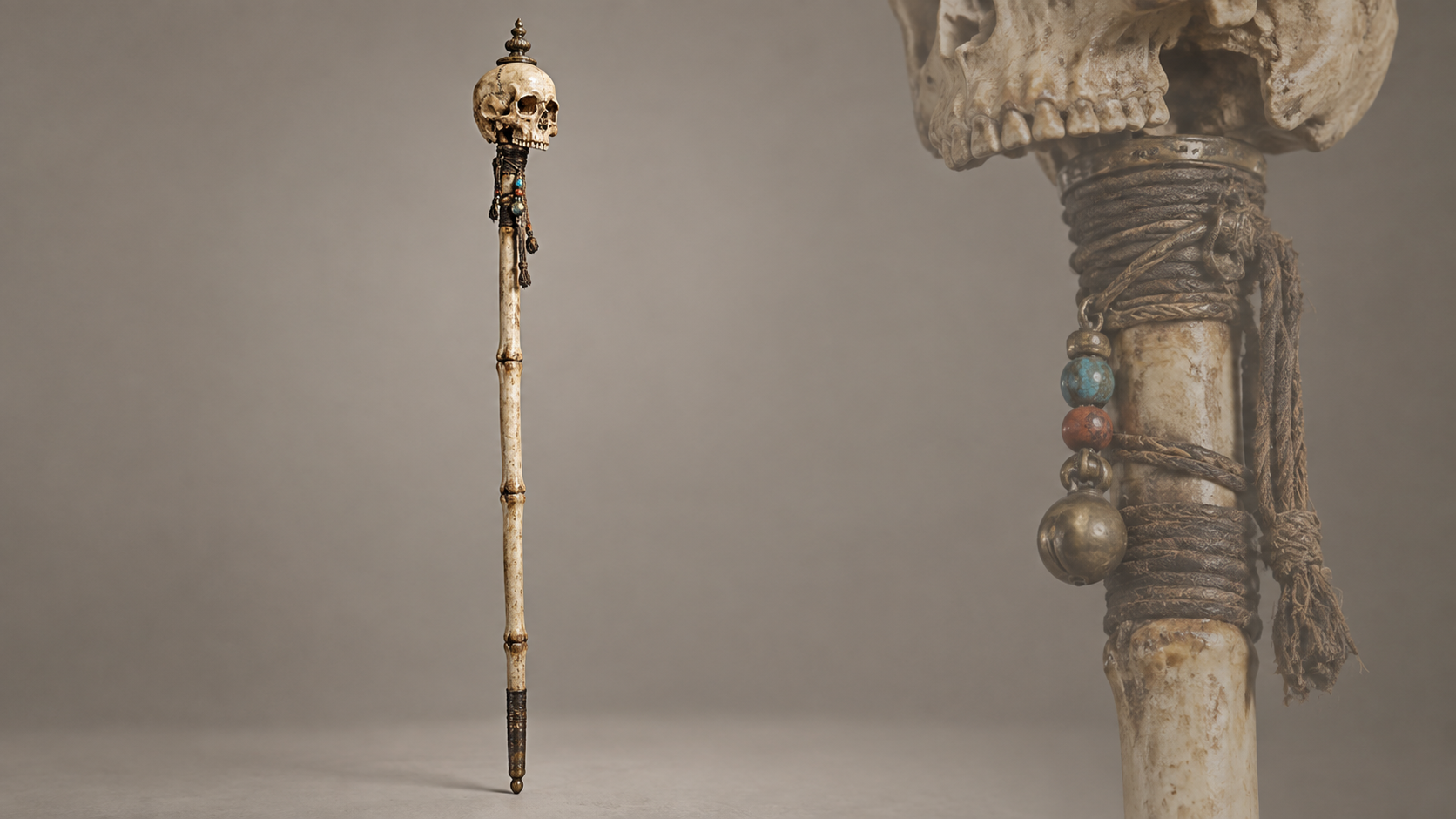
A khatvanga is not simply any staff decorated with something that resembles a head. In its stark iconographic description, it is a staff whose shaft is formed from a human forearm bone and whose upper end bears a human skull. Artists may simplify, stylize, or partially conceal those features, especially in a small image or a weathered sculpture.
Use three visual checks before assigning the name:
- Look for a staff. The object should have a long shaft that can be carried. A skull held by itself or used as a vessel is a different kind of attribute.
- Examine the upper end. The skull should surmount the staff or be visibly integrated with it. If the top has three clear prongs, you are probably looking at a trident instead.
- Identify the bearer. The khatvanga appears among the implements of fierce forms of Shiva and certain wrathful goddesses. The figure’s identity, posture, expression, and other attributes determine how the staff should be interpreted.
Do not force the identification when the image is damaged. A rounded finial on a worn staff is not enough. Check a temple tradition, catalogue entry, inscription, or reliable iconographic description before treating your first impression as certain.
The skull and bone shaft form one theological statement

The skull makes bodily mortality visible. It no longer displays the social markers by which people distinguish themselves: beauty, age, occupation, wealth, rank, or reputation. Read at this level, it confronts you with a condition shared by every embodied being.
The bone shaft intensifies that confrontation. Death is not placed at a safe distance as a small ornament. What once belonged to the body becomes the supporting structure of a sacred implement. The image therefore refuses the comfortable habit of treating mortality as something that happens only to someone else.
The staff form matters as well. A carried attribute is deliberate: the deity or ascetic does not stumble upon the reminder of death but bears it openly. That visual arrangement supports several related readings:
- Mortality: embodied life is finite, so attachment to the body cannot provide permanent security.
- Renunciation: social status and cultivated appearance lose their final authority when seen against death.
- Fearlessness: the bearer faces what ordinary consciousness avoids and is not ruled by revulsion.
- Transformation: something feared or rejected is placed within a sacred purpose rather than excluded from spiritual vision.
Calling the khatvanga merely a death symbol misses this structure. Its point is not only that death exists. It asks what changes when mortality is remembered without denial, and when fear no longer dictates what may enter religious awareness.
Why fierce forms carry such an unsettling attribute
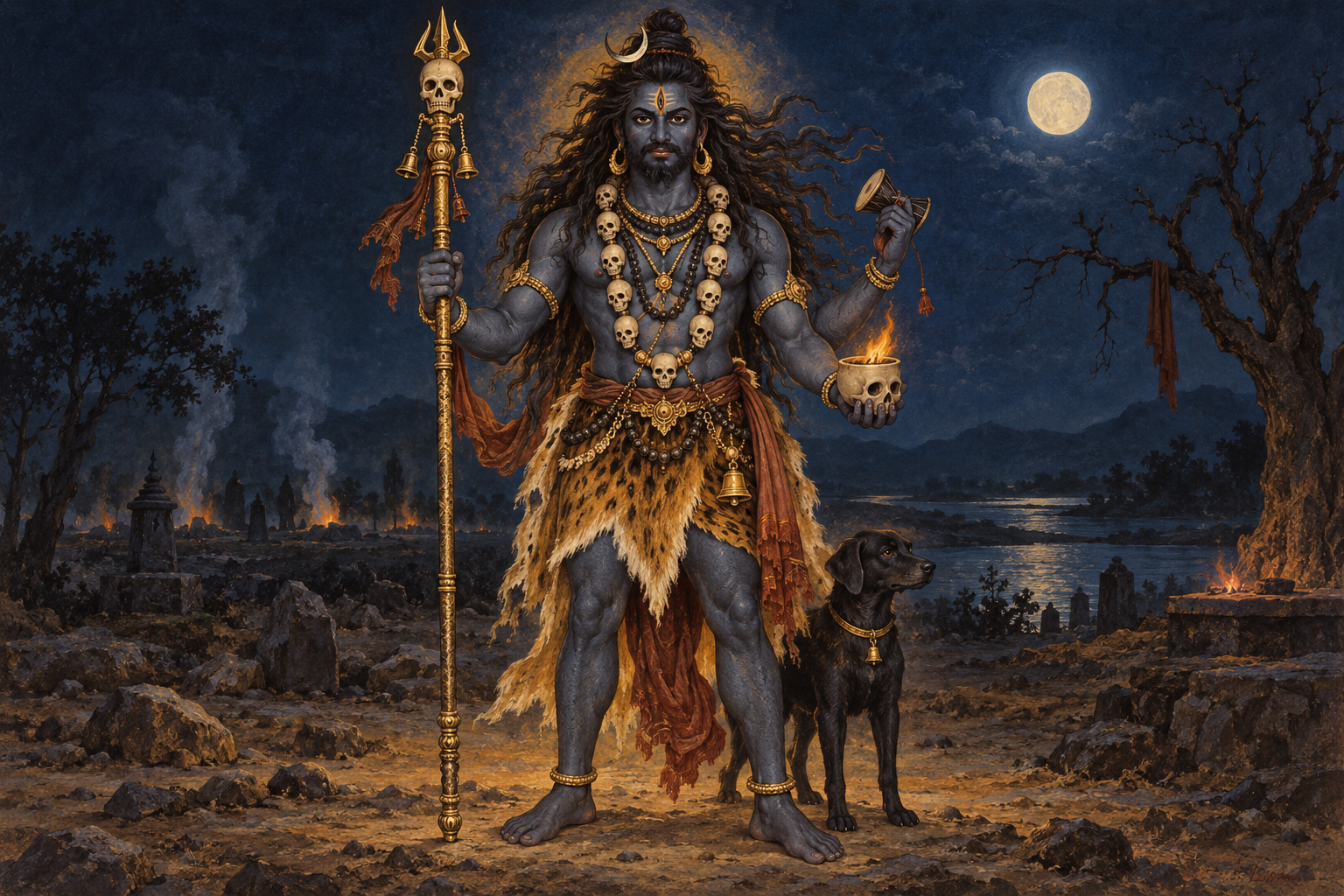
Fierce appearance is not the same as moral evil. Hindu sacred art can use an alarming form to represent power that enters experiences people would prefer to avoid: dissolution, terror, impurity, loss, or the collapse of pride. The disturbing surface is often what prevents the viewer from turning a demanding truth into a pleasant abstraction.
When a fierce form of Shiva carries the khatvanga, ask how the image connects ascetic detachment, mortality, and the destruction of false security. When a wrathful goddess carries it, ask what binding force her fierceness is directed against. Do not assume that the same emphasis applies to every form. The staff acquires its precise force through the deity’s larger identity and the tradition in which the image is worshipped.
This distinction prevents a common error. A viewer sees a skull, labels the figure sinister, and stops looking. That imports a ready-made horror vocabulary into an iconographic system with its own theological grammar. A better question is not, “Why is this deity evil?” but, “What fear, attachment, or obstruction is this fierce form equipped to overcome?”
The opposite error is to make the symbol harmless by translating it into a vague message about positivity. The khatvanga is meant to remain difficult. Its spiritual force depends on keeping death, bodily impermanence, and renunciation visible rather than converting them into decorative metaphors.
A five-step method for reading the complete image
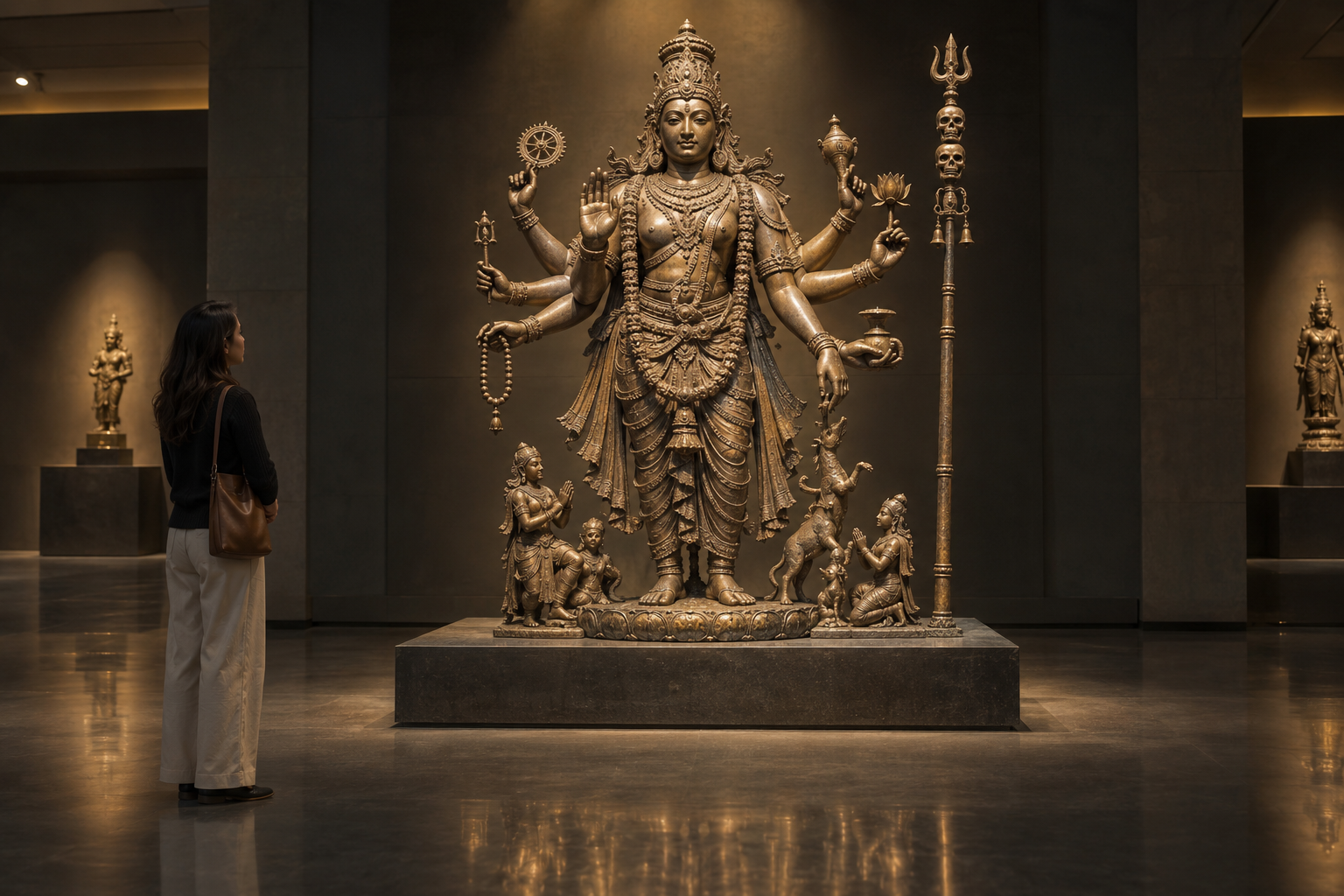
You can use the following method in a temple, museum, book, or online image archive. It keeps observation separate from interpretation and reduces the risk of assigning a meaning borrowed from an unrelated tradition.
- Record only what is visible. Note the length of the shaft, the form at its top, which hand holds it, and whether it is upright, lowered, or raised. Do this before deciding what the object means.
- Confirm the figure’s identity. Use the local name, accompanying inscription, temple account, or catalogue identification. Fierce forms should not be treated as interchangeable simply because they share a skull-bearing attribute.
- Read the ensemble. Consider the face, posture, gestures, other implements, attendants, and setting. An attribute functions as part of a visual sentence; separating one object from everything around it can reverse or flatten the intended meaning.
- Distinguish description from theology. A label such as “skull staff” tells you what an object looks like. It does not by itself explain why a particular deity carries it or what devotees understand it to disclose.
- Check the local interpretive tradition. After forming a provisional reading, compare it with material specific to that deity, temple, lineage, or artistic context. Retain broad themes such as mortality and renunciation, but allow the tradition to establish the final emphasis.
This method also helps when the workmanship is ambiguous. If you can identify the skull but not the material of the shaft, say that the image appears to depict a khatvanga rather than claiming more than the visible evidence allows. Careful uncertainty is better than a confident misidentification.
Key takeaways for your next encounter
- A khatvanga is a skull-topped staff, not a loose skull, skull vessel, or trident.
- The skull points toward mortality, while the human-bone shaft makes that truth immediate rather than remote.
- The implement can express renunciation, fearlessness, and the conversion of what is feared into a vehicle of spiritual insight.
- Its fierce appearance should not automatically be read as evidence of evil or as approval of ordinary violence.
- The identity of the bearer and the complete iconographic setting determine which meaning is primary.
- Your first interpretation should remain provisional until it is checked against the relevant temple or lineage tradition.
The next time you meet this symbol, give the initial shock a moment to settle. Name what you actually see, identify who carries it, and ask what attachment the image refuses to protect. Then consult the tradition attached to that particular form. That sequence lets the khatvanga remain what it is: unsettling enough to command attention, but precise enough to guide reflection.
References

Leave a Reply
You must be logged in to post a comment.