
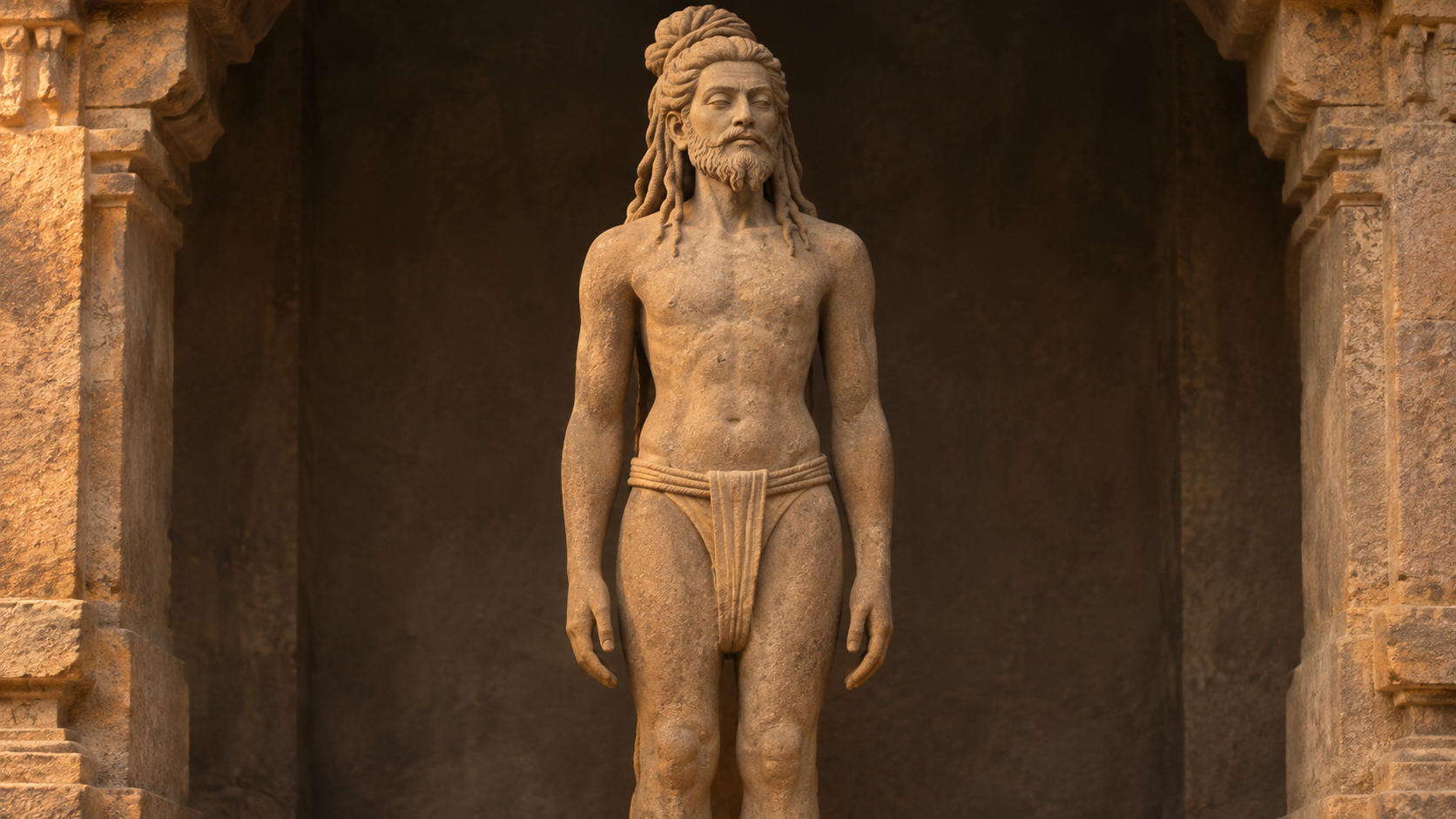
You see a sacred figure wearing almost nothing. Is the figure nude? Has part of the sculpture been lost? Or are you looking at a deliberately minimal garment with a precise spiritual meaning?
The answer matters because the kaupina occupies very little physical space but carries considerable iconographic weight. If you learn to identify its construction, distinguish observation from interpretation, and read it alongside the rest of the image, you can recognize an entire visual language of austerity without reducing every minimally clothed figure to the same type.
Identify the garment before interpreting the figure
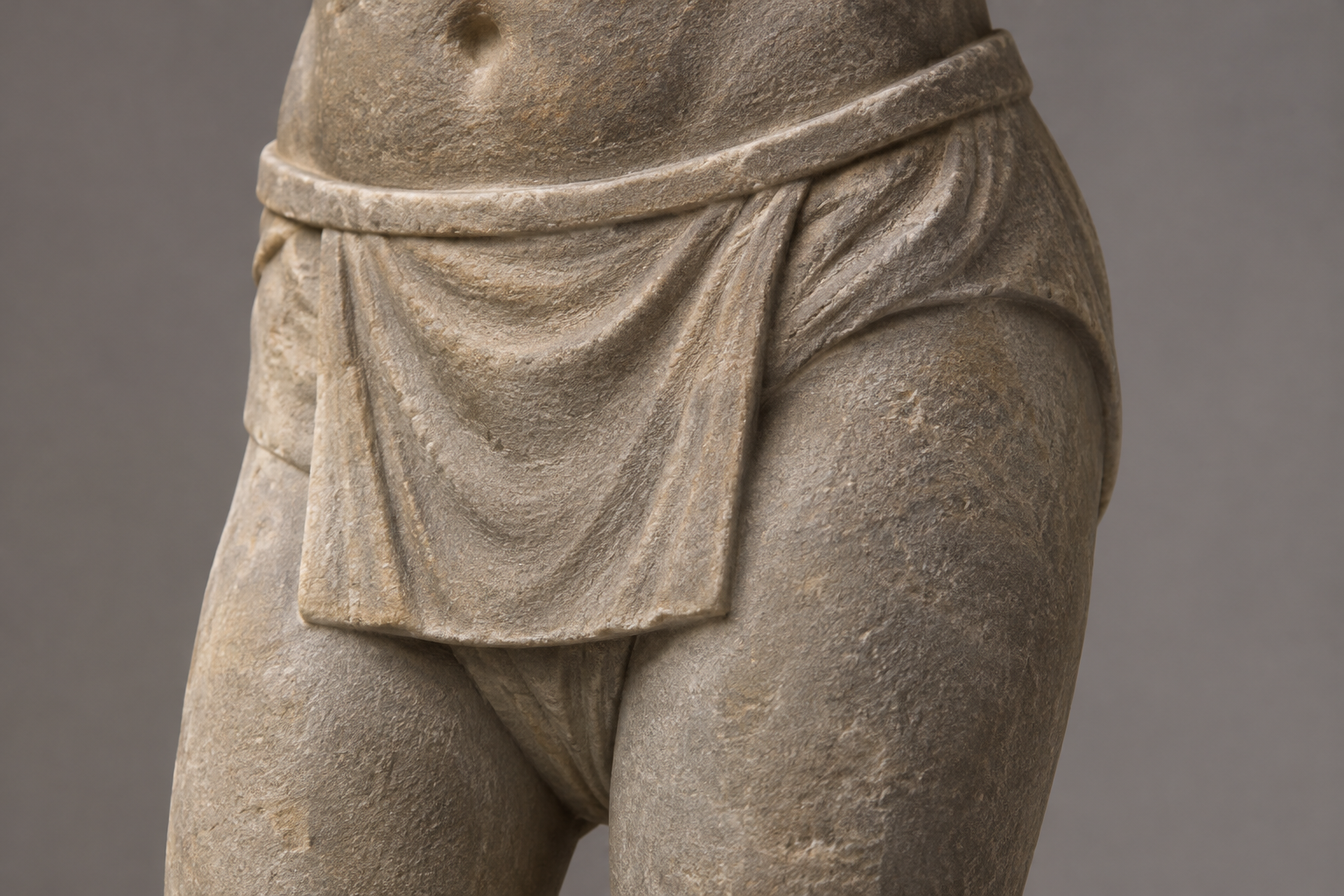
A kaupina is a slender piece of cloth drawn between the legs and held at the waist by a cord or plain band. It is among the most minimal forms of covering represented in Hindu temple sculpture and bronze imagery.
That construction is your first safeguard against guesswork. Do not identify a kaupina merely because a figure appears nearly unclothed. Look for a waist fastening and for some indication that cloth continues between the legs. The carving may be shallow, worn, partly hidden by the pose, or difficult to see in a frontal photograph, so the correct conclusion may sometimes be “probable kaupina” rather than certainty.
- Find the fastening point. Look for a cord, narrow band, or simple waist line that appears to hold a garment rather than an ornamented belt.
- Trace the cloth rather than looking for volume. A kaupina is narrow. Its identifying feature is the route of the covering, not a broad fold or hanging drape.
- Separate carved edges from damage. An irregular break, stain, shadow, or eroded anatomical line should not be promoted into a garment detail.
- Use more than one view when possible. If you are working from a museum photograph or digital archive, inspect alternate angles and higher-resolution images before making a firm identification.
- Record your confidence. “Visible,” “likely,” and “unclear” are more useful labels than forcing every image into a yes-or-no answer.
A waist band by itself is not conclusive. Nor does the absence of an obvious hanging cloth prove nudity. Your task is to determine whether the sculptor represented a functional minimal covering, even when only a few lines survive.
Minimal covering expresses disciplined renunciation
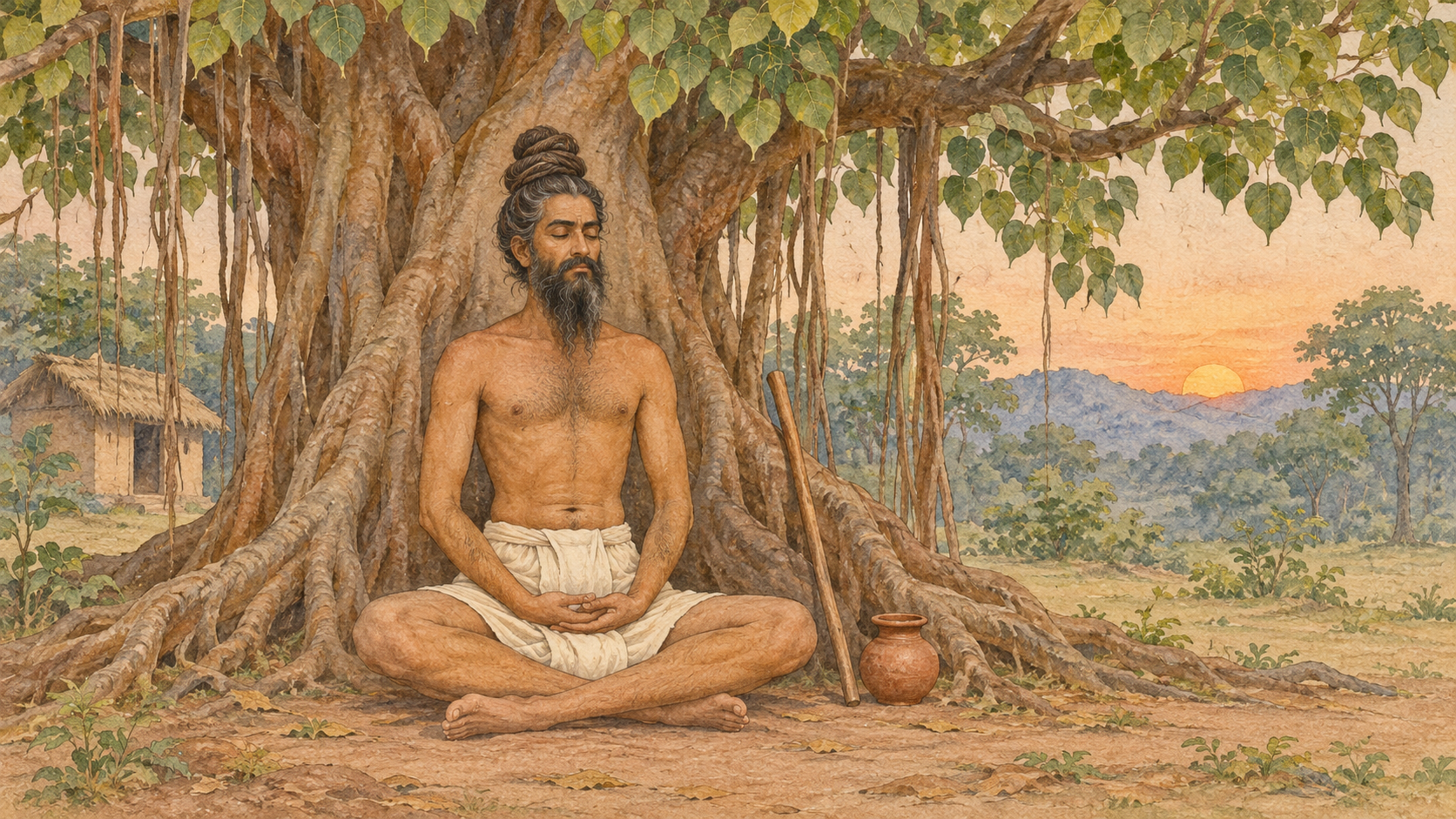
Once the garment is securely identified, its strongest symbolic associations are detachment, austerity, and renunciation. The visual statement is not simply that the figure possesses little clothing. It is that clothing has been reduced to the minimum required for bodily covering.
This distinction prevents a common misunderstanding. Poverty denotes material deprivation; the kaupina in a sacred iconographic setting frames material reduction as discipline. It presents a life in which display, luxury, and elaborate self-presentation have ceased to be governing concerns. The garment therefore communicates through restraint: what has been relinquished is as important as what remains.
You can read that restraint through three related ideas. Detachment concerns the figure’s relation to possessions. Austerity concerns the deliberate narrowing of bodily wants. Renunciation concerns a larger reorientation of life away from ordinary claims of status and display. These ideas overlap, but they are not interchangeable labels for misery, neglect, or contempt for the body.
The kaupina is also a useful reminder that iconographic importance is not measured by size. A crown dominates the silhouette; a loincloth may be reduced to a few carved lines. Both can direct your reading of the figure. The appropriate question is not “Which object is most visually impressive?” but “Which details establish the figure’s mode of life?”
Read the kaupina as one part of a visual argument
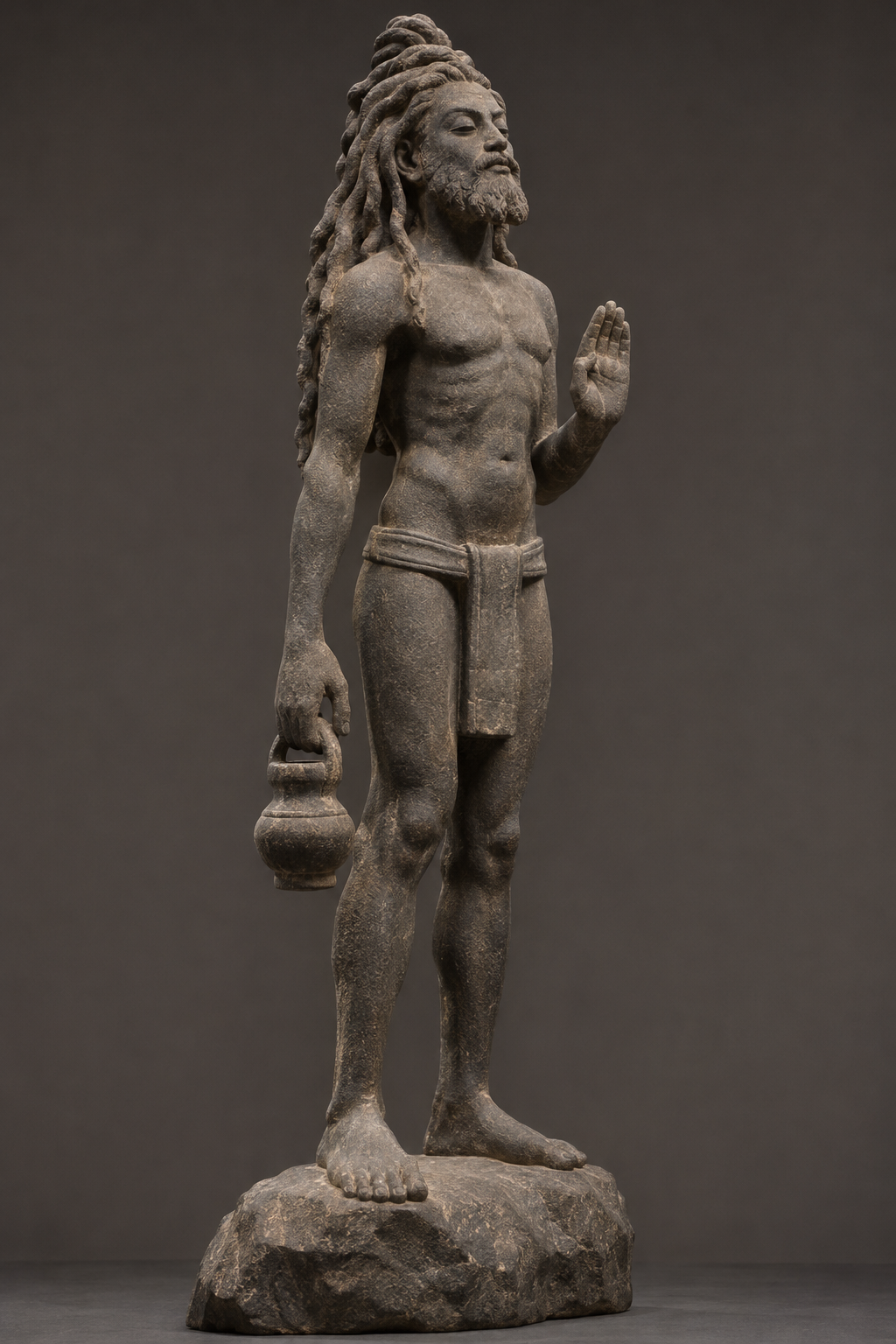
Treat the garment as evidence for an ascetic orientation, not as a name tag. A kaupina alone does not securely identify a particular deity, teacher, sect, episode, or historical person. That level of identification requires the rest of the image.
- Describe only what you can see. Note the waist cord or band, the narrow covering, the pose, ornaments, hair, objects held by the figure, accompanying figures, and architectural setting. Do not assign meanings yet.
- Look for a cluster of compatible cues. Ask whether the rest of the image reinforces restraint or introduces another role. The kaupina becomes more informative when independent details point in the same direction.
- State the narrowest defensible interpretation. “The garment suggests austerity” is stronger than an unsupported claim that it proves a specific identity or biography.
- Compare figures within the same sculptural setting. If every body is rendered with similarly abbreviated clothing, local style may account for part of what you see. If one figure is markedly more austere than richly presented companions, the contrast is more likely to be meaningful.
- Keep observation and inference separate. Write “I see a narrow waist-fastened covering” before writing “this suggests renunciation.” That simple order makes your reading easier to check and correct.
This method works especially well when a label is missing or vague. You do not need to solve the figure’s complete identity before noticing what the kaupina contributes. Begin with the secure claim, then allow other attributes to narrow the interpretation.
Avoid the five most common misreadings
“The figure is nude.” If a waist-fastened covering passes between the legs, describe the figure as wearing a kaupina or a minimal loincloth. Near-nudity and nudity are not iconographically identical.
“The small garment proves poverty.” In a sacred image, deliberate simplicity can express mastery over possession rather than an inability to obtain clothing. Read the form within its iconographic setting before assigning a social condition.
“This must show what everyone wore.” A prescribed or symbolic garment in temple art is not a census of ordinary dress. The image may be valuable evidence for a religious ideal without representing the normal clothing of every person in the same place or period.
“The kaupina identifies the figure completely.” It establishes a thematic direction more readily than a precise identity. Use accompanying attributes and context before moving from “ascetic presentation” to a named figure.
“More clothing means less spirituality.” Do not reverse a specific symbol into a universal hierarchy. The kaupina tells you how this figure has been presented. It does not provide a scale for judging the spiritual worth of people, traditions, or sacred figures represented in other garments.
Key takeaways for your next temple or museum visit
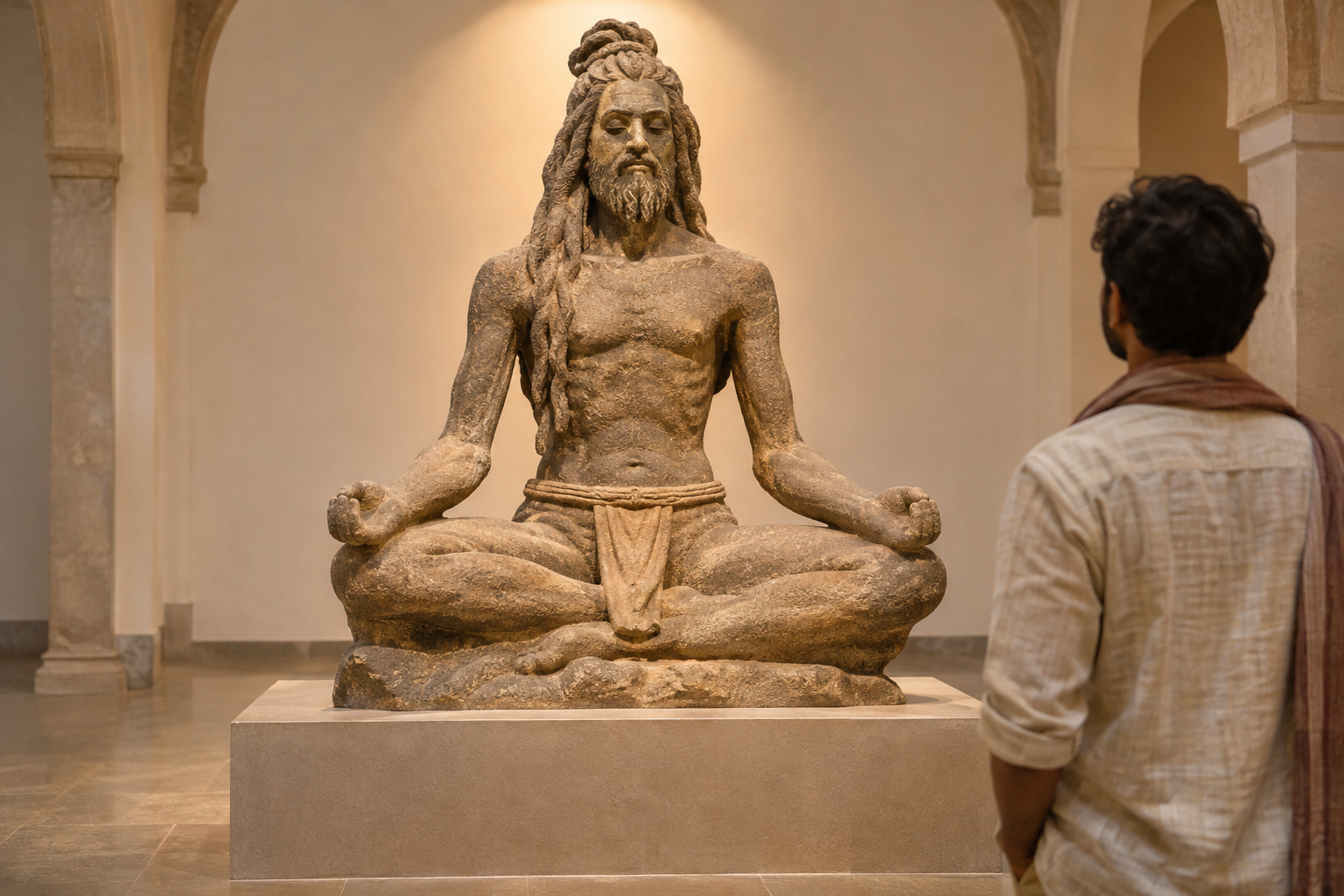
- A kaupina is a narrow covering secured at the waist and drawn between the legs.
- Its presence distinguishes deliberate minimal clothing from complete nudity.
- Its clearest iconographic associations are detachment, austerity, and renunciation.
- It should be read as a sign of disciplined simplicity, not automatically as evidence of poverty or neglect.
- It supports an ascetic interpretation but rarely establishes a precise identity by itself.
- The safest reading combines the garment with pose, attributes, surrounding figures, and the wider sculptural setting.
When you next encounter a minimally clothed figure, take thirty seconds before reading the label. Trace the waist fastening, follow the cloth, and note the surrounding cues. Then make three statements: “I see,” “this suggests,” and “this does not establish.” That disciplined sequence lets a very small garment reveal its meaning without making it carry more than the image supports.
References

Leave a Reply
You must be logged in to post a comment.