
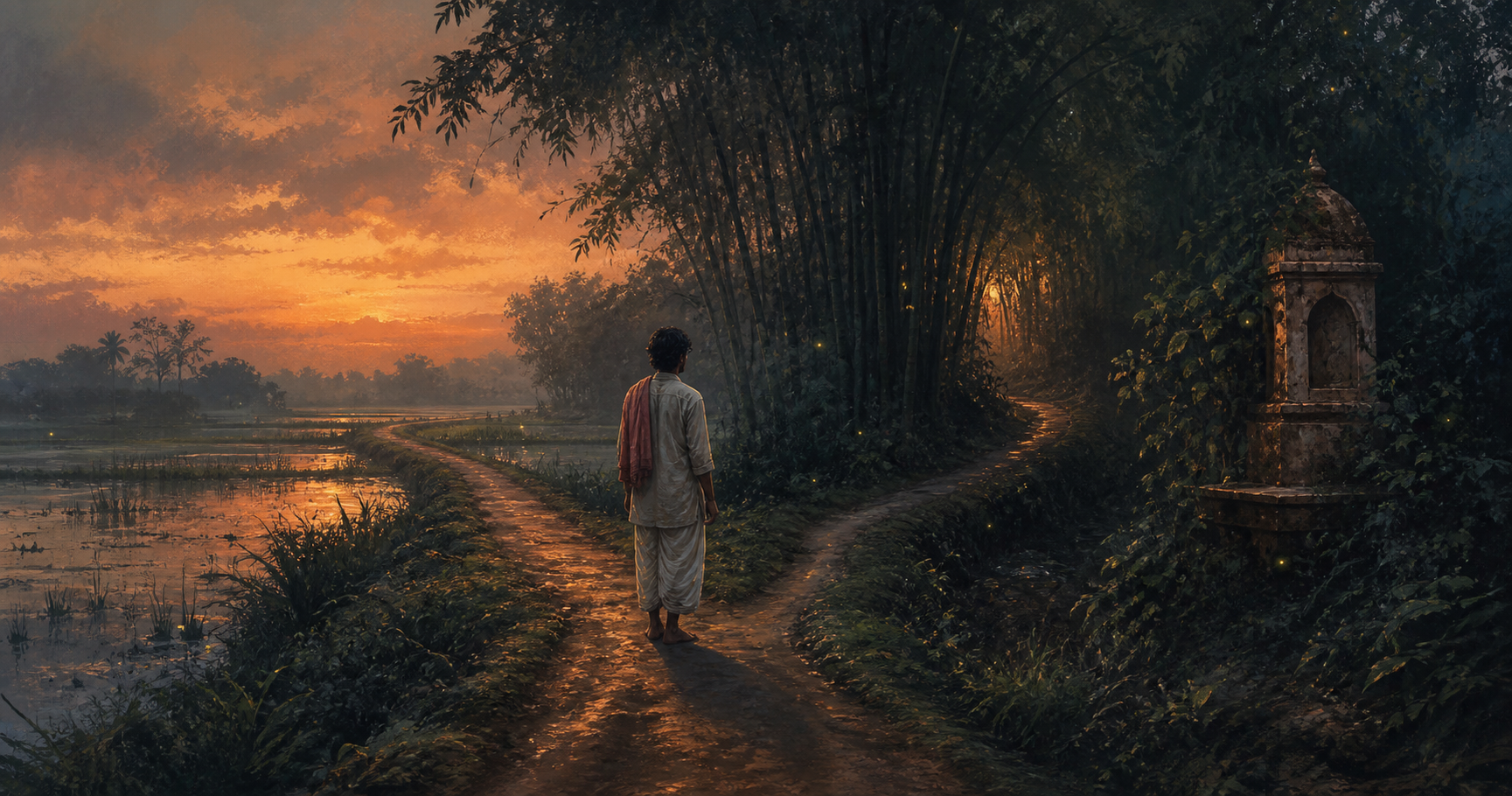
If you have heard a Kanabhulo story and wondered whether you are meant to believe it literally, decode it as village safety advice, or preserve it as sacred memory, don’t force a choice too quickly. The tale works because those readings can remain present at the same time.
The useful question is not simply whether a ghost can be proved. Ask what the story trains you to notice: fading light, misleading sound, uncertain ground, solitude, and the need for humility when you enter a place whose risks and meanings you do not fully understand. That approach lets you take Bengali sacred folklore seriously without turning belief into fact or dismissing inherited wisdom as superstition.
Read the landscape before judging the ghost
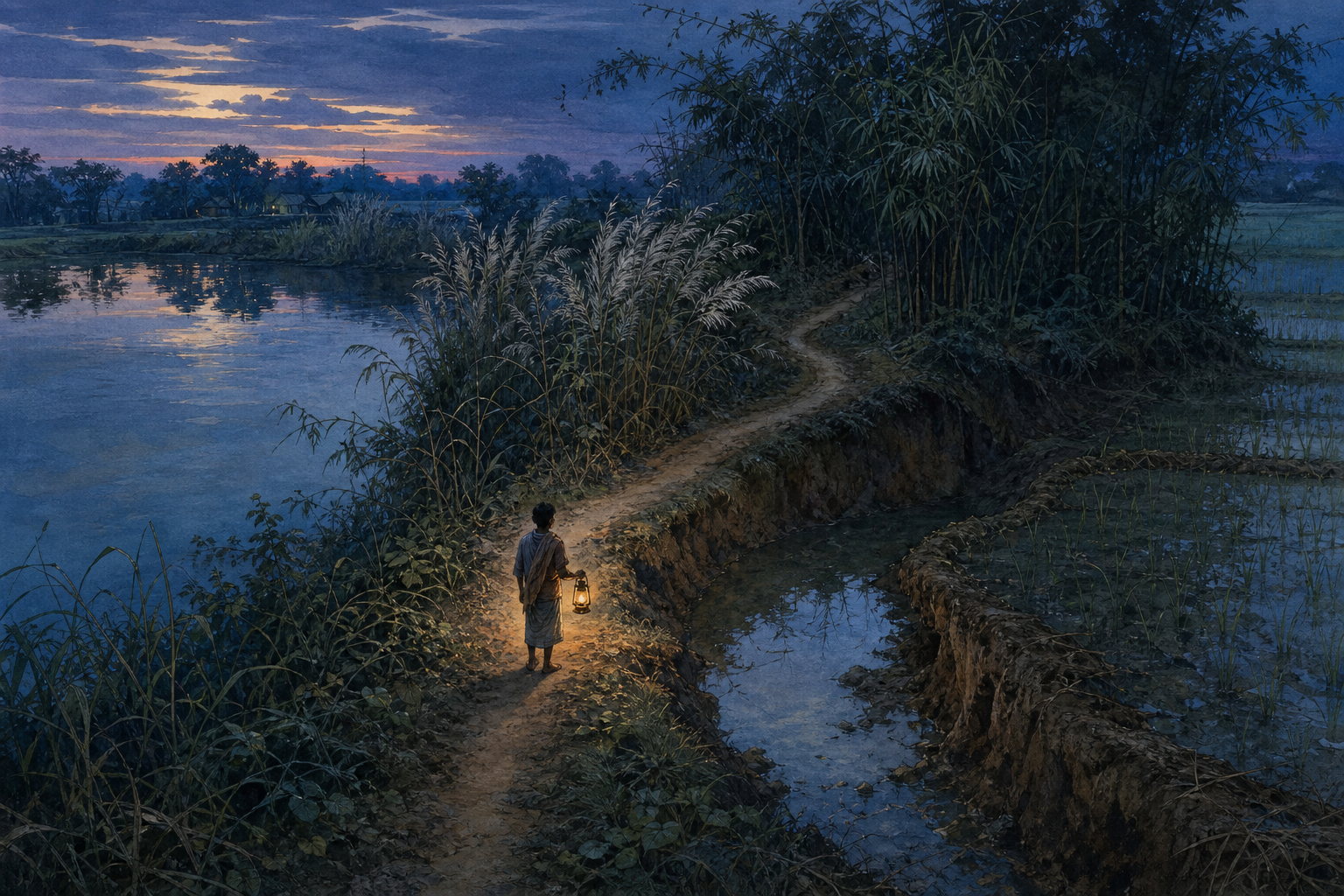
Kanabhulo Bhoot belongs to a particular kind of landscape. The spirit is associated with rural paths, narrow paddy embankments, canals, groves, and crossroads, especially when a person is travelling alone near dusk. Its recurring geography of ponds, shrines, banyan trees, cremation grounds, and three-way crossroads is not decorative scenery. It tells you where ordinary orientation gives way to uncertainty.
A narrow bund leaves little room for a careless step. Fog rising near water can erase familiar reference points. Monsoon clouds can shorten the useful daylight. Long, similar-looking paddy levees can make distance and direction hard to judge. Open water, vegetation, and uneven tree cover can also complicate your sense of where a sound began. The story concentrates those conditions into an unforgettable presence: something is making the traveller lose the way.
This is why you should map a Kanabhulo account before interpreting it. When you hear or read a version, identify five things:
- The threshold: Where did the safe or familiar world end—a village boundary, grove, canal bank, field, shrine, or crossroads?
- The conditions: Was it dusk, foggy, overcast, or otherwise difficult to see?
- The traveller’s state: Was the person alone, tired, hurried, or following a repetitive route?
- The first disturbance: Did the confusion begin with a voice, footsteps, a strange light, or a sudden certainty that the path ran another way?
- The return to orientation: Did company, light, a familiar landmark, stillness, or acknowledgement of a sacred place end the episode?
Those questions keep the story rooted in Bengal rather than reducing Kanabhulo to a generic horror character. They also reveal its practical structure: a person crosses a boundary, attention fails, danger increases, and a disciplined response restores the path.
Follow the sound that bends the traveller’s sense of direction
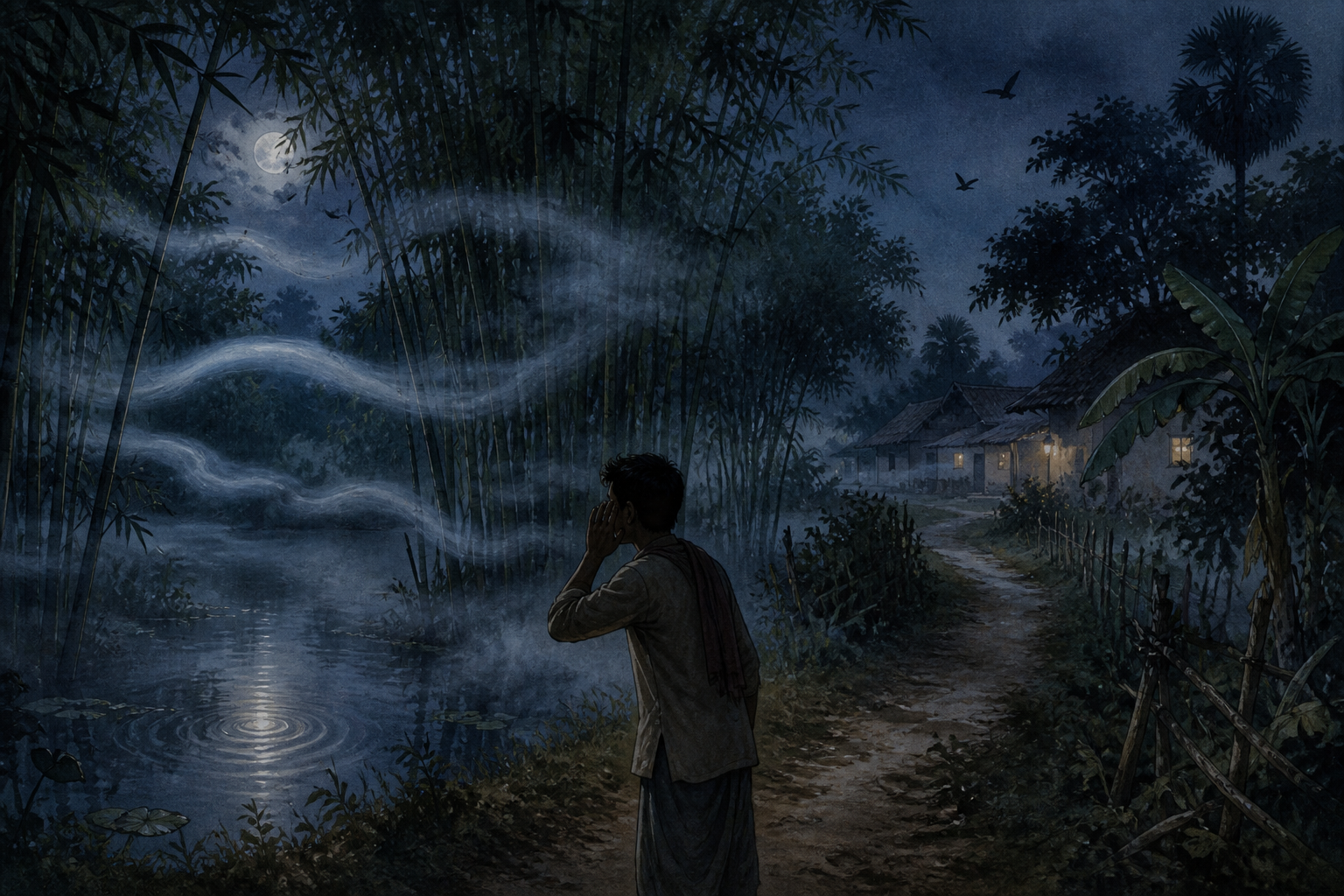
Kanabhulo is popularly understood through confusion and misdirection, with hearing carrying much of the disturbance. Familiar footsteps seem to follow your own. A known voice calls from an unexpected direction. A path you have walked before suddenly feels as though it turns somewhere else. The terror comes not from seeing a monster but from losing confidence in your own senses.
That emphasis matters. When visibility weakens, you depend more heavily on sound. Yet sound across water, foliage, and open fields does not always seem to come from its true point of origin. Fatigue and expectation can make an ambiguous noise feel familiar. Auditory pareidolia—the mind’s tendency to find meaningful patterns in uncertain sound—offers one possible explanation for hearing a recognisable voice or footfall where none was intended.
A perceptual explanation does not exhaust the tale. It can describe how confusion happens without explaining why Bengali communities remembered that confusion as an encounter with a morally charged presence. In the story, the sound tests conduct. Will the traveller abandon the known path, rush into darkness, separate from companions, or move without respecting the place?
Notice the difference between a spirit that merely attacks and one that misdirects. Kanabhulo does not always occupy the role of absolute evil. Some variants allow the mischief to end when the traveller pauses, invokes a sacred name, or acknowledges the sanctity of the surroundings. The figure can therefore appear as deceiver, trickster, warning, and reluctant guardian. Preserve that ambiguity when you retell the story. Turning Kanabhulo into either a harmless metaphor or an all-powerful demon removes the tension that gives the folklore its force.
Use the tale as a practical safety ethic
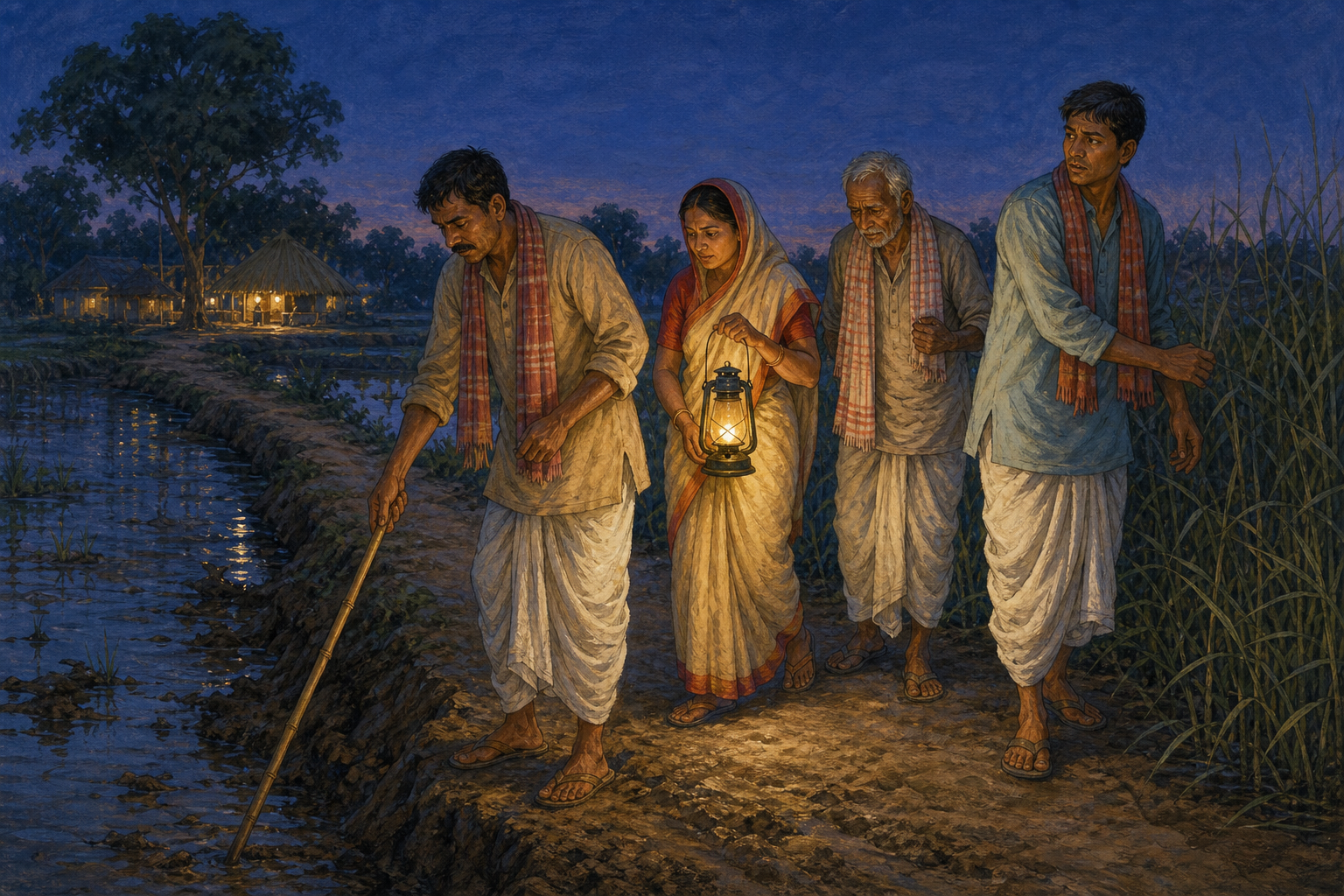
The clearest instruction carried by Kanabhulo folklore is behavioural: uncertainty is the moment to become more deliberate, not less. You do not need to settle the supernatural question before acting on that wisdom.
- Avoid solitary travel on an unfamiliar rural route near sundown. Company provides another set of eyes, ears, and memories when landmarks become unclear.
- Carry a dependable, charged light. Use it before visibility collapses, not after you have already lost the edges of the path.
- Stay on the known route. A marshy shortcut or an unverified turn becomes more dangerous when fog, cloud, fatigue, or repetitive terrain has weakened your sense of direction.
- Stop when certainty suddenly fails. Continuing quickly can turn mild disorientation into a fall, a water hazard, or a longer separation from the settlement. Steady your breathing and return mentally to the last landmark you knew.
- Verify an unseen call before following it. Do not step off a secure path merely because a distant sound resembles someone you know.
- Use spiritual practice to restore composure, not to replace physical caution. If repeating a sacred name or pausing at a wayside shrine belongs to your practice, let it slow the mind while you also check the route, light, ground, and companions.
This balance is important. Belief in a protective invocation is not a guarantee that an embankment, canal edge, or marsh is safe. Likewise, a sceptical traveller should not mock a practice that encourages stillness, controlled breathing, and renewed attention. The immediate task is to prevent confusion from becoming injury.
The same pattern explains why the folklore favours travelling together, carrying light, and pausing before entering uncertain ground. These are not vague moral ornaments. They are specific habits attached to the environmental risks of Bengal’s night paths. A memorable spirit gives those habits emotional weight, making the warning easier to carry across generations.
Keep the sacred and empirical readings in conversation
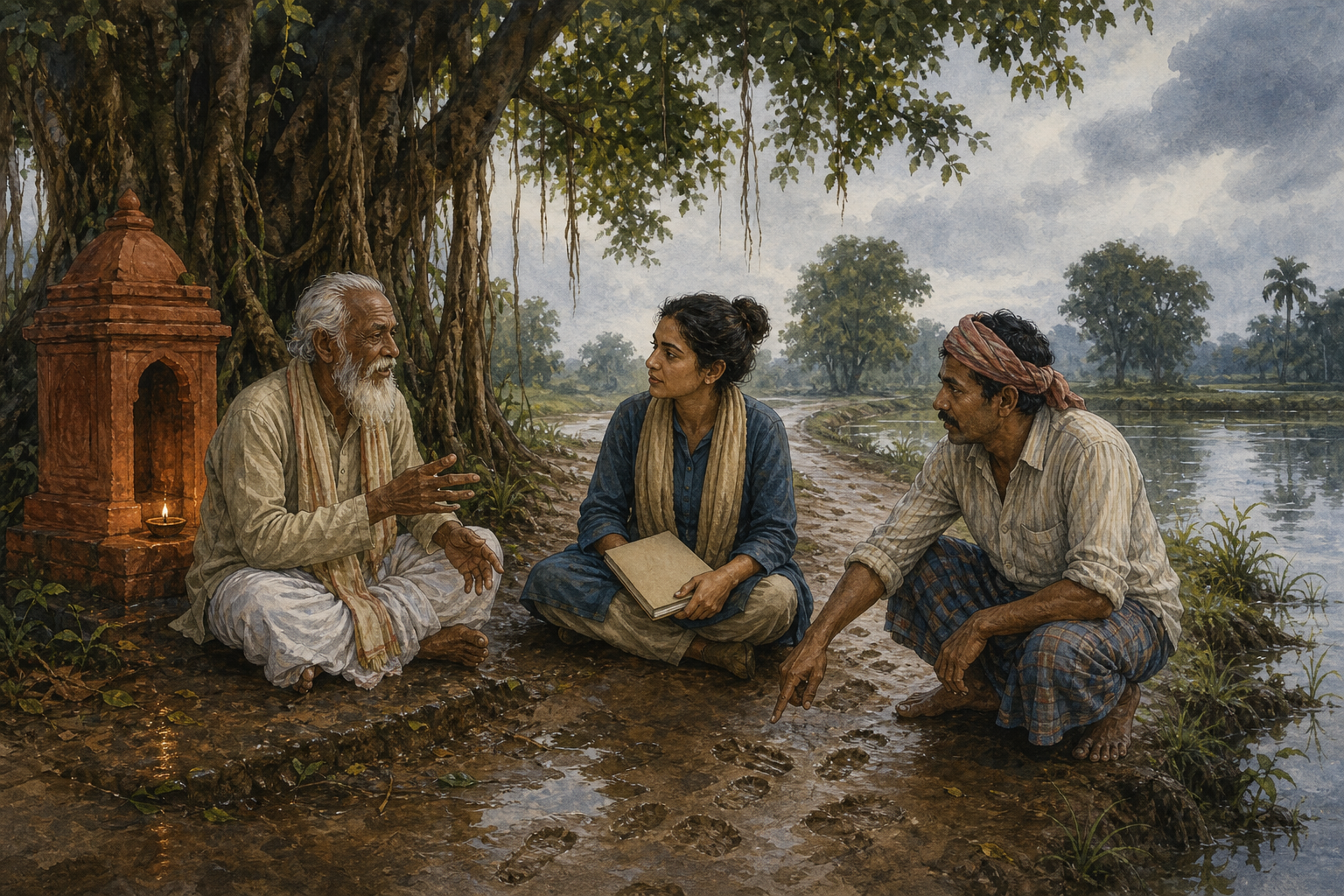
A natural reading asks how a traveller becomes disoriented. A sacred reading asks how a traveller should conduct themselves when certainty disappears. These are different questions, so one does not automatically cancel the other.
Fog, fatigue, ambiguous terrain, altered acoustics, and auditory pareidolia can help you understand the sensory mechanism. Marsh lights, sometimes connected in local explanation with gases over wet ground, offer a related example of an environmental event entering supernatural memory. Yet the sacred interpretation still carries questions that a physical mechanism cannot answer by itself: What respect is owed to a boundary place? When should confidence yield to humility? What practice steadies the mind before fear controls the next step?
The tale’s ethical pattern can resonate with values cultivated across Hindu, Buddhist, Jain, and Sikh traditions: mindful conduct, inner steadiness, compassion, and non-harm. That resonance should not be mistaken for proof that all four traditions teach an identical doctrine about Kanabhulo, spirits, shrines, or sacred names. Shared ethical vocabulary is not the same as interchangeable theology.
In village practice, shraddha, a quiet invocation, or repetition of a sacred name can serve as a way of gathering scattered attention. For a Dharmic reader, the important movement is from panic to awareness and from careless motion to responsible conduct. The spirit becomes a teacher not because every frightening event must be supernatural, but because the encounter exposes whether the traveller can remain inwardly steady while the outer path is unclear.
If you are recording or retelling a family or village version, protect this layered quality:
- Record the exact setting and sensory sequence before offering an explanation.
- Describe the name as popularly understood rather than presenting an uncertain folk gloss as proven etymology.
- Keep variant endings distinct. A version in which the spirit remains deceptive is not identical to one in which respectful acknowledgement ends the misdirection.
- Separate the teller’s interpretation from your own. A natural explanation can accompany the testimony without being inserted into the teller’s voice.
- Retain local features such as the bund, canal, shrine, grove, or crossroads. They carry ecological and sacred meaning that disappears in a generic haunted-road retelling.
- Do not present the story as a universal doctrine shared unchanged by every Dharmic community.
This method treats oral tradition as living cultural knowledge. It neither demands belief from the listener nor requires the teller to surrender belief before being heard.
Key takeaways for reading Kanabhulo folklore
- Kanabhulo is best understood through the relationship between spirit, traveller, and landscape—not as an isolated ghost character.
- Dusk, fog, canals, repetitive paddy paths, groves, and crossroads explain why orientation is the central danger.
- Voices and footsteps matter because uncertain hearing can pull a traveller away from the secure route when vision is already weak.
- Natural mechanisms can explain sensory confusion without erasing the tale’s sacred, ethical, or communal meaning.
- The practical response is concrete: travel with company, carry light, remain on known ground, stop when confused, and verify before following an unseen call.
- Prayer, shraddha, or repetition of a sacred name can support composure, but should accompany rather than replace ordinary physical safety.
- A responsible retelling preserves local geography, competing variants, and the distinction between shared Dharmic values and identical doctrine.
The next time you encounter a Kanabhulo story, write down four things before deciding what it means: the boundary crossed, the sense that failed, the danger created, and the act that restored orientation. If your retelling preserves all four, you will carry forward more than a ghost story. You will preserve a Bengali way of joining attention, community, landscape, and sacred responsibility on the uncertain path home.
References
