
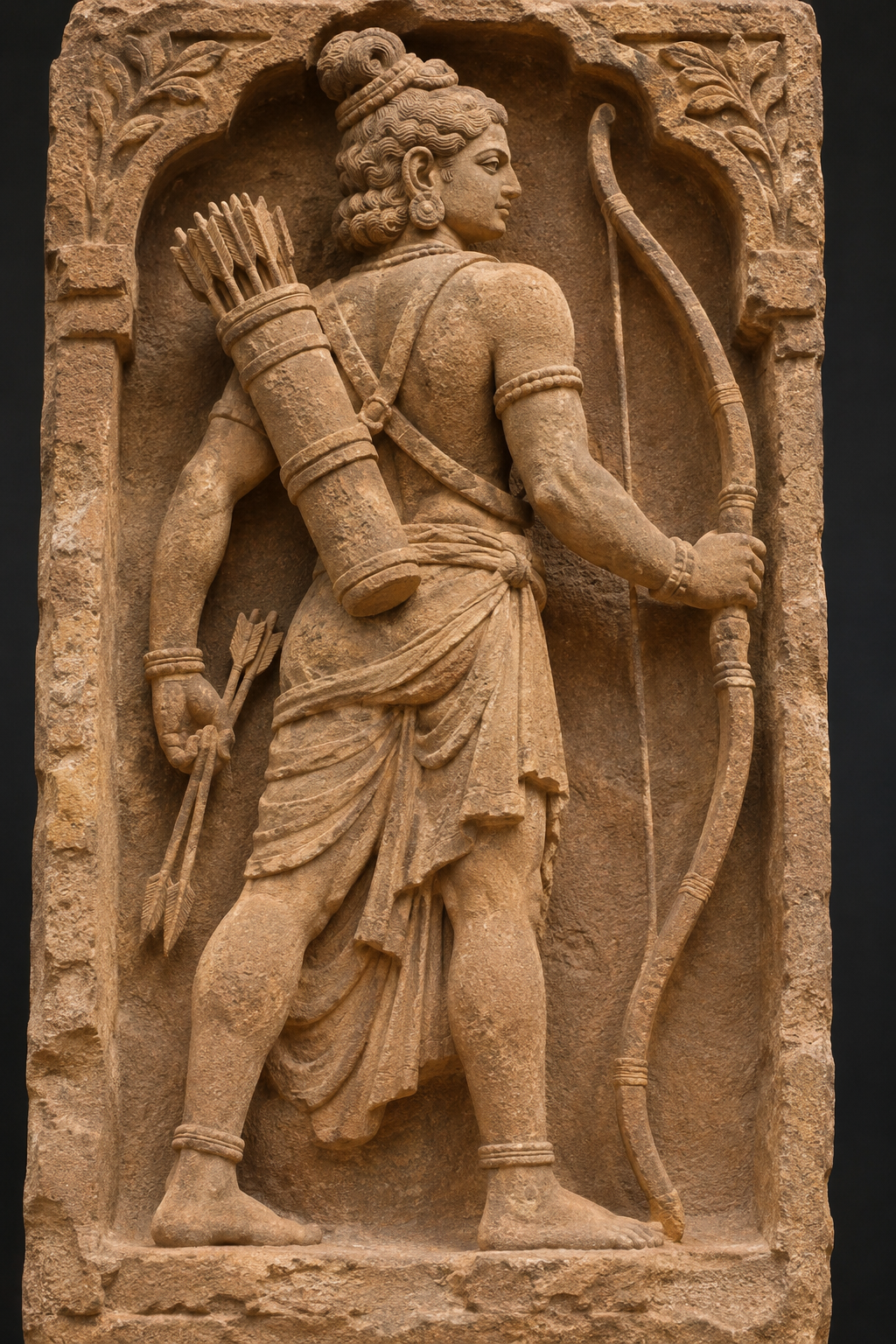
You are looking at a carved archer, and a container of arrows appears beside the figure. Does that quiver identify the deity? Does it signify warfare? Or is it simply practical equipment that the sculptor included for completeness? Begin with the object’s function before assigning it a larger meaning.
In Hindu sculpture, the quiver is known in Sanskrit as the tunira. It carries and preserves arrows, making stored readiness visible. That gives the object real symbolic weight, but not unlimited interpretive power: the tunira can deepen your reading of a figure, yet it normally cannot identify that figure by itself.
First separate the weapon from its supporting equipment
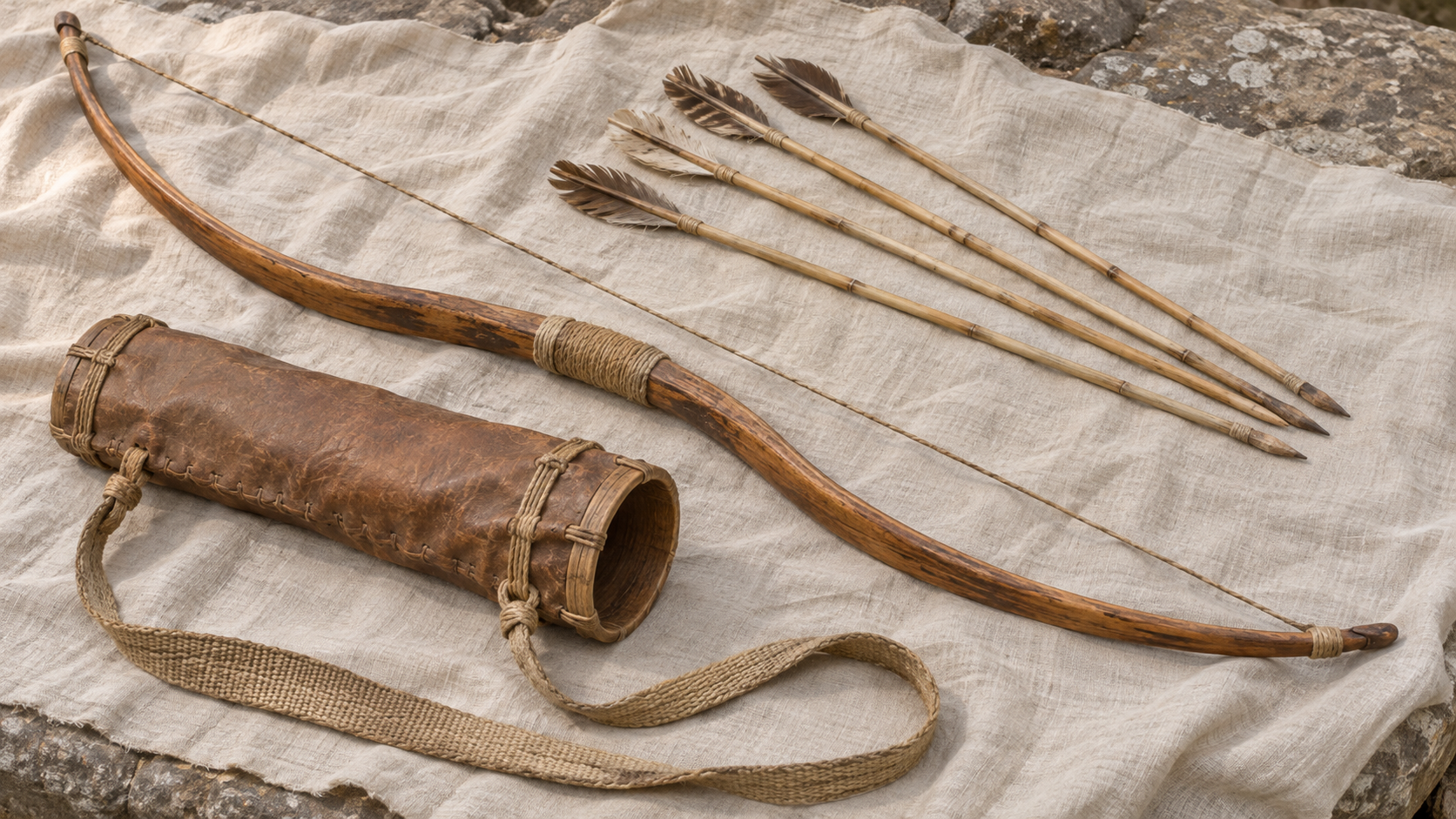
The first useful distinction is functional. A bow and an arrow are weapons. A quiver is the equipment that holds the projectiles and keeps them available. In iconographic terms, it belongs to a supporting class of attributes rather than functioning as a projectile in its own right.
This creates a simple visual grammar:
- The bow makes the figure’s ability to propel an arrow visible.
- The arrow represents the projectile itself, whether it is stored, selected, held, or prepared for release.
- The quiver represents the maintained supply from which arrows can be drawn.
That difference matters. An arrow receiving the figure’s immediate attention can suggest action moving closer to execution. A quiver places the emphasis one step earlier: capacity has been assembled and retained, but not every part of that capacity is being used. The image can therefore communicate preparedness without necessarily depicting an attack.
Do not mistake “supporting” for “unimportant.” An auxiliary attribute often tells you how to understand a more prominent one. The bow establishes martial capability; the quiver shows that this capability is provisioned rather than accidental or momentary.
What stored arrows add to the meaning of the figure
Readiness before action
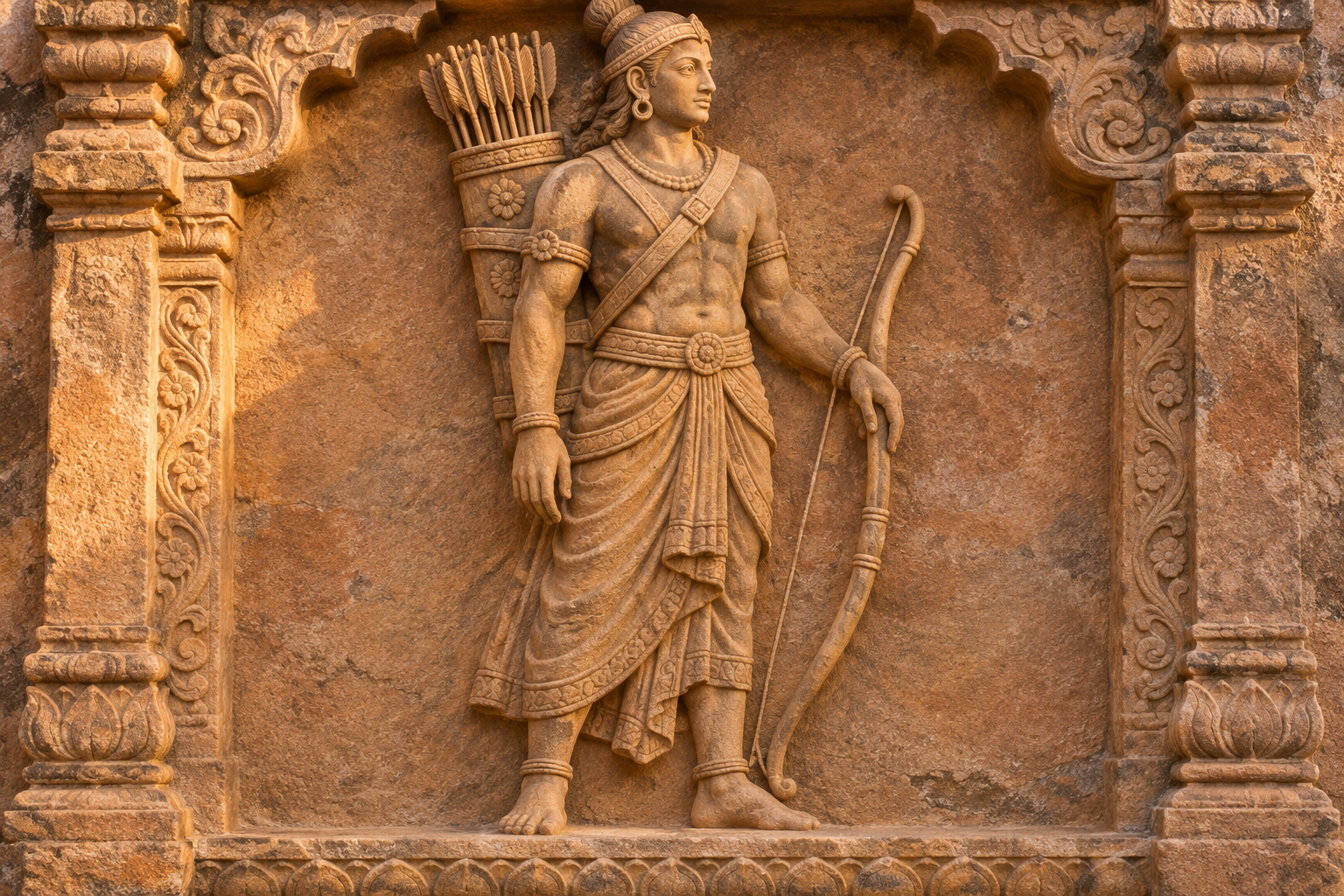
The most direct symbolic reading of the tunira is readiness. Arrows have already been gathered, placed in order, and kept within reach. The figure does not need to begin preparing after a danger or duty appears.
This is more precise than calling the quiver a generic symbol of power. Power can be present without preparation. The tunira emphasizes power made usable through prior arrangement. When you describe it, “prepared capacity” is usually more accurate than “aggression.”
Preservation and order
A loose arrow and a stored arrow are materially the same object, but their visual meanings differ. The quiver gathers separate projectiles into an ordered reserve. Its literal task of carrying and preserving them supports a broader interpretation of disciplined resources: strength has been collected, maintained, and placed under control.
That interpretation should remain connected to what the sculpture actually shows. The quiver does not automatically prove a fully developed doctrine about self-mastery. It gives you a visual basis for discussing order and disciplined capacity, especially when the figure’s posture and other attributes reinforce calm command rather than uncontrolled action.
Capacity that continues beyond one arrow
A single arrow concentrates attention on one projectile. A quiver implies that the figure’s capability is not exhausted by that one arrow. It can therefore suggest continuity, endurance, or the ability to respond more than once.
Keep the claim proportionate. A quiver does not by itself establish an inexhaustible supply, invincibility, or any particular number of arrows. It supports the narrower conclusion that the figure possesses a prepared reserve.
Force held under purpose
The tunira occupies the interval between possessing force and releasing it. That interval allows a sculpture to evoke restraint, vigilance, or duty when the wider composition supports such a reading. The arrows are available, but availability is not the same as use.
This is one reason a quiver should not be reduced to a sign of violence. It can make the possibility of force visible while leaving the decision to act unresolved. If the figure is composed and the weapon is not being discharged, readiness under control may be the stronger reading.
A five-step method for reading a tunira in context
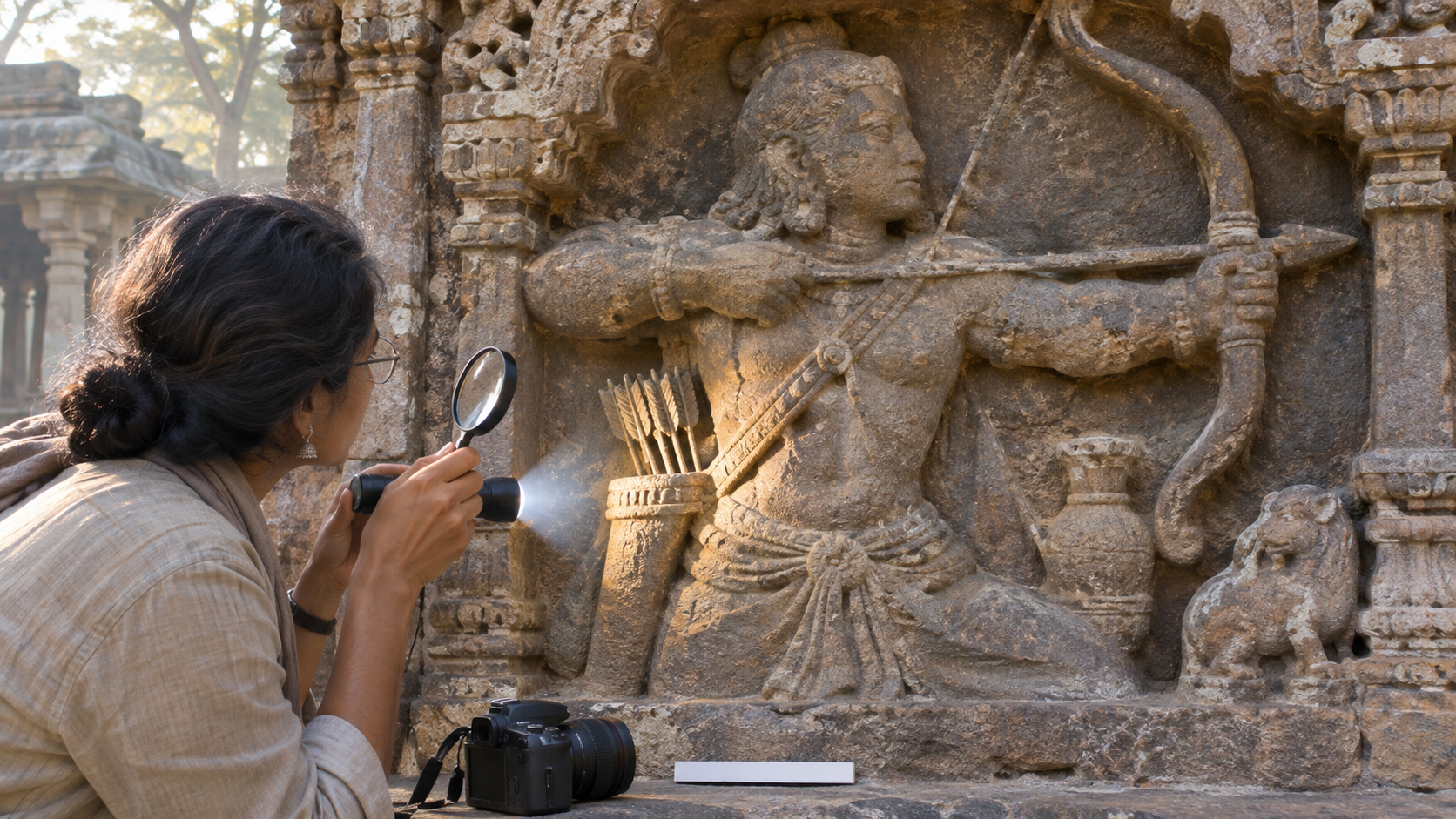
- Identify the object at the literal level. Look for a container associated with arrows. Do not label an indistinct projection as a quiver merely because the figure also carries a bow.
- Note what is active and what is stored. Is an arrow being handled? Is the bow being used, merely carried, or difficult to read because of damage? The relationship among the three objects is more informative than the presence of any one of them.
- Read the whole cluster of attributes. Consider the figure’s posture, hand gestures, other implements, companions, and surrounding forms. The tunira modifies that cluster; it does not erase it.
- Establish the kind of image you are viewing. A self-contained sacred figure and a figure inside a narrative scene ask different questions. In a narrative, the quiver may first serve the depicted action. In a standalone image, its enduring symbolic role may receive more emphasis.
- State only what the evidence supports. Say that the quiver “reinforces prepared martial capacity” before claiming that it proves a particular identity, event, or philosophical doctrine.
This method keeps description and interpretation in the right order. You first establish what the sculptor represented and how the objects relate. You then ask what that relationship contributes to the image’s meaning.
It also helps when a sculpture is weathered or incomplete. If no arrowheads remain visible, do not immediately interpret the quiver as empty. Record the uncertainty. Loss of detail can change what you see without having been part of the intended symbolism.
Four conclusions the quiver cannot support on its own
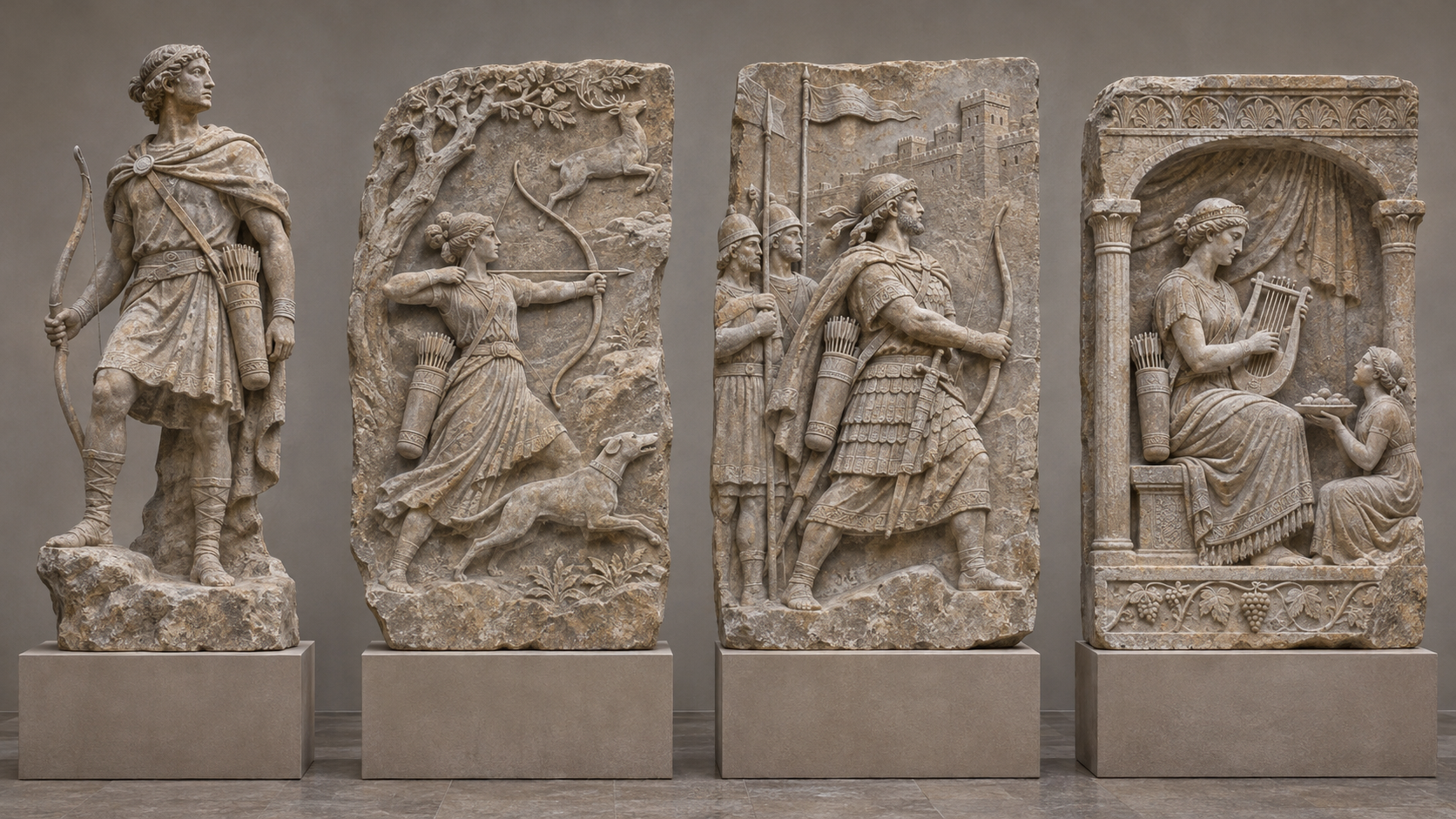
A good iconographic reading includes limits. Avoid these common leaps:
- “The figure carries a quiver, so it must be a specific deity.” A supporting attribute is rarely a sufficient identification key by itself. Confirm identity through the complete set of attributes and the image’s context.
- “The quiver means the figure is attacking.” Stored arrows establish capability and preparation, not necessarily present action.
- “Many arrows mean unlimited destructive power.” The visible reserve supports continuity of capacity, but not an automatic claim of infinity or invincibility.
- “Every quiver carries the same moral lesson.” Readiness, restraint, vigilance, and duty are related possibilities, not interchangeable fixed definitions. The surrounding composition determines which interpretation is strongest.
The most reliable reading can operate on several levels without confusing them. Literally, the tunira is an archer’s container. Iconographically, it supports the figure’s martial equipment. Symbolically, it can make preparedness, preserved capacity, and ordered force visible. A philosophical meaning becomes persuasive only when it grows from those levels and agrees with the rest of the image.
Key takeaways: a field checklist
- Confirm that the object is a container associated with arrows before naming it a tunira.
- Distinguish a stored reserve from an arrow being selected, held, aimed, or released.
- Use “readiness” or “prepared capacity” before reaching for broader claims about aggression or power.
- Check the pose, gestures, companion objects, figures, and narrative setting before identifying the subject.
- Treat missing details cautiously when the carving is damaged or eroded.
- Let the quiver reinforce a conclusion; do not make it prove more than it can.
On your next temple or museum visit, write two sentences about the quiver. Make the first purely descriptive: “The figure carries a quiver containing arrows.” Make the second interpretive: “The quiver presents the figure as prepared and equipped, with force held in reserve.” Add restraint, vigilance, or duty only when the rest of the sculpture gives you a reason. That small discipline turns a quick impression into a defensible reading.
References

Leave a Reply
You must be logged in to post a comment.