
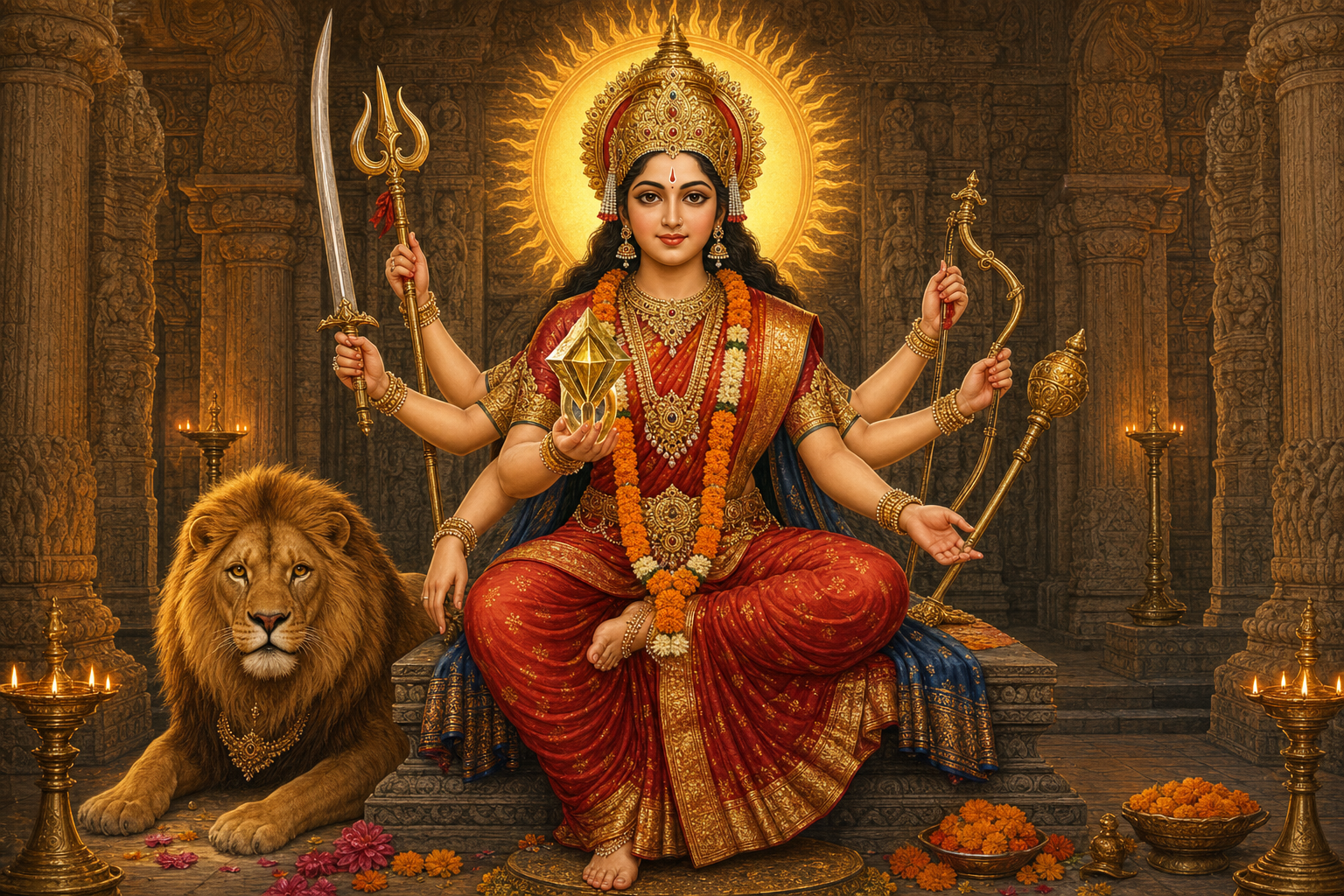
You may be standing before a shrine image, studying a calendar print, or choosing a murti for worship and wondering how Vajreshwari can look serene, radiant and heavily armed at the same time. The apparent tension is the key: her iconography joins unwavering power to compassionate protection.
You do not need to memorise a catalogue of objects to understand her. Begin with the vajra, then read the halo, eyes, weapons, posture, colours and vahana as one visual teaching. That approach will help you recognise what the form asks of a devotee: clear judgment, disciplined desire and the courage to preserve what is right.
Begin with the vajra, not the number of arms
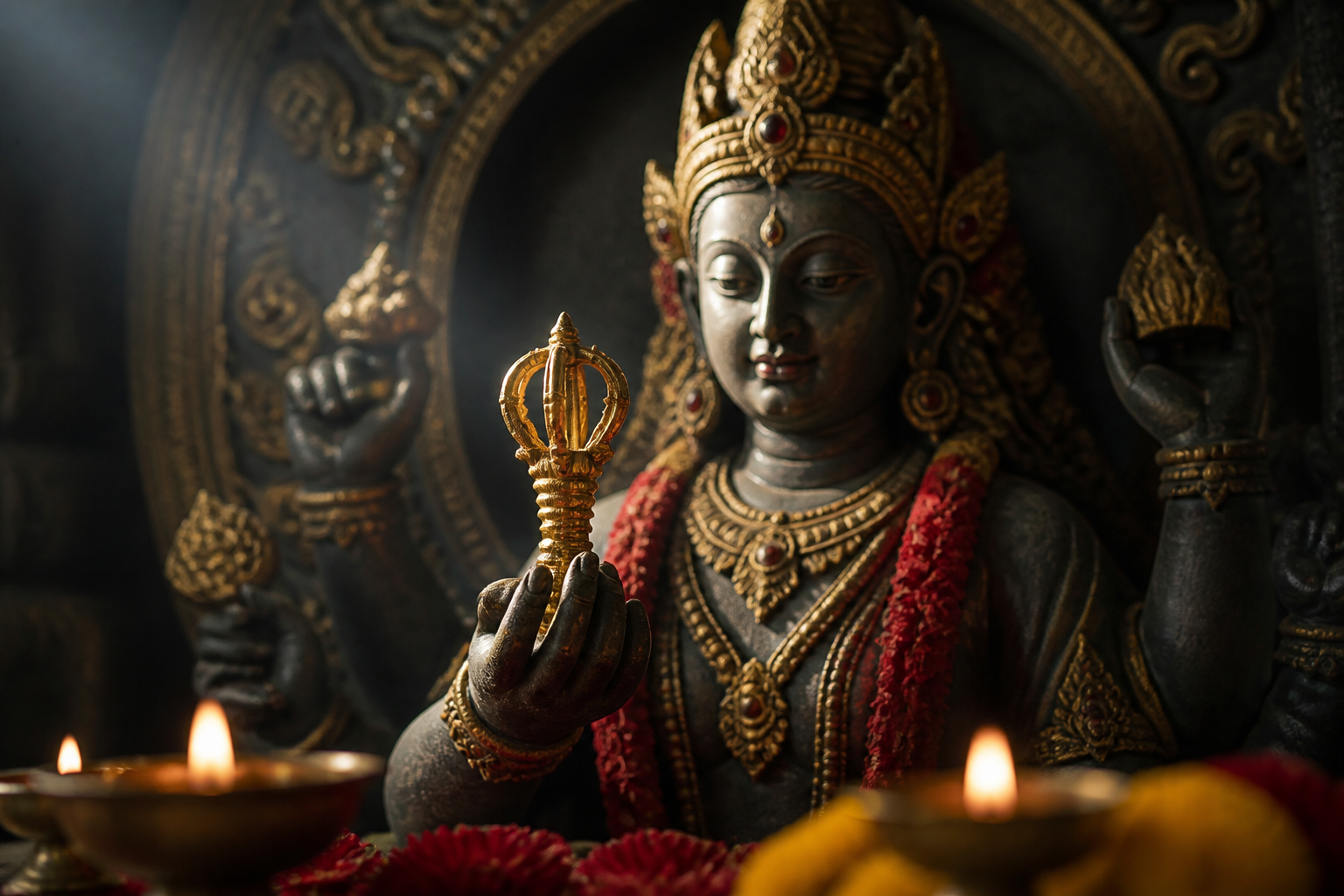
The name Vajreshwari directs your attention to the vajra as thunderbolt and diamond. The thunderbolt conveys concentrated, decisive force. The diamond conveys that which is not easily broken or corrupted. Together they express firm resolve guided by indestructible wisdom.
This is why the vajra should not be read merely as a weapon. Its deeper question is not, “What can I overpower?” but, “What truth must I refuse to abandon?” Vajreshwari’s strength protects dharma; it is not permission to turn anger, pride or personal preference into a sacred cause.
Her multiple arms, commonly shown as four to eight, make several divine capacities visible at once. Do not become preoccupied with finding an identical count in every representation. Hindu murtis vary by temple tradition, regional convention and artistic composition. The plurality of arms matters more than a rigid numerical test: protection, discernment, restraint, purity and sacred authority are operating together.
If you are trying to identify an unfamiliar image, never rely on one shared object. A lotus, sword, trishula or lion can appear with more than one deity. Look for a cluster of signs, especially the vajra, solar radiance, accompanying attributes and the name or tradition given by the shrine. Local temple identification should carry more weight than a checklist assembled from an unrelated picture.
Read the whole murti as a visual grammar
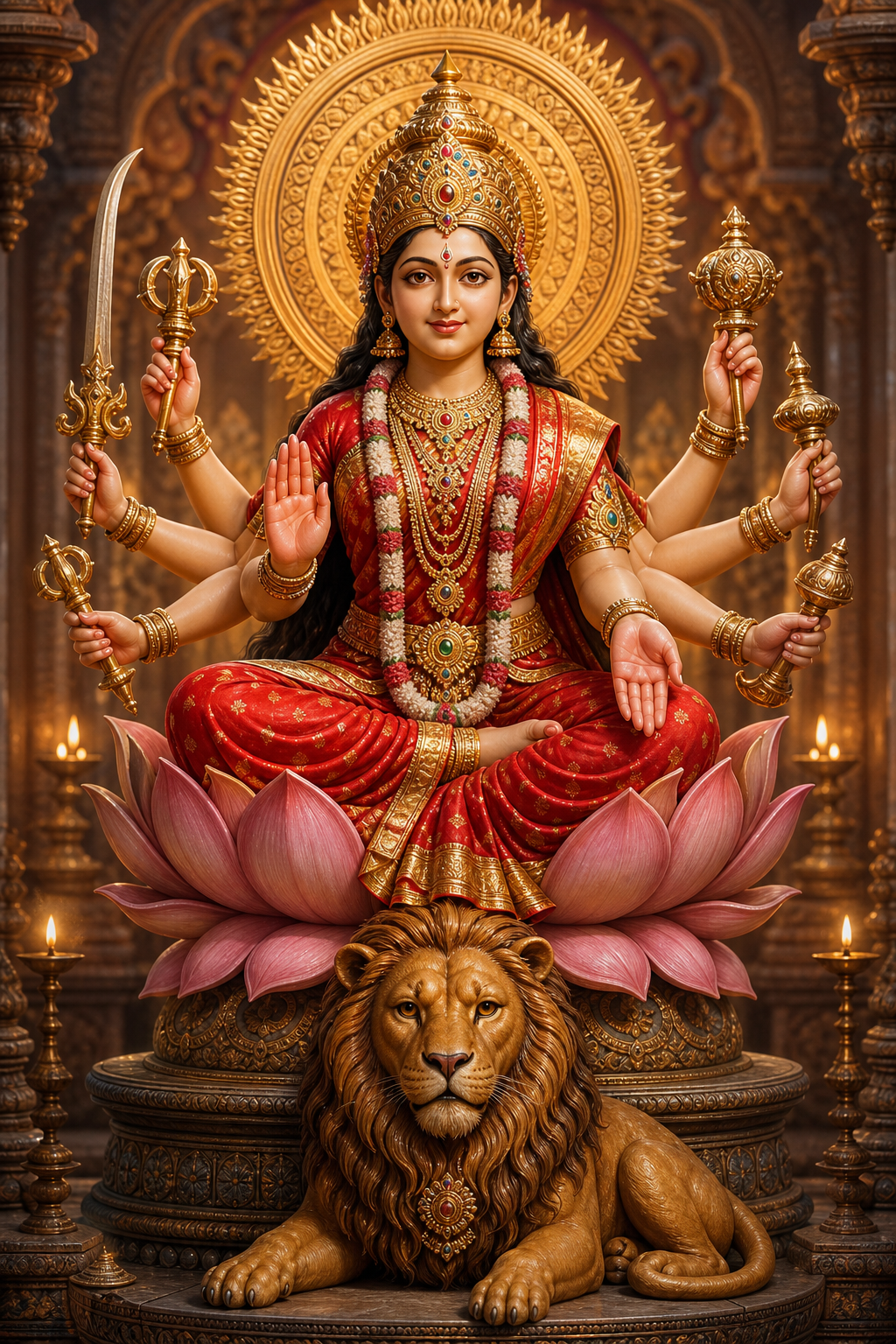
Every attribute contributes to the meaning of the whole form. The following reading is a practical starting point, not a claim that every image must contain every feature.
| Feature | What it directs you to notice | A question for contemplation |
|---|---|---|
| Vajra | Unbreakable resolve, concentrated insight and truth that cannot be compromised | Which principle must remain firm even when convenience pulls me away? |
| Trishula, sword or shield | Protection joined to discernment; harmful confusion must sometimes be confronted rather than accommodated | What must I distinguish, defend or bring to an end? |
| Lotus | Purity and an aspiration that remains directed toward the sacred | Is my goal clean in both its purpose and its means? |
| Noose, bell or conch | Restraint, sacred order and attention gathered around a higher purpose | What impulse must be governed so that my action serves dharma? |
| Three eyes | Awareness that sees beyond an immediate or superficial appearance | What am I failing to see because I am reacting too quickly? |
| Solar halo | Tejas: radiance that illuminates, sustains and clarifies | What would become obvious if I looked at this situation without fear or self-deception? |
| Red or golden clothing | Vitality, auspiciousness and active divine presence | How can insight become disciplined action rather than remain a private thought? |
| Lion or tiger vahana | Fearless guardianship and royal dignity | Can I act firmly without becoming reckless or cruel? |
The weapons and the serene face must be interpreted together. If you notice only the weapons, you can mistake protective force for aggression. If you notice only the calm expression, you can mistake serenity for passivity. Vajreshwari’s composure shows that decisive action need not arise from panic. Her arms display power; her face reveals mastery of that power.
Posture adds another layer. Padmasana presents centred stillness. Lalitasana, the poised posture of royal ease, presents sovereignty that does not need to strain or advertise itself. In either case, the visual lesson is disciplined command: the Goddess is not driven by the forces she governs.
A lion or tiger similarly intensifies the protective meaning. The animal communicates fearlessness, while the Goddess’s mastery of it places strength under conscious direction. For you, the distinction is practical. Courage is not the absence of powerful instinct; it is the ability to place that instinct in the service of a just purpose.
The solar aspect changes how you understand her blessings
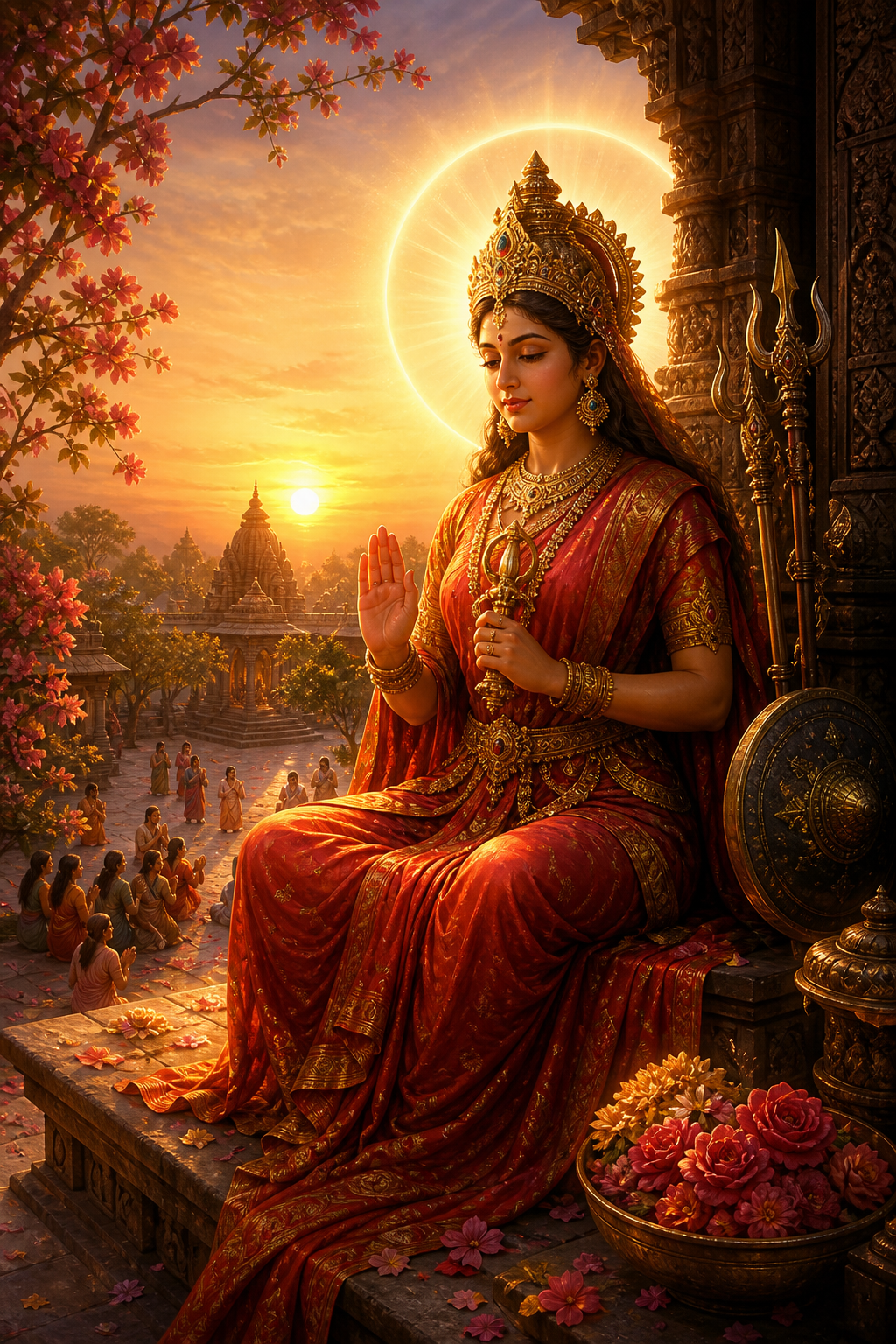
Vajreshwari is described within this devotional interpretation as the sun aspect of the divine feminine trinity. That does not simply mean brightness. The sun illuminates, sustains and makes clear. Her solar quality therefore points to tejas: radiant energy expressed as understanding, vitality and the power to preserve order.
This solar dimension explains why a halo, golden tones and red vestments matter. Gold carries the sense of radiance and auspiciousness. Red communicates living force and active Shakti. The calm face keeps that vitality from being mistaken for uncontrolled intensity. Light, energy and sovereignty remain integrated.
It also changes how you should approach the idea that Vajreshwari fulfils desires. Her grace is associated with rightful aims, including artha and kama when they remain integrated with dharma. This is not a blank cheque for every impulse. The blessing carries an ethical test: Is the desire worthy? Is the timing right? Will its fulfilment benefit life beyond your immediate appetite?
Before asking for success, name the desire precisely. Then inspect its means as carefully as its goal. A wish that depends on deceit, humiliation, exploitation or abandonment of duty has already failed the dharmic test, even if the desired result looks attractive. Vajreshwari’s light is useful precisely because it exposes the motive hidden inside the request.
The thunderbolt and the sun therefore perform different but complementary work. The sun reveals what is true; the thunderbolt gives you the resolve to act on what has been revealed. Clarity without resolve remains inert. Resolve without clarity becomes dangerous. Her iconography refuses both failures.
Notice Dharmic echoes without erasing real differences
The vajra has a particularly strong place in Vajrayana Buddhism, where it signifies immutable reality and skilful means. Jain traditions do not require an identical theology for a meaningful resonance to appear: steadfast vows and disciplined adherence to ahimsa express an ethical firmness comparable to the diamond’s unyielding quality. Sikh teachings on fearless righteousness and seva likewise show strength becoming worthy through truth and service.
These are resonances, not interchangeable definitions. Vajreshwari remains a Hindu form of the Divine Mother. A Buddhist vajra, a Jain vrata and Sikh seva belong to distinct traditions with their own teachings and practices. You honour Dharmic kinship more faithfully when you preserve those distinctions rather than forcing every symbol into one system.
The genuine common ground is ethical. Inner strength is not complete until it protects the vulnerable, restrains destructive impulses and serves truth. Compassion is not complete if it becomes an excuse for cowardice or indifference. Across these Dharmic resonances, courage and care correct each other.
This distinction can guide inter-tradition conversation. Start with the shared moral question – how human strength should serve truth and living beings – before making claims about theological equivalence. You will find meaningful connections without reducing Hinduism, Buddhism, Jainism or Sikhism to decorative versions of the same idea.
Use Vajreshwari’s iconography as a practice of discernment
You can turn the visual language of the murti into a short practice before making a difficult decision. The aim is not to seek a mechanical omen from an image. It is to let the image order your attention.
- Observe before interpreting. Notice the face, hands, attributes, colours, posture, halo and vahana. Do not rush to isolate the most dramatic weapon.
- Name your actual desire. State what you want in one plain sentence. Replace vague requests such as “make everything work” with the decision or outcome you are truly seeking.
- Apply the solar test. Ask what greater clarity would reveal about your motive, timing, obligations and the people affected.
- Apply the vajra test. Identify the principle you must not sacrifice, even if holding it makes the path slower or less comfortable.
- Join force to compassion. Choose one action that is firm enough to protect what matters and restrained enough to avoid needless harm.
- Return the result to dharma. Consider how the desired outcome can support duty, family, community, service or the welfare of others rather than ending with private gratification.
This sequence is especially useful when desire is making judgment unstable. The solar image asks you to see clearly before acting. The vajra asks you to remain steady after the right course becomes clear. The Goddess’s composed form reminds you that urgency does not have to control the quality of your action.
Key takeaways
- Read the vajra as unbreakable wisdom and disciplined resolve, not merely as a weapon.
- Interpret Vajreshwari’s serene face and powerful attributes together: her force is protective, conscious and governed.
- Treat four to eight arms and varying attributes as iconographic variations, not as grounds for declaring a recognised local form incorrect.
- Understand her solar aspect as tejas – the radiance that clarifies judgment, sustains life and turns insight into responsible action.
- Place desires under dharma before asking for their fulfilment; examine the purpose, means, timing and wider consequences.
- Recognise parallels with Buddhist, Jain and Sikh ethics while respecting the distinct identity of each tradition.
The next time you encounter Vajreshwari, begin with one question rather than trying to decode everything at once: “Where do I need clear sight and unwavering integrity together?” Then let each feature of the murti deepen the answer.
Carry one concrete decision away from that contemplation. Make the truthful call, keep the necessary boundary, fulfil the neglected duty or redirect the desire that cannot survive honest scrutiny. That is where thunderbolt resolve and solar compassion become living practice.
References
