

If you are trying to decide which tithi governs Monday, October 27, 2025, the first few hours matter. Shukla Paksha Panchami continues until 2:15 AM, after which Shukla Paksha Sashti prevails for the remainder of the date. On that schedule, Sashti is the relevant tithi for most daytime worship and personal observance.
Do not treat 2:15 AM as a universal time or as a specially auspicious ritual window. It is the transition time in the available calculation. If your sankalpa, vrata, temple visit, or family ceremony depends on an exact boundary, confirm the timing in a Panchang calculated for your locality.
The civil date changes before the tithi does

A tithi follows the lunar cycle rather than resetting automatically at midnight. This is why one civil date can contain parts of two tithis. October 27 begins under Panchami and moves into Sashti at 2:15 AM.
| Period on October 27, 2025 | Tithi | How to read it |
|---|---|---|
| From midnight until 2:15 AM | Shukla Paksha Panchami | The fifth tithi of the waxing phase is still in effect. |
| After 2:15 AM | Shukla Paksha Sashti | The sixth waxing tithi governs the remainder of the date. |
This changeover does not mean that everyone must perform two observances. It simply identifies the lunar date in effect at a given time. For an ordinary daytime practice on October 27, you can plan around Sashti. If you have an established practice that must begin, end, or be resolved on a particular tithi, follow the rules of that practice and the local timing used by your family, sampradaya, or temple.
Most importantly, do not move a daytime puja to 2:15 AM merely because that is when Sashti starts. A tithi boundary tells you when the lunar date changes; it does not, by itself, declare that moment to be a muhurta.
What Sashti tells you, and what it does not
Sashti is the sixth tithi of Shukla Paksha, the waxing or light half of the lunar cycle. Its traditional character supports disciplined forward movement, learning, quiet devotion, and service. You can use that orientation to give the day a clear purpose instead of treating the Panchang as a label that has no effect on how you live.
The tithi alone does not establish that every activity is auspicious. A complete Panchang decision may also require local information about nakshatra, rashi, sunrise, moonrise, and the muhurta relevant to the intended activity. Those details are not established by the available date-level timing, so this is not enough information for selecting a wedding hour, beginning a major ceremony, or making another decision that depends on a precise muhurta.
Keep the distinction simple: the tithi gives you the day’s lunar setting; a muhurta answers a narrower timing question. If all you want is a meaningful daily observance, Sashti gives you a useful devotional frame. If you need a formal election of time, consult a trusted local Panchang, temple bulletin, or qualified practitioner.
Key takeaways for October 27
- Monday, October 27, 2025 begins with Shukla Paksha Panchami.
- Panchami continues until 2:15 AM in the available timing.
- Shukla Paksha Sashti begins after 2:15 AM and remains for the rest of the date.
- The 2:15 AM transition is not automatically an auspicious muhurta.
- Sashti is the practical tithi for most daytime observance on this schedule.
- Use a local Panchang when exact ritual timing or community practice matters.
A simple Sashti observance you can complete
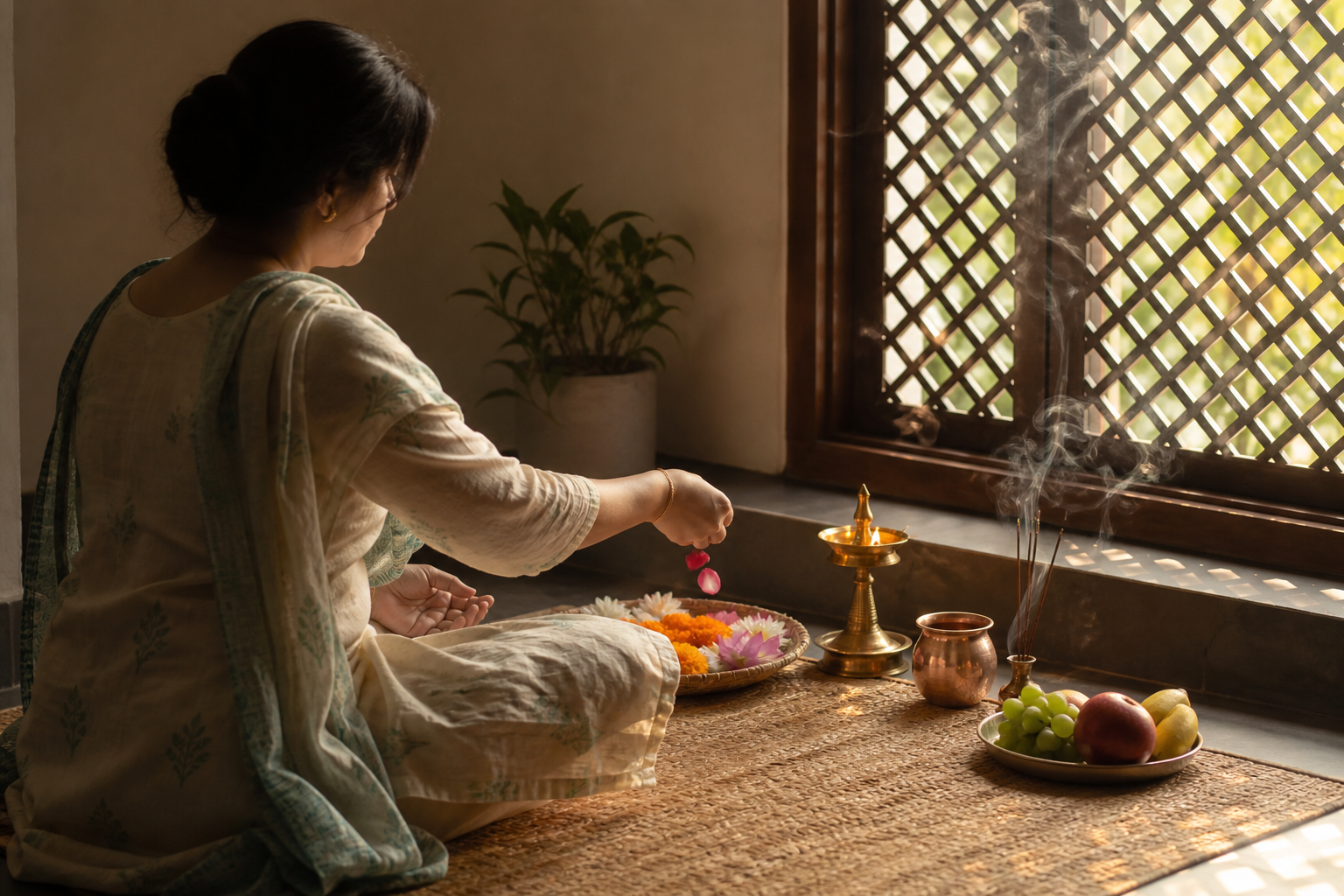
You do not need to fill the day with elaborate activity. Sashti’s emphasis on steadiness is better served by one completed discipline than by several ambitious intentions that disappear before evening.
- Confirm the local tithi before making a formal sankalpa. Check that the Panchang is calculated for your city or region and that its displayed time is local. If your temple publishes its own calendar, use that calendar for a temple observance.
- Choose one defined act of learning. Read a specific portion of a scripture or traditional commentary, return to a lesson you have postponed, or study one teaching closely enough to explain its practical meaning. Set a finish line rather than merely intending to study at some point.
- Make worship quiet and attentive. Follow the puja, prayer, remembrance, or contemplative practice already established in your home or lineage. Reduce distractions and complete the practice without turning it into a display.
- Convert devotion into service. Help someone with a real need, make a considered charitable contribution, or complete a neglected duty that benefits your household or community. Choose an act whose result can be seen, not a vague promise to be more helpful.
- Close the day with an honest review. Ask whether your conduct became steadier, clearer, and more respectful. If it did not, choose one correction to carry into the next day rather than judging the entire observance a failure.
This plan is deliberately general. It does not create a new fasting rule, prescribe worship of a particular deity, or replace the procedure of an established Sashti vrata. If you already observe Sashti according to a guru, temple, regional tradition, or family custom, retain that procedure and use the timing only after checking it against the calendar your community follows.
Resolve regional Panchang differences without guesswork

Two calendars can show slightly different boundaries when they are prepared for different locations or use different astronomical calculations. That does not give you permission to select whichever time is more convenient. First identify which calendar governs the observance you are actually undertaking.
- For private daily reflection: use a reliable Panchang set to your location.
- For a household vrata: follow the regional or family calendar ordinarily used in that household.
- For temple worship: follow the temple’s announced schedule, since the community will perform the observance together.
- For a precise muhurta: obtain the additional Panchang factors required for that purpose rather than relying on the tithi alone.
If the 2:15 AM boundary differs from your local almanac, do not average the two times or combine pieces from separate calendars. Record the locality attached to each calculation, then use the one appropriate to your practice. Consistency matters more than forcing every calendar to display an identical clock time.
Keep the wider Dharmic meaning precise
A Hindu tithi can encourage values that resonate across Dharmic traditions: contemplation, ethical restraint, service, respectful conduct, and communal harmony. That common moral ground should not be confused with identical ritual rules. Hindu, Buddhist, Jain, and Sikh communities retain their own calendars, disciplines, and ways of marking sacred time.
If you are observing the day in an inter-Dharmic household or community, name Sashti accurately as a Hindu lunar tithi while inviting others into the shared acts that do not erase their traditions. Quiet reflection, learning, charity, and considerate speech can create genuine unity without pretending that every community has the same obligation on October 27.
When you prepare an observance for this date, begin with the local calendar and then choose one discipline you can finish. Let Sashti be visible in the quality of your attention, the duty you complete, and the service another person actually receives.
References
