
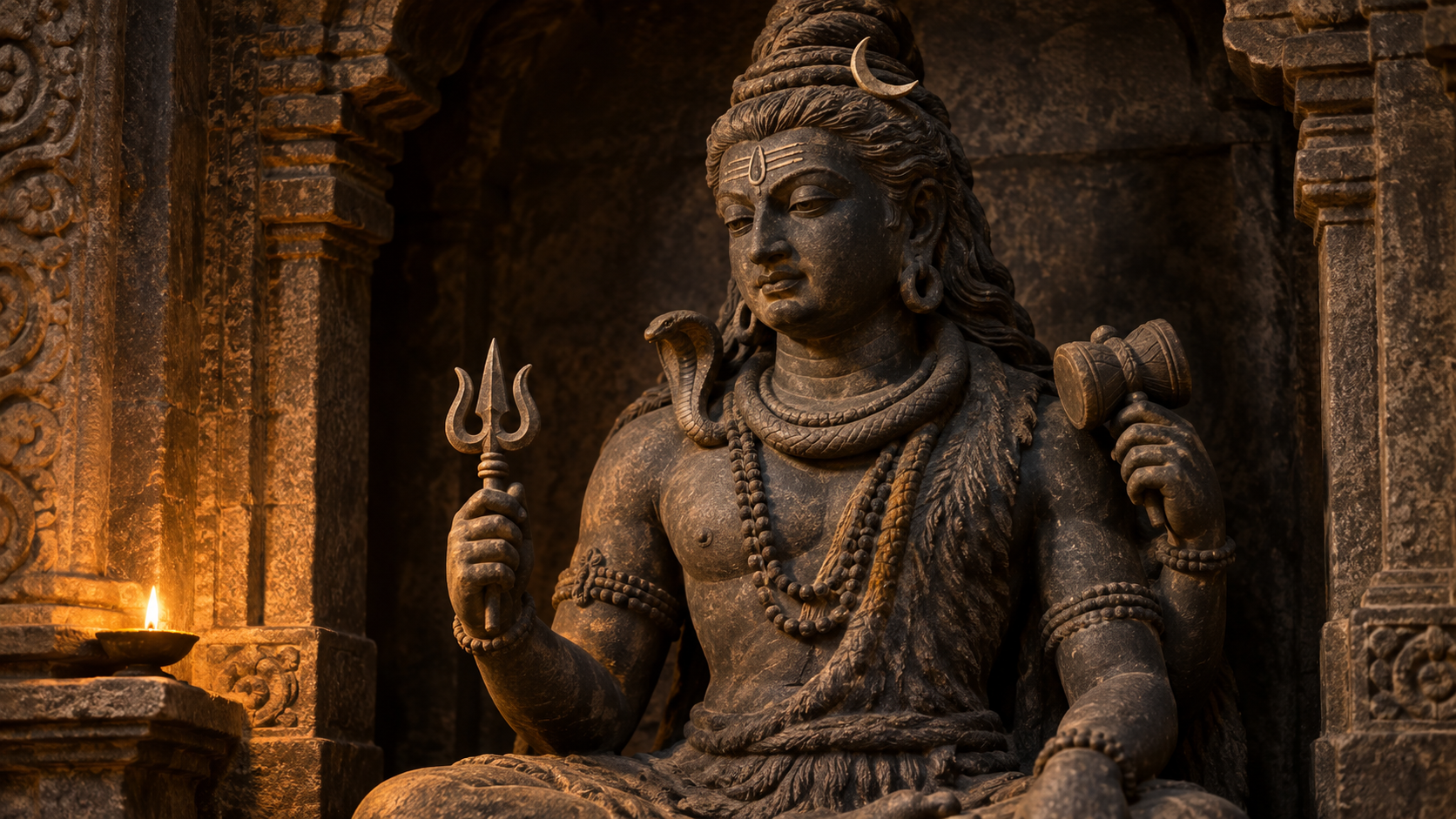
You notice a three-pronged object no longer than the deity’s palm. Is it a trishula, an ornamental flourish, or damage to the sculpture? The answer can change how you identify the figure and understand the image.
If the object is genuinely a trishula, its small size does not make it spiritually minor. In Hindu sacred art, objects, gestures, and ornaments can function as visual theology. You therefore need to read the little trident as part of the whole image, not as an isolated symbol with one dictionary definition.
Small scale does not mean weak significance
A sculptor has to fit a divine figure, posture, hands, implements, ornaments, attendants, and surrounding motifs into a limited field. An attribute may consequently be reduced until it is only large enough to remain recognisable. Scale serves the composition; it does not necessarily rank the attribute’s sacred importance.
This distinction matters when the trident appears as a short hand-held implement, a three-pointed head on a slender staff, or a compact emblem beside the figure. Do not assume that a miniature trishula represents diminished power. First ask whether its three-pronged form is doing iconographic work: Is it helping identify the deity, the deity’s power, or the sacred setting?
Placement gives you an initial clue. An object clearly grasped by a hand belongs to the figure’s set of attributes. A trident standing beside a deity may still be important, but you should check whether it connects to the figure, an attendant, or the surrounding design. A repeated three-pointed motif in a border requires even more caution because it may be ornamental rather than a weapon.
Identify the object before interpreting it
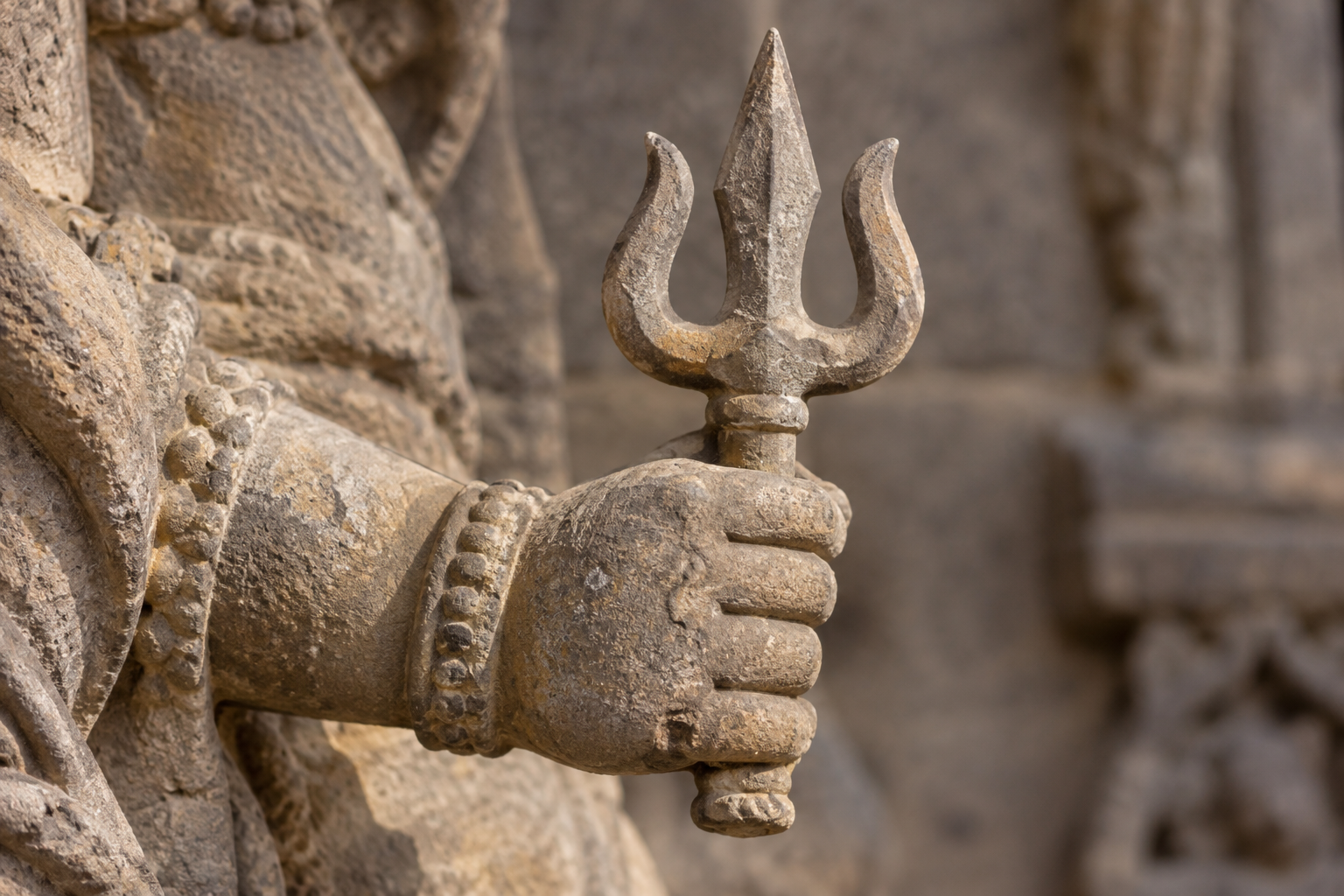
The most common mistake is to jump from three visible points to an elaborate theological explanation. Begin with what the sculpture actually preserves. A damaged spearhead, branching ornament, flame, or floral element can resemble a tiny trident when viewed from one angle.
- Count the surviving points. A probable trishula should present three tips belonging to one head, although erosion may obscure one of them.
- Follow the points downward. Look for a shared base or shaft rather than three unrelated lines in the background.
- Find the physical relationship. Determine whether a hand holds the shaft, the implement rests beside the body, or the form belongs to a halo, crown, or architectural border.
- Read the complete attribute cluster. Posture, other implements, ornaments, vehicle, attendants, and setting are stronger evidence together than any single tiny feature.
- Record uncertainty honestly. If the shaft disappears into damage or the photograph lacks detail, call the object a possible or probable trishula instead of forcing a final identification.
This sequence keeps observation separate from interpretation. Iconography first tells you what may be present; theology then helps you ask what it means. Reversing that order makes it easy to see the symbol you expected rather than the form the sculptor made.
The three points support more than one sacred reading
The trishula is especially associated with Shiva, but its three points should not be reduced to one universal code. Hindu traditions can use a triadic form to express different sets of three. The holder, sectarian setting, and wider composition determine which reading is most persuasive.
Common interpretive frames include creation, preservation, and dissolution; the three gunas of sattva, rajas, and tamas; and past, present, and future. These readings are related by a larger idea: differentiated forces are gathered into one sacred implement. The three prongs remain distinct, but they meet in a single structure and shaft.
That shape can therefore communicate command over a threefold field rather than mere destruction. When Shiva holds the trishula, the image may direct attention to divine sovereignty over the forces and conditions represented by the triad. In an image of Devi, the same weapon may place greater emphasis on active shakti, protection, and the overcoming of disorder. The object remains recognisably a trishula, but its theological accent changes with its bearer.
You do not have to choose a triad merely because three options are available. If the sculpture gives no contextual support for a particular interpretation, stop at the firmer conclusion: the trishula marks divine power through a three-pointed sacred weapon. A modest conclusion grounded in the image is better than a detailed explanation imported from elsewhere.
Let the whole sculpture control the meaning
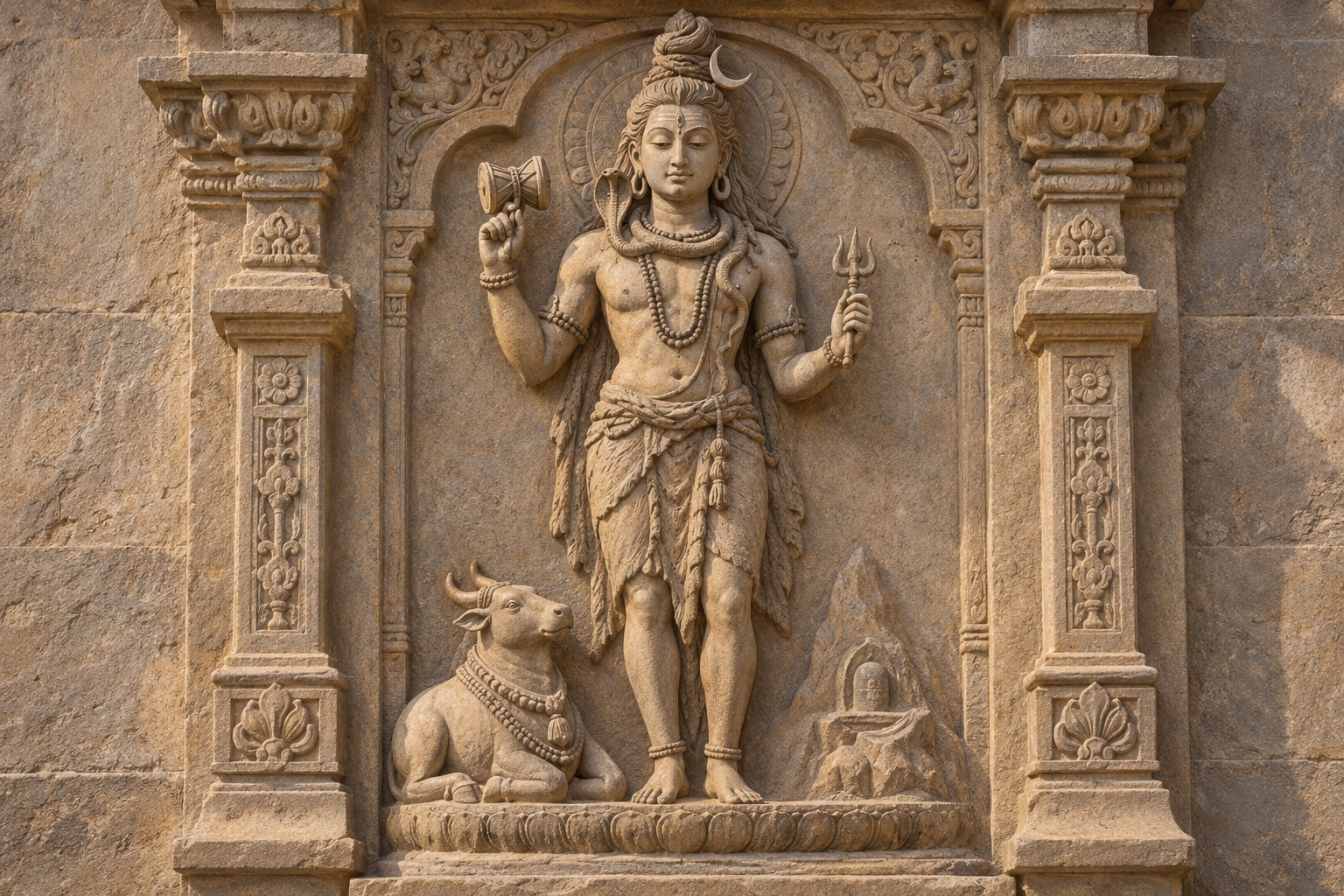
Start with the bearer. A small trident in the hand of Shiva carries a different level of identifying force from a similar motif held by an attendant. In a Goddess image, it belongs within her complete array of powers rather than serving automatically as proof that the figure is Shiva. If no bearer is visible, the surrounding divine figures and the object’s place in the composition become more important.
Next examine how the implement is presented. A raised, firmly grasped trident makes divine agency visually prominent. A staff-like trident resting beside the body may work more as an enduring sign of identity. These are visual observations, not rigid rules: orientation alone cannot tell you whether the image represents protection, combat, blessing, authority, or another function.
Then compare the trident with the sculpture’s other clues. If several independent features point toward the same identification, the small attribute strengthens the conclusion. If the remaining features point elsewhere, reconsider whether you have mistaken an ornament or damaged implement for a trishula. One ambiguous shape should not overrule the entire image.
Material condition also matters. A side prong can disappear through abrasion, a shaft can merge visually with the body, and a frontal photograph can flatten overlapping forms. Before settling the question, look for a second angle, a higher-resolution image, or a description attached to the sculpture. When viewing the object in person, change your position and follow the contour visually without touching the surface.
Key takeaways
- Treat a miniature trishula as a potentially decisive attribute, not as a weaker version of a large weapon.
- Confirm three points, a shared head, a shaft, and a clear relationship to the figure before naming the object.
- Use the bearer and the complete attribute cluster to choose among possible meanings.
- Regard creation-preservation-dissolution, the three gunas, and the three dimensions of time as interpretive possibilities, not interchangeable labels that must appear in every image.
- Separate what you can see from what you infer, especially when the sculpture is worn or the photograph is unclear.
The next time you encounter a small three-pronged form, pause before enlarging its meaning. Trace its shape, locate its bearer, compare the other attributes, and then choose only the interpretation the whole sculpture can sustain. That disciplined attention is how a tiny trident becomes legible as sacred art rather than decorative detail.
References

Leave a Reply
You must be logged in to post a comment.